
NEW
Font size
S
M
L
XL
 Worksheets
Review Homework
Total questions: 40
Worksheet time: 1hrs 4mins
Name
Class
Date
1.
An individual living thing is a/an __________.
a)
habitat
b)
ecosystem
c)
organism
d)
population
2.
All of the nonliving parts of an ecosystem are _______.
a)
biography
b)
biotic
c)
abiotic
d)
biology
3.
The place where an organism lives is its _________.
a)
habitat
b)
abiotic
c)
ecosystem
d)
community
4.
A group of organisms of the same species living in the same area are called a/an ________.
a)
community
b)
habitat
c)
population
d)
ecosystem
5.
A community in which frogs consume only flies is being observed. If the number of frogs increases, which of the follow is most likely to happen first?
a)
The producer population will increase
b)
The fly population will decrease
c)
The fly population will remain the same.
d)
The snake population will soon decrease.
6.

What does a food chain represent?
a)
How all living organisms within a habitat are connected.
b)
All of the things that a particular animal eats.
c)
How plants create their own food.
d)
A single path of energy transfer within a habitat.
7.

An energy pyramid represents what?
a)
How much sunlight is available for the ecosystem to use.
b)
How much energy a particular organism needs.
c)
How much energy is needed to build a pyramid.
d)
The amount of energy available to the next 'feeder' in a food web.
8.

Why might an organism have more than one arrow coming from them in a food web?
a)
More than one organism may eat them.
b)
They may eat more than one other organism.
c)
This organism gets its energy from multiple sources.
9.

What may happen if the snowshoe hare was removed from the food web pictured?
a)
The insects in the habitat would increase.
b)
The shrew population would decrease due to being only hawk food source.
c)
The willow tree population would decrease.
d)
Foxes would dies due to no food source.
10.

The shrew provides energy for the _______?
a)
cricket
b)
grasshopper
c)
frog
d)
snake
11.
Which watery biome has the lowest concentration of salt?
a)
freshwater
b)
ocean
c)
coral reef
d)
wetland
12.
The intertidal zone of oceans
a)
surrounds continents
b)
is on the coastline
c)
has tides that rise and fall each day
d)
is the open ocean
13.
Estuaries form where
a)
a lake evaporates
b)
a river meets the sea
c)
a river becomes dammed
d)
a wetland becomes filled in
14.
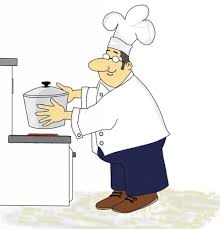
The man goes to take the hot pot off the stove with his bare hands.
a)
conduction
b)
convection
c)
radiation
15.
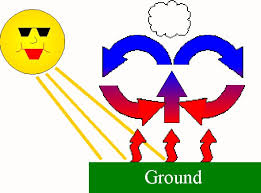
Warm air rises and the cool air sinks.
a)
conduction
b)
convection
c)
radiation
16.

In some cultures, walking on fire is the ultimate sign of strength.
a)
conduction
b)
convection
c)
radiation
17.

In this experiment, the WARM red dye and the COLD blue dye was placed in the water at the same time. The warm red dye rose to the top while the cold blue dye sank to the bottom.
a)
conduction
b)
convection
c)
radiation
18.
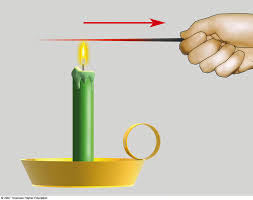
The candle will slowly heat the metal and transfer the heat directly to the mans hand.
a)
conduction
b)
convection
c)
radiation
19.
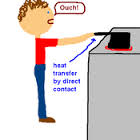
Johnny accidentally grabbed the handle of the hot pot.
a)
conduction
b)
convection
c)
radiation
20.

The warm air from this heater creates a current when the warm air rises and the cold air sinks.
a)
conduction
b)
convection
c)
radiation
21.
wood is a _____?
a)
conductor
b)
insulator
22.
water is a______?
a)
conductor
b)
insulator
23.
Plastic is an example of _______.
a)
an insulator
b)
a conductor
24.
Tin foil is an example of _______.
a)
a conductor
b)
an insulator
25.
_________________ are materials that DO NOT allow heat to move through them easily.
a)
Conductors
b)
Insulators
26.
_________________ are materials that allow heat to move through them easily.
a)
Conductors
b)
Insulators
27.
What is NOT an example of an insulator in the kitchen?
a)
An oven mitt
b)
Pots and pans
c)
A wooden spoon
d)
A plastic measuring cup
28.
Thermal energy travels...
a)
Hot to cold
b)
Cold to hot
c)
Inside to outside
d)
Outside to inside
29.
Where do hurricanes form?
a)
in the ocean near warm areas
b)
in the ocean near cold areas
c)
in large lakes near cold areas
d)
in small lakes near warm areas
30.
Westerly winds moving across the deserts of the United States toward the East Coast most likely bring which types of conditions to North Carolina?
a)
cool and dry
b)
hot and dry
c)
cloudy and humid
d)
clear and humid
31.
During winter, which winds deliver cold air that enters North Carolina?
a)
polar westerlies
b)
prevailing westerlies
c)
northeast trade winds
d)
southeast trade winds
32.
What determines the direction in which air masses flow across the United States?
a)
The Gulf of Mexico
b)
The Atlantic Ocean
c)
The heat from the sun
d)
The rotation of the Earth
33.
Which is most responsible for guiding the movement of different air masses across the United States?
a)
the oceans
b)
trade winds
c)
the jet stream
d)
easterly winds
34.
The El Nino will cause what kind of weather in the southern US?
a)
cold and dry
b)
cold and wet
c)
warm and wet
d)
warm and dry
35.
What causes La Nina?
a)
cooling of water in the Atlantic Ocean off the coast of South America
b)
cooling water off the Atlantic coast of the US
c)
cooling water in the Pacific Ocean off the coast of South America
d)
warm water in the Pacific Ocean off the coast of South America
36.

What causes wind?
a)
convection currents
b)
conduction currents
c)
radiation currents
d)
tropical currents
37.
What impact does the Gulf Stream have on North Carolina’s coastal climate?
a)
The cold water from the Gulf Stream current cools the land.
b)
The warm water from the Gulf Stream current warms the land.
c)
The cold water from the Gulf Stream current decreases inland wind speeds.
d)
The warm water from the Gulf Stream current increases inland wind speeds.
38.
In order for a hurricane to form, the water must be ________.
a)
Cool
b)
Warm
c)
Cold
d)
Hot
39.

What is a tornado?
a)
Rotating funnel shaped cloud with strong winds
b)
A high winds storm with snow and ice
c)
Heavy rains with thunder and lightning
40.

Strong wind blows snow in a ______________.
a)
blizzard
b)
tornado
c)
hurricane
d)
flood
Reset

