wayground logo

Free Printable Worksheets

Font size

S
M
L
XL
Worksheets

Semester 2 Review

Total questions: 170

Worksheet time: 3hrs 37mins

Name
Class
Date
1.
Which cells are more efficient at obtaining nutrients?
a)
Small Cells
b)
Medium Size Cells
c)
Large Cells
d)
X-Large Cells
2.
What is the relationship between the cell size and the cell nutrient absorption rate?
a)
The smaller the cell size the less nutrients are absorbed
b)
The larger the cell size the more nutrients are absorbed
c)
The smaller the cell size the more nutrients are absorbed
d)
The relationship between cell size and nutrient absorption rate cannot be determined
3.
Which type of cell will make greater demands for DNA?
a)
small cell
b)
large cell
4.
Fruit fly body cells have 8 chromosomes. After mitosis, you would expect a resulting fruit fly daughter cell to have ...
a)
16 chromosomes.
b)
46 chromosomes.
c)
8 chromosomes.
d)
4 chromosomes.
5.
Which type of cell is easier to get Oxygen in and waste out?
a)
small cell
b)
large cell
6.
Structure (b) is a ____.
a)
chromosome
b)
chromatid
c)
centromere
7.
The process by which the nuclear material is divided equally between two new cells
a)
mitosis
b)
cancer
c)
spindle
d)
centromere
8.
Structure (c) is a ____.
a)
chromosome
b)
chromatid
c)
centromere
9.
Structure (a) is a ____.
a)
chromosome
b)
chromatid
c)
centromere
10.
Name the phase:
a)
Anaphase
b)
Telophase
c)
Metaphase
d)
Prophase
11.
What is the next phase of mitosis?
a)
Prophase
b)
Metaphase
c)
Anaphase
d)
Telophase
12.
What is the next phase of mitosis?
a)
Prophase
b)
Metaphase
c)
Anaphase
d)
Telophase
13.
Name the previous phase.
a)
Prophase
b)
Metaphase
c)
Anaphase
d)
Telophase
14.
Name the previous phase.
a)
Prophase
b)
Metaphase
c)
Anaphase
d)
Telophase
15.
Name the previous phase.
a)
Prophase
b)
Metaphase
c)
Anaphase
d)
Telophase
16.
Name the phase:
a)
Prophase
b)
Metaphase
c)
Anaphase
d)
Telophase
17.
The stages of mitosis in order
a)
Metaphase, Anaphase, Prophase, Telophase
b)
Prophase, Anaphase, Metaphase, Telophase
c)
Prophase, Metaphase, Anaphase, Telophase
d)
Anaphase, Prophase, Telophase, Metaphase
18.
Before cells can divide, what must be copied?
a)
mitochondria
b)
cytoplasm
c)
DNA
d)
Cell Wall
19.
The division of the nucleus is known as:
a)
Synthesis
b)
Mitosis
c)
G1
d)
G2
20.
Humans have ________ pairs of chromosomes.
a)
21
b)
23
c)
46
d)
None of the above
21.
Eukaryotic cells store their genetic information(DNA) in __________.
a)
Chromosomes
b)
Centromeres
c)
karyotypes
d)
Proteins
22.
The cell spends most of it's life in ________________.
a)
mitosis
b)
cytokinesis
c)
Interphase
d)
None of the above
23.
In the G1 stage of the cell cycle, the cell
a)
Grows
b)
Matures
c)
Carries on normal activities
d)
All of the above
24.
In the S stage of interphase_______________
a)
the cell grows
b)
the nucleus divides
c)
the cell membrane divides
d)
the DNA is replicated
25.
In the G2 stage of cell division, ______________ are made.
a)
organelles
b)
structures for cell division
c)
proteins
d)
all of the above
26.

A human cell has 46 chromosomes before mitotic division. How many chromosomes will the daughter cells have after mitosis.

a)

12

b)

23

c)

46

d)

92

27.
What is cancer?
a)
The heart does not receive enough blood.
b)
Sudden disruption of blood flow to part of the brain.
c)
Blood filled weak spot.
d)
Uncontrolled growth and spread of abnormal cells.
28.
An abnormal mass of cancer cells is called a 
a)
tumor
b)
cyst
c)
lesion
d)
polyp
29.
Cancer creates abnormal cells by disrupting
a)
the cell cycle
b)
red blood cell formation
c)
DNA replication
d)
ATP synthesis
30.
What does heterozygous mean?
a)
An organism that has the same genes for a trait (TT or tt)
b)
An organism that has different genes for a trait (Tt)
c)
When neither gene is fully dominant; offspring is a mixture of both
d)
the different forms of a trait (hair color--> brown, blonde, red
31.
If a heterozygous tall pea plant is crossed with a short pea plant, what are the possible genotypes of the future offspring?
a)
100% Tt
b)
50% Tt, 50% tt
c)
75%Tt, 25%tt
d)
25%TT, 50%Tt, 25%tt
32.
This is an example of what?
a)
Complete dominance
b)
Incomplete dominance
c)
Codominance
d)
None of the above
33.
If T=Tall & t=short, what is the genotypic ratio?
a)
1:3
b)
3:1
c)
1:2:1
d)
2:2
34.
Two brown eyed parents (Bb) have a baby. What is the chance the baby is blue eyed?
a)
0 %
b)
25%
c)
50%
d)
75%
35.
A corn plant heterozygous for tall sprouts mates with a corn plant with short sprouts. If tall sprouts are dominant, how many different phenotypes are possible in the offspring?
a)
1
b)
2
c)
3
d)
4
36.
If a Homozygous red snapdragon and a Heterozygous pink snapdragon were crossed - what percentage of the offspring would be homozygous white?
a)
0%
b)
25%
c)
50%
d)
75%
37.
Snapdragon flowers come in red, pink and white.  What type of inheritance is this?
a)
Complete Dominance
b)
Incomplete Dominance
c)
Codominance
d)
Polygenic Inheritance
38.
A heterozygous yellow pea plant's genotype would be:
a)
YY
b)
yy
c)
Yy
d)
Yg
39.
What is one advantage of sexual reproduction?
a)
offspring are identical to parents
b)
offspring are resistant to viruses
c)
offspring are born live, rather thna from eggs
d)
offspring inherit a wider variety of genetic information
40.
Incomplete dominance means that the traits are
a)
expressed equally
b)
dominant
c)
recessive
d)
blended
41.
Term for homozygous organisms that display two dominant phenotypes at the same time
a)
codominance
b)
incomplete dominance
c)
multiple alleles
d)
linked genes
42.
W=white hair
w= non-white hair
If you cross a horse with WW and a horse with ww what fraction of the offspring would be expected to have white hair?
a)
none
b)
3/4
c)
1/2
d)
all
43.
What is a phenotype?
a)
The expression of a trait; what you see.
b)
refers to the genetic makeup of an individual
c)
An organism that has the same genes for a trait (ex. TT or tt)
d)
the passing of traits from parent to offspring
44.
The inherited combination of alleles is known as the offspring's
a)
heredity
b)
phenotype
c)
genotype
d)
redigree
45.
An organism's appearance is known as its
a)
heredity
b)
phenotype
c)
genotype
d)
pedigree
46.
B=brown eyes
b= blue eyes
What is true about two brothers that have brown eyes?
One has genotype BB the other Bb.
a)
they have same phenotype and genotype
b)
they have different genotypes and phenotypes
c)
they have same phenotype but different genotypes
d)
they have same genotype but different phenotypes
47.
In humans, skin tone is caused by 3 genes, each with 2 alleles.  This is an example of
a)
codominance
b)
incomplete dominance
c)
polygenic inheritance
d)
multiple alleles
48.
This type of inheritance pattern shows BOTH traits in possible offspring
a)
complete dominance
b)
incomplete dominance
c)
co-dominance
d)
dominant pattern
49.
Which is homozygous ?
a)
Zz
b)
SS
50.
 which is heterozygous ?  
a)
Tt
b)
TT
51.
Who was the father of genetics 
a)
Sagan 
b)
Issac Newton 
c)
Gregor Mendel 
d)
C.jenkins 
52.
The passing of traits from parent to offspring 
a)
Heredity 
b)
Genetics 
c)
Hybrid 
d)
Probability 
53.
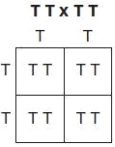
G = green, g = yellow
The genotype for a yellow plant is...
a)
GG
b)
Gg
c)
gg
d)
all of the choices result in yellow
54.
Which of the following genotypes would be considered heterozygous?
a)
BB
b)
gg
c)
Ff
d)
TT
55.
Aa, DD, bB, yy are all examples of
a)
genotypes
b)
phenotypes
56.
How many alleles (letters) do each person carry for a trait?
a)
1
b)
2
c)
3
d)
4
57.
What is another way of saying "purebred"?
a)
homozygous
b)
dominant
c)
recessive
d)
heterozygous
58.
Dominant alleles are represented by a:
a)
Male gene
b)
lowercase letter
c)
recessive trait
d)
capital letter
59.
It is hidden or masked when a dominant allele is present
a)
reflective
b)
reflex
c)
rebouncing
d)
recessive
60.
It will hide other alleles whenever it is present
a)
recessive
b)
bossy
c)
controlling
d)
dominant
61.
What ratio of the offspring from the cross shown will be homozygous recessive for the  trait of tallness? 
a)
0 in 4
b)
1 in 4
c)
2 in 4
d)
4 in 4
62.
Which of the following genotypes is heterozygous?
a)
Bb
b)
BB
c)
bb
d)
B
63.
In a flowering plant species, red flower color (R) is dominant over white flower color (r). What is the genotype of any red-flowering plant resulting from this species?
a)
rr
b)
R
c)
RR
d)
RR or Rr
64.
Which of the characteristics is a lion least likely to pass on to its offspring?
a)
fur color
b)
length of tail
c)
scars on leg
d)
body size
65.
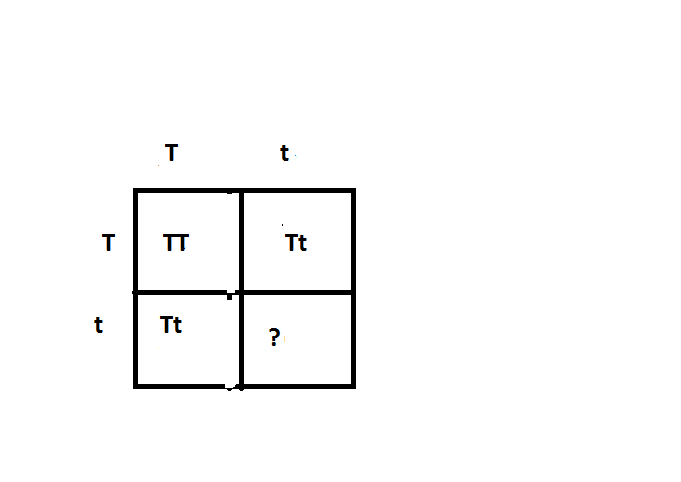
T - tall and t = short
In the punnett square below, what belongs in the missing square
a)
tt
b)
Tt
c)
Bb
d)
TT
66.
Which of the following is homozygous recessive?
a)
Tt
b)
tt
c)
TT
d)
T
67.
Which of the following is homozygous dominant?
a)
Yy
b)
Y
c)
yy
d)
YY
68.
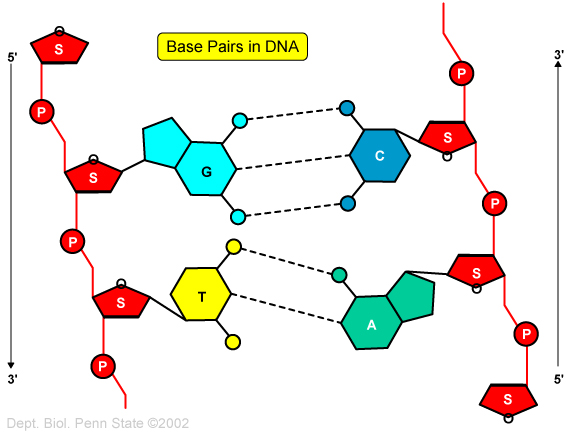
Which sequence of DNA bases would pair with this partial strand
ATG TGA CAG
a)
ATG TGA CAG
b)
TAC ACT GTC
c)
GTA AGT GAC
d)
CAT TCA CTG
69.
Which of the following best describes a DNA molecule?
a)
double helix
b)
contains ribose
c)
made of amino acids
d)
contains Uracil
70.
In a molecule of double-stranded DNA, the amount of Adenine present is always equal to the amount of
a)
cytosine
b)
guanine
c)
thymine
d)
uracil
71.
Which of the following units are repeatedly joined together to form a strand of DNA?
a)
amino acids
b)
nucleotides
c)
fatty acids
d)
polysaccharides
72.
Adenine bonds with ______________.
a)
Guanine
b)
Thymine
c)
Cytosine
d)
Adenine
73.
Guanine bonds with ______________.
a)
Adenine
b)
Guanine
c)
Cytosine
d)
Thymine
74.
Why is DNA important?
a)
it is very small and very complicated
b)
it's in everything
c)
it serves as the blueprint for traits of all living things
d)
because we eat it every day for energy
75.
What determines the code, or information, of a DNA molecule?
a)
the shape (structure) of the nitrogen bases
b)
the order (sequence) of the nitrogen bases
c)
the color of the nitrogen bases
d)
the frequency (number) of nitrogen bases
76.
Which 2 molecules form the sides (backbone) of the DNA ladder?
a)
deoxyribose sugar and adenine
b)
deoxyribose sugar and a hydrogen bond
c)
deoxyribose sugar and the nucleus
d)
deoxyribose sugar and phosphate
77.
Which organelle is DNA usually found in?
a)
cell membrane
b)
vacuole
c)
chloroplast
d)
nucleus
78.
Nitrogenous bases are joined by which type of bond?
a)
polar bonds
b)
ionic bonds
c)
covalent bonds
d)
hydrogen bonds
79.
Replicate the following strand of DNA: 
AATCATGGA
a)
AATCATGGA
b)
TTAGTACCT
c)
UUAGUACCU
d)
GGATAUCUA
80.
The enzyme that unzips the DNA to prepare for replication
a)
helicase
b)
replicase
c)
polymerase
d)
synthase
81.
DNA replication results in two DNA molecules,
a)
each one with two original strands
b)
each one with two new strands
c)
each one with one new strand and one original strand
d)
one with two new strands and the other with two original strands
82.
A process in which DNA has the unique ability to make an exact copy of itself.
a)
Replication
b)
Translation
c)
Transcription
83.
What are the three components of a nucleotide?
a)
sugar, hydrogen, nitrogen base
b)
sugar, oxygen, nitrogen base
c)
sugar, phosphate, nitrogen base
d)
sugar, phosphate, protein
84.
Tightly wound DNA is known as 
a)
DNA Replication
b)
Chromosomes
c)
Chromatin
d)
Genes
85.

Chromosomes are composed of _____________________, which is a segment of DNA that codes for a particular protein which in turn codes for a trait.

a)

genes

b)

autosomes

c)

genetics

d)

autocrats

86.
structures that lost their function
a)
vestigial
b)
homologous
c)
analogous
d)
fitness
87.
Which of the following is a fossil?
a)
a plant that has recently died
b)
a group of organisms that can reproduce
c)
a structure or organ that no longer functions
d)
a trace of an organisms that existed in the past
88.
Who observed variations in the characteristics of plants and animals on the Galapagos Islands?
a)
James Hutton
b)
Charles Lyell
c)
Thomas Malthus
d)
Charles Darwin
89.
process of change over time in a species
a)
evolution
b)
fitness
c)
acquired characteristics
d)
fossils
90.
ability to survive and reproduce
a)
fitness
b)
adapation
c)
natural selection
d)
artificial selection
91.
heritable characteristics that increases chance of survival
a)
fitness
b)
adpatation
c)
natural selection
d)
homologous structure
92.
common ancestor, but function can vary
a)
homologous structure
b)
analogous structure
c)
vestigial structure
93.
preserved remains of ancient organsims
a)
fossils
b)
acquired characteristics
c)
vestigial structures
d)
adapations
94.
Who created the theory of evolution?
a)
Charles Darwin
b)
Charles Derwin
c)
Charlie Darwin
d)
Chris Darwin
95.
What was the name of the ship Charles Darwin sailed on?
a)
Boaty McBoaty Face
b)
HMS Beagle
c)
HMS Britannia
d)
HMS Bulldog
96.
A process in which individuals with certain inherited traits tend to survive and reproduce at higher rates than other individuals because of those traits is called
a)
artificial selection
b)
natural selection
c)
extinction
d)
speciation
97.
What characteristic did Darwin observe about the finches on the Galapagos Islands?
a)
Their feathers 
b)
Genotypes 
c)
Their beaks
d)
Their body sizes
98.
Two organisms that are closely related would have
a)
very similar DNA sequence
b)
exactly the same DNA sequences
c)
no proteins in common
d)
completely different DNA sequence
99.
Farmers breed cows to produce high amounts of milk. This is an example of...
a)
Natural Selection 
b)
Variations in a species 
c)
Selective Breeding 
100.
Why are advantageous traits more likely to be passed onto offspring?
a)
Because they are more likely to survive and reproduce.
b)
Because they come from dominant alleles.
c)
Because they come from recessive alleles.
d)
Because the trait is an acquired phenotype.
101.
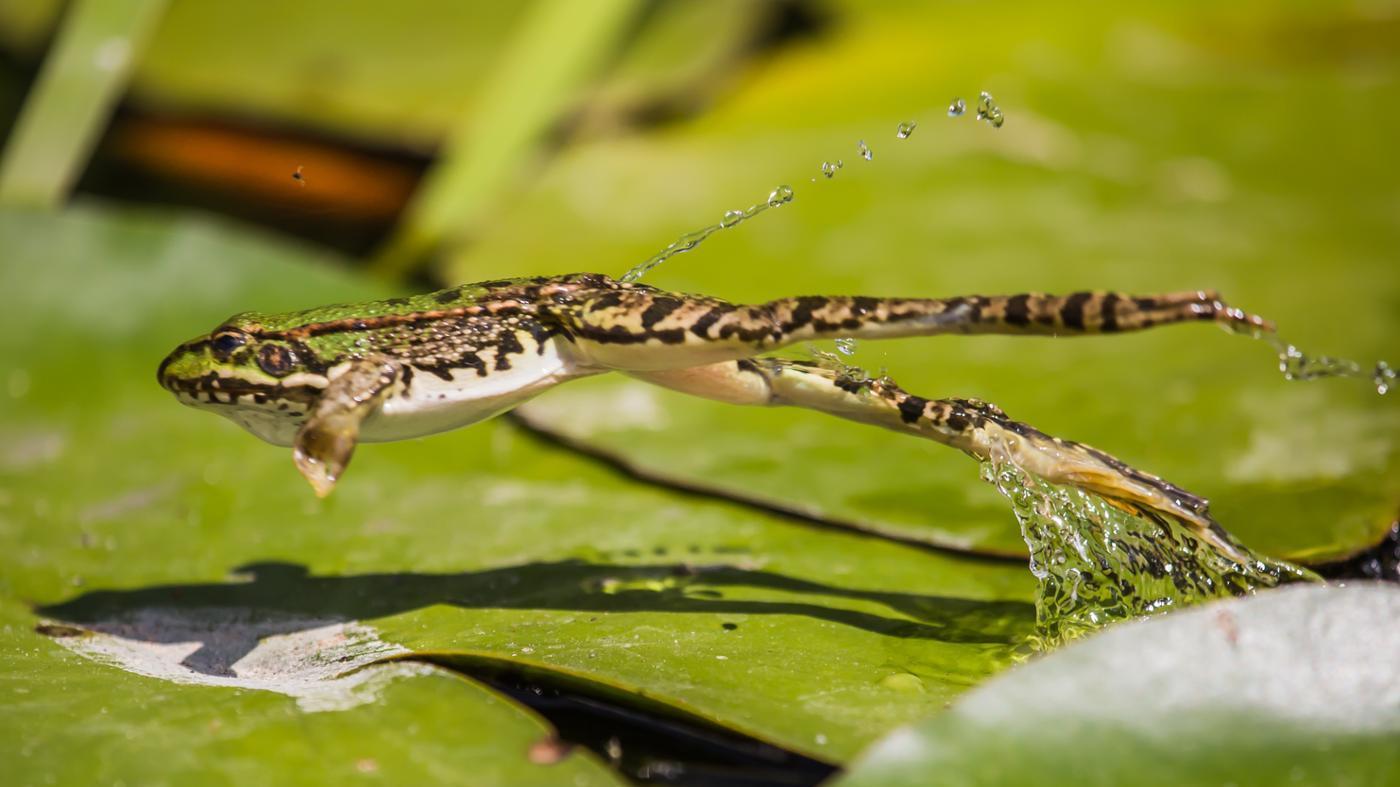
Frogs have webbed feet that help them to swim in water. Webbed feet in frogs are an example of a
a)
niche
b)
variation
c)
adaptation
d)
learned behavior
102.
 characteristic or trait that helps an organism survive in its environment
a)
skills
b)
speciation
c)
natural instinct
d)
adaptation
103.
What is another name for natural selection?
a)
survival of the smartest
b)
survival of the fastest
c)
survival of the biggest
d)
survival of the fittest
104.
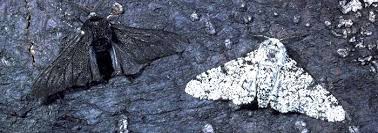
Predict which moth would increase in population
a)
light 
b)
dark
105.
The ability of an organism to survive and reproduce in its specific environment 
a)
diversity.
b)
evolution
c)
adaptation
d)
 fitness
106.
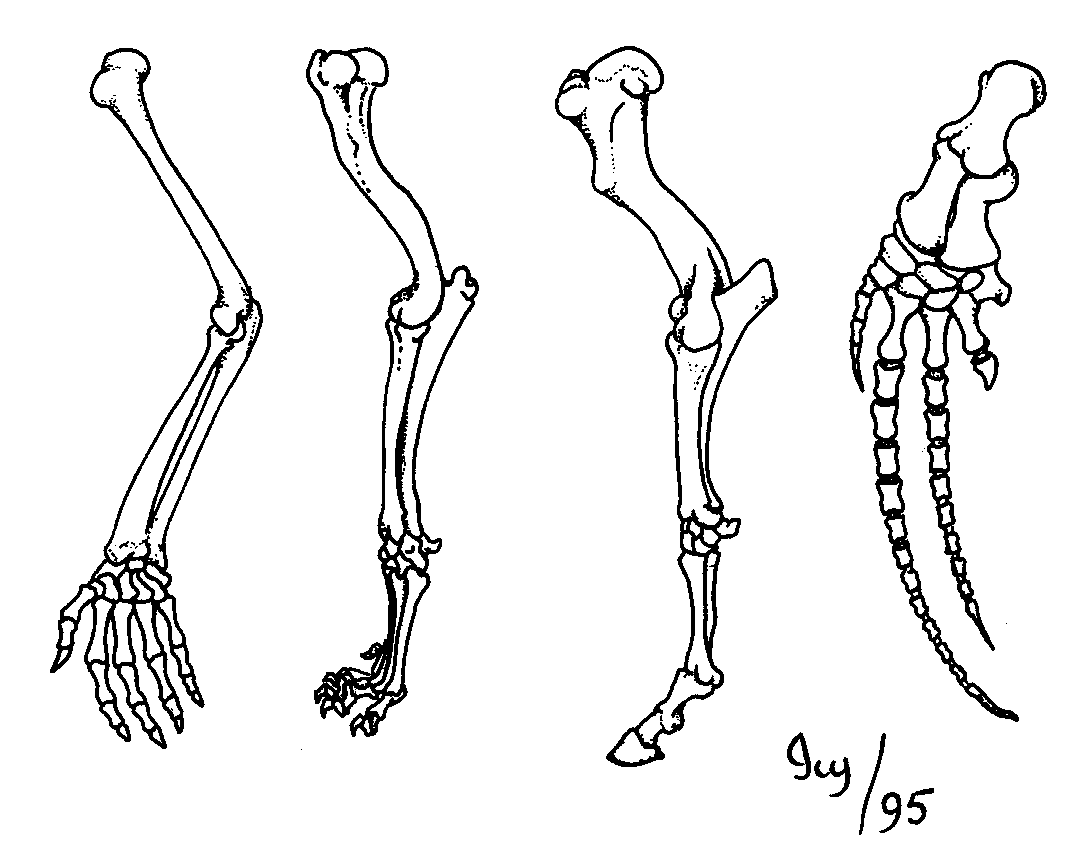
the hind leg bones in a whale are examples of
a)
homologous structures
b)
analogous structures
c)
fossils
d)
vestigals
107.
Structures with the same parts have different functions; suggests that organisms share a common ancestry
a)
vestigial structures
b)
homologous structures
c)
adaptive radiation
d)
fossil
108.
The differences in traits such as hair color, eye color, height, and hand span are examples of ____________.
a)
vesitgial structures
b)
genetic drift
c)
analogous structures
d)
variations 
109.
The wings of bats and insects have the same function, but they are NOT built similarly; therefore, these structures are considered __________ structures.
a)
analogous
b)
homologous
c)
vestigial
d)
dormant 
110.
_______________ states that organisms with variations most suited to their environment survive and leave more offspring. 
a)
directional selection
b)
artificial selection
c)
natural selection
d)
sexual selection 
111.
Which structures below are vestigial structures? 
a)
mouse arm & bat wing
b)
human arm & bat wing
c)
wisdom teeth & an appendix
d)
dog's nose & snake's tongue
112.
When more offspring are being produced, there is a competition of limited resources---this is known as:
a)
Struggle for Existence
b)
Survival of the Fittest
c)
Descent with Modification
d)
Adaptation
113.
When organisms, whether living or extinct, are descended from a common ancestor---this is known as: 
a)
Struggle for Existence
b)
Survival of the Fittest
c)
Descent with Modification
d)
Adaptation
114.
Individuals that are better able to cope with the challenges of their environment tend to  
a)
Decrease in population over time.
b)
Leave more offspring than those less suited to the environment.
c)
Leave fewer offspring than those less suited to the environment.
115.

Creates sperm and eggs

a)

Mitosis

b)

Meiosis

116.
Crossing over occurs during prophase I 
a)
Mitosis 
b)
Meiosis
117.
Two identical cells are produced
a)
Mitosis
b)
Meiosis
118.
Four gamete cells are formed
a)
Mitosis
b)
Meiosis
119.

Occurs in Somatic (body) cells 

a)

Mitosis

b)

Meiosis

120.
Creates diploid cells
a)
Mitosis
b)
Meiosis
121.
Creates haploid cells
a)
Mitosis
b)
Meiosis
122.
Occurs in skin, liver, and heart cells
a)
Mitosis
b)
Meiosis
123.
Sexual Reproduction
a)
Mitosis
b)
Meiosis 
124.
Asexual reproduction
a)
Mitosis
b)
Meiosis 
125.
An organism has 20 chromosomes in its skin cell. How many chromosomes are in its gamete cells? 
a)
20
b)
10
c)
40
d)
15
126.
What is the process that occurs during meiosis that causes genetic variation?
a)
cytokinesis
b)
prophase I
c)
crossing-over
d)
genetic mutations
127.
Which of the following statements are true?
a)
Meiosis cells divide once while mitosis cells divide twice
b)
Meiosis parent cell is diploid while mitosis parent cell is haploid
c)
Meiosis produces four haploid cells while mitosis produces two diploid cells 
d)
Meiosis produces genetically identical cells while mitosis produces genetically different cells
128.
What is the end goal of meiosis?
a)
to repair injured cells
b)
to destroy unhealthy cells
c)
to create sperm and eggs
d)
to manufacture energy for cells
129.
Which process is occurring here?
a)
mitosis
b)
cytokinesis
c)
DNA Replication
d)
Crossing-over
130.
Which is true about gamete formation during meiosis? 
a)
It ensures genetic variation by causing mutations
b)
It helps to make haploid organisms by reducing the number of gametes
c)
It keeps the chromosome number of the organism the same by forming diploid gametes
d)
It ensures the chromosome number of the organism remains constant by making haploid gametes
131.
What is the diploid number for humans?
a)
46
b)
23
c)
10
d)
52
132.
What is the haploid number for humans?
a)
46
b)
23
c)
10
d)
52
133.
An organism has 16 chromosomes in its skin cell. How many chromosomes are in its heart cells?
a)
16
b)
32
c)
8
d)
64
134.
What are the phases of mitosis in order?
a)
Pro-Meta-Ana-Telo-Cyto
b)
Telo-Pro-Meta-Ana-Cyto
c)
Ana-Telo-Meta-Pro-Cyto
d)
Cyto-Telo-Ana-Meta-Pro
135.
Which process and type of resulting cells are represented?
a)
mitosis, gametes
b)
mitosis, body cells
c)
meiosis, gametes
d)
meiosis, body cells
136.
If the Diploid number of Carrots is 18, the haploid number is
a)
18
b)
9
c)
27
d)
36
137.
In mitosis, the two resulting cells are
a)
different from the starting cell and identical to each other.
b)
different from the starting cell and different from each other.
c)
identical to the starting cell and different from each other.
d)
identical to the starting cell and identical to each other.
138.
If a parent cell has 88 chromosomes, following MITOSIS, the daughter cells will have ___ chromosomes.
a)
42
b)
88
c)
Impossible to know
139.
If a parent cell has 88 chromosomes, following MEIOSIS, the daughter cells will have ___ chromosomes.
a)
42
b)
88
c)
Impossible to know
140.
The symbol for haploid is...
a)
N
b)
2N
141.
The symbol for diploid is...
a)
N
b)
2N
142.
What type of selection is depicted in the picture? 
a)
stabilizing 
b)
directional 
c)
disruptive 
d)
the answer is not here
143.

What type of selection?

a)

Directional

b)

Stabilizing

c)

Disruptive

144.

Only populations can evolve.

Individuals can not evolve.

a)

True

b)

False

145.
Why are advantageous traits more likely to be passed onto offspring?
a)
Because they are more likely to survive and reproduce.
b)
Because they look cooler.
c)
Because they come from recessive alleles.
d)
Because the trait is an acquired phenotype.
146.
what is the phenotype?
A green wrinkled  pea plant RR has two dominant alleles
a)
RR
b)
dominant
c)
green wrinkled
d)
alleles
147.
Is zz dominant or recessive
a)
dominant
b)
recessive
148.
Alternative forms of a gene are called
a)
Alleles
b)
Homozygous
c)
DNA
d)
Genetics
149.
The physical appearance of an organism based on traits
a)
Genotype
b)
Phenotype
c)
Meiosis
d)
Genetics
150.
The allele combinations
a)
genetics
b)
mitosis
c)
genotype
d)
phenotype
151.
Hair colour is an example of
a)
genotype
b)
phenotype
152.

Natural selection works on the

a)

phenotype

b)

genotype

c)

individual

153.
Do populations or individuals evolve?
a)
populations
b)
individuals
154.

What type of genetic drift is most common after a natural disaster which results in a drastic reduction in population size?

a)

Bottleneck Effect

b)

Founders Effect

c)

Gene Flow

d)

Sexual Selection

155.

What type of genetic drift is characterized by a small subgroup of a population leaving and forming a new population?

a)

Gene Flow

b)

Bottleneck Effect

c)

Sexual Selection

d)

Founders Effect

156.

What are the two types of genetic drift?

a)

Founders Effect

b)

Gene Flow

c)

Sexual Selection

d)

Bottleneck effect

157.

The total collection of genes in a population at any one time.

a)

population genetics

b)

gene pool

c)

gene flow

d)

allele frequency

158.

The measure of how common a certain allele is in the population.

a)

population genetics

b)

gene pool

c)

Hardy Weinberg equilibrium

d)

allele frequency

159.

Polygenic traits create a

a)

linear graph

b)

bell curve

c)

decreasing curve

d)

increasing curve

160.
What type of selection is depicted in the picture? 
a)
stabilizing 
b)
directional 
c)
disruptive 
d)
the answer is not here
161.
How many alleles does someone have for a genotype?
a)
1
b)
2
c)
3
d)
4
162.
Genetic drift is change in the allele frequency of a population due to...
a)
random chance
b)
natural selection
c)
non-random mating (sexual selection)
d)
artificial selection
163.
 Genetic Drift is more likely to happen in... 
a)
aquatic populations
b)
small populations
c)
terrestrial populations
d)
older populations
164.

If a population is not evolving it is said to be in

a)

genetic disequilibrium

b)

genetic transfer

c)

genetic equilibrium

d)

gene pool transfer

165.
The term for the formation of new and distinct species over the course of evolution is...
a)
speciation
b)
biological species concept
c)
reproductive barrier
d)
natural selection
166.
What is a species? 
a)
A group of organisms that can mate with each other and produce fertile offspring. 
b)
A group of organisms that can mate and produce offspring even if those offspring are infertile.
c)
A group of organisms that genetically are very different from each other. 
d)
Indivual organisms that live in the same environment. 
167.

The emergence of new rivers or streams is a type of ____________ isolation.

a)

Temporal

b)

Mechanical

c)

Behavioral

d)

Geographic

168.

What type of speciation involves isolation due to differences in mating rituals?

a)

geologic isolation

b)

behavioral isolation

c)

temporal isolation

169.

What type of islation occurs when species no longer breed because they mate at different times?

a)

temporal isolation

b)

geographical isolation

c)

behavioral isolation

170.

One species splitting into two species is called...

a)

Mass extinction

b)

Speciation

c)

Stabilizing selection

d)

None of these