wayground logo

Free Printable Worksheets

Font size

S
M
L
XL
Worksheets

EOC review

Total questions: 165

Worksheet time: 2hrs 32mins

Name
Class
Date
1.
The purpose of surface proteins/tail fibers in viruses is to....
a)
Help with viral reproduction
b)
No purpose
c)
Attach virus to host cell
d)
Help virus spread to other organisms
2.
This virus cycle can lead to outbreaks for rest of a person's life. Ex: Herpes/HIV
a)
Lytic
b)
Lysogenic
c)
Mitosis
d)
Meiosis
3.
What is a difference between a Prokaryotic cell (bacteria) and a Eukaryotic cell (cheek cell)?
a)
Pro = Nucleus Eu= no nucleus
b)
Pro= nucleus Eu= nucleus
c)
Pro= no nucleus Eu = no nucleus
d)
Pro = no nucleus Eu= nucleus
4.
Active transport requires particles to move in this direction
a)
With the concentration gradient
b)
Into the cell
c)
Against the concentration gradient
d)
Out of the cell
5.
The role of the cell membrane is to
a)
protect the genetic information
b)
Give the cell additional structure and support
c)
Signal the cell that it is time to divide
d)
protect and limit what can enter and leave cell
6.
The role of the ribosome in the cell is to
a)
Make Proteins
b)
Produce lipids
c)
Transport materials
d)
Provide energy
7.
What is osmosis?
a)
Movement of water only
b)
Movement of particles other than water
c)
Movement of both water and particles
d)
Energy production
8.
Amount of water entering and exiting cell is equal. This cell is said to be:
a)
Hypertonic
b)
Hypotonic
c)
Isotonic
d)
Platonic
9.
Water is leaving this cell at a fast rate to offset the salt outside the cell. The cell is...
a)
Hypertonic
b)
Hypotonic
c)
Isotonic
d)
Platonic
10.
Water is entering this cell to try and balance out the salt on the inside. This cell is....
a)
Hypertonic
b)
Isotonic
c)
Hypotonic
d)
Platonic
11.
Viral reproduction that happens quickly. Can be known as a "hot" virus because of reproduction.
a)
Lytic
b)
Lysogenic
c)
Mitosis
d)
Meiosis
12.
How can you quickly identify if a cell is Eukaryotic?
a)
Presence of a nuclear membrane
b)
Presence of ribosomes
c)
Presence of cytoplasm
d)
Presence of genetic material
13.
Organelle that converts glucose into ATP (cell energy)
a)
Chloroplast
b)
Mitochondria
c)
Ribosome
d)
Nucleus
14.
Organelle that breaks down worn out cells/cell parts. Contains digestive enzymes.
a)
Vacuole
b)
Lysosome
c)
Mitochondria
d)
Golgi Apparatus
15.
Specialized Eukaryotic cell that contains NO nucleus. Transports CO2 and O2
a)
Red Blood Cell
b)
White Blood Cell
c)
Nerve Cell
d)
Cardiac Cell
16.
"Tube" that brings glucose from leaves DOWN to rest of plant
a)
Xylem
b)
Phloem
c)
Palisade Cell
d)
Root
17.
"Tube" that brings water/nutrients UP from the roots.
a)
Xylem
b)
Phloem
c)
Palisade Cell
d)
Root
18.
Passive transport requires particles to move in this direction
a)
With the concentration gradient
b)
Against the concentration gradient
c)
Into the cell
d)
Out of the cell
19.
Type of cell that fights off foreign invaders within your body. 
a)
Red Blood Cell
b)
Cardiac Cell
c)
Skeletal Muscle Cell
d)
White Blood Cell
20.
Type of muscle cell with a large amount of mitochondria and sarcomeres. 
a)
Skeletal/Striated Muscle cells
b)
Cardiac Muscle
c)
Smooth Muscle
d)
Phloem
21.
Type of specialized cell that transport one way messages using chemicals. 
a)
Red Blood Cell
b)
White Blood Cell
c)
Nerve Cell
d)
Smooth Muscle Cell
22.
Which monomer is paired with the correct biomolecule?
a)
Amino Acid = Protein
b)
Monosaccharide = Lipid
c)
Glycerol and Fatty Acid = Carbohydrate
d)
Monosaccharide = Nucleic Acid
23.
Which monomer is paired with the correct biomolecule?
a)
Monosaccharide = Carbohyrate
b)
Nucleotide = Protein
c)
Glycerol and Fatty Acid = Nucleic Acid
d)
Amino Acid = Lipid
24.
What is the function of nucleic acids?
a)
Speed up chemical reactions
b)
Store Energy
c)
Store Genetic information
d)
To help in muscle repair
25.
This molecule is made of C:H:O and happens in a 1:2:1 ratio. 
a)
Lipid
b)
Carbohydrate
c)
Protein
d)
Nucleic Acid
26.
This biomolecule is made of C:H:O. Contains Lots of C's and H's, very few O's. Ex: steroids/hormones, waxes
a)
Protein
b)
Lipid
c)
Carbohydrate
d)
Nucleic Acid
27.
Identify the biomolecule
a)
Carbohydrate
b)
Lipid
c)
Nucleic Acid
d)
Protein
28.
The monomer of Lipids are
a)
Saccharides
b)
Amino Acids
c)
Nucleotides
d)
Glyerol/Fatty Acid
29.
Which statement best describes what happens when an enzyme and a substrate come together. 
a)
The enzyme and substrate stick to a container
b)
The enzyme bounces off the substrate
c)
The substrate fits in the enzyme
d)
Both substrate and enzyme break apart
30.
What occurs as the result of a substrate fitting into its specified active site on an enzyme?
a)
The substrate will denature
b)
The reaction will stop
c)
The new product will form
d)
The enzyme will dissolve
31.
What is the main source of energy in living organisms?
a)
Carbohydrates
b)
Lipids
c)
Proteins
d)
Nucleic Acids
32.
What is osmosis?
a)
Movement of water only
b)
Movement of particles other than water
c)
Movement of both water and particles
d)
Energy production
33.
The role of the cell membrane is to
a)
protect the genetic information
b)
Give the cell additional structure and support
c)
Signal the cell that it is time to divide
d)
protect and limit what can enter and leave cell
34.
Active transport requires particles to move in this direction
a)
With the concentration gradient
b)
Into the cell
c)
Against the concentration gradient
d)
Out of the cell
35.
This virus cycle can lead to outbreaks for rest of a person's life. Ex: Herpes/HIV
a)
Lytic
b)
Lysogenic
c)
Mitosis
d)
Meiosis
36.

What does the dotted  line represent in this graph?
a)
Limited Factors
b)
Competition
c)
Carrying Capacity
d)
Predation
37.
Symbiotic relationship where both species benefit.
a)
Mutualism
b)
Parasitism
c)
Commensalism
d)
Predation
38.
Symbiotic relationship where one species benefits and the other isn't helped or hurt.
a)
Mutualism
b)
Commensalism
c)
Parasitism
d)
Predation
39.
In an ecosystem, a biotic or abiotic resource that over time can keep organism populations "in check" is known as a ___________________. 
a)
Limiting Factor
b)
Carrying Capacity
c)
Parasitism
d)
Niche
40.
The particular role an organism plays in an ecosystem. 
a)
Consumer
b)
Predator
c)
Niche
d)
Symbiosis
41.
After the first trophic level - what percentage of energy is available  to each of the following levels?
a)
100%
b)
90%
c)
10%
d)
8.5%
42.
Organisms that make their own food are known as ______________. 
a)
Omnivores
b)
Detrivores
c)
Heterotrophs
d)
Autotrophs
43.
These organisms break down organic matter and release it back into the environment. 
Ex: Bacteria, Fungi
a)
Carnivores
b)
Omnivores
c)
Detritivores
d)
Decomposers
44.
A collection of different populations that live in a specific area/habitat. 
a)
Community
b)
Niche
c)
Ecosystem
d)
Biome
45.
Biotic and Abiotic factors that make up an environment
a)
Population
b)
Biome
c)
Ecosystem
d)
Community
46.
This biome has the highest amount of biodiversity and the lowest amount of nutrients in soil 
a)
Desert
b)
Rainforest
c)
Tundra
d)
Temperate Forest
47.
The picture is an example of...
a)
active transport
b)
passive transport
c)
diffusion
d)
osmosis
48.
This picture represents which type of cellular transport?
a)
passive transport
b)
endocytosis
c)
exocytosis
d)
osmosis
49.
Food is moved into the cell by ________________________.
a)
endocytosis
b)
pinocytosis
c)
exocytosis
d)
osmosis
50.
The concentration of water is higher in the soil than in plant root cells. Water moves into root cells of a plant by...
a)
Facilitated Diffusion
b)
Simple Diffusion
c)
Active Transport
d)
Osmosis
51.
The cell membrane is made mostly of
a)
phospholipid monolayer and proteins
b)
phospholipid bilayer and proteins
c)
proteins and carbohydrates bilayer
d)
triglycerides and carbohydrates
52.
A state of biological balance
a)
homeostasis
b)
turgor pressure
c)
hypotonic
d)
plasma membrane
53.
Permeable means
a)
things can pass through
b)
the concentration levels are different
c)
it is permanent
d)
things are stuck
54.
What does this molecule represent?
a)
Protein
b)
Nucleic Acid
c)
Carbohydrate
d)
Lipid
55.
Which of the following is the correct equation for PHOTOSYNTHESIS?
a)
6CO2 + 6H2O --> 6O+ C6H12O6
b)
6CO+ C6H12O6 + 6H2O --> O
c)
6O2 + 6H2O --> 6CO+ C6H12O6
d)
C6H12O6 + 6O2 ---> 6H2O + 6CO2 
56.
Which gas is removed from the atmosphere during photosynthesis?
a)
hydrogen
b)
oxygen
c)
nitrogen
d)
carbon dioxide
57.
What are the products of photosynthesis?
a)
Carbon dioxide and water
b)
Carbon dioxide and oxygen
c)
Glucose and oxygen
d)
Glucose and water
58.
What is one of the reactants of cellular respiration?
a)
energy
b)
glucose
c)
carbon dioxide
d)
water
59.
What is the purpose of photosynthesis?
a)
make glucose
b)
make ATP
c)
make light
d)
release carbon dioxide
60.
Which of the following structure is where cellular respiration occurs in the cell?
a)
nucleus
b)
cytoplasm
c)
mitochondria
d)
vacuoles
61.
What are the reactants in the equation for cellular respiration?
a)
oxygen and lactic acid
b)
carbon dioxide and water
c)
glucose and oxygen
d)
water and glucose
62.
What is the correct equation for cellular respiration?
a)
6O2 + C6H12O6 -> 6CO2 + 6H2O + Energy
b)
6O2 + C6H12O6 + Energy -> 6CO2 + 6H2O
c)
6CO2 + 6H2O -> 6O2 + C6H12O6 + Energy
d)
6CO2 + 6H2O + Energy -> 6O2 + C6H12O6
63.
Cellular Respiration's goal is to
a)
make water
b)
make ATP
c)
make glucose
d)
make  oxygen
64.
Type of RNA that transfers amino acids to ribosomes during protein synthesis. 
a)
mRNA
b)
rRNA
c)
tRNA
d)
DNA
65.
What is made during translation?
a)
transfer RNA
b)
messenger RNA
c)
Proteins
d)
Spanish Rice
66.
The site of protein synthesis?
a)
nucleus
b)
ER
c)
Ribosome
d)
Golgi Body
67.
Nitrogenous bases are joined by which type of bond?
a)
polar bonds
b)
ionic bonds
c)
covalent bonds
d)
hydrogen bonds
68.
Single nucleic acid made during transcription to provide template for making proteins at ribosome during translation.
a)
RNA
b)
DNA
c)
ATP
d)
Protein
69.
the two halves of a chromosome after DNA has been replicated
a)
centromeres
b)
sister chromatids
c)
spindle
d)
tissues
70.

This process leads to genetic variety in a species. Results in formation of gametes.

a)

Mitosis

b)

Replicatoin

c)

Meiosis

d)

Transcription

71.

Identify the process occurring here

a)

Replication

b)

Translation

c)

Transcription

d)

Mitosis

72.

Crossing over during meiosis leads to:

a)

Genetic variation

b)

Decrease in number of chromosomes

c)

Exchange of corresponding segments of DNA

d)

Produce new genes

73.
Package proteins to be distributed to OTHER cells or areas of the organism
a)
rough ER
b)
ribosome
c)
golgi bodies
d)
lysosome
74.
What is the function of the vacuole?
a)
Sac that stores water, nutrients, and waste products
b)
Sac filled with digestive chemicals
c)
Jelly-like substance within the plasma membrane
d)
stack of membranes that packages chemicals
75.
This organelle is responsible for synthesizing and transporting lipids.
a)
Rough Endoplasmic Reticulum
b)
Smooth Endoplasmic Reticulum
c)
Nucleolus 
d)
Mitochondria
76.

Portion of the cell cycle where the organelles replicate and cell division is about to occur

a)

G1

b)

G2

c)

S

d)

G0

77.

What happens during the S phase of the cell cycle?

a)

Cells grow and develop

b)

DNA is replicated

c)

Organelles are replicated

d)

New cells enter rest phase

78.

What can a karyotype show you about a person's chromosomes?

a)

The person's phenotype

b)

A person's gender

c)

Additional or missing chromosomes

d)

Who their parents are

79.

Physical traits such as hair color, eye color, hitchhikers thumb, attached/free earlobes are the result of this specific piece of the DNA nucleotide.

a)

Phosphate

b)

Sugar

c)

Nitrogen Base

d)

RNA

80.

In dragons fire breathing (F) is dominant to non-fire breathing (f). Hairy (H) is dominant to bald (h).


A homozygous fire breathing hairy dragon is crossed with a heterozygous fire breathing heterozygous hairy dragon.


What percentage of their offspring will be FfHH?

a)

25% or 4/16

b)

50% or 8/16

c)

75% or 12/16

d)

6.25 or 1/16

81.

A white furred rabbit will have its fur turn black when exposed to temperatures below 35 degrees F. When the weather warms up, the new fur will grow in white. What is a possible reason this occurs?

a)

Gene expression triggered by physical environment

b)

Changes in rabbits age

c)

Trait is sex linked and only happens in females

d)

Poor blood circulation in cold weather

82.
What makes the endoplasmic reticulum rough?
a)
Vessicles
b)
Vacuoles
c)
Ribosomes
d)
Chromosomes
83.
Selectively permeable barrier that controls what enters and leaves the cell.
a)
cell membrane
b)
cell wall
c)
cytoskeleton
d)
rough ER
84.
Simple cells. Contains DNA, ribosomes and cytoplasm. NO membrane bound organelles. 
Ex: Bacteria
a)
Eukaryotic
b)
Nucleus
c)
Prokaryotic
d)
Vacuole
85.
Symbiotic relationship where one species benefits and the other isn't helped or hurt.
a)
Mutualism
b)
Commensalism
c)
Parasitism
d)
Predation
86.
How does Dehydration Synthesis work in making large biomolecules?
a)
It uses a water molecule, breaking bonds and creating two smaller molecules
b)
It removes a water molecule, creating a bond between two smaller molecules.
c)
It creates a double bond between two carbon atoms
d)
It links monosaccharides together to make polysaccharides.
87.
How does Hydrolysis work with biomolecules? 
a)
It uses a water molecule, breaking bonds and creating two smaller molecules
b)
It links monosaccharides together to make polysaccharides.
c)
It removes a water molecule, creating a bond between two smaller molecules.
d)
It creates a double bond between two carbon atoms
88.
This term means "sugar"
a)
-Saccharide
b)
Amino Acid
c)
Polypeptide
d)
Double Bond
89.
This is a special lipid. It is what the cell membrane is made of. Composed of C:H:O:P
a)
Protein
b)
Nucleic Acid
c)
Phospholipid
d)
Carbohydrate
90.
A cell in a hypotonic solution will
a)
swell
b)
shrink 
c)
stay the same size
d)
impossible to tell
91.
A cell in an isotonic solution will
a)
swell
b)
shrink
c)
stay the same size
d)
impossible to tell
92.
Which is true of passive transport?
a)
Moves from low to high concentration 
b)
Requires energy
c)
Moves from high to low concentration 
d)
Moves against the gradient 
93.
diffusion is the movement of 
a)
water from low to high concentration
b)
particles from low to high concentration
c)
water from high to low concentration
d)
particles from high to lowconcentration
94.
Passive transport requires no
a)
concentration gradients
b)
osmosis
c)
motion
d)
energy
95.
A state of biological balance
a)
homeostasis
b)
turgor pressure
c)
hypotonic
d)
plasma membrane
96.
This cell sends one way chemical signals throughout the body. 
a)
Nerve Cell
b)
Red Blood Cell
c)
White Blood Cell
d)
Xylem
97.
This type of muscle is involuntary. These muscles make up your digestive system, among other things. 
a)
Striated Muscle
b)
Cardiac Muscle
c)
Xylem
d)
Smooth Muscle
98.
These specialized cells contain a large number of chloroplasts for absorbing light
a)
Nerve Cell
b)
Palisade Cell
c)
Smooth Muscle cell
d)
Chlorophyll
99.
Specialized cells that absorb water by osmosis
a)
Nerve Cell
b)
Xylem
c)
Palisade Cell
d)
Root Hair Cell
100.
What type of isolation has occurred when species can no longer interbreed with each other?
a)
Temporal Isolation
b)
Behavioral Isolation
c)
Geographic Isolation
d)
Reproductive Isolation
101.
What type of isolation has occurred when members of a species develop behaviors to attract a mate?
a)
Behavioral Isolation
b)
Reproductive Isolation
c)
Geographic Isolation
d)
Temporal Isolation
102.
Form of speciation where a physical barrier separates members of a species
a)
Geographical Isolation
b)
Temporal Isolation
c)
Reproductive Isolation
d)
Behavioral Isolation
103.
When species breed at different times of the year
a)
Temporal Isolation
b)
Reproductive Isolation
c)
Geographic Isolation
d)
Behavioral Isolation
104.
When an organism enters or leaves a specific gene pool. 
a)
Genetic Drift
b)
Gene Flow
c)
Mutation
d)
Extinction
105.
When a random chance can affect a population, usually a small population
a)
Gene Flow
b)
Genetic Drift
c)
Mutation
d)
Extinction
106.
Leads to a change in species over time
a)
Fitness
b)
Mutation
c)
Evolution
d)
Genetics
107.
Ability of an organism to survive and reproduce in its environment
a)
Genetics
b)
Evolution
c)
Fitness
d)
Mutation
108.
Which theory states the following:
* More organisms are born than survive to adulthood
* Genetic Variation must be present
* Those with favorable traits are more likely to survive
a)
Lamarck's Adaptation Theory
b)
Newton's Law of Inertia
c)
Hardy-Weinberg's Genetic Equilibrium
d)
Darwin's Theory of Natural Selection
109.
Which of these 3 systems work together to get the body the oxygen and sugar that it needs to make ATP(energy)?
a)
Digestive - Cardiovascular -Urinary
b)
Cardiovascular - Respiratory - Reproductive
c)
Respiratory - Digestive - Lymphatic
d)
Cardiovascular - Digestive - Respiratory
110.
On a very hot day a long distance runner will produce large quantities of sweat.  How will the kidneys adapt to this situation?
a)
Increased amounts of urine to remove amino acids
b)
Decreased urine production to allow the body to conserve water
c)
increased amounts of urine to help the body retain water
d)
less urine increases the amount of amino acids
111.
What function do the endocrine system and nervous system have in common?
a)
Both relay messages to cells throughout the body.
b)
Both produce electrical signals that are carried by neurons
c)
Both produce hormones which are chemical messengers
d)
both remove wastes and toxins from the body
112.
Blood is produced in the red marrow of the bones.  Which system is this?
a)
Cardiovascular system
b)
Skeletal system
c)
Digestive system
d)
Lymphatic system
113.
What two systems work together to get rid of infection?
a)
Digestive and immune
b)
Respiratory and circulatory
c)
Circulatory and immune
d)
Immune and endocrine
114.
In the skeletal system the function of bones is to
a)
Protect organs, make blood, store calcium and minerals
b)
Help our bodies make atp
c)
Diffusion
d)
Make plasma
115.
Which of the following systems is the largest human organ that protects the body, regulates body temperature, and plays a role in sensory perception.
a)
Nervous system
b)
Endocrine system
c)
Integumentary system
d)
Skeletal system
116.
What type of cells are responsible for carrying oxygen to the cells of the body?
a)
White blood cells
b)
Nerve cells
c)
Lung cells
d)
Red blood cells
117.
Which systems usually work together to overcome bacterial infections?
a)
skeletal and cardiovascular
b)
digestive and skeletal
c)
cardiovascular and immune
d)
immune and muscular
118.
What is the function of the Xylem?
a)
Transport sugar
b)
Transport water
c)
Transport salt
d)
Turgor Pressure
119.
Vegetables and Taproots store energy underground for plants. Vegetables and taproots are part of the plants ________ system.
a)
Photosynthesis
b)
Shoot
c)
Root 
d)
Hydrotropism
120.
Phloem is a vascular tissue that transports....
a)
Sugar
b)
Auxin
c)
Water
d)
Shoot
121.
A plant moving away from a stimulus is showing __________ tropism.
a)
Positive
b)
Negative 
c)
Taproot
d)
Auxin
122.
A plant that is moving towards a stimulus is showing______ tropism.
a)
Positive
b)
Negative
c)
Root
d)
Shoot
123.
The gases being released and absorbed from the plant are coming out of tiny holes in the leaves. What are these tiny holes called?
a)
cuticle
b)
xylem 
c)
stomata
d)
phloem
124.
To prevent water from evaporating from its leaves, a plant will keep its stomata closed during the heat of the day. What cells regulate this process by controlling the size of the stomata?
a)
Gamete Cells
b)
Guard Cells
c)
Root Cells
d)
Vascular Cells 
125.
pollen grains are part of the  _____ reproductive structures of a flower
a)
male
b)
female
126.
responds to gravity - plant growth is directional - roots will grow downward regardless of the way the seed is planted
a)
thigmotropism
b)
gravitropism
c)
phototropism
d)
photosynthesis
127.
responds to touch - bends or grows because of touch
a)
thigmotropism
b)
gravitropism
c)
phototropism
d)
photosynthesis
128.
responds to light - plant grows or bends in response to light
a)
thigmotropism
b)
gravitropism
c)
phototropism
d)
photosynthesis
129.
This structure functions to control gas exchange in the plant
a)
stomata
b)
roots
c)
xylem
d)
cuticle
130.
What structure protects the leaf from the drying effects of air?
a)
stomata
b)
cuticle
c)
guard cells
d)
xylem
131.
What is #6 pointing to?
a)
stigma
b)
style
c)
ovary
d)
petal
132.
What is #7 pointing to?
a)
anther
b)
ovary
c)
ovule
d)
petal
133.
In what part of the flower does fertilization take place?
a)
anther
b)
stigma
c)
ovary
d)
filament
134.
Where is pollen made?
a)
ovary
b)
petal
c)
pistil
d)
anther
135.
What part of the flower will turn into a fruit?
a)
petal
b)
ovary
c)
ovule
d)
stamen
136.
What part of the flower will turn into a seed?
a)
ovary
b)
anther
c)
ovule
d)
filament
137.
Structures that are inherited from a common ancestor are homologous.
a)
True
b)
False
138.
When would convergent evolution occur?
a)
When organisms share a common ancestor
b)
When organisms live in similar environments
c)
When organisms become increasingly different
d)
When organisms experience a change in their environment
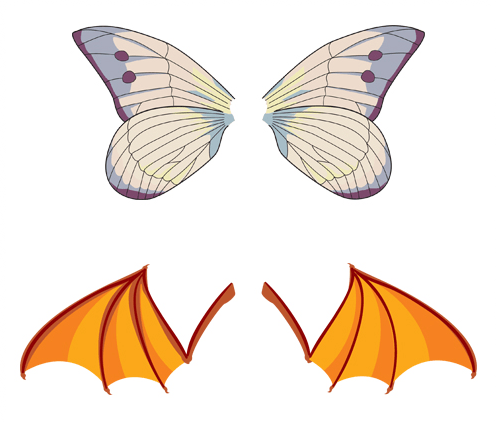
139.
Bird wings and butterfly wings are an example of
a)
Homologous structure
b)
Analogous structure
c)
Mimicry
d)
Camoflague
140.
Individuals with favorable traits survive, reproduce, and pass their traits onto their offspring. This is called
a)
Mutation
b)
Adaptation
c)
Evolution
d)
Natural Selection
141.
Some organisms that share a common ancestor have features that have different functions, but similar structures.  These are known as
a)
vestigial structures
b)
analogous structures
c)
homologous structures
d)
fossil structures
142.
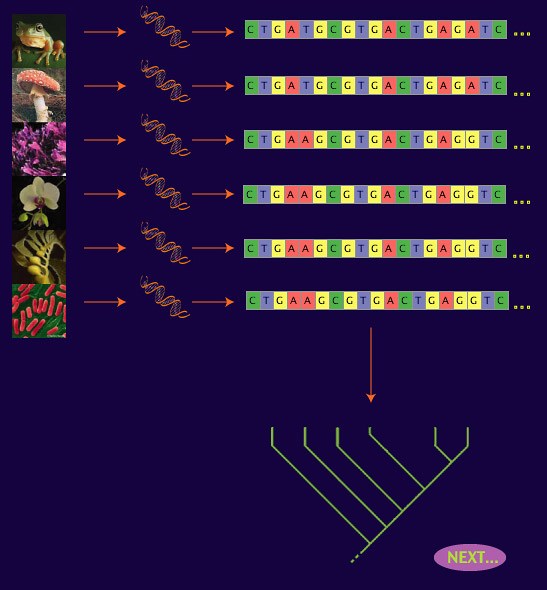
Two organisms that are closely related would have
a)
very similar DNA sequence
b)
exactly the same DNA sequences
c)
no proteins in common
d)
completely different DNA sequence
143.
Mutations are important because they bring about
a)
death of the organism in which they develop
b)
genetic variation needed for a population to evolve
c)
benefits for the individual, not for the population
d)
Hardey-Weinberg equilibrium within a population
144.
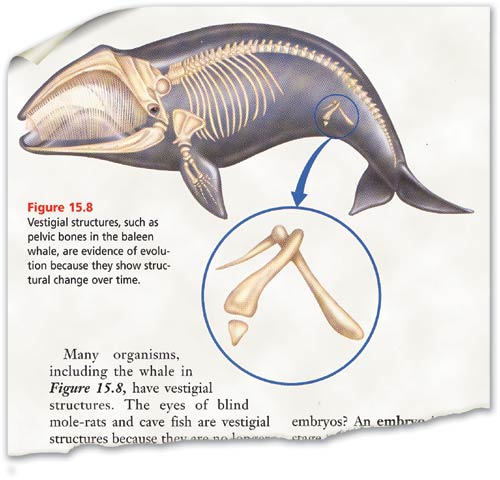
The hind leg bones in a whale are examples of
a)
homologous structures
b)
analogous structures
c)
fossils
d)
vestigal structures
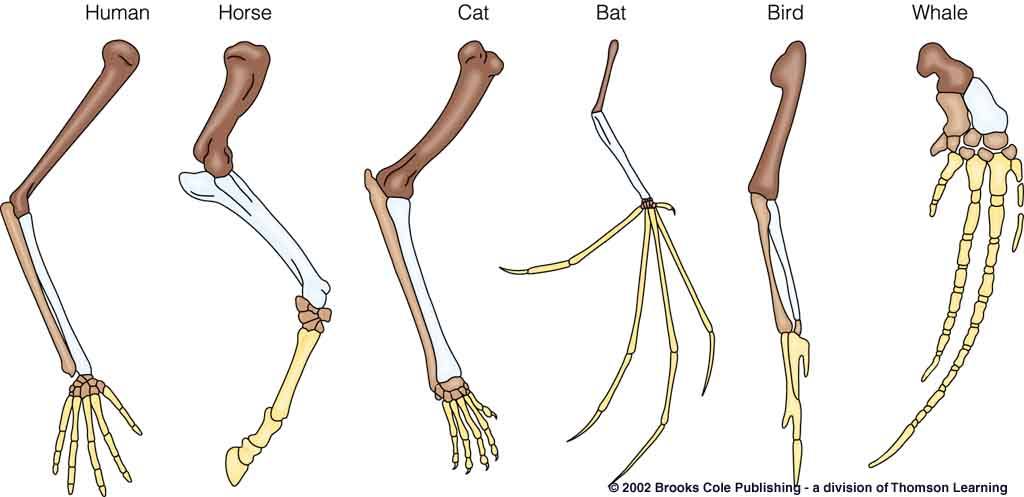
145.
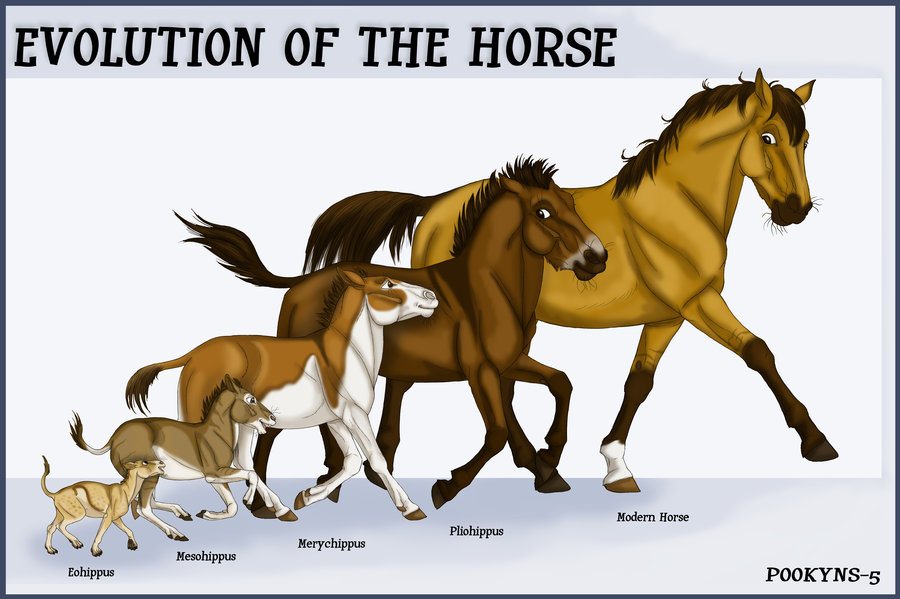
How would you describe this evolution?
a)
Homologous structure
b)
Analogous structure
c)
Structural adaption
d)
Functional adaption
146.
The structures shown are_________
a)
homologous
b)
heterologous
c)
analogous
d)
vestigial
147.
Organisms in this category get their energy from both plant and animal matter. 
a)
Producer
b)
Carnivore
c)
Detrivore
d)
Omnivore
148.
Environmental factors that keep a population from increasing. 
a)
Carrying Capacity
b)
Limiting Factors
149.
Which is NOT an example of a limiting factor.
a)
Climate
b)
Available Food & Water
c)
Available Space & Shelter
d)
Species color
150.
What is the longest stage of the cell cycle called?
a)
Cytokinesis
b)
M phase
c)
Interphase
d)
G1 Phase
151.
During what stage does the G1, S and G2 phases happen?
a)
Interphase
b)
M phase
c)
Mitosis
d)
Cytokinesis
152.
During what phase of the cell cycle does the cell grow?
a)
G1 phase
b)
S phase
c)
M phase
d)
Cytokinesis
153.
During what phase of the cell cycle does the cell prepare for mitosis?
a)
G1 phase
b)
S phase
c)
G2 phase
d)
M phase
154.
Put the following stages of mitosis in order: anaphase, prophase, metaphase, and telophase. 
a)
prophase, metaphase, telophase, anaphase
b)
prophase, anaphase, metaphase, telophase
c)
prophase, metaphase, anaphase, telophase
d)
prophase, telophase, metaphase, anaphase
155.
Put the following stages of the cell cycle in order: G2, S, G1, M. 
a)
G1, S, G2, M
b)
S, G1, G2, M
c)
G1, M, G2, S
d)
M, G1, S, G2
156.
Put the following in order: G2, G1, S, mitosis, cytokinesis. 
a)
G1, G2, S, Mitosis, cytokinesis
b)
G1, S, G2, Mitosis, cytokinesis
c)
G1, G2, S, cytokinesis, mitosis
d)
G1, S, G2, cytokinesis, mitosis
157.
Put the following actions in order: DNA replicates, cell grows, cell divides, cell prepares for mitosis. 
a)
DNA replicates, cell grows, cell prepares for mitosis, cell divides
b)
cell grows, cell prepares for mitosis, DNA replicates, cell divides
c)
cell grows, DNA replicates, cell prepares for mitosis, cell divides
d)
DNA replicates, cell prepares for mitosis, cell grows, cell divides
158.
Why would it be important to replicate DNA before a cell divides in mitosis or meiosis?
a)
In order for genetic information to be transferred into daughter cells.
b)
In order for the cell to be able to increase in size.
c)
In order for the DNA to be contained in the nucleus.
d)
In order for the cell to re-order the DNA sequencing in the new cells.
159.
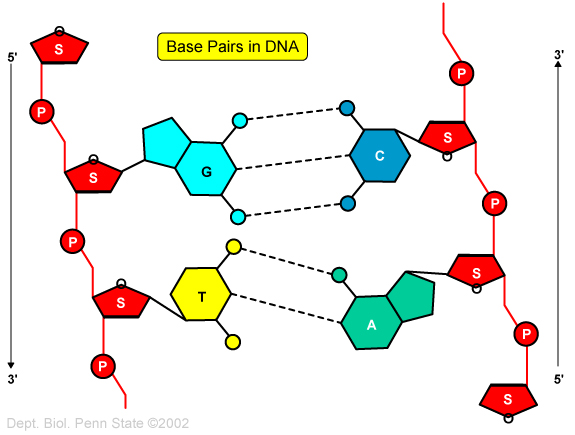
Which 2 molecules forms the sides (backbone) of the DNA ladder?
a)
deoxyribose and adenine
b)
deoxyribose and a hydrogen bond
c)
sugar and the nucleus
d)
deoxyribose (sugar) and phosphate
160.
A process in which DNA has the unique ability to make an exact copy of itself.
a)
Replication
b)
Translation
c)
Transcription
161.
The drawing shows the structure of what molecule?
a)
A DNA molecule
b)
A lipid molecule
c)
A carbohydrate molecule
d)
A protein molecule
162.

What are the type of bonds that hold together both sides of a DNA strand. (Hint- they can easily be broken)

a)

Hydrogen Bond

b)

Ionic Bond

c)

Covalent Bond

d)

Peptide Bond

163.

Type of bond that links together amino acids during protein synthesis

a)

Hydrogen bond

b)

Ionic Bond

c)

Covalent Bond

d)

Peptide Bond

164.

This is the type of succession that occurs when a pioneer species first appears in an ecosystem.

a)

Primary

b)

Secondary

c)

Tertiary

d)

Climax Community

165.

This type of succession can occur in an ecosystem after a wildfire.

a)

Primary

b)

Secondary

c)

Tertiary

d)

Climax Community