wayground logo

Free Printable Worksheets

Font size

S
M
L
XL
Worksheets

Evolution Review

Total questions: 169

Worksheet time: 3hrs 54mins

Name
Class
Date
1.
Which of the following ideas is supported by Darwin’s observation of local variation among tortoises in the Galápagos Islands? 
a)
artificial selection
b)
adaptation
c)
acquired characteristics
d)
tendency towards perfection
2.
Which statement is part of Darwin’s theory of evolution by natural selection? 
a)
More offspring are produced than can possibly survive.
b)
The organisms that are the fittest are always largest and strongest. 
c)
The number of offspring is not related to fitness.
d)
Acquired characteristics that are inherited are the cause of evolution.
3.

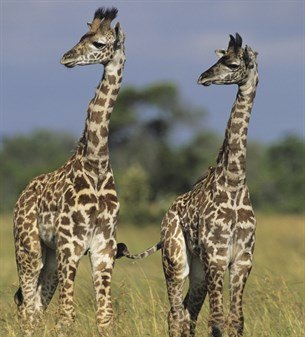
A change in a DNA sequence that affects genetic information

a)

mutation

b)

fitness

c)

transformation

4.

An inherited characteristic that increases an organism's chance of survival

a)

adaptation

b)

evolution

c)

fitness

5.

By looking at the genes of some animals we can determine which living species are most closely related to each other. This also reveals which species most recently diverged from their common ancestor.

Based on the partial gene segments shown, which pair of animals are genetically most closely related and therefore most recently diverged from their common ancestor?

a)

Chimpanzee and Mouse

b)

Rat and Mouse

c)

Rat and Chimpanzee

6.
Charles Darwin’s observation that finches of different species on the Galápagos Islands have many similar physical characteristics supports the hypothesis that these finches 
 
a)

have the ability to interbreed.

b)
acquired traits through use and disuse.
c)
all eat the same type of food.
d)
descended from a common ancestor.
7.

Images of the embryo and adult stages of three different organisms are shown.


Which of the following is the best conclusion that can be drawn from this evidence?

a)

Having similar embryos indicates that these organisms eat the same types of food.

b)

Having similar embryos indicates that these organisms live in a similar environment.

c)

Having similar embryos indicates that these organisms share a recent common ancestor.

d)

Having similar embryos indicates that a certain protein controls how many legs the adult organisms will have.

8.

Please select all correct answers that apply, based on the cladogram shown

a)

Sharks and Primates do not have a common ancestor.

b)

Crocodiles and Amphibians are more closely related than Birds and Sharks.

c)

Rodents and Rabbits do have Eggs with Shells.

d)

Sharks have more of the traits shown than of all of the other organisms.

e)

Birds have all of the shown traits that Sharks have, but Sharks do not have all of the shown traits that Birds have.

9.

If a new trait DOES help an organism survive, what may happen to it?

a)

It dies and its DNA is not passed on

b)

It survives and its DNA is passed on

c)

It changes its traits to adapt and survive

10.

In the table shown, the DNA found in five primate species was compared to the DNA found in humans. The number of sequence differences was recorded. Based on the data in this table, what inference could you make about these species compared to humans?

a)

Lemurs are most like humans.

b)

Gorillas are most like humans.

c)

None of the species are similar to humans.

d)

Only the lemur differs from humans in any way.

11.

Researchers discovered that the legs of birds are homologous to the feet of reptiles. Which claim is BEST supported by this fact?

a)

Birds do not require legs

b)

Birds and reptiles have a common ancestor

c)

They randomly developed the same structures

d)

Selection pressures have acted on birds, but not on reptiles

12.

Which type of rock are most fossils found?

a)

sedimentary rock

b)

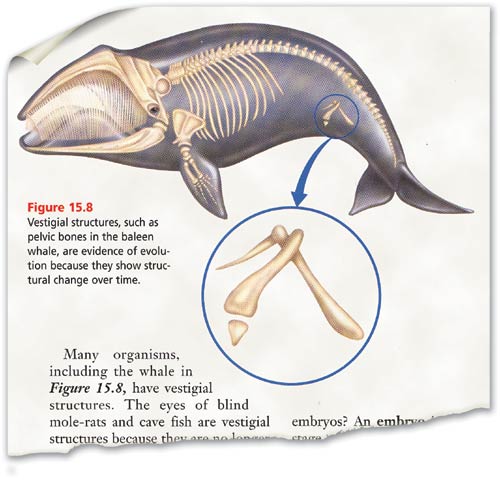
metamorphic rock

c)

igneous rock

d)

fossils

13.
Common ancestry relates to evolution because
a)
evolution only happens when there are common ancestors.
b)
Common ancestors make evolution happen more quickly.
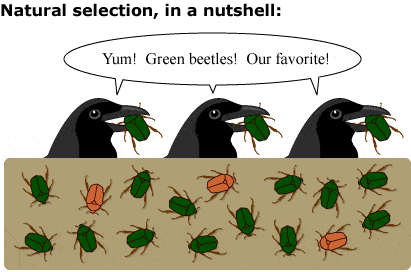
c)
evolution can never take place with common ancestors.
d)
the more two organisms have in common, the more recent is their common ancestor during their evolution.
14.

Various species show similar developmental patterns as embryos.

a)

DNA similarities

b)

Anatomical Homology

c)

Embryology

d)

All of the above

15.

What is reproductive success?

a)

A: The ability to produce healthy offspring that survive.

b)

B: The ability to reproduce.

c)

C: The ability to find a mate.

d)

D: The ability to not reproduce.

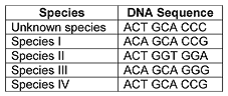
16.

Select ALL the parts of Natural Selection.

a)

overproduction

b)

evolution

c)

variation

d)

selection

e)

competition

17.

What happens to new traits that HELP organisms survive over time?

a)

They become MORE COMMON

b)

They become LESS COMMON

c)

They are EQUALLY COMMON

18.

What evidence presented here supports the argument that vertebrates and insects evolved from a common ancestor?

a)

The fact that the eye structures of vertebrates and insects are analogous

b)

The fact that the genes encoding the eye structures of vertebrates and insects are analogous

c)

The fact that the eye developmental genes of vertebrates and insects are homologous

19.

What does it mean that the eye structures and specific genes for those structures are analogous but the genes that control eye development are homologous?

Select all that apply

a)

It means vertebrates and insects had a common ancestor that possessed genes that coded for a primitive eye

b)

It means every species that descended from the common ancestor developed additional genes that made changed the structure of their eye

c)

It means that vertebrates and insects are not related to each other but developed eyes in a similar pattern

20.

Which of these statements does NOT help explain why the development of gene sequencing technology provided a turning point in evidence gathering related to this claim?

Select all that apply

a)

Before gene sequencing, the only evidence was the anatomical appearance of the eyes of vertebrates and insects

b)

Because the eye structures are so different in appearance, it was easy to conclude these groups had no evolutionary relationship with each other

c)

Gene sequencing shows that there are enough genetic similarities in the genes of eye development to suggest a very early common ancestor

d)

Gene sequencing shows that, since the genes encoding eye structures are analogous, that vertebrates and insects share no common ancestors

21.
Which of the following is a term for a group of similar organisms that can reproduce fertile offspring?
a)
individual
b)
population
c)
species
d)
fossil
22.
If an organism has a vestigial structure, that structure likely once had a function in a(n)
a)
close relative
b)
early ancestor
c)
unrelated organism
d)
embryological stage
23.
Mutations are important because they bring about
a)
death of the organism in which they develop
b)
genetic variation needed for a population to evolve
c)
benefits for the individual, not for the population
d)
Hardey-Weinberg equilibrium within a population
24.
Extinction can occur because of which of the following?
a)
All can be causes of extinction.
b)
Increased competition with other species
c)
New predators within the environment
d)
Loss of habitat and/or catastrophes
25.
Finches on the Galapagos Islands had different beaks in order to help them do what?
a)
Build nests
b)
Fight off predators
c)
Collect food sources
d)
Compete with rivals
26.
This scientist came up with the idea of natural selection.
a)
Jean Baptiste Lamarck
b)
Gregor Mendel
c)
Charles Darwin
d)
Thomas Malthus
27.
A remnant or trace of an organism from the past is called a _______.
a)
Ancestor
b)
Skeleton
c)
Fossil
d)
Imprints
28.
Inherited trait that helps an organism survive is a(n) __________.
a)
Fossil
b)
Adaptation
c)
Ancestor
d)
Natural selection
29.
Survival of the fittest or when favorable adaptations reproduce faster is called what?
a)
Evolution
b)
Adaptation
c)
Natural selection
d)
Fossilization
30.
This occurs when no more of a species is living.
a)
Fossilization
b)
Adaptation
c)
Extinction
d)
Natural selection
31.
Magda is a tall, 11 year old drummer. She has a scar on her right cheek. She is good at swimming. Which of her traits did Magda most likely inherit?
a)
height
b)
the scar
c)
ability to swim
d)
ability to play drums
32.
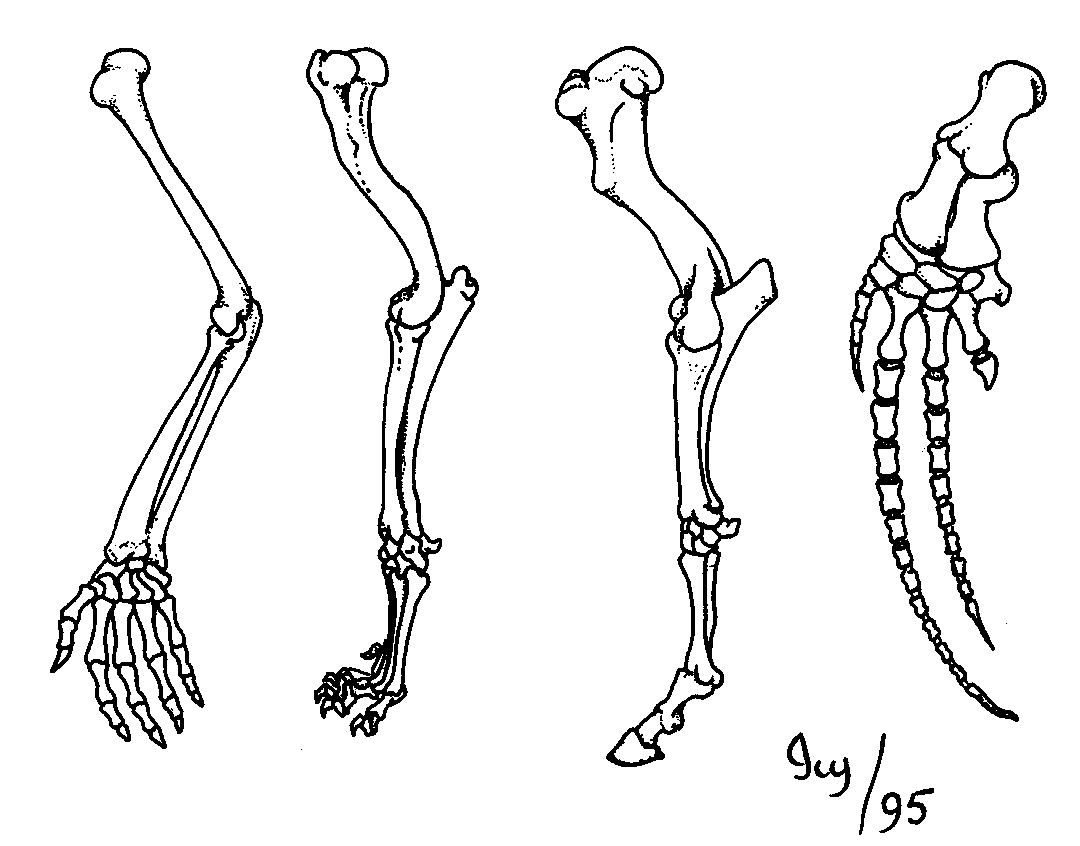
Structures with the same parts have different functions; suggests that organisms share a common ancestry
a)
vestigial structures
b)
homologous structures
c)
adaptive radiation
d)
fossil
33.
Which of the following is an example of a vestigial structure?
a)
the wings of a red-tailed hawk
b)
the hind limbs of a house cat
c)
the fins of sharks
d)
the tailbone of a human
34.
If species A and B have very similar genes and proteins, what is probably TRUE?
a)
species A and B share a relatively recent common ancestor
b)
species A evolved independently of species B for a long period
c)
species A is younger than species B
d)
species A is older than species B
35.
What would happen if the Giraffes never evolve?
a)
they would survive
b)
They would thrive
c)
They would become extinct
d)
They will find another source of food
36.
The ability of an organism to survive and reproduce in its specific environment 
a)
diversity.
b)
evolution
c)
adaptation
d)
 fitness
37.
Why are advantageous traits more likely to be passed onto offspring?
a)
Because they are more likely to survive and reproduce.
b)
Because they come from dominant alleles.
c)
Because they come from recessive alleles.
d)
Because the trait is an acquired phenotype.
38.
Farmers breed cows to produce high amounts of milk. This is an example of...
a)
Natural Selection 
b)
Variations in a species 
c)
Selective Breeding 
d)
inbreeding
39.
What is the term for a feature that allows an organism to survive in its environment?
a)
adaptation
b)
variation
c)
homologous structure
d)
vestigial structure
40.
a)
analogous structures
b)
homologous structures
c)
vestigial structures
d)
none of the above
41.
What is the process of which humans breed organisms for certain traits?
a)
artificial selection
b)
descent without modification
c)
inheritance of acquired characteristics
d)
natural selection
42.
Vertebrate embryos pass through similar stages of development is evidence for
a)
use and disuse
b)
homologous structures
c)
common ancestry
d)
acquired characteristics
43.
Individuals that are well adapted to their environment will survive and produce
a)
better traits
b)
stronger genes
c)
more offspring
d)
fewer mutations
44.
All the individuals of a species that live in a particular area are called a 
a)
group
b)
population
c)
variation
d)
fossil
45.
The remnant of an organ that had a function in an early ancestor is known as a(n)
a)
vestigial structure
b)
analogous structure
c)
homologous structure
d)
fossil structure
46.
Who said that geological forces acting today are the same ones that have been acting in the past?
a)
Lamarck
b)
Darwin
c)
Hutton
d)
Lyell 
47.
What is the study of the distribution of organisms around the world?
a)
geology
b)
biogeography
c)
paleontology
d)
geography
48.
Which of the following is a factor in natural selection?
a)
Individuals of species compete with one another to survive.
b)
All species are genetically diverse.
c)
Individuals better able to adapt to changes leave more offspring.
d)
All are correct 
49.
The fossil record provides evidence that 
a)
Fossils cannot be dated.
b)
All species were formed during Earth’s formation and have changed little since then.
c)
The fossilized species have no connection to today’s species.
d)
Older species gave rise to more-recent species.
50.
Individuals that are better able to cope with the challenges of their environment tend to  
a)
Decrease in population over time.
b)
Leave more offspring than those less suited to the environment.
c)
Leave fewer offspring than those less suited to the environment.
51.
Members of different subspecies
a)
Are considered to be entirely different species.
b)
Can no longer interbreed successfully.
c)
Differ genetically because of adaptations for different living conditions.
d)
Will never diverge to become different species.
52.
Starting in 1954, commercial fishers in the northwest Pacific were paid by weight, rather than by the individual fish, for pink salmon. The fishers increased the use of a type of net that selectively catches larger fish.  Which of the following effects did this change in fishing technique most likely have on the salmon population over the next 20 years?
a)
The average body size of the salmon population decreased significantly.
b)
The average body size of the salmon population increased significantly.
c)
The average body size of the males in the salmon population increased, and the females stayed the same.
53.
European rabbits were introduced to Australia in 1859. The rabbits reproduced rapidly in their new habitat, displaced other animals, and overgrazed vegetation. In an attempt to reduce the rabbit population, a virus was introduced in 1951. This virus is usually deadly to European rabbits. When the virus was first introduced, the rabbits died in large numbers, but the death rate decreased over time. Which of the following best explains the decrease in the rabbit death rate? 
a)
Young rabbits learned to avoid being infected with the virus.
b)
The lifespan of the virus was too short to affect rabbits over a long period of time.
c)
Natural selection favored rabbits that were resistant to the virus. 
d)
No correct choices.
54.
Which of the following statements gives the most likely explanation for the presence of two very similar species of squirrels living on opposite sides of the Grand Canyon?
a)
One squirrel traveled across the canyon and started a new population on the other side.
b)
One squirrel traveled across the canyon and interbred with a different population on the other side.
c)
Members of one single squirrel species were geographically separated by the formation of the canyon.
d)
Members of two different squirrel species migrated from two different places to opposite sides of the canyon. 
55.
The Asian shore crab invaded parts of the eastern coast of the United States about 15 years ago. The Asian shore crab preys on blue mussels. In the time since the Asian shore crab arrived, the average shell thickness of the blue mussel population has increased. Which of the following is the most likely reason that this increase in shell thickness has occurred? 
a)
Blue mussels with thick shells attract more crabs that mussels without thick shells.
b)
Blue mussels with thick shells grow in larger colonies than mussels without thick shells.
c)
Blue mussels with thick shells catch more food per day than mussels without thick shells.
d)
Blue mussels with thick shells survive and reproduce more successfully than mussels without thick shells.
56.
Some willow trees alter the chemical composition of their leaves when attacked by caterpillars. Compared to normal leaves, the chemically altered leaves are less nutritious and more difficult for caterpillars to digest.
 Which of the following is a likely effect of this ability to alter leaf composition?
a)
Willow trees with this ability will attract more caterpillars than other willow trees.
b)
Willow trees with this ability have a survival advantage over other willow trees. 
c)
More butterflies will lay their eggs on willow trees with this ability than other willow trees. 
d)
None are correct
57.
Structures that share a common ancestry or are similar because they are modified versions of structures from a common ancestor that contain the same basic bone structure are
a)
Not related.
b)
Not homologous. 
c)
Homologous.
d)
Young in origin.
58.
The process in which organisms with traits well suited to an environment are more likely to survive and to produce offspring is
a)
Natural Selection
b)
Origin of Species
c)
Genetic Principles
d)
Trait Mechanism
59.
Structures with no function that are remnants of an organism’s evolutionary past are
a)
Not visible organisms.
b)
Vestigial
c)
Young in origin
d)
Useful to the organism
60.
Comparing human hemoglobin of chimpanzees, horses, kangaroos, and chickens, reveal that humans have the fewest amino acid differences with 
a)
Kangaroos
b)
Horses
c)
chickens
d)
chimpanzees
61.
The hypothesis that evolution of a species occurs in periods of rapid change separated by periods of little or no change is called
a)
divergence
b)
gradualism
c)
punctuated equilibrium
d)
isolation
62.
The formation of new species is a process known as ____________________, which is typically the product of divergence. 
a)
gradualism
b)
speciation
c)
reproductive isolation
d)
subspecies
63.
The hypothesis that evolution of a species occurs gradually over time as a slow and constant process is known as
a)
speciation
b)
punctuated equilibrium
c)
gradualism
d)
microevolution
64.
Which of the following phrase best describes how Thomas Malthus influenced Charles Darwin’s idea of natural selection?
a)
The number of resources available can limit the survival of a species. 
b)
The survival of a species depends on the traits they acquire in their lifetime.
c)
The survival of a species is determined by how many offspring they leave behind.
d)
The Earth is constantly changing; seashell fossils were found at the top of the Andes Mountains. 
65.
Which of the following statements best reflects the evolutionary importance of the figures pictured?
a)
New genetic instructions have been disregarded in the evolution of vertebrates.
b)
Early in development, vertebrate embryos show no evidence of common ancestry.
c)
All adult vertebrates retain pharyngeal pouches (gills).
d)
The evolutionary history of organisms is seen in the way embryos develop.
66.
What is the term for a feature that allows an organism to survive better in its environment?
a)
variation
b)
adaptation
c)
homologous structure
d)
vestigial structure
67.
All the individuals of a species that live in a particular area are called a
a)
variation
b)
population
c)
fossil
d)
group
68.
The gradual change in species over time is...
a)
Evolution
b)
Nucleotide 
c)
Adaptation
d)
Natural Selection
69.
Darwin wrote that organisms with traits that are best suited to the environment will ________________
a)
increase in number
b)
become extinct
70.
What characteristic did Darwin observe about the finches on the Galapagos Islands?
a)
Their feathers 
b)
Genotypes 
c)
Their beaks
d)
Their body sizes
71.
The natural differences between individuals of a species is called ___________.
a)
adaptations
b)
natural selection
c)
variation
d)
fitness
72.
What is the advantage of having different shaped beaks?
a)
To look different from other species.
b)
To be able to eat the food readily available in the environment.
c)
To protect itself against predators.
d)
To protect itself against prey.
73.
The struggle for existence against other members of an organisms species is
a)
Competition
b)
Natural Selection
c)
gene flow
d)
genetic drift
74.
Darwin's expedition was called the Voyage of the _________.
a)
Titanic
b)
Beagle
75.
Remains of ancient organisms are called
a)
Extinctions
b)
Fossils
c)
Mutations
d)
Variations
76.
This picture is best known as
a)
homologous structures
b)
analogous structures
c)
vestigial structures
d)
embryology
77.
What do phylogenetic trees do?
a)
Help you visualize how species are related.
b)
Provide windbreaks in your yard.
c)
Provide DNA details.
d)
Show the distribution of organisms
78.
What do the similarities of the structures suggest?
a)
a common ancestor
b)
grow at different rates
c)
evolved slowly
d)
lived a long time
79.
Which two species are most related?
a)
B&C
b)
A&B
c)
A&C
d)
C&B
80.
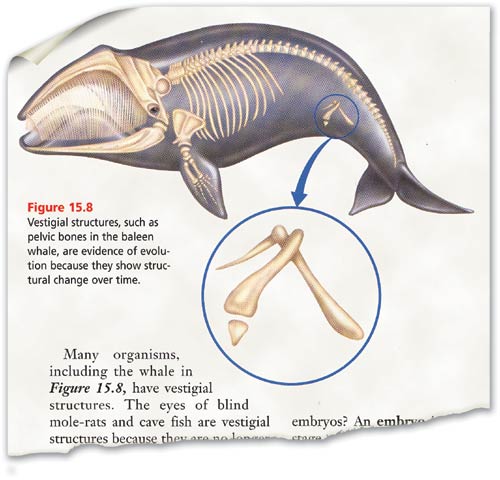
The magnified part of this picture is best known as
a)
vestigial structures
b)
homologous structures
c)
analogous structure
d)
adapations
81.
Looking at this chart humans are most related to which of the following? (You are looking for the one that has the lowest number)
a)
Gibbon
b)
Dog
c)
Mouse
d)
Lamprey
82.
Which type of cell came first?
a)
Eukaryotic
b)
Prokaryotic
c)
Protists
d)
Both Eukaryotic and Prokaryotic were about the same
83.
Which gas was believed to be absent from early Earth's atmosphere
a)
Hydrogen
b)
Nitrogen
c)
Oxygen
d)
Carbon
84.
These structures shown are ________.
a)
Homologous structures
b)
Analogous structures
c)
Structural adaptation
d)
Functional adaptation
85.
Which two organisms are the most closely related according to their DNA sequence?
Critter A--> ATG CTT AAC CCG TTA
Critter B--> ATC GTT TTC CCG TAA
Critter C--> ATG CTA TAG GCG TAA
a)
Critter A and B
b)
Critter A and C
c)
Critter B and C
d)
They are all equally related
86.
Which term refers to the process by which individuals that are better suited to the environment survive and reproduce therefore passing down their genes to their offspring? 
a)
Evolution 
b)
Variation 
c)
Adaptation
d)
Natural Selection 
87.
A well-tested concept that explains a wide range of observations is called a(an):
a)
hypothesis
b)
experiment
c)
cause and effect
d)
scientific theory
88.
The structures shown are_________
a)
homologous
b)
heterologous
c)
analogous
d)
vestigial
89.
The ability of an organism to survive and reproduce in its specific environment 
a)
diversity.
b)
evolution
c)
adaptation
d)
 fitness
90.

What is an inherited characteristic that helps organisms survive?

a)

Evolution

b)

Adaptation

c)

Natural Selection

d)

Extinction

91.

Evolution is...

a)

changes over time in populations

b)

natural process that passes favorable traits

c)

historical timeline of fossils

d)

the process in which an animal dies out

92.

Natural selection is the process that passes down ____________________ traits.

a)

Same

b)

Old

c)

Useless

d)

Favorable

93.

A mistake or change that occurs in the DNA sequence is called a ______________________.

a)

Extinction

b)

Speciation

c)

Mutation

d)

Genetic Variation

94.

The process in which an animal cannot reproduce any more and dies out is known as _________________________.

a)

Speciation

b)

Extinction

c)

Evolution

d)

Natural Selection

95.

When there is a difference in population based on genes, it is said to be a _______________.

a)

Mutation

b)

Speciation

c)

Extinction

d)

Genetic Variation

96.
Group of organisms capable of interbreeding and producing fertile offspring.
a)
species
b)
gene pool
c)
population
d)
homologous structure
97.
Gradual change in a population through adaptations over time.
a)
migration
b)
directional selection
c)
evolution
d)
speciation
98.
Group of organisms all of the same species, living in the same place at the same time.
a)
gene pool
b)
population
c)
species
d)
evolution
99.
A population moving from on place to another.
a)
speciation
b)
geographic isolation
c)
genetic drift
d)
migration
100.
Scientist who proposed the theory of Natural Selection.
a)
Hardy
b)
Weinburg
c)
Darwin
d)
Einstein
101.
A change in the genetic information (DNA).
a)
Mutation
b)
Speciation
c)
Migration
d)
Evolution
102.
mechanism by which individuals that have inherited beneficial adaptions produce more offspring on average than do other individuals 
a)
Fitness
b)
Natural Selection
c)
Evolution
d)
Artificial Selection
103.
differences in physical traits of an individual from the group to which it belongs
a)
Adaptation
b)
Variation
c)
Fittness
d)
Natural Selection
104.
measure of an organisms's ability to survive and produce offspring relative to other members of a population 
a)
Natural Selection
b)
Adaptation
c)
Fitness
d)
Variation
105.
Darwin referred to this as survival of the fittest. Over time, it results in changes in the inherited characteristics of a population. 
a)
Natural Selection
b)
Genetic Variation
c)
Survival of the Fittest
d)
Extinction
106.

Survival and reproduction of organisms the are best suited in their environment

a)

natural selection

b)

extinction

c)

biodiversity

d)

acquired characteristics

107.

Small differences of a particular trait

a)

gene pool

b)

mutation

c)

variation

d)

continental drift

108.

physical or behavioral characteristics that increase chances of survival/reproduction

a)

microevolution

b)

macroevolution

c)

adaptation

d)

allele

109.

Which of the following describes a population?

a)

the wild dogs and cats that live in the city

b)

four different species of fish living in a pond

c)

a group of Canadian Geese living in a pond on Shanley Dr.

d)

roses and sun flowers in a garden

110.

Variation in a population is caused by _________.

a)

mutations only

b)

recombination of genes as a result of sexual reproduction

c)

phenotypes changing more quickly than genotypes

d)

None of the above

111.

Natural selection acts ________.

a)

on heterozygous genotypes

b)

only on recessive alleles

c)

on phenotypes that are expressed

d)

on all mutations

112.

______________ was a naturalist who presented natural selection as a driving force behind evolution.

a)

Gregor Mendel

b)

Louis Pasteur

c)

Charles Darwin

d)

Shah Rukh Khan

113.

Which of the following conditions can influence the rate at which evolution takes place?

a)

genetic drift

b)

nonrandom mating

c)

migration

d)

All of the above

114.

Gene flow describes the ________.

a)

movement of genes from one generation to the next

b)

movement of genes from one population to another

c)

exchange of genes during recombination

d)

movement of genes within a population because of interbreeding

115.

Selection that splits a population into two groups

a)

directional selection

b)

disruptive selection

c)

polygenic selection

d)

stabilizing selection

116.

Speciation can occur as a result of geographic isolation because _________.

a)

members of a species can no longer find mates

b)

populations that live in different environments may be exposed to different selection pressures

c)

exchange of genes during recombination

d)

movement of genes within a population because of interbreeding

117.

The hypothesis that evolution occurs at a slow, constant rate is known as ______.

a)

gradualism

b)

slow motion

c)

natural selection

d)

adaptation

118.

Speciation that occurs over relatively short periods of time, followed by long periods of little or no change ___.

a)

directional evolution

b)

directional equilibrium

c)

punctuated equilibrium

d)

punctuated evolution

119.

Darwin referred to the process of promoting certain traits by selective breeding members with those traits as ___________.

a)

gradualism

b)

ancestral breeding

c)

artificial selection

d)

vestigial structures

120.

Which statement is true regarding evolution?

a)

It describes changes over many generations

b)

It is the same as natural selection.

c)

It only involves artificial selection.

d)

It occurs within a single generation of students.

121.

The dolphin and the shark are similar because they have

Both adapted to a marine (ocean) environment and they both have a similar body shape but they do not share a recent common ancestor. This is known as ___________.

a)

coevolution

b)

ancestral breeding

c)

artificial selection

d)

convergent evolution

122.

_______________ occurs when a population declines to a very small number then goes back up but results in a permanent loss of genetic diversity in the population (example: the Cheetah population)

a)

coevolution

b)

bottleneck

c)

archaeopteryz

d)

mutation

123.

The fossil of ___________ is an example of an Intermediate species providing evidence

that dinosaurs are the ancestors of birds.

a)

gradualism

b)

Archaeopteryx

c)

H.M.S. Beagle

d)

vestigial structure

124.

A ____________________ is a mistake in the DNA which can lead to an increase in the genetic variation in a population.

a)

mutation

b)

vestigial structure

c)

coevolution

d)

gradualism

125.

The reduced functionless hind leg bones in some whale species and the wings of the flightless bird called the Kiwi are

both an example of _____________________.

a)

vestigial structure

b)

bottleneck

c)

allopatric speciation

d)

genetic drift

126.

The great variety of dog breeds is a result of humans selecting and breeding dogs together with the desired trait over many generations is an example of ____________________.

a)

sexual selection

b)

artificial selection

c)

gradualism

d)

mutation

127.

Some moth and flower species have evolved so that they depend on each other in a relationship in which they both

benefit, this is called _________________.

a)

gradualism

b)

Archaeopteryx

c)

bottleneck

d)

coevolution

128.

The name of the ship in which Darwin sailed in 1826 was the ____________.

a)

H.M.S. Bottleneck

b)

H.M.S. Beagle

c)

The Mutant

d)

H.M.S. Tiger

129.

What word describes a trait that helps an organism survive in its environment?

a)

natural selection

b)

mutation

c)

camouflage

d)

adaptation

130.

Almost all adaptations started off as?

a)

selective breeding

b)

physiological

c)

structural

d)

mutations

131.

Why are advantageous or beneficial traits more likely to be passed onto offspring?

a)

Because those traits make them more likely to survive and reproduce.

b)

Because those traits come from dominant alleles.

c)

Because those traits come from recessive alleles.

d)

Because those traits are acquired phenotypes.

132.

Structures with the same bone structure but different functions (jobs) suggest that organisms share a common ancestry. What are these structures called?

a)

vestigial structures

b)

homologous structures

c)

adaptive radiation

d)

fossil

133.
Which of the following is an example of a vestigial structure?
a)
the wings of a red-tailed hawk
b)
the hind limbs of a house cat
c)
the fins of sharks
d)
the tailbone of a human
134.

Two organisms that are closely related but not clones would have...

a)

very similar DNA sequences

b)

exactly the same DNA sequences

c)

no proteins in common

d)

completely different DNA sequences

135.
What does Darwin's theory of evolution suggest?
a)
species change over time
b)
extinct species are not related to living species
c)
different species can interbreed
d)
animals that look alike are most closely related
136.

In a population of ladybugs, black bugs are more successful in escaping predators. Overtime, this gene becomes more popular in the population and the ladybug population loses its red color. This is an example of?

a)

Natural Selection

b)

Mutation

c)

Genetic Drift

d)

Gene Flow

137.

A lion gets chased off from his pride, then joins another pride. He mates with a lioness and make 6 lion cubs. This is an example of?

a)

Natural Selection

b)

Mutation

c)

Genetic Drift

d)

Gene Flow

138.

A hurricane wipes out half the population of blue jays in Cape Hatteras, North Carolina. This is an example of?

a)

Natural Selection

b)

Mutation

c)

Genetic Drift

d)

Gene Flow

139.
Modern whales developed their traits through natural selection.  What occurs during the process of natural selection?
a)
Organisms choose mates from other species to create new species
b)
Breeders selectively cross organisms with desired traits
c)
Only the fittest organisms can survive and reproduce
d)
Organisms remain exactly the same over time.
140.
Which statement best describes the process of evolution?
a)
Populations can survive in different locations on earth
b)
Environmental conditions limit the number of species on Earth
c)
Populations grow when resources are abundant
d)
The traits of a species can change over time
141.

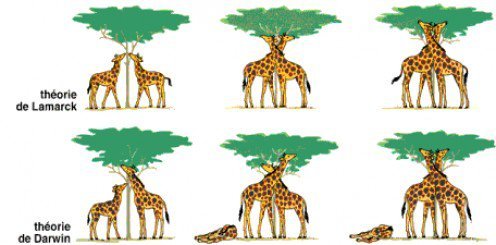
Lamarck’s ideas about evolution include the concept that differences among the traits of organisms happen as a result of

a)

increases in population size.

b)

the actions of organisms as they use or do not use body structures

c)

an unchanging local environment

d)

the natural variations already present within the population of organisms

142.
____________ believed that those organisms that were best suited for their environment would survive and pass on their beneficial traits to their offspring. 
a)
Darwin
b)
Lamarck
c)
Watson
d)
Mendel
143.

Based on the image, why are these similar looking birds now considered different species, even though they have a common ancestor?

a)

all these birds could swim, so they went to different continents to evolve

b)

their environments changed over time, so they had to adapt to those environment

c)

the birds acquired the new traits while trying to adapt to their new environments

d)

there were fewer species of birds in the past, now there are more

144.
The study of the early stages of development that is one evidence of evolution is:
a)
Homologous Structures
b)
Embryology
c)
Vestigial Organs
145.
Evolutionary Similarities that can be seen in organisms by comparing their DNA is called-
a)
Biochemical Similarities
b)
Embryology
c)
Vestigial Structures
d)
Homologous Structures
146.
Some organisms have genes that improve their ability to survive and reproduce. If the gene also help their offspring survive and reproduce, then which of the following will most likely increase?
a)
The number of genes in a species
b)
The frequency of genes in a population
c)
The frequency of genes in one individual 
147.
The opossum and kangaroo both incubate their young in a pouch. This provides evidence that they---
a)
are descended from a common ancestor
b)
Have very similar skeletal structures
c)
belong to the same species
d)
must range great distances to eat
148.
What do these three organisms have in common?
a)
They have stomachs of the same size
b)
They have DNA made up of the same components
c)
They have eyes that see the same ways
d)
They have brains that are the same size
149.
The white feathers of a snowy owl allow it to blend in with its environment during the winter months (snow). This is an example of ________________
a)
Species
b)
Environmental Change
c)
Adaptation
d)
Variation
150.
The concept of gene flow is demonstrated when a cow is driven off from its herd, joins another herd, and reproduces. When the cow contributes to the gene pool of the new herd, which of these will most likely increase?
a)
Environmental fitness
b)
Reproductive mutations
c)
Natural selection
d)
Genetic variation
151.
Genetic drift is a process that causes---
a)
The genetic makeup of an entire population to disappear
b)
The genetic makeup of an entire population to be altered
c)
Organisms to better adapt to their environment
d)
Organisms to have the same DNA as their parents
152.
The DNA of an advanced species of grasshoppers contains---
a)
New types of bases, all formed from mutations in a primitive species of algae
b)
Different bases than the DNA of a primitive species of algae
c)
The same bases as the DNA of a primitive species of algae
153.
Which of the following statements best explains why some mosquitoes survived after the first spraying?
a)
Some mosquitoes had a genetic mutation that made them resistant to the insecticide
b)
A.  All mosquitoes had a genetic mutation that made them resistant to the insecticide
c)
A.  None of the mosquitoes had a genetic mutation that made them resistant to the pesticide
154.
A trait that an organism expresses during its lifetime will only cause its species to become better adapted if the trait—
a)
A.  Results from isolation of the organism from the rest of the population 
b)
A.  Is caused by the genetic code that is present in the gametes of the organism
c)
A.  Causes a change in the environment surrounding the organism
d)
A.  Decreases the number of genes in the body cells of the organism
155.
A graph regarding the effect of agricultural bioengineering on insect pests is shown below How has natural selection affected species of insect pests?
a)
A.  Natural selection has not affected the number of species that are resistant to pesticides
b)
A.  Natural selection has rapidly increased the number of species that are resistant to pesticides
c)
A.  Natural selection has only affected the number of species that are resistant to pesticides
156.
The table shows the survival rate of two types of beetles in the same environment over a period of three years.  

Which statement about the beetles in this environment is best supported by the data?
a)
Brown beetles have a shorter life cycle than green beetles have
b)
Green beetles are more fit for their environment than brown beetles
c)
 brown beetles are undergo more unfavorable mutations than green beetles
157.
The similarities of the bones in the diagram provide evidence that---
a)
The organisms shown lived in the same natural envionrment
b)
The organisms shown may have developed from a common ancestor
c)
The organisms shown have the same genetic diseases
d)
All vertebrate species have identical forelimbs
158.
The green frog (Lithobates clamitans clamitans) is found in many parts of the United States. The table contains some information about this frog.
Why does the ability to lay 1,000 to 5,000 eggs increase the fitness of the species L. clamitans clamitans?
a)
A.  It increases the probability that some offspring will survive long enough to reproduce.
b)
It increases the chance of the recombination of alleles, leading to genetic drift in the population.
c)
A.  It increases opportunities for offspring to compete for limited resources.
159.
A prey population consists of individuals with a variety of running speeds.
The adaptation that allows some of these animals to run fast would be an example of natural selection if it helps them —
a)
survive and undergo mutations in their DNA
b)
produce offspring that run at average speeds
c)
reproduce and increase the frequency of their genes in the population
d)
lower the mortality rates of the population
160.
According to this data, the unknown bacterial species is most closely related to: 
a)
Species I
b)
Species II
c)
Species III
d)
Species IV
161.
Certain insects resemble (look like) the bark of the trees on which they live. Which statement provides the best explanation  for this resemblance? (Peppered Moths)
a)
The trees caused mutations in the insects
b)
Natural selection played a role in this protective coloration
c)
The insect camouflage so they developed this coloration
162.
All genes present in a population is called:
a)
Genetic Drift
b)
Gene Flow
c)
Gene Pool
163.
Darwin referred to this as survival of the fittest. Over time, it results in changes in the inherited characteristics of a population. 
a)
Natural Selection
b)
Genetic Variation
c)
Survival of the Fittest
164.
The similarities of organisms in which two areas numbered in the picture provide the best evidence for common ancestry?
a)
1 and 2
b)
3 and 4
c)
5 and 6
d)
7 and 8
165.
Which statement best describes a relationship between these organisms?
a)
Organism A was probably more primitive than Organisms B and C
b)
Organism A was probably more complex than organism B and C
c)
All of these organisms probably lived at the same time
166.
Scientist sometimes compare the limbs of these organisms to look for evidence of common ancestry.
These limbs provide evidence of common ancestry because they— 
a)
have the same basic structure
b)
are the same size
c)
are parts of mammals
d)
perform the same function
167.
Genetic variation can aid in the survival of species when the environment changes.
Which of the following is the best example of an organism with a genetic variation that could improve survival chances over time?
a)
an ant that is resistant to pesticide
b)
a cactus that has no spikes
c)
a mouse that has learned to avoid mouse traps
168.
Common baboons live on the savanna in breeding groups called troops. While females tend to stay with the troop, younger or less dominant males may leave to join a neighboring troop.
Which of these is a likely outcome of movement by young males? 
a)
Gene flow occurs between the populations
b)
relative genotypic frequencies reach a constant state
c)
Allele frequencies suddenly change
169.
which of the following is an example of a vestigial structure?
a)
the wings of a red-tailed hawk
b)
the hind limbs of a house cat
c)
the fins of sharks
d)
the wings of an ostrich