
 Worksheets
Ks3 Year 8 assessment practice
Total questions: 165
Worksheet time: 2hrs 50mins


The angle of incidence is _________ the angle of reflection


Which type of wave does light travel in?
Ocean wave
Compression wave
Transverse waves
Radio wave

In the diagram, which letter represents the angle of incidence?
A
B
C
D


What is the center of our solar system?
Earth
the moon
the Sun
the Milky Way
What keeps planets from flying off into outer space?
friction
gravity
magnets
Which lists the planets in the correct order from the closest to the Sun?
Mercury, Venus, Earth, Mars, Jupiter, Saturn, Neptune, Uranus
Mercury, Venus, Earth, Mars, Jupiter, Saturn, Uranus, Neptune
Mars, Venus, Earth, Mercury, Jupiter, Saturn, Uranus, Neptune
Mercury, Venus, Earth, Mars, Jupiter, Neptune, Saturn, Uranus
Which of the following is NOT a characteristic of an inner planet?
smaller
few or no moons
many rings
rocky
What separates the inner planets from the outer planets?
the asteroid belt
the Milky Way
the Sun
Earth's moon
Outer planets are colder than inner planets.
True
False
Which of the following is a characteristic of outer planets?
smaller
rocky
gaseous
no rings
The moon is considered a natural __________.
satellite
rock
star
planet
How long is a lunar (moon) cycle?
24 1/4 days
29 1/4 days
24 hours
19 days
How confident do you feel about the differences between inner and outer planets that we have covered over the past 2 days?
Very confident. Ready for the test!
I understand what we've learned and could list several differences between inner and outer planets.
I could say 1 or 2 differences between inner and outer planets.
I cannot list any differences between inner and outer planets.
What is the center of our Solar System?
Earth
the moon
the sun
All of the objects in our Solar System orbit the sun.
True
False
How many planets are in our Solar System?
7
8
9
The inner planets (Mercury, Venus, Earth, and Mars) are made of--
rocks
gas
helium
The outer planets (Jupiter, Saturn, Uranus, Neptune) are made of --
gas
rocks
water
In the mnemonic, what planet is associated with nachos?
Mercury
Neptune
Mars
In the mnemonic, what planet is associated with My?
Mars
Mercury
Venus
What is the third planet from the Sun?
Mercury
Venus
Earth
__________ is the amount of matter in an object. It does not change regardless of location
Weight
Mass
______________ is how heavy an object is. It is determined by the pull of gravity
Weight
Mass
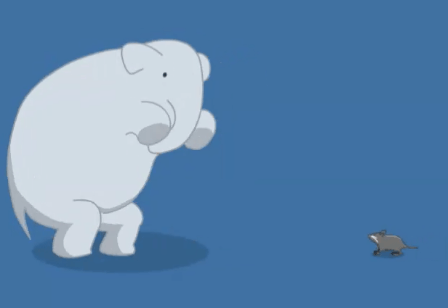
A young girl has a mass of 40.0 kg. What is her weight in newtons? g = 10 m/s2
400 N
392 m/s
4.08 N
4.08 m/s
A physical science text book has a mass of 2.2 kg. What is the weight on the Earth? g = 10 m/s2
22.00 N
21.56 kg
21.56 m/s
21.56 m/s2
A physical science text book has a mass of 2.2 kg on Earth. What is the mass on theMoon?
(a)
A physical science text book has a mass of 2.2 kg on Earth. On a different planet, the weight of the book is 5.5 N - Calculate the gravitational field of the planet ( your answer must have units)
(a)
A young girl has a mass of 40.0 kg on Earth and her weight is 400 N. She goes on a different planets and measures her weight - The scale reads 492 N - Her weight went up!!!! why?
She ate a lot during the trip
She has too many equipment
The garvity of the planet is greater
The gravity of the planet is smaller
A young girl has a mass of 40.0 kg on Earth and her weight is 400 N. She goes on a different planets and measures her weight - The scale reads 492 N -Calculate g of the Planet
(a)
The columns on the Periodic Table are known as..
periods
rows
groups
periodics
the rows on the periodic table are called..
groups
periods
columns
periodics
Metals are found on the _________ hand side of the periodic table
centre
right
left
top right
The elements in the middle of the periodic table are known as the __________ metals
reactive
unreactive
transition
vigorous
Group 1 elements are also known as ________
The noble gases
The Halogens
The Alkali metals
The transition metals
Which Group 1 element is the most reactive out of these..
lithium
sodium
potassium
When a metal reacts with water, what gas is produced?
oxygen
carbon dioxide
hydrogen
nitrogen
Group 7 elements are also known as the_________
Noble gases
Halogens
Transition metals
Alkali metals
In Group 7, reactivity __________ as you go down the group
increases
decreases
stays the same
Why does a displacement reaction occur?
when a metal is more reactive than the metal in the compound
when a metal is less reactive than the metal in the compound
when a metal bonds to oxygen
when a metal reacts with water
When two or more elements bond together a _______ is formed...
atom
molecule
compound
carbonate
Group 0 elements are also known as the____________
Halogens
Alkali metals
Noble gases
Transition metals
Magnesium + oxygen --> ______________
magnesium carbonate
magnesium dioxide
magnesium oxide
magnesium iodide
Sodium + iodine -----> _______________
sodium iodine
sodium iodide
sodium oxide
sodium carbonate
Lithium + water ------> lithium __________ + ____________
oxide + oxygen
hydroxide + hydrogen
hydroxide + carbon dioxide
hydroxide + oxygen
Which two of these words are properties of a metal?
sonorous
dull
shiny
poor conductor of electricity
What Group is oxygen in on the periodic table
1
3
6
7
Which group is magnesium in on the periodic table?
1
2
3
4
How many chlorine atoms are present in MgCl2
1
2
3
4
What is the name of the compound that has a formula of MgCl2
Magnesium chlorine
Manganese chlorine
Manganese chloride
Magnesium chloride

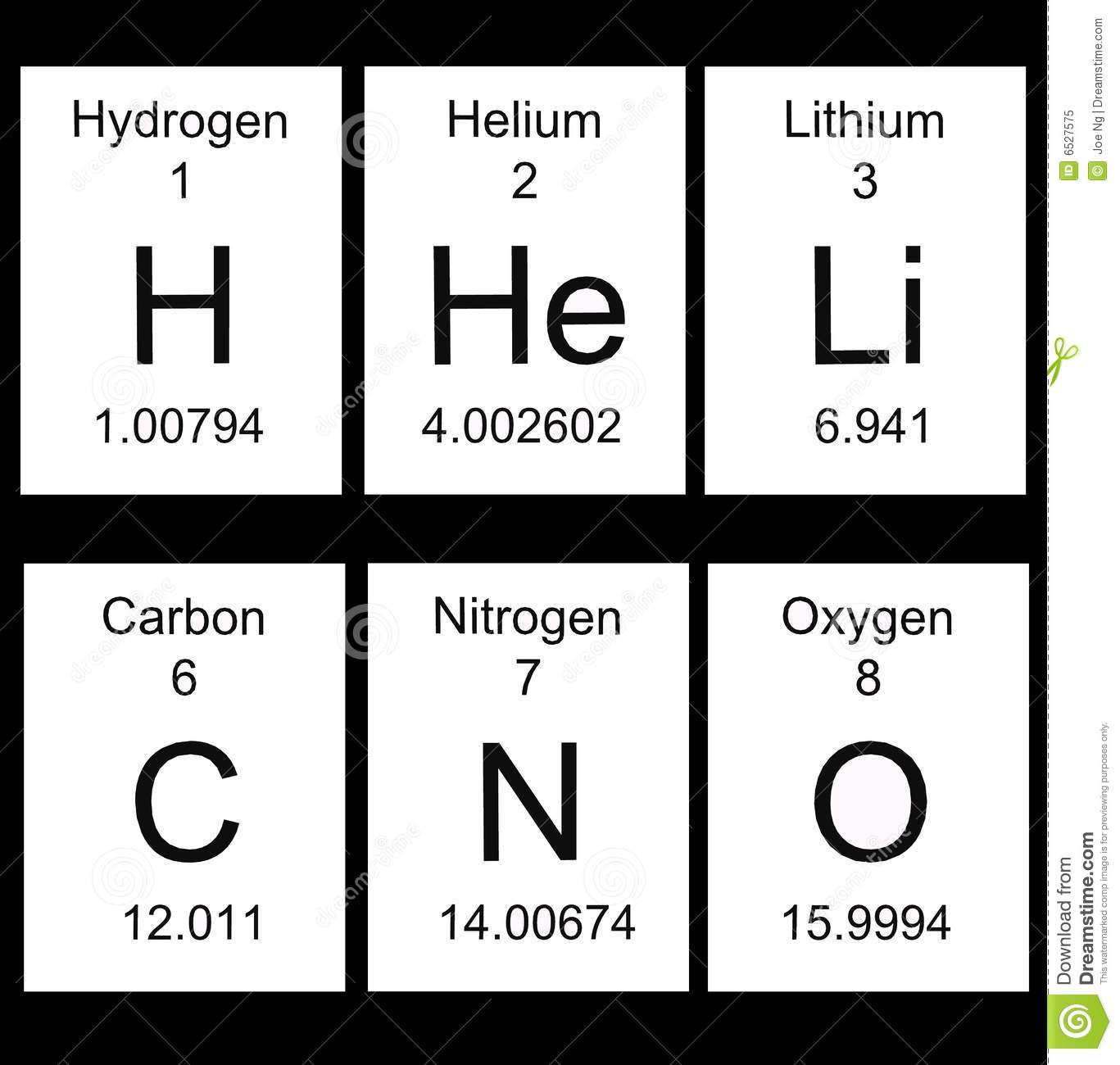
What element is circled?
Halogen
Helium
Hydrogen
Hallium

Group 2
Group 3
Group 4
Group 7

3
2
4

group
family
period
atomic number

Sulfur (S)
Selenium (Se)
Chlorine (Cl)
Carbon (C)

Chlorine
Flourine
Oxygen
Phosphorous

Sodium (Na)
Magnesium (Mg)
Yttrium (Y)
Boron (B)

Neon (Ne)
Chlorine (Cl)
Krypton (Kr)
Xenon (Xe)

Lithium
Magnesium
Beryllium
Potassium

Neon (Ne)
Helium (He)
Chlorine (Cl)
Krypton (Kr)

Radium (Ra)
Radon (Rn)
Stontium (Sr)
Lutetium (Lu)

Chromium (Cr)
Tungsten (W)
Molybdenum (Mo)
Tantalum (Ta)

group
period


Which group of the periodic table corresponds with the halogens.
Group 1A
Group 5A
Group 7A
Group 8A

Which group of the periodic table corresponds with the noble gases.
10
14
16
18

Which color on the image of the periodic table corresponds with the transition metals.
red
purple
yellow
orange

Which color on the image of the periodic table corresponds with the alkaline earth metals.
yellow
orange
purple
red
There are (a) periods in the periodic table. Period 1 has only two elements ( (b) and (c) ) , while periods 2 and 3 have 8 elements.
There are (a) numbered groups in the periodic table
Group 1A is called : (a)
Group 2A is called : (b)
Group 7A is called: (c)
Group 8A or 18 is called: (d)
All B groups are called: (e)
Magnesium is a (a) and oxygen is a (b)
How long is an adult’s small intestine?
22 feet
23 inches
23 feet
22 inches
Where does the digestive process begin?
rectum
small intestine
mouth
large intestine
What does mashed-up food mix with in the stomach?
Gastric juices
Villi
Bile
Minerals
Where is Bile made?
Large Intestine
Liver
Small Intestine
Gallbadder
What is the overall job of the digestive system?
Storing bile
Sending signals to and from the brain.
Absorbing nutrients into the body and ridding the body of harmful materials.
Ridding the body of urea
About how long does your food spend in the small intestine?
40 minutes
2 hours
4 hours
24 hours
What is the name of the tube that moves food from the throat to the stomach?
Bolus
Tongue
Saliva
Esophagus
Which organ helps with the absorption of nutrients?
Small Intestine
Large Intestine
Esophagus
Gallbladder


Put the parts of the digestive tract in order from start to finish.
Mouth
esophagus
stomach
small intestines
large intestines

This is an example of a -------- circuit.
Series
Parallel
Combination

This is an example of a -------- circuit.
Series
Parallel
Combination

In this circuit, the bulb(s) that light up are:
1 only
2 only
1 and 2
None of them
This circuit has more than one path. When one light goes out, the others stay on.
closed circuit
series circuit
parallel circuit
open circuit


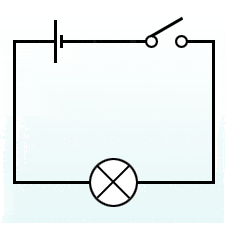

When a switch is OFF, the circuit is called an _________ ______________.
(a)

What is a circuit with several paths for electricity to flow?
conductor
series circuit
parallel circuit
open circuit

What is a circuit that only has ONE path for electricity to flow?
series circuit
closed circuit
parallel circuit
light bulb

To complete the circuit, a wire should be placed from —

When a switch is ON, the circuit is called a _________ ______________.
(a)
Define what a current is
the flow of charge
the speed of an electron
the amount of charge
the number of electrons
What is voltage?
the sum of potential energy between two points in a circuit
the speed of electrons as they flow around a circuit
the difference in potential energy between two points in a circuit
the opposition to the flow of current


The circuit shown contains a battery, a 6.0 Ω resistor and two meters X and Y.
One meter records current and one meter records potential difference.
meter X : 2.0 A
meter Y : 12.0 V
meter X : 2.0 V
meter Y : 1.0 A
meter X : 12.0 A
meter Y : 2.0 V
meter X : 12.0 V
meter Y : 2.0 A

In the image, the arrow represents the __________ flow of current
conventional
electron
alternating

The voltage of the cell (A) is
greater than the voltage across bulb C
less than the voltage across bulb C
the same as the voltage across bulb C
Bulbs C and D are identical. Which of the following is true?
the voltage across each bulb is identical
the voltage across C is greater than the voltage across D
the voltage across D is greater than the voltage across C

Compared to the voltage of the battery, the voltage of bulb C is
greater than the battery
less than the battery
same as the battery
Bulb C and D are identical. Compared to the voltage of D, the voltage of bulb C is
greater than bulb D
less than bulb D
same as bulb D
Compared to the current through the battery, the current through bulb C is
greater
less
same
What is the unit of Current?
Ohm, Ω
Amp, A
Volt, V
Joule, J
What is the unit of Potential Difference?
Ohm, Ω
Amp, A
Volt, V
Joule, J
What is the unit of Resistance?
Ohm, Ω
Amp, A
Volt, V
Joule, J
Which has a higher resistance?
Conductors
Insulators
Which has a higher resistance?
Conductors
Insulators

What is the resistance of a bulb which has a potential difference of 8V, and a current of 2A
6 Ω
4 Ω
2 Ω
10 Ω
What is the resistance of a buzzer which has a potential difference of 12V, and a current of 2A?
6 Ω
4 Ω
14 Ω
10 Ω
What is the resistance of a swtich which has a potential difference of 6 V, and a current of 0.5 A?
6 Ω
12 Ω
3 Ω
9 Ω

What device do we use to measure the current through a circuit?
(a)

What device do we use to measure the potential difference across a component?
(a)

If your voltmeter reading is 3V across bulb 1, and your ammeter reads 1A, what is the Resistance of bulb 1?
2 Ω
3 Ω
4 Ω
0.333 Ω

What is the resistance of bulb 2?
4 Ω
3 Ω
2 Ω
1 Ω

What is the total resistance of both bulbs?
6 Ω
4Ω
3Ω
7 Ω

