
 Worksheets
Common Assessment 4
Total questions: 160
Worksheet time: 3hrs 17mins


Which of the following can be determined by observing the embryos shown in the diagram

Vestigial structures
structures that perform a similar function but are not similar in origin
remnants of once-important structures that have slowly lost all or most of their function
features found in different organisms that share structural similarities but may have very different functions
preserved remains of an organism


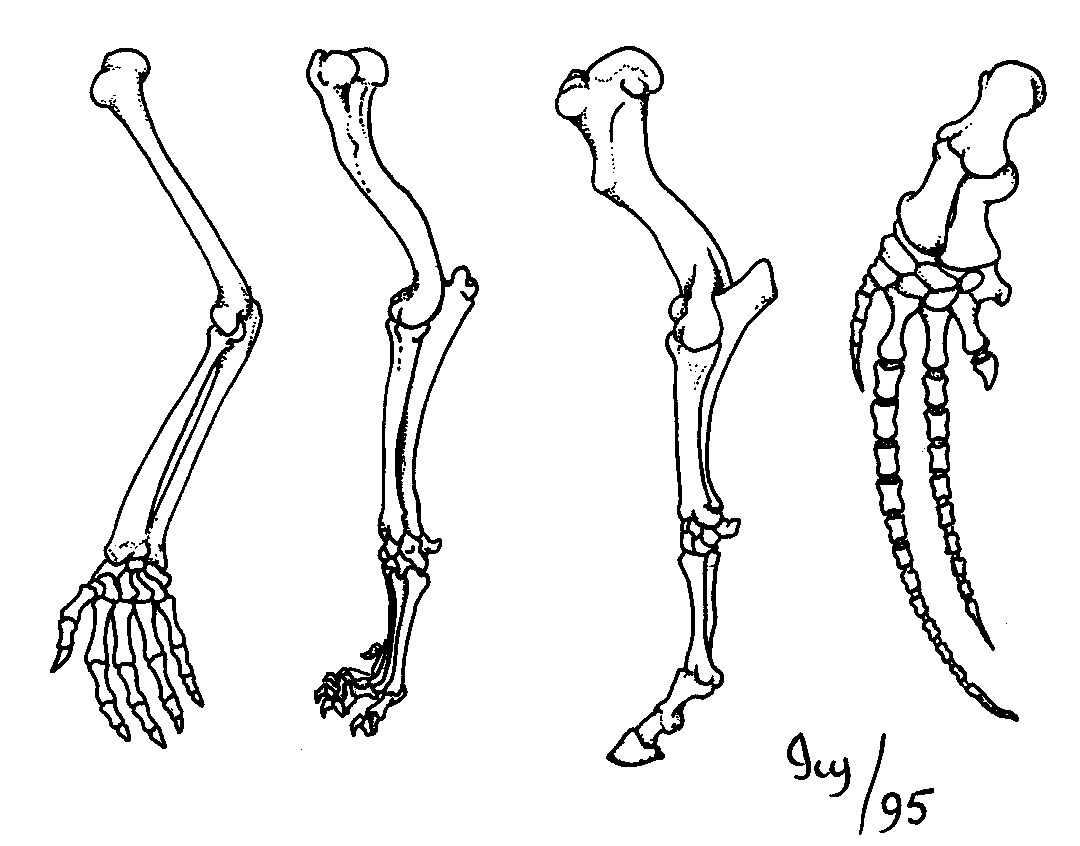
The picture shows a/an ___________
homologous structure
vestigial structure
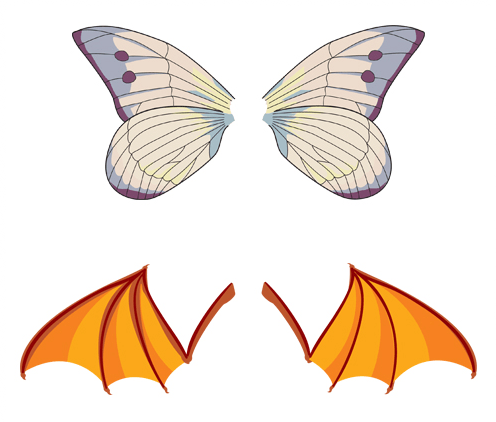
What is this an example of?
Homologous structure
Analogous structure
Vestigial organs
Functional adaption
Which of the following can be determined by observing the embryos shown in the diagram

What best describes the hind leg bones seen in the whale?
The bones are analogous structures to the fins of living fish.
The bones are vestigial structures that had a function in an ancestor.
The bones are homologous structures to the wings of butterflies.
The bones are fossil structures from an extinct ancestor.
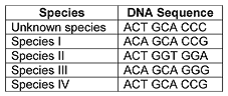


Whales are aquatic mammals that contain a pelvis (hip) bone. Even though it does not aid in its movement, the function must have been used by a common ancestor of the whale. Thus, the pelvis is referred to as a(n)
vestigial structure
analogous structure
homologous structure
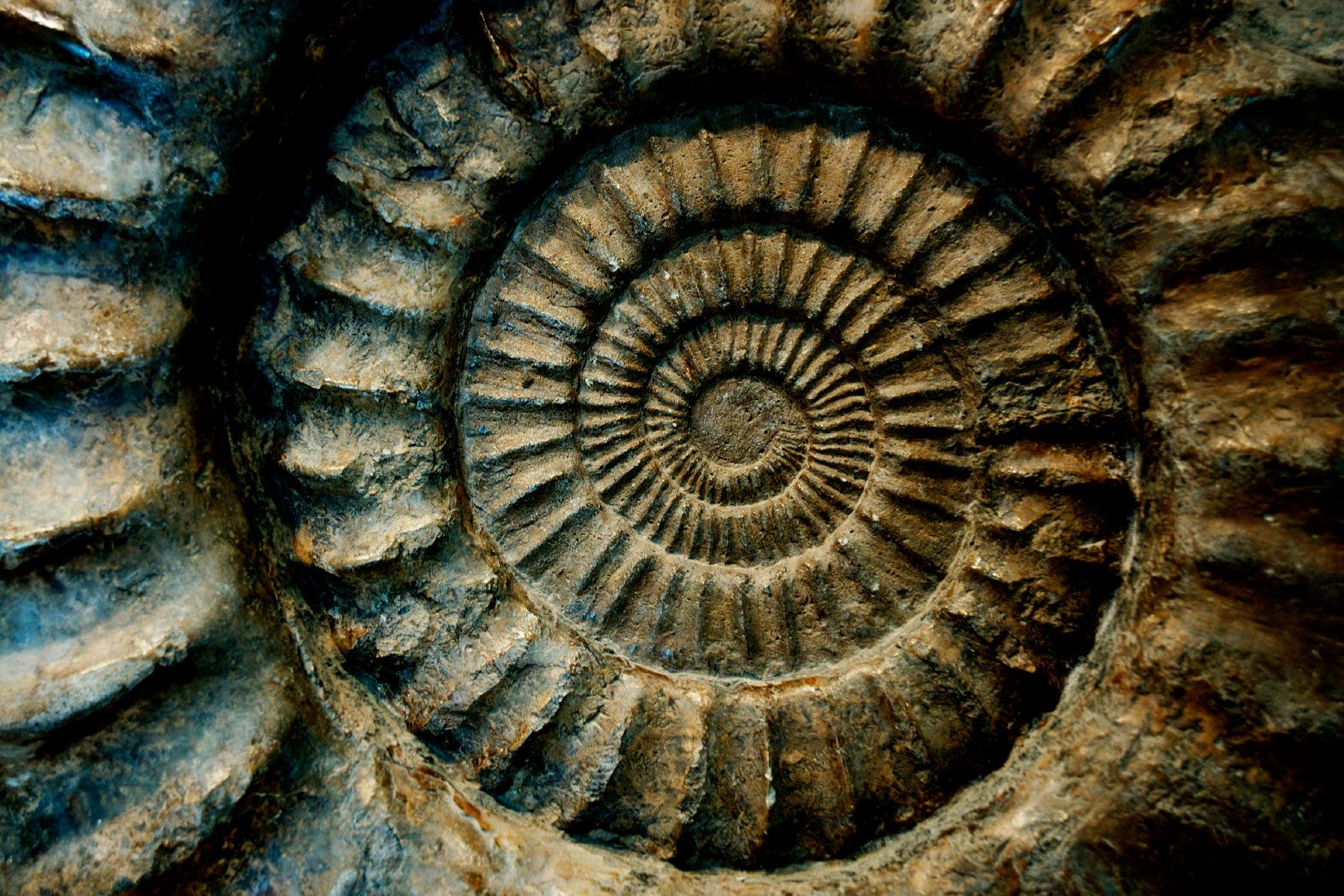

All of the genetic information found in a population.
population
genetic drift
evolution
gene pool
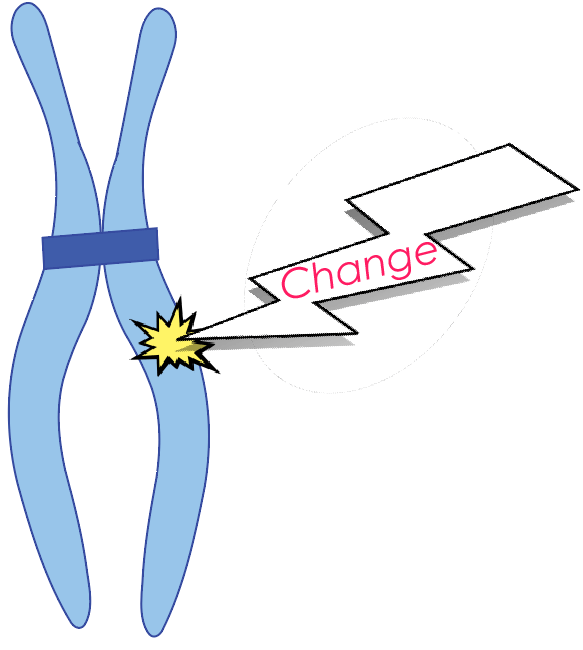
A change in a gene, group of genes or chromosome that results in a change in the proteins
Replication
Mutations
Translation
Transcription
Mutations can benefit humans because they can:
Cause illness
Make an organism more suited to live in its environment.
Make organisms live shorter lives
Cause organisms to grow extra limbs.
Mechanism of evolution responsible for a random change in a population is known as:
Speciation
Selection
Genetic Drift
Variation
Situation in which allele frequencies change as aresult of the migration of small subgroup of a population is known as:
founder effect
genetic bottleneck
random mating
natural selection
The formation of new species
Speciation
Evolution
Natural selection
Mutations
Which of the following is NOT an example of natural selection?
People selectively breeding hamsters.
Insect populations developing resistance to certain pesticides.
Bacteria becoming resistant to antibiotics.
Male birds of certain species developing colorful feathers to attract female mates.

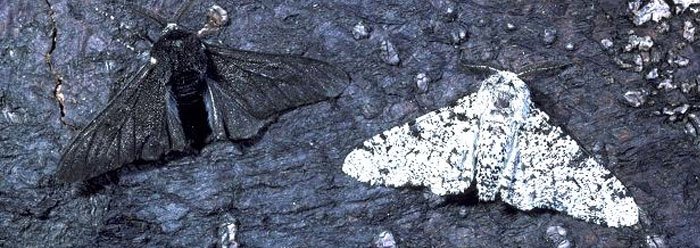
What characteristic did Darwin observe about the finches on the Galapagos Islands?
Their feathers
Genotypes
Their beaks
Their body sizes
What is a change in an organism that allows for it to survive in its environment?
homologous
vestigial
variation
adaptation
When individuals choose traits possessed by the opposite sex it is called…
Mutation
Gene Flow
Genetic Drift
Sexual Selection
Genetic drift is more likely to happen in...
aquatic populations
small populations
terrestrial populations
older populations

Which of the following is an example of the bottleneck effect?
Cheetah populations reach their lowest levels with reduced diversity and as they rebound are so genetically similar they appear to be inbred.
Affected individuals with blue skin can trace their ancestry back to one of the first settlers in the region.
The environment of a fox population changes and over time foxes who are white survive and pass on their genes to their offspring.
Humans choose two dogs they like the characteristics of and breed them together.

Which of the following is an example of the founder effect?
Humans choose two dogs they like the characteristics of and breed them together.
Affected individuals with blue skin can trace their ancestry back to one of the first settlers in the region.
The environment of a fox population changes and over time foxes who are white survive and pass on their genes to their offspring.
Cheetah populations reach their lowest levels with reduced diversity and as they rebound are so genetically similar they appear to be inbred.
Mutations are important because they bring about
death of the organism in which they develop
genetic variation needed for a population to evolve
benefits for the individual, not for the population
changes in genotype, but not phenotype
Why is competition important for natural selection?
It shows which variations are more successful, allowing the organisms with those variations to survive.
It causes organisms, regardless of which traits they have, to die out, reducing the population size.
It causes organisms to get stronger due to having to outcompete other species.
Competition is not important for natural selection.
A flash flood carried a raft of Amazon ants away from their original population. There is enough distance between the two groups, that they will never meet in nature again. What type of isolation is this?
Behavioral isolation
Temporal isolation
Geographic isolation

You are researching reptiles and encounter two garter snakes on a hike. Both snakes are brown and white, but their patterns are slightly different. You bring them back to the lab for further study. What is the BEST way to determine if these two are the same species?
Their appearance - if they look similar, they must be the same species
Their adaptations - if they have the same traits, they must be the same species
A breeding experiment - if they are able to produce offspring, they must be the same species
DNA testing - if their DNA/genes are the same, they must be the same species
Temporal isolation is different from behaviorial isolation because, temporal isolation means...
Organisms are not reproducing at the same time
Organisms are physically separated
Organisms are not attracted to the mates attraction signals
If a population becomes isolated from other populations of the same species and then genetic differences start to occur, what happens?
Competition
Extinction
Speciation
Fossils form

What type of isolation has occurred in the image?
Geographic isolation
Temporal isolation
Behavioral isolation

What type of isolation has occurred in the image?
Geographic isolation
Temporal isolation
Behavioral isolation
The moderate trait is favored, and eventually the extremes disappear. Examples include gall flies and humans.
Directional
Stabilizing
Disruptive
The two extreme traits are favored with the moderates eventually disappearing. Examples include African Finches.
Directional
Stabilizing
Disruptive
A species is sent to the brink of extinction, but manages to bounce back. This results in the genes of individuals being very similar.
Genetic Drift
Bottleneck Effect
Founder's Effect
A subset of a greater population establishes a new population that is often remote from the original population.
Genetic Drift
Bottleneck Effect
Founder's Effect
The most common evolutionary mechanism comes about through geographic isolation. Other isolations may come in to prevent gene flow.
Allopatric
Parapatric
Sympatric
A species is born within the home range of a parent species, likely due to some sort of polyploidy.
Allopatric
Parapatric
Sympatric
Two neighboring populations diverge into distinct species while still remaining in contact at a common border.
Allopatric
Parapatric
Sympatric
Organisms whose cells do not have a nucleus are called _____.
Eukaryotes
Multicellular
Unicellular
Prokaryotes
An organism made of only one cell is called _____ .
Eukaryotic
Mutlicellular
Monocellular
Unicellular
The densely packed area of a cell that has the DNA and controls the cell's activities.
Chloroplast
Golgi Bodies
Nucleus
Mitochondria
When an organism has cells with a nuclues, they are called _______.
Archaea
Bacteria
Prokaryotes
Eukaryotes
What is the basic unit of an organism?
Chloroplast
Organelle
Organ
Cell
What kind of organism is made of many cells, each with a special function?
Multicellular
Eukaryotic
Prokaryotic
Unicellular
Name the outermost layer of a plant cell that protects and supports it.
Cell Membrane
Cell Wall
Golgi Apparatus
Cytoplasm
What surrounds the cytoplasm of all cells and controls what goes in and out of the cell?
Cell Membrane
Cell Wall
Cellophane
Cellulose
What fluid can be found in cells that holds organelles?
Blood
Plasma
Chlorine
Cytoplasm
Which organelle converts energy found in food into a form that cells can use?
Mitochondria
Ribosomes
Nucleus
Nucleolus
Which plant organelle transforms light into glucose to use as food?
Mitochondria
Vacuoles
Chloroplasts
Nucleus
What organelle is used as storage? Hint: plants have a large one that filled with water.
Vacuole
Cell
Cell Wall
Ribosome
Which of the following are components of cell theory?
Cells must contain DNA
All living things are made of cells
Cells only come from other cells
Cells are the basic unit of life
What are the small structures inside of cells that carry out specific functions called?
Animalcules
Organelles
Tissues
Organs
Where does photosynthesis occur?
Chloroplast
Glucose
Nucleus
Mitochondria
What is the process in which a plant makes usable energy?
ATP
Cellular Respiration
Oxygen
Transmission
Plants and animal cells have...
Mitochondria and chloroplasts
Nucleus and chloroplast
Cell wall and chloroplast
Mitchochodria and cytoplasm
Which organelle is the command center for eukaryotic (plant and animal) cells?
Cell wall
Nucleus
Mitochondria
Lysosome
What is the difference between a prokaryotic cell and a eukaryotic cell?
Prokaryotes do not have a nucleus or organelles, but a eukaryotic cell does
Eukaryotic cells do not have a nucleus or organelles, but prokaryotes do
Which of the following is a eukaryotic cell?
Bacteria
Plant
Plant and animal
Animal
What is the purpose of the nucleus?
It is the command center, contains DNA, and cell division
It protects the cell
It stores energy for the cell
It gets rid of waste in the cell
What is the difference between mitochondria and chloroplast?
Mitochondria produces energy and chloroplasts breaks down energy
There is no difference. They are the same.
Mitochondria breaks down energy from food and chloroplasts produce energy from sunlight.
Mitochondria contains DNA and chloroplasts are green
The outermost layer of a plant cell and animal cell is...
Plant cell - cell membrane, animal cell - cell wall
Plant cell - cell wall; animal cell - cell membrane
Plant and animal cell - cell wall
Plant and animal cell - cell membrane
"Post office" of the cell that packages proteins and fats:
ER
Golgi Body
Nucleus
Cytoplasm
What does a plant cell have that an animal cell doesn't have?
Cell Membrane and Cell Wall
Cell Wall and Mitochondria
Cell Wall and Nucleus
Cell Wall and Chloroplast
What is the jelly-like substance that keeps the organelles floating?
Cell Membrane
Nucleus
ER
Cytoplasm
Which organelle holds the cell together? (found in both an animal and plant cell)
Cell Wall
Nucleus
Cell Membrane
Ribosome
What are the "protein-makers" of a cell?
Ribosomes
Mitochondria
ER
Golgi Body
What is binomial nomenclature?
system of 3 names
system of 2 names
the names of the kingdoms
the levels of classification


Scientists group similar organisms together through a process called .....
identification
Estimation
Classification
Organization
What is the genus name here:
Canis lupus
Canis
lupus

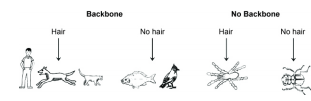
According to the classification key above, which pair of animals could be classified as mammals?
humans and dogs
birds and fish
birds and fish
cats and birds


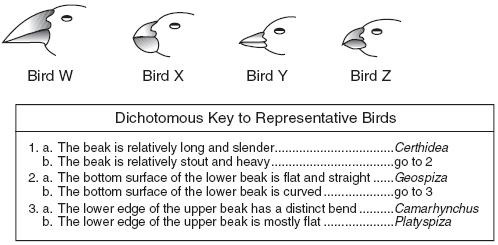


What would the scientific name of this organism be?
Kingdom: Animalia
Phylum: Chordata
Class: Mammalia
Order: Carnivora
Family:Canidae
Genus: Canis
species: mesomelas
Mammalia carnivora
Canidae mesomelas
Canis mesomelas
Animalia chordata

According the the dichotomous key given, what trait separates M&Ms from KitKats?
having caramel
shape of candy
number of candies
having nuts
Name them:

Term given to describe the 2 name naming system is:
dichotmous key
binomial nomenclature
2 scientific names
binomial key
What are the 6 kingdoms?
phylum, class, Order, Family, Genus, Species
Humans, Plants, Protists, Archaea, Fungi, Bacteria
Trees, Animals, Protists, Archaea, Fungi, Bacteria
Plants, Animals, Protists, Archaea, Fungi, Bacteria
I am an autotroph
I am multicellular
What am I?
I am eukaryotic
I reproduce sexually
I am multicellular
What kingdom do I belong to?
I am prokaryotic
I am found in extreme ecosystems
What kingdom do I belong to?
What kingdom-Prokaryotic-lives in hot,salts environments
plants
animals
archaebacteria
eubacteria
What kingdom- eukaryotic-multi-celled-heterotrophic
plant
animal
protista
fungi
What kingdom- prokaryotic-single celled-found on humans & other surfaces
eubacteria
archaebacteria
protists
fungi

MUSHROOMS ARE IN WHAT KINGDOM
PLANT
ANIMAL
FUNGI
PROTIST

AMOEBA-PARAMECIUM-EUGLENA-DINOFLAGELLATES BELONG TO WHAT KINGDOM
PLANT
PROTIST
FUNGI
ANIMAL
ARCHAEBACTERIA

STREP THROAT IS CAUSED BY MEMBERS OF WHAT KINGDOM
EUBACTERIA
ARCHAEBACTERIA
PROTIST
FUNGI
HAS A CELL WALL
FUNGI-ANIMALS
SOME BACTERIA-FUNGI
SOME BACTERIA-FUNGI-PLANTS
SOME PROTIST-ANIMALS


What is the role of the muscular system?
Support the body
Digest food and absorb nutrients
Movement
Transport oxygen
The excretory system is for removing solid waste and liquids?
True
False
What is the main function of the circulatory system?
Movement
to remove waste
action and senses
Transport blood around your body
The __________ system is responsible for all these jobs:
Making blood cells, supporting your body, allowing movement, storing minerals, and protecting your organs
Muscular
Skeletal
Circulatory
Excretory
What is the basic structural and functional unit of living organisms?
cells
atoms
molecules
organelles
What does "function" mean?
How fast something moves
What something does
A measurement
cells that make up an organ.
function
muscle
skin
tissue
You had a lot of water to drink earlier, now you realize need to use the bathroom. Which body system is NOT involved?
Skeletal System
Excretory System
Digestive System
Circulatory System

How could the model of the digestive system be modified to show an interaction of the Digestive and Muscular systems?
Show nutrients entering bloodstream from small intestine
show food being moved through the esophagus (peristalsis)
Show saliva acting on food in the mouth
show digestive enzymes being released in the stomach
Which system transports nutrients and oxygen to the parts of the body?
Respiratory System
Digestive System
Circulatory System
Integumentary System
Which systems are at work when you are sweating?
Circulatory and Respiratory
Integumentary and Nervous
Muscular and Skeletal
Respiratory and Integumentary
Which system takes in information through the 5 senses?
Nervous
Respiratory
Circulatory
Digestive
Reorder the following from simplest to most complex.
Organelle
Cell
Tissue
Organ
Organ System
Drag the images to match the labels

Cell

Tissue

Organ

Organ System

Organism
Someone is cold and shivers. Which systems are at work together?
Respiratory, Skeletal, and Integumentary
Nervous, Integumentary, and Muscular
Nervous, Digestive, and Circulatory
Match the organ system with its function(s).
Integumentary System
Protects the body and helps control body temperature
Skeletal System
Provides support, protects organs, helps the body move
Respiratory System
Takes in oxygen and removes carbon dioxide
Digestive System
Breaks down food, absorbs nutrients, and removes waste
Match the organ system with its function
Nervous System
Controls the body
Circulatory System
Transports oxygen and nutrients through the body
Muscular System
Helps move the body
Excretory System
Removes waste
The Circulatory system will work with ___ to help pump oxygenated blood while running.
Digestive
Respiratory
Excretory
Muscular
Which shows circulatory and respiratory system working together?
Nutrients absorb into blood from intestines
Lungs expand and contract due to diaphragm
Gases exchanged in lungs are carried by blood
New red blood cells are generated in the marrow of bones
Specialized tissues that perform a task.
Cell
Tissue
Organ
Organ System
An example of a(n) _______________ is the brain, spinal cord,and nerves working together.
Tissue
Organ
Organ System
Organism

