wayground logo

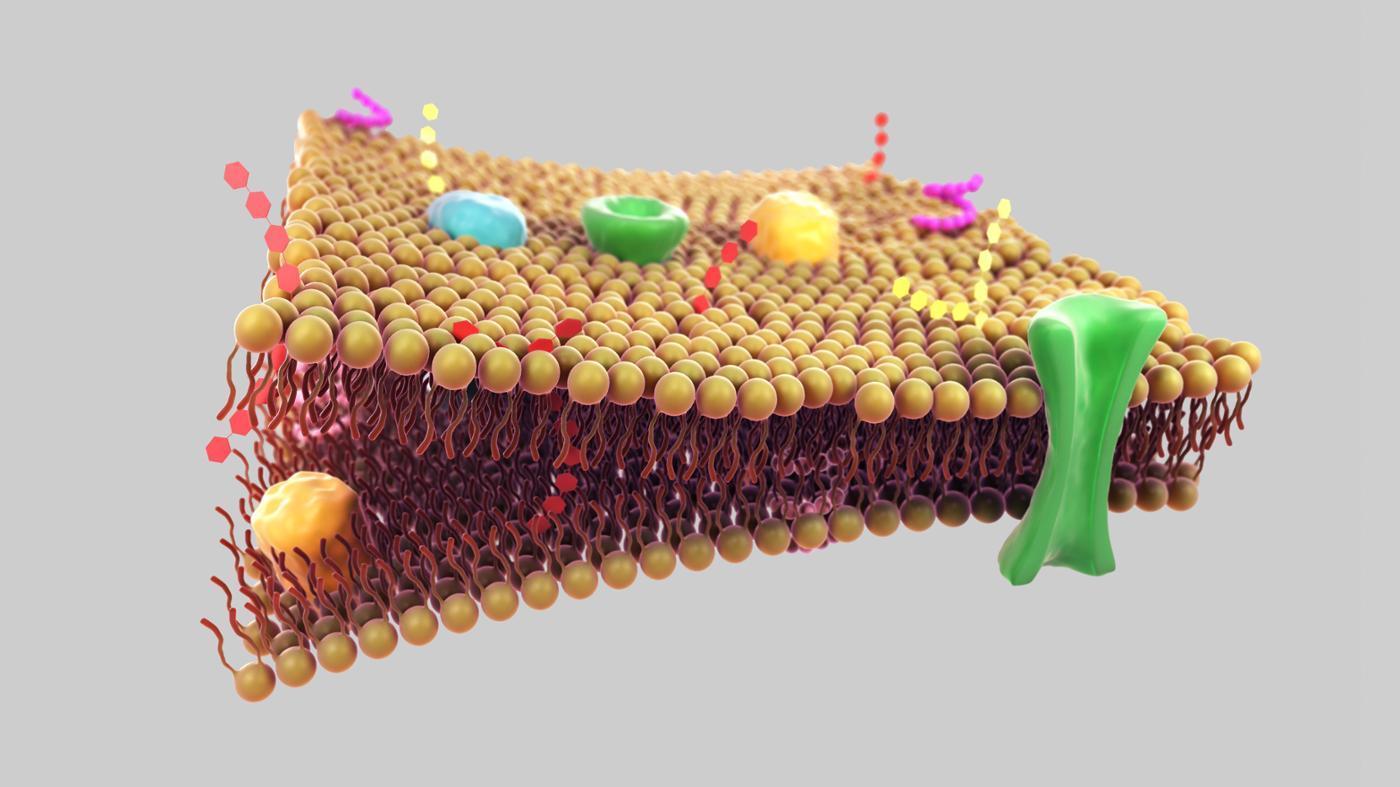
Free Printable Worksheets

Font size

S
M
L
XL
Worksheets

Honors Biochem, Carbs, Lipids, N.A.

Total questions: 160

Worksheet time: 2hrs 25mins

Name
Class
Date
1.
What elements make up carbohydrates?
a)
Carbon, hydrogen, nitrogen, oxygen
b)
sulfur, carbon, hydrogen
c)
glucose and fructose
d)
carbon, hydrogen, oxygen
2.
The 3 categories of carbohydrates are:
a)
Monosaccharide, disaccharide, polysaccharide
b)
glucose, fructose, galatose
c)
starch, cellulose, chitin
d)
There are no categories of carbohydrates
3.
What two groups are removed from monosaccharides to form disaccharides or polysaccharides
a)
water and oxygen
b)
hydrogen and hydroxyl group
c)
carbon and hydrogen
d)
water and carbon
4.

How do the number of H atoms compare to the number of O atoms in a carbohydrate?

a)

There are TWICE as many H atoms as there are O atoms

b)

They have the same amount

c)

There are THREE times as many H atoms as there are O atoms

d)

There are TWICE as many O atoms as there are H atoms

5.
All carbohydrate names end with which ending:
a)
ise
b)
ase
c)
ese
d)
ose
6.
C6H12O6 is the molecular formula for what carbohydrate?
a)
Sucrose
b)
Glucose
c)
Fructose
d)
Both glucose and fructose
7.
What molecule is this
a)
sucrose
b)
protein
c)
glucose
d)
cellulose
8.
What type of carbohydrate is this?
a)
polysaccharide
b)
disaccharide
c)
monosaccharide
d)
it isn't a carbohydrate
9.
What type of carbohydrate is this?
a)
polysaccharide
b)
disaccharide
c)
monosaccharide
d)
it isn't a carbohydrate
10.

What is the function of a carbohydrate?

a)

Stores energy and structure

b)

Movement and metabolism

c)

Stores genetic information and makes proteins

d)

Speeds up chemical reactions

11.
What are the building blocks of carbohydrates called?
a)
Monosaccharides
b)
Disaccharides
c)
Polysaccharides
d)
Amino Acids
12.

All carbohydrates can be broken down into basic building blocks. Another word for this basic building block or base unit is

a)

monosaccharide

b)

water

c)

polysaccharide

d)

amino acid

13.

Select any of the following that are functions (or roles) of carbohydrates.

a)

energy source

b)

cell structure

c)

speed up reactions

d)

genetic material

14.

What is not a type of carbohydrate?

a)

Lipid

b)

Fiber

c)

Starch

d)

Sugar

15.
___________ is sugar found in fruit, honey and vegetables.
a)
Maltose
b)
Lactose
c)
Fructose
d)
Sucrose
16.
what is the storage(s) form of carbohydrate found in mammals?
a)
Glucose and glycogen
b)
Glycogen
c)
starch
d)
Fiber and glycogen
17.
The digestion of sucrose (table sugar) results in what two monosaccharides?
a)
Fructose and glucose
b)
Maltose and glucose
c)
Glucose and galactose
d)
Galactose and fructose
18.

Important to the structural integrity of plant cells, this is the single most abundant polysaccharide in the world.

a)

Starch

b)

Glycogen

c)

Cellulose

d)

Chitin

19.

How many monomers are in a disaccharide?

a)

One

b)

Two

c)

Three

d)

Four

e)

Twenty

20.

Plants store energy in the form of ________, whereas animals store energy as _______.

a)

Glycogen; Starch

b)

Starch; Glycogen

c)

Cellulose; Chitin

d)

Chitin; Cellulose

21.

fructose, glucose, ribose, and deoxyribose are all examples of

a)

monosaccharides

b)

polysaccharides

c)

disaccharides

22.

starch, chitin, cellulose, and glycogen are all examples of

a)

monosaccharides

b)

polysaccharides

c)

disaccharides

23.

lactose, sucrose, and maltose are all examples of

a)

monosaccharides

b)

disaccharides

c)

polysaccharides

24.
What does hydrolysis mean?
a)
breaking of water molecules
b)
Formation by water
c)
Splitting by water
d)
Getting rid of water molecules
25.
All polymers are made up of...
a)
monosaccharides
b)
monomers
c)
proteins
d)
None of these
26.

All organic compounds contain the element

a)

carbon

b)

nitrogen

c)

phosphorus

d)

sulfur

e)

oxygen

27.
a)

a

b)

b

c)

c

d)

d

28.

These atoms form the backbone of most organic molecules.

a)

Hydrogen chains

b)

Carbon skeletons

c)

Oxygen double bonds

d)

Functional groupings

29.

Which of the following is not one of the ways that carbon chains vary?

a)

Number of double bonds

b)

Number of branches

c)

Number of rings

d)

Length of the chain

e)

Number of protons per atom

30.

Molecules that include only hydrogen and carbon are called _____.

a)

Isomers

b)

Proteins

c)

Hydrocarbons

d)

Nucleotides

31.

Which of the following means "water loving"?

a)

Hydrophilic

b)

Hydrophobic

c)

Nonpolar

d)

Radioactive

32.

Chemical groups that affect a molecule by participating in chemical reactions are called _________.

a)

Functional groups

b)

Isomers

c)

Monomers

d)

Fats

33.

Which of the following is commonly found on alcohol compounds?

a)

Amino group

b)

Hydroxyl group

c)

Carboxyl group

d)

Carbonyl group

34.

The group pictured here is which of the following?

a)

Amino group

b)

Hydroxyl group

c)

Carboxyl group

d)

Carbonyl group

35.

The group pictured here is which of the following?

a)

Amino group

b)

Sulfhydryl group

c)

Carboxyl group

d)

Carbonyl group

e)

Phosphate group

36.

The group pictured here is which of the following?

a)

Amino group

b)

Sulfhydryl group

c)

Methyl

d)

Carbonyl group

e)

Phosphate group

37.

The group pictured here is which of the following?

a)

Amino group

b)

Sulfhydryl group

c)

Methyl

d)

Carbonyl group

e)

Phosphate group

38.

The group pictured here is which of the following?

a)

Amino group

b)

Sulfhydryl group

c)

Carboxyl group

d)

Carbonyl group

e)

Phosphate group

39.

This is an example of which type of reaction?

a)

Hydrolysis

b)

Dehydration

c)

None of these

d)

Joining

40.
Organic chemistry is a science based on the study of  
a)
functional groups.
b)
vital forces interacting with matter.
c)
carbon compounds.
d)
water and its interaction with other kinds of molecules.
41.
Which of the above functional groups is a phosphate group?
a)
A
b)
B
c)
C
d)
D
42.
Which of the above functional groups is a hydroxyl group?
a)
A
b)
B
c)
C
d)
D
43.
Which of the above functional groups is a carboxyl group?
a)
D
b)
E
c)
F
d)
G
44.
Which of the above functional groups is an amino group?
a)
D
b)
E
c)
F
d)
G
45.

which statement about hydrocarbons is true?

a)

they contain only hydrogen, carbon, and functional groups

b)

they may have double bonds and different shapes

c)

they are only formed in rings

d)

they can only form single bonds

46.

Which is the only functional group that is non-polar?

a)

methyl

b)

carboxyl

c)

carbonyl

d)

amino

47.

Water is needed break a polysaccharide down into a disaccharide and a monosaccharide. This process is called

a)

hydrolysis

b)

dehydration synthesis

c)

lysing a sugar

d)

desaccharization

e)

prohydrolysis

48.

What is the molecular formula of carbs?

a)

CnH2On

b)

C2nH2nOn

c)

CnHnOn

d)

C2nHnOn

49.

One function of carbohydrate is

a)

To provide the body with immediate energy

b)

Store energy efficiently

c)

make up most of the structure of living

cells

d)

reproduction and growth of cells and new organisms.

50.
A student is preparing to run in a school track competition. For the quickest source of energy, the student should eat a food that contains a high percentage of...
a)
carbohydrates
b)
fat
c)
proteins
d)
sodium
51.
Many land plants store energy in carbohydrates. When energy is needed, the carbohydrate molecules can be broken down quickly. This chemical reaction produces which of the following monomers?
a)
Amino Acids
b)
Lipids
c)
Monosaccharides
d)
RNA chains
52.
Fruits and vegetables are made mostly of which macromolecule?
a)
lipids
b)
nucleic acids
c)
proteins
d)
carbohydrates
53.
Scientists have found geysers on one of Saturn’s moons. The geysers release
water vapor containing complex organic compounds, which may indicate the presence of life. Which of the following elements is most likely abundant in the organic compounds in the water vapor?
a)
carbon
b)
chlorine
c)
iron
d)
zince
54.
Carbon atoms have four electrons in their outer shell. This means that a single carbon atom can form up to _______ bonds with other atoms.
a)
4
b)
8
c)
6
d)
2
55.
These are all properties of a monosaccharide EXCEPT:
a)
simple sugar
b)
1:2:1 ratio
c)
double sugar
d)
used for energy
56.

Which is Table Sugar:

a)

Cellulose

b)

Sucrose

c)

Glucose

d)

Lactose

57.

Which is NOT a carbohydrate?

a)

Butter

b)

Potatoes

c)

Sugar

d)

Rice

58.
What molecule is this
a)
sucrose
b)
protein
c)
glucose
d)
cellulose
59.

What functional group is shown?

a)

amino

b)

hydroxyl

c)

carboxyl

d)

sulfhydryl

60.

What functional group is shown?

a)

hydroxyl

b)

carboxyl

c)

methyl

d)

carbonyl

61.

What functional group is shown?

a)

carboxyl

b)

carbonyl

c)

hydroxyl

d)

amino

62.

What functional group is shown?

a)

carbonyl

b)

hydroxyl

c)

carboxyl

d)

amino

63.
a)

sulfhydryl

b)

hydroxyl

c)

amino

d)

phosphate

64.

What functional group is shown?

a)

carboxyl

b)

phosphate

c)

hydroxyl

d)

amino

65.
What two elements make up the amino group?
a)
Hydrogen, Oxygen
b)
Nitrogen, Oxygen
c)
Potassium, Hydrogen 
d)
Hydrogen, Nitrogen
66.

Which functional group is NOT present?

a)

Amino

b)

Carboxyl

c)

Hydroxl

d)

Sulfhydryl

67.
What two elements are in Hydroxyl?
a)
Oxygen and Hydrogen
b)
Sulfur and Oxgen
c)
Helium and Neon
d)
Argon and Hydrogen
68.

What is a functional group?

a)

Group of atoms that give specific characteristics to a molecule

b)

Group of molecules that give specific characteristics to an atom

c)

Group of molecules that make up a group of atoms

d)

Group of atoms that give specific characteristics to an element

69.
What is a biological molecule?
a)
a large organic molecule in any living organism.
b)
A molecule that has its own biology
c)
A molecule found only in rodents
d)
A biological polymer maade of amino acid monomers
70.
What type of bond connects carbons to each other and other elements?  (The sharing of electrons)
a)
Ionic Bonding
b)
Covalent Bonding
c)
Monomer Bonding
d)
Nucleotide Bonding
71.
The type of polysaccharide which serves as a strengthening tissue in the cell wall of plants is 
a)
cellulose
b)
glucose
c)
lactose
d)
fructose
72.
Carbohydrates are made of... 
a)
C H O
b)
C H O N
c)
C H O N P
d)
C H O N S
73.
The primary purpose the body uses monosaccharides for is?
a)
Building muscles
b)
Helping the Immune System
c)
Immediate Energy
d)
Generating Heat
74.
True of False. Glycogen is a starch that is found in animals. 
a)
True
b)
False
75.
What do disaccharides, such as sucrose, and polysaccharides, such as starch, have in common?
a)
They are lipids made of fatty acids.
b)
They are proteins made of amino acids.
c)
They are nucleic acids made of nucleotides.
d)
They are carbohydrates made of simple sugars.
76.
Types of disaccharides include following except for?
a)
Maltose
b)
Glucose
c)
Sucrose
d)
Lactose
77.
How do lipids function for cells?
a)
store information
b)
store energy
c)
breakdown wastes
d)
join with substrates
78.
Which biomolecule is often stored in the body's tissues as energy?
a)
proteins
b)
carbohydrates
c)
lipids
d)
nucleic acids
79.
Which of the following molecules make up the basic structure of a cell membrane?
a)
waxes
b)
steroids
c)
fatty acids
d)
phospholipids
80.
What are different examples of lipids?
a)
monosaccahrides, disaccharides, starch, cellulose
b)
dipetide, polypeptide, amino acids
c)
DNA, RNA, ATP
d)
triglycerides, waxes, steroids, phospholipds
81.
This molecule is a
a)
carbohydrate
b)
nucleic acid
c)
protein
d)
lipid
82.
Saturated fats are __________ at room temperature.
a)
liquid
b)
gases
c)
plasma
d)
solid
83.
Which macromolecule is this?
a)
carbohydrate
b)
lipid
c)
protein
d)
nucleic acid
84.
Which of the following is a lipid?
a)
cholesterol
b)
cellulose
c)
glucose
d)
protein
85.
The characteristic that all lipids have in common is----
a)
made of lots of double bonds
b)
acidic when mixed with water
c)
no high energy content
d)
do not dissolve in water
86.
Unsaturated fats are __________ at room temperature.
a)
liquids
b)
solids
c)
toxic
d)
saturated
87.
The phospholipid bilayer comprises what part of the cell?
a)
cytoplasm
b)
cell membrane
c)
cytoskeleton
d)
nuclear membrane
88.
In the phospholipid, the polar head is considered what type of structure?
a)
hydrophobic
b)
insoluble
c)
hydrophilic
89.
Saturated fats have _______________
a)
straight structure
b)
single bonds
c)
solidity at room temperature
d)
all of the above
90.
Unsaturated fats have _______________
a)
bent structure
b)
double bonds
c)
liqudity at room temperature
d)
all of the above
91.
An example of an unsaturated fat would be ________
a)
butter
b)
bacon fat
c)
vegetable oil
d)
scrapple
92.
All of the following are lipids except __________
a)
ear wax
b)
saturated fats
c)
cholesterol
d)
starch
93.
Which biomolecule is mainly hydrocarbons and therefore very hydrophobic?
a)
carbohydrate
b)
nucleic acid
c)
protein
d)
lipid
94.
Which of the following is a lipid?
a)
lard
b)
cellulose
c)
glucose
d)
protein
95.
Lipids differ from most other larger biomolecules in that they
a)
Are hydrophillic
b)
Are hydrophobic
c)
Do not have specific shapes
d)
Do not contain carbon
96.
Which of these is not a function of lipids?
a)
Quick energy
b)
Sturctural components in cell membranes
c)
Waterproofing
d)
Long term energy storage
97.

Lipids are composed of which atoms?

a)

Hydrogen, Oxygen, Nitrogen

b)

Hydrogen, Oxygen, Carbon

c)

Oxygen, Nitrogen, Carbon

d)

Oxygen, Nitrogen, Hydrogen

98.

What is the difference between a saturated fat and an unsaturated fat?

a)

Saturated fat is solid at room temperature and unsaturated fat is liquid at room temperature

b)

Saturated fat has a single bond and unsaturated fat has a double bond

c)

Saturated fats are bad for you and unsaturated fats are better for you.

d)

All of the above

99.

What is an example of a saturated fat?

a)

Olive oil

b)

Butter

c)

Corn oil

d)

Steroids

100.

What is an example of an unsaturated fat?

a)

Butter

b)

Coconut Oil

c)

Olive Oil

d)

Steroids

101.

True or False: Lipids are insoluble

a)

True

b)

False

102.

Which diagram is a triglyceride?

a)
b)
c)
d)
103.

True or False: A fatty acid with a double bond is a saturated fatty acid

a)

True

b)

False

104.

Under basic conditions, lipid molecule hydrolysis produces

a)

Glycerol + Water

b)

Glycerol + Fatty acids

c)

Glycerol + Fatty acids

d)

Water + Fatty acids

105.
Which of the following is NOT a function of lipids?
a)
long term energy
b)
provides flavor in food
c)
used to make hormones
d)
building of muscles
106.
These are the monomers (building blocks) of lipids?
a)
nucleotides
b)
amino acids
c)
disaccharides
d)
fatty acids
107.
This picture shows what type of lipid?
a)
unsaturated fat
b)
wax
c)
saturated fat
d)
steroid
108.
How come having excess cholesterol in our arteries is not desirable?
a)
having excess cholesterol makes us weigh more 
b)
It is desirable to have excess cholesterol in your arteries 
c)
Can block blood flow and lead to heart disease 
109.
What are two main functions of fats within the body?
a)
energy storage and cellular transport
b)
energy storage and insulation
c)
building blocks for DNA and hormones
d)
storing cellular information and in the cell membrane
110.
Why are lipids insoluble in water?  
a)
lipids are polar
b)
lipids are non-polar
c)
lipids have a negative charge
d)
lipids are building blocks of protiens
111.

Some animals synthesize a special polysaccharide _______ which forms a protective exoskeleton shell .

a)

Chitin

b)

Cartilage

c)

Skull

d)

Cuticle

112.

The cholesterol viewed as bad because it builds up in the artery walls:

a)

HDL

b)

LDL

113.
What molecule should a bear eat the most before hibernating?
a)
carbohydrates
b)
lipids
c)
proteins
d)
nucleic acid
114.

In general, lipids dissolve in water?

a)

true

b)

false

115.

Which of the following are properties of lipid?

a)

Hydrophilic

b)

Hydrophobic

c)

Polar

d)

Nonpolar

e)

Made up mostly of hydrocarbon chains

116.

Which of the following are functions of lipids?

a)

Formation of cell membrane and hormones

b)

Immediately available energy

c)

Energy storage and insulation

d)

Formation of muscle tissue

e)

Protein storage

117.

Which of the following are types of lipids

a)

Fats and oils

b)

Phospholipids and steroids

c)

Disaccharides and Polysaccharides

d)

Waxes

e)

Polypeptides

118.

What is the chemical composition of fat molecules?

a)

1 glycerol molecule and 3 fatty acids

b)

1 fatty acid and 3 glycerol molecules

c)

1 glycerol molecule, 2 fatty acids, and 1 phosphate group

d)

3 cyclohexanes and 1 cyclopentane

119.

What is the chemical composition of a phospholipid?

a)

1 glycerol molecule and 3 fatty acids

b)

1 fatty acid and 3 glycerol molecules

c)

1 glycerol molecule, 2 fatty acids, and 1 phosphate group

d)

3 cyclohexanes and 1 cyclopentane

120.

Which molecule is represented in this image?

a)

Fatty acid

b)

Wax

c)

Glycerol

d)

Phosphate group

121.

What type of molecule is represented in this image?

a)

Fatty acid

b)

Wax

c)

Steroid

d)

Phosphate group

122.

What does it mean for a fatty acid to be saturated?

a)

It contains only double bonds

b)

It contains only single bonds

c)

It contains at least one double bond

d)

It contains at least one triple bond

123.

What does it mean for a fatty acid to be unsaturated?

a)

It contains only double bonds

b)

It contains only single bonds

c)

It contains at least one double bond

d)

It contains at least one triple bond

124.

Unsaturated fats are less tightly packed than saturated fats and therefore have a lower melting point.

a)

True

b)

False

125.

Which reaction is needed to form fat molecules?

a)

Dehydration

b)

Hydration

c)

Hydrolysis

d)

Dehydrogenation

126.

What type of reaction is used to break down fats into glycerol and fatty acids?

a)

Hydration

b)

Dehydration

c)

Hydrogenation

d)

Hydrolysis

127.
DNA and RNA are examples of...
a)
proteins
b)
nucleic acids
c)
carbohydrates
d)
lipids
128.
What is the function of nucleic acids?
a)
Stores energy
b)
Stores genetic information
c)
Movement
d)
Physical structure
129.
What is the monomer of nucleic acids?
a)
Glycerol
b)
Monosaccharides
c)
Amino Acids
d)
Nucleotides
130.
Which macromolecule is this?
a)
carbohydrate
b)
lipid
c)
protein
d)
nucleic acid
131.
What are the components of a nucleotide?
a)
nitrogen base, phosphate group, and pentose sugar
b)
pentose sugar, purine, and pyrimidine
c)
nitrogen base and a phosphate group
d)
DNA, phosphate group, monosaccharide
132.
RNA contains the sugar...
a)
Deoxyribose
b)
Glucose
c)
Ribose
d)
Lipids
133.
All organic compounds contain the element
a)
carbon
b)
nitrogen
c)
phosphorus
d)
sulfur
134.

Which molecule is shown?

a)

lipid

b)

protein

c)

nucleic acid

d)

carbohydrate

135.
Which of the following is a MONOMER:
a)
Nucleic Acid
b)
Nucleotide
c)
Polysaccharide
d)
Phospholipid
136.
Which of the following elements does a Nucleic Acid have that a Carbohydrate and Lipid do not?
a)
Carbon
b)
Oxygen
c)
Hydrogen
d)
Nitrogen
137.
From the nucleotide on the right, which part is labeled 2?
a)
Sugar
b)
Phosphate
c)
Nitrogenous Base
d)
Phosphorous
138.
What pentose sugar does DNA use?
a)
Ribose
b)
Sucrose
c)
Amylose
d)
Deoxyribose
139.
Guanine is complementary to what other nitrogenous base?
a)
Cytosine
b)
Adenine
c)
Thymine
d)
Uracil
140.
If a cell has 20% Adenine in it, what % of Cytosine must it have?
a)
10%
b)
20%
c)
30%
d)
80%
141.
Complementary Bases are held together by what type of bond?
a)
Covalent
b)
Hydrogen
c)
Ionic
d)
Mettalic
142.
If one series of bases reads: TTGACTAGG, then the complementary set of bases would read:
a)
TTGACTAGG
b)
AACTGATCC
c)
AATCGAACTT
d)
AAGTCATCC
143.
When coiled together, DNA looks like a:
a)
Single Helix
b)
Double Helix
c)
Triple Helix
d)
Broken Ladder
144.
The backbone of DNA is made up of _______ & ________ units. 
a)
sugar & base
b)
sugar & phosphate
c)
base & phosphate
d)
phosphate & phosphate
145.

What is the function of nucleic acids?

a)

Energy

b)

Energy Storage

c)

Building Cell Structures

d)

Information Storage

146.

What are 2 types of nucleic acids?

a)

Fatty Acids and Glycerol

b)

DNA and RNA

c)

Amino Acids and Enzymes

d)

Monosaccharides and Polysaccharides

147.

Which of the following is NOT part of a nucleotide?

a)

Nitrogenous Base

b)

Phosphate Group

c)

Pentose Sugar

d)

Fatty Acid

148.

Which base is ONLY found in DNA?

a)

Cytosine

b)

Guanine

c)

Thymine

d)

Adenine

149.

Which base is only found in RNA?

a)

Uracil

b)

Thymine

c)

Adenine

d)

Guanine

150.

The image shown is of

a)

DNA

b)

RNA

c)

Fatty Acids

d)

ATP

151.

What molecule is shown here?

a)

Peptide

b)

Amino Acid

c)

Nucleotide

d)

Carbohydrate

152.

What is A?

a)

Phosphate Group

b)

Pentose Sugar

c)

Nitrogenous Base

d)

Adenosine Triphosphate

153.

What is C?

a)

Phosphate Group

b)

Pentose Sugar

c)

Adenosine Triphosphate

d)

Nitrogenous Base

154.
Which of the following elements make up nucleic acids?
a)
C, H, O
b)
C, H, O, N
c)
C, H, O, N, P
d)
C, H, O, Ca, S
155.
Which of these is true about DNA?
a)
Has a double helix
b)
Has a single helix
c)
Contains uracil
156.
Which of these is true about RNA?
a)
Has a double helix
b)
Has a single helix
c)
Contains thymine
157.
Which is the correct pairing?
a)
A-C
b)
A-T
c)
A-G
158.
Which is the correct pairing?
a)
T-C
b)
G-T
c)
G-C
159.
Adenine, Thymine, Guanine and Cytosine are what?
a)
Phosphates
b)
Sugars
c)
Nucleotides
d)
Bases
160.
The word saccharide means:
a)
sugar
b)
glucose
c)
sweetener
d)
carbohydrate