
 Worksheets
Biology Fall Final w photosynthesis
Total questions: 165
Worksheet time: 41hrs 15mins
What word describes a trait that helps an organism survive in its environment?
natural selection
mutation
camouflage
adaptation
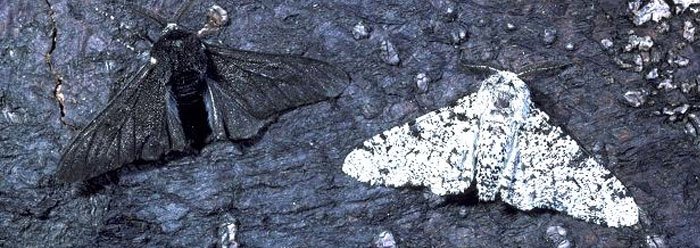


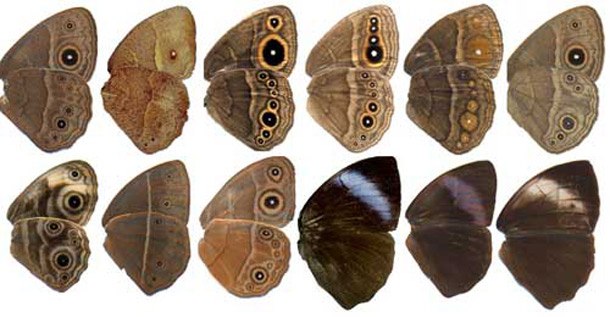
What causes competition to occur in an environment?
Good conditions make resources plentiful.
Organisms struggle for a limited resource.
Members of a population have different roles.
A population falls below the environment’s carrying capacity.

Which of the following is an example of an abiotic limiting factor on population size?
water availability
Availability of food
disease
predation


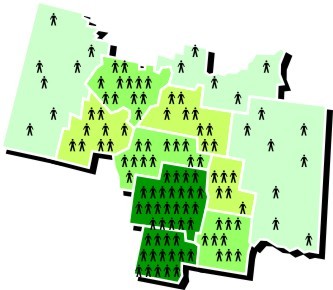
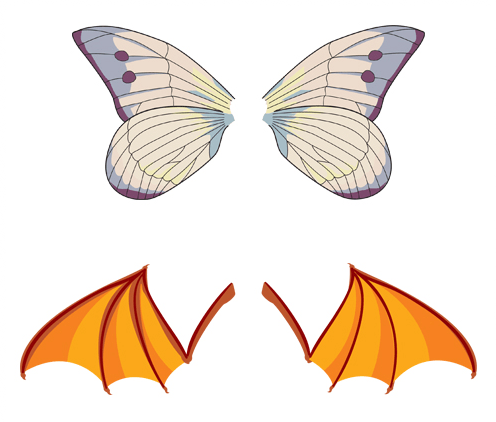
What is this an example of?
Homologous structure
Analogous structure
Vestigial organs
Functional adaption
Some organisms that share a common ancestor have features that have different functions, but similar structures. These are known as
vestigial structures
analogous structures
homologous structures
embryology
Breeding for specific traits is called:
Natural Selection
Artificial Selection
Trait Selection
Gradualism,
Blending into the environment is:
Camouflage
Mimicry
Fitness
Embryo

Example of Evolution
Biochemical Analysis
Fossils
Vestigial Organ
Homologous Structure
A trait that helps an animal meet its need in the place it lives
mimicry
adaptation
camouflage
adoption


Energy is release from ATP when-
A phosphate group is added to the end of the phosphate chain
Adenine bonds to ribose
ATP is exposed to sunlight
A phosphate group is removed from the end of a phosphate chain
What is the correct equation for cellular respiration?
6O2 + C6H12O6 -> 6CO2 + 6H2O + Energy (ATP)
6O2 + C6H12O6 + Energy (ATP) -> 6CO2 + 6H2O
6CO2 + 6H2O -> 6O2 + C6H12O6 + Energy (ATP)
6CO2 + 6H2O + Energy (ATP) -> 6O2 + C6H12O6
Which of the following shows the three stages of respiration in the correct order?
Calvin Cycle, Glycolysis, Electron Transport Chain
Glycolysis, Krebs Cycle, Electron Transport Chain
Glucose, Krebs Cycle, Electron Transport Chain
Glycolysis, Calvin Cycle, Electron Transport Chain
When living things break down molecules, energy is-
Stored as ADP
Stored as ATP and released as heat
Stored as ATP and taken in as heat
Released as oxygen
How many ATP are produced in aerobic respiration?
2
28
4
36
What is glucose converted to during glycolysis?
Acetyl-Co A
Coenzyme A
Pyruvate
Sucrose
What comes next after glycolysis if oxygen is present
Krebs cycle
Electron transport chain
Alcoholic Fermentation
Lactic Acid Fermentation
C6H12O6
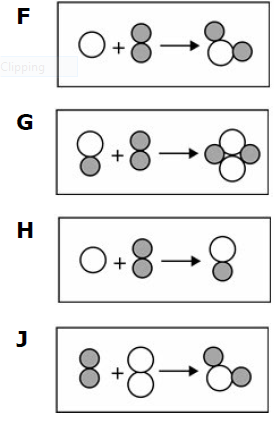
The Law of Conservation of Mass states
that matter exists in all states and reacts the same
that matter can only be changed into new substances by introducing a catalyst
that matter exists in the same state throughout any chemical change
that matter cannot be created or destroyed and that the mass of the products must equal the mass of the reactants


What is a Calorie?
A unit of measurement for Energy
Energy from the food
The amount of energy you will need to work off
Part of a 2,000 Calorie diet to maintain a healthy weight
cell are called ____________________.

View Figure 1 (if not visible)

View Figure 3 (if not visible)

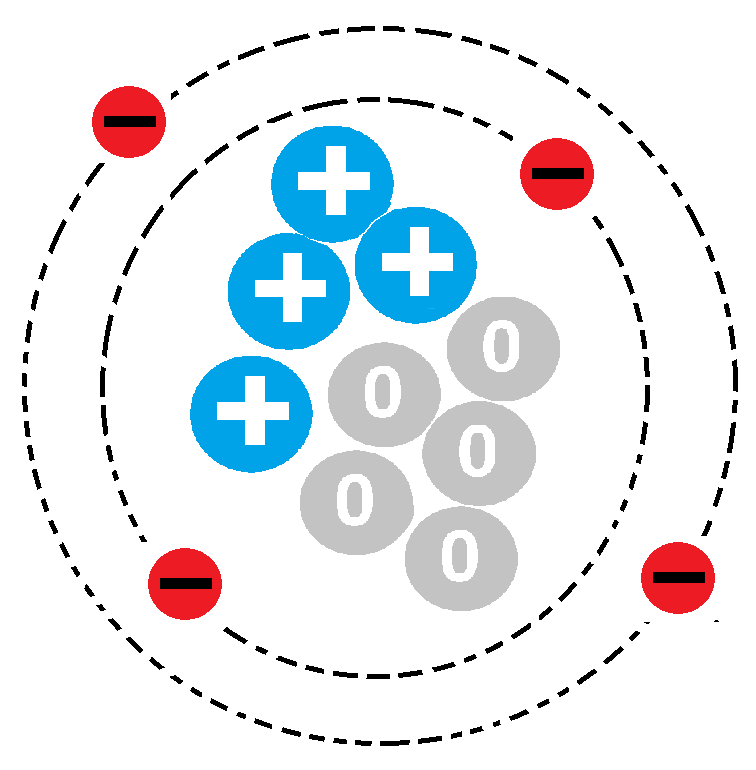
An element has the mass number 12 and atomic number 6. The number of neutrons in it is:
6
10
4
8
If an atom has 10 electrons, how many protons does it have?
0
1
10
5
Kinetic energy is...
energy carried in ultraviolet waves
energy stored in food
energy in motion
energy from splitting an atom
____________ is the ability to do work or cause change.
Energy
Force
Friction
Motion
__________ energy is stored energy.
Potential
Kinetic
Force
Gravity
Why are plants usually green?
Because the chlorophyll reflects green light
Because the chlorophyll absorbs green light
Because the accessory pigments combine to make green
Because the accessory pigments only absorb green light
Exit: Carbon dioxide
Exit: Glucose
Exit: Oxygen
Exit: Water vapor
Most of the oxygen in the Earth’s atmosphere was produced by —
a big explosion
photosynthesis
digestion
metabolism



