wayground logo

Free Printable Worksheets

Font size

S
M
L
XL
Worksheets

Biology Final '18 Review

Total questions: 160

Worksheet time: 2hrs 29mins

Name
Class
Date
1.
What is the purpose of Science ?
a)
To confirm what you believe
b)
To make new things
c)
To find truth about Nature
d)
To look smart
2.
Which is NOT a characteristic that all living organisms share? 
a)
Ability to reproduce 
b)
Ability to grow 
c)
Ability to respond to their environment 
d)
Ability to dominate an ecosystem 
3.
Rocks, water, air, sun, and soil are...
a)
living
b)
nonliving
4.
Which one of these is NOT one of the characteristics of living things?
a)
All living things get & use energy
b)
All living things respond to the environment
c)
All living things take in water
d)
All living things reproduce asexually
5.
All living organisms are made up of ____.
a)
Cells
b)
Bacteria
c)
Organs
d)
Tissue
6.
Providing the main source of energy for cells and structural support for plants are important functions of 
a)
carbohydrates
b)
lipids
c)
proteins
d)
nucleic acids
7.
Storing energy long term and providing insulation to maintain body heat are important functions of 
a)
carbohydrates
b)
lipids
c)
proteins
d)
nucleic acids
8.
Storing and transmitting genetic information is the main function of 
a)
carbohydrates
b)
lipids
c)
proteins
d)
nucleic acids
9.
Nucleotides are the building blocks of 
a)
carbohydrates
b)
lipids
c)
proteins
d)
nucleic acids
10.
Amino acids link together to form the polymer
a)
carbohydrates
b)
lipids
c)
proteins
d)
nucleic acids
11.

The study of all compounds that contain bonds between carbon atoms.

a)

microbiology

b)

organic chemistry

c)

evolution

d)

ecology

12.
What group of organic compounds is represented by this molecular structure
a)
Lipids
b)
Proteins
c)
Carbohydrates
d)
Nucleic Acids
13.
Which macromolecule is shown?
a)
lipid
b)
protein
c)
nucleic acid
d)
carbohydrate
14.
An enzyme speeds up a chemical reaction in the cell, but can only be used once? 
a)
true
b)
false
15.
Enzymes speed up chemical reaction by 
a)
destroying products
b)
lowering activation energy
c)
increasing activation energy 
d)
allowing reactions to process at their own speed
16.
Enzymes are
a)
nucleic acids
b)
proteins
c)
lipids
d)
carbohydrates
17.
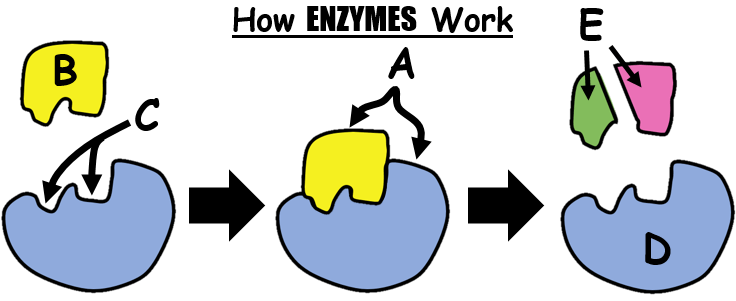
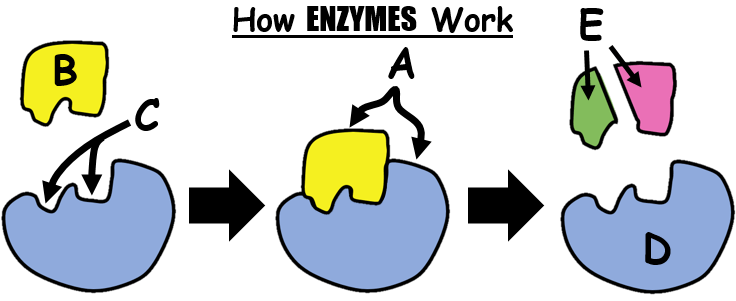
Letter E...
a)
active site
b)
enzyme
c)
substrate
d)
products
18.
Letter C...
a)
active site
b)
enzymes
c)
substrate
d)
products
19.
What does monosaccharide mean?
a)
two sugars
b)
one sugar
c)
many sugar
d)
one carbohydrate
20.
On organelle found in large numbers in most cells, in which the biochemical processes of respiration and energy production occur.
a)
Cytoplasm
b)
weoow weoow weoow
c)
Mitochondria
d)
Cell Wall
21.
Tiny cell structures that carry out specific functions within the cell.
a)
membranes
b)
nucleus
c)
organelles
d)
animalicules
22.
If a cell has a nucleus, then it must be what type of cell? 
a)
animal 
b)
prokaryotic 
c)
eukaryotic 
d)
 plant
23.
Using this image, what organelle is H?
a)
Nucleus
b)
Nuclear Membrane
c)
Nucleolus
d)
Cell Membrane
24.
Using this image, what organelle is M?
a)
Golgi Apparatus
b)
Nuclear Membrane
c)
Nucleolus
d)
Cell Membrane
25.
Using this image, what organelle is O?
a)
Cell Membrane
b)
Centrioles
c)
Golgi Apparatus
d)
Mitochondria
26.
Using this image, what organelle is A?
a)
Cell Wall
b)
Large Central Vacuole
c)
Mitochondria
d)
Chloroplast
27.
ALL living cells have this in common
a)
Nucleus
b)
Cell Membrane
c)
Cell Wall
d)
Mitochondria
28.
Which of these BEST describes the function of the cell membrane?
a)
It produces energy for cell functions.
b)
It is responsible for cell reproduction.
c)
It controls what enters and leaves the cell.
d)
It stores water and nutrients until needed by the cell.
29.
This process happens inside chloroplasts
a)
Cellular Respiration
b)
Photosynthesis
c)
Protein Synthesis
d)
Osmosis
30.
Which is NOT a principle of the cell theory?
a)
All living things are made of cells
b)
All cells come from preexisting cells
c)
All plants are made of cells
d)
Cells are the basic unit of life
31.
The diffusion of WATER across a semi-permeable membrane is
a)
osmosis
b)
diffusion
c)
endocytosis
d)
exocytosis
32.
The movement of molecules from higher concentration to lower concentration is
a)
diffusion
b)
cell division
active transport
c)
active transport
d)
tonicity
33.
Active transport requires
a)
energy
b)
the nucleus
c)
chloroplasts
d)
lysosomes
34.
On the diagram below, indicating the direction of osmosis (water)
a)
Into the cell
b)
Outside the cell
c)
Remain the same inside and outside the cell
d)
Remain the same outside, but not inside
35.
Engulfs large molecules inside the membrane.
uses energy
a)
exocytosis
b)
endocytosis
c)
protein channel 
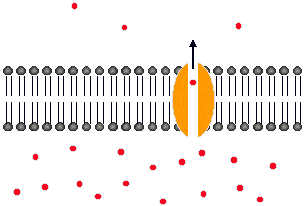
36.
Particles are too large to enter the membrane.
Need help from channel proteins.
No energy
a)
active transport
b)
passive transport
c)
facilitated diffusion
37.
The picture is an example of...
a)
active tranport
b)
passive transport
c)
diffusion
d)
osmosis
38.
Fruit fly body cells have 8 chromosomes. After mitosis, you would expect a resulting fruit fly daughter cell to have ...
a)
16 chromosomes.
b)
46 chromosomes.
c)
8 chromosomes.
d)
4 chromosomes.
39.
The process by which the nuclear material is divided equally between two new cells
a)
mitosis
b)
cancer
c)
spindle
d)
centromere
40.
Structure (b) is a ____.
a)
chromosome
b)
chromatid
c)
centromere
41.
Structure (a) is a ____.
a)
chromosome
b)
chromatid
c)
centromere
42.
Name the phase:
a)
Anaphase
b)
Telophase
c)
Metaphase
d)
Prophase
43.
What is the next phase of mitosis?
a)
Prophase
b)
Metaphase
c)
Anaphase
d)
Telophase
44.
The stages of mitosis in order
a)
Metaphase, Anaphase, Prophase, Telophase
b)
Prophase, Anaphase, Metaphase, Telophase
c)
Prophase, Metaphase, Anaphase, Telophase
d)
Anaphase, Prophase, Telophase, Metaphase
45.
The phase in mitosis where chromosomes move away and are pulled apart by spindles to opposite sides of the cell.
a)
prophase
b)
anaphase
c)
metaphase
d)
telephase
46.
Why would it be important to replicate DNA before a cell divides in mitosis or meiosis?
a)
In order for genetic information to be transferred into daughter cells.
b)
In order for the cell to be able to increase in size.
c)
In order for the DNA to be contained in the nucleus.
d)
In order for the cell to re-order the DNA sequencing in the new cells.
47.
In mitosis, the two resulting cells are
a)
different from the starting cell and identical to each other.
b)
different from the starting cell and different from each other.
c)
identical to the starting cell and different from each other.
d)
identical to the starting cell and identical to each other.
48.
The time between cell divisions in the life cycle of the cell is called
a)
anaphase
b)
interphase
c)
prophase
d)
metaphase
49.
What process does a multi-cellular organism use to replace its damaged body cells?
a)
mitosis
b)
meiosis
c)
replication
d)
transcription
50.
Which process and type of resulting cells are represented?
a)
mitosis, gametes
b)
mitosis, body cells
c)
meiosis, gametes
d)
meiosis, body cells
51.
Which of the following cell types is formed by meiosis?
a)
muscle cells
b)
skin cells
c)
sperm cells
d)
blood cells
52.
Which statement correctly describes meiosis?
a)
Cells divide only once.
b)
Meiosis does not occur in reproductive cells.
c)
The cells produced at the end of meiosis are genetically identical to the parent cell.
d)
The cells produced at the end of meiosis contain half the number of chromosomes as the parent cell.
53.
Which best describes the process shown?
a)
nondisjunction
b)
mitosis
c)
independent assortment
d)
crossing over
54.
If an intestinal cell in a butterfly contains 24 chromosomes, a butterfly egg would contain ____ chromosomes.
a)
3
b)
6
c)
12
d)
24
55.
Body cells of fruit flies contain 8 chromosomes.  Scientists used studies of flies to discover how egg and sperm are formed. What did they observe?
a)
Body cell of offspring flies have 16 chromosomes.
b)
Sperm cells have 8 chromosomes.
c)
Egg cells have 4 chromosomes.
d)
Body cells of offspring have 4 chromosomes.
56.
How many times in meiosis does the cell divide?
a)
2
b)
4
c)
3
d)
1
57.
How many daughter cells are produced at the end of meiosis?
a)
1
b)
2
c)
3
d)
4
58.
The result of meiosis is ______.
a)
two diploid cells
b)
two haploid cells
c)
four diploid cells
d)
four haploid cells
59.
Which process produces the most variation within a species? 
a)
mitosis
b)
cloning
c)
meiosis
d)
asexual reproduction
60.
The passing of DNA from parents to offspring
a)
Generation
b)
Heredity
c)
Inheritance
d)
Traits
61.
What is a gene?
a)
An entire chromosome that  codes for a trait
b)
a piece of clothing
c)
a piece of a DNA on chromosome that codes for a trait
d)
Chemical messengers in your brain that code for a trait
62.
What are the possible combinations of a pea plant with the alleles PP and a male pea plant with the alleles pp.
P= purple
p= white
a)
all Pp
b)
all PP
c)
Pp,PP,Pp,PP
d)
all pp
63.

A punnet square is used to determine what?

a)

Probabilities

b)

# of offspring

c)

Phenotypes

d)

Genotypes

64.
Are recessive traits shown with capital or lowercase letters? 
a)
Capital
b)
Lowercase
65.
Homozygous is when...
a)
the alleles are the same
b)
the alleles are different
c)
the alleles are absent
d)
the alleles are present
66.
G = green, g = yellow
The genotype for a yellow plant is...
a)
GG
b)
Gg
c)
gg
d)
all of the choices result in yellow
67.
B = brown fur  b = white fur
In the punnett square, what is the probability for white fur? 
a)
0%
b)
25%
c)
50%
d)
75%
68.
Which of the following is a phenotype?
a)
Aa
b)
red hair
c)
heterozygous
d)
DNA
69.
What is a phenotype?
a)
The expression of a trait; physical appearance.
b)
refers to the genetic makeup of an individual
c)
An organism that has the same genes for a trait (ex. TT or tt)
d)
the passing of traits from parent to offspring
70.
Purebred is another word for __________, while hybrid is another word for __________.
a)
dominant; recessive
b)
recessive; dominant
c)
homozygous; heterozygous
d)
heterozygous; homozygous
71.
The different forms of genes are known as...
a)
traits.
b)
environment.
c)
probability.
d)
alleles.
72.

In dragons, scale color shows incomplete dominance. If a red (RR) dragon mates with a white (WW) dragon, what percentage of their offspring could be pink?

a)

100%

b)

75%

c)

50%

d)

0%

73.

Human skin variation is an example of

a)

multiple allele traits

b)

polygenic traits

c)

incomplete dominance

d)

codominance

74.

He is known as the father of modern day genetics.

a)

Hooke

b)

George Michael

c)

Gregor Mendel

d)

Virchow

75.
Which of the following alleles is homozygous recessive?
a)
Tt
b)
tt
c)
TT
d)
T
76.
The genotype BB would be considered
a)
homozygous recessive
b)
homozygous dominant
c)
heterozygous
77.
The genotype Tt would be considered
a)
homozygous recessive
b)
heterozygous
c)
homozygous dominant
78.
What must someones genotype be for their phenotype to show the recessive trait?
a)
homozygous dominant
b)
heterozygous
c)
hybrid
d)
homozygous recessive
79.
Round face is dominant to oval face. The following genotype will result in which phenotype?
ff
a)
round 
b)
oval 
c)
square
80.
If a red flower is dominant to a white flower, but a pink flower is produced, this is an example of
a)
incomplete dominance
b)
co-dominance 
81.
When there are two dominant alleles for a single trait and both are expressed in the phenotype, this is called ________________.
a)
co- dominance
b)
incomplete dominance
c)
shared dominance
d)
complete dominance
82.
Why do sexually reproducing organisms look like their parents?
a)
Boys look more like their dads and girls look more like their moms
b)
They get half of their genetic material from one parent and half from the other parent
c)
They get more genetic material from the parent they most resemble
d)
They only get genetic material from one parent
83.
The physical appearance of a gene:
a)
Genotype
b)
Heredity
c)
Phenotype
d)
Allele
84.
Which of Mendel's laws states that alleles are separated during meiosis?
a)
Law of Dominance
b)
Law of Segregation
c)
Law of Independent Assortment
d)
Law of Meiosis
85.
Which process is used to copy DNA in the nucleus?
a)
replication
b)
transcription
c)
translation
86.
Which process is used to make mRNA from the DNA in the nucleus?
a)
transcription
b)
translation
c)
replication 
87.
Which RNA bases would pair with TACGAA in transcription
a)
AUGCUU
b)
ATGCTT
c)
GCATCC
d)
GCAUCC
88.
Where does transcription take place?
a)
nucleus
b)
cytoplasm
c)
ribosome
89.
What is occurring in this picture?
a)
Translation
b)
Replication
c)
Translocation
d)
Transcription
90.
One difference between DNA and RNA is that....
a)
Only RNA has the base Uracil
b)
only RNA contains the base Thymine
c)
only RNA contains the base Cytocine
d)
only RNA contained the base Guanine
91.
What process is being shown here?
a)
Replication
b)
Translation
c)
Transcription
92.
The process represented in the diagram produces a molecule that is complementary to the template strand of DNA. What type of molecule is produced?
a)
New DNA
b)
Polypeptide
c)
Messenger RNA
d)
Carbohydrate
93.
Which of the following best describes a DNA molecule?
a)
double helix
b)
contains ribose
c)
made of amino acids
d)
contains Uracil
94.
Translation takes place in the 
a)
ribosome
b)
chloroplast
c)
nucleus
d)
mitochondria
95.
Brings the amino acids to the ribosome
a)
mRNA
b)
tRNA
c)
rRNA
d)
DNA
96.
What is the term for a three-nucleotide sequence that codes for an amino acid?
a)
base
b)
codon
c)
amine
d)
serine
97.
Which phrase best describes translation?
a)
converts mRNA into a polypeptide
b)
catalyzes bonds between amino acids
c)
produces RNA from DNA molecules
d)
recycles tRNA molecules for reuse
98.
What type of bonds are forming during translation?
a)
Peptide bonds
b)
Hydrogen bonds
c)
Acid bonds
99.
RNA contains the sugar
a)
ribose
b)
deoxyribose
c)
glucose
d)
lactose
100.
What does this picture represent?
a)
amino acid
b)
base pairing
c)
nucleotide
d)
the DNA molecule
101.
What bonds hold DNA bases together?
a)
nitrogen bonds
b)
hydrogen bonds
c)
phosphorus bonds
d)
carbon bonds
102.
I have the sugar deoxyribose.
a)
RNA
b)
DNA
c)
Both DNA and RNA
103.

Factory for making a protein

a)

mRNA

b)

rRNA

c)

tRNA

104.

anti-codons are found on the

a)

mRNA

b)

tRNA

c)

rRNA

d)

DNA

105.

a)

rRNA

b)

mRNA

c)

tRNA

106.

a)

rRNA

b)

mRNA

c)

tRNA

107.

a)

rRNA

b)

mRNA

c)

tRNA

108.
In a strand of DNA, if it contains 20% of Thymine, then how much Guanine would be present?
a)
30%
b)
20%
c)
80%
d)
10%
109.
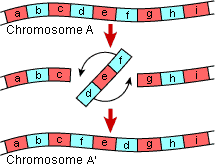
What type of chromosomal mutation is this?
a)
Translocation
b)
Inversion
c)
Deletion
d)
Duplication
110.

A

a)

nucleus

b)

ribosome

c)

messenger RNA

d)

amino acid

111.
What percentage of the offspring will have this recessive disease?
a)
0%
b)
25%
c)
50%
d)
75%
112.
Colorblindness is a recessive X-linked disorder.
Which genotype represents a male with normal vision?
a)
XNYN
b)
XnYn
c)
XNY
d)
XnY
113.

What do we use pedigrees for?

a)

To look at families

b)

To make determinations about the offspring

c)

To track traits in families

d)

To find out what type of dog we have

114.
How many affected females are present? 
a)
1
b)
2
c)
3
d)
4
115.
I have 2 X chromosomes. What am I?
a)
Male
b)
Female
116.
How many kids did the mother and father from the first generation have?
a)
2
b)
4
c)
5
d)
6
117.
In a pedigree, what shape represents a male?
a)
circle
b)
square
c)
triangle
d)
diamond
118.
Does this pedigree show a dominant or recessive trait?
a)
Dominant
b)
Recessive
119.
How many generations are shown in this pedigree?
a)
1
b)
2
c)
3
d)
4
120.
What is the gender of the individual whose karyotype is seen in the image?
a)
Male
b)
Female
121.

What is the mode of inheritance shown here?

a)

Recessive

b)

Incompletely dominant

c)

Dominant

122.
What percentage of the offspring will have this recessive disease?
a)
0%
b)
25%
c)
50%
d)
75%
123.
Hemophilia is a recessive x-linked disorder. According to the Punnett square, what percentage of offspring will have the disorder?
a)
0%
b)
25%
c)
50%
d)
100%
124.

Which of the following is a recessive disorder causing children to have an enzyme metabolism problem with lipids, most commonly found in people of Ashkanazi Jewish descent?

a)

PKU

b)

Hemophilia

c)

Sickle-Cell Anemia

d)

Tay-Sachs

125.

Which of the following is a sex-linked disorder that causes people to have difficulty clotting their blood?

a)

Huntington's Disorder

b)

Hemophilia

c)

Color-Blindness

d)

Tay-Sachs

126.

Which of the following is a dominant disorder causing mental retardation along with immobility.

a)

Huntington's Disease

b)

Turner's Syndrome

c)

Klinefelter Syndrom

d)

Trisomy 21

127.

Which of the following dominant disorders results in very short stature?

a)

Achondroplasia

b)

Hemophilia

c)

Tay-Sachs

d)

Cystic Fibrosis

128.

Which of the following recessive disorders causes excess production of mucus due to faulty sodium channels in cell membranes?

a)

Tay-Sachs

b)

PKU

c)

Cystic Fibrosis

d)

Sickle-Cell Anemia

129.

"transgenic" refers to an animal that:

a)

Has DNA from another organism spliced into its genome

b)

Has undergone DNA modification

c)

Has unique genes for its species

130.

Gel electrophoresis sorts DNA based on:

a)

fragment length

b)

fragement sequence

131.
Making changes in the DNA of an organism is
a)
selective breeding
b)
artificial selection
c)
genetic engineering
d)
genetic transformation
132.
When making a DNA Fingerprint, which molecule is used to cut DNA into DNA fragments?
a)
DNA helicase
b)
DNA polymerase
c)
restriction enzyme
d)
transgenic enzyme
133.
What process allows scientists to create a group of genetically identical organisms?
a)
Cloning
b)
DNA fingerprinting
c)
DNA recombination
d)
Genetic modification
134.
Which is a use genetically modified bacteria?
a)
Identifying the remains of an unknown person.
b)
developing a DNA fingerprint for blood left at a crime scene
c)
making human insulin for diabetics
d)
producing corn that is resistant to herbicides
135.
Which would BEST represent a community?
a)
bison herd
b)
hawk, snake,bison,prairie dog, grass
c)
bison
d)
hawk,snake,bison,prairie dog, grass,stream,rocks, air
136.
Which is a biotic factor?
a)
water
b)
clouds
c)
tree
d)
sun
137.
Which of the following is MOST likely when a producer is removed from a food chain?
a)
It impacts the entire chain
b)
It only impacts the next step in the chain
c)
it impacts only the next two steps in the chain
d)
it will have little effect, as the producers take its place
138.
Which of these BEST describes biomes?
a)
large ecosystems that have distinctive organisms and a particular climate
b)
a group of individuals of the same species that live together in the same area
c)
a system made up of parts that work together
d)
external conditions that affect an  organism
139.
An organism that hunts its food
a)
Predator
b)
Prey
c)
Hunter
d)
Gather
140.
An organism that is hunted for food
a)
Predator
b)
Gather
c)
Prey
d)
Hunter
141.
A condition that occurs when two or more organisms compete for the same resources or food within an ecological community
a)
Population
b)
Competition
c)
Ecosystem
d)
Community
142.
Is a deer an abiotic or biotic factor? 
a)
abiotic
b)
biotic
143.
Is a weather an abiotic or biotic factor? 
a)
abiotic
b)
biotic
144.
What would likely be the result if a pesticide is used to reduce the # of harvester ants?
a)
an increase in snakes & a decrease in hawks
b)
a decrease in snakes & an increase in hawks
c)
a decrease in mesquite bushes & an icnrease in horned lizards
d)
an increase in mesquite bushes & a decrease in horned lizards
145.
Human-built dams across rivers have both positive & negative effects on the environment.  What effect does building dams have on environments downstream?
a)
a positive effect due to increasing the natural flow of nutrients
b)
a negative effect due to reducing populations of non-native species
c)
a negative effect due to increasing the populations of native species
d)
a negative effect due to decreasing the natural flow of nutrients
146.
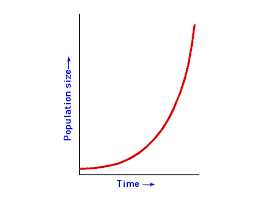
What type of growth is shown in the diagram?
a)
exponential growth
b)
logistic growth 
c)
predator-prey cycle
d)
boom-bust curve
147.
When a population grows past the ecosystem's carrying capacity, what happens to the population?
a)
Continues to grow
b)
The population starts to die off to return to carrying capcity
c)
The population will go extinct due to lack of resources
d)
The population grows then finds a new carrying capacity
148.
The scientific study of interactions of organisms with each other and with their environment is called
a)
Ecology
b)
Economics
c)
Etiology
d)
zoology
149.
Oak trees, Maple trees, Whitetail deer, gray squirrel, and acorns are all examples of
a)
biotic factors
b)
abiotic factors
c)
biomes
d)
niches
150.
All the food chains of an ecosystem linked together is called a 
a)
food chain
b)
food web
c)
niche
d)
ecology
151.
What group of organisms always make up the base, bottom, or first trophic leves?
a)
primary consumers
b)
producers
c)
Secondary consumers
d)
herbivores
152.
Which of the following is an example of COMPETITION?
a)
Deer fighting to impress a mate
b)
hunting in packs
c)
tick and dog relationship
d)
ant and aphid relationship
153.
All of the following are examples of a resource except
a)
food
b)
water 
c)
mate
d)
air
154.
In an ecosystem where foxes feed on field mice, if the population of foxes increased, what would most likely happen to the population of field mice?
a)
it would increase
b)
it would decrease
c)
no change
d)
mice would become extinct
155.
The sum of the genetically based variety of all the organisms in the biosphere is called
a)
ecology
b)
biodiversity
c)
biovariety
d)
a hot spot
156.
What is one of the greatest threats to biological diversity today?
a)
Old-growth forests
b)
Rapid use of fossil fuels
c)
Habitat destruction
d)
Pioneer species
157.
The high level of pesticides in birds of prey is an example of 
a)
the principle of exclusion 
b)
cycling of nutrients by decomposers
c)
exponential growth
d)
biological magnification 
158.
What does deforestation effect?
a)
Plants and animals
b)
Our biosphere
c)
Humans
d)
All of the above
159.
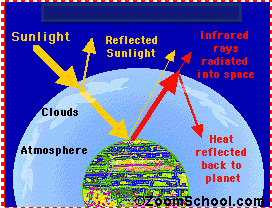
What does this diagram illustrate?
a)
Ozone Layer
b)
The Greenhouse Effect
c)
Ultraviolet Radiation
d)
Layers of the atmosphere
160.
The three Rs of solving the garbage problem are
a)
Rebekah, Rachel, and Ronda.
b)
red, redo, and remember.
c)
remove, rewind, and recover.
d)
reduce, reuse, and recycle.