
 Worksheets
Noor Biology Finals
Total questions: 162
Worksheet time: 3hrs 0mins
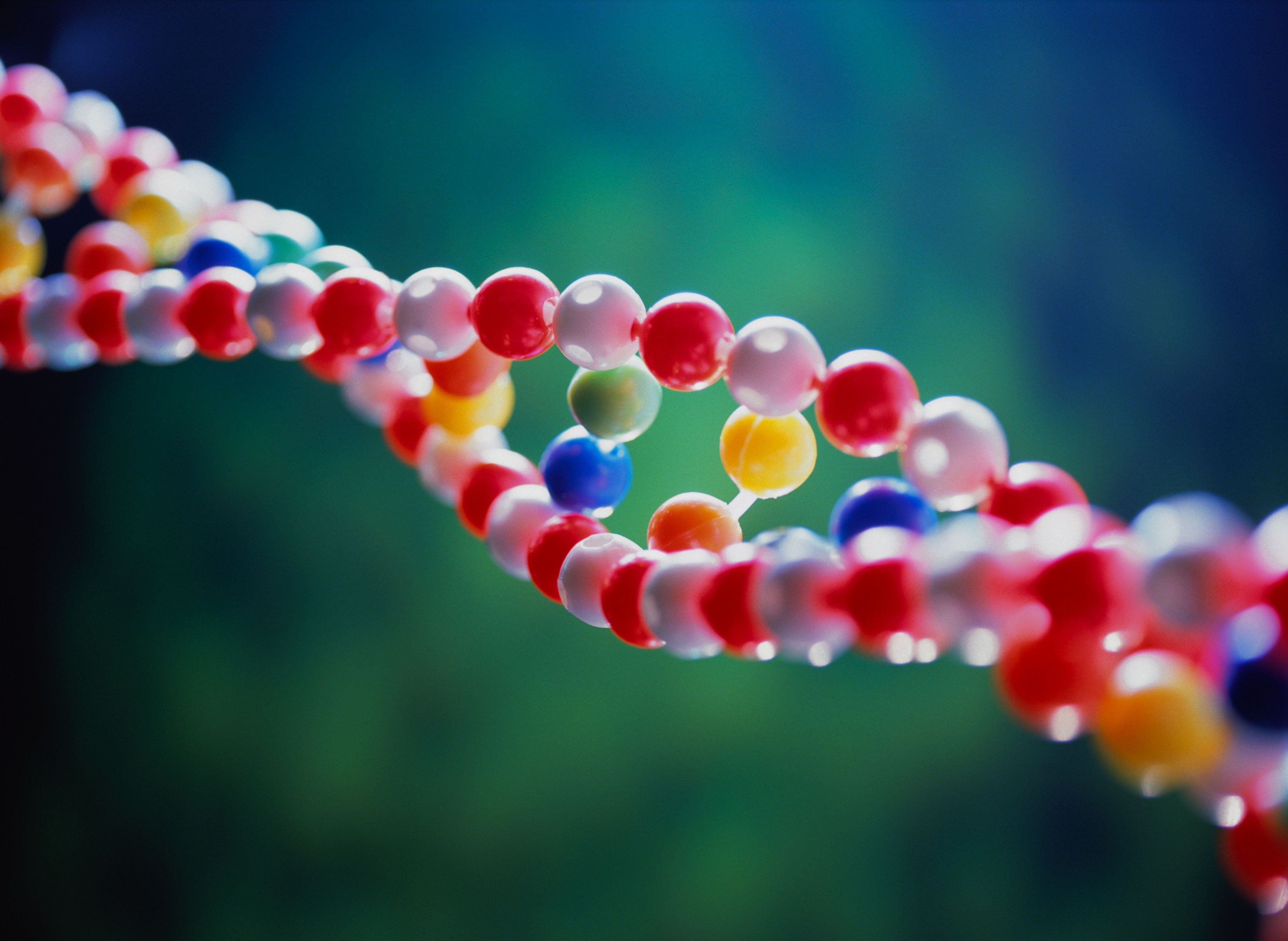
What is a gene
A long length of DNA that codes for a chromosome
A short length of DNA that codes for a chromosome
A short length of DNA that codes for a protein.
The number of human chromosomes is
23
46
92
64
How many pairs of chromosomes do you have?
2
46
23
8
Which of the following statements about chromosomes is correct?
Chromosomes are long, thread-like structures
Chromosomes are found in the nucleus of all cells in the human body
Chromosomes contain DNA
All of the above
What is a long coiled strand of DNA and proteins?
gene
RNA
chromosome
genome
What is a short segment of a DNA strand that codes for our characteristics?
chromosome
DNA
RNA
gene
From smallest to largest how would genetic information be organized?
genes, cell, nucleus, chromosome, DNA
chromosome, cell, gene, DNA, nucleus
DNA/nucleotides, gene, chromosome, nucleus, cell
nucleus, cell, gene, DNA, chromosome
What are homologous chromosomes?
Two chromosomes that are the same length
Two chromosomes that have the centromere in the same position
Two chromosomes that have genes for particular characteristics at the same location along their length
All of the above
Which of the following base pairings is correct?
T-T, C-A
A-T, C-C
A-T, C-G
C-G, C-C
What is the complimentary sequence of the following sequence:
GATCAG
TGACAT
GACATG
CTAGTC
CGACTA

What do the dotted lines between the nitrogenous bases (A,T,C,G) represent in the image provided?
Covalent bonds
Ionic bonds
Peptide bonds
Hydrogen bonds
gene, chromosome, nucleus, cell, nucleotide
cell, nucleus, chromosome, gene, nucleotide
nucleotide, chromosome, cell, nucleus
cell, gene, nucleotide, nucleus, chromosome
Which is a purine?
adenine
cytosine
thymine
uracil
According to Chargaff's rule, there are equal numbers of certain nitrogenous bases in DNA due to base pairing. So if we were to inspect a molecule of DNA and 20% of it was composed of Cytosine, what percentage would be composed of Adenine?
20%
30%
40%
25%
What's the difference between purine and pyrimidine nitrogen bases?
Pyrimidines are only found in DNA, not RNA
Pyrimidines have two rings, Purines have one
Purines are only found in DNA, not RNA
Purines have two rings, Pyrimidines have one
Which of the following are purines?
adenine
cytosine
guanine
thymine
uracil
Bases with a double-ring structure
Pyrimidine
Purine
Polymer
Monomer
______ is coiled DNA, while ______ is uncoiled DNA
Chromatid ; Chromatin
Chromosome ; Chromatin
Chromatin ; Chromatid
Sister Chromatid ; Sister Chromosome
Direction that DNA is replicated
3' to 5'
5' to 3'

Structure C is
helicase
primase
DNA polymerase III
gyrase

H is the
leading strand
lagging strand
parent strand
none of these

This structure is an Okazaki fragment.
A
D
F
G


The picture below shows the steps of DNA replication beginning with step one and ending with step three.
Because you are reusing the old, or parent, DNA strand DNA replication is said to be
Semi- Conservative
Semi-discontinuous
Continuous
Fully-Conserveative

The picture below shows an enzyme unwinding and unzipping DNA.
What is the name of this enzyme?
DNA Helicase
DNA Ligase
DNA polyermase
RNA Polymerase
Which is the first step?
DNA Helicase unwinds original DNA strand
RNA Primase lays down RNA primer for new nucleotide bases.
DNA polymerase builds new strands by bring in new nucleotide bases.
Ligase knits together fragments on lagging strand
Which is the second step?
DNA Helicase unwinds original DNA strand
RNA Primase lays down RNA primer for new nucleotide bases.
DNA polymerase builds new strands by bring in new nucleotide bases.
Ligase knits together fragments on lagging strand
Which is the third step?
DNA Helicase unwinds original DNA strand
RNA Primase lays down RNA primer for new nucleotide bases.
DNA polymerase builds new strands by bring in new nucleotide bases.
Ligase knits together fragments on lagging strand
Which is the fourth step?
DNA Helicase unwinds original DNA strand
RNA Primase lays down RNA primer for new nucleotide bases.
DNA polymerase builds new strands by bring in new nucleotide bases.
Ligase knits together fragments on lagging strand

Which letter in the picture below depicts the leading strand in DNA replication?
A
C
B
None of the above
Which letter in the picture below depicts the lagging strand in DNA replication?
A
C
B
None of the above
Which letter in the picture below depicts the replication fork in DNA replication?
A
C
B
None of the above
If a person suffered from a disorder where their DNA fragments were unable to fill in the missing slots in between the fragments of the lagging strand, they would most likely have a disorder that affected which enzyme?
DNA Helicase
DNA Ligase
DNA polyermase
RNA Polymerase
The directionality of DNA is said to be ___________, because it is side by side by goes in opposite directions.
Anti-directional
Parallel
Anti-parallel
Anti-uniform

The Meselson-Stahl experiment demonstrated that DNA replication produces two DNA molecules each composed of
Two old strands
Two new strands
One old strand and one new strand
two strands with variable proportions of new and old DNA.
Which model does NOT predict that after one replication both DNA molecules will be a 50/50 mix of original and new DNA?
conservative
semi-conservative
dispersive

This is the correct model for DNA Replication.
True
False

This is the correct model for DNA Replication.
True
False

This is the correct model for DNA Replication.
True
False
G1, S, G2 are all part of what stage of the cell cycle?
Cytokinesis
Interphase
Mitosis
Telophase

What phase of mitosis is shown in the image?
Anaphase
Telophase
Prophase
Metaphase
Which of the following does NOT occur during mitosis?
Condensation of the chromosomes
Separation of sister chromatids
Replication of the DNA
Spindle formation

What phase of mitosis is shown in the image?
Anaphase
Prophase
Metaphase
Telophase

The chromatids of a double-stranded chromosome are held together at a region known as the
Spindle
Endoplasmic Reticulum
Centriole
Centromere

Which phase of mitosis is shown in the image?
Anaphase
Metaphase
Telophase
Prophase
Which of the following is an accurate definition of cytokinesis?
Division of the centrioles
Division of the cytoplasm
DNA replication
Normal cell growth

The life of a cell is called the cell cycle. Which period of the cell cycle is where cells grow and perform their normal functions?
Interphase
Mitosis
Cytokinesis
Cell Division
During the "s" phase of the cell cycle, DNA is duplicated. Why is this important?
Allows for each daughter cell to be genetically DIFFERENT.
Allows for each daughter cell to be genetically IDENTICAL
Allows for each daughter cell to have 2X the amount of DNA as the parent cell.
Allows for each daughter cell to have half the amount of DNA as the parent cell

What happens in prophase of mitosis?
The chromosomes become visible; nucleus disappear; spindles form
The chromosomes align in the middle of the cell
The sister chromatids separate
The chromosomes uncoil into chromatin; nucleus reappears; spindles disappear
During anaphase
DNA lines up in the middle of the cell and DNA attaches to spindle fibers
centrioles and spindle fibers appear
Each DNA gets pull to the opposite sides of the cell
DNA gets copied

The structures labeled B are_________, held together by a centromere.
sister chromatid
centriole
centromere
chromophere
Has one set of chromosomes
Haploid
Diploid
Body cells
None of the above
What is cancer?
Regulated meiosis
Uncontrolled meiosis
Regulated Mitosis
Uncontrolled Mitosis
A mass of cells that can be either malignant or benign.
cancer
chromosome
tumor
interphase
Apoptosis is
the process of programmed cell death
the process of programmed cell growth
the process of programmed cell birth
the process of programmed cell regulation
Cancer promoting substances are called:
Tumors
Carcinogens
Cyclins
Malignant
TAC GAA
Both DNA and RNA are nucleic acids.
True
False
During transcription, this type of ribonucleic acid is responsible for copying the DNA and brining it out of the nucleus.
tRNA
mRNA
rRNA
dRNA
When these bond together, they form a protein
Amino Acids
Peptide Bonds
Ribose
Nucleotides
During translation, this type of ribonucleic acid is responsible for delivering amino acids to help make a protein.
mRNA
rRNA
tRNA
dRNA
There are a total of ____ different amino acids
20
1
4
unlimited
mRNA occurs during this process
Translation
Transcription
Replication
Delivery

In what process is mRNA synthesized?
Transcription
Translation
DNA Replication
Mitosis
Why must transcription occur in the nucleus?
because DNA can't leave the nucleus
because ribosomes are in the nucleus
because DNA polymerase is found there
because helicase unzips the DNA

What brings the amino acids to the ribosome to assemble a protein?
DNA
What mutation has occurred here?
T-G-A-C-C-A
T-G-A-G-C-A
Substitution
Deletion
Insertion
Frameshift
Which of the following would result in a frameshift mutation?
Insertions only
Substitution only
Deletion only
Insertions and Deletions
DNA molecule segment is : TTACGCAAG
The mutated DNA segment is TTCGCAAG. This is an example of ___ mutation.
Substitution
Deletion
Insertion
Inversion
ATTTGAGCC- Original
ATTGAGCC - Mutated
The example above is an example of a
Insertion- Frameshift
Deletion- Substitution
Deletion -Frameshift
All of the above
Why are insertion and deletion (frameshift) mutations so harmful?
They change all of the codons from the mutation on down the line, which changes the amino acid sequence
They insert things that an organism doesn't need.
They often delete things that organisms need.
Insertion and deletions are not any more harmful than substitution mutations.

Which mutation will cause translation to stop?
Mutations 1 and 3 only
Mutation 1 only
Mutation 2 only
Muations 1, 2, 3

Which type of mutation does the model demonstrate?
Deletion
Substitution
Insertion
Translocation
As a fertilized egg divides, the cells differentiate because they
have different sets of DNA passed on to the daughter cells
have different sets of genes activated in the daughter cells
have mutations that cause different genes to appear in the daughter cells
randomly assort the chromosomes into different daughter cells
What is the role of stem cells in cell differentiation?
They serve as a precursor for generalized cells
These cells can turn into specialized cells and back into generalized cells when needed
They are generalized cells that can lead to specialized cells
They are specialized cells that can lead to generalized cells
Which of these acts to block transcription and therefore gene expression?
Promoter regions of DNA
RNA Polymerase
Repressor Proteins
mRNA
When gene expression occurs
A gene is mutated with either an insertion or deletion
The gene is removed from the genotype in that cell
The gene is passed on to the daughter cells during mitosis
The gene is activated and used in protein synthesis
One way to regulate the expression of a gene is to control the formation of mRNA. This is called ___ control.
transcriptional
translational
post-transcriptional
post-translational
Genes can be turned on (expressed) when a(n) ____ such as CRP or cAMP receptor protein binds to the CRP binding site.
repressor
corepressor
inducer
activator
Negative control of gene expression is mediated by __ and results in a(n) __ in the frequency of transcription.
activators, increase
activators, decrease
repressors, increase
repressors, decrease
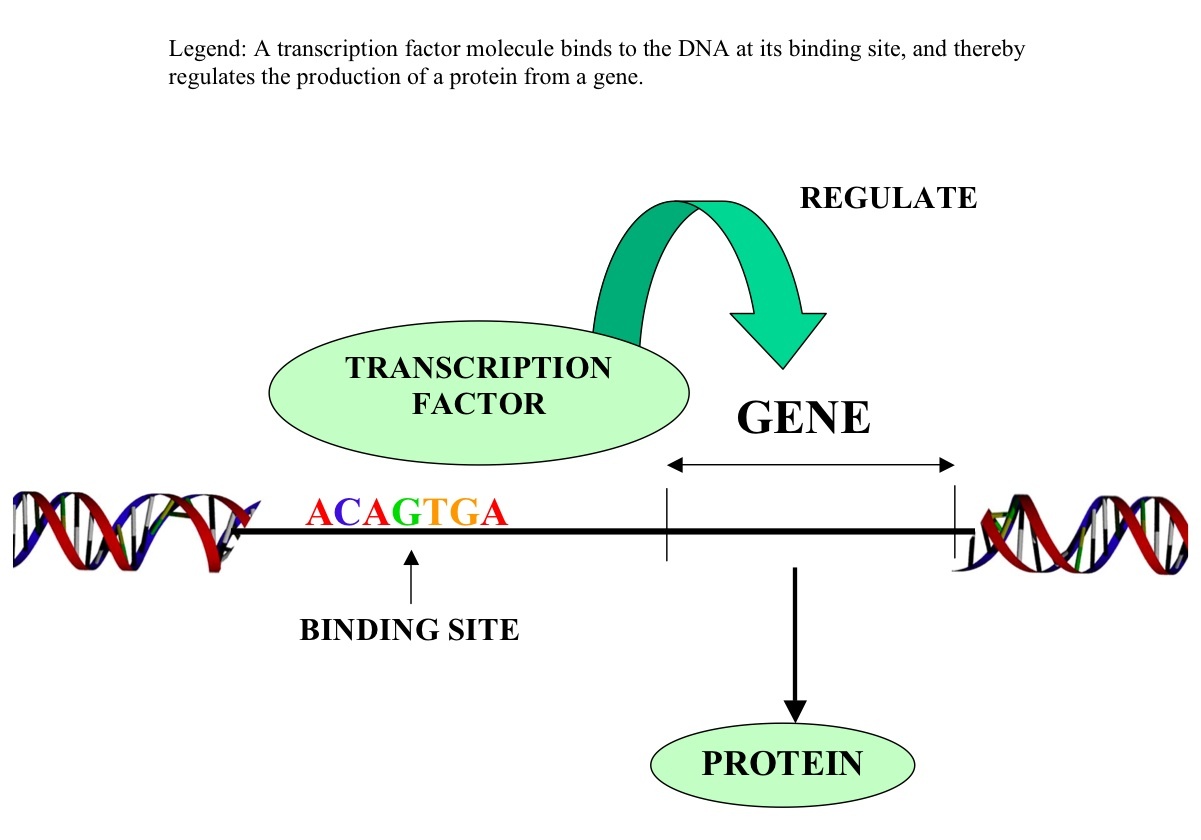
Which of the following is the best definition for MEIOSIS?
the process of two haploid cells uniting
the counting of chromosomes within a diploid cell
a two-step process that reduces the number of chromosomes in half such that there is only one copy of all the chromosomes
the equational division of a cell into two identical copies

In which stage of MEIOSIS does crossing over occur? (The exchange of genetic material between chromosomes in a tetrad.)
Anaphase I
Metaphase I
Prophase I
Telophase I
Which of the following are CORRECT observations about the differences between MITOSIS and MEIOSIS? (Check all that apply.)
Mitosis produces cells that identical to the parent cell.
Meiosis produces cells that have half the number of chromosomes as the parent cell.
All cells go through INTERPHASE as part of the cell cycle, whether it goes to mitosis or meiosis next.
In both types of cell division, the chromosomes are only duplicated once.
Only in Mitosis, do you see chromosomes pair up to form a tetrad.

Name this phase of Meiosis
Anaphase II
Anaphase I
Metaphase I
Metaphase II

Name this phase of Meiosis:
Telophase I
Prophase II
Telophase II
Anaphase II
What is unique to Prophase I- is that the duplicated chromosomes pair up to form _______.
a centrosome
a tetrad
the mitotic spindle
sister chromatids
A HETEROZYGOUS individual would have the genotype:
Hh
hh
HH
Hi

In pea plants, tall (T) plant alleles are dominant to short (t) plant alleles. If two tall plants (each with the genotype Tt) are crossed, what is the probability that the cross would result in a short pea plant?
25%
50%
75%
100%
If tall eyeballs (T) are dominant to short eyeballs (t), give the genotypes that are possible for tall eyeballs.
(a)
How many alleles do you inherit from EACH parent for a specific trait?
1
2
A tool used to predict the probability of offspring inheriting certain traits is called a ...
karyotype
Punnett Square
The physical expression of a trait is called the ...
genotype
phenotype
Genotype: TT
homozygous dominant
homozygous recessive
heterozygous dominant
Which statement below describes DOMINANT alleles?
expressed when at least one is present
only expressed when 2 are present

In the problem shown, what must the genotype of the missing parent be?
BB
Bb
bb

The different forms or versions of a gene are called ...
alleles
gametes
Having freckles is a dominant trait in humans. A girl has freckles, but her brother does not. What do we know for certain about the parents?
both parents have at least one recessive allele
both parents are heterozygous for freckles
one of the parents does not have freckles
Genotype: rr
homozygous dominant
homozygous recessive
heterozygous dominant
Which statement below describes RECESSIVE alleles?
expressed when at least one is present
only expressed when 2 are present

What are alleles?
different versions of a gene
different genes
different chromosomes
different cells
One of Mendel's Laws states that genes for different traits can segregate without affecting each other. This is known as the
Law of Independent Assortment
Law of Probability
Law of Segregation
Law of Crossing Over and Recombination
One of Mendel's Laws states that alleles separate during meiosis. This is known as the
Law of Independent Assortment
Law of Probability
Law of Segregation
Law of Crossing Over and Recombination

If the image were real, it would represent what type of inheritance pattern?
Incomplete Dominance
Codominance
Multiple Alleles
Polygenic Inheritance

What type of inheritance pattern does the diagram represent?
Incomplete Dominance
Codominance
Multiple Alleles
Polygenic Inheritance


Assuming a trait is AUTOSOMAL DOMINANT, what genotypes could make a person AFFECTED?
AA
Aa
aa
XAY
XaY
Assuming a trait is AUTOSOMAL DOMINANT, what genotype would make a person UNAFFECTED?
AA
Aa
aa
XAY
XaY

Assuming a trait is AUTOSOMAL RECESSIVE, what genotype would make a person AFFECTED?
AA
Aa
aa
XAY
XaY
Assuming a trait is AUTOSOMAL RECESSIVE, what genotypes would make a person UNAFFECTED?
AA
Aa
aa
XAY
XaY

Assuming a trait is X-LINKED RECESSIVE, what are the genotypes of an AFFECTED person?
XAY
XaY
XAXA
XAXa
XaXa
Assuming a trait is X-LINKED RECESSIVE, what are the genotypes of an UNAFFECTED person?
XAY
XaY
XAXA
XAXa
XaXa
The genotype XaY represents a ________
dominant male
recessive male
dominant female
recessive female
The genotype XAXa represents a ________
dominant male
recessive male
dominant female
recessive female
Assuming a trait is X-LINKED RECESSIVE, a person with the genotype "XaY" would be ____
affected
unaffected
Assuming a trait is X-LINKED RECESSIVE, a person with the genotype "XAXa" would be ____
affected
unaffected
A population of rabbits grows rapidly from one year to the next. Then one year, a disease strikes approximately one fourth of the adult rabbits. The disease remains with the population in the years that follow.
As explained by Darwin’s theory, which of these conditions allows the rabbit population to evolve by natural selection?
The disease affects adult and juvenile rabbits equally.
The disease reduces the ability of the rabbits to reproduce.
Some rabbits are resistant to the disease, and they pass the resistance to their offspring.
No rabbits are resistant to the disease, and all die when the disease strikes them.
Which of the following is a situation that could cause evolutionary change that is NOT due to natural selection?
A volcano erupts and kills many individuals in a population.
A mutation produces sea stars that are less visible to predators.
An insecticide is sprayed in a community to combat mosquitoes.
Cattle are treated with antibiotics to prevent the spread of infections.

The graphs below show the changes in crab color at one beach.
Which of the following is most likely to have caused the change in the distribution?
A new predator arrived that preferred dark-tan crabs.
A new predator arrived that preferred light-tan crabs.
A change in beach color made medium-tan crabs the least visible to predators.
A change in beach color made medium-tan crabs the most visible to predators.
What is the process where animals live or die based on their adaptations to their environment.
Genetic Drift
Natural Selection
The Circle of Life
Mammoth

