
 Worksheets
Midterm Exam Review
Total questions: 160
Worksheet time: 2hrs 12mins
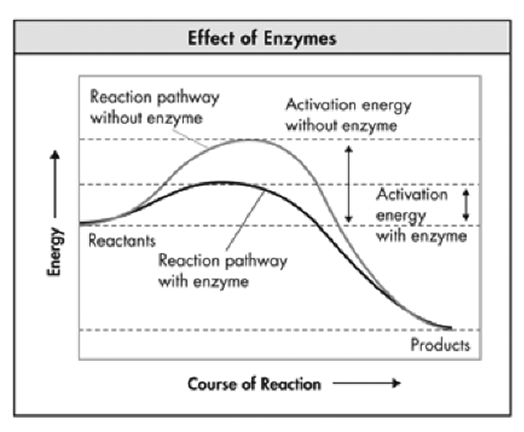
How do enzymes speed up chemical reaction?
Increasing activation energy
Decreasing activation energy
Increasing deactivation energy
Decreasing deactivation energy

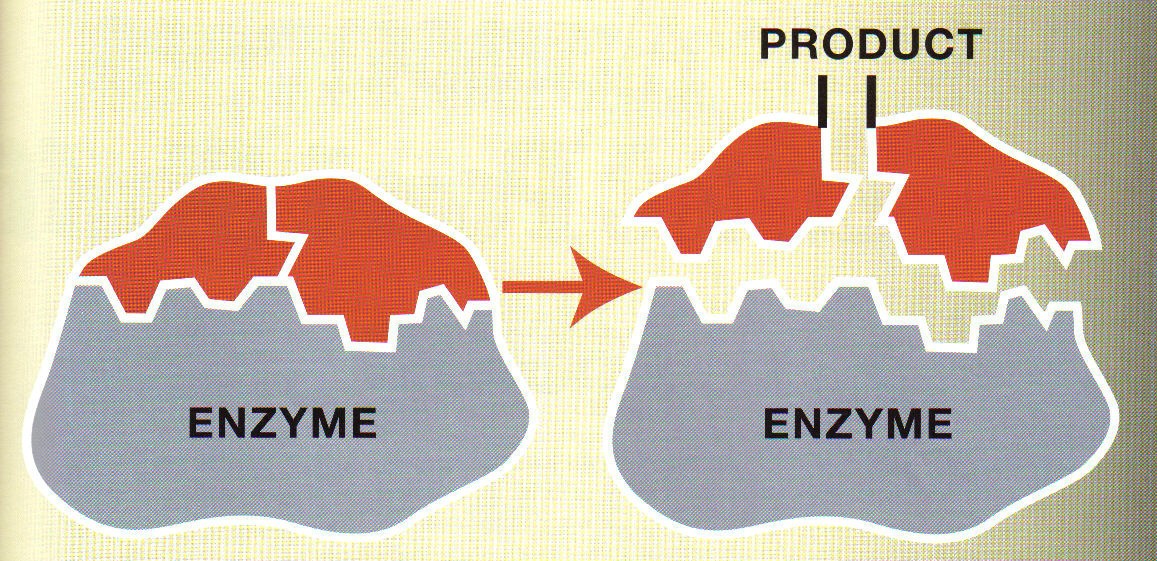
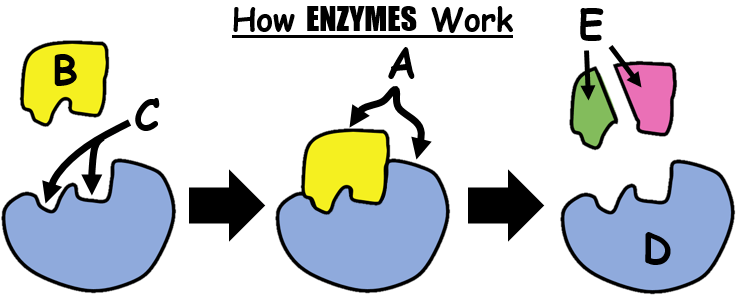
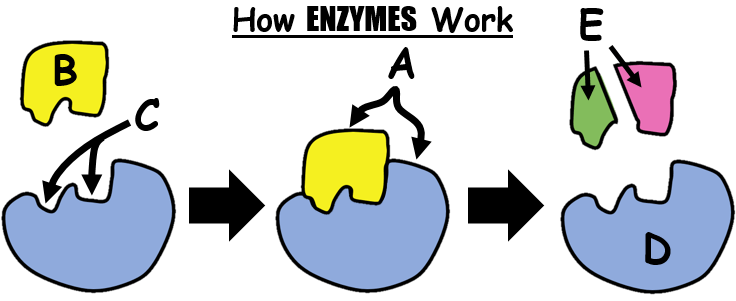
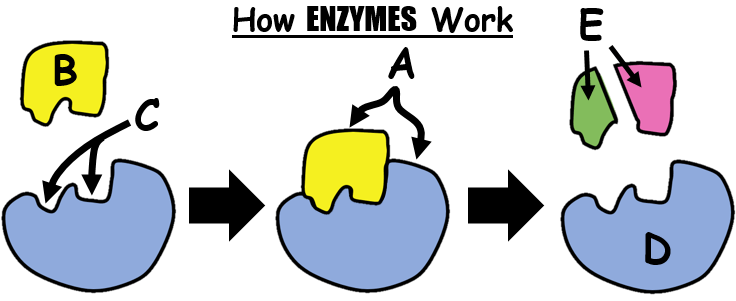
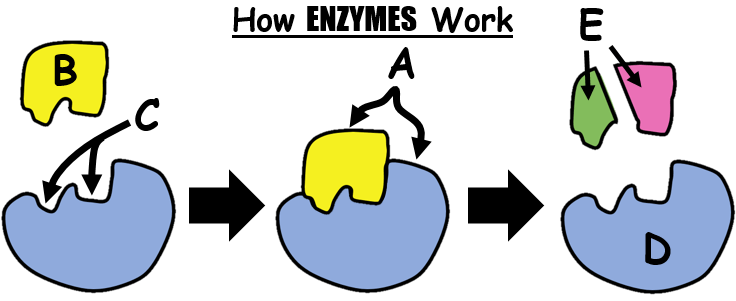
Enzymes are an example of
Lipids
Carbohydrate
Protein
Nucleic Acid
In a chemical reaction, ________ are what you have at the end
Products
Molecules
Reactants
Substances
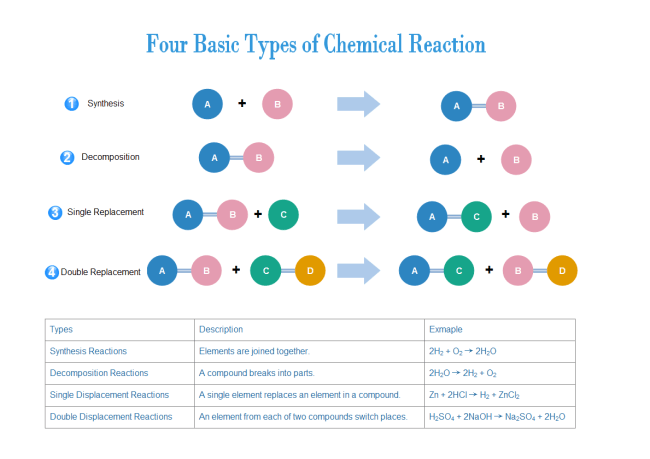
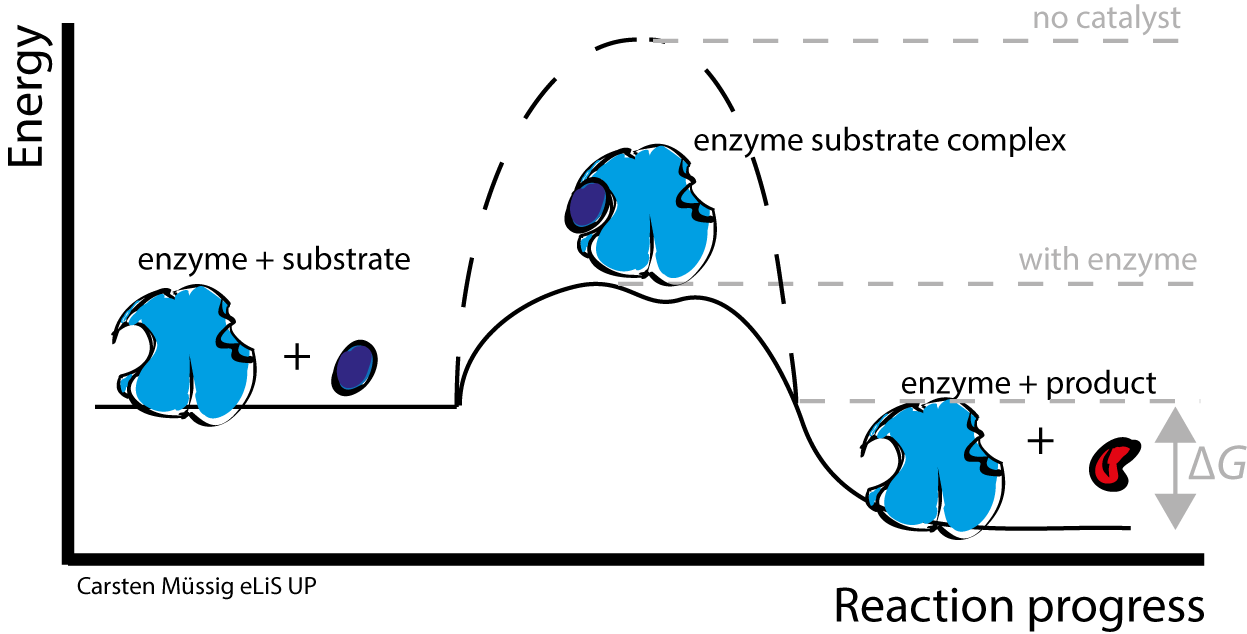
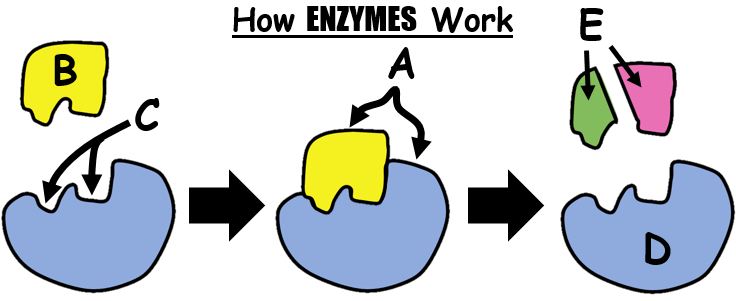
How does an enzymes shape relate to its function?
the shape of the enzyme has no relation to its function
the enzyme is shaped specially for certain substrates to perform a specific reaction
the enzyme shape acts as a receptor to certain products
the enzyme shape can fit into specific substrates to cease a reaction
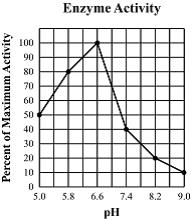
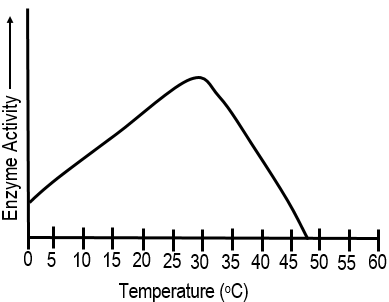
Changes in pH and temperature can ___________________ an enzyme which causes it to lose its shape and affects its function.
puncture
denature
double
delete


Which is true of prokaryotic and eukaryotic cells?
Prokaryotic cells are larger than eukaryotic cells.
Eukaryotic cells do not have nuclei, and prokaryotic cells do have nuclei.
Prokaryotic cells lack membrane-bound organelles, and eukaryotic cells contain membrane-bound organelles.
Eukaryotic cells are simpler than prokaryotic cells.
Which organelle in eukaryotic cells is near the nucleus and has ribosomes attached to it
rough ER
smooth ER
golgi apparatus
lysosome

What organelle converts energy from organic molecules to ATP?

Long skinny structures made of protein that help with cell structure/ support
cytoplasm
cytoskeleton
lysosomes
cell membrane
this protects the nucleus
nucleolus
cell membrane
cell wall
nuclear membrane
Collects, processes, and packages proteins for the cell
mitochondria
golgi apparatus
smooth ER
rough ER
Organelles are suspended in this.
nucleus
cytoplasm
golgi body
ribosome
Prokaryotes do NOT have....
membrane bound organelles
DNA or RNA
Cell membrane
Life
Which organelle assists with movement of the cell?
Flagella
Nucleus
Nuclear Membrane
Golgi Apparatus
For the two pyruvates that enter from glycolysis, the Krebs cycles will yield:
1 ATP, 2 NADH, and 1 FADH2
1 ATP, 2 NADH, and 2 FADH2
1 ATP, 3 NADH, and 1 FADH2
2 ATP, 6 NADH, and 2 FADH2
2 ATP, 4 NADH, and 2 FADH2
The initial reaction of the Krebs cycle produces:
Glucose and pyruvate
H2O and CO2
CO2, acetyl-CoA, and NADH
Coenzyme A and NADH
Acetyl-CoA is joined up to a ________________________ to form ________________________.
6 carbon compound; acetate
3 carbon compound; acetyl-CoA
4 carbon compound; acetyl-CoA
4 carbon compound; citric acid
6 carbon compound; citric acid
Where does the Krebs cycle take place?
Cytoplasm
Inner Mitochondrial Membrane
Outer Mitochondrial Membrane
Mitochondrial Matrix
The waste product produced during the Krebs cycle is...
Oxygen
Water
Carbon Dioxide
ATP
True or False: The Krebs cycle anaerobic.
True
False

What part of the cell cycle is considered interphase? Select all that apply.
G1
G2
S
M
Which statement is NOT true about interphase?
It's the longest phase of the cell cycle
During interphase organelles duplicate
During interphase, DNA replicates
During interphase, the chromatin condenses into chromosomes.

What is this picture of?
Chromosomes
Chromatids
Chromatin
Centromeres


Why do cells go through the cell cycle?
growth
repair
reproduction
All of the above
True or False: Mitosis occurs for all cells including sex cells.
True
False
When vesicles REMOVE things from inside of the cell, this is called
endocytosis
exocytosis
deconstruction of the organelle
protein pumping
What is the overall goal of ALL cellular transport?
to make a gradient
to maintain homeostasis
to make the cells shrink
to keep molecules where they are
What characteristic does the cell membrane have that describes it's ability to let some things in and keep other things out of the cell?
selectively permeable
impermeable
controlling
fluid
When water moves across the cell membrane, is energy used?
Yes, it is active transport
Yes, it is passive transport
No, it is active transport
No, it is passive transport
In a hypotonic solution, water will
go INTO the cell
LEAVE the cell
go IN and OUT of the cell
stop moving
Which of the following is NOT a type of passive transport?
Facilitated Diffusion
Diffusion
Osmosis
Molecular (Protein) Pump
Which type of transport does NOT use vesicles and energy?
Facilitated Diffusion
Endocytosis
Exocytosis
Which type of transport does NOT use proteins?
Osmosis
Facilitated Diffusion
Molecular (Protein) Pump
The difference between passive and active transport is that active transport
uses energy
does not use energy
goes from HIGH to LOW
moves molecules randomly
Does facilitated diffusion require energy?
Yes
No
Does endocytosis require energy?
Yes
No
Does osmosis require energy?
Yes
No
Which type of transport moves molecules from an area of HIGH concentration to an area of LOW concentration?
Active
Passive

What type of transport would use the structure shown in the picture?
Facilitated Diffusion
Diffusion
Endocytosis
Molecular (Protein) Pump

What type of transport is this?
Osmosis
Endocytosis
Exocytosis
Protein Pump
The function of the _________________ is to control what enters and exits the cell.
protein
cell membrane
cell wall
mitochondria
The majority of the cell membrane is made up of
lipids
carbohydrates
protein
nucleic acids
The cell membrane forms a boundary between the inside and the outside of the cell. It's job is to
give the cell structure and support
maintain homeostasis
allow all things to enter the cell
not allow anything to enter the cell
If you placed a cell into saltwater, water would move
into the cell
out of the cell
Proteins in the cell membrane allow
only water to enter the cell
the cell to interact with it's environment (surrounding cells)
the cell to attach to other cells
The molecule that functions as the oxidizing agent (electron receptor) in a redox or oxidation-reduction reaction _____.
gains electrons and gains potential energy
loses electrons and loses potential energy
gains electrons and loses potential energy
loses electrons and gains potential energy
Glucose is broken down into pyruvic acid during which process
Which molecule isn't a high energy hydrogen carrier?
Which of the following is a product of cellular respiration?
Radiant Energy
Oxygen
Glucose
Water

What are the reactants (taken into) of cellular respiration? (Mark all of them!)
oxygen
glucose
carbon dioxide
water
energy
Each glucose (6C) produces how many pyruvic acid (3C) molecules?
5
2
3
4
Which of the following do at least one stage of cellular respiration? (Mark all)
plants
animals
bacteria
fungi
What role do NADH and FADH2 (produced during Glycolysis and Kreb's Cycle) play in cellular respiration
they are energy carriers (hydrogen)that use that energy to produce massive amounts of ATP
They are waste products and are pushed out of the cell
They are necessary for long-term energy storage
They don't play any role in cellular respiration
What are the outputs of the Kreb's cycle? (Mark all)
CO2
H2O
ATP
NADH and FADH2

