wayground logo

Free Printable Worksheets

Font size

S
M
L
XL
Worksheets

Biology EOC Review Day 2

Total questions: 169

Worksheet time: 4hrs 27mins

Name
Class
Date
1.

The cladogram shows the evolution of land plants as indicated by fossil records.

Which discovery would challenge the validity of this cladogram?

a)

A large aquatic vascular plant about 200 million years old

b)

A species of algae that has existed for less than one million years

c)

A moss species that has existed for less than 380 million years

d)

A fossil of a fern more than 425 million years old

2.

Scientists estimate that there are more than 20,000 species of ants. The species range in size from 1 mm long to 38 mm long and live in most environments. The diets of ants range from flowers and seeds to fluids from their own larvae. Ants have been able to successfully inhabit so many different environments because their populations have been able to --

a)

hybridize with other species of insects

b)

adapt to a variety of habitats and food sources

c)

fill niches usually occupied by mammals

d)

occupy habitats that have no other life-forms

3.

Two populations of mice living in the same forest are separated by a large water-filled ditch. After a rainstorm, flooding brings several mice from one population to the other population. When the mice from the first population reproduce with members of the second population, which of the following will likely occur?

a)

All of the offspring will die as a result of reproductive mutations.

b)

The offspring will be forced to leave the second population.

c)

The offspring will be genetically identical to their parent from the first population.

d)

The offspring in the second population will have greater genetic variety.

4.

The picture shows bean-shaped glands called nodes. The clusters of cells in the nodes include macrophages that break down viruses and other potentially harmful materials. Nodes also contain cells that produce protein particles capable of capturing harmful materials that flow in tissue fluid through the nodes. Different parts of the body are drained by nodes in different regions of the body.


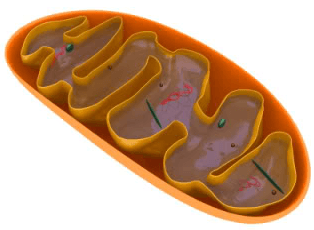
Which body systems are directly responsible for regulating these nodes and protecting the body from harmful materials in tissue fluid?

a)

Immune and lymphatic systems

b)

Digestive and nervous systems

c)

Endocrine and digestive systems

d)

Circulatory and nervous systems

5.

Organisms are classified today using the Linnaean system, and the following table shows the taxonomic classification of two marine organisms living along the Pacific Coast.


Taxonomic classification is important to marine biologists because it provides a way to -

a)

prove that marine evolution occurs

b)

discover and name every marine organism on Earth

c)

designate Latin as the universal language of marine biology

d)

identify marine organisms and find evolutionary relationships between them

6.

When a person is suddenly cut by a sharp object, a nervous impulse is sent along a sensory neuron to the spinal cord. The impulse is immediately transmitted through motor neurons to produce a response. Which of the following correctly identifies and describes this response?

a)

It is a conditioned response that occurs only to prevent injury.

b)

It is a learned response that does not occur in infants and small children.

c)

It is a reflex response that causes various muscles to contract in order to move away from the object.

d)

It is a voluntary response that is initiated only after the impulse has been carried to the relevant area in the brain.

7.

A student conducted an investigation to study phototropism in grasses. The only difference between the control group and the experimental group was the light conditions. The control group was provided full light, while the experimental group was shaded on one side. The diagrams show the average heights and positions of blades of grass in the investigation. (View Image)


Which statement best explains why the grass tips of the experimental group bent toward the light?

a)

Water evaporated faster on the side of the plant having full light.

b)

Light sensors in the grass tips simulated a hormone in the shoot system.

c)

The xylem in the roots system absorbed more nutrients from the shaded side.

d)

The side facing the light has greater chance of absorbing carbon dioxide from the atmosphere.

8.

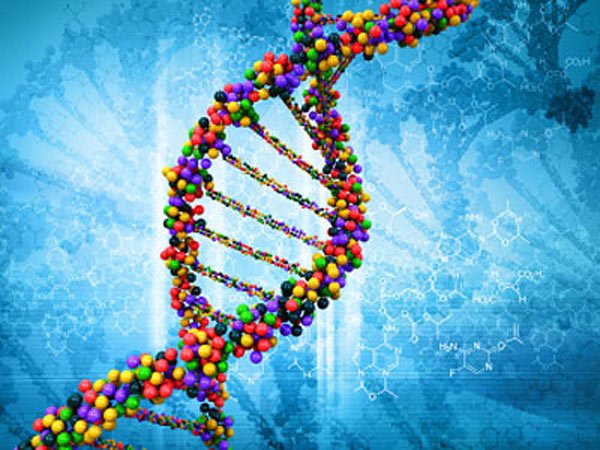
Part of an important cellular process involving a DNA strand is modeled in the image. (View image)


What is the purpose of this cellular process?

a)

Preserving genetic information for future generations

b)

Deleting the information in the sequence produced from the DNA template

c)

Transcribing information in the DNA sequence for use by the cell

d)

Producing more nucleotides for the DNA sequence

9.

The energy pyramid shows the energy made available by producers. (View Image)


Base on the energy flow between trophic levels in an energy pyramid, how much energy would be expected to be found at the secondary consumer level in this pyramid?

a)

100 joules

b)

500 joules

c)

1,000 joules

d)

50 joules

10.

Nitrogenous bases are located on both strands of the DNA double helix. What is the significance of the nitrogenous bases?

a)

The number of adenines and cytosines determines the type of RNA that will be produced.

b)

The order of nitrogenous bases determines the order of amino acids in the proteins synthesized.

c)

The amount of thymine and guanine in the DNA molecules determines the length of the genes.

d)

The type of hydrogen bonding between the nitrogenous bases determines which amino acid will be added to the peptide chain.

11.

Oncogenes are mutated forms of genes. Oncogenes can transform a cell into a tumor cell. Some tumor cells are benign, while others are malignant. How does the presence of an oncogene lead to the formation of a tumor?

a)

ATP Production is inhibited.

b)

Cell division is unregulated.

c)

Somatic cell growth is inhibited.

d)

Antibody Activity is unregulated.

12.

Some students used vinegar to dissolve away the shells of three eggs and used the eggs as models of human red blood cells. The students observed the changes in the eggs when they were placed in different solutions. (View Image)


Which statement best describes the role of the cell membrane in this model?

a)

The cell membrane is an impermeable barrier that prevents water from entering the cell.

b)

The cell membrane allows solutes to enter the cell, which causes the cell to shrink.

c)

The cell membrane allows water to enter and leave the cell.

d)

The cell membrane removes solutes from the environment.

13.

Viruses can be transmitted through air, water, food, insect bites, and direct skin contact. Once a virus gains entry to the body, it invades a host cell in order to --

a)

deactivate the host cell's defences

b)

synthesize antibodies for defence

c)

metabolize host proteins and grow

d)

access cellular processes for replication

14.

The diagram shows cells in different phases of mitosis. A student is trying to find a cell in a particular phase of mitosis. The student is looking for evidence that spindle fibers are separating the chromosomes to ensure that each new nucleus has one copy of each chromosome. (View Image)


Which cell is in the phase of mitosis that the student is searching for?

a)

Cell 1

b)

Cell 2

c)

Cell 3

d)

Cell 4

15.

Albinism is an autosomal recessive condition. Which circle graph shows the genotype probability when an albino female mates with a male that is heterozygous for the albinism trait? (View Image)

a)

F

b)

G

c)

H

d)

J

16.

The complex carbohydrates pictured (View Image) are made by linking molecules of glucose.


In all three complex carbohydrates, the subunits of glucose are bonded together differently. Because they have different structures, they most likely --

a)

contain different chemical elements

b)

form different proteins

c)

carry different nucleotides

d)

perform different functions

17.

Photosynthesis and cellular respiration both involve the use and release of gases. Which statement correctly identifies the role of gases in the two processes?

a)

Photosynthesis and cellular respiration both use carbon dioxide and release oxygen.

b)

Photosynthesis and cellular respiration both use oxygen and release carbon dioxide.

c)

Cellular respiration uses oxygen and releases carbon dioxide, while photosynthesis uses carbon dioxide and releases oxygen.

d)

Cellular respiration uses carbon dioxide and releases oxygen, while photosynthesis uses oxygen and releases carbon dioxide.

18.

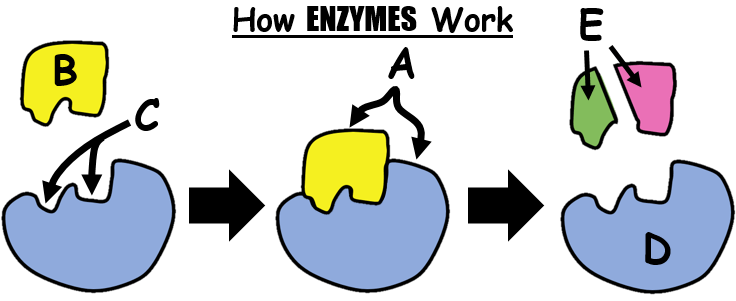
The diagram represents one way an enzyme can be inhibited. (View Image)


Which statement explains the effect of an inhibitor on an enzyme?

a)

A substrate will be able to bond with the enzyme.

b)

The enzyme will likely be attacked by immune cells.

c)

The enzyme will be unable to produce more enzymes.

d)

A substrate will be unable to attach to the enzyme.

19.

Four common relationships between organisms are listed in the box. (View Image)


Which statements best describe these relationships?

a)

Relationships 1 and 4 are examples of mutualism.

Relationship 2 is an example of commensalism.

Relationship 3 is an example of parasitism.

b)

Relationships 1, 2, and 4 are examples of mutualism.

Relationship 3 is an example of parasitism.

20.

In an experiment, two plants are grown together for a time and then separated. Plant 2 is a parasite of Plant 1. Which graph predicts the growth of Plant 1 and Plant 2 during the experiment?

a)
b)
c)
d)
21.
a)
b)
c)
d)
22.
a)
b)
c)
d)
23.
a)
b)
c)
d)
24.
a)

crickets and sparrows

b)

toads and spiders

c)

rabbits and mice

d)

hognose snakes and owls

25.
a)

Canada goose

b)

eastern cottontail

c)

loggerhead sea turtle

d)

sand dollar

26.
a)

grasses and ants

b)

ants and grasshoppers

c)

grasshoppers and Texas cottonmouths

d)

Texas cottonmouths and red-shoulder hawks

27.
a)

organisms at higher trophic levels have less energy available to them than organisms at lower trophic levels

b)

organisms at higher trophic levels require smaller habitats than organisms at lower trophic levels

c)

organisms at lower trophic levels provide less energy than organisms at higher trophic levels.

d)

organisms at lower trophic levels outcompete organisms at higher trophic levels

28.

Overfishing is causing the decline of fish populations, such as Eastern Atlantic bluefin in the Meditteranean. Eastern Atlantic bluefin tuna are caught faster than they can reproduce. Which statement describes the most likely effect that over fishing will have on this ecosystem?

a)

Overfishing makes the ecosystem more stable by increasing competition for limited resources.

b)

Overfishing decreases the stability of the ecosystem by disrupting food chains.

c)

Overfishing has no effect on ecosystem's stability because it affects one species out of many.

d)

Overfishing increases ecosystem stability by allowing prey populations to overproduce.

29.
a)

The birds will increase biodiversity of native plant species.

b)

Birds will pollinate native species, increasing genetic variation.

c)

The birds will consume beneficial insects, as well as the pest species.

d)

The birds will mate with native birds and create a new species.

30.

The San Marcos salamander, Eurycea nana, a light reddish-brown translucent salamander about 2-5 cm in length. E. nana is found only in Spring Lake and a portion of the San Marcos river. Which human activity would most likely decrease the ability of salamanders to survive?

a)

Increasing water consumption that decreases the flow of clean water from the springs that feed the river.

b)

Public transportation that reduces the number of automobiles that contribute to pollution runoff into the river.

c)

Tourism that helps fund the educational programs related to river ecosystem conservation

d)

The addition of a new food source into the river that limits competition for resources.

31.

Which statement is an example of how carbon moves through a food chain as part of a carbon cycle?

a)

Producers release carbon dioxide, consumers take it in.

b)

Producers take in carbon dioxide, consumers release it.

c)

Producers take in carbon from the soil, and they release it when they decompose.

d)

Producers release carbon into the soil, and consumers take it in from the soil.

32.

What would be the most likely effect of a wildfire that burned a large area of a forest?

a)

more sugars and starches would be available for the animals in the area

b)

the availability of fossil fuels for use by industries in the area would be reduced.

c)

less carbon dioxide would be removed from the area by plants.

d)

an increase in animal respiration would increase the release of carbon dioxide in the area.

33.

As part of the nitrogen cycle, animals acquire some amino acids by doing which of the following?

a)

breathing air

b)

eating plants

c)

drinking water

d)

producing waste

34.

NUCLEOTIDES ARE THE BUILDING BLOCKS OF...

a)

CARBOHYDRATES

b)

LIPIDS

c)

NUCLEIC ACIDS

d)

PROTEINS

35.

AMINO ACIDS ARE THE BUILDING BLOCKS OF...

a)

CARBHYDRATES

b)

LIPIDS

c)

NUCLEIC ACIDS

d)

PROTEINS

36.

FATTY ACIDS AND GLYCEROL ARE THE BUILDING BLOCKS OF..

a)

CARBOHYDRATES

b)

LIPIDS

c)

NUCLEIC ACIDS

d)

PROTEINS

37.

MONOSACCARIDES ARE THE BUILDING BLOCKS OF...

a)

CARBOHYDRATES

b)

LIPIDS

c)

NUCLEIC ACIDS

d)

PROTEINS

38.

WHAT ELEMENTS DO ALL BIOMOLECULES (LIPIDS, PROTEINS, NUCLEIC ACIDS, CARBS) HAVE IN COMMON?

a)

CARBON, HYDROGEN, FLOURINE

b)

CARBON, HYDROGEN, CHLORINE

c)

CARBON, HYDROGEN, IODINE

d)

CARBON, HYDROGEN, OXYGEN

39.

WHAT ELEMENT DO AMINO ACIDS AND NUCLEOTIDES HAVE THAT THE OTHERS DO NOT HAVE?

a)

PHOSPHATE

b)

NITROGEN

c)

CARBON

d)

OXYGEN

40.

WHICH BIOMOLECULES STORES LONG-TERM ENERGY?

a)

PROTEIN

b)

CARBS

c)

LIPIDS

d)

NUCLEIC ACIDS

41.

A CELL WITHOUT A NUCLEUS IS...

a)

PROKARYOTIC

b)

PLANT

c)

ANIMAL

d)

PROTIST

42.

A CELL WITH A NUCLEUS IS...

a)

PROKARYOTIC

b)

VIRUS

c)

BACTERIA

d)

EUKARYOTIC

43.
Directs all cell activities through the DNA located there.
a)
Lysosomes
b)
Nucleus
c)
ribosomes
d)
Mitochondria
44.
What is the name of the genetic material that is inside the nucleus?
a)
ER
b)
ATP
c)
YOLO
d)
DNA
45.
Where are proteins made?
a)
Golgi body
b)
Mitoichondria
c)
Chromosomes
d)
Ribosomes
46.
The site of photosynthesis
a)
ribosome
b)
mitochondria
c)
chloroplast
d)
nucleus
47.
What are tiny organelles that convert glucose into ATP?
a)
Ribosomes
b)
Vesicles
c)
Cytoskeleton
d)
Mitochondria
48.
A rigid layer that lies outside the cell's  membrane is...
a)
Cytoskeleton
b)
Cilia
c)
Cell Wall
d)
Flagella
49.
Osmosis is the movement of _____ across a membrane.
a)
food
b)
energy
c)
oxygen
d)
water
50.
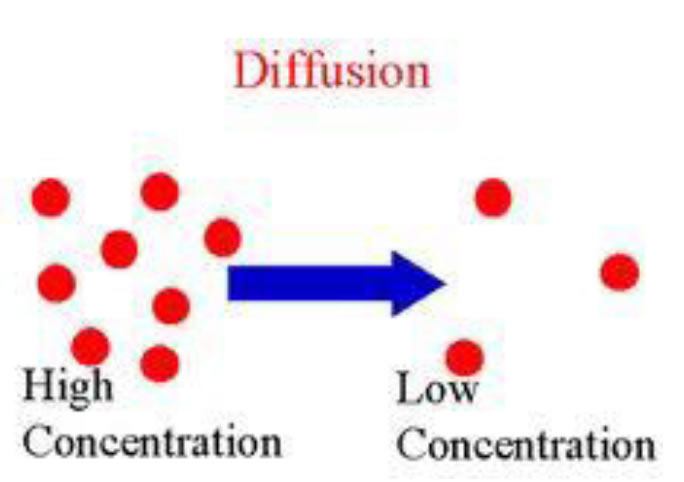
Movement of particles from high to low concentration. 
a)
Passive Transport
b)
Active Transport
51.
Osmosis is a form of ______________. 
a)
Passive Transport
b)
Active Transport
52.
The cell membrane is selectively permeable, which means...
a)
All materials can enter and leave the cell
b)
Certain things can enter while others cannot
c)
The cell manually sorts through all materials
d)
Only certain cells can interact with the cell.
53.
What is it called when molecules move across the cell membrane from an area of high concentration to an area of low concentration through a carrier protein?
a)
Diffusion
b)
Osmosis
c)
Active Transport
d)
Facilitated Diffusion
54.
What is the name of the process in which molecules move from an area of high concentration to an area of low concentration across a selectively permeable membrane?
a)
Diffusion
b)
Osmosis
c)
Active Transport
d)
Facilitated Diffusion 
55.
A cell in an isotonic solution will
a)
swell (get bigger)
b)
shrink (get smaller)
c)
stay the same size
d)
impossible to tell
56.
The cell below is in a _________ solution.
a)
Hypotonic
b)
Hypertonic
c)
Isotonic
57.
The cell below is in a _____________ solution.
a)
Hypertonic
b)
Hypotonic
c)
Isotonic
58.
During which stage of the cell cycle does mitosis and cytokinesis occur?
a)
Interphase
b)
S phase
c)
M phase
d)
G1 phase
59.
During what phase of the cell cycle is DNA replicated?
a)
G1 phase
b)
S phase
c)
G2 phase
d)
M phase
60.
During what phase of the cell cycle does the cell grow?
a)
G1 phase
b)
S phase
c)
M phase
d)
Cytokinesis
61.
Put the following stages of mitosis in order: anaphase, prophase, metaphase, and telophase. 
a)
prophase, metaphase, telophase, anaphase
b)
prophase, anaphase, metaphase, telophase
c)
prophase, metaphase, anaphase, telophase
d)
prophase, telophase, metaphase, anaphase
62.
a)
Anaphase
b)
Cytokinesis
c)
Telophase
d)
Metaphase
63.
a)
Cytokinesis
b)
Interphase
c)
Anaphase
d)
Metaphase
64.
a)
Cytokinesis
b)
Anaphase
c)
Telophase
d)
Prophase
65.
Identify the Cell Cycle Stage.
a)
Anaphase
b)
Cytonkinesis
c)
Interphase
d)
Prophase
66.
Uncontrollable cell growth is known as _____
a)
obesity
b)
cancer
c)
diabetes
d)
hepatitis
67.
The cell process where one cell divides to form two identical cells is called --
a)
Synthesis
b)
Mitosis
c)
Interphase
d)
Cytokinesis
68.
When you start with 1 cell, at the end of mitosis, how many identical cells will you have?
a)
1
b)
2
c)
3
d)
4
69.
After meiosis is complete how many cells will there be?
a)
1
b)
2
c)
3
d)
4
70.
After meiosis is complete, the new cells:
a)
are all identical
b)
are all different
c)
are half identical and half different
d)
are all stretched out
71.
What do viruses need to reproduce?
a)
they need genetic material
b)
They need a host cell
c)
They need  bacteria
d)
They need insulin
72.
Which viral life cycle allows viral genetic material to lay dormant while the host cell reproduces?
a)
lytic
b)
mitosis
c)
lysogenic
d)
S phase
73.
Reasons that viruses are considered to be nonliving is because
a)
They are not cellular
b)
They cannot reproduce on their own
c)
They cannot make proteins
d)
all of the above
74.
A process in which DNA has the unique ability to make an exact copy of itself.
a)
Replication
b)
Translation
c)
Transcription
75.
Adenine bonds with ______________.
a)
Guanine
b)
Thymine
c)
Cytosine
d)
Adenine
76.
Guanine bonds with ______________.
a)
Adenine
b)
Guanine
c)
Cytosine
d)
Thymine
77.
Which sequence of DNA bases would pair with this partial strand
ATG TGA CAG
a)
ATG TGA CAG
b)
TAC ACT GTC
c)
GTA AGT GAC
d)
CAT TCA CTG
78.
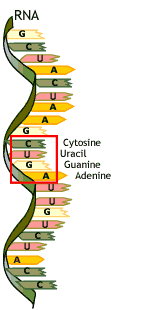
In RNA, Uracil pairs with ______. 
a)
cytosine
b)
adenine
c)
guanine
d)
thymine
79.
The process to go from DNA to mRNA is _______
a)
translation
b)
transcription
c)
replication
80.
The process to go from mRNA to a protein is called ____
a)
transcription
b)
rRNA
c)
replication
d)
translation
81.
Choose the nucleotide sequence of the RNA strand that would be complementary to the following strand: 
GTAGTCA
a)
UATUAGA
b)
ACGACTG
c)
CAUCAGU
d)
CATCAGT
82.
The main function of tRNA is to...
a)
carry a message that, when translated, forms proteins
b)
form a portion of ribosomes
c)
string together complementary RNA and DNA strands
d)
bring amino acids from the cytoplasm to the ribosomes
83.
Which component of DNA determines the traits of an organism? 
a)
Nitrogen Bases
b)
Sugar-Phosphate Backbone
c)
Hydrogen bonds
84.
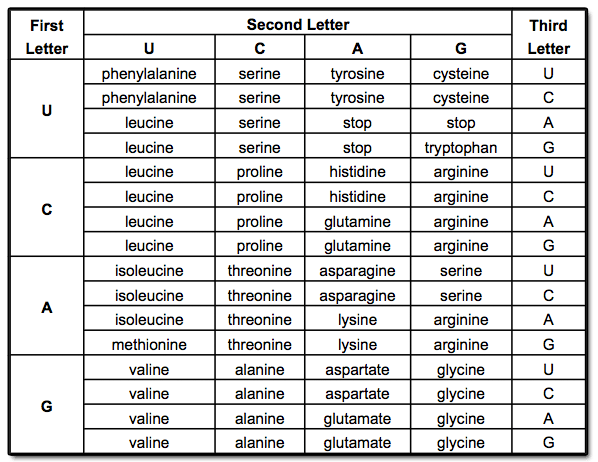
What is the correct amino acid sequence for the mRNA code AUGCCAGUAUGA
a)
Met-Pro-Ala-Val
b)
Met-Pro-Val
c)
Tyr-Gly-His
d)
Tyr-Gly-Arg-His
85.
What type of cell is pictured?
a)
Prokaryotic
b)
Eukaryotic
c)
Plant
d)
Animal
86.
Type of cell shown?
a)
Bacterial
b)
Prokaryotic
c)
Eukaryotic
d)
Red blood 
87.
Which 2 molecules forms the sides (backbone) of the DNA ladder?
a)
deoxyribose and adenine
b)
deoxyribose and a hydrogen bond
c)
sugar and the nucleus
d)
deoxyribose (sugar) and phosphate
88.
Any change in the sequence of DNA is...
a)
transgenic shift
b)
Single Genotype
c)
Monohybrid Trait
d)
Mutation
89.

What mutation has occurred here?

T-G-A-C-C-A

T-G-A-G-C-A

a)

Substitution/Point

b)

Deletion

c)

Insertion

d)

Frameshift

90.
DNA molecule segment is : TTACGCAAG
The mutated DNA segment is TTCGCAAG. This is an example of ___ mutation.
a)
Substitution
b)
Deletion
c)
Insertion
d)
Inversion
91.
What type of gene mutation has occurred here? Normal-
AGA-TTC-ATA-GCG
Mutant-
AGA-TTC-AAT-AGC-G
a)
deletion frameshift
b)
insertion frameshift
c)
substitution
d)
nonsense
92.
A human has 46 chromosomes in their body cells.  What is the haploid number?
a)
46
b)
92
c)
23
d)
12
93.
Gametes have haploid or diploid number of chromosomes?
a)
Haploid
b)
Diploid
94.
Body cells have diploid or haploid number of chromosomes?
a)
Haploid
b)
Diploid
95.
Term for homozygous organisms that display two dominant phenotypes at the same time
a)
codominance
b)
incomplete dominance
c)
multiple alleles
d)
linked genes
96.
What is a phenotype?
a)
The expression of a trait; what you see.
b)
refers to the genetic makeup of an individual
c)
An organism that has the same genes for a trait (ex. TT or tt)
d)
the passing of traits from parent to offspring
97.
What does heterozygous mean?
a)
An organism that has the same genes for a trait (TT or tt)
b)
An organism that has different genes for a trait (Tt)
c)
When neither gene is fully dominant; offspring is a mixture of both
d)
the different forms of a trait (hair color--> brown, blonde, red
98.
having two of the same genes for the trait (sometimes called purebred).
a)
homozygous
b)
hetrozygous
c)
protein
d)
chromosome
99.
What is the percentage of offspring that have green pods?
a)
100%
b)
75%
c)
50%
d)
25%
100.
What goes in box 1
a)
AABb
b)
AABB
c)
aabb
d)
AaBb
101.

A red and white flower are crossed and all offspring are pink flowers. This type of inheritance pattern is a MIXTURE of both traits.

a)

incomplete dominance

b)

co-dominance

c)

complete dominance

d)

recessive pattern

102.
What is the gender of the individual whose karyotype is seen in the image?
a)
Male
b)
Female
103.

Based on the karyotype, what is the sex of this baby?

a)

Male

b)

Female

104.
What is the chromosomal condition of the individual whose karyotype is seen in the image?
a)
Trisomy 21 (Down's Syndrome)
b)
Trisomy 13 (Patau Syndrome)
c)
Trisomy 18 (Edward's Syndrome)
d)
XXY Sex Chromosomes (Klinefelter's Syndrome)
105.
Whose blood was found at the crime scene?
a)
John
b)
Lisa
c)
Bob
d)
Sure
106.
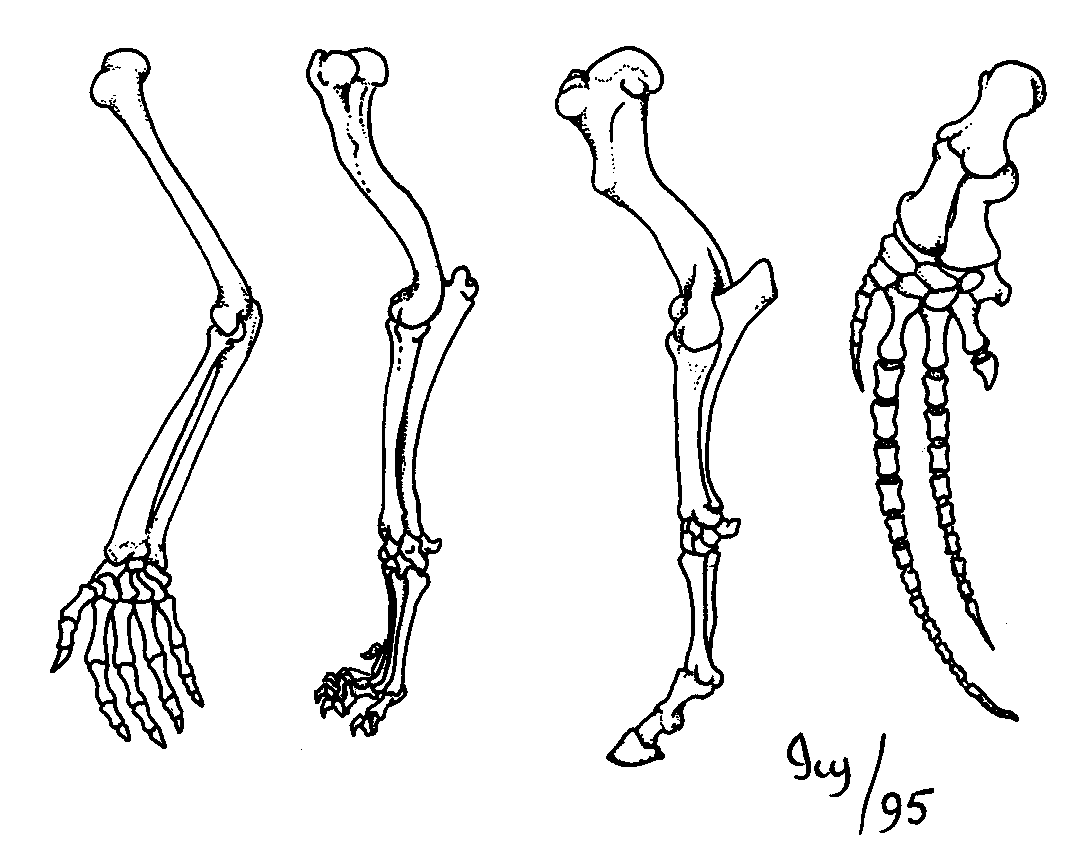
Structures with the same parts have different functions; suggests that organisms share a common ancestry
a)
vestigial structures
b)
homologous structures
c)
adaptive radiation
d)
fossil
107.
Study of embryos of various organisms to show a common ancestor because of similarities in development
a)
natural selection
b)
embryology
c)
speciation
d)
evolution
108.
Which best describes these fossils?
a)
The oldest fossils can be found on the lower layers
b)
The oldest fossils can be found at the top layers
c)
The youngest fossils are always found on the bottom layers
d)
You can not tell the age of any of these fossils
109.
Whales are aquatic mammals that contain a pelvis bone.  Even though it does not aid in its movement, the function must have been used by a common ancestor of the whale.  Thus, the pelvis is referred to as a(n)
a)
vestigial structure
b)
analogous structure
c)
homologous structure
110.
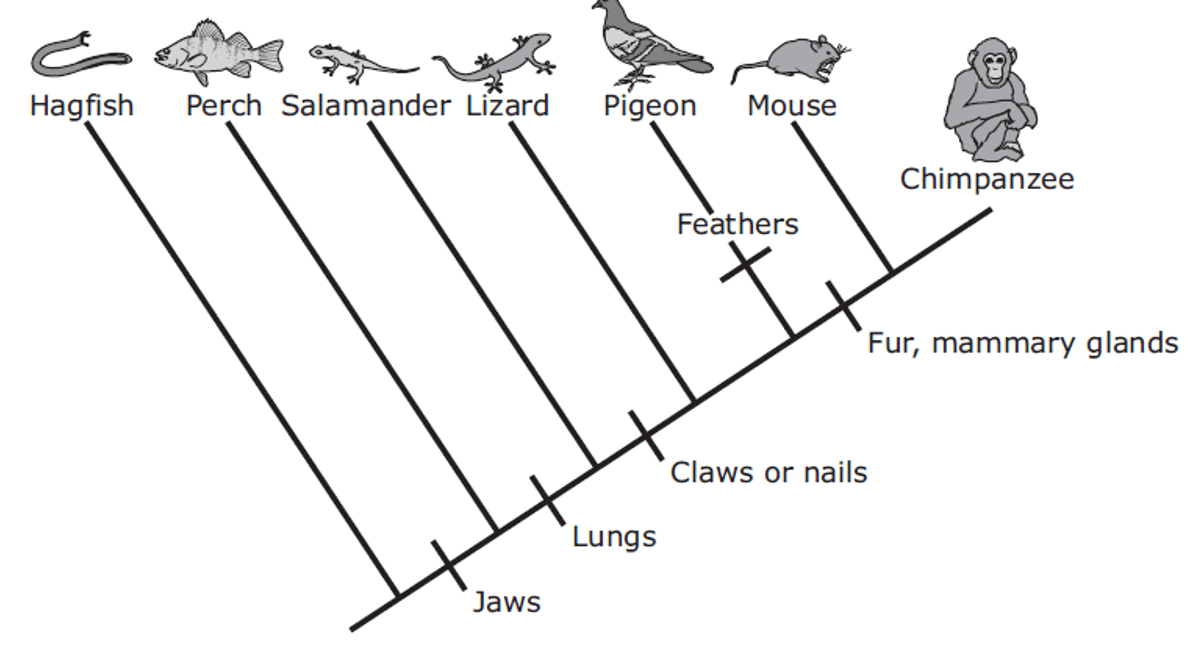
All the animals to the right of the hagfish would have the common characteristic of -
a)
Fur
b)
Claws or nails
c)
Lungs
d)
Jaws
111.
How would you describe this evolution?
a)
Homologous structure
b)
Analogous structure
c)
Structural adaption
d)
Functional adaption
112.
The ability of an organism to survive and reproduce in its specific environment 
a)
diversity.
b)
evolution
c)
adaptation
d)
 fitness
113.
two species are in different environments and look very similar.  However, that are not closely related (analogous).  Their resemblance is most likely an example of.
a)
sexual selection
b)
temporal isolation
c)
convergent evolution
d)
divergent evolution
114.

Other insects cannot, but, a bumble bee has just enough weight to open up the snapdragon flower and pollinate. This adaption is ....

a)

convergent evolution

b)

co-evolution

c)

divergent evolution

d)

speciation

115.

Some female peacocks prefer males with large, colorful tales while other female peacocks prefer males with no tail at all. Females are now mating only with the tail they prefer. What type of reproductive barrier is this?

a)

behavioral isolation

b)

hybrid sterility

c)

temporal isolation

d)

mechanical isolation

116.
Which is an example of temporal isolation?
a)
flowers that bloom in different months 
b)
birds that have different mating calls
c)
fruit flies that mate in different locations
d)
squirrels that have different fur colors
117.

When animals make themselves look or sound like another animal to keep predators away

a)

mimicry

b)

camoflauge

c)

learned behavior

d)

behavioral adaptation

118.
Two organisms that have a common ancestor but overtime evolved into different species. What is this called
a)
convergent
b)
divergent
c)
coevolution
119.
Which evidence of common ancestry is being studied in this visual?
a)
biogeography
b)
fossil record
c)
anatomical homology
d)
molecular homology
120.
What is the most specific level of classification?
a)
Family
b)
Domain
c)
Species
d)
Carolus Linnaeus
121.
The 8 levels of classification, most broad to most specific.
a)
Domain, Genus, Family, Order, Class, Phylum, Kingdom, Species
b)
Domain, Species, Kingdom, Genus, Phylum, Family, Class, Order
c)
Domain, Kingdom, Phylum, Class, Order, Family, Genus, Species
d)
Order, Kingdom, Species, Domain, Phylum, Family, Class, Genus
122.
What kingdom is always multicellular, heterotrophic and has NO cell wall?
a)
Protista
b)
Fungi
c)
Plantae
d)
Animalia
123.
Which kingdom is autotrophic AND has a cell wall?
a)
Bacteria
b)
Fungi
c)
Plantae
d)
Protista
124.
What is the difference between Archaebacteria and Eubacteria?
a)
Bacteria is eukaryotic
b)
Archaebacteria is multicellular
c)
Archaebacteria can live in extreme environments
d)
They are the same
125.
This kingdom contains heterotrophic organisms that can be unicellular or multicellular. Organisms from this kingdom can sometimes cause athlete's foot or ringworm.
a)
Fungi
b)
Animalia
c)
Protista
d)
Archaebacteria
126.
What are the three domains?
a)
Archaea, Bacteria, and Eubacteria
b)
Archaea, Protista, and Eubacteria
c)
Archaea, Bacteria, and Eukarya
d)
Archaea, Fungi, Animalia
127.
This kingdom contains organisms that are unicellular, prokaryotic, and often live in water. Amoeba, euglena, and paramecium are a part of this kingdom.
a)
Animalia
b)
Eubacteria
c)
Fungi
d)
Protista
128.

What two names are used in binomial nomenclature?

a)

Kingom

b)

Phylum

c)

Genus

d)

Species

129.
In which organelle (part of the cell) does photosynthesis take place?
a)
mitochondria
b)
chloroplast
c)
nucleus
d)
cell membrane
130.
Which of the following is the correct equation for PHOTOSYNTHESIS?
a)
CO+ light + H2O --> O+ Sugar
b)
CO+ sugar + H2O --> O+ light
c)
O2 + light + H2O --> CO+ Sugar
d)
CO+ O2 + H2O --> Light+ Sugar
131.
Where does cellular respiration take place in the cell?
a)
Cell Membrane
b)
Nucleus
c)
Mitochondria
d)
Vacuole
132.
The purpose of cellular respiration is to 
a)
make water
b)
make ATP
c)
make glucose
d)
make  oxygen
133.
What is the correct equation for cellular respiration?
a)
6O2 + C6H12O6 -> 6CO2 + 6H2O + Energy
b)
6O2 + C6H12O6 + Energy -> 6CO2 + 6H2O
c)
6CO2 + 6H2O -> 6O2 + C6H12O6 + Energy
d)
6CO2 + 6H2O + Energy -> 6O2 + C6H12O6
134.
The two main types of fermentation are called
a)
alcoholic and aerobic
b)
aerobic and anaerobic
c)
alcoholic and lactic acid
d)
lactic acid and anaerobic
135.
The process carried out by yeast that causes bread to rise is
a)
alcoholic fermentation
b)
lactic acid fermentation
c)
cellular respiration
d)
yeast mitosis
136.
 The expression "feel the burn" means that a person exercising is goes through...
a)
lactic acid fermentation
b)
alcoholic fermentation
c)
photosynthesis
d)
aerobic respiration
137.

How do enzymes speed up chemical reaction?

a)

Increasing activation energy

b)

Decreasing activation energy

c)

Increasing deactivation energy

d)

Decreasing deactivation energy

138.
Enzymes are...
a)
nucleic acids
b)
proteins
c)
lipids
d)
carbohydrates
139.
What is the function of an enzyme?
a)
enzymes break themselves into small pieces
b)
enzymes slow down chemical reactions
c)
enzymes speed up chemical reactions
d)
enzymes combine products to form reactants 
140.
Which of these is most likely an enzyme?  
a)
Sucrose
b)
Galactose
c)
Fructose
d)
Amylase
141.
The "lock and key hypothesis" attempts to explain the mechanism of?
a)
Vacuole formation
b)
Pinocytosis
c)
Sharing of electrons
d)
Enzyme specificity 
142.
Letter E...
a)
active site
b)
enzyme
c)
substrate
d)
products
143.
What is indicated by letter A?
a)
enzyme
b)
product
c)
substrate
d)
active site
144.
Letter D...
a)
active site
b)
enzyme
c)
substrate
d)
products
145.
Letter B...
a)
active site
b)
enzyme
c)
substrate
d)
products
146.
When a person is suddenly cut by a sharp object, a nervous impulse is sent along a sensory neuron to the spinal cord. The impulse is immediately transmitted through motor neurons to produce a response. Which of the following correctly identifies and describes this response?
a)
It is a conditioned response that occurs only to prevent injury.
b)
It is a learned response that does not occur in infants or small children.
c)
It is a reflex response that causes various muscles to contract in order to move away from the object.
d)
It is a voluntary response that is initiated only after the impulse has been carried to the relevant area in the brain.
147.
Which correctly describes an interaction between two body systems of a rabbit that helps the rabbit outrun a pursuing coyote?
a)
The skeletal system releases additional calcium, and the circulatory system retains more sodium in the blood to provide muscles with ions for contraction.
b)
The digestive system increases the rate of digestion, and the excretory system ceases to provide tissues with more nutrients.
c)
The respiratory system increases the breathing rate, and the circulatory system increases blood pressure to provide tissues with more oxygen.
d)
The endocrine system releases hormones that prepare the immune system to deal with possible injuries.
148.
The human digestive system is approximately 900 cm. long. Food is moved through the digestive tract primarily by - 
a)
bile produced by the pancreas
b)
the enzymes amylase and pepsin
c)
muscular contractions
d)
hydrochloric acid in the stomach
149.
a)
a reduced supply of oxygen
b)
long periods of rainfall
c)
high concentrations of glucose
d)
little available water
150.
a)
Pollen is released from the anther and is transferred to the stigma. A pollen tube forms and grows through the style. The pollen tube reaches the filament, where the sperm fertilizes the egg.
b)
Pollen moves from the ovule up through the style and is released from the stigma. The pollen is transferred to the anther, where the sperm fertilizes the egg.
c)
Pollen is released from the anther and is transferred to the stigma. A pollen tube forms and grows through the style. The pollen tube reaches an ovule within the ovary, where the sperm fertilizes the egg.
d)
Pollen is released from the stigma and is transferred to the anther. A pollen tube grows down from the anther through the filament and fuses with the ovule, where the sperm fertilizes the egg.
151.
The outermost layer of plant stems in dicotyledons consists of epidermal cells and guard cells that surround openings called stomata. The epidermal cells are usually covered with a waterproof layer that provides protection from injury and water loss. The stomata allow gas exchange. The epidermal cells and stomata have functions similar to those of which two human body systems?
a)
Skeletal and respiratory
b)
Cardiovascular and skeletal
c)
Integumentary and respiratory
d)
Cardiovascular and integumentary
152.
symbiotic relationship in which both organisms benefit
a)
competition
b)
Mutualism
c)
nitrogen fixation
d)
energy pyramid
153.
A living relationship between two species in which one organism is harmed is called...
a)
mutualism
b)
commensalism
c)
parasitism
d)
niche
154.
The amount of energy that usually transfers from one trophic level to the next...
a)
10%
b)
20%
c)
80%
d)
50%
155.
In the energy pyramid here, which organisms have the most energy available?
a)
Producers
b)
Carnivores
c)
Herbivores
d)
Top Predator
156.
If there is 1000 Kcal available in the producers in trophic level 1, how much energy is available in the herbivores in trophic level 2?
a)
10 Kcal
b)
1 Kcal
c)
100 Kcal
d)
1000 Kcal
157.
The fox in this food web would be considered a:
a)
Tertiary Consumer
b)
Producer
c)
Secondary Consumer
d)
Primary Consumer
158.
Cattle egrets are birds that forage in fields among cattle. The egrets get easy access to food and the cattle don't care if they are there or not.
a)
mutualism
b)
commensalism
c)
competition
d)
parasitism
159.
Red-billed oxpeckers are birds that feed on parasites found on an impala. The impala gets rid of parasites and the red-billed oxpeckers get a yummy dinner. This is an example of _______.
a)
commensalism
b)
mutualism
c)
neutralism
d)
competition
160.
What is the order of succession shown in this figure?
a)
A, B, C, D
b)
B, A, D, C
c)
C, D, A, B
d)
D, A, B, C
161.
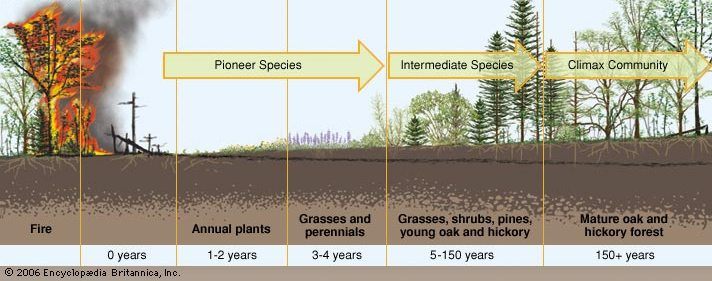
The picture shows what type of succession?
a)
primary
b)
secondary
c)
tertiary
d)
quadanary
162.
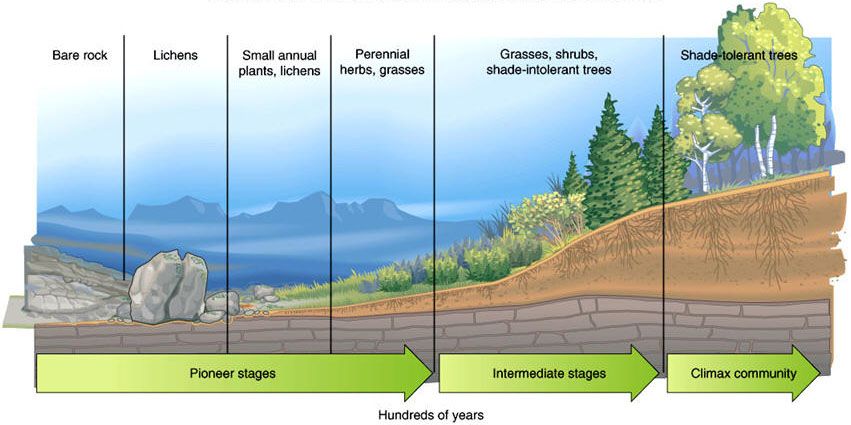
The picture shows what type of succession?
a)
primary
b)
secondary
c)
tertiary
d)
quadanary
163.
What is the name given to lichen or algae after a primary succession?
a)
pioneer species
b)
volunteer species
c)
founder species
d)
conqueror species
164.
What are examples of pioneer species in a primary succession?
a)
Bushes and Shrubs
b)
Oak trees
c)
Mossess and Lichens 
d)
A rose Bush
165.
After a volcanic eruption, lava covers the land. What is the order that plants grow to repopulate the area?
a)
Lichens → Shrubs → Grasses → Trees
b)
Lichens → tree → shrubs→Grasses
c)
Grasses → Lichens → Shrubs → Trees
d)
Lichens → Grasses → Shrubs → Trees
166.
Final illustration (#8) shows
a)
pioneer species
b)
climax community
c)
only biotic factors
d)
only abiotic factors
167.
Which of the following removes carbon from the atmosphere?
a)
Combustion
b)
Respiration
c)
Photosynthesis
d)
Death
168.
A particular golf course is using large amounts of nitrogen fertilizer. What process could move this nitrogen into a local stream?
a)
volatilization
b)
nitrogen fixation
c)
runoff
d)
ammonification
169.
What converts nitrogen gas into a useable form for plants and animals?
a)
bacteria
b)
fungi
c)
rain
d)
car exhaust