
 Worksheets
Unit 5 - Test Quiz Review
Total questions: 168
Worksheet time: 4hrs 25mins
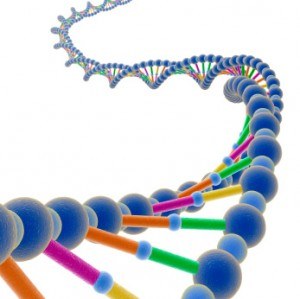
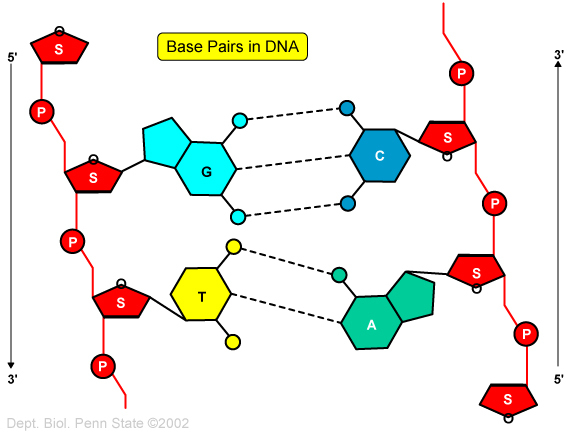
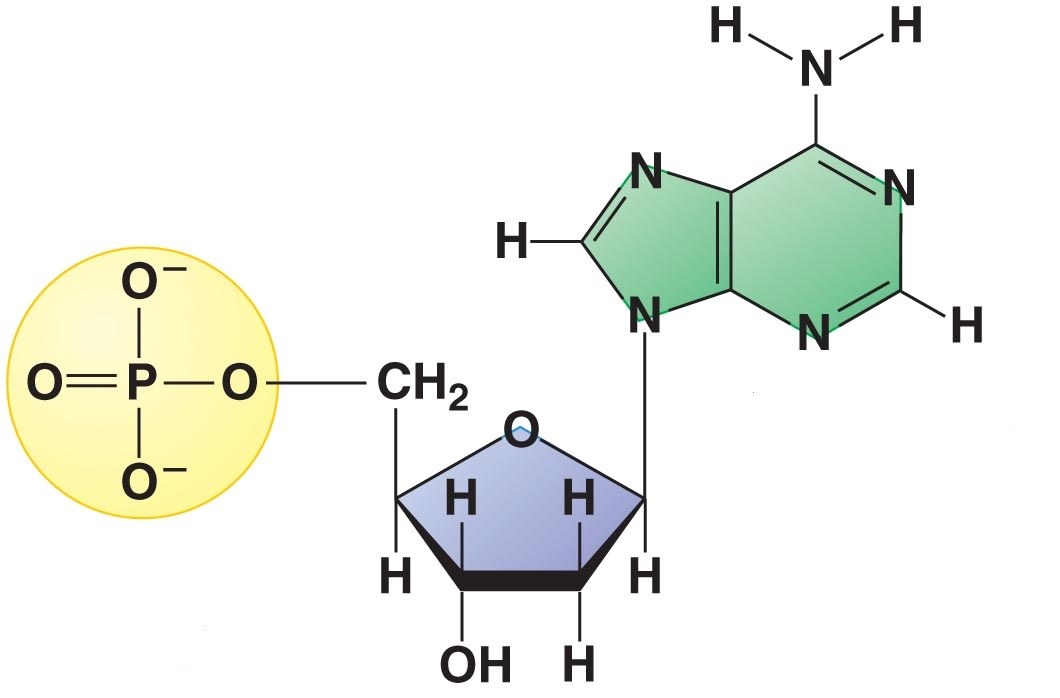
ATG TGA CAG

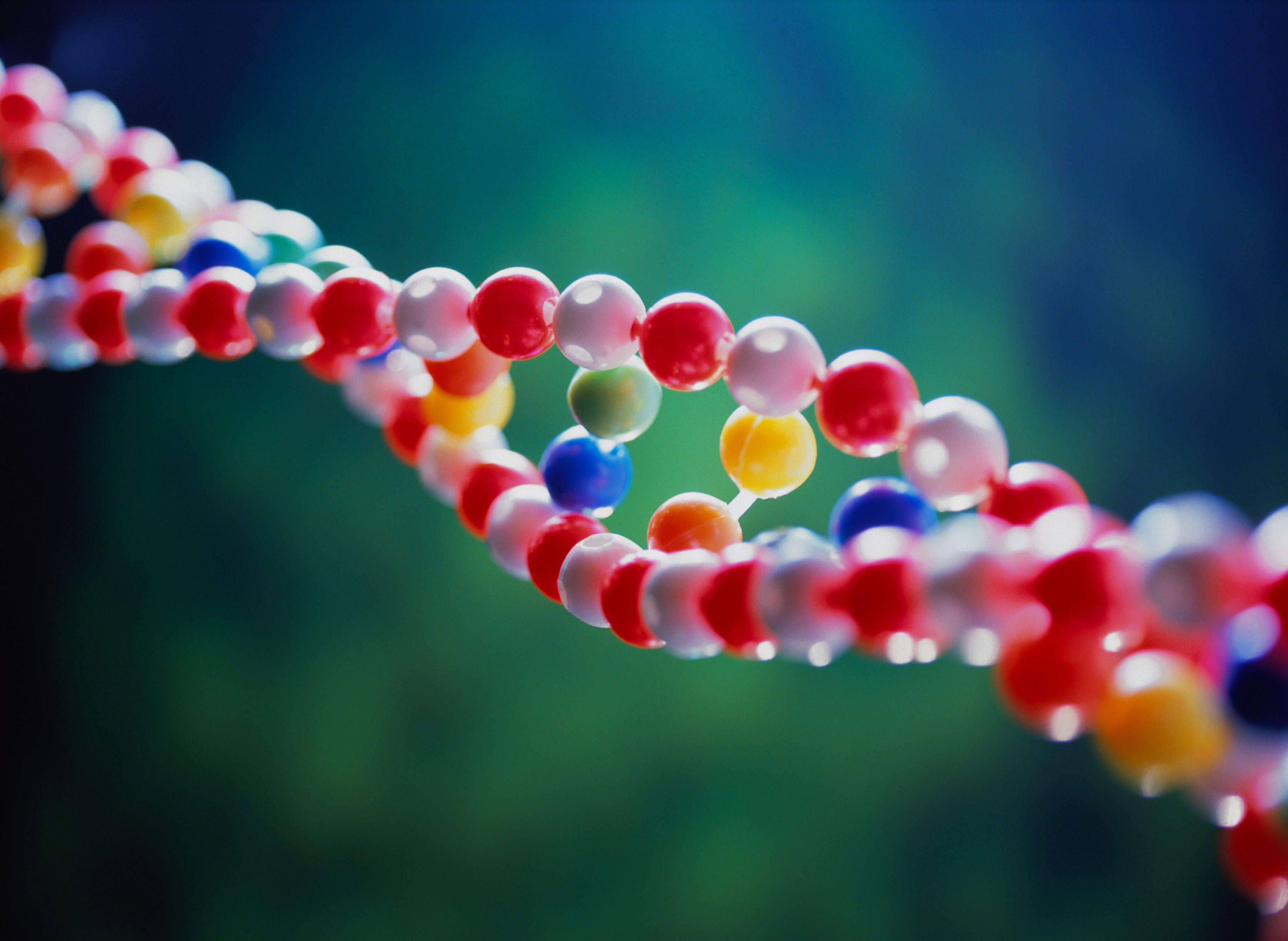
5'-ATGCCAT-3'
How is the instructions for your traits carried on a DNA molecule?
Sequence of the nitrogen bases
In the Deoxyribose Sugar
In the bond between the phosphate and the sugar
In the phosphate group

DNA is an acronym for _____
Diphosphorus Nucleic Acid
Ribose Nucleic Acid
Deoxyribonucleic Acid
Deoxyribonucleic Acetate
DNA replication results in
2 completely new DNA molecules
2 DNA molecules that each contain a strand of the original
1 new DNA molecule and 1 old
1 new molecule of DNA
Enzyme that connects the DNA to the backbone (glues)
Ligase
Polymerase
Helicase
Primase
Enzyme that breaks hydrogen bonds (unzips)
Ligase
Polymerase
Primase
Helicase
The new DNA strand formed after DNA replication is an exact copy of its parent strand
True
False
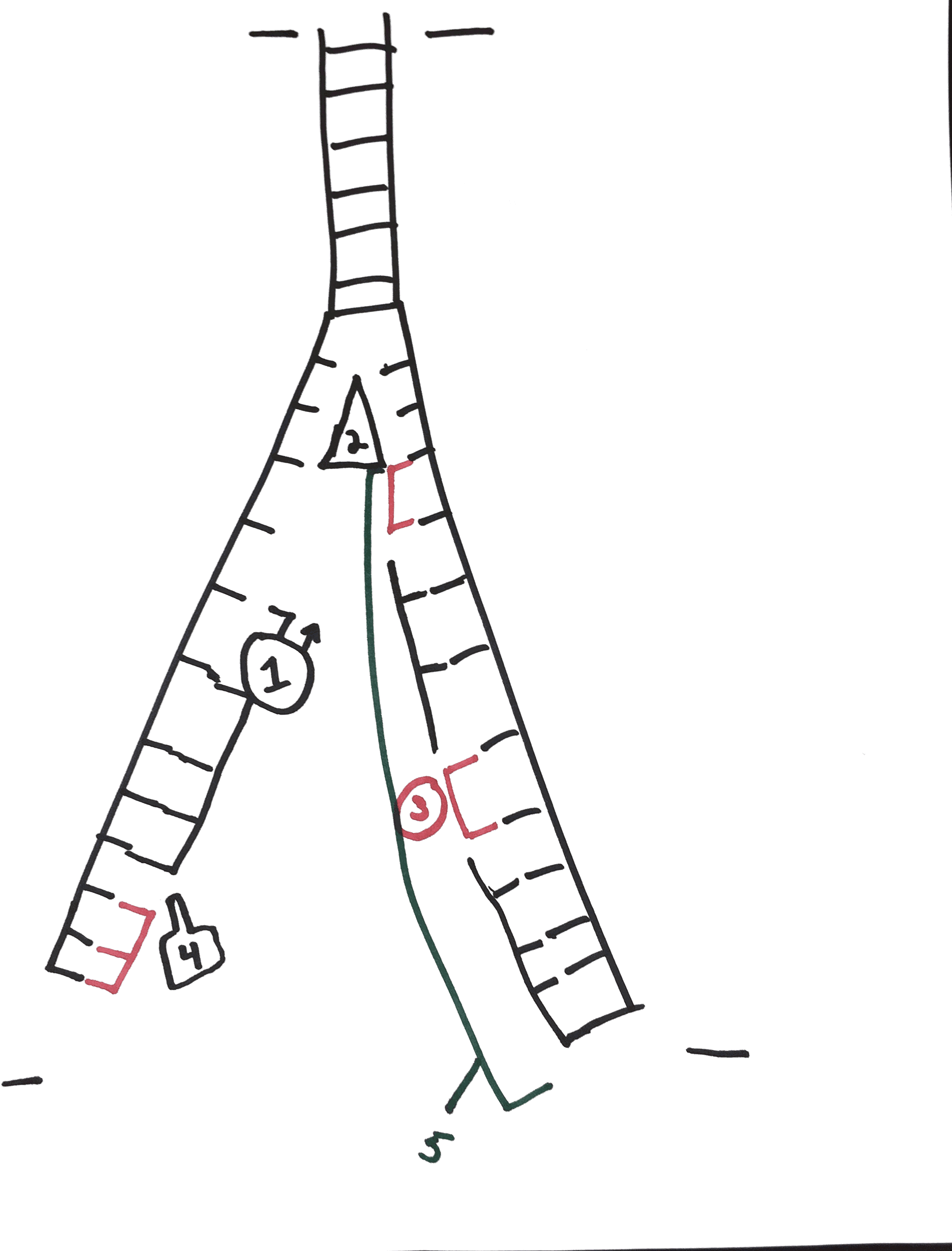
#1 in the picture above (builder)
Helicase
Primase
Polymerase
Ligase
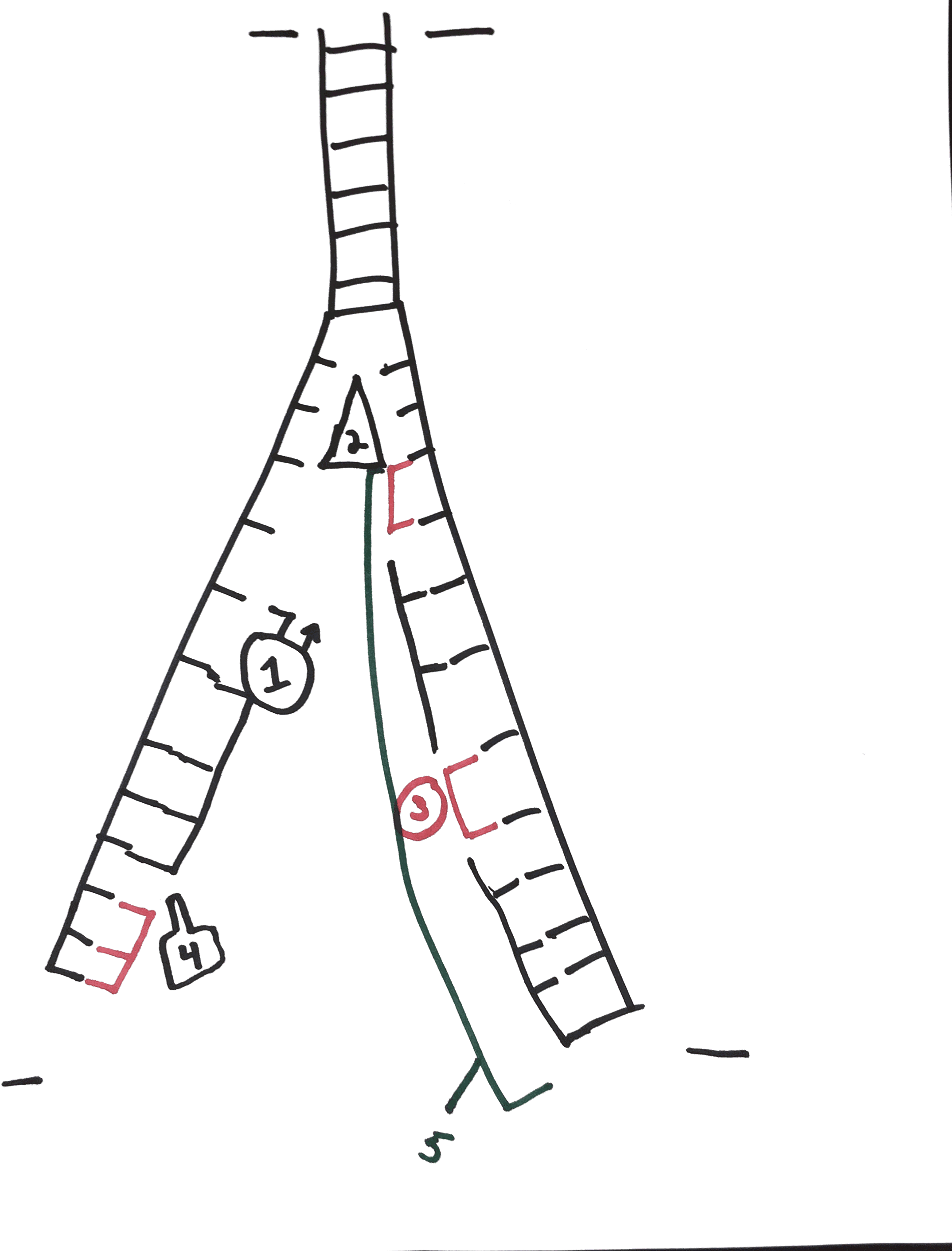
#4 in the picture
Polymerase
Primase
Helicase
Ligase
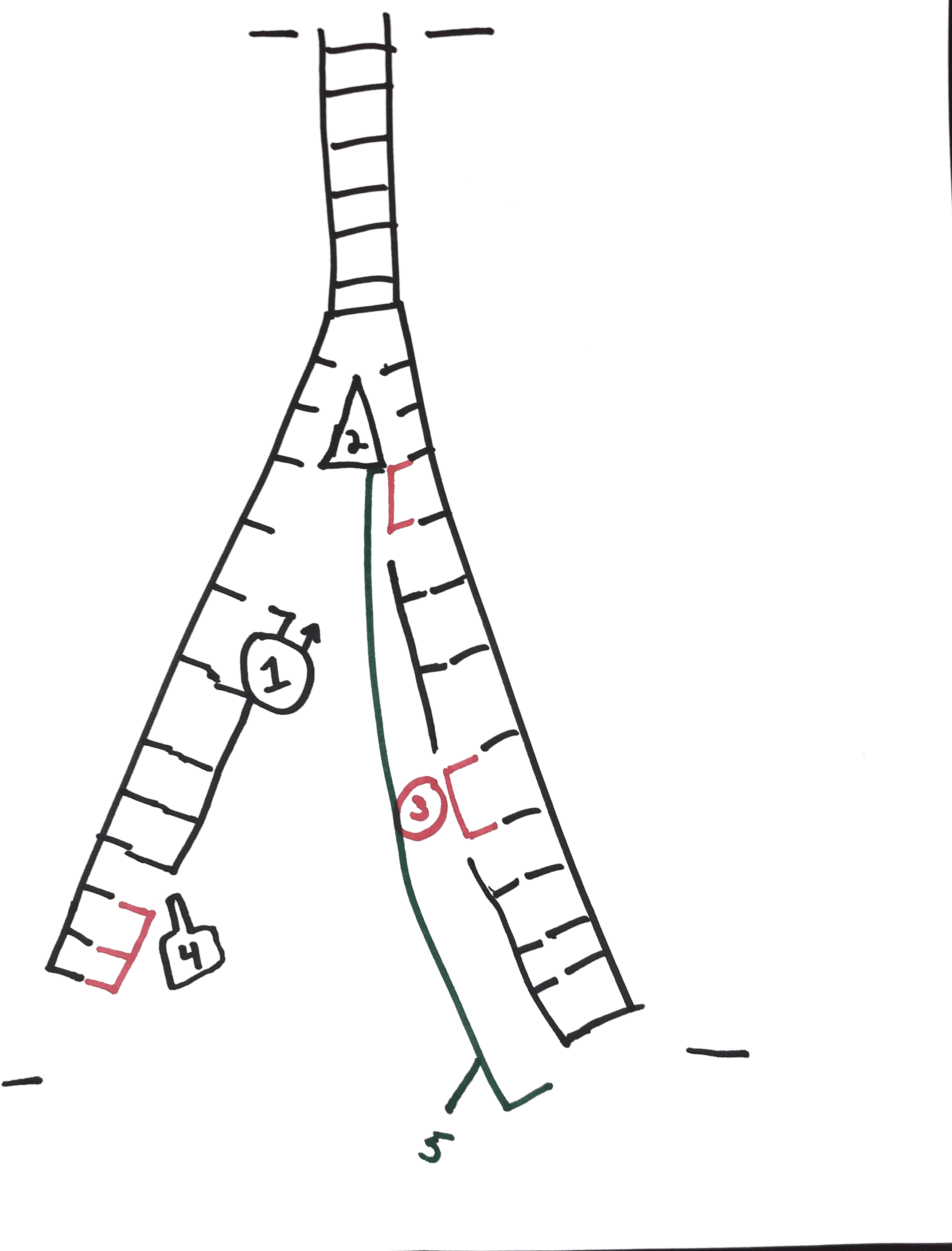
Number 1 in the picture above
Replication
DNA Polymerase
Primase
Ligase
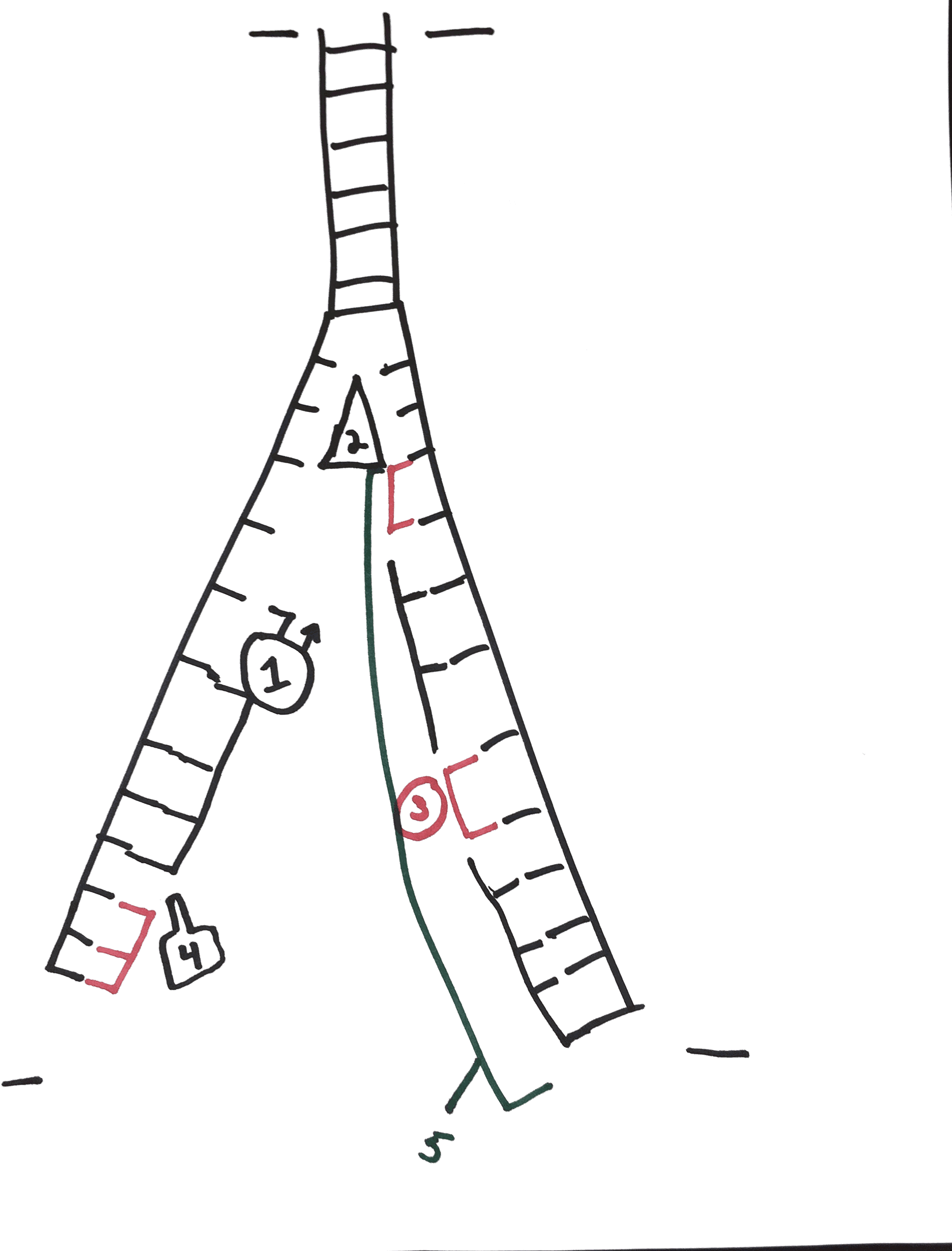
#3 setting Primers
Ligase
Helicase
Polymerase
Primase


The fragments on the lagging strand that are made up of repeating segments of DNA and RNA Primers
okazaki fragments
Primase
Polymerase
unused DNA
Which of the following best describes the arrangement of the sides of the DNA molecule
Bonding
Alternating
Anitparallel
Parallel
DNA polymerase moves in the _________ to ____________ direction
3' to 5'
easiest
5" to 3"
9 to 5
Proteins that DNA winds itself around to for Chromosomes
Histone
Double Helix
Chromatin
Chromatin
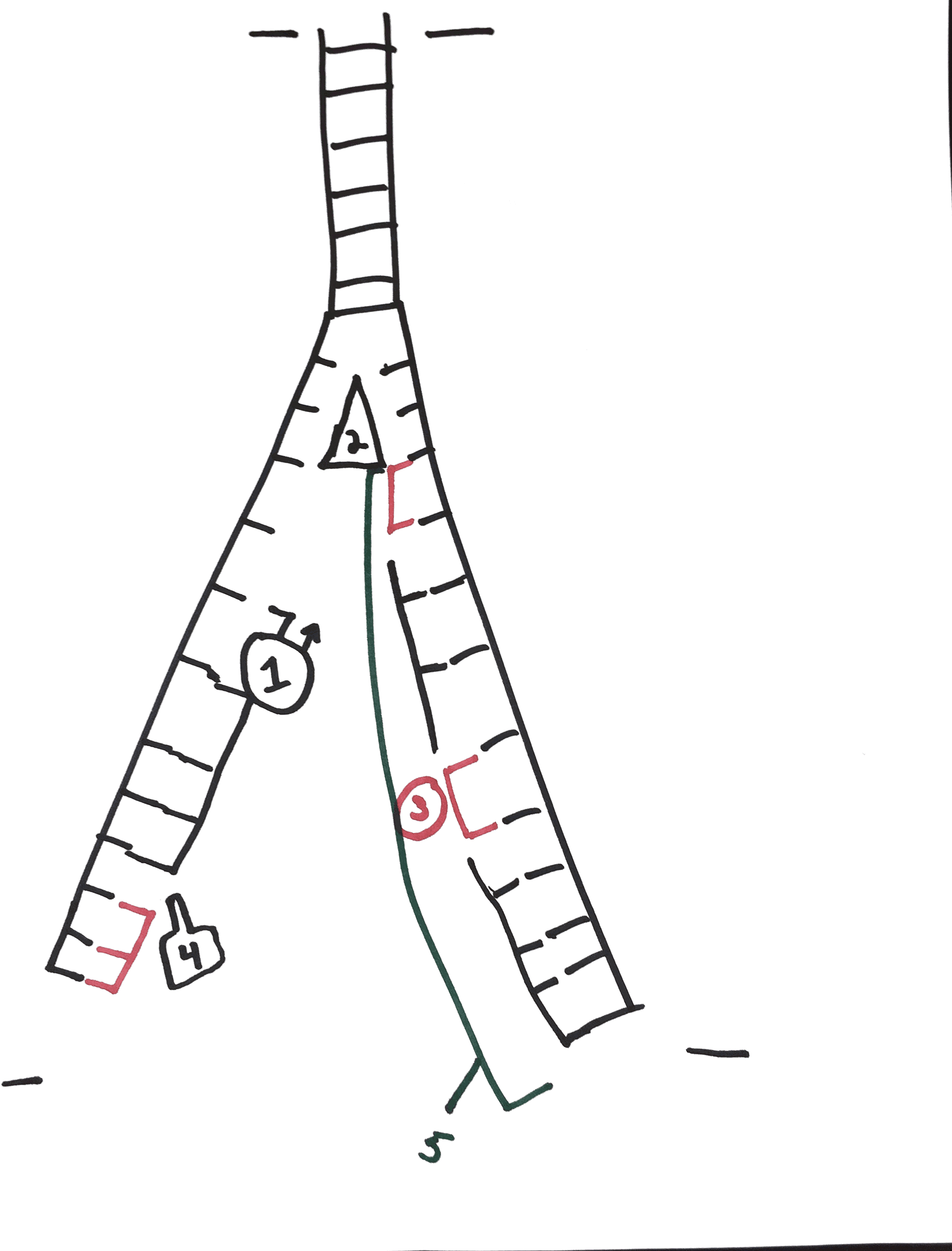
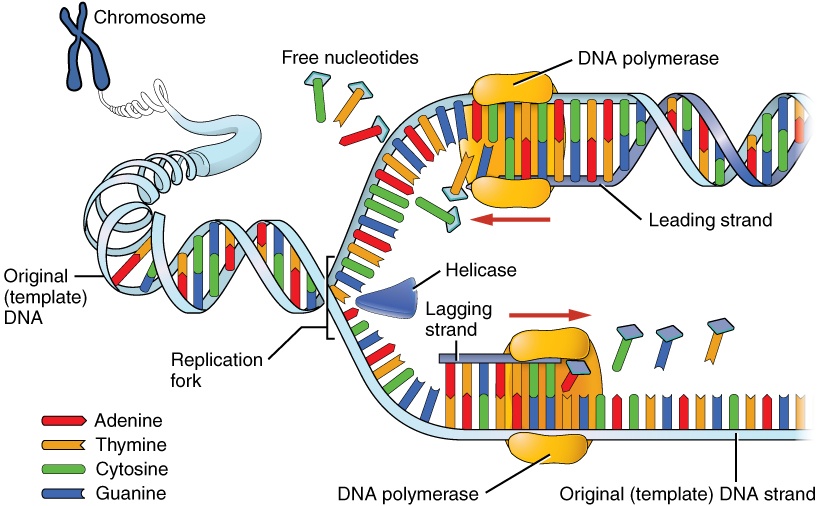
Entire Picture
Lagging Strand
Leading Strand
Replication fork
Okazaki Fragment
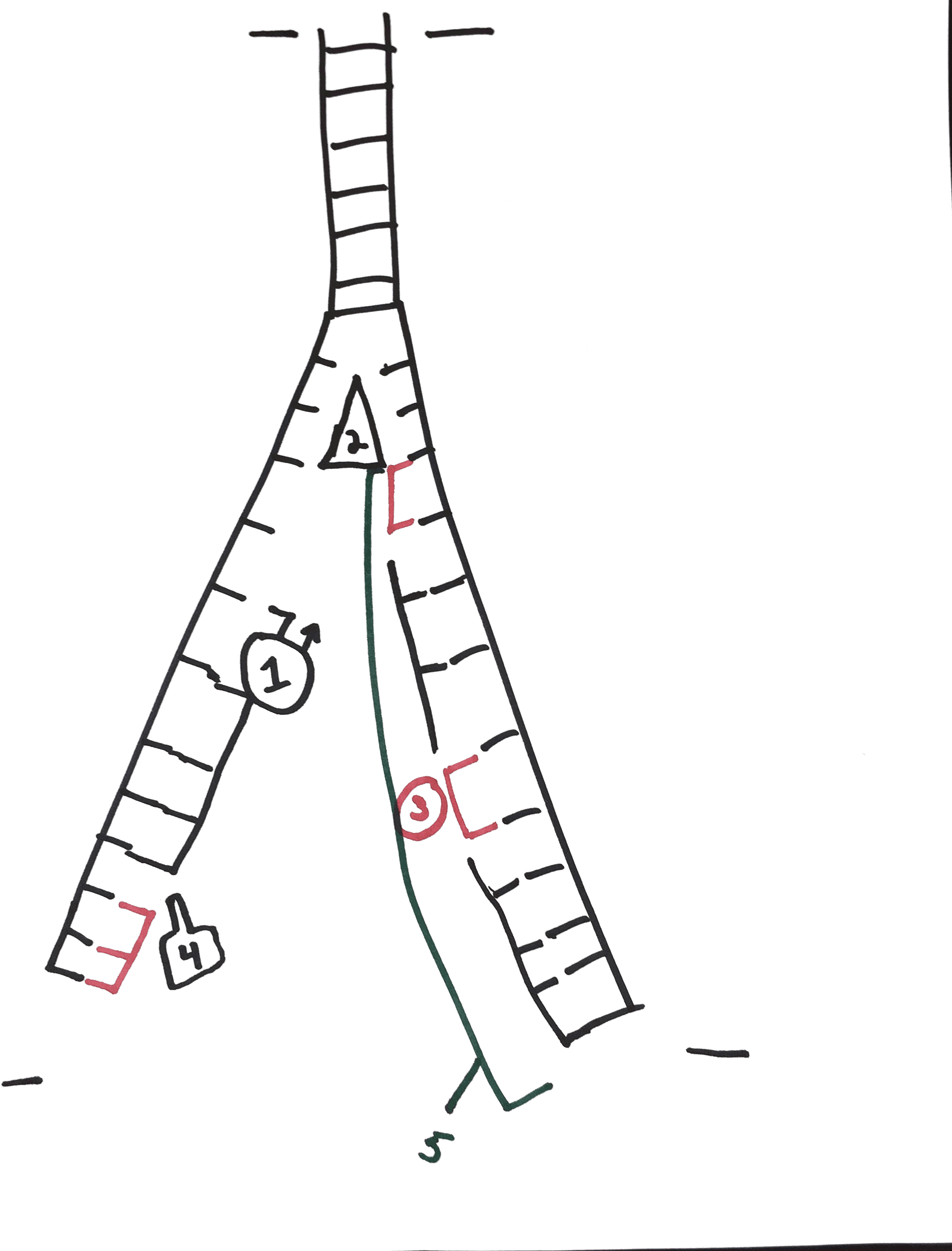
Right Hand Side
Lagging strand
Leading Strand

Built models to determine that DNA was a double helix shape with base pairs A-T and G-C in rungs between the sugar/phosphate backbone of DNA.
Watson & Crick
Franklin
Wilkins
Pauling
Chargaff

Worked on DNA imaging techniques and published Franklin's x-ray crystallography image of DNA
Watson & Crick
Franklin
Wilkins
Pauling
Chargaff

Provided clear x-ray crystallography images of DNA
Watson & Crick
Franklin
Wilkins
Pauling
Chargaff

Discovered that there was the same amount of A and T in a cell, and C and G in a cell.
Watson & Crick
Franklin
Wilkins
Pauling
Chargaff
made up of a long strand of DNA that is bonded to proteins in a way that makes them condense/fold to form chromosomes
genetics
chromosome
proteins
DNA
a piece of a chromosome that is composed of specific nucleotide sequences of DNA
chromatid
nucleotide
gene
circular DNA

Which bond is present in the sugar and phosphate group in a nucleotide?
Phosphodiester bond
Peptide Bond
Ester Bond
Glycosidic Bond
What type of bond links two nitrogenous bases?
Peptide bond
Hydrogen Bond
Covalent Bond
Glycosidic Bond
Purines:
Double ringed structures
Single ringed structures
Pyrimidines:
Double ringed structure
Single ringed structure
After a cell goes through cytokinesis, it starts mitosis all over again.


Which phase of the cell cycle shows two Nuclear membranes forming around chromosomes?
Anaphase
Telophase
Prophase
Metaphase
Which phase of the cell cycle shows two Nuclear membranes forming around chromosomes?
Anaphase
Telophase
Prophase
Metaphase


Which of the following is/are results of the cell cycle ?
growth
repair of damaged cells
replacement of dying cells.
All of the above
Humans have ________ pairs of chromosomes.
21
23
46
None of the above
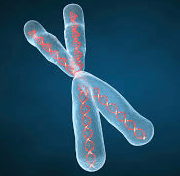

A _______ is a segment of DNA that codes for a specific protein or RNA molecule.
gene
gamete
chromosome
chromatid

A _________ is DNA tightly coiled around proteins.
gene
chromosome
trait
mutation
How many chromosomes does a human body cell have, total?
48
46
23
47
Chromosomes that are paired by size and content are called _______ chromosomes.
homeostasis
homologous
matching
sister


Reproducing asexually will produce offspring ...
genetically different from each other
genetically identical to the parent

Apoptosis is
the process of programmed cell death
the process of programmed cell growth
the process of programmed cell birth
the process of programmed cell regulation
Cyclin is a family of proteins that regulates what?
Mitosis
Meiosis
Cell Cycle
Interphase
Which is a function of cyclins?
Cyclins are carbohydrates that regulate DNA replication during the mitosis phase of the cell cycle.
Cyclins are glycoproteins that repair DNA in the beginning of cell cycle.
Cyclins are proteins that regulate when and how often a cell divides.

Which is NOT a normal reason for apoptosis?
Destroy old or worn out cells
Destroy damaged or dangerous cells
Encourage division of cancer cells
Break down unwanted tissue in embryos
What is the purpose the the cell cycle checkpoints?
To repair damaged cells before they enter cell division.
To remove damaged cells from an organism.
How many cell cycle checkpoints are there?
1
2
3
4
What is the first checkpoint of the cell cycle?
Mitosis checkpoint
G1 checkpoint
G2 checkpoint
When is apoptosis initiated?
When DNA damage is repaired.
When cells are removed from the cell cycle.
When DNA damage cannot be repaired.
Name the 3 checkpoints of the cell cycle
Anaphase checkpoint, mitosis/metaphase checkpoint, and telophase checkpoint
Interphase checkpoint, S phase checkpoint, and M phase checkpoint
G1 checkpoint, G2 checkpoint, and S phase checkpoint
G1 checkpoint, G2 checkpoint, and mitosis/metaphase checkpoint

INCREASES GENETIC VARIATION
TAKES PLACE IN PROPHASE I
CROSSING OVER
ALL ARE TRUE

CROSSING OVER TAKES PLACE DURING
PROPHASE II
PROPHASE I
INTERPHASE
METAPHASE I
WHAT TYPE OF CELLS STORE THE GENETIC INFORMATION THAT IS PASSED TO OFF-SPRING
BODY CELLS
MITOSIS
EGG
SPERM
EGG AND SPERM
MEIOSIS
REDUCES THE NUMBER OF CHROMOSOMES BY ONE HALF
PRODUCES UNIQUE SEX CELLS-1N
ALLOWS TRAITS TO BE PASSED TO OFFSPRING
ALL ARE TRUE
INCREASE GENETIC VARIATION
MITOSIS
INCREASES GENETIC VARIATION
ALLOWS TRAITS TO BE PASSED ON TO OFFSPRING
PRODUCES 2 IDENTICAL DAUGHTER CELLS
ALL ARE TRUE
FERTILIZATION OCCURS WHEN
THE SPERM UNITES WITH THE EGG
THE SPERM UNDERGO MEIOSIS
THE EGG UNDERGOES MEIOSIS
THE EGG AND SPERM UNDERGOES MEIOSIS
MEIOSIS PRODUCES 4 CELLS-THE CHROMOSOME NUMBER IS ...
DIPLOID
HAPLOID
MEIOSIS PRODUCES 4 CELLS, THEY ARE
N
2N
3N
NORMAL HUMANS HAVE 46 CHROMOSOMES, HOW MANY WILL THE GERM CELLS HAVE AFTER MEIOSIS?
46
23
12
92

WHICH OF THE FOLLOWING DO NOT OCCUR DURING THE MITOSIS STAGE OF THE CELL CYCLE
SISTER CHROMATIDS SEPARATE LIKE IN ANAPHASE
DNA IS REPLICATED LIKE IN THE S PHASE
CHROMOSOMES LINE UP AT THE EQUATOR LIKE METAPHASE
CHROMATIN CONDENSES INTO CHROMOSOMES

CANCER CELLS ARE DIFFERENT BECAUSE THE DON'T ENTER THE G-0 PHASE AND THEY ARE LIKELY TO DO WHICH OF THE FOLLOWING
FAIL TO COMPLETE S PHASE
MUTATE DURING G1 PHASE
REPEAT THE CELL CYCLE CONTINUOUSLY
DIE AFTER COMPLETING MITOSIS
Which of the following describes mitosis?
Cell division--creates new somatic cells
Cell division--creates gametes
Which of the following describes meiosis?
Cell division--creates new somatic cells
Cell division--creates gametes
During which process does the cell divide only once?
Mitosis
Meiosis
During which process does the cell divide two times?
Mitosis
Meiosis
Which process produces 4 cells?
Mitosis
Meiosis
Which process produces cells that are identical?
Mitosis
Meiosis
Which process produces cells that are unique / different from each other?
Mitosis
Meiosis
Which process produces haploid cells?
Mitosis
Meiosis
A cell has 10 chromosomes. It undergoes mitosis. How many chromosomes will each of the new cells have?
5
10
15
20
A cell has 10 chromosomes. It undergoes meiosis. How many chromosomes will each of the new cells have?
5
10
15
20


The process on the right is:
Right: meiosis
Right: cloning
Right: meiosis
Right: mitosis
The separation of the two single strands of DNA creates a ‘Y’ shape?
enzyme
unzip
A replication fork

Structure C is
helicase
primase
DNA polymerase III
gyrase

H is the
leading strand
lagging strand
parent strand
none of these

This structure is an Okazaki fragment.
A
D
F
G

The picture below shows the steps of DNA replication beginning with step one and ending with step three.
Because you are reusing the old, or parent, DNA strand DNA replication is said to be
Semi- Conservative
Semi-discontinuous
Continuous
Fully-Conserveative

The picture below shows an enzyme unwinding and unzipping DNA.
What is the name of this enzyme?
DNA Helicase
DNA Ligase
DNA polyermase
RNA Polymerase
Which is the first step?
DNA Helicase unwinds original DNA strand
RNA Primase lays down RNA primer for new nucleotide bases.
DNA polymerase builds new strands by bring in new nucleotide bases.
Ligase knits together fragments on lagging strand
Which is the second step?
DNA Helicase unwinds original DNA strand
RNA Primase lays down RNA primer for new nucleotide bases.
DNA polymerase builds new strands by bring in new nucleotide bases.
Ligase knits together fragments on lagging strand

Which letter in the picture below depicts the leading strand in DNA replication?
A
C
B
None of the above
Which letter in the picture below depicts the lagging strand in DNA replication?
A
C
B
None of the above
Which letter in the picture below depicts the replication fork in DNA replication?
A
C
B
None of the above
If a person suffered from a disorder where their DNA fragments were unable to fill in the missing slots in between the fragments of the lagging strand, they would most likely have a disorder that affected which enzyme?
DNA Helicase
DNA Ligase
DNA polyermase
RNA Polymerase
DNA replication runs from ______' to _____' and is said to be ______________________
5, 3, antiparallel
3, 5, antiparallel
5, 3, parallel
3, 5, parallel
Okazaki fragments appear on which strand of DNA during DNA replication?
lagging
leading
The directionality of DNA is said to be ___________, because it is side by side by goes in opposite directions.
Anti-directional
Parallel
Anti-parallel
Anti-uniform

