
 Worksheets
STAAR Bio Facts Pt #1 23-24
Total questions: 173
Worksheet time: 6hrs 51mins
Match the following

active transport

facilitated transport

simple diffusion

cell membrane
-homeostasis
-control in out
makes identical copy
synthesizes new DNA strands
occurs in the nucleus
copies DNA into mRNA
occurs in the nucleus
forms mRNA from DNA template
occurs in the cytoplasm
converts mRNA into protein
produces polypeptide chains
Match the following

transcription

translation

DNA replication

cell cycle
Match the following

prophase

metaphase

anaphase

telophase

interphase
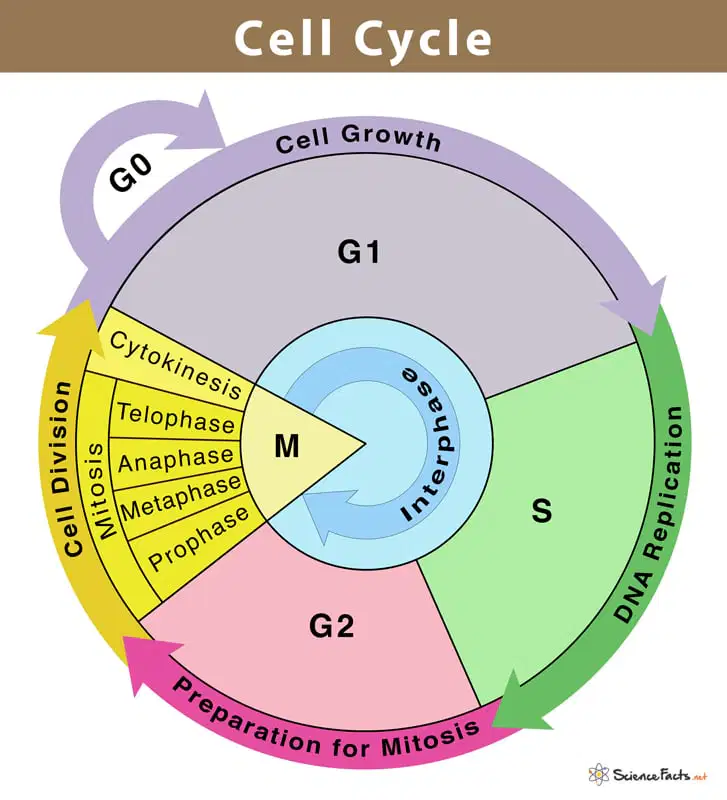
Order the cell stages of the cell cycle. Cytokinesis is not shown.

Interphase

Prophase
Metaphase
Anaphase
Telophase
Label the following diagram.
water and minerals
glucose and nutrients
Xylem
Phloem

If population of frogs decreases significantly, then which TWO of the following would also occur?
snakes would decrease
snakes would increase
grasshoppers would increase
grasshoppers would decrease
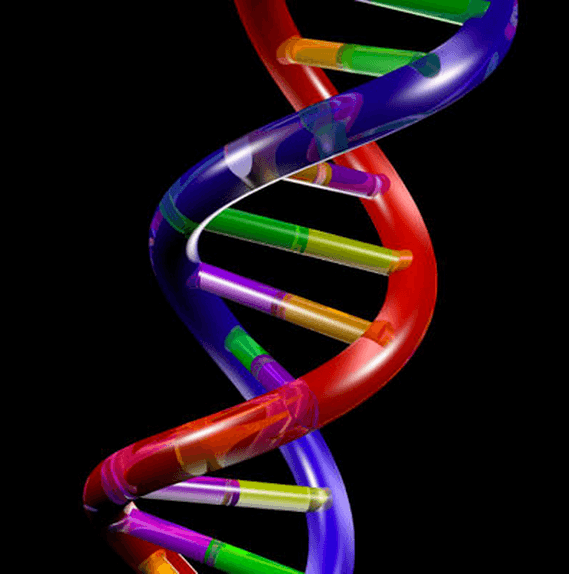
Label the following components a molecule of DNA.
sugar phosphate backbone
nucleotide
nitrogen base
hydrogen bond
deoxyribose sugar
Match the following chromosomal mutations with its name.
deletion
inversion
translocation
duplication
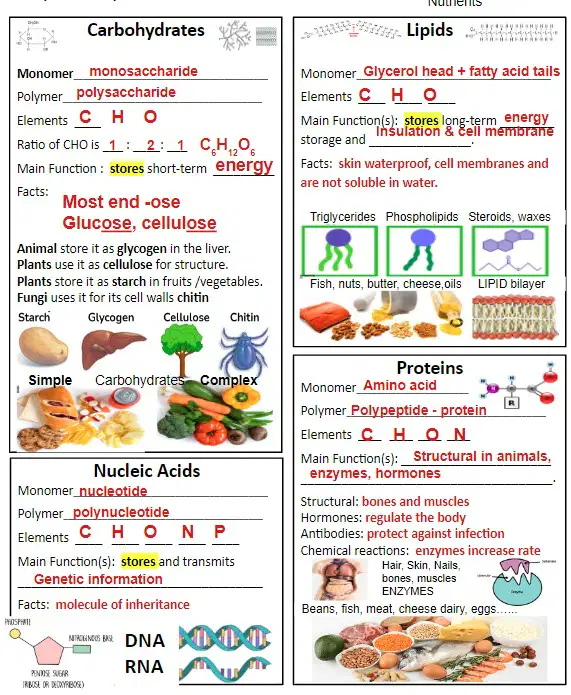
CHO (1)
CHON
CHONP
stores short term energy
CHO (2)
stores long term energy as fat
enzymes and hormones
stores genetic information
muscles bones hair skin beans eggs
insulates
cell membrane structure
cellulose, chitin, sugars, starches
amino acid
DNA & RNA
nucleotide
glycerol & fatty acid
monoshaccharide
Match the following
divides once
divides twice
gametes made
somotic cells made
makes 2 identical cells
makes 4 non identical cells
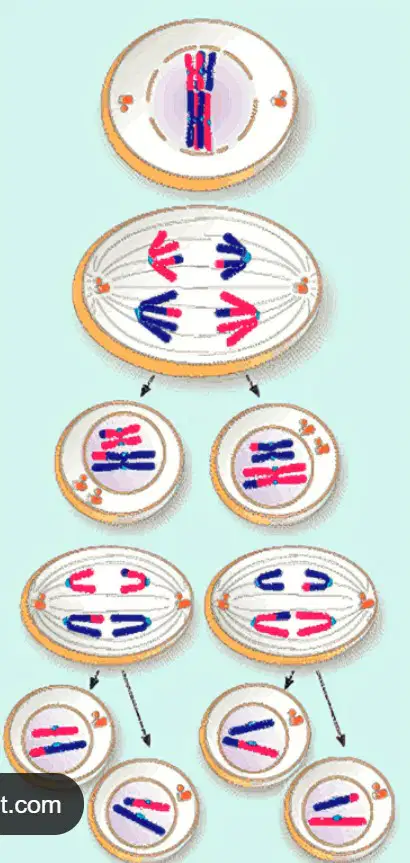
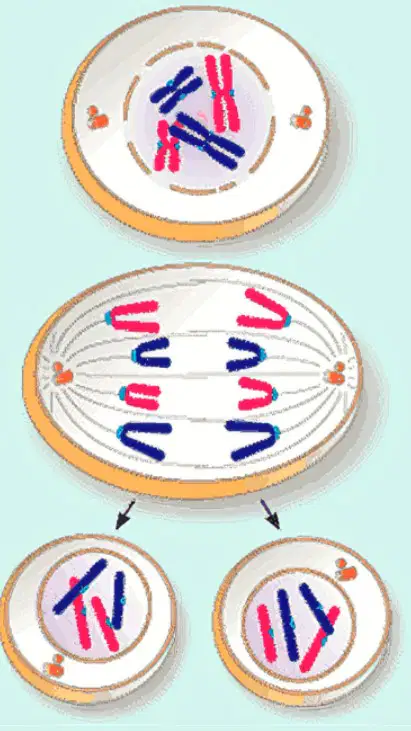
increases genetic variation
recombination of genetic material
haploid cells produced
diploid cells produced
repair, replacement of cells
sexual reproduction

All Domain Eukarya cells have a nucleus and membrane bound organelles. The following characteristics help to identify them by specific kingdom. Sort the characteristics into the correct kingdom. DO THE ONES YOU KNOW FOR SURE FIRST!
weird & in water
most diversity
cell wall: chitin
cell wall: cellulose
autotroph
sexual reproduction: pollen & ovules
trees, flowers, grass
NO cell wall
heterotroph
motile-moves
sexual reproduction: sperm & eggs
you, insects, jellyfish
heterotroph by absorption
autotroph & heterotroph
phytoplankton, kelp, seaweed
decomposers
mushroom & yeast
amoeba, paramecium, euglena

Check ALL that apply to this diagram.
crossing over
increases genetic diversity
only occurs in gametes - sex cells
occurs during meiosis
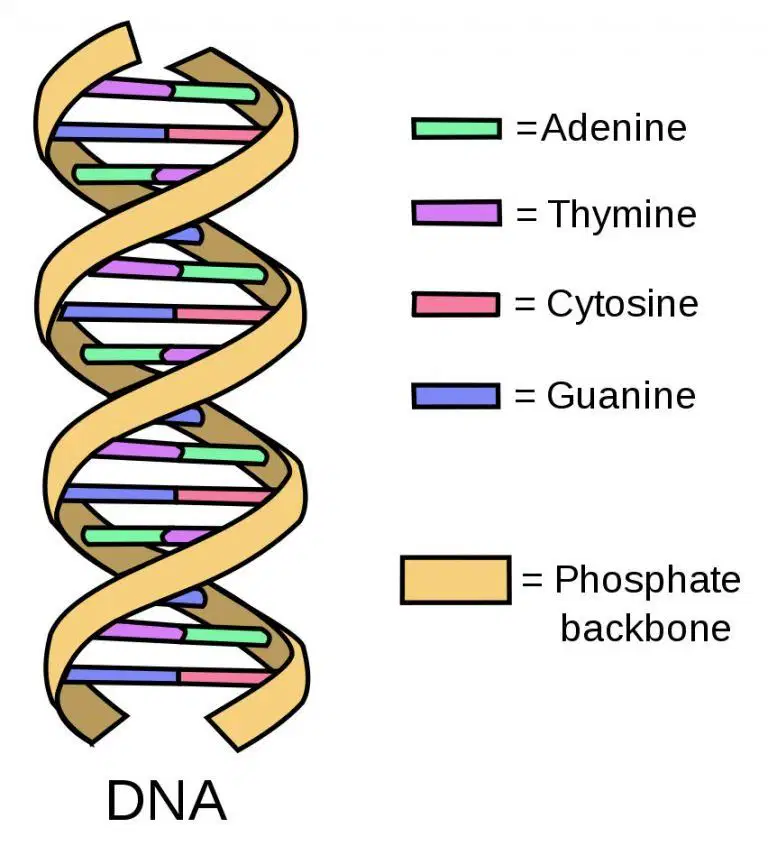
The information for the blueprint of life is stored in
the sequence of nitrogen bases
sugar and phosphate
backbone
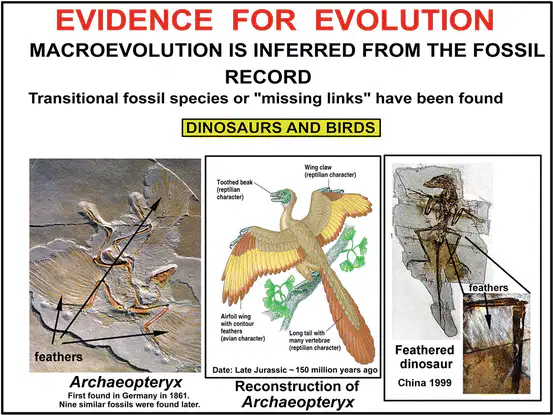
Evidence of evolution shows
common ancestory
those that survive, reproduce and the successful trait increases in future populations
The theme of natural selection is
common ancestory
those that survive, reproduce and the successful trait increases in future populations
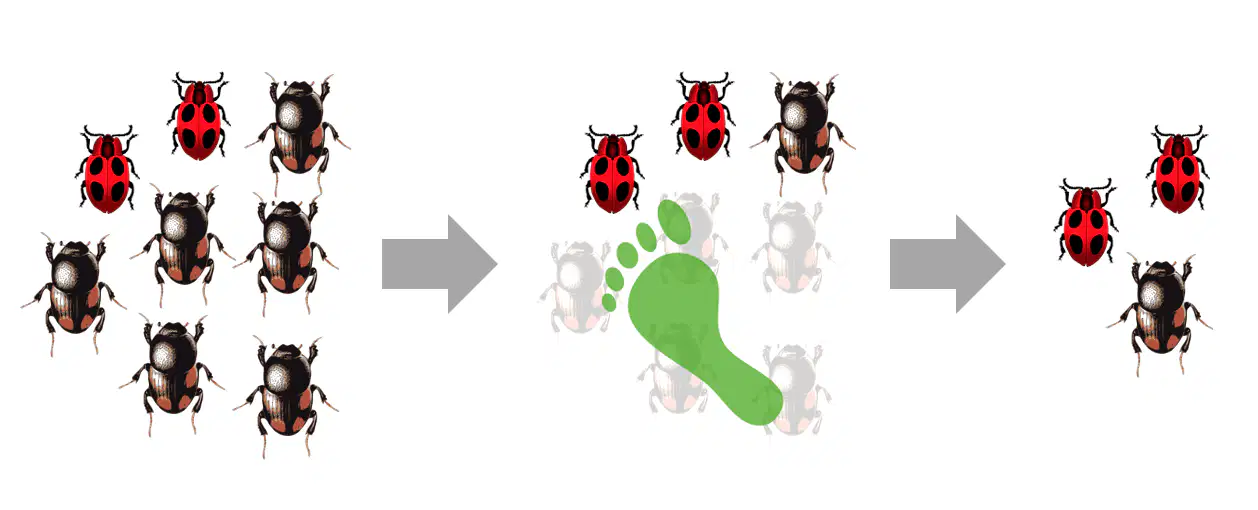
Genetic drift is
a random event that increase variation due to movement in or out of papulation
emigration or immigration
a random event that drastically reduces a population leaving future generations to have less variation
a change in DNA
A mutation is
a random event that increase variation due to movement in or out of papulation
emigration or immigration
a change in DNA
a random event that drastically reduces a population leaving future generations to have less variation
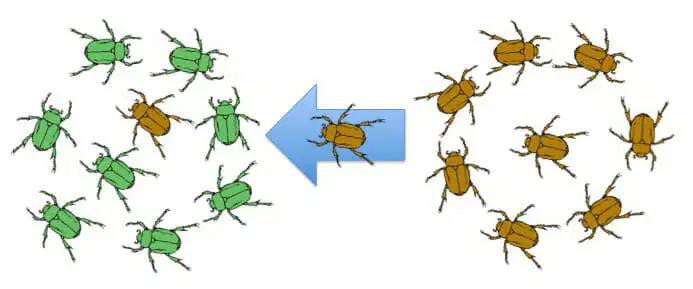
Gene flow is
a random event that increase variation due to movement in or out of papulation
emigration or immigration
a random event that drastically reduces a population leaving future generations to have less variation
a change in DNA

If there is 1000 Kcal available in the producers, how much energy will be available for the secondary consumers?


What would happen to the bird if the green fish died out?
the bird population would grow
the bird population would die out
the smaller fish will die out


Natural disasters such as flooding and tornadoes are linked to ________________.
primary succession
secondary succession
new island from lava flow
glacial retreat
The main difference between primary succession and secondary succession is that primary succession starts from
pioneer species
bare rock
soil
microorganisms
After a forest fire the pioneer species would be
lichens and moss
grasses and weeds
shrubs and bushes
pine trees
The pioneer species of primary succession are
lichens and moss
grasses and weeds
deciduous trees
After a volcanic eruption, volcanic rock is present (but no soil). Which of the following states the most likely order of succession that would be seen?
Lichens → Shrubs → Grasses → Trees
Lichens → tree → shrubs→Grasses
Grasses → Lichens → Shrubs → Trees
Lichens → Grasses → Shrubs → Trees
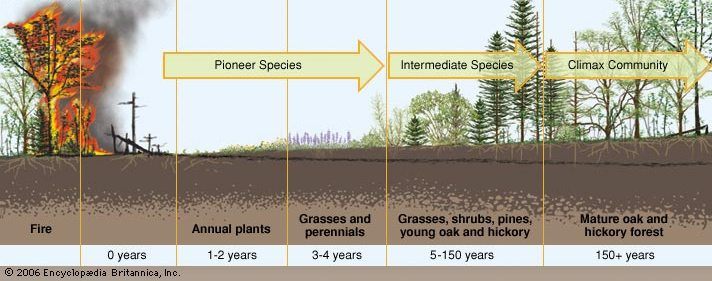
The picture displays which type of succession?
primary
secondary
tertiary
all of the above
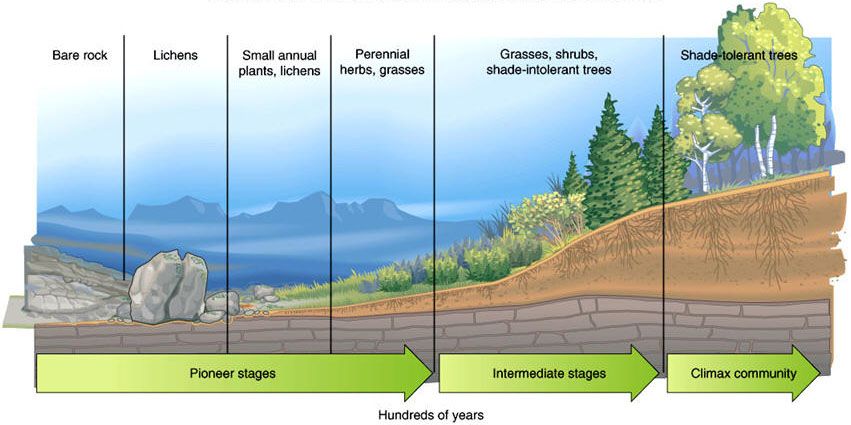
The picture display which type of succession?
primary
secondary
tertiary
all of the above
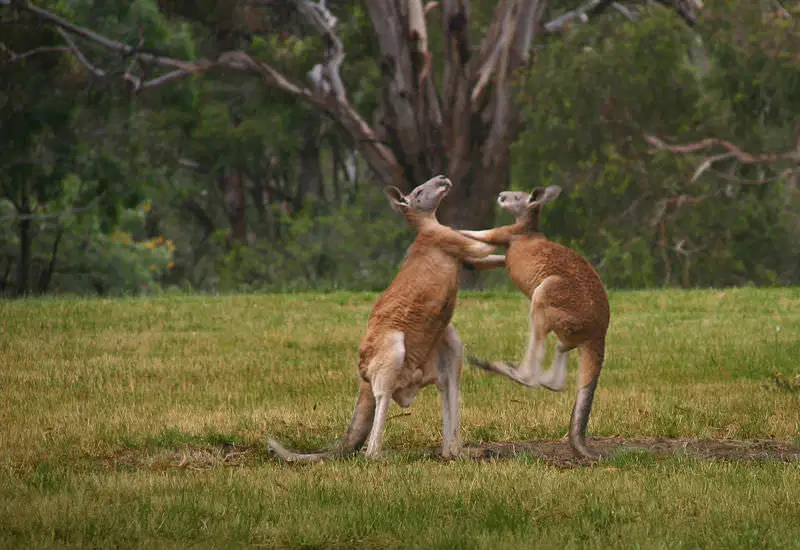
Animals that fight for resources (food, water, mates)
predation
competition
parasitism
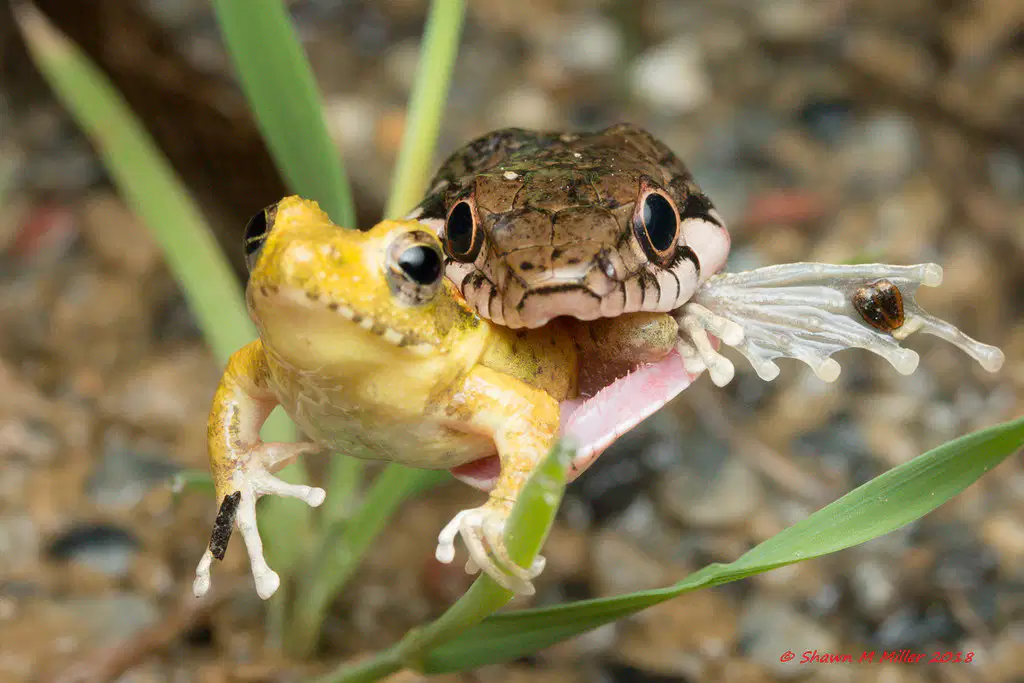
A snake eating a frog is an example of
competition
predation
parasitism

Fungi is a heterotroph that gets its nutrition by absorption of dead and decaying organic matter. Fungi is a

In this symbiotic relationship one benefits and the other is neither harmed or helped.
mutualism
commensalism
parasitism

In this symbiotic relationship the bird gets to eat the insects that the elephant stirs up as he walks.
mutualism
commensalism
parasitism

mutualism
commensalism
parasitism

mutualism
commensalism
parasitism


mutualism
commensalism
Enzymes are an example of a
Lipids
Carbohydrate
Protein
Nucleic Acid
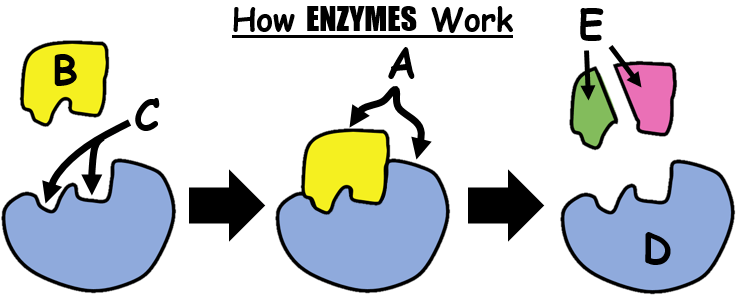
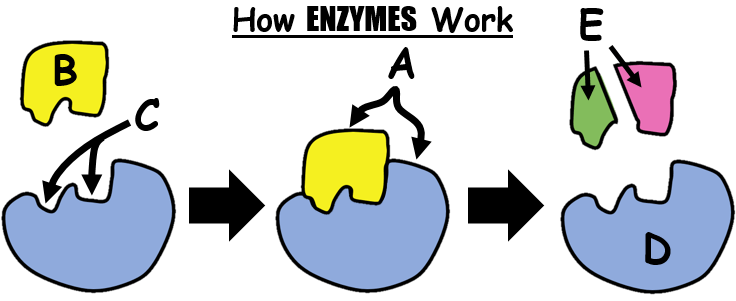
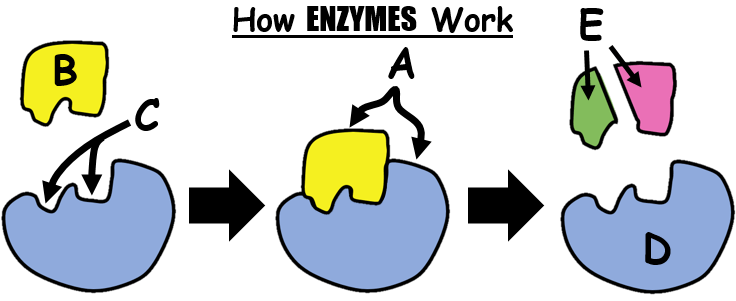

At what temperature does the enzyme function at its optimum (best)?
temperature of 20 C
temperature of 30 C
temperature of 37 C
temperature of 50 C
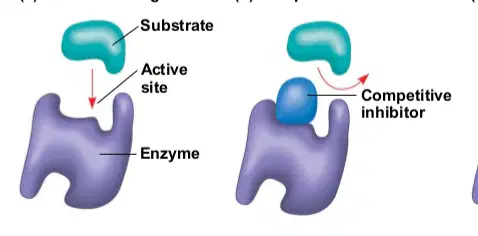
What would happen if an inhibitor blocked the active site on an enzyme?
the inhibitor would prevent the substrate from attaching to the enzyme.
the inhibitor would prevent the enzyme from producing more enzymes.
Which of the following biomolecule is correctly paired to its function
Carbo: a source of energy; Lipids: stores energy
Nucleic acids: store energy; Proteins: store and transmit genetic info
Nucleic acids: store and transmit genetic info: Lipids: control the rate of reactions
Carbo: store and transmit genetic info; Proteins: control rate of reactions

All the proteins shown are transmembranes because they are proteins that
assist the cell in interacting with the external environment
stop chemical reactions in a cell
synthesize molecules embedded in the cell

Which of the types of transport are passive?
A only.
A and B only.
B and C only.
C only.

Why has water moved into the cell in the hypotonic solution?
The concentration of solute (salt) was higher outside the cell than inside.
The concentration of solute (salt) was higher inside the cell than outside.
When we say genes are regulated, it means they are
on the x chromosome
turned on or off
mutated
The plasma membrane maintains homeostasis by
having two protein layers
regulating what comes in and out of the cell
controlling protein channels
Which of the following diagrams represents a virus?


Living organisms can be classified as prokaryotes or eukaryotes. Which two structures are common to both prokaryotic and eukaryotic cells?
cell wall and nucleus
cell membrane and nucleus
cell membrane and cytoplasm
In which of the following ways does a bacterial cell differ from an animal cell?
A bacterial cell has RNA for its genetic material, whereas an animal cell does not
A bacterial cell does not have membrane-bound organelles, whereas an animal cell does.

The diagram represents a Euglena and Paramecium. Which functions do X and Y have in common?
movement
reproduction

Which of the following is a function performed by the cell part labeled X?
generating ATP
Synthesizing polypeptides
storing genetic information
breaking down unneeded materials
Which of the following diagrams shows a prokaryotic cell?


For many years scientists debated whether viruses should be considered living organisms. Which statement could a scientist use to support the positions that viruses are NOT living?
Viruses have genes encoded in DNA
Viruses require a host cell in order to reproduce
Which of the following are components of the cell theory? (Select all that apply)
All organisms are composed of cells.
Cells are the basic unit of life.
All cells come from previous cells.
Cells are always the same size and shape.

What process occurs in a chloroplast?
digestion of cell parts
ATP (energy) production
photosynthesis
protein production

What is the function of the mitochondria?
site of digestive enzymes
site of ATP (energy) production
site of photosynthesis
site of protein production

A bacterium is:
Prokaryotic
Eukaryotic

What do we call the science of classifying organisms into groups based on shared characteristics?
Osmosis
Taxonomy
Transcription
Metabolism
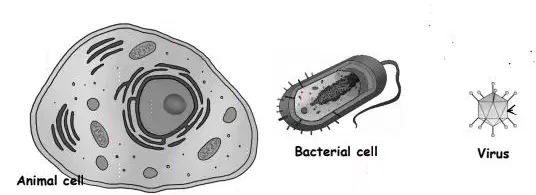
Compared to a cell, a virus is
Small but the same
Not considered living, made of cells and contains organelles
Not considered living, Not made of cells, and do not have organelles.

A model of the human immunodeficiency virus (HIV) and an animal cell are shown. What is the difference in function of the glycoprotein structures on HIV and the cilia of an animal cell?
a review side note: HIV destroys helper T cells
The glycoproteinare used for attachment to the host cell, and cilia are used for movement.
The glycoprotein are used to obtain nutrition, and the cilia are used to secrete proteins.
The glycoprotein structures are used for defense, and the cilia are used for locomotion.
Which viral life cycle kills its host cell by breaking it open?
lytic
lysogenic
The information in DNA is written according to the genetic code and carried by the -
sequence of nitrogen bases/nucleotides
enzymes which unwind the double helix
The genetic code (GCAT) stores the genetic information for all organisms. This code is -
determined by organism’s environment
the same code is used by all living organisms

Which series of bases will complete this strand of DNA?
CCTGAT
ACTGGC
GTAGGC
TCAGGG
In which process is light energy transformed into chemical energy (C6H12O6)?
Photosynthesis
Cellular respiration
In which process is chemical energy transformed into chemical energy ?
Which process is described below?
Glucose and oxygen become carbon dioxide, water and ATP
Photosynthesis
Cellular Respiration
Which process is described below?
Carbon dioxide, water and sunlight become oxygen and glucose
Photosynthesis
Fermentation
Cellular Respiration

In photosynthesis, the chemical energy formed is stored in the bonds of which molecule?
ATP
Glucose
Oxygen
Carbon Dioxide
In photosynthesis, the chemical energy formed is stored in the bonds of which molecule?
ATP
Glucose

In cell respiration, the glucose is broken down and the chemical energy is then stored in which molecule?
ATP
Oxygen
Carbon Dioxide
Which systems go with these clues?
senses, hormones, heart rate
nervous, endocrine, circulatory
nervous, endocrine, reproductive
Which three systems use these word clues?
movement, senses, support
nervous, endocrine, excretory
digestive, endocrine, reprodutive
muscular, nervous, skeletal
Which three systems use these word clues?
contraction, hormone, egg
muscular, endocrine, reproductive
muscular, nervous, skeletal
Which three systems use these word clues?
breakdown food, hormone, transports
digestive, endocrine, reproductive
digestive, nervous, circulatory
Which three systems use these word clues?
senses, hormone, filters waste
nervous, endocrine, excretory
digestive, endocrine, reproductive
digestive, nervous, circulatory
muscular, nervous, skeletal
Which systems go with these clues?
hormone, transport, reabsorb water
endocrine, circulatory, digestive
endocrine, circulatory, excretory
Which systems go with these clues?
senses, hormones, heart rate
nervous, endocrine, circulatory
nervous, endocrine, reproductive
Which systems go with these clues?
nodes, white blood cells, red blood cells
lymphatic, skeletal, circulatory
lymphatic, immune, circulatory
Which systems go with these clues?
senses, gas exchange, transports
nervous, respiratory, integumentary
nervous, respiratory, circulatory
organs, organ systems, organisms, cells, tissues

Several structures work together to allow flowering plants to reproduce. The diagram shows a typical flower. Which table correctly identifies the function of each structure or group of structures in the reproduction of the plant?


During the final stages of human gestation, receptors for the hormone oxytocin increase on the smooth muscle cells of the uterus. The release the hormone oxytocin during labor stimulates the smooth muscle tissue in the wall of the uterus. The vigorous contraction of the uterine smooth muscle helps push the baby through the birth canal so that delivery can occur. This process involves the interaction of which organ systems?
Endocrine, muscular, and reproductive
Endocrine, reproductive, and excretory
Which statement best describes the relationship between the products of photosynthesis and the reactants in cellular respiration?
The products of photosynthesis serve as the reactants in cellular respiration to provide chemical energy.
The products of photosynthesis combine with the reactants in cellular respiration to remove ATP from cells.

Complex inheritance that blend phenotypes

If T=Tall & t=short.
Crossing two heterozygous plants. What is the PHENOTYPE RATIO?
2:2.

(RRYY x rryy)
R = round seeds, r = wrinkled seeds Y = yellow seeds, y = green seeds
What percent will have Round and Yellow seeds?


What are the 4 nitrogen bases of DNA?
adenine, thymine, cytoplasm, and guanine
adenine, thymine cytosine, and guanine
adenine, thymine, cytosine, and gylcerol
adenine, thymine, cytosine, and glucose

The process of DNA replication occurs during ____ of Interphase.
G1
G0
S
G2
All living things complete the process of DNA replication.
TRUE
FALSE

The process of DNA replication produces two identical copies of DNA each made from one old strand and one new strand.
semiconservative replication
conservation of nature of man
In DNA replication the template strand reads:
3' A A A T T T C 5'
The COMPLEMENTARY DNA strand would read...
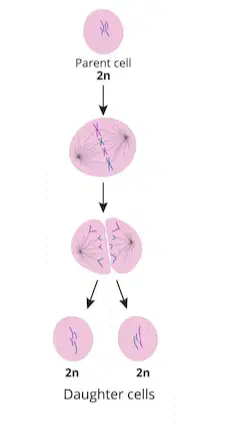
Produces Somatic cells (body cells)
Mitosis
Meiosis
Produces Gamete Cells (egg and sperm)
Mitosis
Meiosis
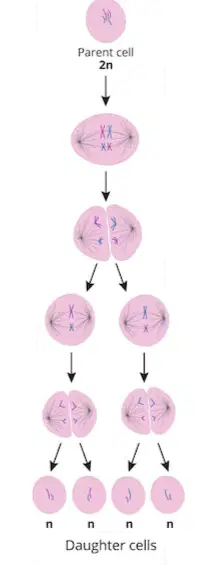
Which process produces a reduction of the number of chromosomes (Half -23)?
Mitosis
Meiosis


The process shown is transcription. What type of molecule is produced?
New DNA
Polypeptide
Messenger RNA
Below is a DNA segment of a gene. Determine the mRNA strand.
TACGGT
TACGGT
AUGCCA
ATGCCA
UACGGU
The process to go from mRNA to a protein is called ____
transcription
translation
replication
DNA holds the code for
protein
carbohydrates
The main function of tRNA is to...
carry a message that, when translated, forms proteins
bring amino acids from the cytoplasm to the ribosomes
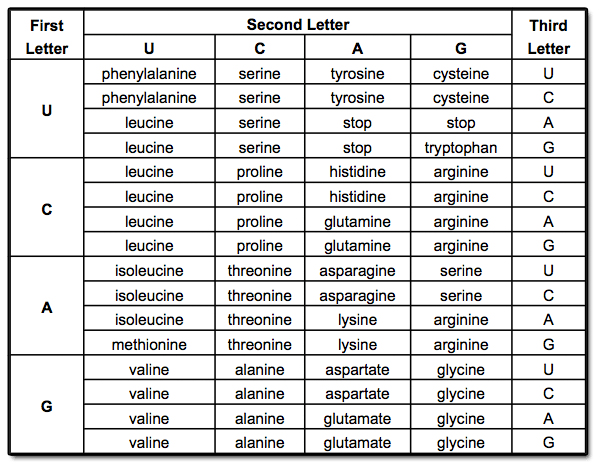
What amino acid is represented by the codon UUA?
Phenylalanine
Leucine
What amino acid is represented by the codon AUG?
Methionine MET
Isoleucine ILE
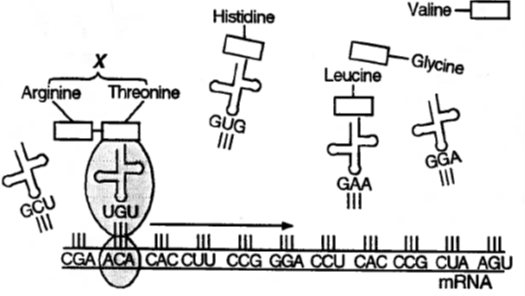
What process is going on in this photo?
Transcription
Translation
Replication
Which component of DNA determines the traits of an organism?
Nitrogen Bases
Sugar-Phosphate Backbone
Translation is the process where
mRNA is created in the Nucleus
mRNA is decoded to form a protein

What process is happening in the diagram?
transcription
translation
All cells contain these FOUR items.
a nucleus
DNA
cell membrane
ribosomes
cytoplasm

Which cell is more complex? A prokaryotic or eukaryotic cell?
Prokaryote
Eukaryote

Three cells are shown in the diagram. Which one(s) are prokaryotic?
AB
B
A
C

Comparing the genetic material of prokaryotic cells and eukaryotic cells
prokaryotes have less DNA and is linear in shape
prokaryotes have more DNA and is circular in shape
eukaryotes have more DNA and is linear in shape
Eukaryotic have less DNA and are linear in shape

All viruses have these two structures
DNA and RNA and a capsule
DNA or RNA and a capsule
DNA and RNA and a capsid
DNA or RNA and a capsid

The function of the glycoprotein spikes on the Coronavirus are to
attach to a host cell
protect the DNA
What are the two characteristics of life that viruses have in common with cells?
nucleic acids and the ability to evolve.
nucleic acids and made of cells

Shown are a virus, bacterial cell and a plant and animal cell.
How are the virus and the bacteria cell different when compared to the animal and plant cell?
do not have genetic material
do not have membrane bound organelles
do not have the ability to evolve

A person who shows symptoms of a virus is in the ____________________ phase.
lytic cycle
lysogenic cycle

How are viruses and bacteria similar?
they both are living things
they both maintain homeostasis
they both do not have membrane bound organelles
they both grow and develop

A student produces a labeled drawing of a virus for a presentation. The student states that the capsid has a function similar to the nuclear membrane found in animal cells. Which of these describe the similar functions of capsids and nuclear membranes?
both provide energy for activities in the structures
both protect genetic information for the structures
Which of these describes a difference between viruses and cells?
cells reproduce independently, and viruses require a host to reproduce
viruses have membranes made of proteins, and cells have membranes made of nucleic acid

A photograph of a virus is shown. The projections on the surface of this virus allow the virus to -
attach to a host cell
signal other viruses to infect a host cell
Severe acute respiratory syndrome (SARS) is an illness caused by a coronavirus. Symptoms including a high fever, headaches, and body aches typically occur two to fourteen days after infection by the virus. Coronavirus is more serious in elderly patients. This information suggests that the reproductive cycle of the Coronavirus is -
lytic, because the virus causes respiratory illness
lytic, because of the quick onset of symptoms after infection

tissues


15.Which of the following characteristics in the Venn diagram are incorrect?
Structural components of cell walls.
Found in fruits and vegetables.
Made of monomers.
Major source of energy for organisms.
16. Which sequence represents the levels of organization found in a multicellular organism, from smallest to largest?
tissue --> organ --> organ system --> cell
cell --> tissue --> organ system --> organelle
organism --> cell --> organelle --> organ
cell --> tissue --> organ -->organ system
11.Correctly identify the level of organization for each picture

organism

population

community
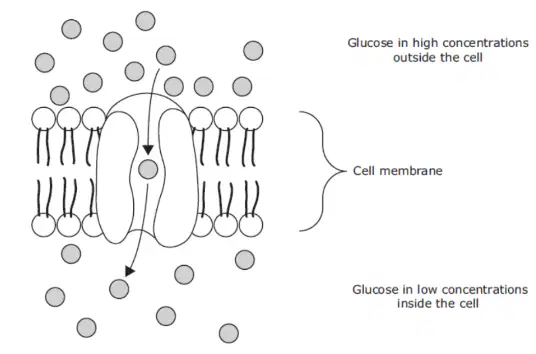
10.Which statement best describes the role of the transport protein in this process?
It will keep the plasma membrane flexible when glucose is removed from outside the cell.
It will help to maintain stable glucose levels both inside and outside the cell.
8.The table below contains different types of cells. Identify the section of the table that contains Eukaryotic cells.
7. Which pair of statements best compares the primary function of the carbohydrate chitin, found in insects, and the protein chitinase, found in insectivorous bats?
The chitinase exoskeleton stores genetic information for insects.
The chitinase provides support and protection for the insectivorous bats.
The chitin in the exoskeleton provides support and protection for insects.
The chitinase breaks down chitin for energy to be used by insectivorous bats.
4.A student is looking at a classroom full of goldfish (Carassius auratus). The student tells a friend, "I love this community of goldfish." Why is the student incorrect to classify the goldfish as a community?
A community has two or more species.
A community must also include abiotic components.
2. Which of the following is a reason a person needs a healthy amount of lipids in their diet.
Lipids store and translate the genetic code.
Lipids can be used for cell walls and a quick energy source.
Lipids provide a key structural component to cell membranes and function as long term energy storage.
Lipids can break down substrates into usable products.

What type of tropism response to light?
Gravitropism (geo)
Thigmotropism (nastic)
Phototropism
Hydrotropism

What type of tropism response to gravity?
Hydrotropism
Phototropism
Thigmotropism (nastic)
Gravitropism (geo)

A sunflower turns toward the sun, what type of tropism would this be?
Hypothyroidism
Phototropism
Thigmotropism (nastic)
Gravitropism (geo)

What type of tropism response to touch?
Gravitropism (geo)
Phototropism
Thigmotropism (nastic)
Hydrotropism

The plant hormone that allows the cells away from the sunlight to elongate so the plant can bend toward the light?
Auxin
Ethylene
Gibberellins
Cytokinins

A vine plant brushes against a fence and wraps itself around the fence. To what stimulus is the plant responding?
phototropism
hydrotropism
thigmotropism (nastic)
gravitropism (geo)

The plant shown bending toward the light is because of the interaction of
auxin and phototropism
ethylene and phototropism

The Venus flytrap (Dionaea muscipula) is a carnivorous plant that quickly responds to the presence of insects when they crawl across the surface of its specialized leaves. This quick response to the touching of the plant is called –
gravitropism
thigmonasty
When animal cells are placed into a hypotonic solution they burst, however this does not happen to plant cells in the same situation. Plant cells can take on excess water without bursting. Which of the following structural adaptations explains why plant cells do not burst in hypotonic solutions?
plants have cell walls and animal cells do not
plants have chloroplasts and animals do not
Why are root hairs important to the roots, stems, and leaves of plants?
they increase the surface area of the roots allowing them to absorb more water
they transport water to other areas of the plant for photosynthesis

The flower is the reproductive organ in some plants. Most flowers have both male and female structures for fertilization and reproduction. Which structure is represented by the letter A in the diagram?
the stamen, a male reproductive organ that produces pollen
the petals, decorative structures which attract pollinators
the carpel (pistil) , the female reproductive organ that produces ovules (eggs)

