Wayground logo

Free Printable Worksheets

Font size

S
M
L
XL
Worksheets

Ecology review

Total questions: 103

Worksheet time: 1hrs 14mins

Name
Class
Date
1.
An individual belonging to a specific species
a)
Biotic
b)
Community
c)
Organism
d)
Reptile
2.
All of the living and nonliving things in an area that interact with each other are called a/an ______.
a)
community
b)
habitat
c)
population
d)
ecosystem
3.
An area where an organism finds food, shelter and water in a specific arrangement
a)
niche
b)
biosphere
c)
biome
d)
habitat
4.
The living part of an ecosystem
a)
Biotic
b)
Abiotic
c)
Mother Earth
d)
Flowers
5.
The non-living part of an ecosystem
a)
Ocean
b)
Lava Flow
c)
Birds
d)
Abiotic
6.
The study of how living things interact with one another and with their environment.
a)
Biology
b)
Lithology
c)
Ecology
d)
Farmacology
7.
Organisms that look similar and can produce fertile offspring
a)
Species
b)
Fish
c)
Community
d)
Trees
8.
Two or more members of a particular species living and interacting in the same area
a)
Community
b)
Population
c)
Organisms
d)
Biosphere
9.
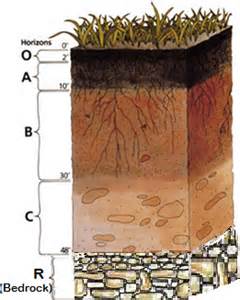
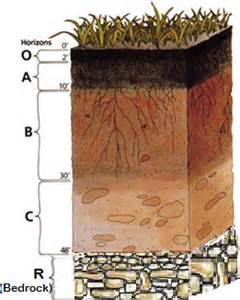
Different populations living and interacting with each other in the same area
a)
Biome
b)
Ecosystem
c)
Community
d)
Niche
10.
The area between the highest mountain and the deepest ocean where life can be found
a)
Biosphere
b)
Biome
c)
Farm
d)
Ecosystem
11.
Which of these is the ultimate source of energy in the energy pyramid
a)
water
b)
air 
c)
sunlight
d)
soil
12.
Which of the following is NOT important cycle of matter in the environment?
a)
helium cycle
b)
water cycle
c)
carbon cycle 
d)
nitrogen cycle
13.
A local company dumped sewage into the wetlands. As a result, most fish in the wetlands died.  This decrease in the number of fish will probably result in
a)
fewer mice
b)
fewer birds
c)
fewer spiders
d)
fewer insects
14.
The science of the environment, its components, and the interactions between these components is called
a)
geology
b)
ecology
c)
biology
d)
physiology
15.
Which of the following is NOT an abiotic environmental factor?
a)
air
b)
animals
c)
soil
d)
water
16.
A local network of plants, animals, and surrounding environment is called
a)
a biosphere
b)
a symbiosis
c)
an ecosystem
d)
nature
17.
Sometimes a population cannot grow to its biotic potential due to environmental factors. What are these environmental factors called?
a)
limiting factors
b)
biomes
c)
ecological pyramids
d)
carrying capasity
18.
Which order of these shows the food chain in the correct order?
a)
Zooplankton--->Bear--->Salmon
b)
Salmon--->Zooplankton--->Bear
c)
Zooplankton-->Salmon--->Bear
d)
Bear--->Zooplankton--->Salmon
19.
The change in the physical state of water from gas to liquid is called? 
a)
Evaportation
b)
Run off 
c)
Condensation
d)
Precipitation
20.
Which of the following is NOT a form of precipitation?
a)
Snow 
b)
Sleet
c)
Rain 
d)
Fog
21.
Which of the following is an example of mutualism? 
a)
tick and dog
b)
Nemo and sea anemome
c)
flatworms and horseshoe crab
d)
mistletoe and tree
22.
What is made up of all populations in an area?
a)
niche
b)
habitat
c)
community
d)
ecosystem
23.
What is the symbiotic relationship called in which the organism is helped and the other organism is harmed?
a)
mutualism
b)
parasitism
c)
commensalism
d)
consumer
24.
What is the symbiotic relationship called which one organism is helped and the other organism is unharmed?
a)
mutualism
b)
parasitism
c)
commensalism
d)
consumer
25.
A close interaction between tow or more different species is known as 
a)
symbiosis
b)
commensalism
c)
mutualism
d)
botulism
26.
Antelope and zebras interacting is an example of a (n)
a)
community
b)
population
c)
ecosystem
d)
biome
27.
Which of the following organisms are typical decomposers?
a)
grasses and ferns
b)
bacteria and mushrooms
c)
mice and deer
d)
lions and snakes
28.
Much of Canada is covered in pine spruce forests. The winter is cold and long. What is this biome?
a)
tundra
b)
taiga or boreal forest
c)
deciduous forest
d)
grassland
29.
An organism's specific role in its habitat is called its
a)
consumer
b)
niche
c)
birth right 
d)
mutalism
30.
What percent of energy is transferred from consumer to consumer in a food chain?
a)
25%
b)
10% 
c)
90%
d)
50%
31.
How would the removal of the earth worms affect the other organisms.
a)
The number of bass will increase
b)
The number of crayfish will decrease
c)
The crayfish will get their energy directly from the sun 
d)
The number of bass and ospreys will increase
32.
An organism that needs to eat other organisms to obtain energy is known as a:
a)
Autotroph
b)
Producer
c)
Consumer
d)
Mutualist
33.
Consumer that eats plants
a)
heterotroph
b)
herbivore
c)
producer
d)
community
34.
What does a food web represent?
a)
All connections of energy flow throughout all organisms in a habitat.
b)
The specific ways that mutualism is carried out.
c)
A single pathway or energy flow between organisms. 
d)
How carnivores get their food. 
35.
relationship in which two species live closely together
a)
resource
b)
mutualism
c)
succession
d)
symbiosis
36.
The rabbit in this food web would be considered a:
a)
Decomposer
b)
Producer
c)
Secondary Consumer
d)
Primary Consumer
37.
Where an organism lives
a)
habitat
b)
niche 
c)
heterotrogh
d)
biosphere
38.
In this Food Web Pyramid Which type of consumer gets only 10% of the energy stored in plants?
a)
Herbivore
b)
Carnivore
c)
Omnivore
d)
Secondary Consumer
39.
Which one is not a consumer?
a)
anemone 
b)
bear
c)
shark
d)
vulture
40.
The image provided is an example of a(n):
a)
Carnivore
b)
Herbivore
c)
Producer
d)
Autotroph
41.
The amount of energy that usually transfers from one trophic level to the next...
a)
10%
b)
20%
c)
80%
d)
50%
42.
An illustration that uses arrows to show the MANY possible directions in which matter and energy can pass through the organisms in an ecosystem.
a)
Food chain
b)
Food web
c)
Energy Pyramid
d)
Succession Map
43.
The nonliving aspects of an ecosystem.
a)
Abiotic factors
b)
Biotic factors
44.
The living portions of the ecosystem.
a)
Biotic factors
b)
Abiotic factors
45.
A graphic illustration that shows each trophic level and the amount of useable energy contained within.
a)
Food chain
b)
Food web
c)
Energy Pyramid
d)
All of these
46.
A collection of organisms that make up a community as well as all of the nonliving aspects of the environment.
a)
Population
b)
Community
c)
Habitat
d)
Ecosystem
47.
What is the term for each step in the transfer of energy and matter within a biological community?
a)
energy path
b)
food web
c)
trophic level
d)
food pyramid
48.
As you move upward, from level to level, in an energy pyramid, energy _____.
a)
increases
b)
decreases
c)
stays the same
d)
increases exponentially
49.
What does every food chain start with? (Even if it's not drawn or written there!)
a)
producers
b)
sun
c)
consumer
d)
decomposers
50.

Which of these is the foundation of the Food Web and Energy Pyramid?

a)

Photosynthesis

b)

Plants

c)

Decomposers

d)

Omnivores

51.

Which of these is the main source of energy on Earth?

a)

The Sun

b)

Producers/Plants

c)

Consumers/Animals

d)

Decomposers/Fungi

52.

Which organisms have the ability to use the sun's energy to PRODUCE glucose?

a)

Snakes/Mice

b)

Grass/ Trees

c)

Hawks/Eagles

d)

Fungi/Bacteria

53.

Which organisms convert Nitrogen in the atmosphere to a usable for for plants and animals?

a)

Plants

b)

Animals

c)

Bacteria

d)

Converters

54.

Photosynthesis will most likely appear in which of these cycles?

a)

Nitrogen

b)

Carbon

c)

Water

55.

Evaporation and Transpiration will most likely appear in which of these cycles?

a)

Nitrogen

b)

Carbon

c)

Water

56.

Which species will have the largest population?

a)

Hawks

b)

Snakes

c)

Rabbits

d)

Grass

57.

Which species is the 2nd level consumer?

a)

Sharks

b)

Mackerel

c)

Herring

d)

Crustaceans

58.

Which of these are negative consequences of farming?

a)

Nitrogen/Fertilizer run off causing an algae bloom

b)

Loss of habitat for animal homes

c)

Loss of territory for animals to hunt

d)

Birds will be able to find seeds in fields

59.

When members of a population work together it is called...

a)

Competition

b)

Cooperation

c)

Mutualism

60.

A population is...

a)

All of the members of a species in the same area.

b)

All of the different species in the same area.

c)

All of the Biotic and Abiotic factors in an area.

61.

An ecosystem is...

a)

All of the members of a species in the same area.

b)

All of the different species in the same area.

c)

All of the Biotic and Abiotic factors in an area.

62.

Territorial behaviors can be...

a)

Screaming/barking.

b)

Marking an area (rubbing antlers on trees, urinating).

c)

Fighting over mates.

d)

Different species working together.

63.

Which of these are ways that animals will use to conserve energy during the winter?

a)

Grow more fur

b)

Hibernate

c)

Take a long trip to find food (migrate)

d)

Find a cabin with a fire place

64.

Which of these would be used to describe a Tundra?

a)

Permafrost

b)

Caribou

c)

Cool summers

d)

Rich topsoil

65.

Decomposers...

a)

Recycle nutrients in the ecosystem.

b)

Provide most of the Earth's energy.

c)

Can be considered producers because they grow in the ground.

d)

Are mostly Abiotic.

66.

Which of these are the Niche of Squirrel?

a)

Predator when it eats an insect.

b)

Prey when it is eaten by an owl.

c)

Planter when it hides and acorn and forgets where it is

67.

Which of these are examples of Commensalism?

a)

Barnacles riding on a whale.

b)

Remora feeding of food scrapes left by a shark.

c)

A tick sucking blood from its host.

68.

Which of these determine which biome will be in an area?

a)

Temperature

b)

Precipitation

c)

Geology

d)

Animals that live there

69.

Increased Carbon Dioxide in the atmosphere has formed a blanket around the planet and contributed to an ...

a)

increase in the temperature of the planet.

b)

increase in noise

c)

increase in ice around the planet.

d)

increase in parasites looking for hosts.

70.

A relationship in which both species benefit is called...

a)

Parasitism

b)

Commensalism

c)

Mutualism

71.

Limiting factors ...

a)

are resources that are in short supply and limit the size of a population.

b)

are a cause of too much nitrogen in the water.

c)

are hosts for parasites.

d)

only found in the jungle.

72.
1. What makes a species invasive?
a)
Moving to a new ecosystem and taking resources from natives 
b)
Not having papers
c)
Species that can't adapt
d)
Plants that take up too much space
73.
What kind of organisms can become invasive? 
a)
Lions, Tigers, Bears
b)
Plants, Animals, or Pathogens 
c)
Animals
d)
Plants
74.
Does every species have the means to become invasive? 
a)
Depends on the abiotic factors
b)
es, if the food web can support another organism
c)
Yes, if they are determined enough
d)
No, only species that pose a threat to ecosystem
75.
What is the main cause for species invading?
a)
Air Pollution 
b)
Wanting to be adventerous
c)
Human Means 
d)
Themselves
76.
The lack of natural predators makes populations of invasive species unmanageable?
a)
True
b)
False
77.
Invasive species help the food web by adding extra carnivores?
a)
True
b)
False
78.
How are invasive species managed?
a)
They aren't
b)
By killing everything and hoping
c)
New laws have prevented most invasions from happening 
d)
Lasers
79.
When taken to a new habitat, non-native plants often threaten native plants of the new habitat.  Why do they do this?
a)
Non-native plants are able to mutate rapidly
b)
Non-native  plants cause native animals to relocate
c)
Non-native plants are able to be used for medicine
d)
Non-native plants compete with native plants for resources
80.
Biodiversity refers to
a)
extinct species
b)
the variety of species on Earth
c)
nonrenewable resources
d)
the rate of species decline
81.
What effect will an invasive species have on the carrying capacity of an ecosystem?
a)
The carrying capacity will increase
b)
The carrying capacity for everyone will decrease
c)
The carrying capacity will only decrease for those in competition for same resource
d)
The carrying capacity for all animals will stay the same
82.
Kudzu has overgrown many parts of southern Missouri and native ground plants have disappeared from the area. This is an example of:
a)
Parasitism between kudzu and the native plants
b)
A predator prey relationship between ground plants and kudzu
c)
Competition occurring between the native and invasive species
d)
Commesalism occurring between the kudzo and native plants
83.
The field mouse population in Australia has grown so fast that they eat an average of  $4 billion of wheat every year. Their fast growth is caused by:
a)
A. The mice like to reproduce
b)
B. A lack of a native species to eat the field mouse
c)
C. Abundant food supply
d)
Both B and C
84.
How did the zebra mussels end up in the Great Lakes?
a)
In ballast tanks of ships
b)
They were intentionally released
c)
They have always been in the Great Lakes
d)
That's not a zebra mussel
85.
1. What makes a species invasive?
a)
Moving to a new ecosystem and taking resources from natives 
b)
Not having papers
c)
Species that can't adapt
d)
Plants that take up too much space
86.
If a blue catfish is introduced and eats the large fish who eat the smaller fish, what will happen to the population of the smaller fish?
a)
Increase
b)
Decrease
c)
Stay the same
d)
No affect on smaller fish
87.
Which of the following is a key characteristic of most invasive species?
a)
Ability to breathe in the air & in the water
b)
Large, sharp teeth
c)
Produce many offspring
d)
Is a top predator
88.
What is a native specie?
a)
A specie that is local and has lived in the same place
b)
A specie who has come from another state or country
c)
A specie that has no "home" and travels for its whole life
d)
None of the above
89.
A population of an organism will only grow exponentially if:
a)
The resources are unlimited
b)
They want to
c)
The resources are limited
d)
They do not like to compete
90.
Species that are indigenous to an area with no human intervention
a)
invasive species
b)
native species
c)
all species that live in an ecosystem
91.
Invasive species have a negative impact on...
a)
the ecosystem
b)
the economy
c)
Both the ecosystem and the economy
d)
None of these
92.
What's one EFFECT of pythons invading the Everglades?
a)
the number of small mammals, like mice, are decreasing
b)
the number of white-tailed deer is increasing
c)
pythons can grow to be 18 feet long
93.
Fire ants were introduced into the US by 
a)
Groundskeepers to the Governor's mansion in Alabama
b)
Stowing away on a cargo ship sailing from India 
c)
Stuck in a pant leg of a tourist coming in from South America
d)
A ship that used soil from South America as ballast
94.
Soil formation begins with the weathering of_______.
a)
Humas
b)
Subsoil
c)
Litter
d)
Rock
95.
The layer of soil which the topsoil is found.
a)
Horizon A
b)
Horizon B
c)
Horizon C
d)
Horizon D or R
96.
The MAIN  thing Decomposers do for the the soil is the following:
a)
Store moisture
b)
Burrow deep in the soil
c)
Make space for air and water
d)
Break down and digest dead organisms
97.
Decayed organic material in soil is called______.
a)
Litter
b)
Silt
c)
Humus
d)
Clay
98.
Topsoil which contains the HUMUS is the soil layer best for growing plants.
a)
True
b)
False
99.
Which horizon is made up of partially weathered rocks?
a)
Horizon A
b)
Horizon B
c)
Horizon C
d)
Horizon D or R
100.
In which horizon is most of the HUMUS?
a)
Horizon A
b)
Horizon B
c)
Horizon C
d)
Horizon D or R
101.
Which horizon contains clay, silt, minerals, and a little humus?
a)
 Horizon A
b)
Horizon B
c)
Horizon C
d)
Horizon D or R
102.
There is an unlimited supply of fertile soil.
a)
True
b)
False
103.
Soil layers are called horizons because...
a)
The layers are all different
b)
The layers are vertical
c)
The layers are horizontal
d)
The layers are above one another