wayground logo

Free Printable Worksheets

NEW

Font size

S
M
L
XL
Worksheets

Integrated Science Final Exam Review

Total questions: 62

Worksheet time: 1hrs 29mins

Name
Class
Date
1.
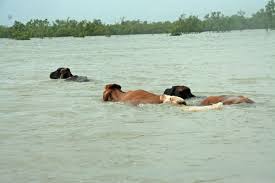
Cattle egrets are birds that forage in fields among cattle. The egrets get easy access to food and the cattle don't care if they are there or not.
a)
mutualism
b)
commensalism
c)
competition
d)
parasitism
2.
Red-billed oxpeckers are birds that feed on parasites found on an impala. The impala gets rid of parasites and the red-billed oxpeckers get a yummy dinner. This is an example of _______.
a)
commensalism
b)
mutualism
c)
neutralism
d)
competition
3.
A relationship between two organisms in which one organism benefits and the other is harmed.
a)
Mutualism 
b)
Competition
c)
Parasitsm 
d)
Commensalism 
4.
Which of the following is not an abiotic factor?
a)
sun
b)
temperature
c)
soil
d)
grass
5.
Which of the following is not a biotic factor?
a)
mushroom
b)
air
c)
elephant
d)
coyote
6.
Which organism recieves the least amount of energy from the producer?
a)
Owl
b)
Grasshopper
c)
Lilypad
d)
Mouse
7.
What does a Primary Consumer eat?
a)
Tertiary Consumers
b)
Secondary Consumers
c)
Producers
8.
Which of the following best describes the small bird in the food web above?
a)
primary and secondary consumer
b)
secondary and tertiary consumer
c)
primary consumer only
d)
secondary consumer only
9.
What kind of limiting factor is a flood?
a)
density-independent
b)
density-dependent
10.
If these organisms were arranged in an ecological biomass pyramid, which organism would have the least amount of biomass?
a)
coyote
b)
insect
c)
lizard
d)
shrub
11.
Another term for producer
a)
Heterotroph
b)
Autotroph
12.
Organisms that cannot make their own food and must obtain energy from external sources are called
a)
autotrophs
b)
heterotrophs
c)
thylakoids
d)
plants
13.
What are the primary products of  fusion in stars?
a)
Helium
b)
Energy
c)
Hydrogen
d)
Both Helium and Energy
14.
All stars begin their life in a
a)
Main Sequence
b)
Nebula
c)
Protostar
d)
Black Dwarf
15.
Our sun is currently in what star stage?
a)
Protostar
b)
Nebula
c)
Main Sequence
d)
Red Giant
16.
Most stars are made of which elements?
a)
Hydrogen only
b)
Hydrogen and Lithium
c)
Hydrogen and Sodium
d)
Hydrogen and Helium
17.
What color of star is the hottest?
a)
Blue
b)
Red
c)
Yellow
d)
Orange
18.
What can a scientist learn about a star from its spectrum
a)
its color
b)
its size
c)
its composition and temperature
d)
its age
19.
This gas is what stars burn into heat and light.
a)
Helium
b)
Oxygen
c)
Hydrogen
20.
If a star is being observed from Earth and it's light has shifted towards the blue side of the electromagnetic spectrum it would be...
a)
Moving towards the Earth
b)
Moving away from the Earth
c)
This is a trick question that cannot be answered
d)
It isn't a star, it is a very large blueberry.
21.

A main sequence star is able to remain stable because ______ and ______ are balanced.

a)

Heat and light

b)

Fusion and gravity

c)

Pressure and heat

d)

Temperature and radiation

22.
A divergent boundary occurs when plates ....
a)
Pull apart
b)
Come together
c)
Slide past each other
d)
subducting
23.
subduction zones in the ocean can create which features?
a)
islands
b)
volcanoes
c)
earthquakes
d)
all of the above
24.
Transform boundaries are most likely to produce what phenomenon?
a)
volcanoes
b)
deep sea trenches
c)
underwater mountain ranges
d)
earthquakes
25.

What kind of boundary would form here?

a)

Divergent

b)

Convergent

c)

Transform

26.
What geologic feature/event would you most likely to find at a convergent boundary between two pieces of continental crust?
a)
Volcano
b)
Mountain
c)
Rift
d)
Island Arc
27.
What would you be most likely to find at a convergent boundary between two pieces of oceanic crust?
a)
Mountains
b)
Rift
c)
Mid-Ocean Ridge
d)
Island Arc
28.

If humans didn’t exist, would there still be a Greenhouse Effect? Why?

a)

No, the greenhouse effect is not natural

b)

Yes, the greenhouse effect is natural and keeps Earth warm enough to live on

c)

No, humans created the Greenhouse Effect

d)

Yes, the greenhouse effect is natural and keeps Earth cool enough to live on

29.

almost all energy reaching the earth from is the sun is in the form of

a)

electromagnetic waves

b)

gamma rays

c)

ultraviolet rays

d)

atomic particles

30.
Where weather occurs.
a)
stratosphere
b)
thermosphere
c)
troposphere
d)
mesosphere
31.

This layer of the atmosphere reflects radio waves, allowing them to be transmitted farther

a)

troposphere

b)

mesosphere

c)

ionosphere

d)

thermosphere

32.
The only layer that contains water vapor and carbon dioxide.
a)
stratosphere
b)
thermosphere
c)
troposphere
d)
mesosphere
33.
What do carbon-12 and carbon-14 have in common?
a)
they have same number of protons
b)
they have the same number of neutrons
c)
they have the same atomic mass
d)
they have the same atomic weight
34.
How is carbon-12 different from carbon-14?
a)
They have a different number of protons
b)
they have a different number of electrons
c)
they have a different number of neutrons
d)
they are different elements
35.
What bond involves the sharing of electrons?
a)
Ionic
b)
Transitive
c)
Covalent
36.
an atom with atomic number 6 would have how many protons 
a)
6
b)
12
c)
3
d)
cannot be determined 
37.
What is the atomic mass of "F"
a)
9
b)
18
c)
17
d)
19
38.
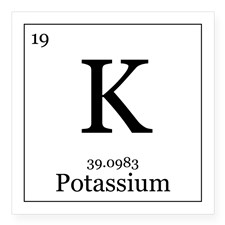
How many neutron are in the atom "K"?
a)
7
b)
2
c)
39
d)
20
39.
An atom becomes _________ when it gains electrons.
a)
Positive
b)
Negative
c)
Neutral
d)
Invinsible
40.
In a polar covalent bond, electrons are shared ___________.
a)
equally
b)
unequally
c)
between non-metals with similar electronegativities
d)
between a metal and a non-metal
41.
The variable that is being measured or observed is called the _______________. Hint: this is the variable that is the result or effect 
a)
independent variable
b)
dependent variable
c)
control variable
42.
The independent variable is the ONE thing you _____.
a)
change on purpose
b)
control or keep constant
c)
measure
43.

What is the independent variable in this experiment?

a)

temperature of the stove

b)

how fast the water boils

c)

amount of water

44.
You know 1000 mg = 1 g.  Convert 2.5 grams into milligrams.
a)
25 mg
b)
25,000 mg
c)
250 mg
d)
2500 mg
45.
Which of the following happened most recently?
a)
A. Deposition of Unit C
b)
B. Deposition of Unit B
c)
C. Deposition of Unit F
d)
D. Tilting of C, D, E, and F
46.
Which is the most accurate form of absolute dating?
a)
radiometric dating
b)
erosion rate
c)
deposition rate
d)
index fossils
47.
How is radioactive dating used to determine the absolute age of rocks?
a)
The percent of radioactive parent isotopes remaining in the rock is compared to the amount of stable daughter isotopes that are present
b)
it compares the radioactive isotope in a younger layer of rock to an older layer
c)
isotopes of different compounds are compared
d)
daughter isotopes are compared to sister isotopes
48.
If a radioactive substance has a half life of 200 years, how much time has passed if ¼ (25%)  of the original isotope is left?  
a)
25 years
b)
600 years
c)
50 years
d)
400 years
49.
what is the function of xylem tissue?
a)
transports water and minerals salt 
b)
control the opening and closing of stoma
c)
carry out photosynthesis
d)
provide support for young plant
50.

Minerals from the soil move into roots by

a)

transpiration.

b)

root pressure.

c)

active transport.

d)

diffusion.

51.

When a tree grows wider in trunk diameter, this is an example of which of the following?

a)

Secondary growth

b)

Primary growth

c)

Photosynthesis

d)

Xylem transport

52.

The attraction of water molecules to other water molecules is called

a)

capillary action.

b)

transpirational pull.

c)

cohesion.

d)

adhesion.

53.

Which biomolecular group carries and passes on the hereditary information of the organism?

a)

a. carbohydrates

b)

b. lipids

c)

c. nucleic acids

d)

d. proteins

54.

Which of the following is considered as the building blocks of protein?

a)

a. amino acids

b)

b. nucleic acids

c)

c. nucleotides

d)

d. polypeptides

55.
The elements, ____________________, are found in all of the organic compounds.
a)
Carbon, Hydrogen and Oxygen
b)
Carbon, Hydrogen, Oxygen, and Nitrogen
c)
Carbon and Oxygen
d)
Carbon, Hydrogen, and Nitrogen
56.
Which type of biological macromolecule are enzymes?
a)
Protein
b)
Carbohydrate
c)
Lipid
d)
Nucleic Acid
57.
Which macromolecule stores energy, insulates us, and makes up the cell membrane?
a)
lipids
b)
proteins
c)
carbohydrates
d)
nucleic acids
58.
Which macromolecule is made up of a glycerol and fatty acids?
a)
Lipids
b)
Proteins
c)
Nucleic Acids
d)
Carbohydrates
59.
What are the four types of biological macromolecules?
a)
carbohydrates, nucleotides, lipids, amino acids
b)
carbohydrates, lipids, nucleic acids, proteins
c)
nucleic acids, monosaccharides, proteins, lipids
d)
carbohydrates, amino acids, water, proteins
60.
What are the monomers (building blocks) of CARBOHYDRATES?
a)
Monosaccharides (simple sugars)
b)
Amino Acids
c)
Nucleotides
d)
Glycerol and fatty acids
61.
What are the monomers (building blocks) of NUCLEIC ACIDS?
a)
Monosaccharides (simple sugars)
b)
Amino Acids
c)
Nucleotides
d)
Glycerol and fatty acids
62.
__________________ provide us with quick energy, while _________________ are our secondary energy source.
a)
Lipids, proteins
b)
Carbohydrates, nucleic acids
c)
Proteins, carbohydrates
d)
Carbohydrates, lipids