wayground logo

Free Printable Worksheets

Font size

S
M
L
XL
Worksheets

Benchmark 2 Review

Total questions: 60

Worksheet time: 50mins

Name
Class
Date
1.
Proteins are made of monomers called ___________
a)
Nucleotides
b)
Monosaccharides
c)
Amino Acids
d)
Glycerol and fatty acids
2.
The element _______is found in all of the organic compounds.
a)
Iron
b)
Nitrogen
c)
Carbon
d)
Oxygen
3.
DNA and RNA are examples of 
a)
Carbohydrates
b)
Lipids
c)
Proteins
d)
Nucleic Acids
4.
Nucleotides are monomers of
a)
Carbohydrates
b)
Lipids
c)
Proteins
d)
Nucleic Acids
5.
Monosaccharides are monomers of
a)
Carbohydrates
b)
Lipids
c)
Proteins
d)
Nucleic Acids
6.
Waxes, oils and fats are examples of
a)
Carbohydrates
b)
Lipids
c)
Proteins
d)
Nucleic Acids
7.
Glycerol and fatty acids are the monomers of
a)
Carbohydrates
b)
Lipids
c)
Proteins
d)
Nucleic Acids
8.
Carbohydrates are made of... 
a)
C H O
b)
C H O N
c)
C H O N P
d)
C H O N S
9.
Lipids are made of... 
a)
C H O
b)
C H O N
c)
C H O N P
d)
C H O N S
10.
Proteins are made of... 
a)
C H O
b)
C H O N
c)
C H O N P
d)
C H O N S
11.
With what 3 letters do enzymes typically end?
a)
-ose
b)
-ase
c)
-ese
d)
-tic
12.

Enzymes are an example of

a)

Lipids

b)

Carbohydrate

c)

Protein

d)

Nucleic Acid

13.
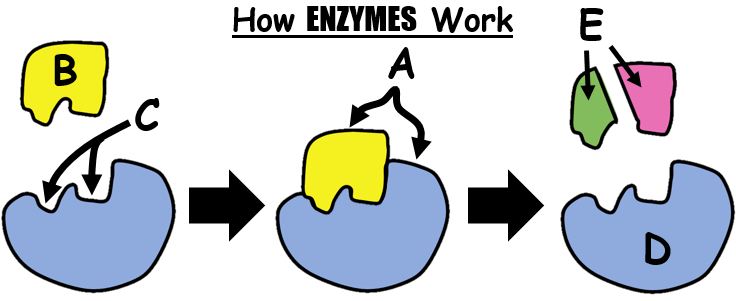
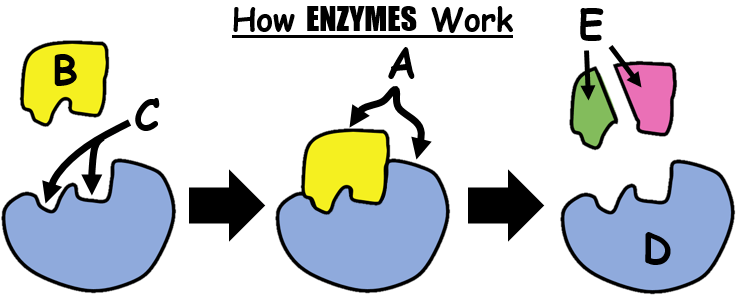
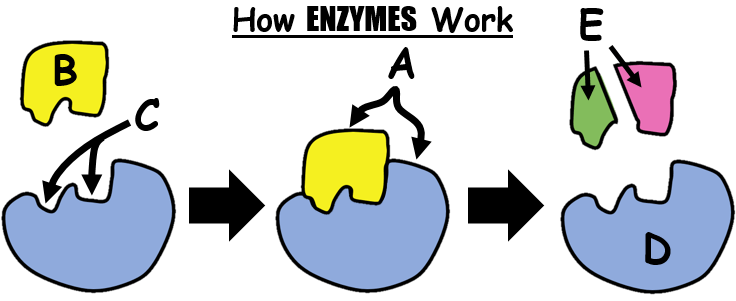
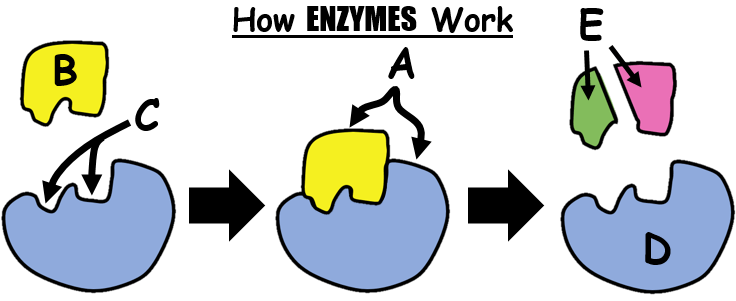
In the diagram, what is letter A? 
a)
product
b)
substrate
c)
enzyme-substrate complex
d)
active site
14.
Letter D...
a)
active site
b)
enzyme
c)
substrate
d)
products
15.
Letter B...
a)
active site
b)
enzyme
c)
substrate
d)
products
16.
Letter C...
a)
active site
b)
enzymes
c)
substrate
d)
products
17.
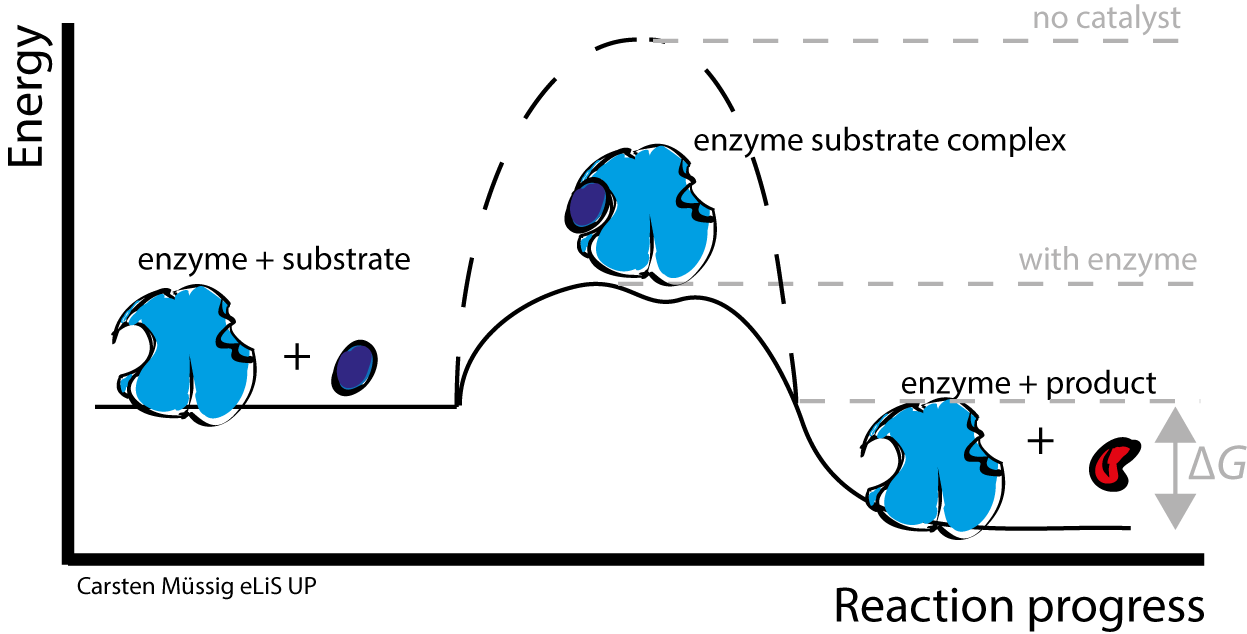
An enzyme speeds up a reaction by
a)
lowering the activation energy.
b)
raising the activation energy.
c)
releasing energy.
d)
absorbing energy.
18.

What happens when enzymes are heated to a high temperature?

a)

The enzymes die.

b)

The shape of the enzyme are changed and it denatures

c)

The enzymes' amino acid sequence changes.

d)

The enzymes remain the same

19.
What type of cell has a nucleus? 
a)
eukaryotic
b)
prokaryotic 
20.
Bacteria is what kind of cell?
a)
Eukaryotic
b)
Prokaryotic
21.

What is the function of the Vacuoles

a)

Store food, water and waste

b)

Receive proteins

c)

Assembles amino acids

d)

Found inside the nucleus

22.

Which organelle receives proteins and materials from the ER, packages them and distributes them

a)

Vacuoles

b)

Golgi Bodies

c)

Nucleus

d)

Chromatin

23.

The control center of cell is

a)

the nucleus

b)

ribosomes

c)

chromatin

24.
Which organelle allows the cell to obtain items from outside the cell?
a)
Nuclear membrane
b)
Vacuole
c)
Cell Membrane
d)
Cell Wall
25.
Which organelle releases the energy stored inside food
a)
Chloroplast
b)
Mitochondria
c)
Lysosomes
d)
Nucleus
26.
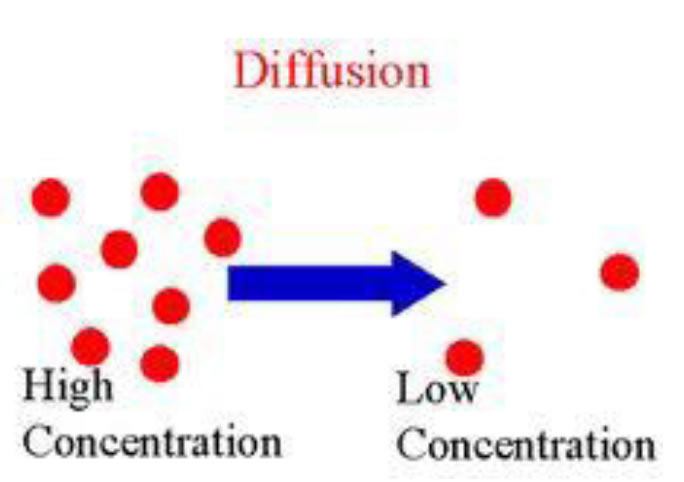
Movement of particles from high to low concentration. 
a)
Passive Transport
b)
Active Transport
27.
What is it called when molecules move across the cell membrane from an area of high concentration to an area of low concentration through a carrier protein?
a)
Diffusion
b)
Osmosis
c)
Active Transport
d)
Facilitated Diffusion
28.
Osmosis is the movement of _____ across a membrane.
a)
food
b)
energy
c)
oxygen
d)
water
29.
Which is true about active transport?
a)
It requires energy
b)
it does not require energy
c)
It moves substances down the concentration gradient
d)
it moves material from high to low concentration
30.
The cell below is in a _________ solution.
a)
Hypotonic
b)
Hypertonic
c)
Isotonic
31.
The cell below is in a _____________ solution.
a)
Hypertonic
b)
Hypotonic
c)
Isotonic
32.
A cell in an isotonic solution will
a)
swell
b)
shrink
c)
stay the same size
d)
impossible to tell
33.
What phase of mitosis is occuring in the picture?
a)
Prophase
b)
Metaphase
c)
Cytokinesis
d)
Telophase
34.
In which phase does the cell spend most of it's life?
a)
Interphase
b)
Nuclear Division
c)
Telophase
d)
Mitosis
35.
Which is Metaphase?
a)
A
b)
E
c)
C
d)
F
36.

What is the correct order of the cell cycle?

a)

Interphase, Cytokinesis, Mitosis

b)

Interphase, Mitosis, Cytokinesis

c)

Cytokinesis, Mitosis, Interphase

d)

Anaphase, Telophase, Cytokinesis

37.

Undifferentiated cells that can become one or more specialized types of cell are called_________

a)

Stem Cells

b)

Somatic Cells

c)

Body Cells

d)

Zygotes

38.

Arrange the following levels of hierarchy from LARGEST to SMALLEST

a)

Organism, Organ, Tissue, Cell

b)

Cell, Tissue, Organ, Organism

c)

Organism, Cell, Tissue, Organ

d)

Tissue, Cell, Organ, Organism

39.

How is cytokinesis different in plant cells vs. animal cells?

a)

In plant cells, cytokinesis uses a cell plate. In animal cells, cytokinesis uses a cleavage furrow.

b)

In plant cells, cytokinesis uses a cleavage furrow. In animal cells, cytokinesis uses a cell plate.

c)

In plant cells, cytokinesis happens twice, in animal cells cytokinesis happens once

d)

In plant cells, cytokinesis happens once, in animal cells cytokinesis happens twice.

40.
____ means cancerous.
a)
Malignant
b)
Metastesis
c)
Mitosis
d)
Replication
41.
Cancer spreading to another tissue is called
a)
Malignant
b)
Metastesis
c)
Mitosis
d)
Replication
42.
Uncontrolled cell growth is called___.
a)
Mitosis
b)
DNA Replication
c)
Cancer
d)
Radiation
43.
Using the figure, between which parts of the molecule must the bonds be broken to form an ADP molecule?all of the above
a)
A and B
b)
B and C
c)
C and D
44.
the products of photosynthesis are...
a)
glucose and sunlight
b)
carbon dioxide and water
c)
glucose and chlorophyll
d)
oxygen and glucose
45.
The formula for glucose is...
a)
C12 H22 O11
b)
NaCl
c)
NaOH
d)
C6 H12 O6
46.
The reactant of photosynthesis are...
a)
sunlight and chlorophyll
b)
glucose and oxygen
c)
carbon dioxide and water
d)
sunlight and water
47.
What is cellular respiration?
a)
the breakdown of glucose  to release ATP
b)
the breakdown of glucose to release NADH
c)
the breakdown of glucose to release FADH
d)
the breakdown of glucose to release carbon
48.
The two type of fermentation are alcohol and _____________ acid fermentation. 
a)
lactic
b)
sulfuric
c)
hydrochloric
d)
acetic 
49.
When glycolysis occurs,
a)
a molecule of glucose is split
b)
two pyruvate are made
c)
some ATP is produced
d)
all of these
50.

The end products of the KREBS cycle include all of the following except

a)

carbon dioxide

b)

pyruvic acid

c)

ATP

d)

NADH

51.

In the electron transport chain, electrons are passed from one electron transport molecule to another and are finally accepted by

a)

an oxygen molecule

b)

a molecule of carbon dioxide

c)

a molecule of water

d)

ADP

52.

The transfer of genetic info from DNA to RNA is called

a)

translation

b)

transcription

c)

initiation

d)

elongation

53.

When RNA is being made, the RNA base ____ always pairs with the base ___ in DNA.

a)

U-T

b)

T-G

c)

U-A

d)

A-U

54.
Choose the nucleotide sequence of the RNA strand that would be complementary to the following strand: 
GTAGTCA
a)
UATUAGA
b)
ACGACTG
c)
CAUCAGU
d)
CATCAGT
55.
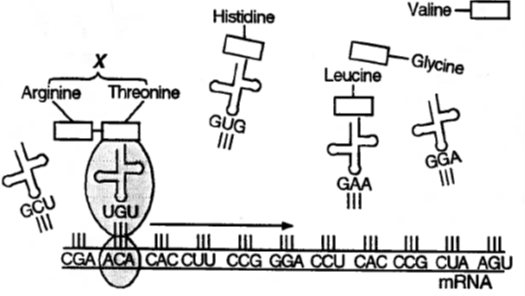
What process is going on in this photo? 
a)
Transcription 
b)
Translation 
c)
Replication 
d)
All the above 
56.

What is the three base sequence of mRNA that codes for a single amino acid?

a)

Anticodon

b)

Codon

c)

Protein

d)

DNA

57.
What are the backbones (sides) of the DNA structure made up of?
a)
repeating phosphates and sugars
b)
nitrogen bases
c)
nucleotides
d)
adenine and thymine
58.
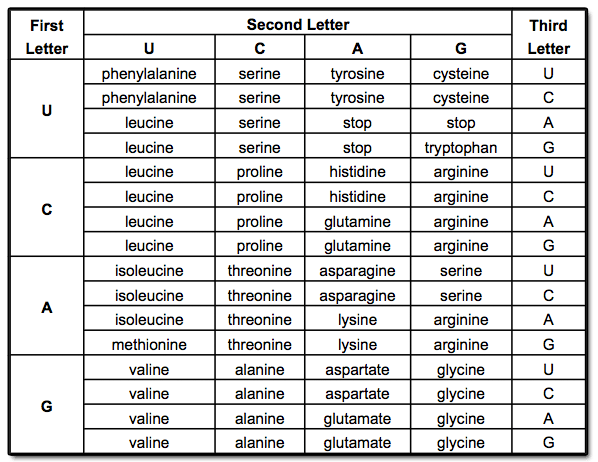
What is the correct amino acid sequence for the mRNA code AUGCCAGUAUGA
a)
Met-Pro-Ala-Val
b)
Met-Pro-Val
c)
Tyr-Gly-His
d)
Tyr-Gly-Arg-His
59.

CROSSING OVER TAKES PLACE DURING

a)

PROPHASE II

b)

PROPHASE I

c)

INTERPHASE

d)

METAPHASE I

60.

MEIOSIS PRODUCES 4 CELLS-THE CHROMOSOME NUMBER IS ...

a)

DIPLOID

b)

HAPLOID