wayground logo

Free Printable Worksheets

Font size

S
M
L
XL
Worksheets

Ecology

Total questions: 58

Worksheet time: 15hrs 30mins

Name
Class
Date
1.
What does a food web represent?
a)
All connections of energy flow throughout all organisms in a habitat.
b)
The specific ways that mutualism is carried out.
c)
A single pathway or energy flow between organisms. 
d)
How carnivores get their food. 
2.
relationship in which two species live closely together
a)
resource
b)
mutualism
c)
succession
d)
symbiosis
3.
The rabbit in this food web would be considered a:
a)
Decomposer
b)
Producer
c)
Secondary Consumer
d)
Primary Consumer
4.
What is the term for each step in the transfer of energy and matter within a biological community?
a)
energy path
b)
food web
c)
trophic level
d)
food pyramid
5.
An illustration that uses arrows to show the MANY possible directions in which matter and energy can pass through the organisms in an ecosystem.
a)
Food chain
b)
Food web
c)
Energy Pyramid
d)
Succession Map
6.
The nonliving aspects of an ecosystem.
a)
Abiotic factors
b)
Biotic factors
7.
A graphic illustration that shows each trophic level and the amount of useable energy contained within.
a)
Food chain
b)
Food web
c)
Energy Pyramid
d)
All of these
8.
A collection of organisms that make up a community as well as all of the nonliving aspects of the environment.
a)
Population
b)
Community
c)
Habitat
d)
Ecosystem
9.
As you move upward, from level to level, in an energy pyramid, energy _____.
a)
increases
b)
decreases
c)
stays the same
d)
increases exponentially
10.
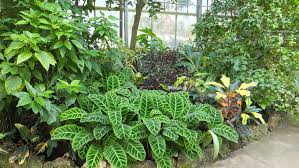
What are the Abiotic factors in this image? 
a)
water, sunlight, dirt, air
b)
birds and plants
c)
birds, water, dirt
d)
plants, water
11.
Two or more members of a particular species living and interacting in the same area
a)
Community
b)
Population
c)
Organisms
d)
Biosphere
12.
Different populations living and interacting with each other in the same area
a)
Biome
b)
Ecosystem
c)
Community
d)
Niche
13.
Example of a decomposer
a)
fungus
b)
mouse
c)
plants
d)
frogs
14.
Which of the following is a herbivore?
a)
cricket
b)
frog
c)
hawk
d)
shrew
15.
All food chains begin with a ____________.
a)
primary consumer
b)
secondary consumer
c)
producers
d)
scavengers
16.

Many fish die due to a drastic change in water temperature.

a)

Density-Dependent

b)

Density-Independent

17.

An extensive drought in the plains threatens wildebeest, giraffe, zebra, and springbok populations.

a)

Density-Dependent

b)

Density-Independent

18.

Which of the following is a density-dependent limiting factor?

a)

human activities

b)

unusual weather

c)

competition

d)

natural disaster

19.
Which of the following is a density-independent limiting factor?
a)
natural disaster
b)
predation
c)
disease
d)
parasitism
20.

Which of the following would NOT be an example of a density dependent limiting factor?

a)

fire

b)

disease

c)

lack of food

d)

space

21.

Which of the following would NOT be an example of a density independent factor?

a)

predation

b)

tornado

c)

hurricane

d)

fire

22.
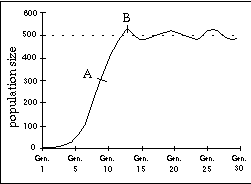
What is the carrying capacity of the graph?
a)
around 500
b)
more than 500
c)
less than 500
d)
around 600
23.
What is the carrying capacity of the following graph?
a)
1000
b)
8000
c)
800
d)
600
24.
The total number of individuals a habitat can survive with the resources it has available.
a)
Carrying capacity
b)
Limiting factors
c)
Resources
d)
Population
25.

Exponential population growth can be described as

a)

growth when resources are limited

b)

a j-shaped curve

c)

a s-shaped curve

d)

growth that reaches carrying capacity

26.

Logistic population growth can be described as

a)

growth when resources are limited

b)

a s-shaped curve

c)

reaching carrying capacity

d)

all of the above

27.

Exponential Growth occurs when-

a)

populations have plenty of food/space

b)

home to keystone species

c)

have few evasive species in a habitat

d)

have little to no competition or predators

28.
The process of plants losing water through their leaves is called ____.
a)
condensation
b)
evaporation
c)
transpiration
d)
exhaling
29.
These gases, such as carbon dioxide, trap heat in the Earth's atmosphere causing global warming
a)
Global warming gases
b)
Hot House gases
c)
Green House gases
d)
Thermal pollution
30.
What is the only process that removes carbon from the atmosphere?
a)
combustion
b)
cellular respiration
c)
photosynthesis
d)
decomposition
31.

Which describes the relationship between plants and animals in the carbon cycle?

a)

Plants produce and release oxygen that animals need

b)

Plants produce and release carbon dioxide that animals need

c)

Animals produce and release oxygen that plants need

d)

Animals produce oxygen that plants turn into carbon dioxide

32.

Coal, natural gas, and oil are examples of _________

a)

the carbon cycle

b)

products of photosynthesis

c)

good fuels for barbecues

d)

fossil fuels

33.
What is the process of combining nitrogen gas with other elements to make nitrogen into usable compounds?
a)
nitrogen composition
b)
ammonia 
c)
nitrogen fixation
d)
denitrification
34.
succession that occurs in an area with no soil
a)
ecological succession 
b)
primary succession 
c)
secondary succession
d)
pioneer speciles
35.
succession that occurs in an area where soil is already present
a)
ecological succession 
b)
primary succession 
c)
secondary succession
d)
pioneer speciles
36.
the first organisms that appear in an ecological community
a)
ecological succession 
b)
primary succession 
c)
secondary succession
d)
pioneer speciles
37.
a stable ecological community that has reached equilibrium
a)
ecological succession 
b)
climax community
c)
secondary succession
d)
pioneer speciles
38.
starts with bare rock followed by lichen
a)
primary succession 
b)
secondary succession
c)
both types of succession
39.
Which biome is MOST LIKE the "desert" in terms of precipitation?
a)
tropical rainforest
b)
temperate deciduous forest
c)
tundra
d)
coniferous forest
40.
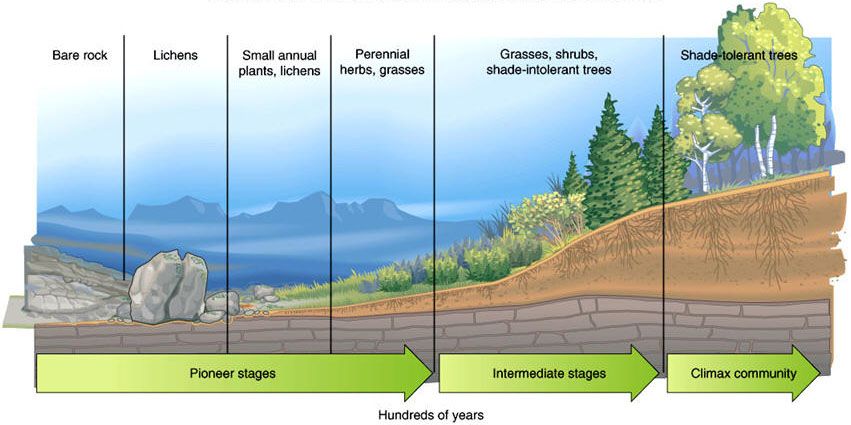
What is the order of succession shown in this figure?
a)
A, B, C, D
b)
B, A, D, C
c)
C, D, A, B
d)
D, A, B, C
41.
What type of succession is shown going from figure A to figure B?
a)
primary succession
b)
eutrophication
c)
secondary succession
d)
intermediate
42.

The picture shows what type of succession?

a)

primary

b)

secondary

c)

tertiary

d)

quadanary

43.
problem caused by increased levels of CFC's in the atmosphere
a)
global warming
b)
thermal pollution 
c)
greenhouse effect
d)
ozone depletion
44.
Cattle egrets forage (feed) in fields among cattle. The egret gets easy access to flying insects stirred up by the cattle, and the cattle don't care if they are there or not.
a)
mutualism
b)
commensalism
c)
competition
d)
parasitism
45.

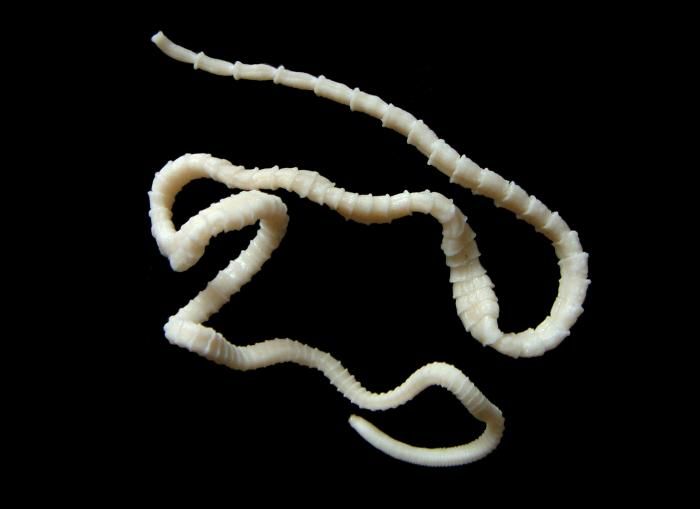
A tapeworm lives in the intestine of a cat absorbing nutrients through its skin. A tapeworm and a cat have this type of relationship.

a)

mutualism

b)

parasitism

c)

commensalism

d)

competition

46.
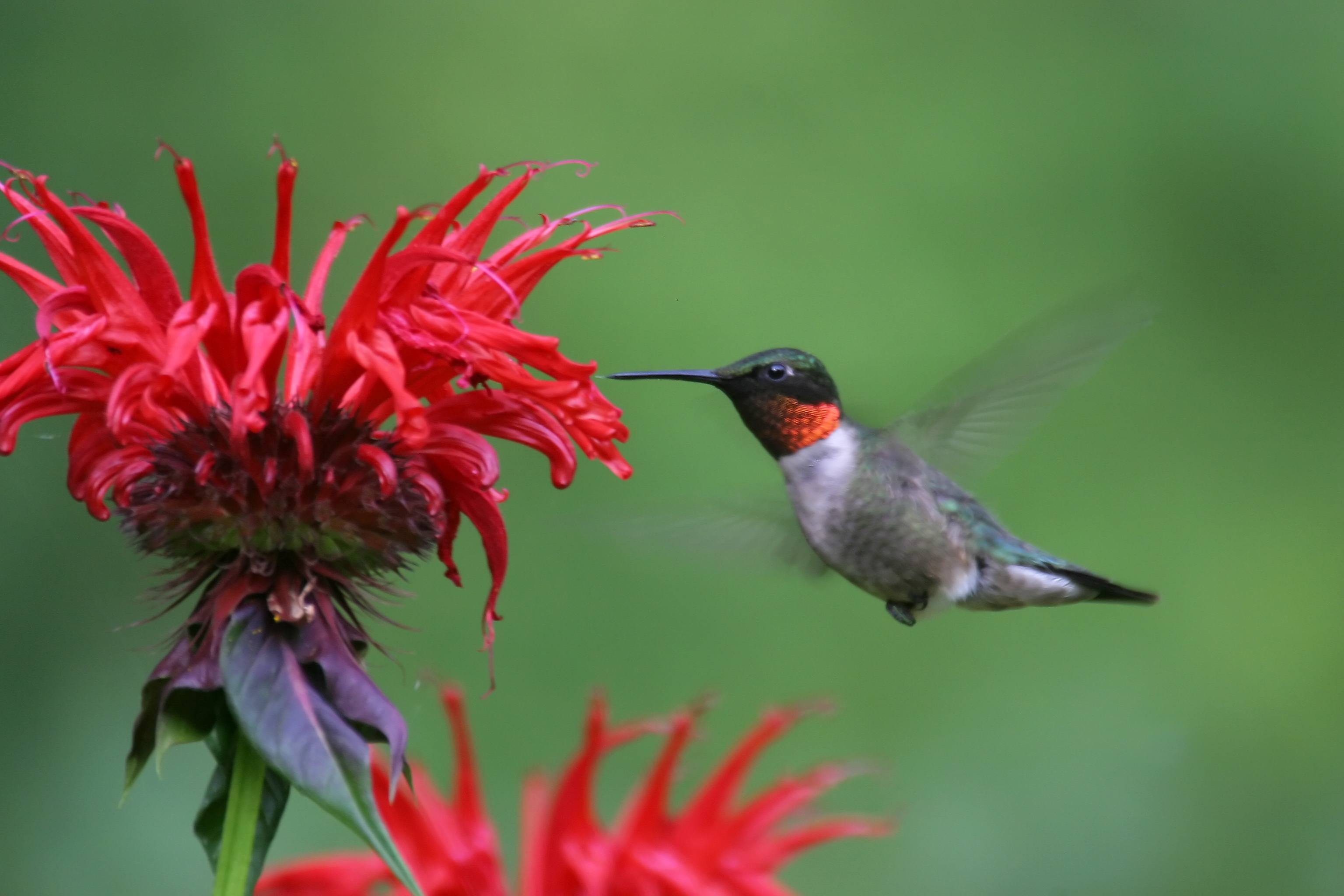
What type of symbiosis?  Hummingbirds feed on nectar from flowers.  The flowers are pollinated by hummingbirds as they move from flower to flower.
a)
commensalism
b)
mutualism
c)
parasitism
d)
predation
47.
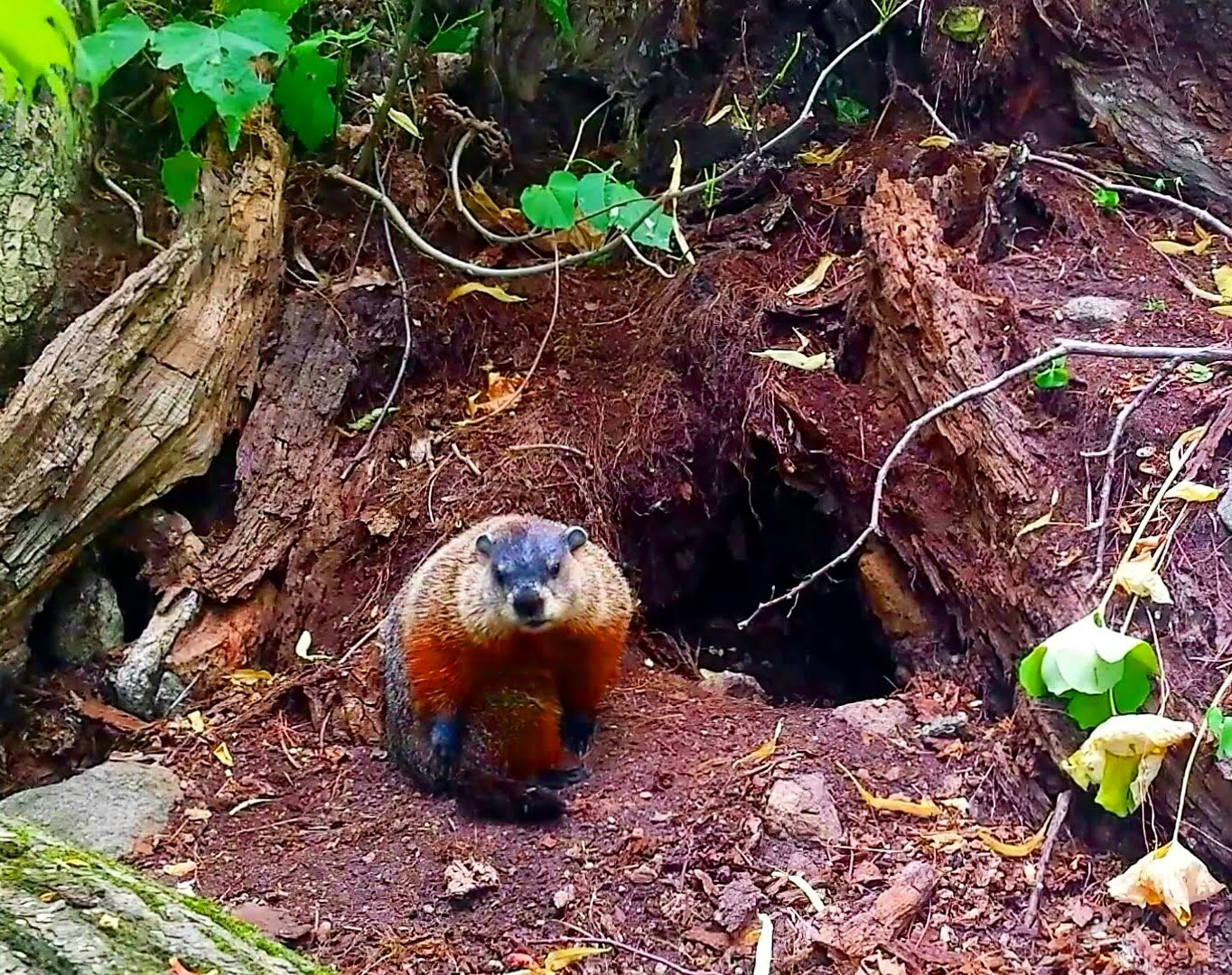
What type of symbiosis?  Skunks often live in burrows that have been dug and abandoned by woodchucks.  
a)
commensalism
b)
mutualism
c)
parasitism
d)
predation
48.
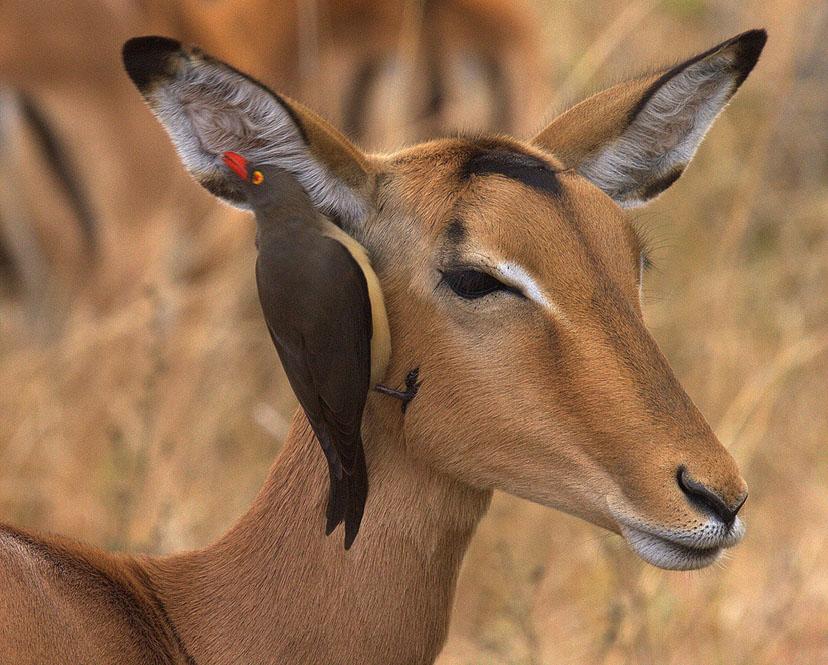
Red-billed oxpeckers are birds that often feed on parasites that infest impala.  This is an example of _______.
a)
commensalism
b)
mutualism
c)
neutralism
d)
competition
49.

Aphids are tiny insects that live on and eat the leaves of plants, removing vital nutrients from the plants.

a)

Predation

b)

Parasitism

c)

Commensalism

d)

Mutualism

50.

Mockingbirds will push the eggs out of a blue bird's nest and use the nest for it's own babies illustrating...

a)

commensalism

b)

parasitism

c)

mutualism

d)

predation

51.

Clown fish live among anemones, acting as a lure for the sea anemone's prey. The clown fish get protection and shelter from the anemone. This is an example of which type of symbiosis?

a)

Commensalism

b)

Mutualism

c)

Parasitism

52.

A bee and a flower work together to benefit each other. This is an example of a ______. The bee helps the flower by pollinating it and the flower helps the bee by providing it with nectar.

a)

commensalistic relationship

b)

parasitic relationship

c)

mutualistic relationship

53.
Eutrophication is caused by
a)
runoff of excessive fertilizer and nutrients
b)
cleaning up waterways
c)
using nuclear energy
d)
using solar energy
54.

What is biomimicry?

a)

The science of learning from nature to solve problems.

b)

The science of watching birds.

c)

Reading about science.

d)

The science of watching ocean animals.

55.
Toxins accumulate in the tissues of organisms as they pass through a food chain/web.
a)
eutrophication
b)
biomagnification
c)
ecological succession
d)
symbiosis 
56.
The fish-eating bird in this food chain likely have the LARGEST _________.
a)
concentration of DDT
b)
amount of energy
c)
biomass
d)
numbers
57.
The greenhouse effect affects life on Earth by
a)
trapping oxygen
b)
cooling the temperatures
c)
trapping warmth
d)
recycling nitrogen
58.

What is Global Warming?

a)

Increasing temperature in Earth's atmosphere

b)

Decreasing temperature in a city

c)

Increasing rain rates in Earth

d)

Decreasing temperature rates