wayground logo

Free Printable Worksheets

Font size

S
M
L
XL
Worksheets

Biology Unit Review

Total questions: 103

Worksheet time: 1hrs 28mins

Name
Class
Date
1.

An organism that makes its own food

a)

Producer

b)

Consumer

c)

Predator

d)

Prey

2.

An organism that eats other organisms

a)

Producer

b)

Consumer

c)

Prey

d)

Autotroph

3.

Organisms that break down dead/decaying organisms

a)

Producer

b)

Consumer

c)

Decomposer

d)

Autotroph

4.

A carnivore that feeds on the bodies of dead organisms (vulture is an example)

a)

Prey

b)

Producer

c)

Scavenger

d)

Decomposer

5.

A consumer that eats only plants

a)

Producer

b)

Herbivore

c)

Carnivore

d)

Omnivore

6.

A consumer that eats only meat

a)

Producer

b)

Herbivore

c)

Carnivore

d)

Omnivore

7.

A consumer that eats both plants and animals

a)

Producer

b)

Carnivore

c)

Herbivore

d)

Omnivore

8.

An organism on which a parasite lives

a)

Parasite

b)

Host

c)

Producer

d)

Omnivore

9.

Any living part of an ecosystem

a)

Abiotic Factor

b)

Biotic Factor

c)

Food chain

d)

Food web

10.

The nonliving parts of an ecosystem

a)

Biotic factors

b)

Abiotic factors

c)

Food chain

d)

Food web

11.

a relationship in which one organism benefits while the other is neither helped nor harmed. (a remora swimming on a shark is an example)

a)

Commensalism

b)

Mutualism

c)

Parasitism

d)

Predator-prey

12.

a relationship in which one organism benefits and the other organism is harmed, but not always killed. (mosquito on a human is an example)

a)

Commensalism

b)

Mutualism

c)

Parasitism

d)

Predator-prey

13.

a relationship in which both species benefit.

a)

Mutualism

b)

Commensalism

c)

Parasitism

d)

Predator-prey

14.

Predator-prey relationship

a)
b)
c)
15.
Cattle egrets forage (feed) in fields among cattle. The egret gets easy access to flying insects stirred up by the cattle, and the cattle don't care if they are there or not.
a)
Mutualism
b)
Commensalism
c)
Competition
d)
Parasitism
16.
Aphids are tiny insects that live on and eat the leaves of plants, removing vital nutrients from the plants.
a)
Predation
b)
Parasitism
c)
Commensalism
d)
Mutualism
17.
When 2 or more individuals or populations try to use the same resource such as food, water, shelter or sunlight. 
a)
Coexistence
b)
Competition
c)
Cooperation
d)
Carrying Capacity
18.
Bacteria live in the intestines of cows and other organisms. Bacteria help to digest food for the cow. The cow provides a warm, moist environment to live.
a)
Mutualism
b)
Commensalism
c)
Parasitism
d)
Predation
19.
The efficiency of energy transfer from a lower trophic level to the next highest level is roughly
a)
1%
b)
10%
c)
100%
d)
1000%
20.
Trophic levels are represented by 
a)
squares
b)
circles
c)
pyramids
d)
lines
21.
Which animal is the apex predator?
a)
hawk
b)
lizard
c)
snake
d)
grass
22.
In the energy pyramid here, how much of the energy in each level gets lost as heat or used by the organism for survival?
a)
80%
b)
90%
c)
10%
d)
20%
23.
The arrows in a food chain or web represents what?
a)
They point to the organism that is being eaten.
b)
It shows how sunlight flows within an ecosystem.
c)
They show what direction the energy is flowing between organisms. 
d)
They represent how water is transferred within a habitat.
24.
An organism that gets energy from breaking down dead organisms, non-living material or waste is a(an) ___________.
a)
producer
b)
consumer
c)
decomposer
d)
autotroph
25.
Organisms that create their own energy from sunlight or chemicals
a)
Herbivore
b)
Omnivore
c)
Autotroph
d)
Heterotroph 
26.
Is a deer an abiotic or biotic factor? 
a)
abiotic
b)
biotic
27.
What does a food web represent?
a)
All connections of energy flow throughout all organisms in a habitat.
b)
The specific ways that mutualism is carried out.
c)
A single pathway or energy flow between organisms. 
d)
How carnivores get their food. 
28.
The image provided is an example of a(n):
a)
Producer
b)
Autotroph
c)
Consumer
d)
Insect
29.
A place where an organism lives.
a)
Terrain
b)
Habitat
c)
Community
d)
Population
30.
A graphic illustration that shows each trophic level and the amount of useable energy contained within.
a)
Food chain
b)
Food web
c)
Energy Pyramid
d)
All of these
31.
When a population grows past the ecosystem's carrying capacity, what happens to the population?
a)
Continues to grow
b)
The population starts to die off to return to carrying capcity
c)
The population will go extinct due to lack of resources
d)
The population grows then finds a new carrying capacity
32.
If a disease destroying barley plants in a field swept through an ecosystem, what would happen to the barley eating bird population in the the field ?
a)
The bird population would stay the same
b)
The bird population would infinitely increase
c)
The bird population would decrease
33.
In a forest ecosystem, which of the following is the best example of a limiting factor for a rabbit population?
a)
Squirrel Population
b)
Sunlight
c)
Grass available
34.
The largest number of individuals in a species that an environment can support long term
a)
carrying capacity
b)
emigration
c)
immigration
d)
population density
35.
Any thing or organism that regulates the size of a population is known as __________.
a)
a limiting measure
b)
a limiting factor
c)
carrying capacity
d)
biodiversity
36.
Limiting factors are sometimes helpful because they can keep the population from getting to large.
a)
True
b)
False
37.
A collection of organisms that belong to different populations but all live in the same area and interact with one another.
a)
Population
b)
Ecosystem
c)
Community
d)
Ecosphere
38.
A collection of organisms that make up a community as well as all of the nonliving aspects of the environment.
a)
Population
b)
Community
c)
Habitat
d)
Ecosystem
39.
The role or function or job of a species in a community.
a)
habitat
b)
diet
c)
niche
d)
ecosystem
40.
Two organisms that are so similar they can interbreed in nature and produce fertile offspring
a)
biotic factor
b)
herbivore
c)
ecosystem
d)
species
41.
Which of the following is a population?
a)
hawks, barred owls, and eagles on NC coast
b)
mountain stream
c)
all the frogs in a pond
d)
blue-tailed skinks (lizards) around a barn
42.
Which of the following best describes a community?
a)
sharks, groupers, anemones and shrimp on a coral reef
b)
decorator crabs on the seafloor
c)
loggerhead sea turtles in Atlantic
d)
prairie grassland in Wyoming
43.
What does every food chain start with? (Even if it's not drawn or written there!)
a)
producers
b)
sun
c)
consumer
d)
decomposers
44.
relationship in which two species live closely together
a)
resource
b)
mutualism
c)
succession
d)
symbiosis
45.
In this Food Web Pyramid Which type of consumer gets only 10% of the energy stored in plants?
a)
Herbivore
b)
Carnivore
c)
Omnivore
d)
Secondary Consumer
46.
Which organelle performs PHOTOSYNTHESIS?
a)
Chloroplast
b)
Mitochondria
47.
Which of the following is the correct equation for PHOTOSYNTHESIS?
a)
CO+ light + H2O --> O+ Sugar
b)
CO+ sugar + H2O --> O+ light
c)
O2 + light + H2O --> CO+ Sugar
d)
CO+ O2 + H2O --> Light+ Sugar
48.
What is the ultimate ORIGINAL source of energy for living things
a)
Sugar
b)
Sun
c)
Moon
d)
Carbon Dioxide
49.
Which gas is removed from the atmosphere during photosynthesis?
a)
hydrogen
b)
oxygen
c)
nitrogen
d)
carbon dioxide
50.
What are the products of photosynthesis?
a)
water and carbon dioxide
b)
oxygen and glucose
c)
oxygen and carbon dioxide
d)
oxygen and water
51.
Where the better adapted organisms survive to pass traits along to offspring.
a)
Evolution
b)
Natural Selection
c)
Extinction
d)
Artifical Selection
52.
Why are advantageous traits more likely to be passed onto offspring?
a)
Because they are more likely to survive and reproduce.
b)
Because they come from dominant alleles.
c)
Because they come from recessive alleles.
d)
Because the trait is an acquired phenotype.
53.
What is the water cycle?
a)
the 3 forms of water
b)
the movement of water on, above, or below the surface of the Earth
c)
when water melts
d)
when clouds form
54.
What is the energy source for the water cycle?
a)
the sun
b)
the earth
c)
water
d)
the moon
55.
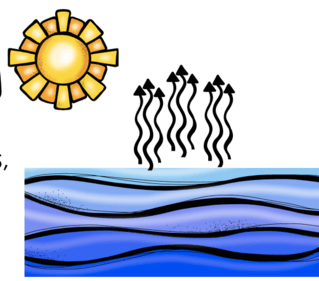
What part of the water cycle does this picture show?
a)
condensation
b)
precipitation
c)
evaporation
56.
What is condensation?
a)
The part of the water cycle when the sun heats up water, turning it from a liquid into water vapor or steam. It rises from the ground into the air.
b)
The part of the water cycle when the water vapor in the air gets cold. The water turns back into a liquid and forms clouds.
c)
The part of the water cycle when clouds get heavy and can no longer hold the liquid water. This causes the water to fall from the sky to the earth as rain, snow, sleet, or hail.
57.
When water condenses, the liquid water forms ______________.
a)
water vapor
b)
steam
c)
air
d)
clouds
58.
Plants have ways of getting their seeds to travel away from them because ______.
a)
they want to help animals.
b)
seeds that travel away from the parent are more likely to get light.
c)
seeds need water to grow.
59.
What part of a plant produces seeds?
a)
leaf
b)
flower
c)
root
d)
stem
60.
What is the male part of the flower?
a)
Petals
b)
Stamen
c)
Pistil
d)
Sepals
61.
What is the female part of the flower?
a)
Petals
b)
Stamen
c)
Pistil
d)
Sepals
62.
What is the part of the flower that is brightly colored to attract pollinators?
a)
Petals
b)
Stamen
c)
Pistil
d)
Sepals
63.
What part of the male part of the flower makes pollen?
a)
Ovary
b)
Anther
c)
Filament
d)
Stigma
64.
What part of the female part of the flower gathers pollen?
a)
Ovary
b)
Style
c)
Filament
d)
Stigma
65.
What part of the female part of the flower is the place that holds the eggs?
a)
Ovary
b)
Style
c)
Filament
d)
Stigma
66.
What are the small, green leaf-like structures that protect the flower when it is a bud?
a)
Seeds
b)
Pollen
c)
Petals
d)
Sepals
67.
What part of the flower turns into the fruit?
a)
Seeds
b)
Ovary
c)
Stamen
d)
Sepals
68.
What organelle in the leaves of plants capture light energy from the sun to complete photosynthesis?
a)
Chloroplasts
b)
Mitochondria
c)
Nucleus
d)
Ribosomes
69.
What is the waxy layer on leaves?
a)
Chloroplasts
b)
Plastic
c)
Wax
d)
Cuticle
70.
What is the function of the cuticle on a leaf?
a)
to keep water from entering the leaf
b)
to keep water from leaving the leaf
c)
to keep bacteria out of the leaf
d)
to keep oxygen in the leaf
71.
What are the openings on the underside of leaves that let carbon dioxide into the leaf and let oxygen out?
a)
Chloroplasts
b)
Stomata
c)
Stomach
d)
Cuticle
72.
In which type of growth response does the plant grow toward a light source?
a)
Phototropism
b)
Heliotropism
c)
Geotropism
d)
Hydrotropism
73.
In which type of growth response does the plant grow in response to gravity?
a)
Hydrotropism
b)
Phototropism
c)
Geotropism
d)
Thigmotropism
74.
In which type of growth response does the plant's roots grow toward a water source?
a)
Hydrotropism
b)
Phototropism
c)
Heliotropism
d)
Thigmotropism
75.
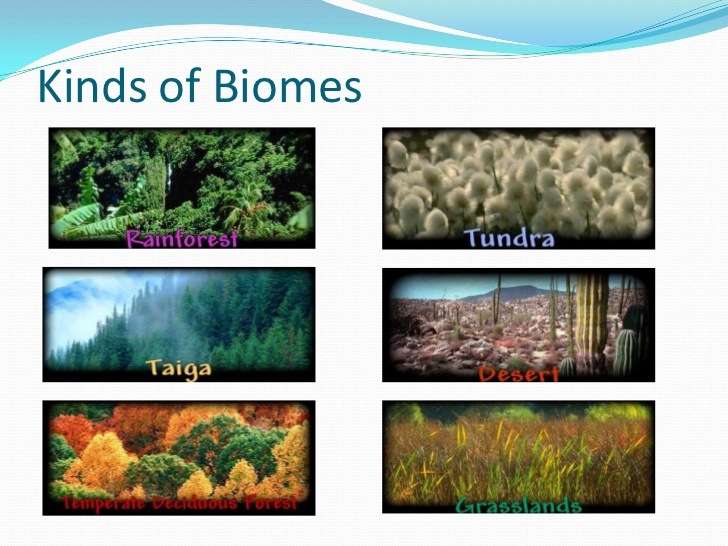
Which biome is characterized by low temperatures and low amounts of rainfall?
a)
tundra
b)
desert
c)
temperate deciduous forest
d)
tropical rain forest
76.
Which biome covers most of the land mass near the Earth's equator?
a)
tundra
b)
desert
c)
grassland
d)
tropical rainforest
77.
Which biome, because of its climate, has the largest number of species of plants and animals?
a)
tundra
b)
desert
c)
tropical rainforest
d)
pine forest
78.
One characteristic feature of tundra is that only the surface thaws in the summer and refreezes in the winter, leaving a layer of permanently frozen subsoil.  This characteristic is known as
a)
glaciation
b)
permafrost
c)
crystallization
d)
soilfrost
79.
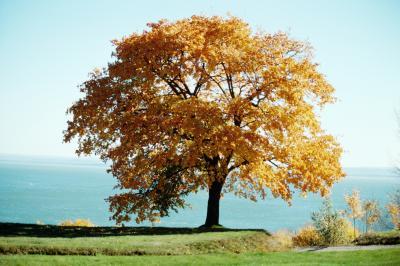
Which type of trees is found in a temperate forest?
a)
deciduous
b)
evergreen
c)
ginko
d)
palm
80.
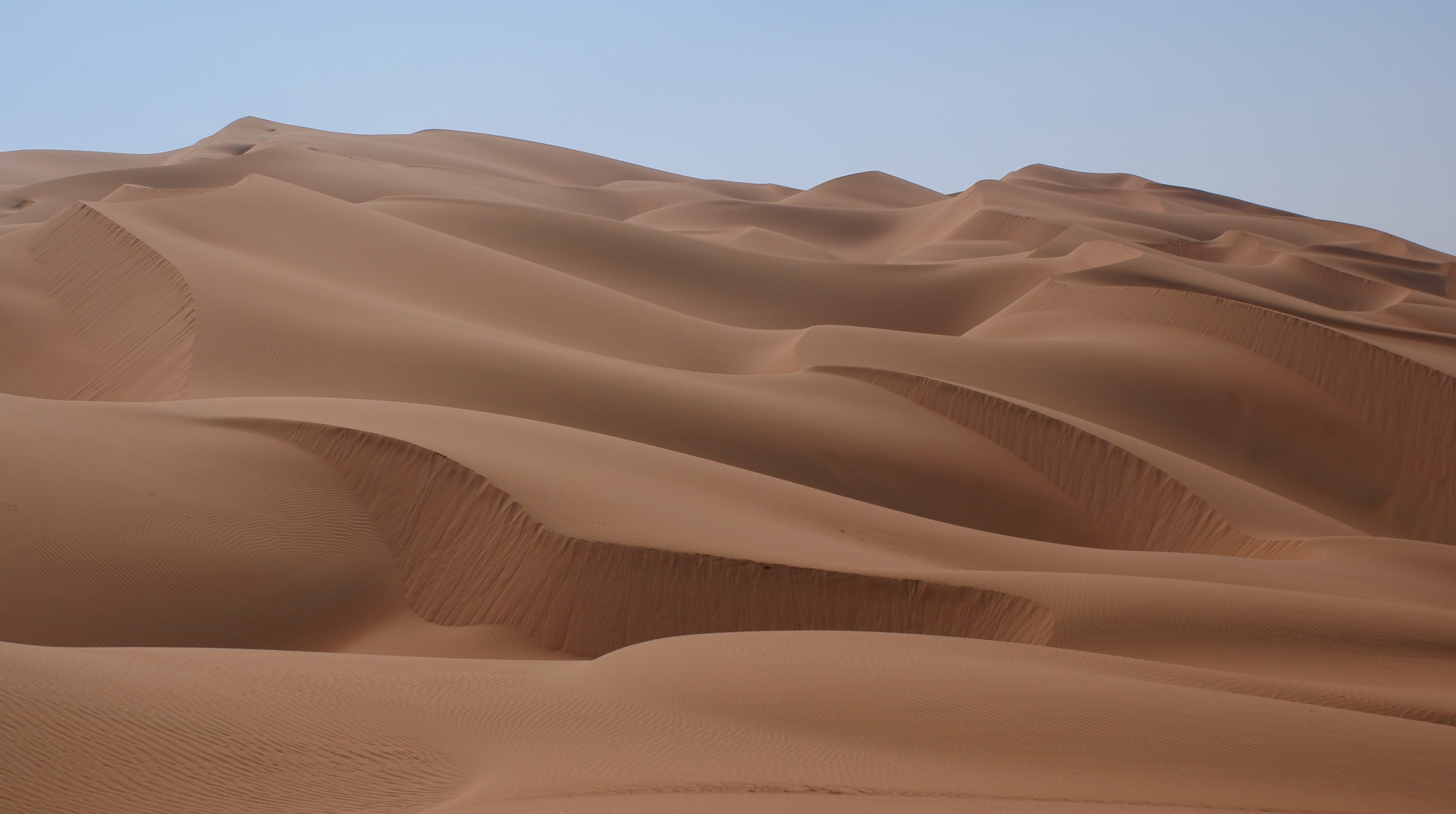
Which major biome is home to cacti, mesquite, white thorn, pack rats, small reptiles, and coyotes?
a)
desert
b)
taiga
c)
tundra
d)
grassland
81.
In which biome is Georgia located?
a)
tropical rainforest
b)
temperate rainforest
c)
temperate deciduous forest
d)
alpine forest
82.
Which biome receives between 0 to 25 centimeters of rain per year, has a temperature range of 0 to 50 degrees Celsius, has poor soil, and is home to lizards, scorpions, and snakes?
a)
desert
b)
mountain
c)
taiga
d)
tundra
83.
Which biome receives between 0 and 25 centimeters of precipitation each year, has a temperature range from -27 to 5 degrees Celsius, has frozen soil, and is home to hares, caribou, and wolves?
a)
desert
b)
mountain
c)
savannah
d)
tundra
84.
Which biome contains large populations of grazing herbivores, few species of birds, and deep, rich soil?
a)
taiga
b)
tundra
c)
deciduous forest
d)
grassland
85.
This biome contains mostly spruce trees and Douglas firs, which are both evergreen.  The winters are long and cold and the summers are short and rainy.  The soil is very rich.  Moose and elk live here.  This biome is classified as a
a)
taiga
b)
tundra
c)
deciduous forest
d)
temperate forest
86.
The biome known for trees with broad leaves that fall off the trees in the winter.
a)
Coniferous Forests
b)
Deciduous Forests
c)
Deserts
d)
Tropical Rain Forests
87.
The most important abiotic factors when studying biomes are...
a)
Food and Water
b)
Water and Sunlight
c)
Temperature and Oxygen
d)
Water and Temperature 
88.
The greatest biodiversity on earth is found in the __________ biome.
a)
taiga
b)
grassland
c)
temperate deciduous forest
d)
tropical rainforest
89.
Which biome is MOST LIKE the "desert" in terms of precipitation?
a)
tropical rainforest
b)
temperate deciduous forest
c)
tundra
d)
coniferous forest
90.
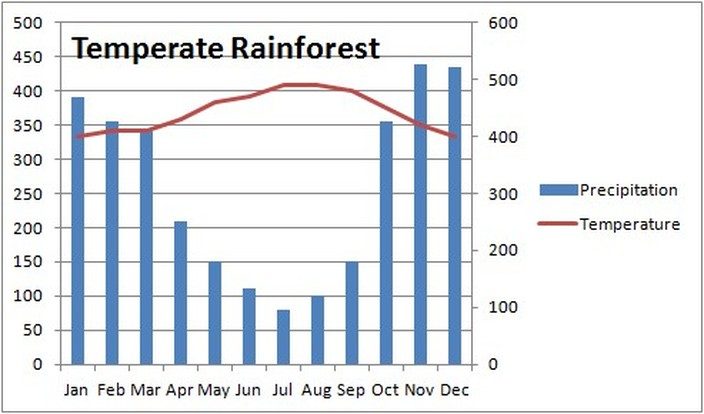
Which biome is represented by the rainfall amounts in letter C?
a)
desert
b)
prairie
c)
deciduous forest
d)
tropical rain forest
91.
What are the key features of the Tundra?
a)
cold winter, thin acidic soil, evergreen trees
b)
treeless, permafrost, cold dark winters
c)
ong cool summers, short dark winters, migrating animals
d)
many evergreen trees, short moist summers, long snowy winters
92.
Areas defined by their geographical location and ecological similarity are called?
a)
ecozones
b)
biotopes
c)
biomes
d)
biodomes
93.
What is the main factor that separates the biomes?
a)
Land
b)
Water
c)
Climate
d)
Longitude
94.
Which biome do we live in?
a)
Grasslands
b)
Taiga
c)
Rainforest
d)
Temperate Forest
95.
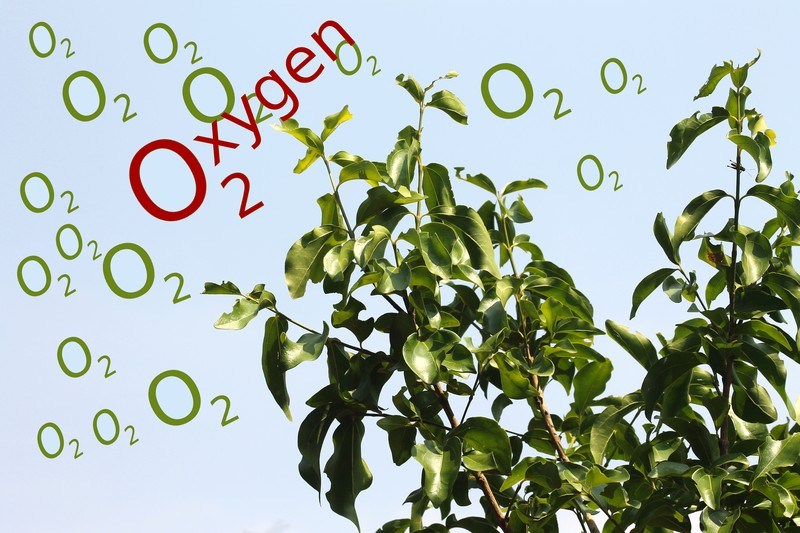
Which biome produces over 50% of the world's oxygen?
a)
Rainforest
b)
Temperate Forest
c)
Grasslands
d)
Taiga
96.
In which biome does an organism have to be able to conserve water to survive?
a)
Rainforest
b)
Taiga
c)
Desert
d)
Temperate Forest
97.
Biomes with densely packed trees sometimes form a continuous green "roof" layer called a: 
a)
canopy
b)
ceiling
c)
green layer
d)
forest top
98.
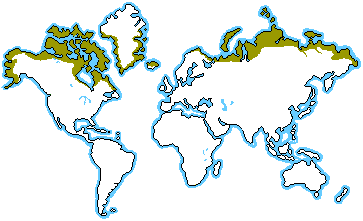
The area of the map shaded in green represents which of the following terrestrial biome
a)
Coniferous Forrest
b)
Deciduous Forrest 
c)
Desert
d)
Tundra
99.
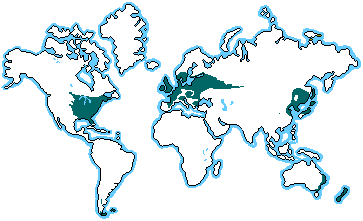
The area of the map shaded in dark blue represents which of the following terrestrial biome
a)
Coniferous Forest
b)
Deciduous Forest
c)
Desert
d)
Tundra
100.
Which of the following BEST MATCHES the meaning of the word TEMPERATE.
a)
temperatures within moderate limits
b)
an area with trees and bushes
c)
a forest with plants growing together
d)
an area with all the same temperature
101.
Coniferous (Boreal) forests are made up primarily of trees that _______________.
a)
change color in the fall
b)
bear cones
c)
shed their leaves
d)
have thin bark
102.
The term "terrestrial" means
a)
land.
b)
water.
103.
Why doesn’t photosynthesis occur in deep ocean water?
a)
There is no sunlight.
b)
There are not enough nutrients. 
c)
The salinity level of the water is too high.
d)
The water temperature is too cold.