
 Worksheets
Review Quiz
Total questions: 99
Worksheet time: 1hrs 27mins
Name
Class
Date
1.
Stores food and water for the cell.
a)
Cytoplasm
b)
Cell Wall
c)
Vacuole
d)
Nucleus
2.

What do all of these organisms have in common?
a)
They all have uniform offspring
b)
They are all made of cells
c)
They possess the same features
d)
They have the same internal and external structures
3.
Controls what enters and leaves the cell
a)
Mitochondria
b)
Cell Membrane
c)
Cell Wall
d)
Nucleus
4.

According to cell theory, where did this cell come from?
a)
another living cell
b)
energy from sun
c)
a multicellular organism
d)
the nonliving environment
5.

Robert Hooke, Anton van Leeuwenhoek, Theodor Schwann, Rudolf Virchow, and Matthias Schliden were all responsible for what theory?
a)
The Theory of Gravity
b)
The Theory of Relativity
c)
The Cell Theory
d)
The Theory of Continental Drift
6.
What tool do you use to view the cells?
a)
metric ruler
b)
centrifuge
c)
microscope
d)
pipette
7.
Which of the following is NOT a cell theory.
a)
All non-living things are made of cells
b)
All cells come from pre-existing cells
c)
Cells are the basic unit of structure and function of all living things
8.
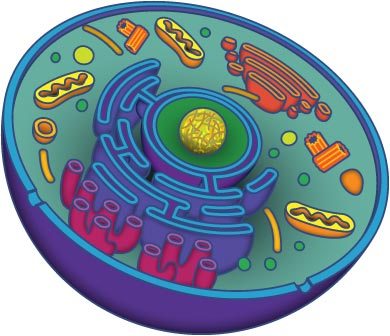
All living things are made up of...
a)
cells
b)
cell tissues
c)
organ
d)
organ systems
9.
The first part of the Cell Theory states: "What happens in Cell Theory, stay in Cell Theory."
a)
True
b)
False
c)
I don't know
d)
Ummmm
10.
All cells come from___________ cells.
a)
pregnant
b)
pre-existing
c)
paternal
d)
pin size
11.
Rocks are not living because
a)
they never move
b)
they aren't needed for humans
c)
they are not made of cells
d)
they don't break down
12.
What is the basic structural and functional unit of all living things?
a)
atom
b)
cell
c)
molecule
d)
human
13.
what is the control center in a cell
a)
mitochondria
b)
DNA
c)
nucleus
d)
movement
14.
All cells are produced ____________.
a)
from nothing
b)
from other cells
15.
what is the control center in a cell
a)
mitochondria
b)
DNA
c)
nucleus
d)
movement
16.
also known as the "powerhouse"
a)
cell membrane
b)
storage
c)
cytoskeleton
d)
mitochondria
17.

What is the fluid inside a cell called?
a)
Endoplasimic Reticulum
b)
Orange Juice
c)
Water
d)
Cytoplasm
18.

What is known as the brain of a cell
a)
cell wall
b)
Cell membrane
c)
Nucleus
d)
Nuclues
19.

This organelle helps plants keep their rigid structure.
a)
Cell wall
b)
Cell membrane
c)
Chloroplast
d)
Nucleus
20.

Chloroplasts carry out...
a)
Phagocytocis
b)
Phylocytosis
c)
Photosynthesis
d)
Respiration
21.
This structure is a storage area for the cell. Plants usually have one large one.
a)
Lysosome
b)
Vacuole
c)
Ribosome
d)
Golgi Body
22.
Long strands of chromosomes that contain deoxyribonucleic acid (DNA) are located in the __________ of the cell.
a)
nucleus
b)
cell membrane
c)
cytoplasm
23.
Prokaryotic
a)
are single celled organisms that do not have a nucleus or membrane bound organelles
b)
a protective layer that covers the the cells surface and acts as a barrier
c)
is the smallest unit that can preform all he processes necessary for life
24.
A typical plant cell is rectangular in shape.
a)
True
b)
False
25.
A gel-like fluid in which many different organelles are found.
a)
cell membrane
b)
nucleus
c)
organelle
d)
cytoplasm
26.
This structure is a storage area for the cell. Plants usually have one large one.
a)
Lysosome
b)
Vacuole
c)
Ribosome
d)
Golgi Body
27.
These organelles capture energy from sunlight and use it to produce food for the cell.
a)
cell membrane
b)
chloroplasts
c)
cell wall
d)
ribosomes
28.
Prokaryotic
a)
are single celled organisms that do not have a nucleus or membrane bound organelles
b)
a protective layer that covers the the cells surface and acts as a barrier
c)
is the smallest unit that can preform all he processes necessary for life
29.
This structure is a storage area for the cell. Plants usually have one large one.
a)
Lysosome
b)
Vacuole
c)
Ribosome
d)
Golgi Body
30.
Which organism listed below is a prokaryote?
a)
dog
b)
human
c)
sunflower
d)
bacterial cell
31.
This structure is in plant cells but not animal cells. It is outside of the cell membrane and adds more support/structure/rigidity to the plant.
a)
Cell membrane
b)
Cell Nucleus
c)
Cell Wall
d)
Endoplasmic Reticulum
32.
This scientist discovered and named the cell.
a)
Robert Hooke
b)
Anton Van Leeuwenhoek
c)
John Dalton
d)
Mathias Schleiden
33.

What tool do you use to view the cells?
a)
metric ruler
b)
centrifuge
c)
microscope
d)
telescope
34.
What tool do you use to view the cells?
a)
metric ruler
b)
centrifuge
c)
microscope
d)
telescope
35.

What is one way in which all living things on Earth are alike?
a)
All living things have hair.
b)
All living things are made of cells and come from other cells.
c)
The cells of all living things have chloroplast.
d)
All living things can move.
36.

Which of the following scientists was the first to observe bacteria under a microscope?
a)
Anton van Leuwenhoek
b)
Matthais Schleiden
c)
Robert Hooke
d)
Theodor Schwann
37.

What kind of cell is this?
a)
animal cell
b)
bell bell
c)
plant cell
d)
vacuole
38.
The green pigment in plants is due to the presence of
a)
chlorophyll
b)
Chlorine
c)
Chlorophyta
d)
chromatophores
39.
Animals cell do or do not have cell walls?
a)
do
b)
do not
40.
Animal and plant cells have structures that are present in both.
a)
True
b)
False
41.
The cell wall lies on the inside of the cell membrane.
a)
True
b)
False
42.

What kind of cell is this? How do you know?
a)
This is an animal cell because it has a cell wall, chloroplast, and a large vacuole. Plant cells don't have a cell wall.
b)
This is a plant cell because it has cell wall, chloroplast, and a large vacuole. Animal cells don't have a cell wall.
43.
True or False: The activities of both plant and animal cells are controlled by a nucleus within the cell.
a)
True
b)
False
44.

What would happen to the plant cell without the chloroplasts?
a)
There wouldn't be an organelle that performs photosynthesis
b)
There wouldn't be an organelle that serves as the resevoir for water and waste
c)
There wouldn't be an organelle that regulates what comes in and out of the cell
d)
They wouldn't be an organelle that makes necesary proteins
45.

Label C
a)
Cell membrane
b)
Nucleus
c)
Cell wall
d)
Cytoplasm
46.
oval shaped organelles that create energy
a)
endoplasmic reticulum
b)
mitochondria
c)
golgi bodies
d)
chloroplast
47.
A possible explanation to a problem that has not yet been tested.
a)
data
b)
theory
c)
hypothesis
d)
fact
48.
Should experiments be repeated over and over to see if the results are the same each time?
a)
yes
b)
no
49.
The summary at the end of an experiment that explains the results.
a)
conclusion
b)
procedures
c)
materials
d)
responding variable
50.
A series of steps used by scientists to solve a problem or answer a question.
a)
scientific method
b)
recipe
c)
data collection
d)
metric system
51.
Science is a continually ongoing process.
a)
True
b)
False
52.
What is a hypothesis?
a)
A hypothesis is the right answer to an experiment.
b)
A hypothesis is the wrong answer to an experiment.
c)
A hypothesis is an educated guess.
d)
I don't know.
53.
Which is NOT a step in the scientific method?
a)
Make observation
b)
Form a theory
c)
Collect data
d)
Form a hypothesis
54.
What step does every scientific experiment begin with?
a)
hypothesis
b)
question/problem
c)
procedures
d)
conclusion
55.
Which of these contains steps in the right order?
a)
Ask a question, state your hypothesis, research, experiment, analyze, make a conclusion
b)
State your hypothesis, ask a question, research, experiment, analyze, make a conclusion
c)
Ask a question, research, state your hypothesis, experiment, analyze, make a conclusion
d)
State your hypothesis, ask a question, research, make a conclusion, experiment, analyze
56.
True or False: Your hypothesis can never be wrong.
a)
True
b)
False
57.
Should experiments be repeated over and over to see if the results are the same each time?
a)
yes
b)
no
58.
Which of the following statements best describes xylem's function in the plant?
a)
transpports water and minerals up from the roots to the rest of the plant
b)
transports food down from the leaves to the rest of the plant
c)
transports water and minerals down from the roots to the rest of the plant
d)
transports food up from the leaves to the rest of the plant
59.
Which of the following statements best describes phloem's function in the plant?
a)
transpports water and minerals up from the roots to the rest of the plant
b)
transports food down from the leaves to the rest of the plant
c)
transports water and minerals down from the roots to the rest of the plant
d)
transports food up from the leaves to the rest of the plant
60.
What is the part of the flower that is brightly colored to attract pollinators?
a)
Petals
b)
Stamen
c)
Pistil
d)
Sepals
61.
What is the female part of the flower?
a)
Petals
b)
Stamen
c)
Pistil
d)
Sepals
62.
What part of the male part of the flower makes pollen?
a)
Ovary
b)
Anther
c)
Filament
d)
Stigma
63.
What part of the male part of the flower holds up the anther?
a)
Ovary
b)
Anther
c)
Filament
d)
Stigma
64.
What part of the female part of the flower gathers pollen?
a)
Ovary
b)
Style
c)
Filament
d)
Stigma
65.
What part of the female part of the flower is a tube that pollen travels through?
a)
Ovary
b)
Style
c)
Filament
d)
Stigma
66.
What part of the female part of the flower is the place that holds the eggs?
a)
Ovary
b)
Style
c)
Filament
d)
Stigma
67.
What is the male reproductive material of plants?
a)
Seeds
b)
Pollen
c)
Fruit
d)
Sepals
68.
What are the small, green leaf-like structures that protect the flower when it is a bud?
a)
Seeds
b)
Pollen
c)
Petals
d)
Sepals
69.
What part of the flower turns into the fruit?
a)
Seeds
b)
Ovary
c)
Stamen
d)
Sepals
70.
What organelle in the leaves of plants capture light energy from the sun to complete photosynthesis?
a)
Chloroplasts
b)
Mitochondria
c)
Nucleus
d)
Ribosomes
71.
What is pollination?
a)
the transfer of pollen from the anther to the stigma
b)
the union of pollen and egg cells in the ovary of the flower
c)
the dispersal of seeds to a new location
d)
the transfer of cash in a business transaction between plants
72.
Which of the following would NOT be an example of a pollinator?
a)
Bumblebee
b)
Hummingbird
c)
Fruit Bat
d)
Praying Mantis
73.
What helps plants pollinate by carrying pollen from one plant to another?
a)
Mailman
b)
Pollinator
c)
Terminator
d)
Commentator
74.
In which type of growth response does the plant grow toward a light source?
a)
Phototropism
b)
Heliotropism
c)
Geotropism
d)
Hydrotropism
75.
What anchor plants to the ground and absorb water and nutrients?
a)
Roots
b)
Stem
c)
Xylem
d)
Leaves
76.
What is the metric unit for LENGTH?
a)
meter
b)
liter
c)
gram
d)
inches
77.

Name the instrument
a)
Graduated Cylinder
b)
Thermometer
c)
Metric Ruler
d)
Digital Scale
78.
What INSTRUMENT is used to measure LENGTH in the metric system?
a)
yard stick
b)
watch
c)
metric ruler
d)
thermometer
79.
What is the metric system based on?
a)
Europe
b)
16
c)
100
d)
10
80.
Kilo- means
a)
1000
b)
100
c)
10
d)
1/1000
81.
Milli- means
a)
0.001
b)
0.01
c)
1000
d)
1/10
82.

Measure to the nearest milliliter.
a)
73 mL
b)
73.0 mL
c)
76 mL
d)
76.1 mL
83.
How many cm's is in a meter?
a)
1000
b)
10
c)
100
d)
1
84.
1000 millilters = _____
a)
5 liters
b)
2 liters
c)
10 liters
d)
1 liter
85.
1,000 g = _______ kg
a)
1
b)
100
c)
0.1
d)
100,000
86.
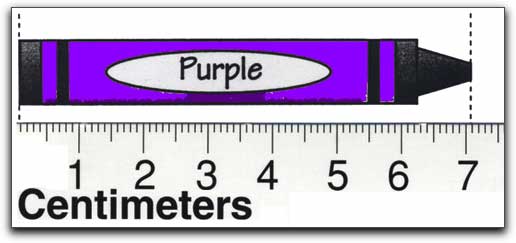
What is the length of this crayon to the nearest tenth of a centimeter?
a)
7 cm
b)
7.1
c)
7.0 cm
d)
7.1 cm
87.
Scientists classify organisms to ____________.
a)
Count the organisms quicker
b)
Catch the organisms in the wild
c)
Train the organisms to behave
d)
See how organisms are alike and different from each other
88.
True or False: A mushroom is classified as a plant.
a)
True
b)
False
89.

You would find mushrooms in which kingdom?
a)
Plantae
b)
Protists
c)
Fungi
d)
Animalia
90.
Which kingdom is a part of the domain Bacteria?
a)
Archaebacteria
b)
Animalia
c)
Eubacteria
d)
Protista
91.

This domain is characterized by ancient bacteria that can live in extreme environments, such as hot springs.
a)
Archaea
b)
Bacteria
c)
Eukarya
d)
Prokarya
93.

Which kingdom would this organism belong to?
a)
Plantae
b)
Archaebacteria
c)
Protista
d)
Animalia
93.
Which kingdom would this organism belong to?
a)
Plantae
b)
Archaebacteria
c)
Protista
d)
Animalia
94.

Which kingdom do humans belong to?
a)
Plantae
b)
Fungi
c)
Animalia
d)
Protista
95.
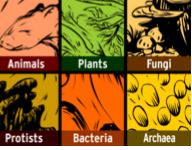
Which kingdoms are prokaryotic?
a)
Archaebacteria and Animalia
b)
Eubacteria and Archaebacteria
c)
Fungi and Protista
d)
Plantae and Eubacteria
96.
This kingdom contains organisms that are unicellular, prokaryotic, and often live in water. Amoeba, euglena, and paramecium are a part of this kingdom.
a)
Animalia
b)
Eubacteria
c)
Fungi
d)
Protista
97.

Moss belongs in the kingdom...
a)
Fungi
b)
Plantae
98.
True or False: All living things are made of one or more cells.
a)
True
b)
False
99.

Fungi are a type of...
a)
decomposer
b)
producer
100 %

