
 Worksheets
Final Exam
Total questions: 97
Worksheet time: 2hrs 6mins
Name
Class
Date
1.
Which of these is an example of precipitation?
a)
snow
b)
air
c)
clouds
d)
vapor
2.
What is it called when water is formed from a liquid to a water vapor?
a)
EVAPORATION
b)
PRECIPITATION
c)
TRANSPIRATION
3.

What comes after evaporation during the water cycle?
How does this occur?
How does this occur?
a)
Water evaporates into water vapor
b)
Water vapor condenses and forms a cloud
c)
Water precipitates to the ground
d)
Water runs down into the hydrosphere
4.

What is it called when plants give off water vapor as a waste product?
a)
condensation
b)
evaporation
c)
sublimation
d)
transpiration
5.
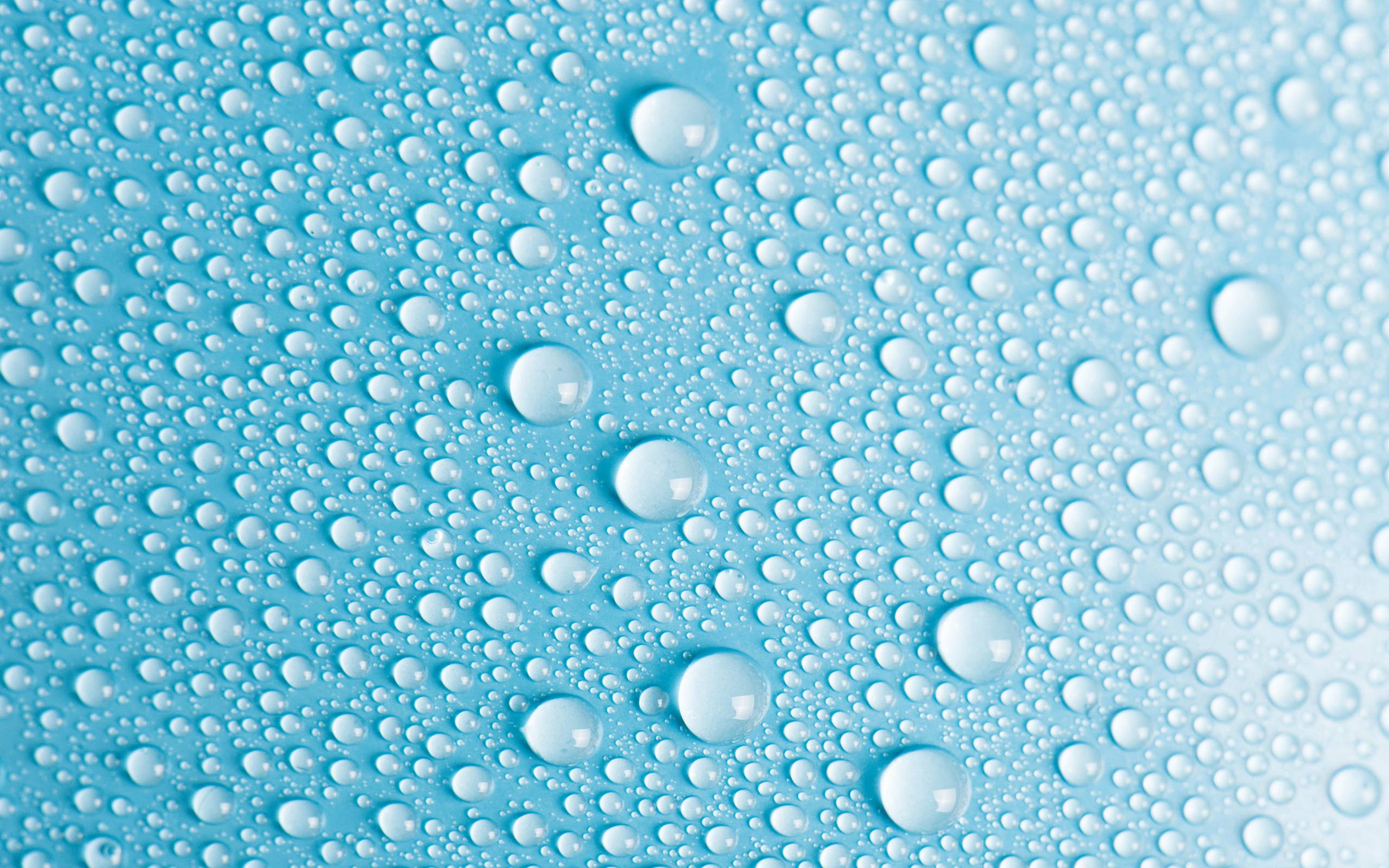
When water _________, dew forms.
a)
Melts
b)
Evaporates
c)
Condenses
d)
Precipitates
6.
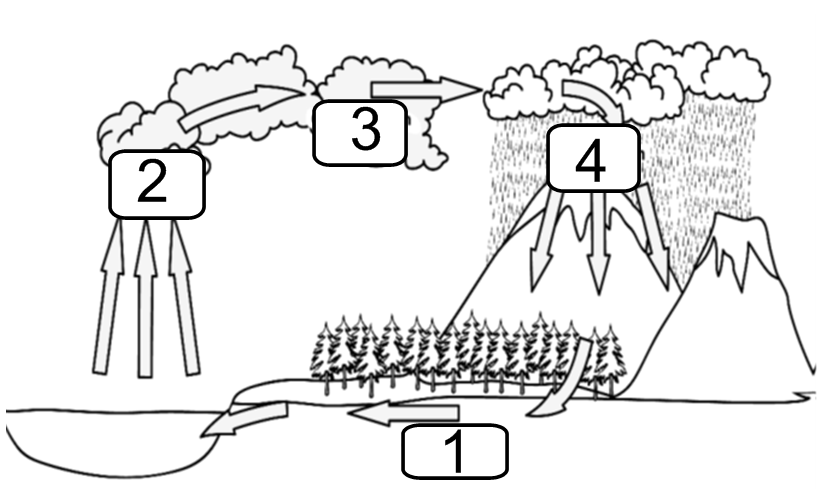
Which stage does the #2 show in the diagram?
a)
condensation
b)
evaporation
c)
precipitation
d)
run off
7.

Which stage does the #3 show in the diagram?
a)
condensation
b)
evaporation
c)
precipitation
d)
run off
8.

what does the #4 show in the diagram?
a)
condensation
b)
evaporation
c)
precipitation
d)
run off
9.
The energy source that allows the water cycle to occur
a)
batteries
b)
the sun
c)
solar panels
d)
gasoline
10.
What is water's freezing point?
a)
0 F
b)
32 C
c)
50 C
d)
0 C
11.
Where is most water found on Earth?
a)
glaciers
b)
lakes
c)
rivers
d)
oceans
12.
Limiting the amount of human waste and chemicals in run-off will decrease
a)
soil pollution
b)
sound pollution
c)
water pollution
d)
air pollution
13.
What does the Sun emit?
a)
currents
b)
nitrogen
c)
radiation
d)
atmosphere
14.
Mixture of gases that surrounds the Earth
a)
atmosphere
b)
troposphere
c)
stratosphere
d)
mesosphere
15.
_______________ is the atmospheric conditions over a short period of time, reported as a forecast.
a)
Weather
b)
Climate
c)
Temperature
d)
Humidity
16.
The lowest layer of the atmosphere, this is also where weather occurs.
a)
Mesosphere
b)
Stratosphere
c)
Troposphere
d)
Thermosphere
17.
The kind of heat transfer that travels through space in electromagnetic waves is ______________________.
a)
insulation.
b)
Radiation
c)
Conduction
d)
Convection
18.
The type of heat transfer that happens through direct contact of molecules or particles with each other is ___________________.
a)
Convection
b)
Conduction
c)
Radiation
d)
insulation.
19.
___________________ is the type of heat transfer that occurs in fluids, such as warm air rising and cold air sinking; creating wind.
a)
Convection
b)
Conduction
c)
Radiation
d)
insulation.
20.

An anemometer is used to measure...
a)
air pressure
b)
humidity
c)
precipitation
d)
wind speed
21.

the amount of water vapor in the air
a)
warm front
b)
precipitation
c)
humidity
d)
air pressure
22.
_____________ has the same temperature and moisture content throughout.
a)
convection current
b)
front
c)
air mass
23.
The ozone is in the stratosphere layer of the atmosphere. The purpose of the ozone is
a)
To generate heat for the earth
b)
To protect earth from the harmful solar radiation
c)
To produce weather
d)
To allow satellites to circle the earth
24.

Which statement best describes the difference between weather and climate?
a)
Weather is the conditions when you look outside while climate is the conditions you can expect for the next 6 months.
b)
Climate is the current condition outside while weather is what you can expect for the next 6 months.
25.
Which of the following will heat the fastest?
a)
water
b)
land
c)
both heat at equal rates
26.
____________ air sinks/falls because it is ____________dense.
a)
Cold, More
b)
Warm, Less
c)
Cold, Less
d)
Warm, More
27.
____________ air rises because it is ____________dense.
a)
Cool, Less
b)
Warm, Less
c)
Cold, More
d)
Warm, More
28.
The place where two air masses meet.
a)
air mass
b)
air pressure
c)
water cycle
d)
front
29.
The conditions of the atmosphere at a certain time and place.
a)
weather
b)
climate
c)
precipitation
d)
atmosphere
30.
The average weather conditions of a region -
a)
daily temperature
b)
weather
c)
climate
31.
Heat that transfers via swirling gases or liquids is called __________
a)
convection
b)
conduction
c)
radiation
d)
induction
32.

The heat from a hot burner to a pot is transferred by ______.
a)
convection
b)
insulation
c)
radiation
d)
conduction
33.
When holding a cup of ice water, your warm hand becomes cold. How does the heat transfer?
a)
From the cold cup to your hand
b)
From the cold cup to the warm air
c)
From the ice to your hand
d)
From your warm hand to the cold cup.
34.

Warm air rises and the cool air sinks demonstrates this type of heat transfer.
a)
conduction
b)
convection
c)
radiation
d)
Insolation
35.
This area of Earth has little or NO wind and is between 5 degrees N and 5 degrees S.
a)
Horse Latitudes
b)
Trade Winds
c)
Prevailing Westerlies
d)
The Doldrums
36.
True or false: In a severe weather warning, severe weather has been spotted.
a)
True
b)
Fales
37.
True or False: In a tornado watch, a tornado has been spotted.
a)
True
b)
False
38.
Fossils are usually found in
a)
igneous rock
b)
extrusions
c)
intrusions
d)
sedimentary rock
39.
Which statement is true about the fossil record?
a)
It is a record of all living things
b)
It shows how our climate has remained the same over time
c)
It provides evidence for history of life on Earth
d)
It does not support the theory of evolution
40.
Scientists who study fossils are called
a)
Geologists
b)
Paleontologists
c)
Fossil Scientists
d)
Meteorologists
41.
What happens when a group of animals become extinct?
a)
All of its members have died.
b)
Only a few of its members are still living.
c)
The animals can no longer lay eggs.
d)
All of its members move to another place.
42.
Relative dating of rock layers tells us that the deeper we dig, _______.
a)
the younger the rocks get
b)
the smellier the rocks get
c)
the harder the rocks get
d)
the older the rocks get
43.
How old do Paleontologists believe the Earth is?
a)
2015 years old
b)
3.6 billion years old
c)
4.6 billion years old
d)
4.6 million years old
44.

According to the law of superposition, which layer is the youngest?
a)
A
b)
B
c)
C
45.
Which is the most recent era of time- the one that we are currently in?
a)
Mesozoic
b)
Paleozoic
c)
Cenozoic
d)
Precambrian
46.

The era that dinosaurs ruled the Earth's land, air and oceans.
a)
Cenozoic
b)
Paleozoic
c)
Precambrian
d)
Mesozoic
47.
What is relative dating?
a)
determining whether an event or object is older or younger than other events or objects
b)
the principle that states that younger rocks lie above older rocks
c)
an arrangement of rock layers in which the oldest rocks are at the bottom
d)
an intrusion
48.
The age of something in years
a)
relative age
b)
absolute age
c)
superposition
d)
index
49.
Fossils provide evidence for all of the following EXCEPT
a)
when organisms lived
b)
where organisms lived
c)
what year the organism was born
d)
how they lived
50.
The age of something compared to the age of other things. (Not an exact age)
a)
relative age
b)
absolute age
c)
superposition
d)
index
51.
In undisturbed rock layers, the oldest rocks are on bottom and the youngest rocks are on top.
a)
absolute age
b)
relative age
c)
principle of superposition
d)
index fossils
52.
The Geologic Time Scale is a record of what?
a)
old geologists
b)
sweet geology music
c)
the known history of rocks and fossils
d)
a list of every living thing ever
53.
Law of _____________ states that older rocks will be at the bottom and younger rocks near the top.
a)
physics
b)
conservation
c)
superposition
d)
geology
54.
During which Era appeared the earliest Humans?
a)
Cenozoic
b)
Paleozoic
c)
Mesozoic
d)
Precambrian
55.
What type of animal lived only during the Mesozoic Era?
a)
Mammals
b)
Birds and Mammals
c)
Dinosaurs
d)
All of them
56.

According to the law of superposition, the oldest fossils are found
a)
At the top of the rock layers
b)
Near the bottom of the rock layers
c)
In the middle of the rock layers
d)
Somewhat near the surface
57.
The ______________ era covers almost 90% of earth's history.
a)
Paleozoic
b)
Mesozoic
c)
Cenozoic
d)
Precambrian
58.
What are era's divided into?
a)
eons
b)
periods
c)
epochs
d)
eras
59.
What does eon mean?
a)
shortest amount of time
b)
the longest amount of time
60.
Where is the point at which the first movement occurs during an earthquake?
a)
Epicenter
b)
Focus
c)
Fault
d)
Plate
61.
Where is the point on the Earth’s surface directly above the focus of an earthquake?
a)
Epicenter
b)
Fault
c)
Hypocenter
d)
Tremor
62.
Which type of wave is the first to arrive after an earthquake occurs?
a)
P Wave
b)
Rayleigh Wave
c)
S Wave
d)
Shear Wave
63.

The huge pieces of the earth's crust are called ____________________________.
a)
crust
b)
plates
c)
directions
d)
seismos
64.

This famous transform fault is located in the western United States creates significant earthquake activity for California
a)
New Madrid
b)
Denali Fault
c)
Ramapo Seismic Zone
d)
San Andreas
65.
The Richter scale measures:
a)
the amount of radon gas released
b)
the movement of plates
c)
the strength of an earthquake
d)
the weight of tectonic plates
66.
Which travels fastest, always being the first detected by seismic stations?
a)
P waves
b)
S waves
67.
An instrument that detects and measures earthquakes is a
a)
seismogram
b)
focus seismic map
c)
focus
d)
seismograph
68.

What is this a picture of?
a)
plate tectonics
b)
continental drift
c)
pangea
d)
glacier scaring
69.
What does the theory of continental drift state?
a)
The continents were once joined in a super-continent and have moved over time
b)
Continents are stationary and do not move
c)
The Earth is broken into lithospheric plates that move due to convection currents
d)
none of the above
70.
The fact that similar fossils are found on both sides of the ocean is evidence of ______
a)
rock forming
b)
magnetic reversal
c)
global positioning
d)
continental drift
71.
What would you be most likely to find at a transform boundary?
a)
Earthquakes
b)
Volcanoes
c)
Mountains
d)
Rift
72.
What would you be most likely to find at a divergent boundary between two pieces of oceanic crust?
a)
Rift
b)
Mid-Ocean Ridge
c)
Island Arc
d)
Flat land
73.
What would you be most likely to find at a convergent boundary between two pieces of continental crust?
a)
Volcano
b)
Mountain
c)
Rift
d)
Island Arc
74.
Which of the following statements is false?
a)
Oceanic crust is made of basalt
b)
Oceanic crust is thinner than continental crust
c)
Oceanic crust is less dense than continental crust
d)
Oceanic crust is younger than continental crust
75.
A subduction zone is formed...
a)
when one tectonic plate sinks below another
b)
at every type of convergent plate boundary
c)
at every type of divergent plate boundary
d)
at transform boundaries
76.
Whenever a subduction zone is formed a ______ is formed.
a)
Mountain
b)
Island Arc
c)
Rift
d)
Volcano
77.
Plates that collide together.
a)
Convergent
b)
Divergent
c)
Transform
78.
Plates that divide(move apart) apart from each other.
a)
Convergent
b)
Divergent
c)
Transform
79.
The San Andreas fault in California is on this type of plate boundary.
a)
Convergent
b)
Divergent
c)
Transform
80.
Mid-ocean ridges and sea-floor spreading happen at this plate boundary.
a)
Convergent
b)
Divergent
c)
Transform
81.
This type of plate boundary is most often associated with earthquakes.
a)
Convergent
b)
Divergent
c)
Transform
82.

a)
Convergent
b)
Divergent
c)
Transform
83.
What feature is formed by this boundary?
a)
Ocean trenches
b)
San Andreas fault
c)
Himalayan Mountains
d)
Lake Erie
84.

a)
Convergent
b)
Divergent
c)
Transform
85.

a)
Convergent
b)
Divergent
c)
Transform
86.
What is happening at this boundary?
a)
Plates are subducting
b)
Mountains are building
c)
Earthquakes
d)
Volcanoes form
87.
A resource that can be used repeatedly because it is replaced as it is being used is a
a)
unrenewable resource
b)
nonrenewable resource
c)
renewable resource
d)
irreplaceable resource
88.
A resource that can NOT be replaced in a usable amount of time is a
a)
continual resource
b)
limitless resource
c)
renewable resource
d)
nonrenewable resource
89.

Which of the following is a nonrenewable resource?
a)
sun
b)
water
c)
wind
d)
oil
90.

Which of the following is a renewable resource?
a)
wind
b)
oil
c)
natural gas
d)
coal
91.

Which of the following is NOT a way to conserve water?
a)
Turn off water while brushing teeth.
b)
Ignore leaky faucets.
c)
Wash only full loads of laundry.
d)
Use a broom instead of a hose to wash off driveway.
92.

Which of the following is NOT a way to conserve air?
a)
Plant a tree.
b)
Ride a bike instead of a car.
c)
Reduce, reuse, and recycle.
d)
Drive around for fun.
93.

Which of the following is NOT a way to conserve soil at home?
a)
Pull up all plants from your yard.
b)
Clean our your gutters.
c)
Plant extra plants in your yard.
d)
Add rocks or mulch to landscaping.
94.
What is the name of the type of pollutant where the source is known?
a)
Point Source
b)
Non-Point Source
95.
Oil leaking into the ground polluting the ground water is a...
a)
nonpoint source
b)
point source
c)
natural source
d)
biological source
96.
Paper and food waste are considered this type of product...
a)
biodegradable
b)
non-biodegradable
c)
reusable
d)
non-pollutants
97.
Which of the following is a natural source of pollution?
a)
forest fire caused by burning campfire
b)
factory smoke
c)
leaking sewerage tanks into a river
d)
volcanic eruptions
100 %

