wayground logo

Free Printable Worksheets

Font size

S
M
L
XL
Worksheets

8th grade SOL Review of Life Science Topics

Total questions: 100

Worksheet time: 33mins

Name
Class
Date
1.
Every living organism is made up of one or more cells
a)
True
b)
False
2.
A cell is...
a)
the basic unit of structure and function in living organism
b)
an organism
c)
a basic part of everything that we see
d)
found only in animals, not plants
3.
Which of the following are NOT found in animal cells
a)
chloroplasts and cytoplasm
b)
chloroplasts and cell wall
c)
cell wall and cell membrane
d)
mitochondria and nucleus
4.
The nucleus is like the ____________ of the cell.
a)
foot
b)
hand
c)
stomach
d)
brain
5.

Which of the following converts food into energy for the cell?

a)

vacuole

b)

mitochondria

c)

cytoplasm

d)

cell membrane

6.

The fluid that surrounds the organelles is... (hint... "Try to pull a fast one and..."

a)

chloroplast

b)

cytoplasm

c)

vacuole

d)

cell wall

7.
What do vacuoles do? 
a)
They actually do not have an important role
b)
They protect the cell
c)
They are the brain of the cell
d)
storage area for cells; water storage in plants 
8.

Which organelle takes in "sun showers" and helps plants with the process or photosynthesis?

a)

Vacuole

b)

Mitochondria

c)

Cytoplasm

d)

Chloroplast

9.
If you were some bad guy trying to sneak into an animal cell, who would be there to stop you?
a)
nucleus
b)
mitochondria
c)
cell membrane
d)
cell wall
10.
Which of the following, found ONLY in plant cells, provides structure?
a)
cell wall
b)
chloroplast
c)
mitochondria
d)
vacuole
11.

Which statement was NOT included in cell theory?

a)

All living things are composed of cells.

b)

Living cells come only from other living cells.

c)

Each cell contains a cell membrane, cytoplasm, nucleus, mitochondria, and endoplasmic reticulum.

d)

Cells are the smallest structure of living things that can perform the functions necessary for life.

12.

This early cell theory scientist looked in a microscope and discovered "animalcules" in the gunk from his teeth and pond water.

a)

Schleiden

b)

Leeowenhoek

c)

Hooke

d)

Virchow

e)

Schwann

13.

Who discovered and named cells while looking at cork?

a)

Captain Hook

b)

Robert Hooke

c)

Matthais Schleiden

d)

Rudolf Virchow

14.

What was Schleiden convinced of?

a)

All plants are made of cells

b)

All animals are made of cells

c)

All cells are prokaryotic

d)

None of the above

15.

Who noted that all animals are made of cells and helped write the first two parts of cell theory?

a)

Rudolf Virchow

b)

Anton van Leeuwenhoek

c)

Theodor Schwann

d)

Robert Hooke

16.

Who discovered that all cells come from other living cells and had research that lead to the last major principle of cell theory?

a)

Matthias Schleiden

b)

Theodore Schwann

c)

Robert Hooke

d)

Rudolf Virchow

17.

How do the particles move in diffusion?

a)

From a region of low concentration to a region of high concentration

b)

From a region of high concentration to a region of low concentration

c)

From a region of low concentration to a region of low concentration

d)

From a region of high concentration to a region of high concentration

18.
During osmosis
a)

water moves from high to low concentration

b)

large or oddly shaped molecules move across a cell membrane

c)

water moves when energy is used

d)

proteins are built

19.
Which way will the water molecules move during osmosis?
a)
Out of the cell, so the cell shrinks.
b)
Out of the cell, so the cell swells.
c)
Into the cell, so the cell shrinks.
d)
Into the cell, so the cell swells.
20.

The movement of substances across a cell membrane without the use of energy by the cell

a)

passive transport

b)

active transport

c)

osmosis

d)

cellular respiration

21.

Which of the following is the correct order of organization in living things from most basic (simple) to most complex?

a)

organism, cell, tissue, organ, organ system

b)

organ system, organ, tissue, cell, organism

c)

cell, tissue, organ, organ system, organism

d)

cell, organ, tissue, organism, organ system

22.

The end result of mitosis is

a)

4 Identical Cells are produced

b)

4 genetically different cells are produced

c)

2 identical cells are produced

d)

2 genetically different cells are produced

23.

The end result of meiosis is...

a)

4 identical cells

b)

4 genetically different cells

c)

2 identical cells

d)

2 genetically different cells

24.

What is the correct order for the phases of mitosis?

a)

Prophase, Anaphase, Telophase, Metaphase

b)

Anaphase, Telophase, Prophase, Metaphase

c)

Telophase, Anaphase, Prophase, Metaphase

d)

Prophase,

Metaphase, Anaphase, Telophase

25.
a)
Prophase
b)
Interphase
c)
Anaphase
d)
Telophase
26.
a)
Anaphase
b)
Cytonkinesis
c)
Interphase
d)
Prophase
27.
a)
Cytokinesis
b)
Interphase
c)
Anaphase
d)
Metaphase
28.
a)
Anaphase
b)
Cytokinesis
c)
Telophase
d)
Metaphase
29.
a)
Cytokinesis
b)
Anaphase
c)
Telophase
d)
Prophase
30.
The 8 levels of classification, most broad to most specific.
a)

Domain, Genus, Family, Order, Class, Phylum, Kingdom, Species

b)

Domain, Species, Kingdom, Genus, Phylum, Family, Class, Order

c)

Domain, Kingdom, Phylum, Class, Order, Family, Genus, Species

d)

Domain, Kingdom, Species, Phylum, Family, Order, Class, Genus

31.
Who first proposed binomial nomenclature as a way of classifying organisms?
a)

Carolus Linnaeus

b)

Thomas Jefferson

c)

Charles Darwin

d)

Albert Einstein 

32.

What is the genus name here:

Canis lupus

a)

Canis

b)

lupus

33.

The science of describing, classifying and naming living things is known as _______.

a)

Biology

b)

Taxonomy

c)

Sortology

d)

Phylogeny

34.
Which of the following is true about animals?
a)
Animals are autotrophic 
b)
Animals are unicellular 
c)
animals are eukaryotes 
d)
animal cells do not contain nucleic acids 
35.
Bacteria and archaea are placed in separate kingdoms because 
a)
they are both unicellular 
b)
bacteria are autotrophs and archea are heterotrophs 
c)
their structure and chemical make up differs 
d)
bacteria are prokaryotes and archaea are eukaryotes 
36.
In the modern system of classification the three domains are Bacteria, Archaea, and 
a)
Eukarya 
b)
Animalia 
c)
Prokarya 
37.
An organism whose cells lack a necleus is called a(n)
a)
protozoa 
b)
autotroph 
c)
prokaryote
38.
What three things are needed for a plant to do photosynthesis?
a)
Glucose, Oxygen, Sunlight
b)
CO2, Oxygen, Sunlight
c)
CO2, Water, Sunlight
d)
Oxygen, Water, Sunlight
39.
What two products does a plant make during photosynthesis?
a)
Water and Glucose
b)
Oxygen and Glucose
c)
Oxygen and Water
d)
CO2 and Glucose
40.
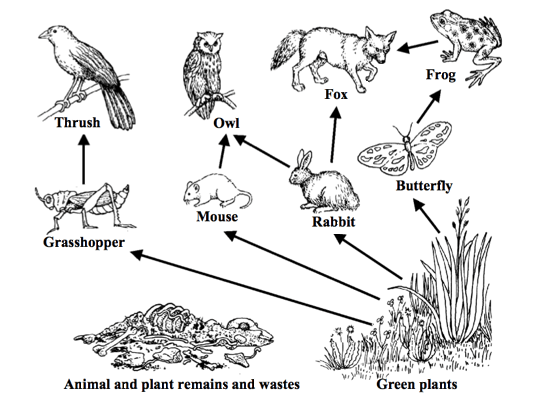
The owl receives energy from which organisms?
a)

grasshopper and mouse

b)

mouse and rabbit

c)

rabbit and butterfly

d)

butterfly and frog

41.
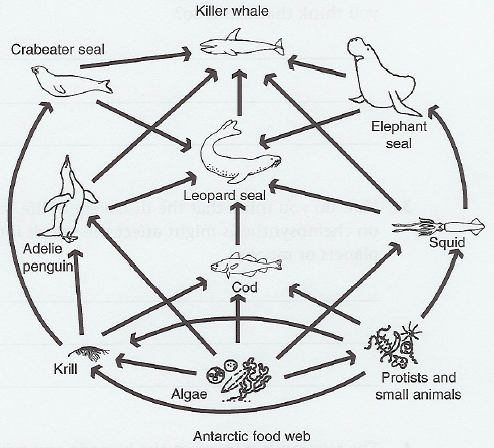
How many predators does the squid have?
a)

1

b)

2

c)

3

d)

4

42.

What living thing is the foundation of this food web?

a)

Rabbit

b)

Deer

c)

Grass

d)

Grasshopper

43.
What does a food web represent?
a)
All connections of energy flow throughout all organisms in a habitat.
b)
The specific ways that mutualism is carried out.
c)
A single pathway or energy flow between organisms. 
d)
How carnivores get their food. 
44.
What are the products of photosynthesis?
a)
water and carbon dioxide
b)
oxygen and glucose
c)
oxygen and carbon dioxide
d)
oxygen and water
45.

Organisms, like bacteria, insects and worms, that break down waste are called ___

a)

carnivore

b)

herbivores

c)

decomposers

46.
An apple tree is a
a)
producer
b)
consumer
c)
decomposer
47.
A hawk is an example of a
a)
consumer
b)
producer
c)
decomposer
48.
How animals get the nitrogen they need
a)
from the air they breathe
b)
from the water they drink
c)
from the food they eat
d)
from the Sun
49.
Organisms that need nitrogen to survive
a)
only plants
b)
only animals
c)
only bacteria
d)
all living organisms
50.
Bacteria fix nitrogen on plant roots. Plant roots provide sugar to bacteria. This is an example of
a)
mutualism
b)
parasitism
c)
commensalism
d)
competition
51.

What are the products of cellular respiration? Choose 3.

a)

water

b)

ATP

c)

Oxygen

d)

Sunlight

e)

Carbon Dioxide

52.

Which organ in a cell produces a large amount of ATP through cellular respiration?

a)

chloroplast

b)

mitochondrion

c)

nucleus

d)

ribosome

53.
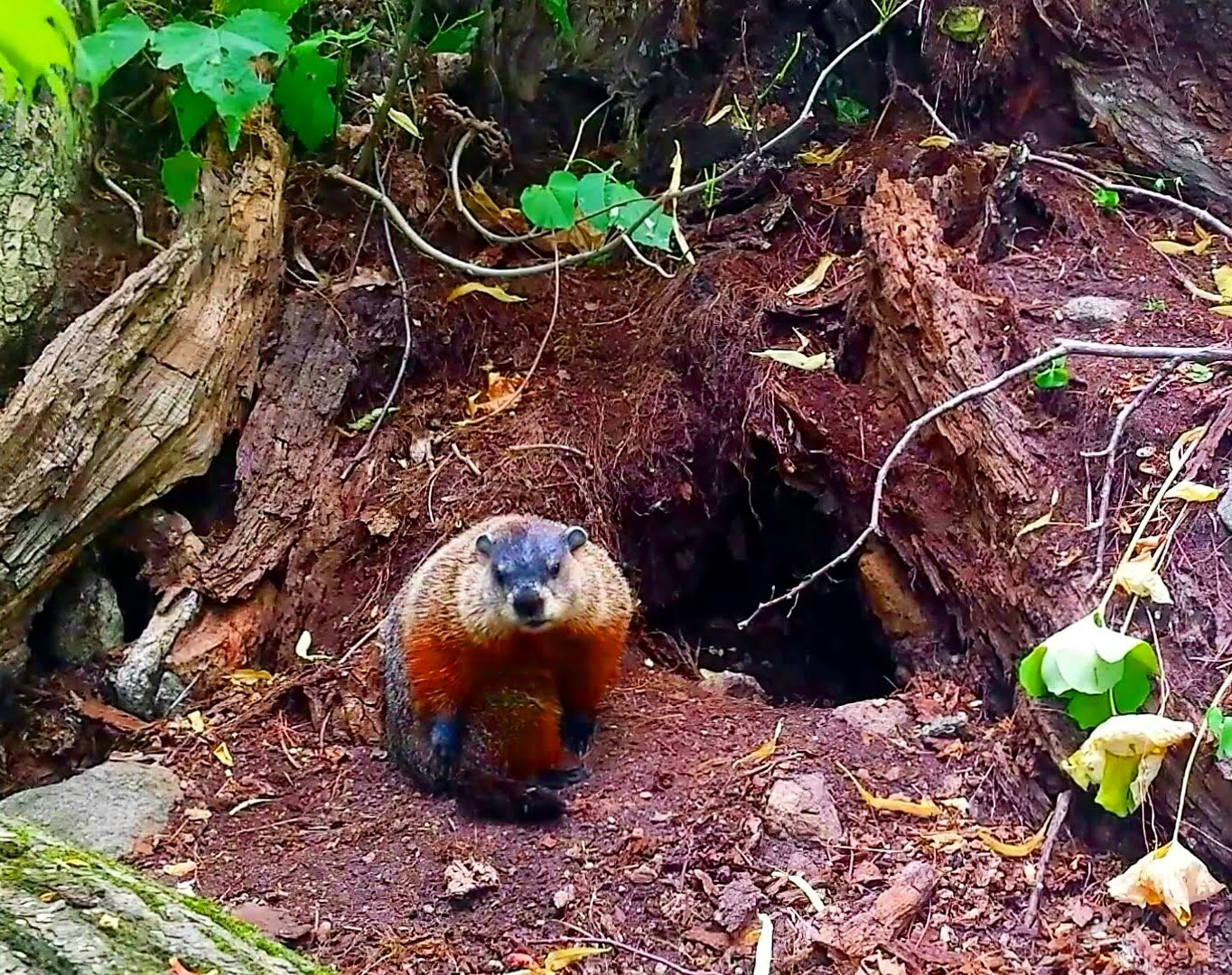
What type of symbiosis?  Skunks often live in burrows that have been dug and abandoned by woodchucks.  
a)
commensalism
b)
mutualism
c)
parasitism
d)
predation
54.
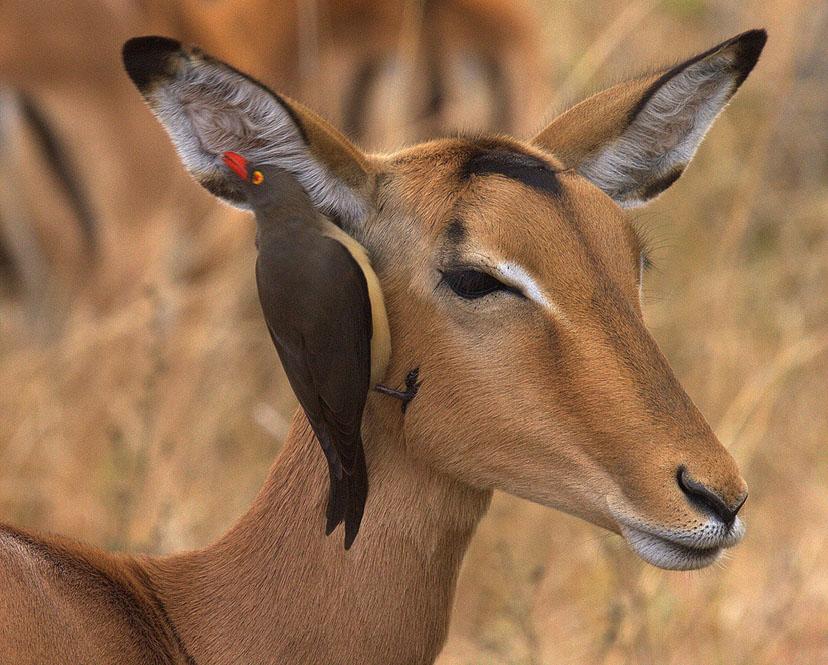
Red-billed oxpeckers are birds that often feed on parasites that infest impala.  This is an example of _______.
a)
commensalism
b)
mutualism
c)
neutralism
d)
competition
55.
A relationship between two organisms in which both organisms benefit. 
a)
Mutualism 
b)
Competition
c)
Parasitsm 
d)
Commensalism 
56.
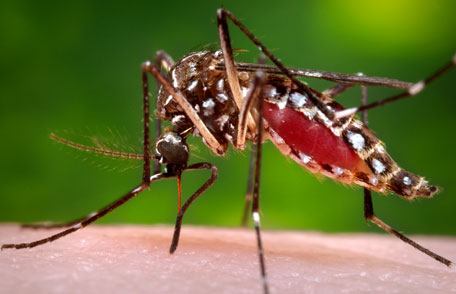
When a mosquito bites you, you are the __________ and the mosquito is the  ____________.
a)
host, hostess
b)
parasite, host
c)
host, parasite
d)
prey, predator
57.
Barnacles create home sites by attaching themselves to whales. This relationship neither harms nor benefits the whales. 
a)
parasitism
b)
commensalism
c)
mutualism
58.
Mistletoe extracts water and nutrients from a spruce tree. The spruce tree is harmed. 
a)
parasitism
b)
commensalism
c)
mutualism
59.

Sloths and monkeys share the same tropical habitat. Deforestation is occurring limiting the space for these two species. What will now occur between the two species?

a)

Mutualism

b)

Parasitism

c)

Cooperation

d)

Competition

60.

Predator/prey is when

a)

animals fight

b)

animals work together for the benefit of the group

c)

animals only care about their own individual survival

d)

one animal eats the other

61.

Select all that apply: Animals will compete over

a)

territory (land)

b)

resources (food, water)

c)

mates

62.

Cooperation is when

a)

animals fight

b)

animals work together for the benefit of the group

c)

animals only care about their own individual survival

d)

one animal eats the other

63.

A niche ________________.

a)

is the function that an organism performs in the food web of that community.

b)

includes everything else the organism does and needs in its environment.

c)

is specific to each individual animal and plant.

d)

All of the above.

64.

An organism’s habitat provides _____________________.

a)

food, water, shelter, and space.

b)

food, water, and clothes.

c)

only food.

d)

video games, ninjas, and baked beans.

65.

A squirrels niche would be _________________.

a)

hunting prey and providing meat for other squirrels.

b)

searching for fish to eat in the ocean.

c)

staying busy storing nuts and seeds for winter.

d)

help decompose other animals and plants.

66.

A squirrels habitat would be _____________.

a)

Ocean

b)

Arctic

c)

Forest

d)

Dessert

67.
Temperature, light, air, water, and soil are all  _____  parts of the environment
a)
alive
b)
biotic 
c)
abiotic
d)
living
68.
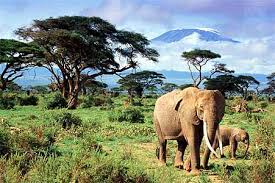
What are the biotic factors in this image?
a)
sunlight, elephants, and grasses
b)
sunlight, water,  and air
c)
elephants, plants, trees 
69.

Some desert plants have waxy leaves to help them retain water.


Why did these plants develop this adaptation?

a)

They needed sun and nutrients.

b)

They needed water.

c)

They needed protection.

d)

They needed to reproduce.

70.
Traveling done by an animal to find food and water. 
Adaption: birds flying south for the winter
a)
Camouflage
b)
Migration
c)
Hibernation
d)
Locomotion
71.
A resting state through the winter. 
Adaptation: Bear sleeping in a cave during the winter months
a)
Locomotion
b)
Hibernation
c)
Migration
d)
Defense
72.
succession that occurs in an area with no soil
a)
ecological succession 
b)
primary succession 
c)
secondary succession
d)
pioneer speciles
73.
succession that occurs in an area where soil is already present
a)
ecological succession 
b)
primary succession 
c)
secondary succession
d)
pioneer speciles
74.
the first organisms that appear in an ecological community
a)
ecological succession 
b)
primary succession 
c)
secondary succession
d)
pioneer speciles
75.
The picture shows what type of succession?
a)
primary
b)
secondary
c)
tertiary
d)
quadanary
76.

Breaking News! A new island has formed off of Hawaii! What must occur for it to become an ecosystem?

a)

Secondary Succession

b)

Aquatic succession

c)

Primary Succession

d)

Ferns must grow

77.

Eutrophication is caused by

a)

excess nutrients building up in the water.

b)

industrial point-source pollution.

c)

unlined landfills and septic tanks.

d)

wastewater from homes mixing with drinking water.

78.

How does eutrophication cause the death of aquatic organisms

a)

the build up of carbon dioxide in the water

b)

the lack of nitrogen in the water

c)

the lack of carbon dioxide in the water

d)

the lack of oxygen in the water

79.
In DNA, Adenine bonds with ______________.
a)
Guanine
b)
Thymine
c)
Cytosine
d)
Adenine
80.
Guanine bonds with ______________.
a)
Adenine
b)
Guanine
c)
Cytosine
d)
Thymine
81.
Which of the following best describes a DNA molecule?
a)
double helix
b)
contains ribose
c)
made of amino acids
d)
contains Uracil
82.
Which two scientists are accredited with correctly deducing the double helix model of DNA?
a)
Watson and Crick
b)
Wilkins and Franklin
c)
Wilkins and Crick
d)
Watson and Franklin
83.

What did Gregor Mendel study?

a)

Mold Spores

b)

Pea Plants

c)

Sun Flowers

d)

Rats

84.

an observable characteristic

a)

trait

b)

personality

c)

cell

d)

DNA

85.

When an organism has two of the same alleles, it is called

a)

homozygous

b)

heterozygous

c)

recessive

d)

dominant

86.

When an organism has two different alleles, it is called

a)

homozygous

b)

heterozygous

c)

recessive

d)

dominant

87.

A/n _____ trait is a trait that prevents or masks the showing of another trait.

a)

controlling

b)

dominant

c)

influential

d)

superior

88.

A trait that is hidden by the presence of a dominant trait is known as a _____ trait.

a)

coy

b)

demure

c)

modest

d)

recessive

89.
T - tall and t = short
In the punnett square below, what belongs in the missing square
a)
tt
b)
Tt
c)
Bb
d)
TT
90.
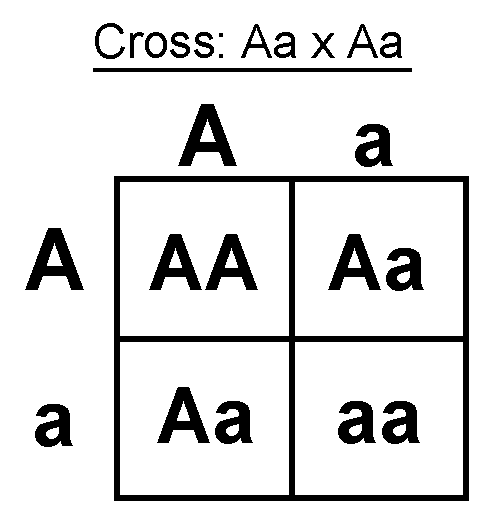
B = brown fur  b = white fur
In the punnett square, what is the probability for white fur? 
a)
0%
b)
25%
c)
50%
d)
75%
91.
In plants, tall (T) is dominant to short (t). Perform the following cross: Tt x Tt. What is the probability of producing a short plant?
a)
0%
b)
25%
c)
50%
d)
75%
92.
What is the phenotype of the offspring? (A-Brown hair; a-blond hair) 
a)
50 % Brown Hair and 50% Blond Hair 
b)
25 % Brown Hair and 75% Blond Hair 
c)
75 % Brown Hair and 25% Blond Hair 
d)
0% Brown Hair and 100% Blond Hair 
93.

The language you speak, how you wear your hair and what music you like to listen to are all examples of

a)

DNA

b)

heredity

c)

acquired traits

d)

inherited traits

94.

Bald eagles have white heads which is an inherited trait

a)

True

b)

False

95.

According to natural selection, organisms more suited to their environment are better able to

a)

Sleep

b)

Survive

c)

Perish

d)

Migrate

96.

Changes in genetic material are called _____________

a)

Mutations

b)

RNA

c)

Genes

97.

Which of the following describes what is meant by Natural Selection?

a)

An organism will survive no matter what its adaptations may be

b)

An organism with adaptations that do not allow it to reproduce as effectively as others will survive.

c)

An organism with adaptations that allow it to obtain resources and reproduce more effectively than others will survive.

d)

No organisms will survive.

98.
Which best describes an adaptation?
a)
A trait that helps an organism to survive in its environment.
b)
A trait that the organism can change when he wants.
c)
A trait that does not help the organism to survive in its environment.
d)
The place where an organism lives.
99.
What does the term variation mean?
a)
The same traits in a population.
b)
The different ways that traits are expressed in a population.
c)
The same ways traits are expressed in a population.
d)
The place where an animal lives.
100.
What does the term species mean?
a)

All the different organisms in a population

b)

A community of organisms.

c)

Organisms of the same kind that can reproduce with one another and create fertile young.

d)

Organisms of different kinds that can reproduce with one another.