wayground logo

Free Printable Worksheets

Font size

S
M
L
XL
Worksheets

Biology FINAL Review

Total questions: 99

Worksheet time: 1hrs 13mins

Name
Class
Date
1.
What is the definition of Homozygous?
a)
When one allele is dominant and one is recessive
b)
When an individual has two sets of the same allele.
c)
when it is neither dominant or recessive
2.
what is the definition of Heterozygous? 
a)
when an individual has two sets of the same allele
b)
when it is neither dominant or recessive
c)
A pair of genes where one is dominant and one is recessive.
3.
The genotype is the ______________.
a)
physical appearance
b)
Genetic makeup
c)
Alleles gained from one parent
4.
The phenotype is the _______________.
a)
physical appearance of an organism
b)
Genetic makeup 
c)
Alleles acquired from a specific parent.
5.
An allele whose trait only shows up when no dominant allele is present.
a)
hidden allele
b)
dominant allele
c)
recessive allele
d)
present allele
6.
A homozygous dominant dog with brown fur is crossed with a heterozygous dog with brown fur. What are the percentages of the possible genotypes?
a)
100% BB
b)
75% BB and 25%Bb
c)
50 % BB and 50% Bb
d)
50% Bb and 50% bb
7.
G = green, g = yellow
The genotype for a yellow plant is...
a)
GG
b)
Gg
c)
gg
d)
all of the choices result in yellow
8.
The letters on the TOP AND SIDE of a punnett square represent ______________.
a)
The combination of alleles in offspring.
b)
The possible alleles given by the parents following meiosis.
c)
The genotype and phenotype of offspring.
d)
The results of genetic mutations in offspring.
9.
True or False: If a dominant allele is present, the trait will always appear in the organism.
a)
True
b)
False
10.
This is an example of what?
a)
Complete dominance
b)
Incomplete dominance
c)
Codominance
d)
None of the above
11.
Snapdragon flowers come in red, pink and white.  What type of inheritance is this?
a)
Complete Dominance
b)
Incomplete Dominance
c)
Codominance
d)
Polygenic Inheritance
12.
The sex of an offspring is determined by ______________________.
a)
the mother
b)
the father
c)
the mother and the father
d)
by the environment
13.
Incomplete dominance means that the traits are
a)
expressed equally
b)
dominant
c)
recessive
d)
blended
14.
Term for homozygous organisms that display two dominant phenotypes at the same time
a)
codominance
b)
incomplete dominance
c)
multiple alleles
d)
linked genes
15.
What percentage of the offspring will have this recessive disease?
a)
0%
b)
25%
c)
50%
d)
75%
16.
What percentage of the female offspring will be a carrier for this recessive disease?
a)
0%
b)
50%
c)
100%
d)
25%
17.
How many PAIRS of chromosomes do humans have?
a)
23
b)
46
c)
1
d)
2
18.
I have 1 X chromosome and 1 Y chromosome. What am I?
a)
Male
b)
Female
19.
DNA is copied during a process called ______________ which results in an identical copy of itself.
a)
Photosynthesis
b)
Transcription
c)
Replication
d)
Translation
20.
Which type(s) of RNA is(are) involved in protein synthesis?
a)
transfer RNA
b)
messenger RNA
c)
tRNA and mRNA
d)
tRNA, mRNA, and rRNA
21.
Genes contain instructions for assembling _______________.
a)
Nucleosomes
b)
Proteins
c)
Purines
d)
Pyrimidines
22.

Which of the following are found in both DNA and RNA?

a)

ribose, phosphate groups, and adenine

b)

guanine, cytosine, adenine

c)

phosphate groups, guanine, and thymine

d)

deoxyribose, phosphate groups, and guanine

23.
DNA replication results in two DNA molecules,
a)
each with two new strands.
b)
each with one new strand and one original strand.
c)
each with two original strands.
d)
one with two new strands and the other with two original strands.
24.
Unlike DNA, RNA contains...
a)
a phosphate group
b)
thymine
c)
guanine
d)
uracil
25.
What is produced during transcription?
a)
Protein
b)
tRNA
c)
mRNA
d)
DNA
26.
The order of nitrogenous bases in DNA determines the order of ______________ in proteins.
a)
nucleic acids
b)
lactic acids
c)
Phosphates
d)
amino acids
27.
What happens during the process of translation?
a)
The cell uses information from messenger RNA to produce proteins.
b)
Messenger RNA is made from DNA.
c)
Copies of DNA molecules are made.
d)
Transfer RNA is made from messenger RNA.
28.
In eukaryotes, DNA:
a)
floats freely in the cytoplasm
b)
is found in the nucleus
c)
is wrapped within the ribosome
d)
is circular
29.

A DNA nucleotide contains--

a)

ribose, uracil, and a polypeptide.

b)

deoxyribose, cytosine, and a lipid.

c)

deoxyribose, a nitrogen base, and a phosphate group.

d)

ribose, adenine, and thymine.

30.

mRNA strand: UAC-AGG-GUG-CUA-CCC-ACU

What is the peptide chain that results from this strand of DNA?

a)

methionine, phenylalanine, histidine, aspartate, glycine

b)

methionine, leucine, histidine, aspartate, glycine

c)

tyrosine, arginine, valine, leucine, proline, threonine

d)

methionine, proline, histidine, aspartate, glycine

31.
Which of the following best describes a DNA molecule?
a)
double helix
b)
contains ribose
c)
made of amino acids
d)
contains Uracil
32.
In DNA, Adenine bonds with ______________.
a)
Guanine
b)
Thymine
c)
Cytosine
d)
Adenine
33.
Name this structure
a)
double helix
b)
nucelotide
c)
twisted ladder
d)
hydrogen bond
34.

Which enzyme is responsible for adding nucleotides during replication?

a)

Topoisomerase

b)

DNA Polymerase

c)

Ligase

d)

Primase

35.
The enzyme that unzips the DNA to prepare for replication
a)
helicase
b)
replicase
c)
polymerase
d)
synthase
36.
RNA contains the sugar
a)
ribose
b)
deoxyribose
c)
glucose
d)
lactose
37.

What is the order for Protein Synthesis?

a)

Transcription -> Translation -> Protein

b)

Translation - > Transcription -> Protein

c)

Protein -> Transcription -> Translation

d)

Translation -> Protein -> Transcription

38.
An organism that needs to eat other organisms to obtain energy is known as a:
a)
Autotroph
b)
Producer
c)
Consumer
d)
Mutualist
39.
What does a food web represent?
a)
All connections of energy flow throughout all organisms in a habitat.
b)
The specific ways that mutualism is carried out.
c)
A single pathway or energy flow between organisms. 
d)
How carnivores get their food. 
40.
In this Food Web Pyramid Which type of consumer gets only 10% of the energy stored in plants?
a)
Herbivore
b)
Carnivore
c)
Omnivore
d)
Secondary Consumer
41.

The image provided is an example of a(n):

a)

predation

b)

Herbivore

c)

Producer

d)

Autotroph

42.
The nonliving aspects of an ecosystem.
a)
Abiotic factors
b)
Biotic factors
43.
As you move upward, from level to level, in an energy pyramid, energy _____.
a)
increases
b)
decreases
c)
stays the same
d)
increases exponentially
44.
What do the arrows show in a food chain picture?
a)
They always point to the smallest animals.
b)
They point to the animal that tastes the best.
c)
They always point to the producers.
d)
They point in the direction that energy is flowing.
45.
Which of these organisms would receive energy from the snake?
a)
Plant
b)
Rabbit
c)
Mouse
d)
Hawk
46.
In an ecosystem, members of the lizards are observed eating members of the insect population.  In this same ecosystem, birds are also observed using insects as a food source.  The relationship between lizards and birds would best be described as –
a)
predator
b)
 competitive
c)
parasitic
d)
mutualistic
47.
Which of the following removes carbon from the atmosphere?
a)
Combustion
b)
Respiration
c)
Photosynthesis
d)
Death
48.

What is transpiration?

a)

Water evaporates directly from the leaves of plants

b)

Excess sugar being released from the leave

c)

The way a plant makes its food

d)

When the plant uses sugar for energy

49.
The diagram represents a pyramid of energy in an ecosystem.  Which level would most likely contain organisms that do photosynthesis?
a)
A
b)
B
c)
C
d)
D
50.

A herd of deer leave their home and move into a new area. this is an example of ___________________

a)

Immigration

b)

Emigration

c)

Migration

51.
When there is a lack of resources such as food, water, sunlight, shelter, and space this is often called __________.
a)
limiting factors
b)
wet
c)
messy
d)
found in rocks
52.
If a disease destroying barley plants in a field swept through an ecosystem, what would happen to the barley eating bird population in the the field ?
a)
The bird population would stay the same
b)
The bird population would infinitely increase
c)
The bird population would decrease
53.
The number of individuals a habitat can sustain with the resources it has available
a)
Limiting Factors
b)
Limiting number
c)
Carrying capacity
d)
Habitat capacity
54.
The emergence of a new species is __________.
a)
uniformitarianism
b)
speciation
c)
catatrophism
d)
extinction
55.
Variations present in living organisms that aided in their survival are ______________.
a)
natural selection
b)
evolution
c)
adaptions
d)
tedder selection
56.
One species evolving into several different species is known as
a)
adaptive radiation
b)
divergent evolution
c)
convergent evolution
d)
coevolution
57.
Unrelated organisms evolving to resemble each other is
a)
coevolution
b)
convergent evolution
c)
divergent evolution
d)
punctuated equilibrium
58.
One species evolving in response to another species is known as
a)
coevolution
b)
convergent evolution
c)
divergent evolution
d)
adaptive radiation
59.
Any inherited characteristic that increases an organisms chance of survival is a(n)
a)
fitness
b)
adaptation
c)
arm
d)
teeth
60.
The ability to survive in a given environment is known as
a)
adaptation
b)
fitness
c)
ability
d)
evolution
61.

This type of selection favors one extreme

a)

directional

b)

stabilizing

c)

disruptive

d)

no selection

62.
This type of selection favors BOTH extremes
a)
directional
b)
stabilizing
c)
disruptive
63.
A species is defined as
a)
organisms that look alike
b)
organisms that act similar
c)
organisms that can interbreed and produce fertile offspring
d)
organisms that look and act similar
64.
This type of isolation is caused by mating at different times
a)
reproductive
b)
temporal
c)
behavioral
d)
geographic
65.
This graph represents
a)
directional selection
b)
stabilizing selection
c)
disruptive selection
d)
no selection
66.
This type of isolation is caused by behavioral differences such as different mating calls
a)
geographic isolation
b)
behavioral isolation
c)
temporal isolation
d)
no isolation
67.

Sometimes bones in the front limbs of animals are very similar in structure. What do we call similar bone structures that indicate a link to a common ancestor?

a)

Adaptations

b)

Gradualism

c)

Homologous Structures

d)

Extinction

68.

What is the study of organisms at the early stages of development?

a)

DNA studies

b)

Comparative Embryology

c)

Extinction

d)

Fossil Record

69.
Mutations are important because they bring about
a)
death of the organism in which they develop
b)
genetic variation needed for a population to evolve
c)
benefits for the individual, not for the population
d)
Hardey-Weinberg equilibrium within a population
70.
What is a Vestigial Structure?
a)
Structures that have a common function and suggest common ancestry
b)
The traits of organisms that result from sharing a common ancestor: such traits often have similar embryological origins
c)
genetically determined structures or attributes that have apparently lost most or all of their ancestral function in a given species
d)
I don't know :(
71.
Structures derived from a common ancestor or same evolutionary or developmental origin
a)
homologous structures
b)
homosapien
c)
analogous structures
d)
atoms
72.

If two organisms have similar traits of DNA they are probably

a)

share a common ancestor

b)

share a common environment

c)

share a common population

d)

speciation

73.
This system transports essentials and removes wastes to and from the cells of the body.
a)
circulatory
b)
respiratory
c)
skeletal
d)
integumentary
74.
This system receives and proccesses information.
a)
respiratory
b)
immune
c)
nervous
d)
endocrine
75.
This system processes food to provide the body with nutrients. 
a)
digestive
b)
excretory
c)
endocrine
d)
circulatory
76.
This system secretes chemical messages (hormones) to different parts of the body.
a)
excretory
b)
endocrine
c)
digestive
d)
immune
77.
Which body system helps you remove waste products from your body that you do not need?
a)
muscular system
b)
excretory system
c)
skeletal system
d)
none of the above
78.
What are kidneys?
a)
curvy shapes that look like a human ear
b)
a pair of respiratory organs used for breathing
c)
red beans often used in chili and salads
d)
a pair of excretory organs that filter waste products from blood
79.
The smallest units or parts of living things; the body's building blocks.
a)
cells
b)
organs
c)
tissues
d)
system
80.

The CENTRAL nervous system is made up of which two organs?

a)

Brain and Spinal Cord

b)

Spinal Cord and Peripheral Nerves

c)

Peripheral Nerves and Heart

d)

Heart and Lungs

81.

The two (2) divisions of the peripheral nervous system are

a)

the sensory division

b)

the motor division

c)

the automatic division

d)

the manual division

82.

Which is not a function of the skeletal system?

a)

shape and support

b)

movement

c)

protection

d)

gas exchange

83.

What is the function of marrow?

a)

To make protein

b)

To make red blood cells and store fat.

c)

reduce friction

d)

to hold bones together

84.

What is between the bones to cushion them from rubbing against each other?

a)

periosteum

b)

ligament

c)

tendon

d)

cartilage

85.

A tough band of tissue that connects bone to bone are called a __________________________.

a)

tendon

b)

cartilage

c)

periosteum

d)

ligament

86.

These connect muscles to bones

a)

ligaments

b)

tendons

c)

cartilage

d)

bone marrow

87.
What is the main function of the excretory system?
a)
to collect and remove wastes from the body
b)
to strengthen skeletal muscles
c)
to protect the nervous system
d)
to bring oxygen to body cells
88.

Which digestive system structure is responsible for water absorption?

a)

epiglottis

b)

Stomach

c)

Large intestine

d)

Small intestine

89.
Which structure makes bile?
a)
Stomach
b)
Pancreas
c)
Liver
d)
mouth
90.

Where does absorption of nutrients into the blood occur in the digestive system?

a)

small intestine

b)

large intestine

c)

stomach

d)

epiglottis

91.

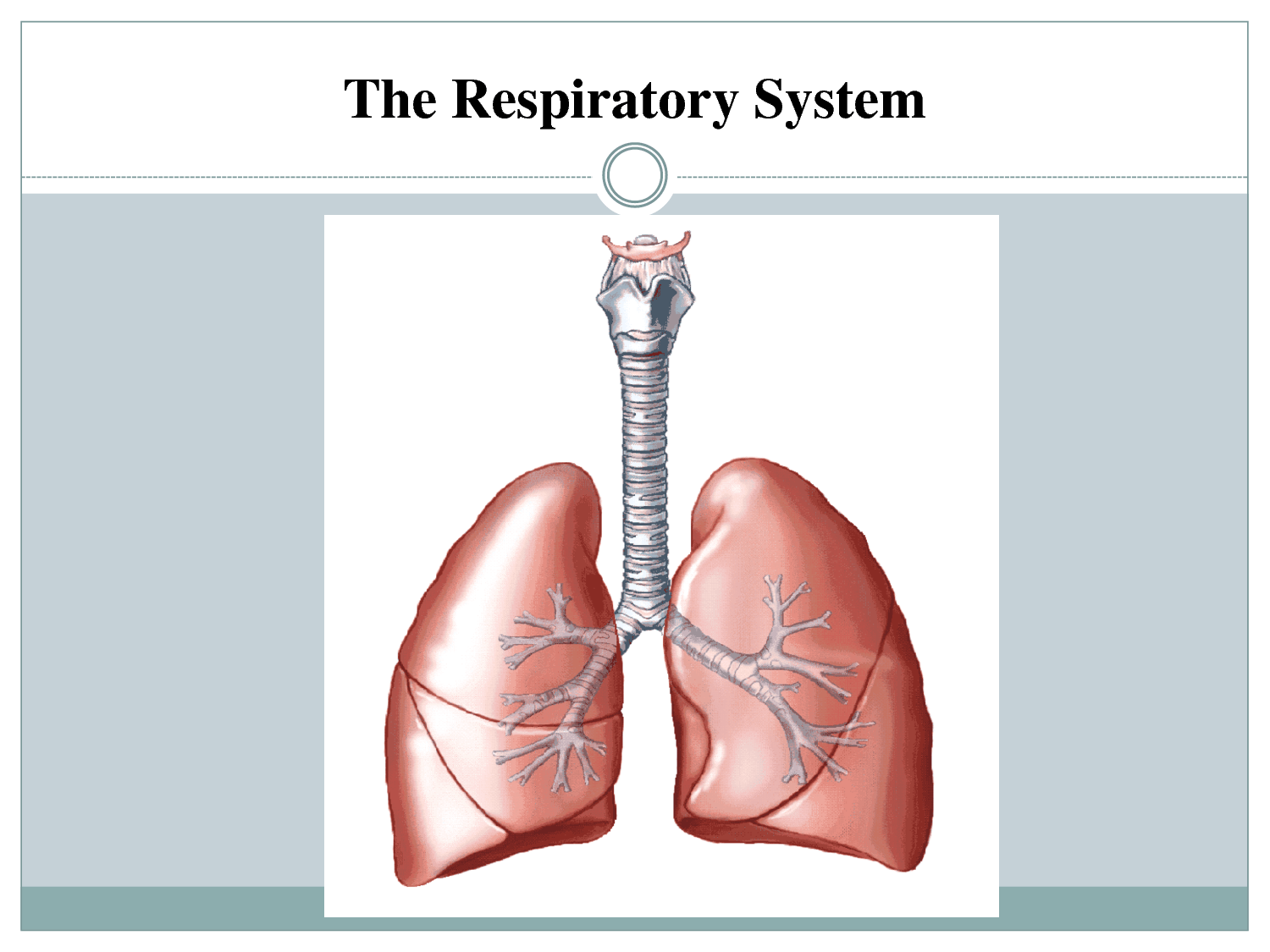
What is the main function of the respiratory system?

a)

to provide oxygen and remove carbon dioxide from the body

b)

o break down food and absorb nutrients

c)

to remove oxygen from the body and deliver carbon dioxide
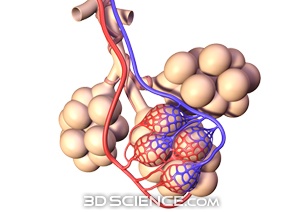
92.
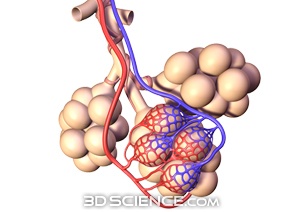
The air sacs that are covered with capillaries where gas exchange takes place
a)
bronchi
b)
lungs
c)
oxygen
d)
alveoli
93.

When you breathe, your lungs take in ___ and remove ___.

a)

air/oxygen

b)

oxygen/carbon dioxide

c)

carbon dioxide/oxygen

d)

waste/air

94.
This type of vessel carries blood TO the heart:
a)
vein
b)
nerve
c)
muscle
d)
artery
95.

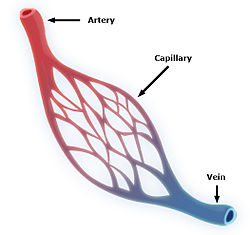
The smallest type of blood vessel and the site of gas exchange is the:

a)

nerve

b)

vein

c)

capillary

d)

artery

96.

These carry blood AWAY from the heart

a)

artery

b)

neuron

c)

vein

d)

straw

97.

The job of the heart is to . . .

a)

pump blood around the body.

b)

send food to the small intestines.

c)

break down food.

d)

give energy to the body.

98.

Which is NOT a function of the circulatory system?

a)

deliver O2 and nutrients to cells

b)

remove CO2 and wastes from cells

c)

break down carbohydrates into glucose

d)

transport other materials through body

99.

Which activity is NOT good for cardiovascular health.

a)

Exercising regularly

b)

Eating a diet low in saturated fats

c)

Eating a diet low in trans fats

d)

Smoking/Juuling