Wayground logo

Free Printable Worksheets

Font size

S
M
L
XL
Worksheets

Unit 8 Evolution and Classification Practice Test

Total questions: 34

Worksheet time: 25mins
Name
Class
Date
1.
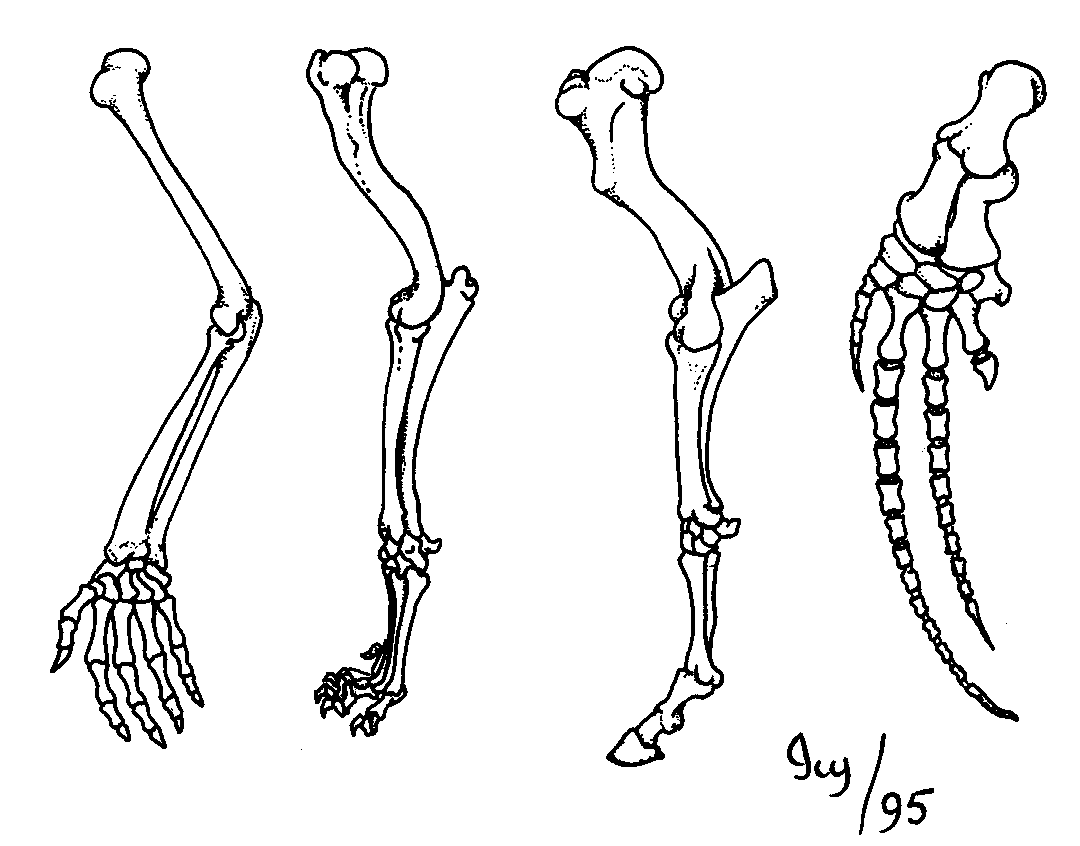
Structures with the same parts have different functions; suggests that organisms share a common ancestry
a)
vestigial structures
b)
homologous structures
c)
adaptive radiation
d)
fossil
2.

Which of the following is an example of a vestigial structure?

a)

the wings of a red-tailed hawk

b)

the hind limbs of a house cat

c)

the fins of sharks

d)

the tailbone of a human

3.
Which layer is the oldest
a)
B
b)
A
c)
E
d)
C
4.
If two organisms have similar traits of DNA they are probably
a)
share a common ancestor
b)
share a common environment
c)
share a common population
d)
speciation
5.
Which two animals are most closely related?
a)
Fish and Amphibian
b)
Reptile and Amphibian 
c)
Reptile and Bird
d)
Mammal and Bird
6.
What gas were we missing in Earth's early atmosphere?
a)
carbon dioxide
b)
oxygen
c)
water vapor
d)
sulfur oxides
7.
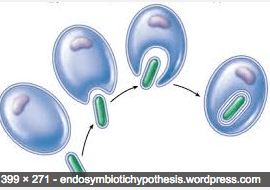
What process is shown within this diagram?
a)
Natural selection
b)
Endosymbiosis
c)
Chemical evolution
d)
Abiogenesis
8.

Which of the following are evidence of endosymbiosis? Pick 3

a)

mitochondria and chloroplast ribosomes are similar to bacterial ribosomes

b)

mitochondria and chloroplast are similar in size to bacteria

c)

mitochondria and chloroplast have double membranes

d)

mitochondria and chloroplast have a nucleus

9.

Based upon the conditions of the early Earth, which form of life most likely appeared first? Select 3 to describe this life form.

a)

Prokaryotic

b)

Anaerobic

c)

Photosynthetic

d)

Aerobic

e)

Heterotroph

10.
A unicellular organism that does not have a nucleus
a)
fungus
b)
bacteria
c)
biome
d)
virus
11.
Antibiotic resistant bacteria are a problem because:
a)
we can't help people with those infections
b)
bacteria smell pretty bad
c)
something about viruses
d)
they are not a problem, I love being sick
12.
Which question were the scientists trying to answer with this experiment?
a)
Where do cells come from?
b)
What came first the chicken or the egg?
c)
How are biomolecules formed?
d)
What gave rise to the Eukaryotic cell?
13.
Which agent of change causes genetic variation and has a large effect on allele frequencies when it produces new alleles.
a)
Non-random mating
b)
Gene Flow
c)
Mutation
d)
Genetic Drift
14.
When an animal moves from one place to another the animal can alter that population’s
a)
Gene Flow
b)
Gene Pool
c)
Genetic Drift
d)
Size
15.
Where the better adapted organisms survive to pass traits along to offspring.
a)
Evolution
b)
Natural Selection
c)
Extinction
d)
Artifical Selection
16.
What is the process in which humans breed organisms for certain traits?
a)
natural selection
b)
inheritance
c)
artificial selection
d)
descent without modification
17.
What did Darwin conclude about the finches on the Galapagos Islands?
a)
They evolved from a common ancestor on the main land
b)
They evolved from many different types of birds
c)
They all came from different countries and continents
d)
They developed from other types of organisms
18.
The lava released by a volcanic eruption separates two populations of a species of monkey. What does this represent?
a)
biological isolation
b)
geographical isolation
c)
temporal isolation
d)
anatomical isolation
19.
Which of the following is an example of reproductive isolation?
a)
two populations of finches that cannot produce viable offspring
b)
two populations of finches that have different feather colors
c)
two populations of salamanders that live in different lakes
d)
two populations of salamanders that have different tail lengths
20.
What is a species?
a)
A group of organisms that can mate with each other and produce fertile offspring. 
b)
A group of organisms that genetically are very different from each other. 
c)
A group of organisms that can mate and produce offspring even if those offspring are infertile.
d)
Indivual organisms that live in the same environment. 
21.
What is speciation?
a)
The change from one species into two or more distinct species. 
b)
The movement of a group of organisms into a new area. 
c)
The ability to mate and reproduce.
d)
The death of an entire species. 
22.
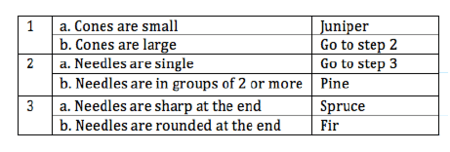
A dichotomous key for trees is provided. Hikers found a tree that has large brown cones and single sharp needles. What species of tree have the hikers found?
a)
Juniper
b)
Pine
c)
Spruce
d)
Fir
23.
From the table, which two animals are MOST CLOSELY related
a)
House Cate and Red Fox
b)
Red Fox and Dog
c)
Dog and Wolf
d)
Wolf and Gopher
24.
The 8 levels of classification, most broad to most specific.
a)
Domain, Genus, Family, Order, Class, Phylum, Kingdom, Species
b)
Domain, Species, Kingdom, Genus, Phylum, Family, Class, Order
c)
Domain, Kingdom, Phylum, Class, Order, Family, Genus, Species
d)
Order, Kingdom, Species, Domain, Phylum, Family, Class, Genus
25.
Term given to describe the 2 name naming system is:
a)
dichotmous key
b)
binomial nomenclature
c)
2 scientific names
d)
binomial key
26.
The first part of a scientific name is an organism's _______________ and the second part is its ________________.
a)
species, genus
b)
phylum, order
c)
class, spices
d)
genus, species
27.
amoeba, paramecium, euglena, algae
a)
Protista
b)
Plantae
c)
Animalia
d)
Monera
28.
Multicellular eukaryotes that are heterotrophs and can move on their own.
a)
Protista
b)
Monera
c)
Fungi
d)
Animalia
29.
mostly unicellular but some are multicellular, some eat food and some make food, most are mobile and eukaryotes
a)
Protista
b)
Animalia
c)
Monera
d)
Fungi
30.

unicellular prokaryotes

a)

Protista

b)

Plantae

c)

Animalia

d)

Eubacteria

31.

Select the proper descriptions (2 choices) for the picture on the left vs the right.

a)

Right is punctuated speciation

b)

Right is gradualism speciation

c)

Left is punctuated speciation

d)

Left is gradualism speciation

32.

Which two organisms are most closely related/share a more recent common ancestor?

a)

1 and 2

b)

2 and 3

c)

3 and 4

d)

4 and 5

33.
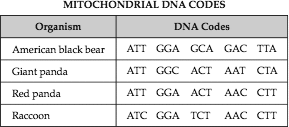
What conclusions can be made based on this table shown?
a)
the American black bear and the giant panda are most closely related
b)
the giant panda and the red panda are most closely related
c)
the red panda and the racoon are the most closely related
34.

You are only considered "fit" in natural selection if you can

a)

have many babies

b)

have a large competition

c)

have many variations

d)

have a large population