

wayground logo

Free Printable Worksheets

NEW

Font size

S
M
L
XL
Worksheets

Science Super STAAR Review

Total questions: 58

Worksheet time: 2hrs 56mins

Name
Class
Date
1.
Two wires carrying electricity can create a spark if they come too close together. This spark can start a fire. Wires carrying electricity are usuallly covered  with plastic to keep them from starting a fire. Why does the plastic keep electricity from starting a fire?
a)
Plastic is a good insulator.
b)
Plastic can melt when heated.
c)
Plastic is softer than wire.
d)
Plastic conducts electricity.
2.
Erosion is one of the processes involved in the formation of sedimentary rock. Which of these best describes the process of erosion?
a)
Rocks are broken into smaller pieces that remain in the same location.
b)
Pressure compacts layers of sediment and turns them into rock.
c)
Pieces of rock or soil are carried from one place to another.
d)
Sediment grains fall to the bottom of a lake to form sedimentary layers.
3.
A student observing birds in a park records some ways that birds interact with living and nonliving parts of their environment. All the following  observations are was that a bird interacts with nonliving parts of its environment except______
a)
reacting to morning sunlight by singing
b)
drinking and taking a bath in a puddle of water
c)
responding to cold temperatures by fluffing its feathers
d)
feeding insects to its chicks
4.
A student made a list of activities that involve energy.  
-
1. Sharks chasing a school of fish
2. A toaster heating bread
3. A cell phone charging
4. A tree limb falling to the ground
5. Tomato plants absorbing sunlight
6. A canoe floating down a river
-
Which activities on the list are examples of the use of mechanical energy? 
a)
Activities 1, 4, and 6 
b)
Activities 2, 4, and 5
c)
Activities 1 and 2 
d)
Activities 3, 5, and 6 
5.
Tropical climates have warm temperatures and abundant sunlight all year. What must be available for plants in these climates to make their own food throughout the year?
a)
Bacteria 
b)
Birds  
c)
Shade
d)
Water
6.
A student puts four objects in a bucket filled with water. The objects are listed below. 
-
 Plastic ball
Glass marble
Metal paper clip
Wood block 
-
Which two objects are most likely less dense than the water?
a)
Wood block and metal paper clip
b)
Plastic ball and glass marble
c)
Metal paper clip and glass marble
d)
Wood block and plastic ball
7.
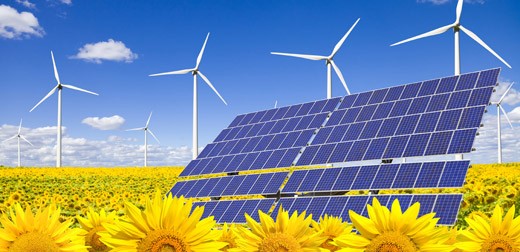
Most alternative energy resources produce more energy at certain times. Which combination can produce a steady flow of energy from only alternative resources 24 hours a day year-round? 
a)
Geothermal and natural gas
b)
Hydroelectric and geothermal 
c)
Solar and petroleum 
d)
Wind and coal 
8.
Which of these is not soluble in water?
a)
Oil
b)
Salt
c)
Honey
d)
Sugar
9.
__________ is an energy resource that WILL NOT run out in the next several hundred years. 
a)
Renewable Energy Resource
b)
Nonrenewable Energy Resource
10.
A type of energy that uses heat that is stored  inside the earth is 
a)
geometric energy
b)
geothermal energy
c)
biomass energy
d)
solar energy
11.
Where can the oldest layer be found?
a)
The top layer
b)
The middle layer
c)
They are all the same age
d)
The bottom layer
12.
In what kind of rock can fossils be found?
a)
Sedimentary Rocks
b)
Igneous Rocks
c)
Metamorphic Rocks
d)
Granite
13.
A group of students visited a park and collected leaves from many different trees in order to study them. They recorded their observations about the leaves. Which of these observations does NOT describe an inherited trait? 
a)
The leaves vary in shape and size. 
b)
 Some leaves have holes made by insects chewing on them.
c)
Some leaves are smooth on one side and rough on the other. 
d)
The colors of the leaves range from light green to dark green. 
14.
In a grassland ecosystem, if the population of eagles suddenly decreased, what will most likely be the effect on the rest of the ecosystem?
a)
The ecosystem will become overpopulated with snakes.
b)
There will be a decrease in the population of snakes in the ecosystem.
c)
The nutrition of the soil in the ecosystem will decrease
d)
More types of plants will begin growing in the ecosystem.
15.
Which gets all its energy from the sun?
a)
consumer
b)
producer
c)
decomposer
d)
no living organism
16.
Which statement best describes how winter weather can damage roads?
a)
Snow and ice can cause car accidents, which damage roads.
b)
Rain, ice, and snow can cause the painted lines on roads to fade.
c)
Cold temperatures can cause road materials to expand, creating potholes.
d)
Water can get into cracks in roads, then freeze and expand, making the cracks worse.
17.
A boy is doing an experiment with coke and different kinds of mentos. He is testing what kind of mentos will have the biggest effect and highest geyser with coke. What is not a constant in this experiment?
a)
The type of soda
b)
The amount of soda
c)
The mentos
d)
The place you are doing the experiment
18.
Which statement describes weather, rather than climate?
a)
The weather is usually hot and humid year around
b)
The destination has hot summers and cold winters
c)
The summer temperatures average between 29 and 35 degrees
d)
The humidity level on Tuesday was 30%
19.
Which of the following is a learned behavior of a kitten?
a)
Having gray fur
b)
Playing with yarn
c)
Drinking Water
d)
Having two ears
20.
Which mixture can be separated using a coffee filter?
a)
rocks and sand
b)
sand and water
c)
lemon juice and water
d)
sand and iron filings
21.
What describes the ability of a solid to dissolve in water?
a)
melt
b)
dissapear
c)
solubility
d)
evaporate
22.
Which type of objects would float?
a)
Those heavier than water
b)
Those with the same density as water
c)
Those less dense than water
d)
Those that are only made of gas
23.
The Smiths notice a bird flying into a window.  The bird flies into the window because light - 
a)
travels through the window
b)
reflects from the window
c)
refracts around the window
d)
reflects around the window
24.
If students could rotate the globe quickly or slowly and the globe could rotate only at the rate that Earth actually rotates, about how long would each complete rotation take?
a)
30 Days
b)
60 Minutes
c)
24 Hours
d)
365 Days
25.
A student observes ice forming on the edge of a school building. At what temperature did the water outside the school building most likely begin to change to ice? 
a)
100 C.
b)
32 C.
c)
25 C.
d)
0 C.
26.
Which of these organisms is best suited for the terrarium?
a)
Blue jay
b)
Lobster
c)
Snail
d)
Water lily
27.
Each school year for 30 years, the amount of rain that fell at a school was measure and recorded. Tracking rainfall over a long period provides the most information about which characteristic of an area?
a)
Climate
b)
Temperature of the day
c)
Weather
d)
Type of soil
28.
Most cars have lights, power locks, radios, and other equipment that use electricity. Electric circuits power this equipment. Each circuit has a fuse that completes it.  Which of these describes one thing that could happen if the wire in a car fuse burns out?
a)
The car’s lights will burn brighter.
b)
The car’s radio will not work.
c)
The car’s turn signal will blink too slowly.
d)
The car’s power windows will open faster.
29.
In a food chain, energy does NOT flow directly from —
a)
Producer to decomposer
b)
Producer to consumer
c)
Consumer to decomposer
d)
Consumer to producer
30.
A group of students built the circuit shown below. The light bulb does not glow. Which statement explains this observation?
a)
The bell uses most of the energy from the battery.
b)
The light bulb is not part of a complete circuit.
c)
The battery is not charged.
d)
The circuit does not have a switch.
31.
A student looks into a mirror and sees an image of an object. Which diagram shows an X where the object is most likely located?
a)
F
b)
G
c)
G
d)
J
32.
The photograph below shows a canyon in northern Arizona. Which of these describes how this canyon was most likely formed?
a)
Floods eroded the sandstone away from the canyon walls.
b)
Glaciers eroded the canyon rock as they melted and moved.
c)
Ice wedged into cracks in the rock and weathered the canyon walls.
d)
Wind blew large rocks that smashed against the canyon walls.
33.
A wide U-shaped valley is shown in the photograph below. This valley was most likely formed by —
a)
Flashing Flooding
b)
A Glacier
c)
A Hurricane
d)
Melting snow
34.
A group of fifth-grade students was researching alternative energy resources in the school library. Each student made a list of resources. Which list contains only alternative energy resources?
a)
F
b)
G
c)
H
d)
J
35.

If I mix one cup of sand with a half cup of iron fillings, can I separate them? If yes, how?

a)

No, you can not separate this mixture

b)

By using your hand

c)

With a filter

d)

By using a magnet

36.

Which of the following is NOT a Conductor?

a)

Water

b)

Iron

c)

Penny

d)

Wood

37.

How can I separate sugar and water?

a)

By letting the sugar evaporate

b)

By letting the water evaporate

c)

By drinking the water and leaving the sugar behind

d)

By mixing it

38.

A toaster is powered by electrical energy. The toaster changes the electrical energy to.....

a)

wind energy

b)

solar energy

c)

thermal energy

d)

mechanical energy

39.

What name is given to any material that allows electricity to pass through it?

a)

Battery

b)

Conductor

c)

Insulator

d)

Appliance

40.

A source of power would be a....

a)

battery

b)

open circuit

c)

closed circuit

d)

a wire

41.

What kind of energy do we use when we carry out trash to the trash can?

a)

Sound

b)

Mechanical

c)

Thermal

d)

Solar

42.

Reflection means that light

a)

bends

b)

bounces

c)

refracts

d)

magnifies

43.

Soil is made up of both living and non-living materials. Which of the following is a living material that might be found in soil?

a)

Air

b)

Algae

c)

Mineral

d)

Silt

44.

Which Earth-changing process involves the gradual wearing away of rock by wind, water, and ice?

a)

Cooling

b)

Rotation

c)

Sedimentation

d)

Weathering

45.

Which is NOT a fossil fuel

a)

Biomass

b)

Natural gas

c)

Petroleum

d)

Coal

46.

Which best describes fossil fuels?

a)

Organic matter trapped in the Earth's crust

b)

Organic matter trapped in igneous rock

c)

Organic matter trapped in sedimentary rock

d)

Non-organic matter trapped in metamorphic rock

47.

Which of the following causes the greatest change in the Earth's surface over a long period of time?

a)

Heat from the Sun

b)

Hurricanes and tornadoes

c)

Volcanoes and earthquakes

d)

Erosion by wind and water

48.

A significant benefit of using alternative energy resources is that these sources....

a)

are easy to use

b)

can be replaced

c)

cost nothing to use

d)

exist in many places

49.

About how long does one rotation of Earth take?

a)

365 days

b)

52 weeks

c)

24hours

d)

30 days

50.

The Sun appears to move across the sky from morning until nightfall because....

a)

Earth rotates on its axis

b)

the Sun rotates on its axis

c)

Earth is tilted toward the Sun

d)

Earth revolves around the Sun

51.

How many times does Earth revolve around the Sun in one year?

a)

1

b)

7

c)

24

d)

365

52.

During which stage of complete metamorphosis does an insect change itself completely from a larva to an adult...

a)

Egg stage

b)

Larva stage

c)

Nymph stage

d)

Pupa stage

53.

Which organisms release oxygen into the air as part of the carbon-dioxide oxygen cycle?

a)

Consumers

b)

Decomposers

c)

Predators

d)

Producers

54.

The purpose of a food chain is to show

a)

the flow of energy through an ecosystem

b)

the number of organisms in an ecosystem

c)

how animals compete for food in an ecosystem

d)

the organisms living near each other in an ecosystem

55.

Insects go through stages to grow and change form. This process is called

a)

adaptation

b)

cycle

c)

development

d)

metamorphosis

56.

Some insects hatch directly from eggs during incomplete metamorphosis. These young insects are called

a)

adults

b)

larva

c)

pupa

d)

nymphs

57.
What's the process and agent involved with the formation of a delta?
a)
deposition by glacier
b)
deposition by wind
c)
deposition by river wter
d)
deposition by ice
58.
What is the process and agent that forms sand dunes?
a)
deposition by water
b)
weathering, erosion by water
c)
deposition by wind
d)
weathering, erosion by glacier
