wayground logo

Free Printable Worksheets

Font size

S
M
L
XL
Worksheets

Earth/Environmental Review

Total questions: 100

Worksheet time: 1hrs 13mins

Name
Class
Date
1.
Which type of rock is formed by weathering and erosion, then compaction and cementation?
a)
sedimentary rock
b)
metamorphic rock
c)
igneous rock
2.
Heat and Pressure causes which type of rock? 
a)
Sedimentary Rock
b)
Metamorphic Rock
c)
Igneous Rock
3.
Landslides are a type of erosion caused by...
a)
wind
b)
water
c)
ice
d)
gravity
4.
What is the term for when rocks are broken down?
a)
Weathering
b)
erosion
c)
deposition
5.
What is the term for when rocks are dropped off in a new location?
a)
weathering
b)
erosion
c)
deposition
6.
What is the term for when rocks are transported and carried away?
a)
weathering
b)
erosion
c)
deposition
7.
What process gets water from the ground to the air? 
a)
condensation
b)
melting
c)
freezing
d)
evaporation
8.
What process gets water from clouds to the ground?
a)
condensation
b)
melting
c)
precipitation
d)
evaporation
9.
What process gets water from the air to form into clouds?
a)
precipitation
b)
freezing
c)
condensation
d)
evaporation
10.
Frost wedging, abrasion, and animals burrowing are all examples of…
a)
chemical weathering
b)
mechanical (physical) weathering
c)
erosion
d)
deposition
11.
Which of the following is an agent (cause) of MECHANICAL weathering?
a)
acid rain
b)
plant roots
c)
water
d)
oxygen (rusting)
12.
This type of rock is formed from MELTING and COOLING.
a)
sedimentary rock
b)
metamorphic rock
c)
igneous rock
13.
This type of rock is formed from COMPACTION and CEMENTATION.
a)
sedimentary rock
b)
metamorphic rock
c)
igneous rock
14.
Melted, liquid rock BELOW the earth's surface is called...
a)
soil
b)
magma
c)
lava
d)
sediment
15.
How does freezing water cause the weathering of rocks?  The freezing water—
a)
keeps the rocks in place
b)
makes the rocks last longer
c)
expands cracks and breaks rocks
d)
causes rocks to fall in landslides
16.

The Great Ocean Conveyor Belt shows the pattern of deep-sea density currents. Which statement best describes an effect caused by these currents?

a)

They cause hurricanes to move in a counterclockwise direction.

b)

They prevent tsunamis from occurring.

c)

They influence climate by distributing energy from the Sun.

d)

They control the occurrence of low and high tides.

17.

Which statement best describes how El Nino affects precipitation in the southwestern United States?

a)

Warm ocean surface temperatures increase convection, thereby increasing rainfall.

b)

Cool ocean surface temperatures alter the jet stream, thereby decreasing rainfall.

c)

Cool air temperatures decrease convection, thereby increasing rainfall.

d)

Warm air temperatures alter the jet stream, thereby decreasing rainfall.

18.

Which is the greatest impact humans have had on the carbon cycle?

a)

Clear-cutting forests

b)

manufacturing plastics

c)

burning fossil fuels

d)

growing agricultural crops

19.

The Gulf Stream is a warm ocean current in the North Atlantic that flows from the Gulf of Mexico, northeast along the U.S. coast, and from there to the British Isles. The Gulf Stream has a strong effect on the climate pattern in the British Isles. Which climate pattern can be attributed to the Gulf Stream Current?

a)

Summer in Great Britain is warmer and wetter than other places of similar latitude.

b)

Summer in Great Britain is cooler and wetter than other places of similar latitude.

c)

Winter in Great Britain is warmer and drier than other places of similar latitude.

d)

Winter in Great Britain is colder and drier than other places of similar latitude.

20.

Which widely used energy sources are nonrenewable and also a source of greenhouse gas emissions?

a)

wind turbines

b)

hydroelectric dams

c)

fossil fuels

d)

solar cells

21.

How does the latitude of a region affect its climate?

a)

by increasing the length of days throughout the year

b)

by increasing the amount of energy the land can absorb

c)

by determining the angle of sunlight throughout the year

d)

by determining the rate that tectonic plates can move

22.

the diagram below shows a process in Earth's atmosphere. Which process does the figure show?

a)

water cycle

b)

smog formation

c)

ozone depletion

d)

greenhouse effect

23.
Which season is shown in the southern hemisphere?
a)
winter
b)
spring
c)
summer
d)
fall
24.
Which season is shown in the northern hemisphere?
a)
winter
b)
spring
c)
summer
d)
fall
25.
Which natural process removes carbon dioxide from the atmosphere?
a)
forest fires
b)
volcanic eruptions
c)
cellular respiration
d)
photosynthesis
26.
Climates are classified by  ____
a)
plants and animals
b)
altitude and latitude
c)
bodies of water and ocean currents
d)
temperature and precipitation
27.
Because Earth's axis is _________________, the hemispheres receive different amounts of solar energy at different times.
a)
straight
b)
titled
c)
bent
d)
not there
28.
Increased carbon dioxide may cause global warming by trapping more ____________ in the atmosphere.
a)
water
b)
gases
c)
heat
d)
water vapor
29.
What is the condition of the Earth's atmosphere at a certain time and place?
a)
climate
b)
temperature
c)
weather
d)
air pressure
30.
Which climate zone is found at the blue X?
a)
Tropical
b)
Temperate
c)
Polar
31.
Which climate zone is found at the red star?
a)
Tropical
b)
Temperate
c)
Polar
32.
Which climate zone is found at the green smiley?
a)
Tropical
b)
Temperate
c)
Polar
33.
Which is a green-house gas?
a)
Methane
b)
Oxygen
c)
Hydrogen
d)
Ammonium
34.
How does the concentration of carbon dioxide in the atmosphere affect climate?
a)
As carbon dioxide concentrations increase, temperatures increase
b)
As carbon dioxide concentration increase, temperatures decrease.
c)
Carbon dioxide concentrations have no affect on climate
d)
As carbon dioxide concentrations increase, temperatures become more random.
35.
What Moon phase is this?
a)
Waxing Crescent
b)
Waning Gibbous
c)
Waning Crescent
d)
Waxing Gibbous
36.
What Moon phase is this?
a)
Last Quarter
b)
New Moon
c)
Third Quarter
d)
First Quarter
37.
What Moon phase is this?
a)
Old Moon
b)
Far Side of the Moon
c)
New Moon
d)
Waxing Gibbous
38.
What Moon phase is this?
a)
Waning Crescent
b)
Waxing Crescent
c)
Waxing Gibbous
d)
Waning Gibbous
39.
What Moon phase is this?
a)
Waxing Crescent
b)
Waning Gibbous
c)
Waxing Gibbous
d)
Waning Crescent
40.
What Moon phase is this?
a)
Waxing Gibbous
b)
Waning Crescent
c)
Waning Gibbous
d)
Full Moon
41.
Name this plate boundary.
a)
divergent
b)
convergent
c)
transform
d)
allegiant 
42.
Name this plate boundary.
a)
divergent 
b)
convergent
c)
transform
d)
transformers
43.
Name this plate boundary.
a)
divergent
b)
convergent 
c)
transform
d)
insurgent
44.
200-300 million years ago, the continents were joined in a single land mass called...
a)
Pan America
b)
Pangaea
c)
Pan Acean
d)
'Murica
45.
Who is known as the "Father of Continental Drift"?
a)
Harry Hess
b)
Abraham Ortelius
c)
Alfred Wegner
d)
John Tuzo Wilson
46.
This theory states that Earth's  plates move on top of the mantle at a slow and constant rate due to convection currents
a)
plate tectonics
b)
continental drift
c)
seafloor spreading
d)
pangaea
47.
What forms when two oceanic plates diverge?
a)
moutains
b)
rift valley
c)
mid-ocean ridge
d)
deep-ocean trench
48.
What is associated with transform boundaries?
a)
mountains
b)
volcanoes
c)
earthquakes
d)
islands
49.
What occurs when two plates come together and the denser one is forced under back into the mantle?
a)
reduction
b)
conduction
c)
subduction
d)
convection
50.
A break or crack in the Earth's crust is called a...
a)
plate
b)
fault
c)
fold
d)
crack
51.
Which type of plate boundary would cause folded mountains to form? 
a)
transform
b)
convergent
c)
divergent
d)
subduction
52.
What drives tectonic plate movement? 
a)
gravity
b)
coriolis effect
c)
convection currents
d)
the earth's magnetic core
53.
Earthquakes and volcanoes are most likely found in which locations? 
a)
at plate boundaries
b)
in oceans
c)
in the middle of continents
d)
in the middle of plates
54.
When an oceanic plate and a continental plate collide, which one will subduct? 
a)
oceanic
b)
continental
c)
neither
d)
both
55.
What were magnetic stripes on the ocean floor used to show?
a)
the seafloor was spreading outward from the mid-Atlantic ridge
b)
the seafloor was spreading inward toward the mid-Atlantic ridge
c)
the seafloor was effectively stationary
d)
natural magnetic rocks always form in the mantle of the Earth
56.
What geologic feature is most likely to form at a divergent boundary?
a)
delta
b)
rift valley
c)
trench
d)
plateau
57.
Which biome covers most of the land mass near the Earth's equator?
a)
tundra
b)
desert
c)
grassland
d)
tropical rainforest
58.
Which biome, because of its climate, has the largest number of species of plants and animals?
a)
tundra
b)
desert
c)
tropical rainforest
d)
pine forest
59.
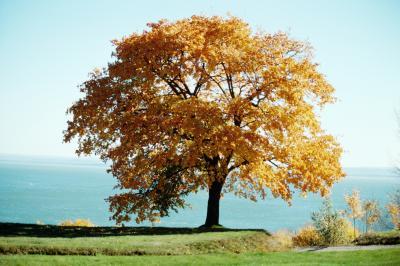
Which type of trees is found in a temperate forest?
a)
deciduous
b)
evergreen
c)
ginko
d)
palm
60.
Which major biome is home to cacti, mesquite, white thorn, pack rats, small reptiles, and coyotes?
a)
desert
b)
taiga
c)
tundra
d)
grassland
61.
Which biome contains large populations of grazing herbivores, few species of birds, and deep, rich soil?
a)
taiga
b)
tundra
c)
deciduous forest
d)
grassland
62.
This biome contains mostly spruce trees and Douglas firs, which are both evergreen.  The winters are long and cold and the summers are short and rainy.  The soil is very rich.  Moose and elk live here.  This biome is classified as a
a)
taiga
b)
tundra
c)
deciduous forest
d)
temperate forest
63.
The biome known for trees with broad leaves that fall off the trees in the winter.
a)
Coniferous Forests
b)
Deciduous Forests
c)
Deserts
d)
Tropical Rain Forests
64.
The most important abiotic factors when studying biomes are...
a)
Food and Water
b)
Water and Sunlight
c)
Temperature and Oxygen
d)
Water and Temperature 
65.
About how long does it take the moon to make one complete cycle around the earth?
a)
65 days
b)
8 days
c)
365 days
d)
28 days
66.
One complete revolution of the Earth around the sun takes about
a)
one rotation
b)
half a year
c)
one year
d)
one season
67.
The spinning of an object on its axis is called______
a)
orbit
b)
rotation
c)
revolution
d)
tide
68.
A ______ eclipse occurs when the moon passes between Earth and the sun, blocking the sunlight from reaching Earth. The moon's shadow then hits Earth.   
a)
solar eclipse
b)
lunar eclipse
c)
vernal equinox
d)
autumnal equinox
69.
pollutants entering waterways from a general area, such as runoff from farmland or suburban communities
a)
Pollution
b)
Point Source Pollution
c)
Non-point Source Pollution
d)
Turbidity
70.
pollution from a definable source
a)
Pollutant
b)
Pollution
c)
Non-point Source Pollution
d)
Point Source Pollution
71.
an area of land that is drained by a specified river or other body of water
a)
Marsh
b)
Estuary
c)
Watershed
d)
Tidal Pool
72.
Water with high turbidity 
a)
is cloudy and hard to see through
b)
is clear
73.
Having a pH of 4 means that the liquid is more ____________
a)
acidic
b)
basic
74.
What is the normal pH of water?
a)
3
b)
7
c)
10
d)
14
75.
organisms (chiefly bacteria and fungi) that break down dead organic matter
a)
Estuary
b)
Plankton
c)
Eater
d)
Decomposer
76.
 How do phosphate detergents contribute to water pollution?
a)
by killing plant life 
b)
by stripping the oil from bird feathers 
c)
by over-fertilizing plants in the water 
d)
by removing carbon dioxide from the water
77.
Which of the following organisms are producers? 
a)
consumers and phytoplankton
b)
plants and consumers
c)
plants and phytoplankton
d)
phytoplankton and chlorophyll
78.
Compare carnivores from herbivores.
a)
Carnivores eat grass, herbivores eat meat
b)
Carnivores eat meat, herbivores eat plants
c)
Carnivores eat people, herbivores don't
d)
The both eat meat and plants.
79.

At which point in the diagram is carbon dioxide being removed from the atmosphere?

a)

respiration

b)

decomposition (decay)

c)

photosynthesis

d)

burning of fossil fuels

80.

Looking at the graph, which statement is true.

a)

The blue line represents a predator.

b)

The red line represents a prey

c)

The red line is a food source for the blue line organisms.

d)

The blue line is a food source for the red line.

81.

Cows are primary consumers on land. Which organism in the food web is a primary consumer?

a)

phytaplankton

b)

zooplankton

c)

squid

d)

killer whale

82.

An underground system that contains groundwater is called an

a)

acid precipitation

b)

primary pollutant

c)

smog

d)

aquifer

83.

the process of clearing forests

a)

infrastructure

b)

rural

c)

deforestation

d)

urban

84.

describes an area that contains a city

a)

urban

b)

wilderness

c)

aquaculture

d)

arable land

85.

the raising of aquatic plants and animals for human use or consumption

a)

arable land

b)

aquaculture

c)

compost

d)

diet

86.
Which of the following is NOT one of the three types of soil?
a)
clay
b)
sand
c)
silt
d)
mud
87.
_______ is the type of soil used most often with plants. It is a mixture of clay, sand, and silt.
a)
loam
b)
humus
c)
mud
d)
dirt
88.
Humus is.....
a)
the dead parts of plants and animals in soil.
b)
A food we eat with pretzels.
c)
The tiny particles inside of soil
d)
The roots that come off of a plant and live in soil.
89.
Which of the following is the largest particle in soil?
a)
sand
b)
silt
c)
humus
d)
clay
90.
The correct order of the layers of the atmosphere starting closest to Earth are
a)
Stratosphere, Exosphere, Mesosphere, Athenosphere, Troposphere
b)
Exosphere, Thermosphere, Mesosphere, Stratosphere, Troposphere
c)
Troposphere, Stratosphere, Mesosphere, Thermosphere, Exosphere
d)
Troposphere, Lithosphere, Hydrosphere, Exosphere, Mesosphere
91.
The amount of water vapor in the air is
a)
air pressure
b)
lithosphere
c)
humidity
d)
temperature
92.
The tool for measuring humidity is
a)
barometer
b)
thermometer
c)
speedometer
d)
hygrometer
93.
A barometer measures
a)
Air pressure
b)
humidity
c)
wind speed
d)
wind direction
94.
Which type of front has cold and warm air meet head on (neither air mass moves the other)? 
a)
Stationary front
b)
Occluded front
c)
Warm front
d)
Cold front
95.
What does this symbol represent?
a)
warm front 
b)
occluded front
c)
cold front
d)
stationary front
96.
What front is this
a)
occluded
b)
warm
c)
cold
d)
stationary
97.
What causes seasons on Earth?
a)
the sun
b)
the Earth's rotaion
c)
the Earth's revolution
d)
the Earth's tilt
98.
Where does weather occur?
a)
mesosphere
b)
thermosphere
c)
troposphere
d)
stratosphere
99.
A high pressure zone
a)
is a mass of descending air
b)
is a mass of ascending air
c)
is a mass of rotating air
d)
all of the above
100.
what can you associate with an area of high pressure?
a)
rain
b)
nice weather