wayground logo

Free Printable Worksheets

Font size

S
M
L
XL
Worksheets

Solar System Unit Review

Total questions: 91

Worksheet time: 1hrs 17mins
Name
Class
Date
1.
Earth and the other planets closest to the Sun are made mostly of _______
a)
gas
b)
metal
c)
water
d)
rock
2.
The moon is a natural  ______ of Earth.
a)
comet
b)
axis
c)
satellite
d)
space probe
3.
Earth's ________ on its axis causes day and night.
a)
rotation
b)
revolution
c)
phase
d)
comet
4.
One full orbit of an object around another object is called a ________.
a)
axis
b)
rotation
c)
revolution
d)
satellite
5.
The __________ has planets, moons, comets, and asteroids.
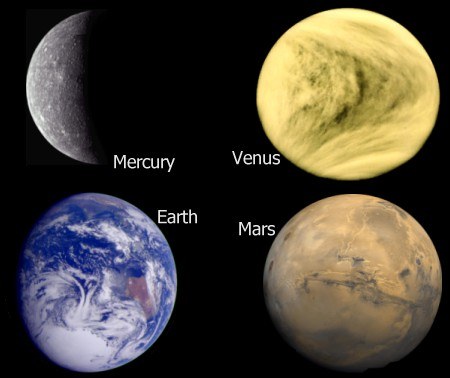
a)
solar system
b)
earth
c)
rotation
d)
United States
6.
One of the main differences between the outer and inner planets is __________.
a)
The inner planets all have water
b)
the inner planets are much bigger than the outer planets
c)
the outer planets are gas planets
d)
the outer planets have rings, and the inner planets don't
7.
Where is the asteroid belt found?
a)
between earth and mars
b)
Between Uranus and Neptune
c)
Between Mercury and Venus
d)
Between Mars and Jupiter
8.
Select the order from smallest to largest.
a)
Sun, Milky Way, solar system, universe
b)
Sun, Milky Way, universe, solar system
c)
Sun, solar system, Milky Way, universe
d)
Sun, solar system, universe, Milky Way
9.
Why does Earth have different seasons? 
a)
because of the distance between Earth and the sun 
b)
because of the speed of Earth as it rotates on its axis 
c)
because of the amount of light blocked by the moon on its axis 
d)
because of the tilt of Earth on its axis as it moves around the sun 
10.
Day and night is caused by the _____________ of earth on its axis.
a)
revolution
b)
orbit
c)
rotation
11.
Which outer planets have rings?
a)
Just Saturn
b)
Saturn and Jupiter
c)
Jupiter, Neptune, and Saturn
d)
all 4 of them
12.
a pattern of stars that form an imaginary picture or design in the sky
a)
Orbit
b)
Rotate
c)
constellation
d)
Milky Way
13.
Which is the largest object in our solar system?
a)
Sun
b)
Jupiter
c)
Earth
d)
Pluto
14.
Which planet is closest to the sun?
a)
Uranus
b)
Mercury
c)
Neptune
d)
Earth
15.
Which is the second closest planet to the sun?
a)
Earth
b)
Saturn
c)
Venus
d)
Mercury
16.
Which planet is third from the sun?
a)
Mars
b)
Pluto
c)
Venus
d)
Earth
17.
Which is the fourth planet from the sun?
a)
Mars
b)
Saturn
c)
Earth
d)
Jupiter
18.
Which planet is fifth from the sun?
a)
Saturn
b)
Jupiter
c)
Mars
d)
Earth
19.
Which is the sixth planet from the sun?
a)
Earth
b)
Uranus
c)
Saturn
d)
Neptune
20.
Which planet is seventh from the sun?
a)
Saturn
b)
Earth
c)
Venus
d)
Uranus
21.
Which planet is farthest from the sun?
a)
Neptune
b)
Pluto
c)
Earth
d)
Uranus
22.
A ball of ice and dust with a tail of gas and dust pointing away from the sun.
a)
Asteroid
b)
Comet
c)
Moon
d)
Meteor
23.
A small rocky object orbiting the sun.
a)
Asteroid
b)
Comet
c)
Moon
d)
Meteor
24.

A small object that appears as a streak of light as it enters earth's atmosphere.

a)

Asteroid

b)

Comet

c)

Meteor

d)

Meteoroid

25.
The GAS GIANTS or Outer planets are:
a)
Mercury, Earth, Jupiter, Saturn
b)
Saturn, Neptune, Pluto, Mars
c)
Saturn, Jupiter, Uranus, Neptune
d)
Earth, Mars, Saturn, Neptune
26.
The inner planets are:
a)
Jupiter, Earth, Mars, Mercury
b)
Saturn, Uranus, Mars, Earth
c)
Earth, Pluto, Neptune, Mars
d)
Mercury, Venus, Earth, Mars
27.
People used to think that Earth was the center if the solar system, They thought everything orbited around it. They called this the _________ model.
a)
Geocentric
b)
Earth First
c)
Egocentric
d)
Solarology
28.
Which planet is the hottest planet?
a)
Mercury
b)
Mars
c)
Venus
d)
Saturn
29.
Why does the moon appear to shine?
a)
It is like a star and gives off light
b)
it refracts light from space
c)
It reflects light from the sun
d)
It absorbs light from the sun
30.
What holds the moon, the planets, and all other objects in orbit around the sun?
a)
ocean tides
b)
magnetism
c)
gravity
d)
the sun's heat and light
31.
which model of the solar system has the sun in the center with all of the planets orbiting it?
a)
heliocentric
b)
geocentric
32.
Which type of technology would you use to see far away objects?
a)
computer
b)
rover
c)
satellite
d)
telescope
33.
The farther from the sun the _____________ the revolution (year)
a)
shorter
b)
longer
34.
Which season is taking place in the Northern Hemisphere in Position 3?
a)
Winter
b)
Spring
c)
Summer
d)
Fall
35.
_____ are loops of gas on the sun that link different parts of sunspot regions together. 
a)
Prominences
b)
Solar flares
c)
Solar winds
d)
Auroras
36.
In what form does the Sun's energy travel to Earth?
a)
Heat
b)
Electrical energy
c)
Electromagnetic radiation
d)
Mechanical energy
37.
What is the definition of RADIATION
a)
 hot liquid or air that  expands, becomes less dense, and rises or becomes more dense, and sinks.
b)
When heat is transferred from objects like rays of light or electromagnetically.
c)
When heat transfers from objects that are touching.
d)
When heat transfers through the heater or AC in your house.
38.
What is the definition of CONVECTION
a)
When heat transfers through the heater or AC in your house.
b)
When heat transfers from objects that are touching.
c)
a  hot liquid or air that  expands, becomes less dense, and rises or becomes more dense, and sinks.
d)
Holding hands
39.
What is the definition of CONDUCTION?
a)
When heat is transferred from objects like rays of light or electromagnetically.
b)
a  hot liquid or air that  expands, becomes less dense, and rises or becomes more dense, and sinks.
c)
When heat transfers from objects that are touching.
d)
When heat transfers through the heater or AC in your house.
40.

The time it takes Earth to rotate one time

a)

365 1/4 day

b)

about 24 hours

c)

about 24 days

41.
The tilt of the Earth and its revolution around the Sun causes 
a)
seasons
b)
full moons
c)
new moons
42.

How long does it take for the MOON to make one full revolution around the Earth?

a)

29 days

b)

32 hours

c)

11 days

d)

24 hours

43.
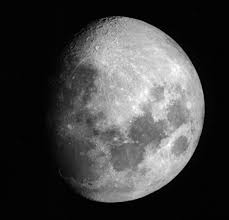
Name the moon phase
a)
waning crescent
b)
waxing crescent
c)
waning gibbous
d)
waxing gibbous
44.
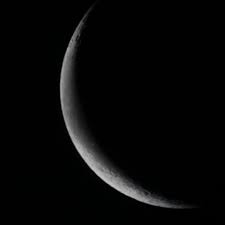
Name the moon phase
a)
waning crescent
b)
waxing crescent
c)
waning gibbous
d)
waxing gibbous
45.
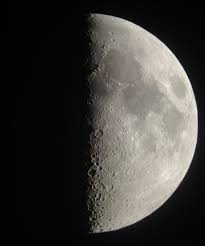
Name the moon phase
a)
First Quarter
b)
Last Quarter
c)
New Moon
d)
Full Moon
46.
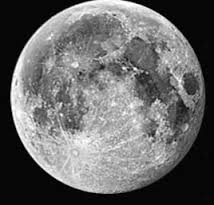
Name the moon phase
a)
First Quarter
b)
Last Quarter
c)
New Moon
d)
Full Moon
47.

What is the correct alignment for a solar eclipse to occur?

a)

Sun Earth Moon

b)

Sun Moon Earth

c)

Earth Sun Moon

d)

Moon Sun Earth

48.

What is the correct order for a lunar eclipse to occur?

a)

Sun Moon Earth

b)

Sun Earth Moon

c)

Earth Moon Sun

d)

Earth Sun Moon

49.

Which planet has the largest gravitational pull?

a)

Mercury

b)

Earth

c)

Mars

d)

Jupiter

50.

What two things control gravitational pull on a planet?

a)

Sun and moon

b)

Distance from the Sun and Mass of the planet

c)

Composition of the planet and distance from the Sun

d)

Asteroid Belt and Satellites

51.

The force that governs the motion of objects in space:

a)

orbit

b)

elliptical

c)

inertia

d)

gravity

52.

Which astronomer developed the heliocentric theory?

a)

Ptolemy

b)

Copernicus

c)

Newton

d)

Galileo

53.

Which astronomer developed the geocentric theory?

a)

Ptolemy

b)

Copernicus

c)

Newton

d)

Galileo

54.

Use the diagram to answer the following:

Which position of the Moon could cause a solar eclipse?

a)

1

b)

2

c)

3

d)

4

55.

Look at the picture.

Predict the location of the Moon during a lunar eclipse:

a)

A

b)

B

c)

C

d)

D

56.

Only planet that supports life in our solar system

a)

Mercury

b)

Venus

c)

Earth

d)

Mars

57.

This planet has virtually no atmosphere

a)

Mercury

b)

Venus

c)

Earth

d)

Mars

58.

This planet has a thick atmosphere making it the hottest planet

a)

Mercury

b)

Venus

c)

Earth

d)

Mars

59.

Has tallest mountain, known as the Red Planet

a)

Mercury

b)

Venus

c)

Earth

d)

Mars

60.

Has unknown substance in atmosphere making it appear bright blue

a)

Jupiter

b)

Saturn

c)

Uranus

d)

Neptune

61.

If the bathtub was big enough, this planet would float in it

a)

Jupiter

b)

Saturn

c)

Uranus

d)

Neptune

62.

Largest planet, giant storm the size of two Earth’s

a)

Jupiter

b)

Saturn

c)

Uranus

d)

Neptune

63.

This planet's axis is sideways and it rotates north/south

a)

Jupiter

b)

Saturn

c)

Uranus

d)

Neptune

64.

Planets are close together and have a shorter revolution time

a)

Solar System

b)

Inner Planets

c)

Milky Way galaxy

d)

Outer Planets

65.

Planets have a longer revolution time, and are farther apart

a)

Solar System

b)

Inner Planets

c)

Milky Way galaxy

d)

Outer Planets

66.

Which letter indicates the phase of the moon halfway through it’s orbit?

a)

A

b)

B

c)

C

d)

D

e)

E

67.

Which letter indicates the waxing crescent moon phase?

a)

A

b)

B

c)

C

d)

D

e)

E

68.

Which letter indicates the first quarter moon phase?

a)

A

b)

B

c)

C

d)

D

e)

E

69.

Which letter indicates the waning gibbous moon phase?

a)

A

b)

AD

c)

AC

d)

AB

e)

E

70.

Which letter indicates the first moon phase, where no sunlight reflects on the surface of the moon we can see here on Earth?

a)

A

b)

AD

c)

AC

d)

AB

e)

E

71.

This crater is located near Flagstaff, Arizona. Which of these objects created this crater?

a)

meteoroid

b)

meteor

c)

meteorite

d)

Kuiper Belt object

72.

People sometimes talk about seeing shooting stars. What do they actually see?

a)

a meteoroid traveling through space

b)

a meteor= a meteoroid that burns up in the atmosphere close enough to see

c)

a star that is moving through the galaxy

d)

a comet that has come close enough to Earth’s atmosphere to be seen.

73.

This diagram shows part of the solar system. In addition to several planets, the diagram includes a belt of small objects that orbit the sun. Which objects are located between the orbits of Mars and Jupiter?

a)

asteroids

b)

comets

c)

Kuiper Belt objects

d)

meteorites

74.

Study the features of this diagram. Which of these objects is pictured in the diagram?

a)

an asteroid

b)

a comet

c)

a meteor

d)

a meteorite

75.
Most planets in our solar system have at least one natural satellite, or ____________. 
a)
star
b)
asteroid
c)
crater
d)
moon
76.
Earth is the only planet in our solar system with large amounts of
a)
sunlight and rock
b)
oxygen and water.
c)
nitrogen and ammonia
d)
helium and methane
77.
The sun appears to move across the sky each day because 
a)
Earth rotates on its axis. 
b)
the sun orbits Earth
c)
 the moon rotates on its axis. 
d)
 It depends on where you look. 
78.
 The phases of the moon can be seen from Earth because _____________________. 
a)
 the moon revolves around the Earth
b)
 the moon's distance from the Earth changes 
c)
the moon spins on its axis 
d)
the moon's axis is tilted
79.
 Georgia is closer to the Sun in the winter than in the summer.  Why is it colder in Georgia in the winter? 
a)
Earth is tilted so that there is less direct sunlight during the winter than during the summer. 
b)
The Sun is not as hot during the winter as it is during the summer.
c)
There are more particles in space that soak up the sunlight during the winter than during the summer. 
d)
Earth orbits faster during the winter than during the summer.
80.
List the planets in order beginning with the one that is closest to the sun. 
a)
Mercury, Venus, Earth, Moon, Jupiter, Saturn, Uranus and Neptune
b)
Earth, Mars, Jupiter, Saturn, Uranus, Neptune, Mercury, and Venus 
c)
Neptune, Uranus, Saturn, Jupiter, Mars, Earth, Venus, and Mercury  
d)
Mercury, Venus, Earth, Mars, Jupiter, Saturn, Uranus, and Neptune  
81.
Which of these is not one of the inner planets? 
a)
 Earth 
b)
Venus
c)
 Uranus 
d)
Mercury
82.

Areas of gas on the Sun that are cooler than the gases around them are known as-

a)

prominences

b)

solar wind

c)

solar flares

d)

sunspots

83.

What country was the first to send a man into space?

a)

Germany

b)

United States

c)

Spain

d)

The Soviet Union

84.

Which celestial body is known as a "dirty snowball"

a)

meteorite

b)

comet

c)

asteroid

d)

meteor

85.

How many days does it take Earth to make one complete revolution?

a)

365

b)

365 1/4

c)

366

d)

364

86.

Which inner planet has a poisonous atmosphere made of carbon dioxide and sulfuric acid?

a)

Mercury

b)

Venus

c)

Earth

d)

Mars

87.

When the lighted part of the moon appears to be getting smaller, the moon is-

a)

waning

b)

eclipsing

c)

waxing

d)

decreasing

88.

Why were fruit flies, a monkey, and a dog sent into space between 1947 and 1957 before the first human was sent into space in 1961?

a)

Because no human was willing to travel into space

b)

To test the importance of animals to the human population

c)

To ensure space travel was safe for living organisms

d)

because animals could develop new technology in space travel

89.

Which planet has hundreds of rings made of chunks of ice and rock?

a)

Mars

b)

Saturn

c)

Mercury

d)

Venus

90.

What is a chunk of rock or dust in space?

a)

Meteoroid

b)

Meteor

c)

Meteorite

d)

Comet

91.

What country was the first to launch an artificial satellite?

a)

The United States

b)

The Soviet Union

c)

Germany

d)

China