Wayground logo

Free Printable Worksheets

Font size

S
M
L
XL
Worksheets

Ecology

Total questions: 47

Worksheet time: 34mins

Name
Class
Date
1.
Study of interactions between organisms and their environment 
a)
niche
b)
community 
c)
ecology
d)
ecosystem
2.
What does a food web represent?
a)
All connections of energy flow throughout all organisms in a habitat.
b)
The specific ways that mutualism is carried out.
c)
A single pathway or energy flow between organisms. 
d)
How carnivores get their food. 
3.
What is the term for each step in the transfer of energy and matter within a biological community?
a)
energy path
b)
food web
c)
trophic level
d)
food pyramid
4.
The amount of energy that usually transfers from one trophic level to the next...
a)
10%
b)
20%
c)
80%
d)
50%
5.
An organism that needs to eat other organisms to obtain energy is known as a:
a)
Autotroph
b)
Producer
c)
Consumer
d)
Mutualist
6.
Autotrophs make up the _______ level in all ecosystems.
a)
First
b)
Second
c)
Third
d)
Fourth
7.
Which of the following would be the definition of a detritivore?
a)
Animals that eat insects.
b)
Organisms that feed on rocks, recycling the nutrients back into the ground.
c)
Organisms that eat only pants
d)
Things that feed on dead organisms, recycling the nutrients back into the ground.
8.
What are the Abiotic factors in this image? 
a)
water, sunlight, dirt, air
b)
birds and plants
c)
birds, water, dirt
d)
plants, water
9.
 plants that convert energy from the sun
a)
decomposer
b)
primary consumer
c)
secondary consumer
d)
producer
10.
A graphic illustration that shows each trophic level and the amount of useable energy contained within.
a)
Food chain
b)
Food web
c)
Energy Pyramid
d)
All of these
11.
An area where an organism finds food, shelter and water in a specific arrangement
a)
niche
b)
biosphere
c)
biome
d)
habitat
12.
The study of how living things interact with one another and with their environment.
a)
Biology
b)
Lithology
c)
Ecology
d)
Farmacology
13.
Organisms that look similar and can produce fertile offspring
a)
Species
b)
Fish
c)
Community
d)
Trees
14.
In this Food Web Pyramid Which type of consumer gets only 10% of the energy stored in plants?
a)
Herbivore
b)
Carnivore
c)
Omnivore
d)
Secondary Consumer
15.
A collection of organisms that belong to different populations but all live in the same area and interact with one another.
a)
Population
b)
Ecosystem
c)
Community
d)
Ecosphere
16.
A living relationship between two species in which one organism is harmed is called...
a)
mutualism
b)
commensalism
c)
parasitism
d)
niche
17.
symbiotic relationship in which both organisms benefit
a)
competition
b)
Mutualism
c)
nitrogen fixation
d)
energy pyramid
18.
Which of the following is NOT important cycle of matter in the environment?
a)
helium cycle
b)
water cycle
c)
carbon cycle 
d)
nitrogen cycle
19.
Which order of these shows the food chain in the correct order?
a)
Zooplankton--->Bear--->Salmon
b)
Salmon--->Zooplankton--->Bear
c)
Zooplankton-->Salmon--->Bear
d)
Bear--->Zooplankton--->Salmon
20.
Which of the following organisms are typical decomposers?
a)
grasses and ferns
b)
bacteria and mushrooms
c)
mice and deer
d)
lions and snakes
21.
An organism's specific role in its habitat is called its
a)
consumer
b)
niche
c)
birth right 
d)
mutalism
22.
Much of Canada is covered in pine spruce forests. The winter is cold and long. What is this biome?
a)
tundra
b)
taiga or boreal forest
c)
deciduous forest
d)
grassland
23.

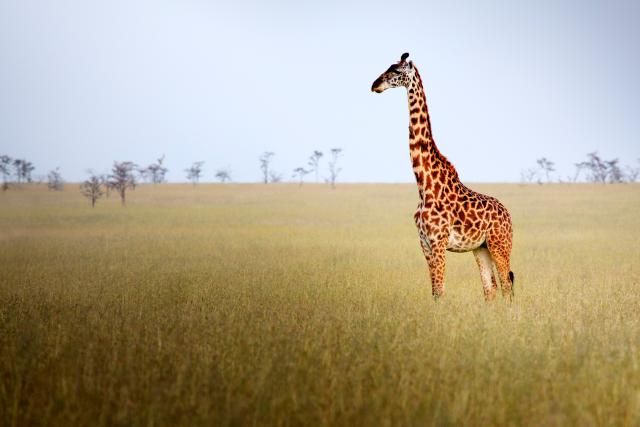
Which biome is home to lions, zebras, wildebeests, giraffes, and elephants?

a)

Savanna

b)

Tundra

c)

Rainforest

d)

Temperate Forest

24.
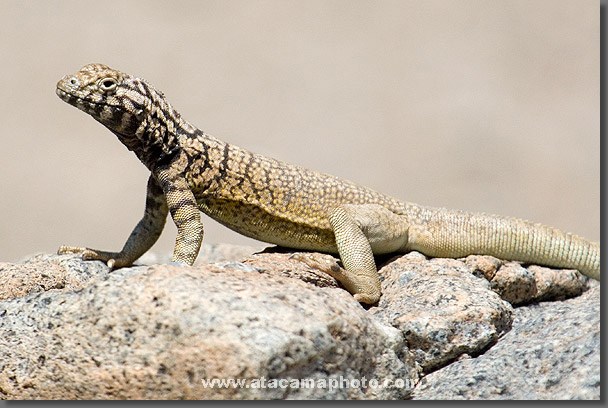
Which biome is home to cacti, scorpions, coyotes, kangaroo rats, and lizards?
a)
Desert
b)
Grasslands
c)
Temperate Forest
d)
Taiga
25.
Which biome is home to jaguars, anacondas, leopards, gorillas, and poisonous tree frogs?
a)
Grasslands
b)
Temperate Forest
c)
Rainforest
d)
Tundra
26.

Which biome do we live in?

a)

Grasslands

b)

Taiga

c)

Rainforest

d)

Chaparral

27.
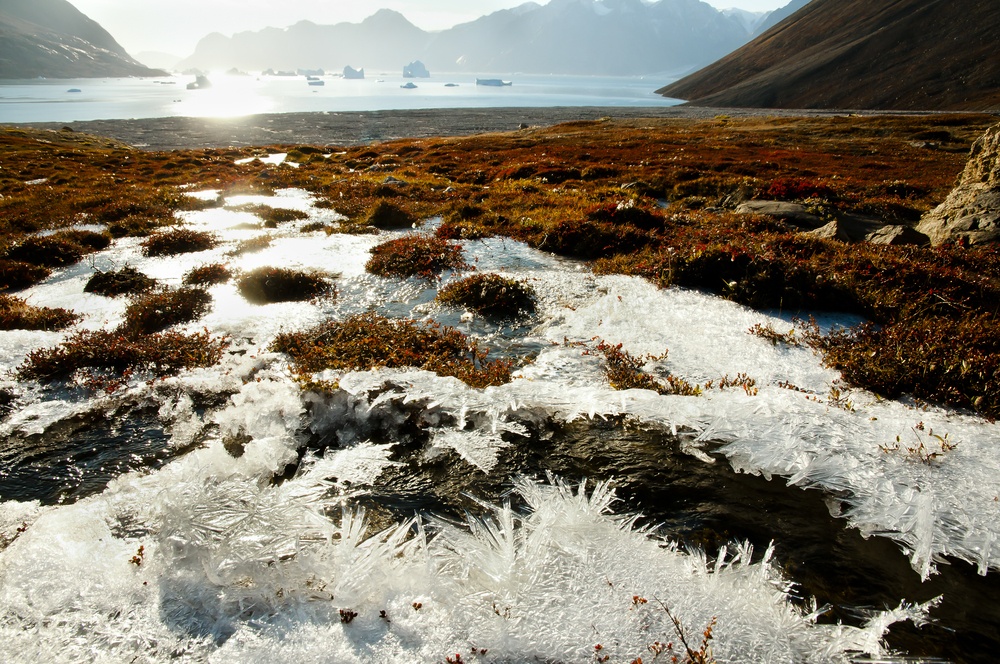
Which Biome has permafrost?
a)
Temperate Forest
b)
Rainforest
c)
Taiga
d)
Tundra
28.
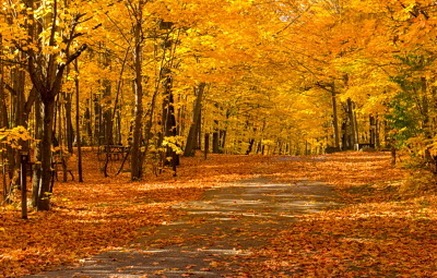
Which biome has deciduous trees (which lose their leaves)?
a)
Temperate Forest
b)
Rainforest
c)
Grasslands
d)
Taiga
29.
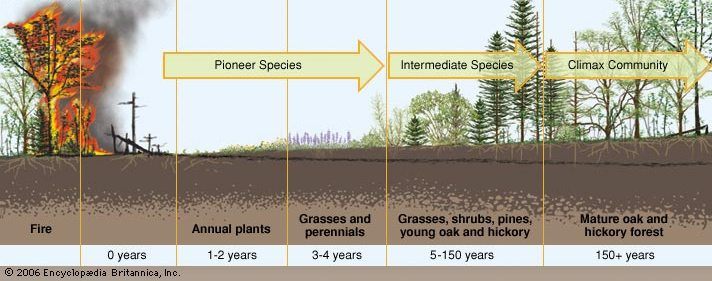
The picture shows what type of succession?
a)
primary
b)
secondary
c)
tertiary
d)
quadanary
30.
What is the order of succession shown in this figure?
a)
A, B, C, D
b)
B, A, D, C
c)
C, D, A, B
d)
D, A, B, C
31.
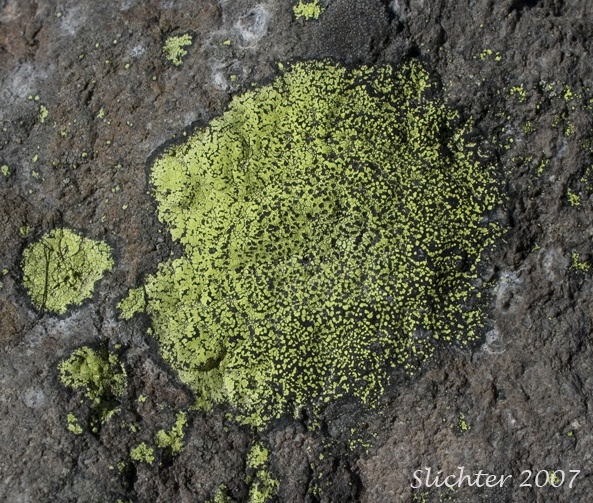
What is the name given to lichen or algae after a primary succession?
a)
pioneer species
b)
volunteer species
c)
founder species
d)
conqueror species
32.
What is the most important function of pioneer species?
a)
To create rocks
b)
To create soil and add nutrients to the environment 
c)
To look nice
d)
Food for animals 
33.
Final illustration (#8) shows
a)
pioneer species
b)
climax community
c)
only biotic factors
d)
only abiotic factors
34.
After a volcanic eruption, lava covers the land. What is the order that plants grow to repopulate the area?
a)
Lichens → Shrubs → Grasses → Trees
b)
Lichens → tree → shrubs→Grasses
c)
Grasses → Lichens → Shrubs → Trees
d)
Lichens → Grasses → Shrubs → Trees
35.
Which of the following is NOT a key abiotic factor in marine ecosystems?
a)
water temperature
b)
amount of sunlight
c)
water depth
d)
amount of plankton
36.

The flow of energy through an ecosystem can be depicted in a food web. What forms the base of the open ocean food web?

a)

phytoplankton

b)

fish

c)

shrimp

d)

whales

37.
Hydrothermal vents, submarine hotsprings, and methane cold seeps release heat and chemicals deep below the surface of the ocean. Surprisingly, the areas around these sites are able to support ecosystems. Based on this info, such ocean ecosystems most likely contain...
a)
primary consumers that create energy from oxidizing chemicals
b)
primary producers that create energy from oxidizing chemicals
c)
primary consumers that obtain energy from photosynthetic plants
d)
primary producers that obtain energy from photosynthetic plants
38.
In terms of photosynthesis, at what depth are organisms in the ocean most productive?
a)
between 1000-4000m
b)
below 4000 meters
c)
above 200 meters
d)
between 200 and 1000 meters
39.
To which condition do all species in the ocean depths have to adapt?
a)
lower salinity
b)
extreme pressure
c)
swift ocean currents
d)
hot water temperature
40.

Where have organisms adapted to keep from being swept away from crashing waves?

a)

intertidal area

b)

coral reef

c)

estuary

d)

Sargasso Sea

41.

Which describes why an estuary has brackish water

a)

a body of water formed where freshwater and saltwater mix

b)

a relatively flat land stretching from either side of a river

c)

the beginning of a river

d)

an abiotic factor of a watershed

42.
The _________ zone is the ocean floor.
a)
intertidal
b)
neritic
c)
oceanic
d)
benthic
43.

Which ocean zone is exposed to the most sunlight?

a)

Photic Zone

b)

Aphotic Zone

c)

Neritic Zone

44.
A lake is an example of _______________ ecosystem.
a)
Marine
b)
Fresh Water
c)
Artificial
d)
Terrestrial
45.

Which description best distinguishes a niche from a habitat?

a)

The role a species plays in the ecosystem is called its niche. A habitat is the physical environment in which a species lives.

b)

The role a species plays in the ecosystem is called its habitat A niche is the physical environment in which a species lives.

c)

They mean the same thing.

46.
What is a similarity between photosynthesis and chemosynthesis?
a)
Both are metabolic processes which produce energy for living things
b)
Both use sunlight
c)
Both are performed by bumblebees
d)
Both produce Carbon Dioxide
47.

a crack in the Earth's crust that allows hot, mineral-rich fluid to escape; chemosynthesis can take place

a)

upwelling

b)

hydrothermal vents

c)

cold seeps