
Font size
S
M
L
XL
 Worksheets
8th Physical Science FINAL
Total questions: 121
Worksheet time: 3hrs 17mins
Name
Class
Date
1.
What type of charge does a proton have?
a)
negative
b)
positive
c)
no charge
2.
Atoms of a specific element can be identified by their number of...
a)
neutrons
b)
electrons
c)
protons
3.
If two substances have the same volume, but different densities, which substance has the greatest mass?
a)
higher density
b)
lower density
4.
Where is a proton found in an atom?
a)
in the electron cloud
b)
in the nucleus
5.
Which state of matter has a definite volume but not a definite shape?
a)
solid
b)
liquid
6.
The particles move the fastest in which state of matter?
a)
liquid
b)
gas
c)
solid
7.
In which state of matter do the particles move past each other?
a)
solid
b)
liquid
8.
True or false? In solids, the particles are very close together and they vibrate in place.
a)
True
b)
false
9.
When a liquid becomes a gas, the process is called ...
a)
melting
b)
evaporating
c)
freezing
d)
condensing
10.
The element, chlorine, is located in which family?
a)
14
b)
15
c)
16
d)
17
11.
The element, magnesium, is located in which period?
a)
1
b)
2
c)
3
d)
4
12.
"NaCl" is the chemical formula for which compound?
a)
salt
b)
sodium
c)
glucose
d)
carbon dioxide
13.
In a chemical equation, the compounds that are located to the left of the arrow are called...
a)
yields
b)
products
c)
reactants
14.
Review:
What is the formula for density?
What is the formula for density?
a)
D= M x V
b)
D= V / M
c)
D= V+M
d)
D= M / V
15.

What is the picture displayed?
a)
atom
b)
element
c)
molecule
d)
compound
16.
What happens to the particles of matter when a substance freezes?
a)
particles speed up and move closer
b)
particles slow down and move apart
c)
particles slow down and move closer
d)
particles speed up and move apart
17.
The energy of an object as it is in motion is defined as
a)
Kinetic Theory
b)
Kinetic energy
c)
Potential energy
d)
Electric energy
18.
The mass of 1 orange is 100grams. What is the mass of 5 oranges?
a)
105 grams
b)
550 grams
c)
500 grams
d)
150 grams
19.
If a piece of matter changes shape, what happens to its mass?
a)
It increases
b)
It decreases
c)
it changes randomly
d)
it stays the same
20.
Which of the following is a unit of mass?
a)
kilogram
b)
liter
c)
meter
d)
pound
21.
Which formula can be used to find the volume of a rectangular prism?
a)
length x width
b)
length x width x height
c)
height x length
d)
length + width + height
22.
Volume is the amount of space an object takes up.
a)
True
b)
False
23.
An atom’s valence electrons are those electrons that have the
highest energy.
highest energy.
a)
True
b)
False
24.
In the periodic table, the number of valence electrons in each
element decreases from left to right across each period.
element decreases from left to right across each period.
a)
True
b)
False
25.
Within each period in the periodic table, elements have similar
properties because they have the same number of valence electrons.
properties because they have the same number of valence electrons.
a)
True
b)
False
26.
a compound that tastes bitter, feels slippery, and turns red litmus paper blue
a)
crystal
b)
acid
c)
base
d)
neutralization
27.
a compound that reacts with metals and carbonates, tastes sour, and turns blue litmus paper red
a)
Acid
b)
Base
c)
Salt
d)
Indicator
28.
a measurement of acids and bases
a)
Acid
b)
Base
c)
pH Scale
d)
All choices are correct
29.
Ammonia and baking soda are
common
common
a)
Acids
b)
Bases
c)
Salts
d)
pH Scale
30.
An acid has a pH value that is
a)
lower than 7
b)
equal to 7
c)
higher than 7
d)
none of the above
31.
a mixture that is so evenly mixed that you can’t differentiate the parts simply by looking at it
a)
homogenous mixture
b)
heterogeneous mixture
c)
pure substance
32.
a mixture in which you can see the different parts and
can easily separate them out
can easily separate them out
a)
heterogeneous
b)
homogenous
c)
pure substance
33.
Which of the following statements
about solutions is NOT true?
about solutions is NOT true?
a)
Solutions are mixtures.
b)
Solutions contain a solvent dissolved in a
solute.
solute.
c)
A solution has the same properties
throughout.
throughout.
d)
The solute in a solution can be a solid,
liquid, or gas.
liquid, or gas.
34.

When salt is dissolved in water it is an example of a:
a)
solvent
b)
mixture
c)
element
d)
solute
35.
What is the definition of a mixture?
a)
when a solute dissolves in a solvent
b)
a substance whose atoms has the same number of protons
c)
a thing that is composed of two or more separate elements
d)
one or more substances mixed together
36.
Which of these selections is an example of an element?
a)
H20
b)
Carbon
c)
sugar mixed with tea
d)
OH-
37.
Which of the following is an example of a solution?
a)
Kool Aid
b)
water
c)
apple
d)
markers
38.
Which of the following selections are the different types of mixtures?
a)
heterogenous, homogenous
b)
acid, base
c)
metal, nonmetal
d)
element, compound
39.
A molecule is the smallest part of...
a)
An element
b)
A compound
c)
A mixture
40.
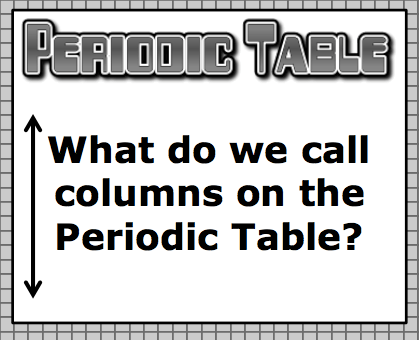
a)
Periods
b)
Groups
41.
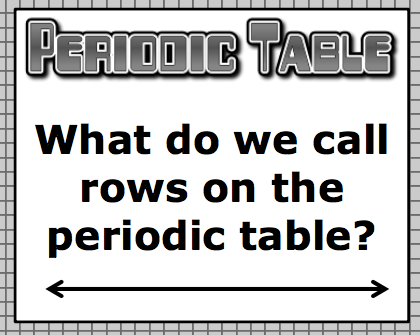
a)
Periods
b)
Groups
42.
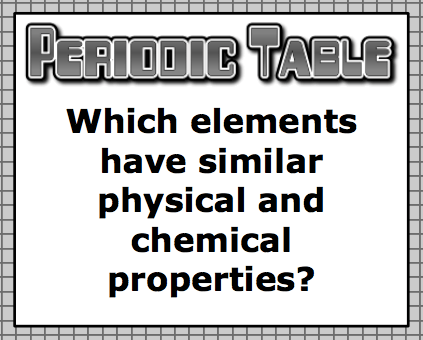
a)
Same group
b)
Same period
43.
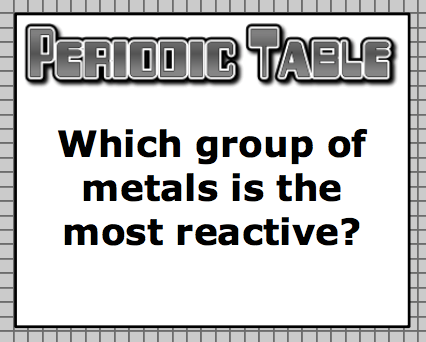
a)
Group 1
b)
Group 17
c)
Group 18
d)
Group 2
44.
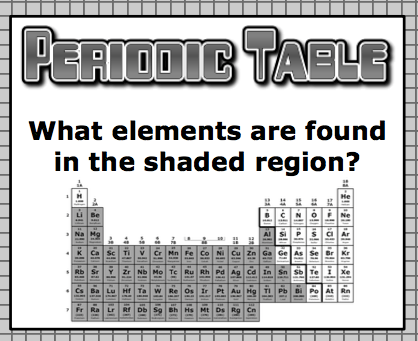
a)
Metals
b)
Nonmetals
c)
Metalloids
45.
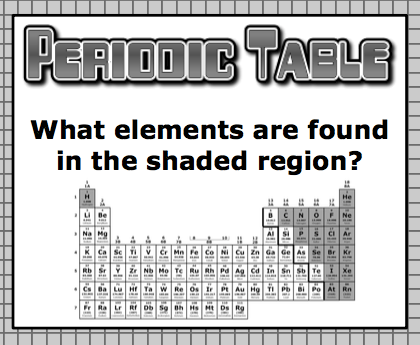
a)
Metals
b)
Nonmetals
c)
Metalloids
46.
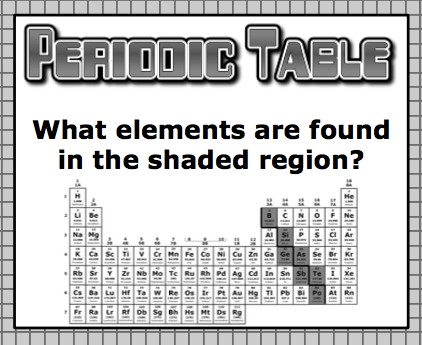
a)
Metals
b)
Nonmetals
c)
Metalloids
47.

How did Mendeleev arrange the elements?
a)
alphabetical
b)
density
c)
melting point
d)
atomic mass
48.
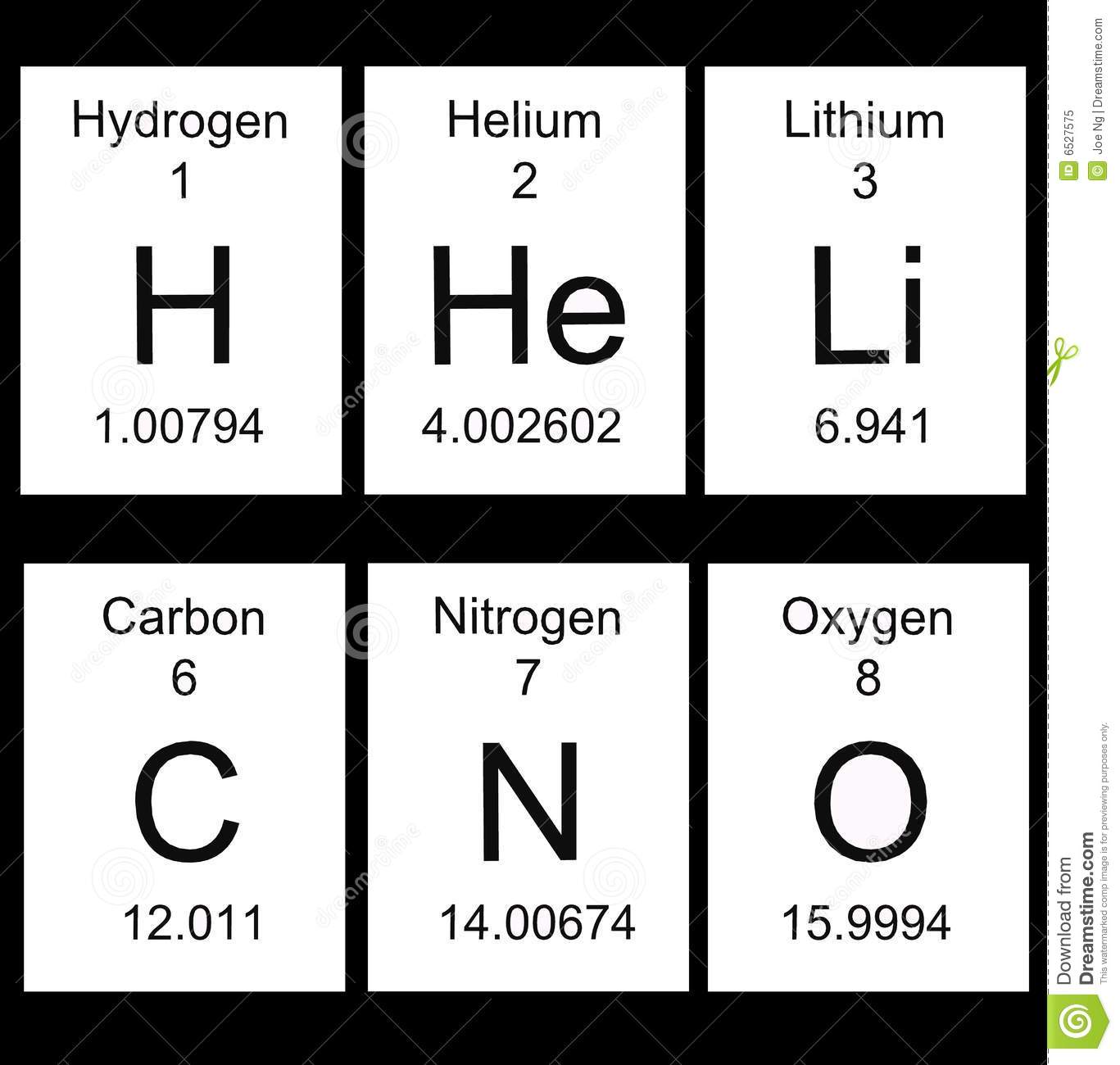
The number at the bottom of each square on the periodic table is the ...
a)
atomic number
b)
atomic mass
c)
chemical symbol
d)
element name
49.
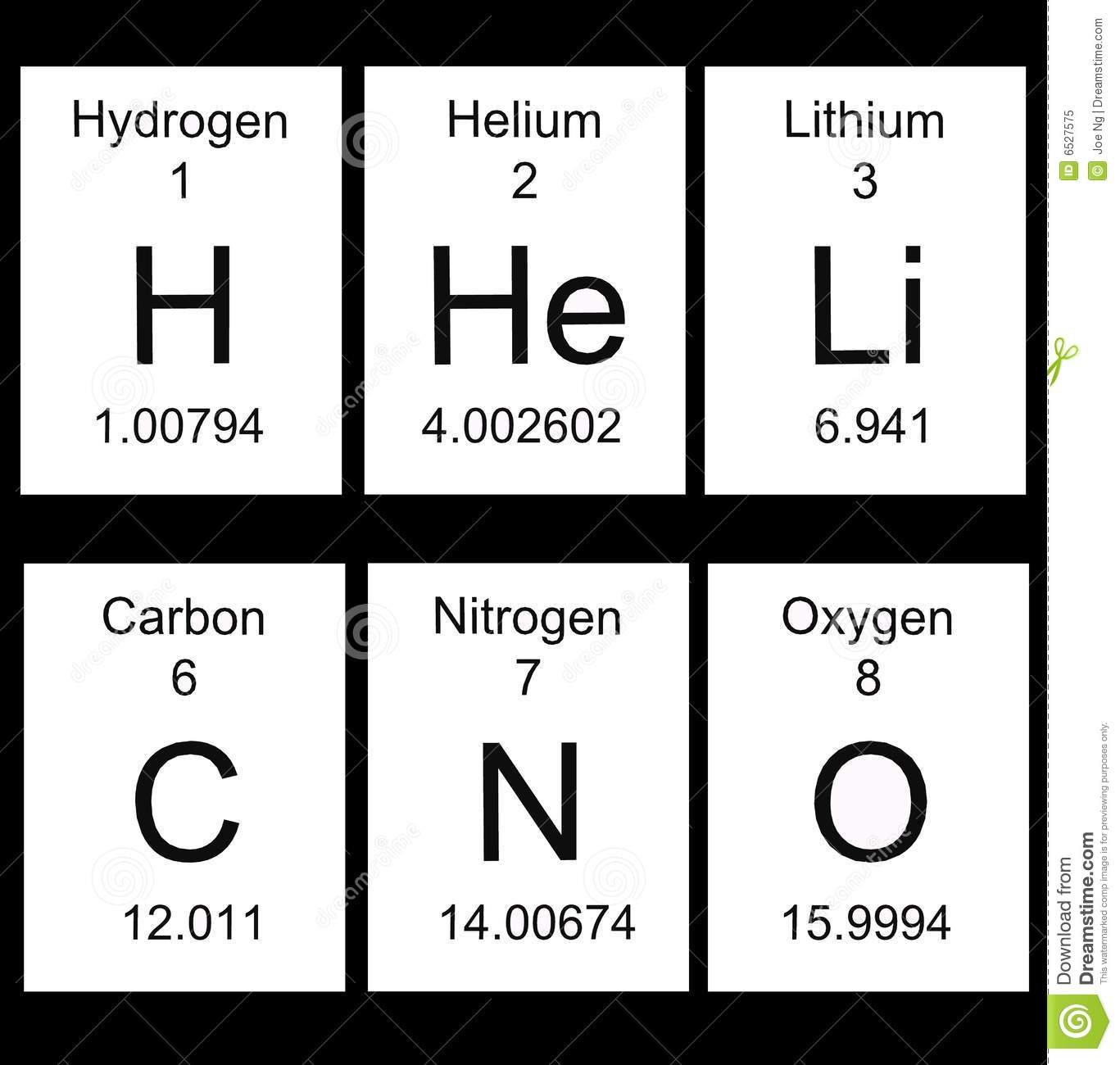
The number at the top of each square on the periodic table is the ...
a)
atomic number
b)
atomic mass
c)
Chemical Symbol
d)
Element Name
50.

All of the actinides are ___________.
a)
stable
b)
radioactive
c)
shiny
d)
named after scientists
51.
The atomic number tells you what?
a)
number of electrons
b)
number of protons
c)
number of neutrons
d)
both electrons and protons in an atom.
52.
Which group of the periodic table is composed of inert (not reactive) gases?
a)
alkali metals
b)
alkaline earth metals
c)
halogens
d)
noble gases
53.
The simplest substance is..?
a)
Carbon
b)
An element
c)
Water
d)
A simple compound
54.
A neutron has a charge of
a)
+2
b)
No charge
c)
-1
d)
+1
55.

What is the tiny, massive central part of the atom?
a)
Neutron
b)
Electron
c)
Proton
d)
Nucleus
56.
The atomic mass is dependent on which two subatomic particles?
a)
Protons and electrons
b)
Protons and neutrons
c)
Neutrons and electrons
d)
Electrons and the nucleus
57.
A ___ is formed when an positive ion bonds with a negative ion.
a)
Acid
b)
base
c)
salt
d)
neutral ion
58.

The Cu in this image is referred to as the element's -
a)
alphabet
b)
chemical name
c)
chemical number
d)
chemical symbol
59.
A _______ is the smallest unit of matter.
a)
cell
b)
atom
c)
compound
d)
organ
60.

Which of the following elements is required in an organic compound?
a)
nitrogen
b)
oxygen
c)
carbon
d)
sodium
61.
Which of the following formulas is inorganic?
a)
CHO
b)
CH
c)
SiO
d)
CHCOOH
62.
What makes something inorganic
a)
It does not contain Hydrogen
b)
It contains Carbon
c)
It does not contain Carbon and Hydrogen
d)
It has more than one element
63.

a)
organic
b)
inorganic
64.

a)
organic
b)
inorganic
65.
The substances listed on the right side of a chemical equation are the
a)
Yields
b)
Reactants
c)
Products
d)
Precipitates
66.
CaCO3 represents a chemical
a)
Symbol
b)
Formula
c)
Subscript
d)
Reaction
67.
In chemical reactions, what does the principle of conservation of mass mean?
a)
Matter is not created or destroyed.
b)
The total mass of the reactants is greater than the total mass of the products.
c)
The total mass of the reactants is less than the total mass of the products.
d)
Matter is not changed.
68.
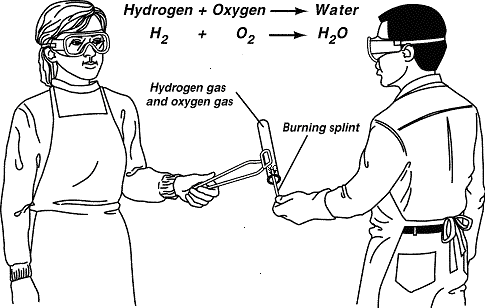
Identify the reactant(s) and product(s) of the reaction.
a)
All three are reactants and none are products.
b)
Hydrogen and water are the reactants, and oxygen is the product.
c)
Water and oxygen are the reactants, and hydrogen is the product.
d)
Hydrogen and oxygen are the reactants, and water is the product.
69.
Which number should go in the blank?
_ H2 + O2 -> 2 H2O
_ H2 + O2 -> 2 H2O
a)
1
b)
2
c)
3
d)
0
70.
Which number should go in the blank?
2 Na+ _ Cl2 -> 2 NaCl
2 Na+ _ Cl2 -> 2 NaCl
a)
1
b)
2
c)
3
d)
0
71.
H2 + O2 -> 2 H2O
Which kind of reaction is this?
Which kind of reaction is this?
a)
synthesis
b)
decomposition
c)
single displacement
d)
double displacement
72.
Mn + _ HNO3 → Mn(NO3)2 + H2
Which kind of reaction is this?
Which kind of reaction is this?
a)
synthesis
b)
decomposition
c)
single displacement
d)
double displacement
73.
FeS + HCl ---> FeCl2 + H2S
Which kind of reaction is this?
Which kind of reaction is this?
a)
synthesis
b)
decomposition
c)
single displacement
d)
double displacement
74.
H2CO3 → H2O + CO2
Which kind of reaction is this?
Which kind of reaction is this?
a)
synthesis
b)
decomposition
c)
single displacement
d)
double displacement
75.
How many Oxygen (O) atoms are in 2C2HO8Cl2
a)
2
b)
16
c)
8
d)
5
76.
How many Hydrogen (H) atoms are in NH3O5
a)
3
b)
4
c)
5
d)
1
77.

This is used to represent the amount of each atom in a molecule. What is the arrow pointing to?
a)
Exponent
b)
Coefficient
c)
Molecule
d)
Subscript
78.

This appears on the left side of a chemical formula, and represents how many molecules there are.... What is highlighted in yellow?
a)
Atom
b)
Subscript
c)
Molecule
d)
Coefficient
79.
The Law of Conservation of Energy states:
a)
Energy can created or destroyed but not transformed
b)
Energy cannot be created or destroyed, it can only transformed
c)
Energy can't be created, destroyed or transformed
80.
Potential or kinetic?
Stretched bow and arrow?
Stretched bow and arrow?
a)
kinetic
b)
potential
81.
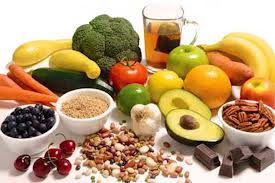
What kind of energy is represented in the picture?
a)
Thermal
b)
Chemical
c)
Sound
d)
Nuclear
82.

What kind of energy does this device use?
a)
Chemical
b)
Electrical
c)
Thermal
d)
Chemical
83.

What kind of energy is represented in this picture?
a)
Thermal
b)
Potential
c)
Nuclear
d)
Mechanical
84.

What force causes the carts to slow down?
a)
friction
b)
applying force
c)
gravity
d)
gravity and friction
85.

The force that makes a roller coaster roll is...?
a)
Rocket Power
b)
Gravity
c)
Motors
d)
Gears
86.
Which energy transformation below matches?
A book falling?
A book falling?
a)
chemical to sound and heat
b)
kinetic to sound and heat
c)
electrical to sound and heat
87.
Which energy transformation below matches?
Water moving over a dam to move a generator?
Water moving over a dam to move a generator?
a)
kinetic to chemical
b)
kinetic to electrical
c)
solar to electrical
88.
Which energy transformation below matches?
Animals eating food?
Animals eating food?
a)
electrical to potential
b)
chemical to kinetic
c)
potential to chemical
89.
In a closed system..
a)
Energy can be exchanged with the surroundings but matter cannot
b)
Matter can be exchanged with the surroundings but energy cannot
c)
Both matter and energy can be exchanged with the surroundings
d)
Neither energy or matter can be exchanged with the surroundings
90.
Another term for burning is
a)
Fire triangle
b)
Magnesium oxide
c)
Combustion
d)
Bustion
91.
What is motion?
a)
It's like the ocean
b)
Any change in an animal or person's position.
c)
Motion is like acting
d)
Any change in an object or person's position.
92.
What does force allow a ball player to do?
a)
To swing a baseball bat and hit a ball in a same direction
b)
To swing a baseball bat and drop a ball in a new direction
c)
To swing a baseball raquet and hit a ball in a new direction
d)
To swing a baseball bat and hit a ball in a new direction
93.

The picture of the position vs. time graph shows an object that is...
a)
accelerating/speeding up
b)
moving at a constant speed
c)
not moving
d)
accelerating/slowing down.
94.

If these boys are pulling with the same amount of force. What will happen?
a)
The boy in blue will win.
b)
They will not move at all.
c)
The boy in red will win.
d)
Both will fall down.
95.
The force that causes a ball to fall to the ground is ____________________________
a)
gravity
b)
lubricant
c)
friction
d)
motion
96.
The tendency of an object at rest to stay at rest unless it is acted upon by a force is ___________________
a)
inertia
b)
motion
c)
gravity
d)
lubricant
97.
What is the Average Speed?
Distance: 10m
Time: 5s
Distance: 10m
Time: 5s
a)
2
b)
1/2
c)
50
d)
100
98.

A train that travels 100 kilometers in 4 hours is traveling at what average speed? Remember: Speed= distance/time
a)
50 km/h
b)
100 km/h
c)
400 km/h
d)
25 km/h
99.
What is the formula for force?
a)
F=M/A
b)
F=A/M
c)
F=M*A
d)
F=M*F
100.
An object at rest will remain at rest or in the same uniform motion unless acted upon by an unbalanced force: law of inertia.
a)
Newton's First Law of Motion
b)
Newton's Second Law of Motion
c)
Newton's Third Law of Motion
101.
as mass increases, the acceleration has to decrease: the law of acceleration
a)
Newton's First Law of Motion
b)
Newton's Second Law of Motion
c)
Newton's Third Law of Motion
102.
If one object exerts a force on a second object, the second object exerts a force equal in magnitude and opposite in direction on the object body; law of interaction
a)
Newton's First Law of Motion
b)
Newton's Second Law of Motion
c)
Newton's Third Law of Motion
103.
You and your friend, are playing tug of war. Your friend pulls with a force of 55 N, to the rights. You pull with a force of 65 N, to the left. What is the net force on the rope?
a)
10 n, to the left
b)
20 N
c)
10 N, to the left
d)
10 N, to the right
104.

If an object is stationary (not moving) the forces acting upon it are _____________
a)
unbalanced
b)
weak
c)
balanced
d)
Hulk Smash!
105.
What Unit do we Measure Force in?
a)
Newtons
b)
Joules
c)
grams
d)
pounds
106.
Jack has a rock. The rock has a mass of 14g and a volume of 2cm3. What is the density of the rock?
a)
7 mL
b)
7 g/cm3
c)
28 g/cm3
d)
1/7 g/cm3
107.
True or false
You do work only when you exert a force on an object and move it
You do work only when you exert a force on an object and move it
a)
true
b)
false
108.
if you push a cart with a force of 60 N for 2 m... how much work have you done
a)
120 J
b)
30 J
c)
120 N
d)
30 N
109.
A simple machine that consists a rigid bar that pivot about a fixed point
a)
lever
b)
pulley
c)
wheel and axle
d)
fulcrum
110.
An axe is an example of a
a)
pulley
b)
inclined plane
c)
screw
d)
wedge
111.
A flat sloping surface that connects lower and higher elevations. It makes raising objects easier.
a)
wedge
b)
screw
c)
lever
d)
inclined plane
112.
An inclined plane wrapped around a rod forms this simple machine
a)
lever
b)
pulley
c)
screw
d)
wedge
113.

Identify this simple machine
a)
Lever
b)
Wheel & Axle
c)
Inclined Plane
d)
Screw
114.

What is the center point of a lever called?
a)
Fulcrom
b)
A Thingy
c)
Cheese
d)
A Brick
115.
Bernoulli’s principle states that the pressure in a fluid decreases as its velocity increases.
a)
True
b)
False
116.
Archimedes Principle states that the buoyant force acting on a submerged object is equal to the density of the fluid displaced by the object.
a)
True
b)
False
117.
Pascal's Principle states that the pressure at a point in a fluid at rest is the same in all directions.
a)
True
b)
False
118.
Sound is caused by?
a)
force
b)
vibrations
c)
instruments
119.

What is frequency?
a)
the number of vibrations per second
b)
how high or low a sound is
c)
the loudness or softness of a sound
d)
the back and forth movement of matter
120.

Measure of how high or low a sound is
a)
amplitude
b)
compression
c)
speed of sound
d)
pitch
121.
Electrical lights will not come on unless their electrical circuit is a --
a)
parallel circuit
b)
series circuit
c)
closed circuit
d)
short circuit
Reset

