
 Worksheets
Science 7 unit E
Total questions: 119
Worksheet time: 1hrs 18mins


Roots grow into cracks of a rock and pry them apart
biological weathering
chemical weathering
erosion
physical weathering

The process in which wind, water, ice or gravity transport rock fragments from one location to another
Weathering
Sedimentation
Erosion
Deposition

How do plants weather rocks?
During photosynthesis
When the plant moves water from the roots to the leaves, the rock breaks
When roots grow into cracks of rocks and expand, the rock breaks
Plants don't weather rocks

The place where the earthquake is felt on the Earth's surface is called the...
Epicenter
Hypocenter (focus)
Surface
Crust
where quake begins below surface
elastic rebounding
focus
epicenter
fault
During _________________ the solid particles that settle down forming a layer are called sediments
Decantation
Condensation
Evaporation
sieving
Sedimentation

Which physical layer is represented by the yellow layer?
lithosphere
mesosphere
core
inner core

The breakdown and decomposition of rocks as a result of chemical reactions and processes
Physical weathering
Chemical weathering

Waves dropping sand onto land until a beach is formed is an example of...
physical weathering
erosion
deposition
chemical weathering

Acid rain slowly wearing away rock over time is an example of...
chemical weathering
physical weathering
erosion
deposition


What type of weathering is this?
Mechanical
Natural
Cracking
Erosion
Physical
Landforms created by running water are called
Fluvial landforms
Eroded landforms
Weathering landforms
Sedimentation
Identify the sentence that tells how weathering from ice causes slow changes to Earth’s surface.
A glacier deposits rocks as it moves.
A glacier melts, leaving behind rocks.
A glacier carries away rocks as it moves.
A glacier rubs against rocks as it moves.
Which of our planet's layers is made up of primarily iron and nickel?
inner core
outer core
lithosphere
mantle
A seismograph measures _________________________.
earthquake intensity
volcanic intensity
sea spreading distance
lava density
How does a volcano cause a constructive change to the Earth's surface?
It floods the land.
It adds new land.
It takes land away.
It breaks apart land.
the boundary formed by the collision of two tectonic plates
fault
compression
divergent
convergent
the boundary between two tectonic plates that are scraping past each other horizontally
transform
divergent
fault
convergent
the name of the landmass that existed when all continents were joined
The Ring of Fire
Pangea
Continental Drift
mid-ocean ridge
________ occurs when two tectonic plates collide, and one plate moves under the other then sinks into the mantle.
subduction
divergent
convergent
Below the mantle lies the liquid ____________.
inner core
mantel
outer core
crust
A break in the Earth’s crust is called a ___________.
hot spot
fault
energy
Molten rock that erupts or flows from a volcano is called _____.
lava
rock
crust

What type of rock is made from magma?
SEDIMENTARY
METAMORPHIC
IGNEOUS

There are 3 types of rocks. They are ...
Volcanic - Magma - Bedrock
Metamorphic - Igneous - Sedimentary
Minerals - Fossil - Crust
Lava - Magma - Crust

What type of rock is made of tiny fragments of rocks?
SEDIMENTARY
IGNEOUS
METAMORPHIC

How are rocks classified?
Based on the way they are formed
Based on their colors
Based on their temperature
Based on their size

Mark the description of METAMORPHIC ROCKS
They are formed under the surface of the earth, where heat and pressure are very intense. Those rocks do not melt. The minerals in those rocks change chemically and form the strong rocks, which can have different colours.
Tiny fragments of rocks. Great pressure transform these rocks. Wind or water flow remove soil and rock from the surface of the planet and transport them to other locations.
They come from volcanoes. When lava, gases and ash escape to the surface, they get cold and solidify.

Mark the description of IGNEOUS ROCKS
Tiny fragments of rocks. Great pressure transform these rocks. Wind or water flow remove soil and rock from the surface of the planet and transport them to other locations.
They come from volcanoes. When lava, gases and ash escape to the surface, they get cold and solidify.
They are formed under the surface of the earth, where heat and pressure are very intense. Those rocks do not melt. The minerals in those rocks change chemically and form the strong rocks, which can have different colours.
igneous rock that formed when magma hardened beneath the surface of Earth
extrusive
intrusive
clastic
biogenic
igneous rock formed from lava that erupted onto Earth's surface
extrusive
intrusive
clastic
biogenic
igneous rock formed from lava that erupted onto Earth's surface
extrusive
intrusive
clastic
biogenic
the process by which running water, wind, or ice carry away bits of broken-up rock
weathering
erosion
compaction
cementation
metamorphic rock with mineral grains arranged randomly and not in layers
foliated
nonfoliated
intrusive
extrusive
metamorphic rock with thin, flat layers
foliated
nonfoliated
intrusive
extrusive


According to the diagram, what process is shown by letter B?
compaction & cementation
weather & erosion
heat & pressure
melting
According to the diagram, what process is shown by letter A?
extrusion
erosion
crystallization
intrusion


What is letter C?
Igneous Rock
Sedimentary Rock
Metamorphic Rock
Minerals
What is letter B?
Igneous Rock
Sedimentary Rock
Metamorphic Rock
Minerals
What is letter A?
Igneous Rock
Sedimentary Rock
Metamorphic Rock
Minerals

What is letter A?
Cooling
Melting
Heat and pressure
Weathering and erosion
What is letter B?
Cooling
Melting
Heat and pressure
Weathering and erosion
What is letter C?
Cooling
Melting
Heat and pressure
Weathering and erosion
What is letter D?
Cooling
Melting
Deposition, Compaction, Cementation
Weathering and erosion
What is letter J?
Heat and pressure
Melting
Deposition, Compaction, Cementation
Weathering and erosion
What is letter G?
Heat and pressure
Cooling
Deposition, Compaction, Cementation
Weathering and erosion


Other than geo-chemical analysis and remote-sensing, identify another method of prospecting
(a)

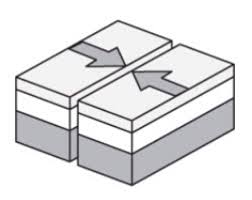
This usually forms at a convergent boundary between two oceanic plates.
Mountain
mid-ocean ridge
Rift
trench
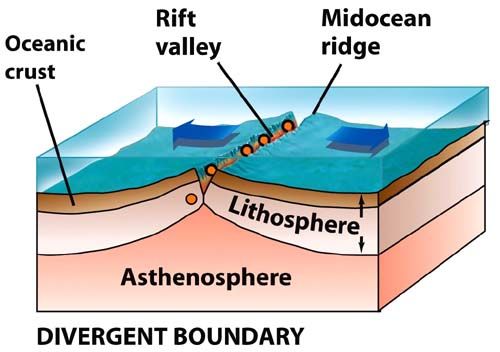
A subduction zone is formed...
at transform boundaries
when an ocean plate sinks below a continental plate creating a mountain range
when an ocean plate sinks below a continental plate creating a mid-ocean ridge and rift valley
when an ocean plate sinks below a continental plate creating a trench and usually volcanoes
The process that occurs at a divergent oceanic boundary that creates new crust (sea floor) is called?
Continental Drift
Seafloor Spreading
Subduction
Volcanism

When two continental plates converge (collide) what type of crustal feature is formed?
Mid Ocean Ridge
Subduction Zone
Rift Valley
Folded Mountains
The oceanic crust usually subduct beneath the continental crust when they collide because it is
denser than continental crust
less dense than continental crust
thicker than continental crust
thinner than continental crust
Which distinctive feature is found at the subduction zone?
volcano
rift
trench
mountain


What era did dinosaurs go extinct ?
Paleozoic
Mesozoic
Cenozoic

Which fossil is the youngest?
fossil A
fossil B
fossil C
fossils A and B are the same age

Law of Superposition states
Younger rocks are on bottom, Older rocks are on top
Older rocks are on bottom, Younger rocks are on top
Rocks are spread out evenly

In which era do we currently live?
Jurassic
Paleozoic
Mesozoic
Cenozoic
Earth has always been a solid mass of rock
True
False
What kind of rock do scientists find fossils in?
Metamorphic
Igneous
Sedimentary
What was the first era?
Paleozoic Era
Cenozoic Era
Mesozoic Era
Precambrian Time
What was Earth's second era called?
Precambrian Time
Mesozoic Era
Paleozoic Era
Cenozoic Era
What was the DOMINANT organism(s) of the Precambrian Time/Era?
Single celled organisms
Plants and animals
Dinosaurs
Mammals
What was the DOMINANT organism(s) of the Paleozoic Era?
Single celled organisms
Dinosaurs
Plants and animals
Mammals
What was the DOMINANT organism(s) of the Cenozoic Era?
Single celled organisms
Plants and animals
Mammals
Dinosaurs
What was the DOMINANT organism(s) of the Mesozoic Era?
Single celled organisms
Dinosaurs
Plants and animals
Mammals
Which era did modern humans evolve in?
Precambrian Time
Paleozoic Era
Mesozoic Era
Cenozoic Era
Put the eras in the correct order from OLDEST to YOUNGEST.
Precambrian Time, Paleozoic Era, Mesozoic Era, Cenozoic Era
Precambrian Time, Cenozoic Era, Mesozoic Era, Paleozoic Era
Paleozoic Era, Precambrian Time, Mesozoic Era, Cenozoic Era
Cenozoic Era, Mesozoic Era, Paleozoic Era, Precambrian Time
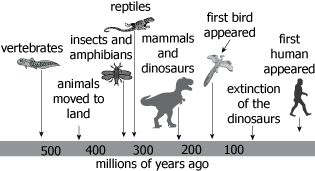

A paleontologist just discovered a Flower fossil. In which layer do you think the fossil was found in?
Cenozoic Layer
Mesozoic Layer
Paleozoic Layer
Late Proterozoic Layer
Which era began with the early invertebrates, such as trilobites and brachiopods.
Paleozoic
Mesozoic
Cenozoic
Which type of fossil would look just like the body part of a once-living thing?
mineral
footprint
cast
petrified wood
Which is an imprint fossil?
bone
a cast
an animal track
amber fossil
Which type of rock are most fossils found?
sedimentary rock
metamorphic rock
igneous rock
fossils

