wayground logo

Free Printable Worksheets

Font size

S
M
L
XL
Worksheets

S2 Final Review--Earth and Life Science

Total questions: 85

Worksheet time: 1hrs 6mins

Name
Class
Date
1.
The process that breaks down rocks and other materials on Earth's surface is called
a)
weathering
b)
erosion
c)
soil conservation
d)
decomposition
2.
How does freezing water cause the weathering of rocks?  The freezing water—
a)
keeps the rocks in place
b)
makes the rocks last longer
c)
expands cracks and breaks rocks
d)
causes rocks to fall in landslides
3.
Muddy water being carried away by a fast-moving river
a)
Weathering
b)
Erosion
c)
Deposition 
4.
A depression or hole formed when the roof of a cave collapses
a)
Cavern
b)
Cave
c)
Sinkhole
d)
Bedrock
5.
Land forms made from dissolving limestone
a)
Soil
b)
Bedrock
c)
Karst
d)
Calcium
6.

The process by which water, ice, wind or gravity moves weathered rock and soil from one place to another.

a)

weathering

b)

erosion

c)

deposition

d)

Karst

7.
How are the tunnels and passages of a cave formed?
a)
columns of rock
b)
people mining
c)
acid in rainwater
d)
animals
8.

Which is not a way erosion occurs?

a)

wind

b)

water

c)

gravity

d)

weathering

9.

What landforms/features is NOT a Karst feature?

a)

caves

b)

sinkholes

c)

fertile soil

d)

disappearing streams

10.
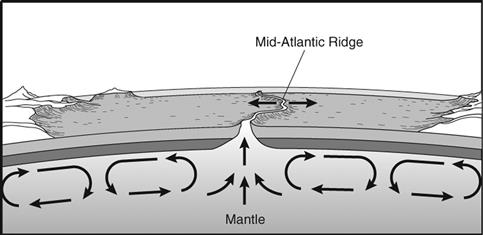
The diagram represents the movement of the mantle under the earth's crust. Which process is represented by the diagram?
a)
rotation
b)
conduction
c)
radiation
d)
convection
11.
Convection currents in the mantle are thought to be the driving force behind tectonic movement. At which location do the convection currents cause the plates to diverge?
a)
strike-slip fault
b)
subduction zone
c)
mid oceanic ridges
d)
folded mountains.
12.
Which layer of Earth is the hottest?
a)
lithosphere
b)
asthenosphere
c)
outer core
d)
inner core
13.

Earth's magnetic field results from movements in the

a)

mantle

b)

outer core

c)

inner core

d)

crust

14.
Hot matter is _________ dense and ___________
a)
less, sinks
b)
less, rises
c)
more, sinks
d)
more, rises
15.
Name this boundary
a)
Convergent
b)
Divergent
c)
Transform
d)
Sergent
16.
Name the boundary
a)
divergent
b)
convergent
c)
transform
d)
sergent
17.

What feature would result from this divergent boundary?

a)

mid-ocean ridge

b)

ocean trench

c)

earthquake

d)

hot spot

18.
Plate movement is caused by _____
a)
The rotation of the Earth
b)
Ocean tides
c)
Convection current in the mantle
d)
The moon's gravity
19.

What feature would form as a result of this convergence?

a)

mid ocean ridge

b)

ocean trench

c)

transform boundary

d)

earthquake

20.
This is the driving force behind the movement of tectonic plates.
a)
Mantle convection currents
b)
Oceanic convection currents
c)
Atmospheric convection currents
d)
Solar convection currents
21.
All of the following were known to Alfred Wegener as support for his Hypothesis of Continental Drift EXCEPT
a)
fossils found on different continents
b)
fit of the continents
c)
rock type similarities
d)
weather patterns in Greenland
22.

The Earth's magnetic field is created by

a)

the movement of iron metal in the earth's outer core

b)

the movement of molten earth material in the asthenosphere

c)

The movement of the earths crust

d)

Lava flowing out of the earth

23.

Intrusive Igneous rocks will have

a)

large crystals

b)

small to no cyrstals

24.
How do Intrusive Igneous rocks cool?
a)
quickly
b)
slowly
c)
really fast
25.

If a rock is formed from lava (outside earth), what will the grains be?

a)

large crystals

b)

fine grains that aren't visible

26.
Igneous rock that forms when magma hardens beneath Earth's surface
a)
intrusive Rock
b)
compaction
c)
Chemical Rock
d)
Clastic Rock
27.
Sedimentary rocks are formed by ___.
a)
existing rocks are baked and squeezed by pressure
b)
small pieces of rock are compacted and cemented together
c)
magma or lava cools and hardens
d)
igneous rocks are broken into pieces
28.
Metamorphic rocks are formed by ___.
a)
existing rocks are baked and squeezed by pressure
b)
small pieces of rock are compacted and cemented together
c)
magma or lava cools and hardens
d)
igneous rocks are broken into pieces
29.
What does clastic mean?
a)
Compacted sediment
b)
Magma made the rock
c)
The rock has crystals 
30.
How is sediment formed?
a)
Weathering and Erosion
b)
Melting
c)
Pressure
31.

This rock is made of salts left behind when a shallow sea evaporated. What type of sedimentary rock is it?

a)

Clastic

b)

Chemical (non clastic)

c)

Organic

32.

What characteristic to foliated, metamorphic rocks often have?

a)

weather patterns

b)

tiny crystals

c)

striped layers

d)

glassy surfaces

33.
How light reflects off of a mineral is called the mineral's 
a)
luster
b)
streak
c)
cleavage
d)
fracture
34.
The following image shows what mineral property?
a)
Hardness
b)
Streak
c)
Cleavage
d)
Density
35.
Which test is not reliable in identifying minerals
a)
streak
b)
luster
c)
specific gravity
d)
color
36.
Which of these minerals is softer than glass?
a)
Topaz 
b)
Corundum 
c)
Calcite 
d)
Orthoclase 
37.
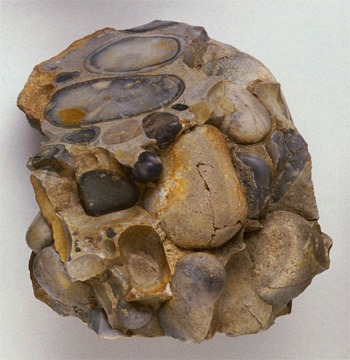
This rock was formed by smaller pieces of rock that settled at the bottom of a lake millions of years ago. What type of rock is this?
a)
Sedimentary
b)
Igneous
c)
Metamorphic
38.
Fossils are often found in ____________ because it is formed from the remains of once living things.
a)
metamorphic
b)
magma
c)
igneous
d)
sedimentary
39.
What does Mohs Chart measure?
a)
The Density of Liquid
b)
The Density of Air
c)
The Hardness of Minerals
d)
The Hardness of Atoms
40.
Metamorphic rocks that have grains arranged randomly are called...
a)
Foliated
b)
Nonfoliated
41.
The process by which the nuclear material is divided equally between two new cells
a)
mitosis
b)
cancer
c)
spindle
d)
centromere
42.
Name the phase:
a)
Anaphase
b)
Telophase
c)
Metaphase
d)
Prophase
43.
Name the phase:
a)
Prophase
b)
Metaphase
c)
Anaphase
d)
Telophase
44.
Name the phase:
a)
Prophase
b)
Metaphase
c)
Anaphase
d)
Telophase
45.
Name the phase:
a)
Prophase
b)
Metaphase
c)
Anaphase
d)
Telophase
46.
Name the phase:
a)
Prophase
b)
Metaphase
c)
Anaphase
d)
Telophase
47.
The phase in mitosis where chromosomes move away and are pulled apart by spindles to opposite sides of the cell.
a)
prophase
b)
anaphase
c)
metaphase
d)
telephase
48.
In mitosis, the two resulting cells are
a)
different from the starting cell and identical to each other.
b)
different from the starting cell and different from each other.
c)
identical to the starting cell and different from each other.
d)
identical to the starting cell and identical to each other.
49.
What process does a multi-cellular organism use to replace its damaged body cells?
a)
mitosis
b)
meiosis
c)
replication
d)
transcription
50.
What is cancer?
a)
The heart does not receive enough blood.
b)
Sudden disruption of blood flow to part of the brain.
c)
Blood filled weak spot.
d)
Uncontrolled growth and spread of abnormal cells.
51.
Which of the following statements is not part of the cell theory?
a)
Cells are the basic unit of structure and function in all living things.
b)
All cells are produced from other cells.
c)
Only animal cells are composed of cells.
d)
All living things are composed of cells.
52.
What structures distinguish a plant cell from an animal cell?
a)
Plant cells have cell walls and ribosomes.
b)
Plant cells have cell walls and chloroplasts.
c)
Plant cells have chloroplasts and ribosomes.
d)
Plant cells have chloroplasts and mitochondria.
53.
Which of the following is NOT one of the basic points of Cell Theory?
a)
All living things are made of cells.
b)
The cell is the smallest living thing that can perform all the functions of life.
c)
Cells are too small to see without a microscope.  
d)
All cells must come from pre-existing cells.
54.
Which of the following controls movement of materials in and out of a cell? 
a)
Cell wall
b)
Cell membrane
c)
Cytoplasm
d)
Nucleus
55.
Microscopic single-cells that do not have a nucleus or other membrane-bound organelles. 
a)
DNA
b)
RNA
c)
Eukaryotes
d)
Prokaryotes
56.
Which of the following structures in a cell would NOT be evidence that the cell is eukaryotic?
a)
DNA material
b)
Mitochondria
c)
Chloroplast
d)
Vacuoles
57.
Prokaryotic cells
a)
more advanced cells, are specialized, have 4 main parts-cell membrane, cytoplasm, nucleus, and organelles
b)
very simple cells, does not contain a nucleus or membrane bound organelles
c)
centrioles and more mitochondria
58.
Each cell has a specific job. Whatever job a cell does is called its ______________.
a)
Structure
b)
Function
c)
Career
d)
Jobanelle
59.

How a cell looks and what it is made of is called its _________________.
a)
Structure
b)
Function
c)
Organelle
d)
Religion
60.
Jelly-like substance that holds all the organelles in place
a)
Cytoplasm
b)
Cytoskeleton
c)
Nucleus
d)
Cell membrane
61.
Directs all cell activities through the DNA located there.
a)
Lysosomes
b)
Nucleus
c)
ribosomes
d)
Mitochondria
62.
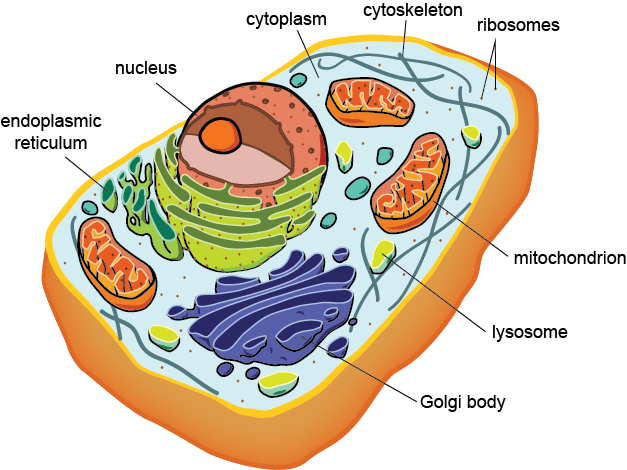
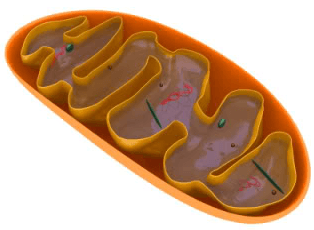
What are tiny organelles that convert glucose into ATP?
a)
Ribosomes
b)
Vesicles
c)
Cytoskeleton
d)
Mitochondria
63.
What would happen to the plant cell without the chloroplasts?
a)
There wouldn't be an organelle that performs photosynthesis
b)
There wouldn't be an organelle that serves as the resevoir for water and waste
c)
There wouldn't be an organelle that regulates what comes in and out of the cell
d)
They wouldn't be an organelle that makes necesary proteins
64.
Which of the following cells is undifferentiated?
a)
cardiac muscle cell
b)
nerve cell
c)
liver cell
d)
stem cell
65.

Which of these organisms relies on mitosis for reproduction?

a)

multicellular cat

b)

multicellular angry bird

c)

unicellular paramecium

d)

multicellular squishy jellyfish

66.

Cell Differentiation gives rise to

a)

stem cells

b)

specialized cells

67.
The diagram shows the process of cell specialization from a single stem cell. Which of the following statements is true about the process of specialization.
a)
Specilized cells (blood, skin, nervous etc) cannot be produced from a single stem cell
b)
Specilized cells are produced immediately following fertilization
c)
Even though all the cells in an organism come from one single cell, they can specialize into different cell types
d)
Sincce all the cells in an organism come from one single cell, they must all have the same structure and function
68.
In which kind of rock do we usually find a fossil?
a)
sedimentary  rock
b)
metamorphic rock
c)
igneous rock
69.
The hardened remains of a living thing that died long ago.
a)
extinct
b)
cast
c)
fossil
d)
bone
70.
Relative dating of rock layers tells us that the deeper we dig, _______.
a)
the younger the rocks get
b)
the smellier the rocks get
c)
the harder the rocks get
d)
the older the rocks get
71.
The Geologic Time Scale is a record of what?
a)
old geologists
b)
sweet geology music
c)
the known history of rocks and fossils
d)
a list of every living thing ever
72.
According to the law of superposition, which layer is the youngest?
a)
A
b)
B
c)
C
73.
Which is the correct definition of the Circulatory system?
a)
The system fights disease so the body stays healthy.
b)
The system that circulates blood and oxygen through the body, consisting of the heart,blood vessels,and blood.
c)
Breaks down food into smaller pieces and absorbs those nutrients into the body.
d)
Provides shape and structure for the body.
74.
Which is NOT a function of the circulatory system?
a)
deliver O2 and nutrients to cells
b)
remove CO2 and wastes from cells
c)
break down carbohydrates into glucose
d)
transport other materials through body
75.

Which of the following is NOT part of the digestive tract?

a)

Mouth

b)

Esophagus

c)

Small Intestine

d)

kidneys

76.
Which is NOT a function of the Digestive System?
a)
To rid the body of solid waste
b)
Absorb nutrients for energy & growth
c)
Break down nutrients from food
d)
Pump blood around the body
77.
Identify 
a)
Esophagus 
b)
Stomach
c)
Small Intestine
d)
Large Intestine
78.
 Like all other body systems, the immune system helps the body maintain homeostasis.  Which statement best describes how the immune system does this?  
a)
it protects other organs and tissues from infection and disease
b)
it breaks down food to provide cells with nutrients
c)
it gathers information through the senses and controls all other body systems
d)
 it transports oxygen and carbon dioxide
79.
What is the main purpose of the immune system?
a)
support the body through bones and muscles
b)
get rid of waste from the body
c)
protect the body from pathogens
d)
move blood through the body
80.
Major organs of the digestive system
a)
Kidneys, nephrons
b)
Stomach, intestines, mouth
c)
Heart, blood vessels, blood
d)
Liver, kidneys, heart
81.

Heart, blood vessels, blood are all part of the:

a)

Digestive system

b)

Excretory system

c)

Circulatory system

d)

Immune system

82.

Major organs of the immune system

a)

Kidneys, lymph nodes, nose

b)

Stomach, brain, pituitary gland

c)

Skin, thymus, bone marrow, lymph nodes, spleen

d)

Bacteria, virus, fungi

83.

Which organelle is the protein factory?

a)

Ribosomes

b)

Mitochondria

c)

cell membrane

d)

Lysosomes

84.
Plants and animal cells are examples of ___ cells 
a)
prokaryotic cells 
b)
eukaryotic cells 
85.

Packages molecules throughout the cell, acts like the "post office"

a)

Golgi apparatus

b)

nucleus

c)

Lysosome

d)

Cytoskeleton