
NEW
Font size
 Worksheets
Wave and Wave Properties
Total questions: 31
Worksheet time: 21mins
When a wave travels through a medium, the wave transfers
mass, only
energy, only
both mass and energy
neither mass nor energy

What type of wave is pictured?
Transverse wave
Longitudinal wave
Waving goodbye
Stadium wave

What type of wave is pictured?
Transverse wave
Longitudinal wave
Wave, what wave?
Slinky wave
Material some waves travel through, such as the type of solid, liquid, or gas.
Trough
Peak
Wavelength
Medium
The distance between any two crests (peaks) or troughs.
Frequency
Amplitude
Wavelength
Transverse
The number of times the wavelength occurs in one second, measured in units called hertz.
Amplitude
Wavelength
Medium
Frequency
Sound travels in which kind of wave?
Longitudinal waves
Transverse waves
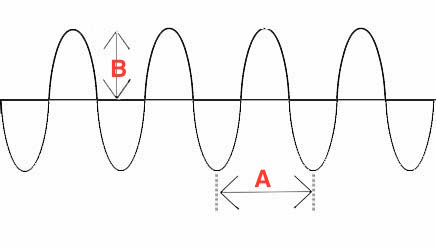
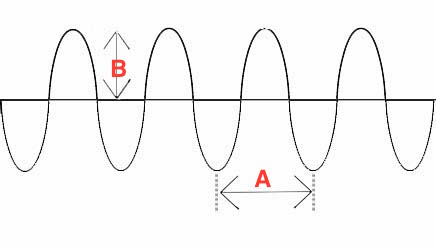
What property of this wave is represented by the letter "A"
amplitude
crest
trough
wavelength

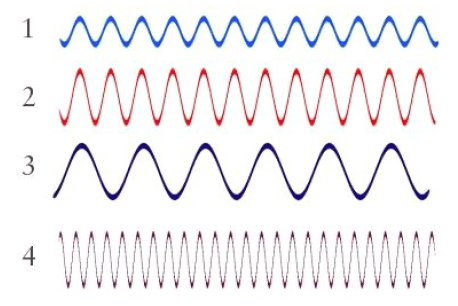
Which type of wave can travel through empty space?
sound waves
spring waves
electromagnetic waves
water waves
A longitudinal wave makes particles move __________ to the direction that the wave travels.
perpendicular
parallel
random
all the above
Which of the following is NOT a way that waves interact with matter?
Waves can be reflected by matter.
Waves are affected by gravity.
Waves can change direction when they travel from one material to another.
As waves pass through matter, some of the energy they carry can be transferred to matter.
What is the name of the regions of a longitudinal wave where the particles in the medium are closest
together?
trough
crest
rarefactions
compressions
What is the name of the regions of a longitudinal wave where the particles in the medium are farthest apart?
trough
crests
rarefactions
compressions
Water waves are:
longitudinal waves
transverse waves
transverse and longitudinal waves
perpendicular waves
When you squeeze spring coils together and then release them; what is the type of wave produced?
water
longitudinal
seismic
transverse
A wave that moves at right angles to the direction of the wave is called:
transverse
longitudinal
compressional
none of the above

When two or more waves overlap or combined to form a new wave is known as:
refraction
reflection
difraction
interference
When the wave strikes an object and bounces of is known as:
refraction
diffraction
reflection
interference
The bending of a wave caused by moving from one medium to another is known as:
diffraction
refraction
reflection
interference

When an object causes a wave to change direction and bend toward it is known as:
refraction
diffraction
reflection
interference
What are the waves produced when parts of Earth’s upper layers move along a fault?
radio waves
electromagnetic waves
seismic waves
x ray waves
What type of energy is carried by electromagnetic waves
radiant energy
sound energy
seismic energy
medium energy
A disturbance that transfers energy from one place to another is known as:
wave
energy
vacuums
matter

