
 Worksheets
Physical Science, Second Semester Review
Total questions: 130
Worksheet time: 2hrs 33mins
Name
Class
Date
1.
An object is _____ if its position changes relative to another object.
a)
in motion
b)
at reset
c)
a frame of refence
d)
magical
2.
A place or object used for comparison to determine if another object is in motion is called a
a)
comparison point
b)
reference point
c)
point of view
d)
motion detector
3.
A distance vs. time graph shows an object's
a)
frame of reference
b)
speed
c)
acceleration
d)
favorite food
4.
Speed =
a)
distance / time
b)
time / distance
c)
distance * time
5.
You walk 10 meters to math class in 20 seconds. Your average speed is
a)
2 m/s
b)
0.5 m/s
c)
200 m/s
d)
5 m/s
6.
On a distance-versus-time graph, a straight line ALWAYS indicates that an object’s speed is _____.
a)
constant
b)
zero
c)
increasing
d)
decreasing
7.
Change in speed over a given period of time is
a)
velocity
b)
motion
c)
speed
d)
acceleration
8.
On a distance vs. time graph, the steeper the slope _____
a)
the slower the speed
b)
the faster the speed
c)
less acceleration
d)
greater acceleration
9.
The rate at which velocity changes is called
a)
motion
b)
average speed
c)
instantaneous speed
d)
acceleration
10.
What is the equation to find speed?
a)
s=t/d
b)
s=d x t
c)
s=d/f
d)
s=d/t
11.
What is the SI unit for acceleration?
a)
m/s
b)
m
c)
m/s2
d)
s
12.
What is the SI unit for speed
a)
Km
b)
s
c)
m/s
d)
m/s2
13.
When something has speed in a certain direction it is called ___________.
a)
motion
b)
position
c)
velocity
d)
speed
14.
Acceleration of an object happens when things ________
a)
slow down
b)
go faster
c)
change direction (turn)
d)
All of the above
15.

The formula:
? = D/T with direction
is used to find
? = D/T with direction
is used to find
a)
Velocity
b)
Speed
c)
Force
d)
Acceleration
16.
LT1 The process of changing distance or position from another object
a)
reference point
b)
location
c)
acceleration
d)
motion
17.
LT1 Which would NOT make a good reference point?
a)
Becker Middle School
b)
A chair
c)
A moving child
18.
LT2 The distance an object travels per unit of time (how far, how fast) is called:
a)
direction
b)
speed
c)
acceleration
d)
deceleration
19.
LT2: I want to find the average speed of a triathlon race. What steps would I take?
a)
add up total distance, add up total time, divide total distance by total time
b)
add up total distance, add up total speed, divide distance by speed
c)
Add up total time and subtract total distance
20.
LT2: Grayson walks 5 meters in 5 seconds. What is his average speed?
a)
25 m/sec
b)
1 m/sec
c)
5 m/sec
d)
.25 m/sec
21.
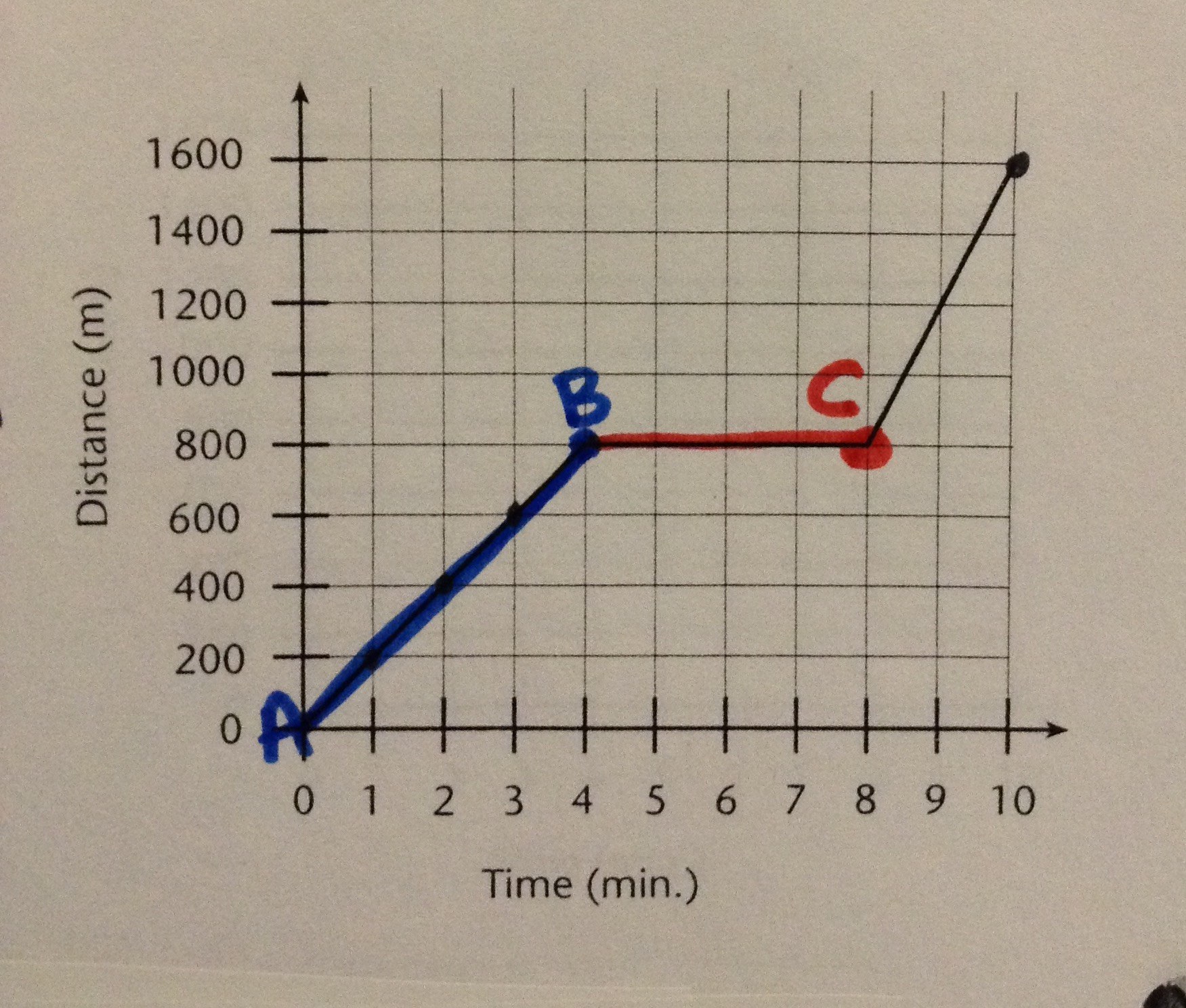
LT4: The graph shows Ashley riding her bike to Maria's house.
What is occurring from point A to point B?
What is occurring from point A to point B?
a)
they are traveling at a constant speed
b)
they are decreasing in speed
c)
they stopped to take a break
22.
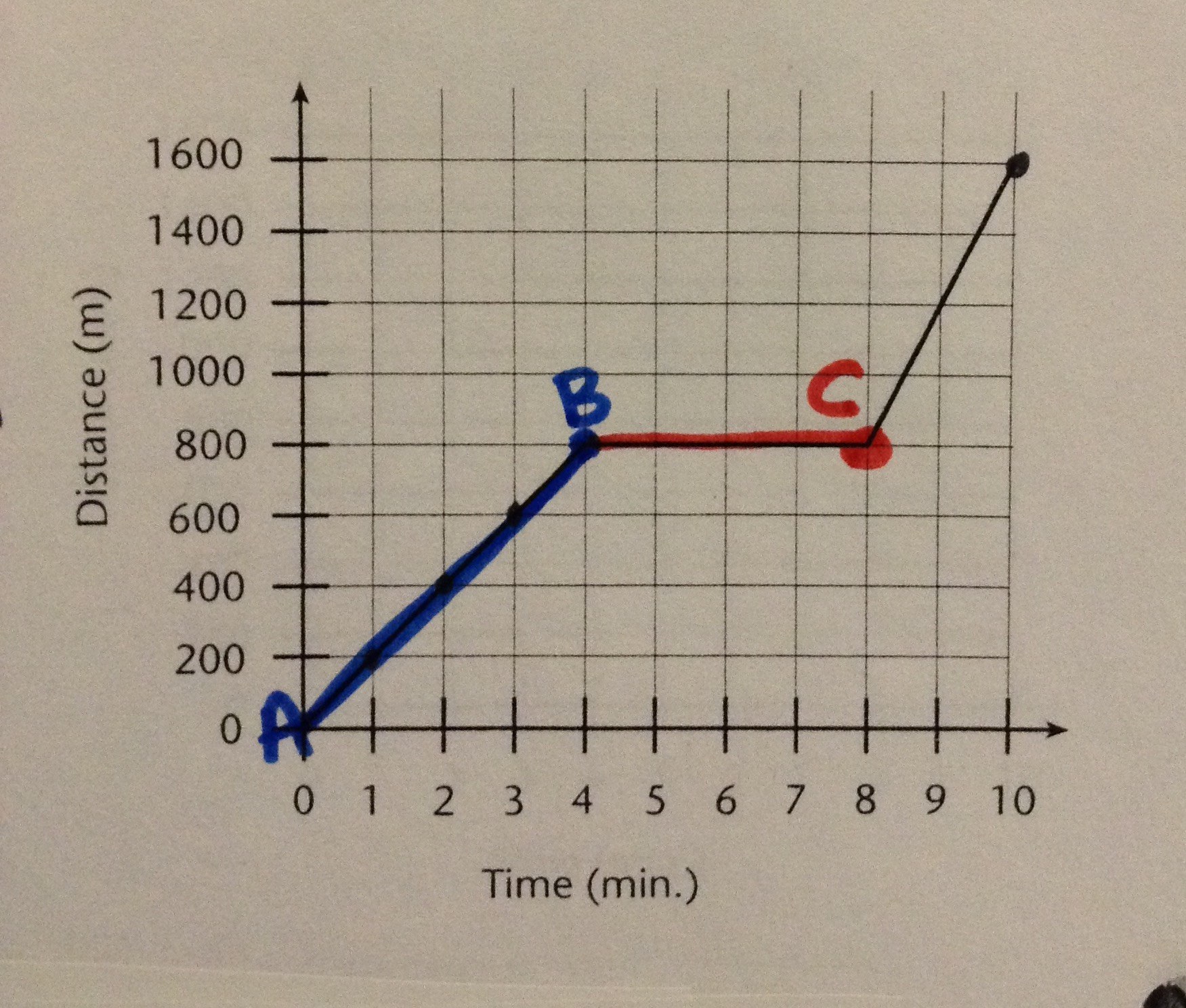
LT4: The graph shows Ashley riding her bike to Maria's house.
What was occurring from point B to point C?
What was occurring from point B to point C?
a)
She was increasing her speed.
b)
She stopped for 4 minutes
c)
She was decreasing in speed
23.
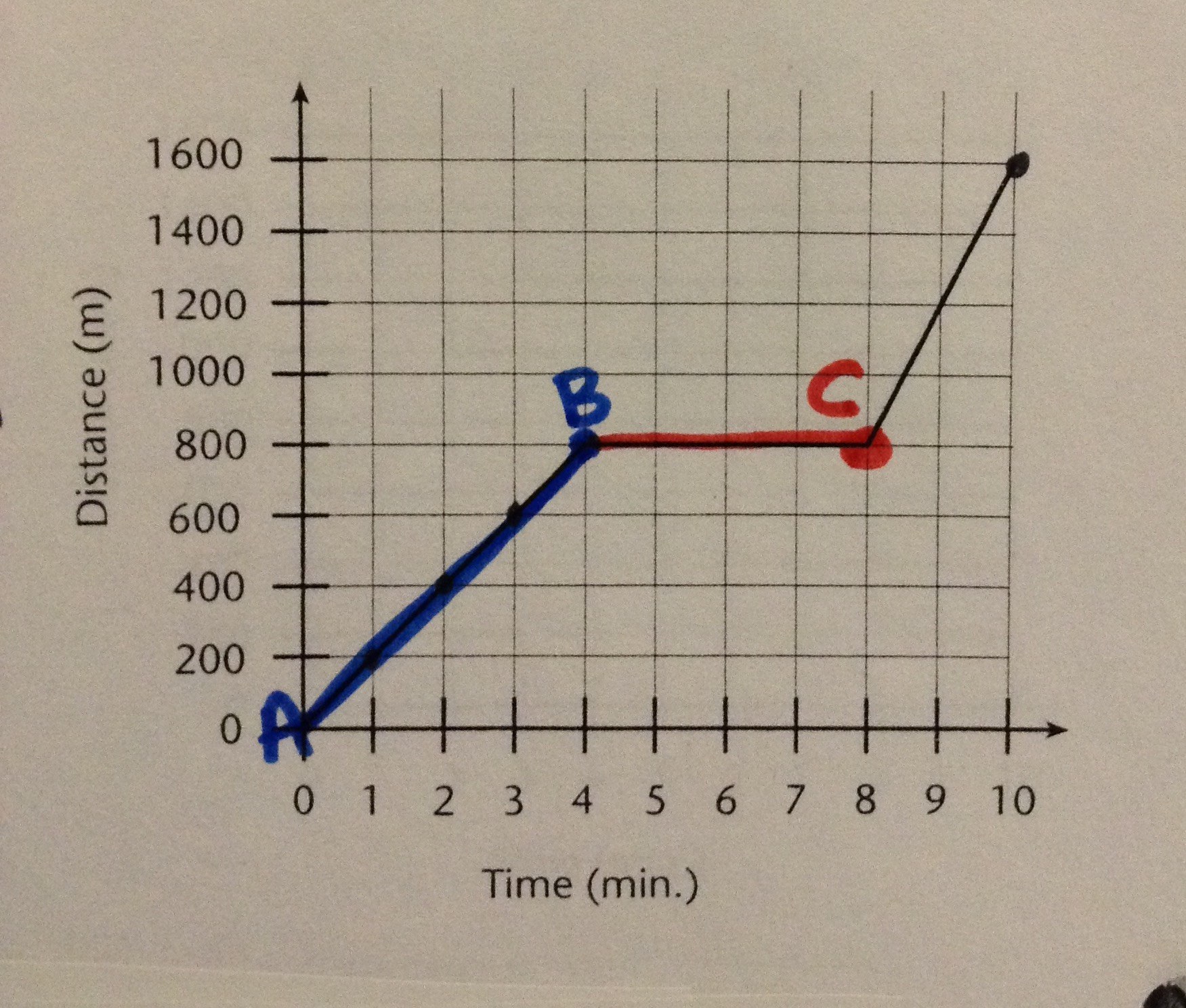
LT4: The graph shows Ashley riding her bike to Maria's house.
What was her average speed for the ENTIRE trip?
What was her average speed for the ENTIRE trip?
a)
1600 m/min
b)
200 m/min
c)
160 m/min
24.
LT5: What is velocity?
a)
Time + Distance
b)
Speed in a given direction
c)
A fast dinosaur
d)
The direction a storm is moving
25.
LT5: The rate at which velocity CHANGES is:
a)
acceleration
b)
speed
c)
direction
d)
physics
26.

What is the net force?
a)
20 N
b)
0 N
c)
400 N
d)
40 N
27.
What is the unit to MEASURE force?
a)
Kilogram
b)
Meter
c)
Pascal
d)
Newton
28.

A ____________ is a push or a pull on an object.
a)
friction
b)
force
c)
magnet
d)
gravity
29.

What is the net force?
a)
30 N
b)
25 N
c)
5 N
d)
55 N
30.

What is the net force?
a)
10 N
b)
0 N
c)
25 N
d)
1 N
31.
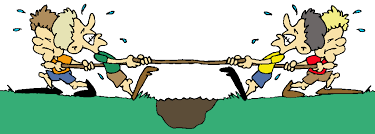
If these teams are pulling with the same amount of force what will happen?
a)
The boy in blue will win.
b)
They will not move at all.
c)
The boy in red will win.
d)
Both will fall down.
32.

Balanced or unbalanced?
a)
balanced
b)
unbalanced
33.

Forces that have a net force of zero
a)
Balanced force
b)
Unbalanced force
34.
The sum of all forces acting on an object.
a)
Contact Force
b)
Balanced Force
c)
Unbalanced Force
d)
Net Force
35.
What will cause an object to move?
a)
Applied forces
b)
Balanced forces
c)
Unbalanced forces
36.

Balanced or Unbalanced?
a)
Balanced
b)
Unbalanced
37.

This is an example of what kind of force?
a)
Balanced Force
b)
Pushing Force
c)
Gravity Force
d)
Unbalanced Force
38.

If an object is not moving the forces acting upon it are _____________
a)
unbalanced
b)
weak
c)
balanced
d)
Hulk Smash!
39.
A push or pull that causes a change in motion
a)
Friction
b)
Gravity
c)
Force
d)
Mass
40.
Examples of forces that make something move are...
a)
pushes
b)
pulls
c)
both pushes and pulls
41.
When forces are _________ the object DOES NOT move.
a)
unbalanced
b)
balanced
c)
heavy
d)
light
42.
When forces are ___________ the object will move.
a)
unbalanced
b)
balanced
c)
light
d)
gravity
43.
What is the net force of an object that is not moving?
a)
0 N
b)
100 N
c)
Upward force
d)
10 N
44.
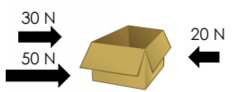
Calculate the Net Force.
a)
60N, Left
b)
40N, Right
c)
0N
d)
60N, Right
45.

Calculate the Net Force.
a)
40N, Left
b)
40N, Right
c)
0N, Balanced
d)
75N, Right
46.
You and your dad are moving the couch from one side to another. Your dad pushes with a force of 35 N to the right and you push with a force of 25 N right. What is the net force on the couch?
a)
60 N right
b)
10 N left
c)
60 n right
d)
50 N left
47.
Which could be an example of an unbalanced force?
a)
A plate sitting on a dining table
b)
A ball at the top of a hill that is not moving
c)
Earth orbiting the Sun
d)
A baseball that has been thrown to home plate.
48.

How will this object move?
a)
It won't move.
b)
It will move to the right.
c)
It will move to the left.
d)
It will move in both directions.
49.

What is the net force?
a)
30 N left
b)
25 N right
c)
5 N left
d)
55 N right
50.

What is the net force?
a)
40 N left
b)
0 N Balalnced
c)
400 N right
d)
40 N right
51.
Which force produces a change in motion?
a)
unbalanced force
b)
balanced force
c)
gravitational force
d)
frictional force
52.
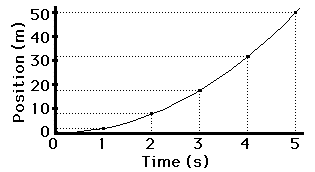
The picture of the position vs. time graph shows an object that is...
a)
accelerating/speeding up
b)
moving at a constant speed
c)
not moving
d)
accelerating/slowing down.
53.
What is the standard unit force is measured in?
a)
Newtons
b)
pounds
c)
grams
d)
meters
54.
What is Newton's First Law known as? The Law of
a)
Friction
b)
Mass
c)
Inertia
d)
Gravity
55.
Which has more Inertia? (so need more force to move)
a)
Truck
b)
Ant
c)
A cat
d)
A skateboard
56.
What is the formula for force?
a)
F=M/A
b)
F=MA
c)
F=AX
d)
what is force?
57.
What is Newton's Third Law?
a)
Object in motion stays in motion and an object at rest stays at rest unless acted on by a outside force
b)
Force = mass x acceleration
c)
For every action there is an equal and opposite reaction
58.
According to Newton's second law, if you increase the force applied to an object :
a)
it accelerates more
b)
it doesn't move
c)
you get more inertia
d)
it decelerates
59.
Who is the scientist who came up with the Laws of Motion?
a)
Sir Issac Newton
b)
The Greeks
c)
John Dalton
d)
Sir John Newt
60.
What is Newtons 2nd law of motion?
a)
Pancakes
b)
Force= Mass multiplied by acceleration
c)
For every action there is a equal and opposite re-action.
d)
Law of gravity
61.
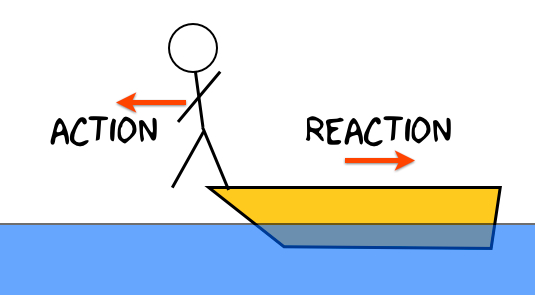
What law of motion does this picture represent?
a)
Newtons 1st law
b)
Newtons 4th law
c)
Newtons 3rd law
d)
Newtons 2nd law
62.
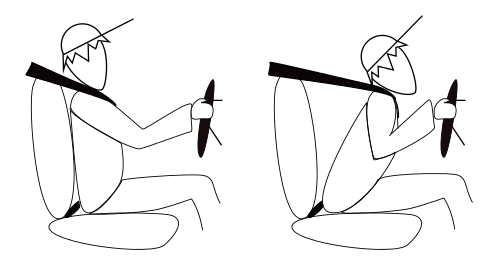
What Newtons law does this picture represent
a)
Newtons 2nd law
b)
Law of gravity
c)
Newtons 1st law
d)
Newtons 5th law
63.

What law of motion does this picture represent?
a)
Newtons 3rd law
b)
Newtons 4th law
c)
Newtons 1st law
d)
Newtons 2nd law
64.
A distance vs. time graph shows an object's
a)
frame of reference
b)
speed
c)
acceleration
d)
favorite food
65.
Speed =
a)
distance / time
b)
time / distance
c)
distance * time
66.
On a distance-versus-time graph, a straight line ALWAYS indicates that an object’s speed is _____.
a)
constant
b)
zero
c)
increasing
d)
decreasing
67.
Change in speed over a given period of time is
a)
velocity
b)
motion
c)
speed
d)
acceleration
68.
On a distance vs. time graph, the steeper the slope _____
a)
the slower the speed
b)
the faster the speed
c)
less acceleration
d)
greater acceleration
69.
When something has speed in a certain direction it is called ___________.
a)
motion
b)
position
c)
velocity
d)
speed
70.
Acceleration of an object happens when things ________
a)
slow down
b)
go faster
c)
change direction (turn)
d)
All of the above
71.
LT4: The graph shows Ashley riding her bike to Maria's house.
What is occurring from point A to point B?
What is occurring from point A to point B?
a)
they are traveling at a constant speed
b)
they are decreasing in speed
c)
they stopped to take a break
72.
LT4: The graph shows Ashley riding her bike to Maria's house.
What was occurring from point B to point C?
What was occurring from point B to point C?
a)
She was increasing her speed.
b)
She stopped for 4 minutes
c)
She was decreasing in speed
73.
LT5: What is velocity?
a)
Time + Distance
b)
Speed in a given direction
c)
A fast dinosaur
d)
The direction a storm is moving
74.
LT5: The rate at which velocity CHANGES is:
a)
acceleration
b)
speed
c)
direction
d)
physics
75.

The graph represents
a)
no motion
b)
Constant velocity
c)
Acceleration
d)
negative acceleration
76.

The graph represents
a)
no motion
b)
constant velocity
c)
acceleration
d)
negative acceleration
77.

The graph respresents
a)
No motion
b)
Constant Velocity
c)
Acceleration
d)
Deceleration
78.
Forces always act in equal and opposite pairs.
a)
Newton's 1st Law
b)
Newton's 3rd Law
c)
Newton's second law
79.
An empty truck and a fully loaded truck are next to each other at a traffic light. When the light turns green, the lighter truck increases speed more quickly. Which of these best explains this situations
a)
Newton's first law
b)
Newton's second law
c)
Newton's third law
d)
Conservation of momentum
80.
Newton's first law of motion states that __________.
a)
when a force is applied on an object, there is an equal force applied by the object in the opposite direction
b)
hen a force acts on an object, its acceleration is in the same direction as the force
c)
an object will remain at rest or keep moving with a constant velocity unless a force acts on it
d)
cceleration is calculated by dividing the force exerted on an object by the mass of the object
81.
Density is...
a)
the amount of mass in an object
b)
the amount of space an object takes up
c)
the amount of mass in a given space
d)
the weight of an object
82.
What is the formula for density?
a)
density = mass x volume
b)
density = mass / volume
c)
density = mass + volume
d)
density = mass - volume
83.
What units can be used to express density?
a)
g/mL
b)
grams
c)
millimeters
d)
milliliters
84.
True or False: The density of a specific type of material never changes.
a)
True
b)
False
85.
If the density of a bar of gold is 19.3 g/cm3and you cut it into 4 pieces, what is the density of each piece of gold?
a)
4.825 g/cm3
b)
9.65 g/cm3
c)
19.3 g/cm3
d)
38.6 g/cm3
86.
If an object has a density of 3.6 g/mL and you put it into water, will it sink or float?
a)
sink
b)
float
87.
If an object has a density of .6 g/mL and you put it into water, will it sink or float?
a)
sink
b)
float
88.

Which liquid is the most dense?
a)
oil
b)
water
c)
syrup
d)
plastic bottle
89.

Which liquid is the least dense?
a)
oil
b)
water
c)
syrup
d)
plastic bottle
90.

Put the liquids in order from most dense to least dense?
a)
4, 3, 2, 1
b)
1, 2, 3, 4
c)
3, 4, 2, 1,
d)
4, 3, 1, 2
91.
Frank has a paper clip. It has a mass of 9g and a volume of 3cm3. What is its density?
a)
3 g/cm3
b)
1/3 g/cm3
c)
27 g/cm3
d)
39 g/cm3
92.

Which box has a higher density?
a)
Box A
b)
Box B
c)
cannot be determined
d)
they are the same
93.
What is buoyant force?
a)
An upward force exerted by fluids on an object.
b)
An downward force exerted by fluids on an object.
94.
What does buoyant mean?
a)
float
b)
push
c)
flying, yeah!!!!!!
d)
sink
95.

Archimedes' Principle states that...
a)
The buoyant force acting on an object equals the volume of the fluid displaced by the object.
b)
The buoyant force acting on an object equals the weight (force of gravity) of the fluid displaced by the object.
c)
The buoyant force acting on an object will always be equal.
96.
Which will result in positive buoyancy?
a)
When the buoyant force is greater than the force of gravity
b)
When the buoyant force is equal to the force of gravity
c)
When the buoyant force is less than the force of gravity
97.
True or False: Buoyancy is an upwards force measured in Newtons.
a)
True
b)
False
98.

Buoyancy is the tendency for objects to float in a fluid. We consider buoyancy the...
a)
Un-gravity force
b)
Anti-gravity force
c)
Gravitational pull
d)
Downwards pull on an object
99.

What is the name of the weather instrument?
a)
Barometer
b)
Thermometer
c)
Psychrometer
d)
Anemometer
100.
What is the formula for pressure?
a)
Pressure = Area / Force
b)
Pressure = Force / Area
c)
Pressure = Force x Area
101.
What are the units for pressure?
a)
pascals
b)
Newtons
c)
kilograms
d)
meters2
102.
Fluids exert pressure...
a)
up
b)
evenly in all directions
c)
down
d)
sideways
103.
What happens to pressure as the atmosphere gets "deeper"?
a)
stays the same
b)
decreases
c)
increases
104.
What happens to water pressure as depth increases?
a)
increases
b)
stays the same
c)
decreases
105.
Which one of these exerts more pressure?
a)
water
b)
air
106.
The unit used to measure work is the
a)
Watt
b)
Newton
c)
Joule
d)
meter
107.
A force exerted over a distance to move an object is ______________________.
a)
power
b)
work
c)
momentum
d)
Watt
108.
Which of the following is the best example of work being done.
a)
doing homework
b)
lifting a box
c)
pushing a stationary box
d)
holding a box
109.
A 5000N block is lifted 10 m. How much work was done?
a)
50000 J
b)
5000 J
c)
500 J
d)
50 J
110.
Force is a _____ or _______
a)
simple complex
b)
push pull
c)
up down
d)
in out
111.
In which of these cases is work being done?
a)
A student sleeps
b)
A student pushes a locked door that does not move
c)
a student carries his chair into another room
d)
A student sits on the carpet
112.
What is the unit for mass?
a)
Kilogram (Kg)
b)
Newton (N)
c)
Joule (J)
d)
Watt (W)
113.
How far does a car that weighs 5,000 N go if 18,000 J of work is done on it?
a)
3.8 m
b)
3.7 m
c)
3.2 m
d)
3.6 m
114.
How much work is done in holding a 15 N sack of potatoes while waiting in line at the grocery store for 3 minutes?
a)
15 J
b)
45 J
c)
0 J
d)
5 J
115.
The amount of work done in a certain amount of time is known as
a)
work
b)
effort force
c)
resistance force
d)
power
116.
How much power is the tractor that drags a plow with a force of 500 N a distance of 10 meters in 20 seconds?
a)
250 Watts
b)
250 Joules
c)
100,000 Watts
d)
100,000 Joules
117.
The more POWER you use to move an object, the more work you do.
a)
True
b)
False
118.
Work done = Force x _________
a)
a. distance
b)
b. acceleration
c)
c. velocity
d)
d. speed
119.
If a group of workers can apply a force of 1,000 Newtons to move a crate 20 meters, what amount of work will they have accomplished?
a)
20,000 J
b)
200 J
c)
2,000 J
d)
20 J
120.
If 68 W of power is produced in 18 seconds, how much work is done?
a)
1,224 J
b)
0.264 J
c)
3.77 J
d)
12.24 J
121.
How much time is needed to produce 720 Joules of work if 90 watts of power is used?
a)
0.125 s
b)
8 s
c)
64800 s
d)
80 s
122.
If 68 Joules were necessary to move a 4 Newton crate, how far was the crate moved?
a)
272 m
b)
17 m
c)
4.05 m
d)
272 cm
123.
What is the equation for power?
a)
P = Work/time
b)
P = Force/time
c)
P = time/distance
d)
P = Work * time
124.
What is the equation for work?
a)
W = mass * acceleration
b)
W = force * distance
c)
W = force/distance
d)
W = speed/time
125.
P=25 watts
W=5000 Joules
t=???
W=5000 Joules
t=???
a)
200 sec
b)
0.0005 s
c)
125000 s
d)
125 s
126.
The unit used to measure power is the
a)
Watt
b)
Newton
c)
Joule
d)
Newton*meter
127.
True or false: when the distance an object moves is zero the work done on the object is also zero.
a)
True
b)
False
128.
What is the potential energy done in lifting a 50kg barbell 5.8m above the floor?
a)
50J
b)
9.81J
c)
2845J
d)
58J
129.
How much work is done on a vacuum cleaner pulled 3m by a force of 50N at an angle of 30-degrees above the horizontal?
a)
50J
b)
80J
c)
130J
d)
240J
130.
Power is defined as the quantity that measures the rate at which _____ is done or energy is transformed.
a)
energy
b)
time
c)
work
d)
elasticity
100 %

