wayground logo

Free Printable Worksheets

Font size

S
M
L
XL
Worksheets

Earth Science Review

Total questions: 134

Worksheet time: 2hrs 28mins

Name
Class
Date
1.
How do hurricanes get energy?
a)
warm water
b)
cold water
c)
dry air
d)
cold air
2.
What 2 air masses meet to form tornado alley?
a)
maritime tropical & continental polar
b)
maritime continental & continental polar
c)
martime tropical & maritime contental
d)
arctic & polar
3.

Clouds form due to what process in the water cycle?

a)

condensation

b)

evaporation

c)

precipitation

d)

transpiration

4.

What happens to air pressure as you climb a mountain?

a)

it increases

b)

it does not change

c)

it decreases

d)

it neutralizes

5.

In which layer of the atmosphere does weather occur?

a)

thermopshere

b)

troposphere

c)

stratosphere

d)

ionsphere

6.

In what layer of the atmosphere is the ozone?

a)

troposphere

b)

mesosphere

c)

thermosphere

d)

stratosphere

7.

Happy days with clear skies are due to what kind of pressure?

a)

Low

b)

High

c)

Stationary

d)

Under

8.

Water released from plants and trees during the water cycle is called

a)

concensation

b)

infiltration

c)

transpiration

d)

evaporation

9.

The process of water soaking into the ground during the water cycle.

a)

infilitration

b)

transpiration

c)

precipitation

d)

condensation

10.

The boundary between 2 air masses is called

a)

a climate zone

b)

a rift

c)

air pressure

d)

a front

11.
What geologic feature/event you be most likely to find at a transform boundary?
a)
Earthquakes
b)
Volcanoes
c)
Mountains
d)
Rift Valleys
12.
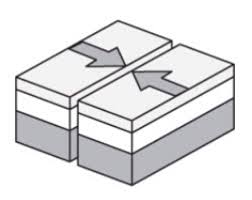
Name the boundary
a)
convergent boundary
b)
divergent boundary
c)
transform boundary
d)
sergent boundary
13.
Name the boundary
a)
convergent boundary
b)
divergent boundary
c)
transform boundary
d)
sergent boundary
14.
In which type of boundary do the plates move away from each other?
a)
convergent
b)
normal
c)
divergent
d)
transform
15.
What drives tectonic plate movement? 
a)
gravity
b)
coriolis effect
c)
convection currents
d)
the earth's magnetic core
16.

Which type of rock results from melting and solidification of magma?

a)

Igneous

b)

Metamorphic

c)

Sedimentary

d)

Extrusive

17.
Which type of rock forms from extreme heat and pressure?
a)
Igneous
b)
Sedimentary
c)
Organic
d)
Metamorphic
18.
What is the MAIN way rocks are classified?
a)
Their color and shapes
b)
How they form
c)
Mineral bands
d)
Where they form
19.
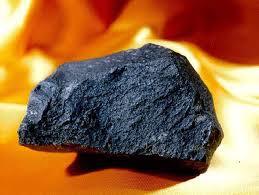
This rock was found near the mouth of a volcano. What type of rock is this?
a)
Sedimentary
b)
Igneous
c)
Metamorphic
20.
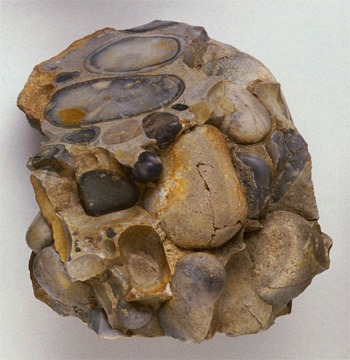
This rock was formed by smaller pieces of rock that settled at the bottom of a lake millions of years ago. What type of rock is this?
a)
Sedimentary
b)
Igneous
c)
Metamorphic
21.
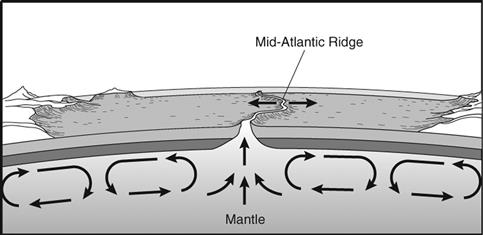
The diagram represents the movement of the mantle under the earth's crust. Which process is represented by the diagram?
a)
rotation
b)
conduction
c)
radiation
d)
convection
22.
What word best describes our sun?
a)
Average
b)
Supergiant
c)
Dwarf
d)
Red Giant
23.
What color of star is the hottest?
a)
Blue
b)
Red
c)
Yellow
d)
Orange
24.
What color of star is the coolest?
a)
Red
b)
Yellow
c)
Blue
d)
White
25.
The color of the star tells us its 
a)
composition
b)
Temperature
c)
Luminosity 
d)
Mass
26.
Our star is a 
a)
yellow/ large star
b)
yellow/ small star
c)
yellow/ medium star
27.
Galaxies are composed of 
a)
millions of stars
b)
trillions of stars
c)
billions of stars, dust and gas
28.
The star around which Earth and other planets orbit.
a)
Moon
b)
Sun
c)
Mars
d)
Mercury
29.
Why do the stars appear to move across the sky at night? 
a)
The Moon revolves.
b)
Earth rotates on its axis.
c)
Earth revolves around the Sun
30.
Why do you see different stars in winter and summer?
a)
Earth rotates on its axis.
b)
The Moon revolves around Earth.
c)
Earth revolves around the Sun.
31.
Where do asteroids collect in the Solar System?
a)
between Earth and Mars
b)
Between Mercury and Venus
c)
Between Mars and Jupiter
d)
Near Pluto
32.
What is the heliocentric model of the universe?
a)
Earth is the center of the solar system
b)
The sun is the center of the solar system
33.
One complete revolution / orbit of the earth =
a)
Year
b)
Day
c)
Month
d)
Week
34.
One complete rotation of the earth =
a)
Year
b)
Day
c)
Month
d)
Week
35.
How long does it take the earth to rotate once on its axis?
a)
365 days
b)
24 hours
c)
26,000 years
d)
18 months
36.
A model of the solar system in which Earth and the other planets revolve around the SUN.
a)
Heliocentric
b)
Geocentric
37.
The energy from the sun is created by a process called:
a)
nuclear fission
b)
nuclear fusion
c)
nuclear reaction
d)
nuclear core
38.
About how many days does it take to moon to go through a complete cycle?
a)
7 days
b)
365 days
c)
29 days
d)
20 days
39.
When the visible (lit) portion of the moon is increasing, the moon is:
a)
waning
b)
full
c)
waxing
d)
new
40.
When the Earth is between the moon and sun, it is most likely a:
a)
new moon
b)
full moon
c)
waxing crescent
d)
waxing gibbous
41.
Changes in the moon's appearance are
a)
phases
b)
eclipses
c)
stages
d)
cycle
42.
Why do we always see the same side of the moon from Earth?
a)
because the phases change
b)
because it rotates and revolves at the same rate
c)
because half of the moon always receives sunlight
d)
The moon changes positions
43.
The phase of the moon that occurs between the sun and Earth
a)
Full moon
b)
Waxing crescent
c)
Waning Crescent
d)
New Moon
44.
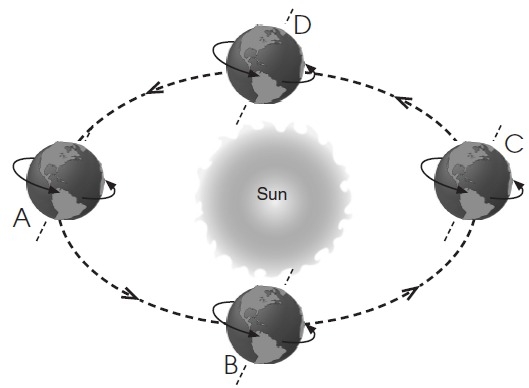
What season is letter A?
a)
Winter
b)
Summer
c)
Spring
d)
Fall
45.
What are the reasons for the seasons?
a)
Earth's tilt and rotation.
b)
Earth's rotation and revolution.
c)
Earth's tilt and revolution.
d)
Earth's tilt and resolution
46.
How long after a new moon will it take to see another new moon?
a)
12 days
b)
29.5 days
c)
27.3 days
d)
365 days
47.
Tides are caused by ___________
a)
wind
b)
gravitational pull of moon
c)
waves gravitation toward land
d)
rain
48.
What happens when the area in which you live tilts away from the sun?
a)
It is summer.
b)
It is spring.
c)
It is winter.
d)
It is fall.
49.
What Moon phase is this?
a)
Full Moon
b)
Waxing Gibbous
c)
New Moon
d)
Half Moon
50.
What Moon phase is this?
a)
Old Moon
b)
Far Side of the Moon
c)
New Moon
d)
Waxing Gibbous
51.
As the moon's shape appears to get smaller, we say that the moon is _.
a)
swelling
b)
waxing
c)
waning
d)
disappearing
52.
Phases of the moon in which the moon appears to be getting larger are referred to as _.
a)
waxing
b)
waning
c)
new
d)
eclipse
53.
If the last full moon was on April 4th, when can you expect to see the next full moon? 
a)
April 29th
b)
July 4th
c)
May 4th
d)
September 12th
54.

The moon's surface is visible from Earth because the moon

a)

absorbs light from Earth

b)

produces its own light

c)

reflects sunlight

d)

glows in the dark

55.

When earth's shadow falls on the moon it causes a

a)

solar eclipse

b)

lunar eclipse

c)

blue moon

d)

new moon

56.

At which moon position would a person on earth see a new moon

a)

A

b)

B

c)

C

d)

D

57.

At which moon position would a person on earth see a full moon

a)

A

b)

B

c)

C

d)

D

58.
Which type of motion causes night / day? 
a)
Rotation
b)
Revolution
c)
Kepler's 1st Law
d)
Nutation
59.
Which term describes the time it takes for Earth to complete one circle around the sun.
a)
Rotation
b)
Revolution
c)
Kepler's 1st Law
d)
Barycenter
60.
Which is the correct hierarchy of the Earth in the universe from SMALLEST TO LARGEST?
a)
Milky Way Galaxy, Earth, solar system, universe
b)
Earth, solar system, universe, Milky Way Galaxy
c)
Earth, solar system, Milky Way Galaxy, universe
d)
universe, Milky Way Galaxy, solar system, Earth
61.
In what form does the Sun's energy travel to Earth?
a)
Heat
b)
Electrical energy
c)
Electromagnetic radiation
d)
Mechanical energy
62.
Heat that is transferred by waves of “light” that we can feel but not see is called ________
a)
radiation
b)
convection
c)
induction
d)
conduction
63.
What keeps the Earth and other planets in orbit?
a)
The sun
b)
Gravity
c)
Earth's magnetic field
d)
tides
64.
Earth is tilted at an angle of 23.5 degrees on its axis
a)
true
b)
false
65.
The shortest  day of the year in North America is the
a)
New Year
b)
summer solstice
c)
winter solstice
d)
equinox
66.
At position D in the Northern hemisphere it would be _____?
a)
Summer
b)
Winter
c)
Spring
d)
Fall
67.
What time of the year is the Earth slightly closer to the Sun in the Northern Hemisphere?
a)
in the summer
b)
in the winter
c)
in the fall
d)
in the spring
68.
What effect does the Moon have on the Earth?
a)
It gives us day and night.
b)
It causes tides.
c)
It gives us years.
d)
It makes us rotate on our axis.
69.
What part of the illustration shows Evaporation? 
a)
1
b)
2
c)
3
d)
4
70.
Which number illustrates Condensation?
a)
1
b)
2
c)
3
d)
4
71.
What does this symbol on a weather map indicate? 
a)
High pressure system
b)
Low pressure system
c)
Cold front
d)
Warm front
72.
What does this symbol indicate on a weather map? 
a)
High pressure system
b)
Low pressure system
c)
Cold front
d)
Warm front
73.
What kind of weather is usually associated with a high pressure system?
a)
Sunny weather
b)
Precipitation (rain, snow, etc.)
74.
Which weather tool measures air pressure?
a)
thermometer
b)
barometer
c)
anemometer
d)
psychrometer
75.
This weather tool measures wind speed and direction
a)
thermometer
b)
barometer
c)
anemometer
d)
psychrometer
76.
Which weather tool measures temperature?
a)
thermometer
b)
barometer
c)
psychrometer
d)
anememeter
77.
The boundary  between two air masses is known as:
a)
front
b)
storm
c)
climate
d)
flood
78.
Hot air (RISES / FALLS) __________.
a)
RISES
b)
FALLS
79.
Cold air (RISES/ FALLS)  _________.
a)
RISES
b)
FALLS
80.
Which condition usually means cloudy, stormy weather?
a)
high pressure
b)
low pressure
81.
What does this symbol on a weather map indicate? 
a)
High pressure system
b)
Low pressure system
c)
Cold front
d)
Warm front
82.
A _____ is a large, swirling, low-pressure system that forms over the Atlantic Ocean.
a)
blizzard
b)
cold front
c)
tornado 
d)
hurricane
83.
Rain, snow, sleet, and hail are all forms of _____.
a)
precipitation
b)
condensation
c)
evaporation
d)
climate
84.
The amount of water vapor present in the air is called ________________.
a)
weather
b)
humidity
c)
air mass
d)
dew point
85.
When a warm air mass gently slides on top of a cold air mass, and you have drizzly rain and then warmer weather, what type of front is it?
a)
warm front
b)
cold front
c)
occluded front
d)
stationary front
86.
Identify the type of front that is shown in the image.
a)
Occluded Front
b)
Cold Front
c)
Stationary Front
d)
Warm Front
87.
Identify the type of front that is shown in the image.
a)
Occluded Front
b)
Cold Front
c)
Stationary Front
d)
Warm Front
88.
Warm air moving upwards from the Gulf of Mexico is:
a)
continental tropical
b)
continental polar
c)
maritime tropical
d)
maritime polar
89.
What is the most abundant gas found in the atmosphere?
a)
Carbon Dioxide
b)
Nitrogen
c)
Oxygen
d)
Water Vapor
90.
________________ are made of water vapor that condenses in the troposphere.
a)
dew
b)
clouds
c)
evaporation
d)
transpiration
91.
__________ a two-thermometer instrument slung around a rod or pole that is also referred to as a wet dry bulb used to measure relative humidity.
a)
thermometer
b)
barometer
c)
sling psychrometer
d)
anemometer
92.
Warm air near the Earth’s surface rises and then cools and drops, this creates a _________________ in the atmosphere.
a)
run-off
b)
Greenhouse Effect
c)
convection current
d)
water cylce
93.
Because the earth is spinning on its axis, the global winds appear to curve. This is known as the __________ ________.
a)
Coriolis Effect
b)
Greenhouse Effect
c)
Climate Effect
d)
Atmosphere Effect
94.
Where does a hurricane form?
a)
Over a cold body of water
b)
Over a warm body of water
c)
Over cold land
d)
Over warm land
95.
What kind of weather is usually associated with a low pressure system?
a)
Sunny weather
b)
Precipitation (rain, snow, etc.)
96.
What layer does weather occur in?
a)
mesosphere
b)
troposphere
c)
thermosphere
d)
stratosphere
97.
Where is the ozone layer located?
a)
Thermosphere
b)
Troposphere
c)
Stratosphere
d)
Mesosphere
98.
The blanket of gases that surrounds the Earth
a)
Lithosphere
b)
Atmosphere
c)
Hydrosphere
d)
Green House Effect
99.
Which letter would you find at 15oS, 60oW?
a)
A
b)
C
c)
L
d)
H
100.
What is the approximate location of letter B?
a)
80oN, 0o
b)
0o, 80oW
c)
80oS, 0o
d)
0o, 80oE
101.
The 0 degree line of longitude that divides the Eastern and Western Hemispheres.
a)
Prime Meridian
b)
meridian
c)
equator
d)
parallel
102.
Contour lines that are very close together indicate the land is _______________
a)
gentle/gradual
b)
a forest
c)
steep
d)
a swamp
103.
What could be the elevation of the mountain top?
a)
860 km
b)
840 km
c)
841 - 859 km
d)
861 - 869 km
104.
Determine the contour interval:
a)
5 m
b)
10 m
c)
15 m
d)
20 m
105.
Lines on a topographic map that connect lines of equal elevation:
a)
contour lines
b)
contour interval
c)
index contour
d)
contour loops 
106.
The lines on the globe that appear horizontal on your maps and go North or South of the equator are line of ___________
a)
latitude
b)
longitude
c)
prime meridian
d)
meridians
107.
When moving from time zone to time zone if you are traveling east for each time zone you need to move your clock  ______________
a)
one hour ahead
b)
one hour back
c)
you do not need to change your clock.
d)
two hours ahead.
108.
Erosion is...
a)
materials begin moved across the Earth's surface by water and wind
b)
materials deposited into a new location as sediment
c)
rocks and other materials being broken down both physically and chemically
109.
What are three types of rocks?
a)
sedimentary, igneous, metamorphic
b)
mantle, igneous, sedimentary
c)
crust, core, mantle
110.
How are sedimentary rocks formed?
a)
cooling
b)
erosion
c)
heat and pressure
d)
compacting and cementing
111.
Which layer would be the oldest?
a)
siltstone
b)
sandstone
c)
conglomerate
d)
mudstone
112.
Deposition is...
a)
using too much fertilizer
b)
materials deposited into a new location as sediment
c)
rocks and materials being broken down
d)
materials being moved by water and wind
113.
Which of these often occur as the Earth's crustal plates move?
a)
earthquakes
b)
floods
c)
tornadoes
d)
hurricanes
114.
Where are earthquakes and volcanoes likely to occur?
a)
anywhere
b)
at boundary plates (fault lines)
c)
on mountains
115.
What type of rock would you most likely find a fossil inside of?
a)
sedimentary
b)
igneous
c)
metamorphic
d)
diamond
116.
What type of rock is formed when magma and lava cools and hardens?
a)
minerals
b)
sedimentary
c)
igneous
d)
metamorphic
117.
_______ is found by rubbing the mineral against an unglazed tile called a plate.
a)
Cleavage
b)
Color
c)
Luster
d)
Streak
118.
This is how a mineral reflects light.
a)
Cleavage
b)
Density
c)
Hardness
d)
Luster
119.
This describes how a mineral looks if it breaks in an irregular way.
a)
Cleavage
b)
Fracture
c)
Inorganic
d)
Organic
120.
What is Hardness?
a)
The tendency of a mineral to split easily along flat surfaces.
b)
A measure of how easily a mineral can be scratched.
c)
The way a mineral shines, or reflects light.
121.

If a mineral is scratched by fluorite, and can scratch gypsum, what is its hardness rating?

a)

10

b)

1

c)

4

d)

3

122.

If a mineral is not scratched by corundum, what is its hardness rating?

a)

1

b)

4

c)

5

d)

10

123.
The type of plate boundary where two plates come together is a .....
a)
Convergent Boundary
b)
Divergent Boundary
c)
Transform Boundary
d)
Plate Boundary
124.
Which of the following causes Earth's tectonic plates to move?
a)
Energy from the Sun
b)
Magnetic Pole Reversal
c)
Convection currents in the mantle
d)
Faults in Mountain Ranges
125.
After lots of time, pressure, and heat, you get this kind of rock. What type of rock is this?
a)
Sedimentary
b)
Igneous
c)
Metamorphic
126.

When rocks are broken down into smaller pieces

a)

erosion

b)

weathering

c)

deposition

127.

When a mineral breaks on a straight line, this is ________________

a)

fracture

b)

luster

c)

cleavage

128.

Gradual movement of the continents across the earth's surface through geological time is what?

a)

The continental float trip

b)

Drift away

c)

Continental drift

129.

What is the name of the "supercontinent" proposed by Alfred Wegener?

a)

Eurasia

b)

Super America

c)

Pangaea

130.

Type of boundary where the 2 plates move apart.

a)

convergent

b)

divergent

c)

transform

131.

The way light reflects off of a mineral is its _________.

a)

streak

b)

fracture

c)

luster

d)

cleavage

132.
Which mineral property is being shown here?
a)
luster
b)
hardness
c)
cleavage
d)
streak
133.

The lower part of the upper mantle

a)

Asthenosphere

b)

Lithosphere

c)

Mesosphere

d)

Stratosphere

134.

The part of the earth that includes the crust and the upper mantle is the

a)

lithosphere

b)

mesosphere

c)

asthenosphere

d)

outer core