Wayground logo

Free Printable Worksheets

Font size

S
M
L
XL
Worksheets

AP Biology Semester 2 Finals Review 2018

Total questions: 49

Worksheet time: 32mins

Name
Class
Date
1.
Most plants appear green because chlorophyll
a)
absorbs green light.
b)
absorbs violet light.
c)
reflects green light.
d)
does not absorb violet light.
2.

The reactants of photosynthesis are

a)

sugar and water.

b)

sugar and oxygen.

c)

carbon dioxide, water, and light

d)

carbon dioxide and oxygen.

3.
Which gas is removed from the atmosphere during photosynthesis?
a)
hydrogen
b)
oxygen
c)
nitrogen
d)
carbon dioxide
4.
Where do the light-dependent reactions occur? 
a)
thylakoid membrane
b)
stroma
c)
mesophyll
d)
mitochondria
5.
What is the primary function of the light-dependent reactions of photosynthesis?
a)
To produce glucose
b)
To produce NADPH and ATP
c)
To use ATP
d)
To produce RuBP
6.
Use the diagram to answer the question. Between which parts of the molecule must the bonds be broken to form an ADP molecule?
a)
A and B
b)
A and C
c)
B and C
d)
C and D
7.
How many sugar molecules are produced from every six molecules of carbon dioxide that enter the Calvin cycle?
a)
1
b)
3
c)
6
d)
12
8.

Which of the following is a drawback of performing fermentation?

a)

Short lived (about 30 seconds)

b)

Lactic acid causes muscle pain

c)

Doesn't produce enough ATP for sustained activity

d)

All of the options are drawbacks

9.

Which stage of cellular respiration is anaerobic?

a)

Glycolysis

b)

Kreb's Cycle

c)

Electron Transport Chain

10.

Where do H+ ions build up to create a proton gradient?

a)

In the mitochondrial matrix

b)

In the chloroplast stroma

c)

In the mitochondrial intermembrane space

d)

In the thylakoid disks

11.

Which of the following molecules acts as a final electron acceptor in the ETC?

a)

H+

b)

NADH & FADH2

c)

H20

d)

0xygen

12.
Describe the bacteria phenotype in the +Plasmid  AMP/LB plate.
a)
The bacteria grew but did not glow in the dark
b)
The bacteria grew AND glowed in the dark
c)
The bacteria did not grow at all
13.
Describe the bacteria phenotype in the -Plasmid  LB/AMP plate.
a)
The bacteria grew but did not glow in the dark
b)
The bacteria grew AND glowed in the dark
c)
The bacteria did not grow at all
14.
What ingredient in the agar causes the bacteria to fluoresce (glow in the dark)?
a)
LB
b)
Arabinose
c)
Ampicillin
d)
Agar
15.
What is the purpose of calcium in the bacteria transformation lab?
a)
It causes the plasmid DNA to be taken into the bacteria cells
b)
It binds to the negative charges on the phosphate heads in order to neutralize charge.
16.
Which organism below does not have a jaw?
a)
Hagfish
b)
eagle
c)
Salmon
d)
Shark
17.
What is the scientific name for the cartilagenous fish?
a)
Chondrichthyes
b)
Osteichthyes
c)
Aves
d)
Amphibia
18.
Which of the following is NOT an amphibian?
a)
Salamander
b)
Frog
c)
Newt
d)
Gecko
19.
Which of the following does have lungs?
a)
Shark
b)
Salmon
c)
Frog
d)
Lamprey (agnatha)
20.
Which of the following animal classes have a four chambered heart?
a)
Aves
b)
Reptilia
c)
Osteichthyes
d)
Agnatha
21.
Which animal is cold blooded?
a)
Mouse
b)
Hummingbird
c)
Human
d)
Snake
22.
Which of the following animal classes is the most diverse and has the most number of species?
a)
Chrondrichthyes
b)
Mammalia
c)
Osteichthyes
d)
Reptilia
23.
Which characteristic developed first (according to this cladogram)? 
a)
Bilateral Symmetry
b)
Mesoderm
c)
Calcified shell
d)
Vertebrae
24.
Which characteristic developed first (according to this cladogram)? 
a)
Head develops First
b)
Segmented Body
c)
Chitonous Shell
25.
What does Darwin's theory of evolution suggest?
a)
species change over time
b)
extinct species are not related to living species
c)
different species can interbreed
d)
animals that look alike are most closely related
26.
Who developed the theory of acquired characteristics - a species can improve itself slightly within its generation and pass this trait on to its offspring.
a)
Gregor Mendel
b)
Jean Baptiste Lamarck
c)
Charles Darwin
d)
Thomas Hunt Morgan
27.
We have such a diverse group of dogs today because of ________.
a)
Natural Selection
b)
Artificial Selection
c)
Analogous Structures
d)
Geographic Isolation
28.
Which of the following is NOT one of Darwin's four principles of natural selection
a)
Variation exists within populations
b)
Heritability of Traits (Traits can be inherited)
c)
Adaptation can happen within a species lifetime
d)
There will always be competition for limited resources
29.

This laboratory procedure is known as

a)

CLONING

b)

gel electrophoresis

c)

chromatography

d)

use of a dichotomous key

30.

In preparation for an electrophoresis procedure, enzymes are added to DNA in order to

a)

convert the DNA into gel

b)

cut the DNA into fragments

c)

change the color of the DNA

d)

produce longer sections of DNA

31.

Gel electrophoresis is used to separate DNA fragments on the basis of which property?

a)

size

b)

color

c)

functions

d)

chromosomes

32.
______________ is a type of bacterial reproduction that moves a plasmid from one bacteria to another by a virus.
a)
Transduction
b)
Transformation
c)
Conjugation
33.
______________ is a type of bacterial reproduction that involves two bacteria sharing genetic information.
a)
Transduction
b)
Transformation
c)
Conjugation
34.
______________ is a type of bacterial reproduction that involves bacteria absorbing DNA fragments from the environment.
a)
Transduction
b)
Transformation
c)
Conjugation
35.
The protein coat that surrounds the DNA/RNA in a virus.
a)
Capsid
b)
Peptidoglycan
c)
Chitin
d)
Envelope
36.
A virus that reproduces using RNA is a _____________.
a)
Retrovirus
b)
Bacteriophage
37.
A virus that only infects bacteria is a _________________.
a)
Retrovirus
b)
Bacteriophage
38.
What part of the phage is the DNA?
a)
A
b)
B
c)
C
d)
D
39.
Which viral life cycle kills its host cell by lysing?
a)
lytic
b)
mitosis
c)
lysogenic
d)
S phase
40.
Which viral life cycle allows viral genetic material to lay dormant while the host cell reproduces?
a)
lytic
b)
mitosis
c)
lysogenic
d)
S phase
41.

What phyla contains earthworms?

a)

Invertebrates

b)

Mollusca

c)

Anthropoda

d)

Annelida

42.

What phyla to all vertebrates belong in?

a)

Chordates

b)

Porifera

c)

Echinoderms

d)

Mammals

43.
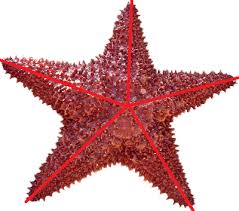
What type of symmetry is displayed in the picture?
a)
asymmetry
b)
bilateral symmetry
c)
radial symmetry
d)
photosynthesis
44.
Organisms, like sponges, lacking body tissues and body symmetry belong to which of the following phyla?
a)
Cnidaria
b)
Mollusca
c)
Nematoda
d)
Porifera
45.
Mollusks include which of the following?
a)
Octopus, Squid, Slugs, Snails
b)
Fish, Squid, Jellyfish, Sea cucumbers
c)
Sea stars, Sea cucumbers, sea urchins
d)
Oysters, Fish, Whales, Sponges
46.

Animals that are segmented and have jointed appendages and an exoskeleton are members of the phylum

a)

Platyhelminthes

b)

Arthropoda

c)

Annelida

d)

Ctenophora

47.
What phylum do crustaceans belong to?
a)
Animalia
b)
Echinodermata
c)
Arthropoda
d)
Cnidarian
48.

Invertebrates that have stinging cells and take food into a central body cavity.

a)

Annelida

b)

Mollusk

c)

Platyhelminthes

d)

Cnidarian

49.

Identify this animal.

a)

Porifera

b)

Cnidarian

c)

Nematoda

d)

Ctenophora