
 Worksheets
Yr 10 Chemistry Revision
Total questions: 66
Worksheet time: 47mins
Name
Class
Date
1.
What is the atomic number?
a)
the number of protons
b)
the number of protons and neutrons
c)
the number of neutrons
d)
the number of protons and electrons
2.
What is the mass number?
a)
the number of protons
b)
the number of protons and neutrons
c)
the number of neutrons
d)
the number of protons and electrons
3.

What is the atomic number of this nucleus?
a)
1
b)
3
c)
4
d)
7
4.

What is the mass number of this nucleus?
a)
1
b)
3
c)
4
d)
7
5.
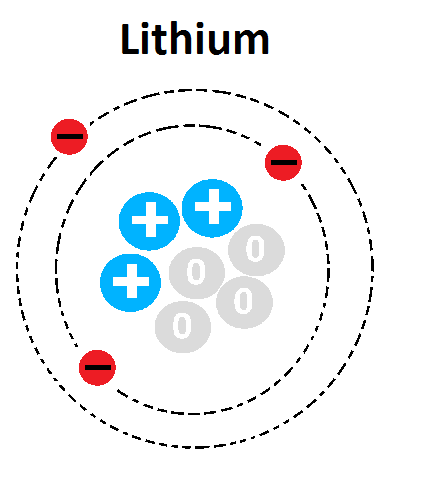
What is the atomic number of this atom?
a)
1
b)
3
c)
4
d)
7
6.
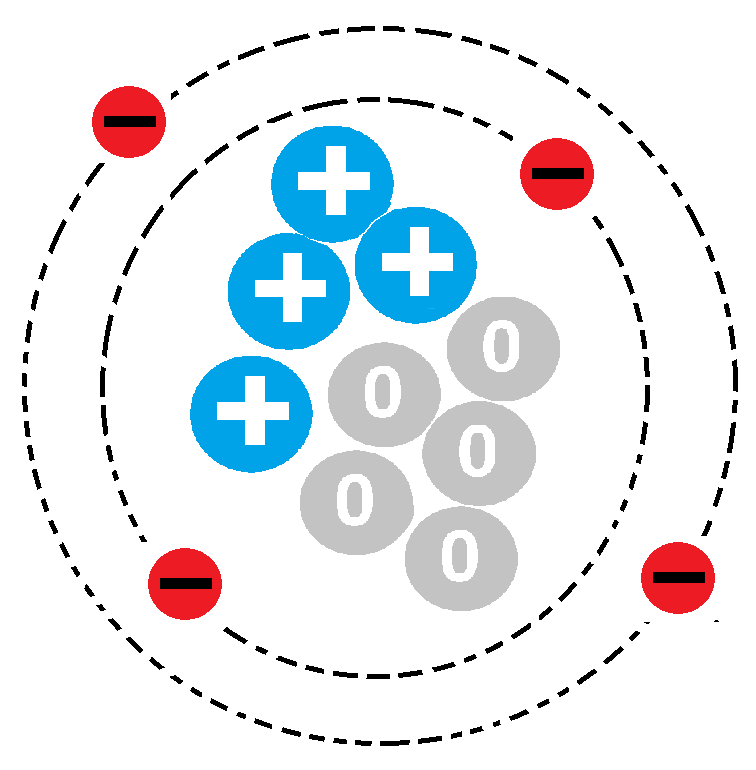
What is the atomic number of this atom?
a)
4
b)
5
c)
9
d)
none of the above
7.

What is the mass number of this atom?
a)
4
b)
5
c)
9
d)
none of the above
8.
The atomic number of Hydrogen is
a)
1
b)
2
c)
3
d)
4
9.
The atomic number of Lithium is
a)
3
b)
4
c)
5
d)
6
10.
Because atoms are neutral, the number of protons is always _______ the number of electrons
a)
greater than
b)
less than
c)
equal to
d)
proportional to
11.
A fluorine atom has 9 protons and 10 neutrons. What is the atomic number of fluorine?
a)
9
b)
10
c)
19
d)
1
12.
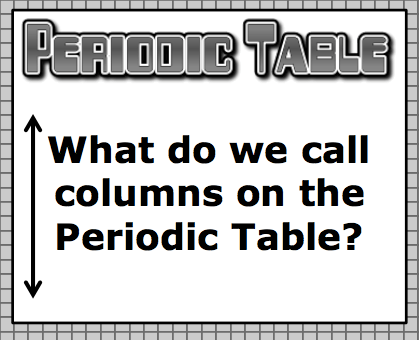
a)
Periods
b)
Groups
13.
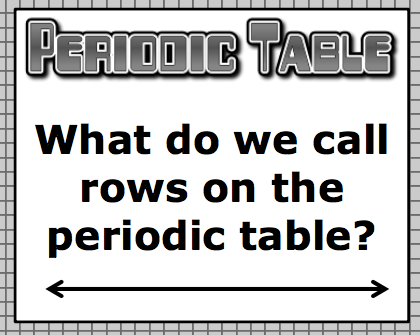
a)
Periods
b)
Groups
14.
What element has 4 valance electrons and three electron shells?
a)
Silicon
b)
Carbon
c)
Germanium
d)
Arsenic
15.
This element has 2 valance electrons and 3 electron shells.
a)
Beryllium
b)
Strontium
c)
Magnesium
d)
Calcium
16.
The elements in this group all have 5 valance electrons.
a)
Group 5
b)
Group 15
c)
Group 3
d)
Group 18
17.

a)
2
b)
3
c)
4
d)
5
18.
What element has 4 valance electrons and three electron shells?
a)
Silicon
b)
Carbon
c)
Germanium
d)
Arsenic
19.
This element has 2 valance electrons and 3 electron shells.
a)
Beryllium
b)
Strontium
c)
Magnesium
d)
Calcium
20.
The elements in this group all have 5 valance electrons.
a)
Group 5
b)
Group 15
c)
Group 3
d)
Group 18
21.
This element has 6 valance electrons and 4 electron shells.
a)
Sulfur
b)
Oxygen
c)
Pollonium
d)
Selenium
22.
What is the electron configuration of sodium?
a)
2.8
b)
2.8.2
c)
2.8.1
d)
11
23.
What is the electron configuration of calcium?
a)
2.8.8.2
b)
2.8.10
c)
20
d)
2.18.2
24.
Which element has an electron configuration of 2.5?
a)
Oxygen
b)
Nitrogen
c)
Phosphorus
d)
Carbon
25.
Which element has an electron configuration of 2.8.8?
a)
Lead
b)
Flourine
c)
Neon
d)
Argon
26.
What is the electron configuration of Aluminium?
a)
2.8.3
b)
2.11
c)
13
d)
2.8.2
27.
What is the electron configuration of chlorine?
a)
17
b)
2.7
c)
2.8.7
d)
2.8.4
28.
Which element has the electron configuration of 2.8.4?
a)
Neon
b)
Boron
c)
Gallium
d)
Silicon
29.
What is the electron configuration of beryllium?
a)
2.2
b)
2.4
c)
4
d)
6
30.
Which element has the electron configuration of 2.7?
a)
Krypton
b)
Iodine
c)
Flourine
d)
Barium
31.

What is an ion?
a)
A Charged Atom
b)
A Large Atom
c)
A Small Atom
d)
A Cute Atom
32.

Barium atoms want to form...
a)
an anion
b)
a cation
c)
an onion
d)
a cuddly kitten friend
33.

An Arsenic atom wants to form...
a)
An anion
b)
A cation
c)
An onion
d)
A cuddly kitten friend
34.

Why are ions formed?
a)
To make our lives difficult
b)
Because atoms want 8 valence electrons
c)
Because atoms have the same number of protons and electrons
d)
Because atoms gained neutrons
35.

Cations are...
a)
Positive
b)
Negative
c)
Neutral
d)
Purring
36.

Anions are...
a)
Positive
b)
Negative
c)
Neutral
d)
Crying
37.

An atom becomes _________ when it gains electrons.
a)
Positive
b)
Negative
c)
Neutral
d)
Invinsible
38.

An atom becomes _______ when it loses electrons.
a)
Positive
b)
Negative
c)
Neutral
d)
Invinsible
39.

Which particles change the charge in atoms when ions are formed?
a)
Protons
b)
Electrons
c)
Neutrons
d)
Kittens
40.

Make sure you get enough Potassium in your diet!
a)
Huh?
b)
K
c)
I <3 bananas
d)
Sure
41.
sulfate
a)
SO22-
b)
SO43-
c)
SO32-
d)
SO42-
42.
carbonate
a)
C4-
b)
CO42-
c)
CO32_
d)
CO31-
43.
phosphate
a)
PO32-
b)
PO33-
c)
PO42-
d)
PO43-
44.
nitrate
a)
N3-
b)
NO21-
c)
NO2-
d)
NO31-
45.
What is the name of K3PO4?
a)
Tripotassium Phosphate
b)
Tripotassium Phosphite
c)
Potassium phosphide
d)
Potassium phosphate
46.
What is the name of Al(NO3)3?
a)
Aluminum trinitrate
b)
Monoaluminum nitrate
c)
Aluminum (III) nitrate
d)
Aluminum Nitrate
47.
What is the proper name for CaCl2?
a)
Calcium dichloride
b)
Monocalcium dichloride
c)
Calcium chloride
d)
Calcium chlorine
48.
How many bonds does carbon have to create in order to satisfy the octet rule
a)
1
b)
2
c)
3
d)
4
49.
How do covalent bonds form?
a)
Donating & receiving valence e- between atoms.
b)
Opposite slight charges attract each other between compounds.
c)
Scientists are still not sure how they form.
d)
Sharing valence e- between atoms.
50.
A Nitrogen molecule (N2) has one triple bond. How many electrons do the nitrogen atoms share?
a)
1
1
1
b)
3
c)
4
d)
6
51.
The chemical bond formed when two atoms share electrons is called a(an) IONIC bond.
a)
True
b)
False
52.
How are covalent bonds explained?
a)
When one atom takes the other atom's electron
b)
When the atom shares an electron with an another atom
c)
When the two nucleus merge
d)
When the neutrons leave the nucleus
53.
What two types of atoms make a covalent bond?
a)
2 Nonmetals
b)
1 Nonmetal and 1 Metal
c)
2 Metals
d)
2 Noble Gases
54.
How are ionic bonds formed?
a)
When atoms share an electron
b)
When opposite charged atoms attract
c)
When one atom takes a proton
d)
When one atom takes a neutron
55.
Covalent compounds
a)
Share electrons
b)
transfer electrons
c)
contain a sea of electrons
d)
conduct electricity
56.
What is a cation?
a)
positive ion
b)
Neutral atom
c)
Two additional protons
d)
negative ion
57.
What is an anion?
a)
positive ion
b)
negative ion
c)
neutral atom
d)
2 neutrons taken away
58.
Rate of chemical reaction means
a)
amount of product formed
b)
speed of reaction
c)
concentration of reacting particles
d)
combining reactants with products
59.
Which factors increase the rate of a reaction.
a)
increasing temperature
b)
increasing concentration
c)
increasing surface area
d)
all of these
60.
Increase in temperature of the reactants can do one of the following
a)
Slow collision frequency
b)
Allow less effective collision between the particles
c)
Neutralise the reaction
d)
increase collision between the particles thus increasing the rate.
61.
Why does a catalyst increase the rate of reaction?
a)
it produces extra energy for the reactants
b)
it increases the speed of the reactant particles
c)
it increases the frequency of particle collisions
d)
it reduces the activation energy of the reaction
62.

You add more bodies into a "mosh pit" to hope for more collisions. You have increased-
a)
temperature
b)
concentration
c)
pressure
d)
catalyst
63.

You double the electricity available to make the bumper cars go even faster hoping for more collisions.
a)
temperature
b)
pressure
c)
surface area
d)
concentration
64.

You lower the high jump bar so everyone can get over it.
a)
temperature
b)
catalyst
c)
pressure
d)
surface area
65.
Why don't all collisions between particles cause a reaction?
a)
the particles also need to collide with a catalyst
b)
not all the particles collide with enough energy
c)
not all the particles collide at a high enough temperature
d)
the particles need to collide with each other twice
66.
Why does a higher temperature increase the rate of a reaction?
a)
it increases both the frequency and energy of particle collisions
b)
it only increases the frequency of particle collisions
c)
it only increases the energy of particle collisions
d)
it reduces the activation energy of the reaction
100 %

