
 Worksheets
7H Final exam review
Total questions: 150
Worksheet time: 2hrs 25mins
Name
Class
Date
1.
Which organelle is only found in a plant cell?
a)
nucleus
b)
chloroplast
c)
mitochondria
d)
cell membrane
2.

Directs all cell activities through the DNA located there.
a)
Lysosomes
b)
Nucleus
c)
ribosomes
d)
Mitochondria
3.
What is found in both plant and animal cells but is much larger in plant cells?
a)
Nucleus
b)
Mitochondria
c)
Chloroplast
d)
Vacuole
4.
Where are proteins made?
a)
Golgi body
b)
Mitoichondria
c)
Chromosomes
d)
Ribosomes
5.
This organelle takes food and turns it into ENERGY for plant and animal cells.
a)
Chloroplast
b)
Mitochondria
c)
Lysosome
d)
Ribosome
6.
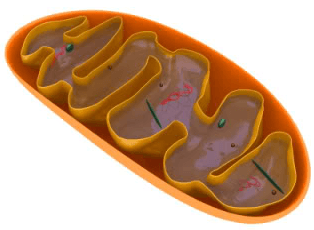
What are tiny organelles that convert glucose into ATP?
a)
Ribosomes
b)
Vesicles
c)
Cytoskeleton
d)
Mitochondria
7.
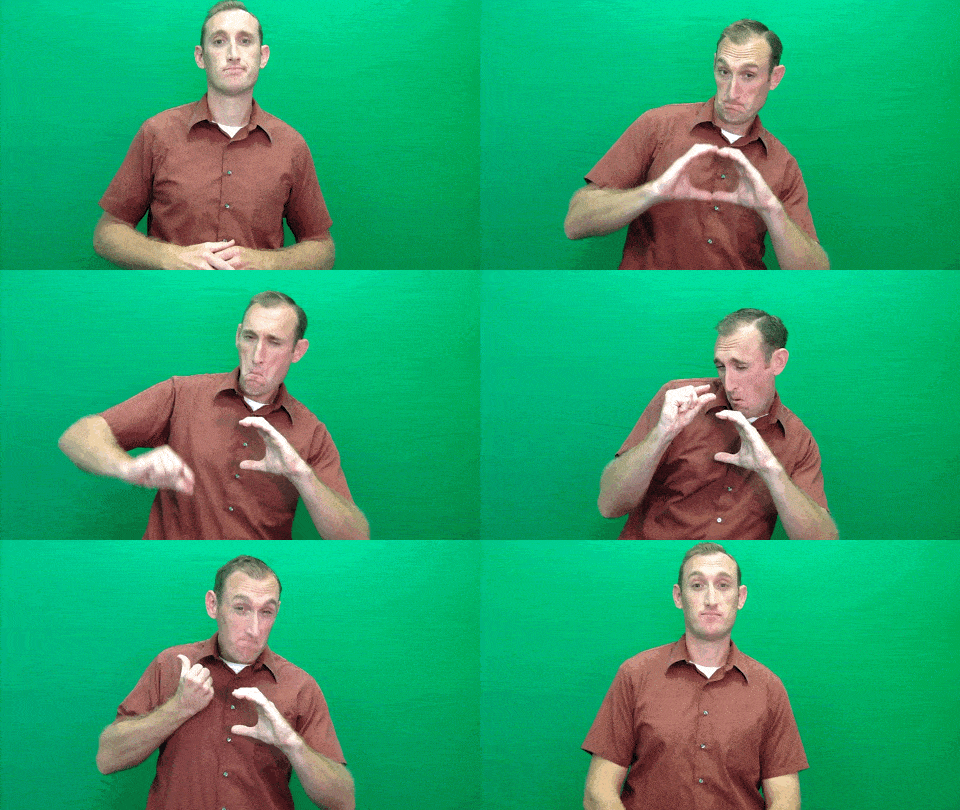
The ___________ is the basic unit of life
a)
organ
b)
cell
c)
atom
d)
tissue
8.
A group of tissues that work together to perform a similar function is called_____. (Examples include the heart, lungs or stomach)
a)
cells
b)
tissues
c)
organs
d)
organ system
9.
A group of cells that have similar functions? Examples are nervous, epithelial, muscle and connective
a)
cells
b)
tissues
c)
organs
d)
atoms
10.
Organs that work together to perform a related function is called _____________?
a)
cells
b)
tissues
c)
organ system
d)
organs
11.
When many organ systems work together it can form...
a)
organ
b)
cells
c)
organ system
d)
organism
12.
The scientific name for an organism is made from the:
a)
class and family name
b)
genus and species name
c)
domain and kingdom name
d)
kingdom and phylum name
13.
Term given to describe the 2 name naming system is:
a)
dichotmous key
b)
binomial nomenclature
c)
2 scientific names
d)
binomial key
14.
Who first proposed binomial nomenclature as a way of classifying organisms?
a)
Carl Linnaeus
b)
Carl's Jr.
c)
Charles Darwin
d)
Henry Groseclose
15.
Cells that do not have a true nucleus are called....
a)
eukaryote
b)
prokaryote
c)
unicellular
d)
multicellular
16.
Cells that have a true nucleus are called....
a)
eukaryotes
b)
prokaryotes
c)
unicellular
d)
multicellular
17.
Which 2 organisms have the fewest characteristics in common?
a)
2 organisms in the same kingdom
b)
2 organisms in the same genus
c)
2 organisms in the same species
d)
2 organisms in the same family
18.

Which organisms are closely related?
a)
American badger and leopard
b)
coyote and gray wolf
c)
european otter and leopard
d)
coyote and american badger
19.
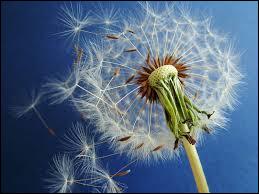
Dandelion, What kingdom does it belongs to?
a)
Plant Kingdom
b)
Animal Kingdom
c)
Fungi Kingdom
d)
Protista Kingdom
20.

Which organism in the table shown is most closely related to the common dolphin?
a)
human
b)
killer whale
c)
giant kelp
d)
bat star
21.

An illustration and a dichotomous key are given. What is the correct classification for this organism?
a)
Class Insecta
b)
Order Amblygygi
c)
Order Araneae
d)
Order Scorpiones
22.
This organism is multicellular, heterotroph, that has a cell wall made of chitin. What kingdom does it belong in?
a)
fungi
b)
plantae
c)
animalia
d)
eubacteria
23.
This organism is found in pond water. It has a nucleus, is microscopic, unicellular and can perform photosynthesis. What kingdom does it belong in?
a)
protista
b)
eubacteria
c)
archaebacteria
d)
plantae
24.
This organism is multicellular, autotroph, that has a cell wall made of cellulose.
a)
animalia
b)
plantae
c)
fungi
d)
eubacteria
25.
The amount of space that matter takes up is its _______.
a)
atom
b)
volume
c)
matter
d)
weight
26.
What is the measure of gravity on an object?
a)
matter
b)
mass
c)
weight
d)
volume
27.
Volume is ______________.
a)
length X width
b)
height X length
c)
length X width X height
d)
width X height
28.
________________ is anything that has mass and takes up space.
a)
volume
b)
matter
c)
mass
d)
weight
29.
The amount of matter in an object is its ________________.
a)
weight
b)
mass
c)
gram
d)
atom
30.
__________ has a definite shape and volume.
a)
liquid
b)
solid
c)
gas
31.
______________ does not have a definite shape or volume.
a)
liquid
b)
solid
c)
gas
32.
Dimensions of a shape are:
length- 4cm
height- 3cm
width- 10cm
What is the volume?
length- 4cm
height- 3cm
width- 10cm
What is the volume?
a)
12cm cubed
b)
40cm cubed
c)
120cm cubed
d)
17cm cubed
33.
2 meters = ____________ centimeters
a)
100
b)
20
c)
200
d)
2000
34.
4,000 milliliters = ______________ liters
a)
4
b)
40
c)
400
d)
0.4
35.
Jack has a rock. The rock has a mass of 14g and a volume of 2cm3. What is the density of the rock?
a)
7 mL
b)
7 g/cm3
c)
28 g/cm3
d)
1/7 g/cm3
36.

What is the volume of Object X?
a)
10.0 cm3
b)
15.0 cm3
c)
20.0 cm3
d)
25.0 cm3
37.
What is the formula for density?
a)
density = mass x volume
b)
density = mass / volume
c)
density = mass + volume
d)
density = mass - volume
38.
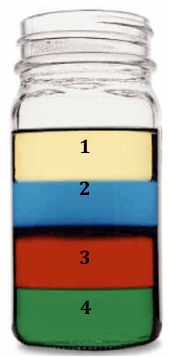
Put the liquids in order from most dense to least dense?
a)
4, 3, 2, 1
b)
1, 2, 3, 4
c)
3, 4, 2, 1,
d)
4, 3, 1, 2
39.

Which box has a higher density?
a)
Box A
b)
Box B
c)
cannot be determined
d)
they are the same
40.
The students measured length during a science experiement, they got 12 cm. But the actual measurement was 14.25 cm. What was the percent error?
a)
15.79%
b)
18.75%
c)
2.25%
d)
18%
41.

Between what two points is the most energy being added to the system
a)
A -B
b)
B-C
c)
C-D
d)
D-E
42.

Which line segment demonstrates vaporization occurring?
a)
B-C
b)
C-D
c)
D-E
d)
E-F
43.

What phase change is occurring at line segment B-C if the graph is exothermic?
a)
melting
b)
freezing
c)
boiling
d)
condensation
44.

As substance goes from D to E what happens to the distance between the particles?
a)
particles get closer together
b)
particles disappear
c)
particles get far apart
45.
The temperature at which a substance in the liquid state freezes is the same as the temperature at which the substance_________-
a)
melts
b)
sublimes
c)
boils
d)
condenses
46.
When the temperature of matter increases the particles...
a)
speed up and move closer
b)
speed up and move farther apart
c)
slow down and move closer together
d)
slow down and move farther apart
47.
What two structures are included in stamen
a)
Filament and pistil
b)
Anther and pistil
c)
Anther and filament
d)
Filament and style
48.
What three structures make up the pistil
a)
Ovary, style, stigma
b)
Ovary, style, Sepal
c)
Ovary, sepal, stigma
d)
Ovary, Stigma, Filament
49.
The process of releasing energy from food is called:
a)
Plant respiration
b)
Human circulation
c)
Body perspiration
d)
Cell respiration
50.
Oxygen is released during
a)
Cellular respiration
b)
Photosynthesis
c)
Breathing
d)
Fermentation
51.
During the process of diffusion
a)
A cell absorbs large particles
b)
Particles move from areas of lower concentration to high concentration
c)
Cell gets rid of large particles
d)
Particles move from areas of higher concerntration to low concerntration
52.

10
a)
Stomach
b)
Liver
c)
Gallbladder
d)
Pancreas
53.
What does mucus do?
a)
Digests food in the mouth.
b)
Digests food in the stomach
c)
Protects the stomach from digesting iteself
d)
Absorbs nutrients from food so the body has energy.
54.
What organ makes bile?
a)
Gallbladder
b)
Liver
c)
Pancreas
d)
Appendix
55.
Enzymes (chemicals) in your saliva help break down food while chewing. This is...
a)
Mechanical digestion
b)
Chemical digestion
56.
3
a)
Esophagus
b)
Salivary Glands
c)
Stomach
d)
Pancreas
57.
Which part of your brain controls memory?
a)
cerebrum
b)
cerebellum
c)
medulla
d)
neurons
58.
Which part of the brain controls balance and body position?
a)
cerebrum
b)
medulla
c)
cerebellum
d)
impluses
59.
Which part of the brain controls breathing?
a)
neurons
b)
medulla
c)
cerebellum
d)
cerebrum
60.
Which part of a neuron RECIEVES information?
a)
axon
b)
dendrite
c)
cell body
d)
axon terminal
61.
Arteries carry oxygen rich blood away from the heart.
a)
True
b)
False
62.
Veins carry oxygen poor blood back to the heart.
a)
False
b)
True
63.
The job of the heart is to . . .
a)
pump blood around the body.
b)
send food to the small intestines.
c)
break down food.
d)
give energy to the body.
64.
______________ are the smallest blood vessels.
a)
Arteries
b)
Veins
c)
Capillaries
65.
Which organ system removes cellular wastes as the result of cellular respiration?
a)
nervous
b)
digestive
c)
excretory
d)
circulatory
66.
Endocrine glands produce __________ which maintain the body in homeostasis
a)
oils
b)
neurotransmitters
c)
tears
d)
hormones
67.

What do you call the union of egg and sperm cell?
a)
penile erection
b)
ejaculation
c)
fertilization
d)
ovulation
68.
Which organ produces sperm cells?
a)
testes
b)
epididymis
c)
ovary
d)
prostate gland
69.
The male sex cells
a)
glans
b)
sperm
c)
penis
d)
urethra
70.
What is a fertilized egg better known as?
a)
zygote
b)
diploid
c)
gamete
d)
hybrid
71.

Meiosis makes sperm and egg cells. In humans, sperm and egg cells each have _____ chromosomes. Therefore a fertilized human egg cell (sperm and egg cell combined) would create a cell with _____ chromosomes.
a)
23, 46
b)
46, 23
c)
2, 4
d)
50, 100
72.
Which of the following cell types is formed by meiosis?
a)
skin cells
b)
sperm cells
c)
blood cells
d)
muscle cells
73.
Two female sex glands that produce the mature ova and female hormones.
a)
Ovaries
b)
Fallopian Tubes
c)
Uterus
d)
Endometrium
74.

Identify the phase of mitosis
a)
prophase
b)
metaphase
c)
anaphase
d)
telophase
75.
The point on the chromosome where the two chromatids are held together is the
a)
centromere
b)
centriole
c)
chromosome
d)
chromatid
76.
The structure of coiled DNA and proteins that forms in the cells nucleus prior to mitosis is
a)
centromere
b)
centriole
c)
chromosome
d)
chromatid
77.

Which is Metaphase?
a)
A
b)
E
c)
C
d)
F
78.
Put the stages of mitosis in the correct order.
a)
prophase - metaphase - anaphase - telophase
b)
metaphase - anaphase - prophase - telophase
c)
anaphase - prophase - telophase - metaphase
d)
telophase - metaphase - prophase - anaphase
79.
Chromosomes are made up of two identical sister _____________.
a)
chloroplasts
b)
nuclei
c)
chromatids
d)
gens
80.
What is the result of mitosis?
a)
1 cell
b)
2 genetically identical cells
c)
2 genetically different cells
d)
4 genetically identical cells
81.

The structures labeled B are
a)
centrioles
b)
chromatids
c)
centromeres
d)
chromopheres
82.

The structure labeled A is a(n)
a)
chromatid
b)
centriole
c)
centromere
d)
chromophere
83.
Which sex chromosomes would indicate a typical human male?
a)
XX
b)
X
c)
XY
d)
XXY
84.
The results of the karyotype indicate that an individual has 3 chromosome #21. Which of the following genetic disorders do they have?
a)
Edwards Syndrome
b)
Patau's Syndrome
c)
Down's Syndrome
d)
Klinefelter's Syndrome
85.
Photograph of chromosomes grouped in ordered pairs
a)
pedigree
b)
Punnett Square
c)
Venn Diagram
d)
Karyotype
86.
Who was the father of genetics
a)
Sagan
b)
Issac Newton
c)
Gregor Mendel
d)
C.jenkins
87.
The study of heredity and the variation of inherited characteristics
a)
gene
b)
genetics
c)
meiosis
d)
hybrid
88.
which is heterozygous ?
a)
Tt
b)
TT
89.
Which is homozygous ?
a)
Zz
b)
SS
90.
the genetic makeup of an organism
a)
heterozygous
b)
punnet square
c)
genotype
91.
what predicts the outcome
a)
genetic engineering
b)
punnet square
c)
probability
92.
What is a phenotype
a)
The genetic make up (code)
b)
The physical trait
93.
Which of the following is a phenotype?
a)
BB
b)
Bb
c)
bb
d)
Blue eyes
94.
having two of the same genes for the trait (sometimes called purebred).
a)
homozygous
b)
hetrozygous
c)
protein
d)
chromosome
95.
having two different genes for a trait (sometimes called hybrid).
a)
protein
b)
homozygous
c)
heterozygous
d)
genotype
96.
A homozygous dominant dog with brown fur is crossed with a heterozygous dog with brown fur. What are the percentages of the possible genotypes?
a)
100% BB
b)
75% BB and 25%Bb
c)
50 % BB and 50% Bb
d)
50% Bb and 50% bb
97.

This is an example of ___________?
a)
Incomplete dominance
b)
Co-Dominance
98.

This is an example of ___________.
a)
Incomplete Dominance
b)
Codominance
99.
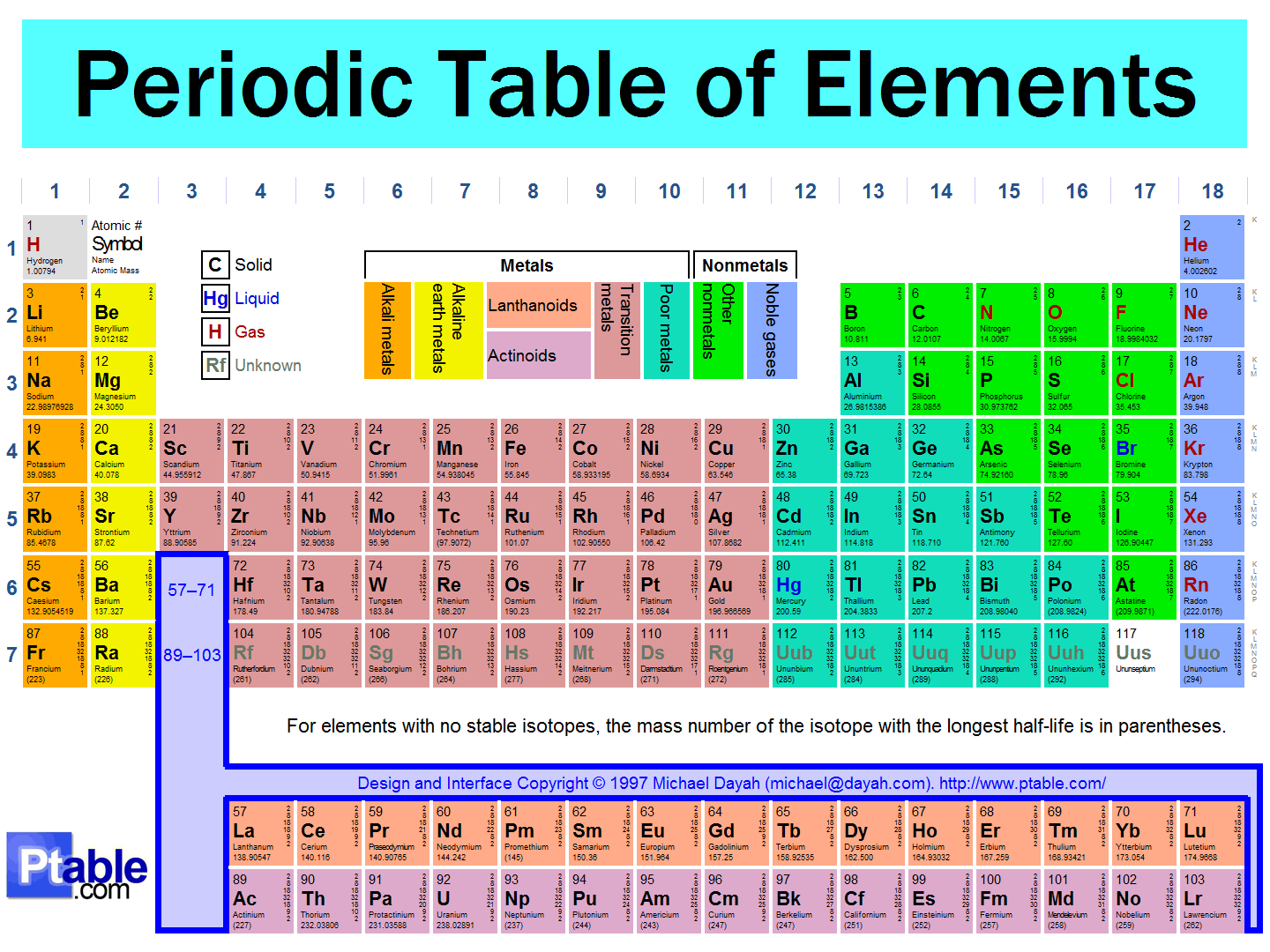
The horizontal row on the periodic table is called a
a)
group
b)
family
c)
period
d)
atomic number
100.

A vertical column is called...
a)
group
b)
tower
c)
period
d)
crew
101.
Which group of the periodic table is composed of inert (not reactive) gases?
a)
alkali metals
b)
alkaline earth metals
c)
halogens
d)
noble gases
102.
Which is an alkali metal?
a)
Magnesium
b)
Iron
c)
Sodium
d)
Europium
103.
Elements in a ..................have similar chemical properties.
a)
period
b)
group
c)
row
104.
A proton is....
a)
A negatively charged subatomic particle
b)
A positively charged subatomic particle
c)
A neutrally charged subatomic particle
d)
The only subatomic particle located in the nucleus
105.
A neutron has a charge of
a)
+2
b)
No charge
c)
-1
d)
+1
106.
the central region of an atom where its neutrons and protons are is its
a)
nucleus
b)
electron cloud
c)
core
d)
center
107.
an atom with atomic number 6 would have how many protons
a)
6
b)
12
c)
3
d)
cannot be determined
108.

What does the 1.00794 stand for?
a)
Hydrogen
b)
atomic number
c)
atomic mass
d)
atomic explosion
109.
In the modern periodic table elements are arranged by:
a)
atomic mass
b)
atomic number
c)
valence electrons
d)
number of isotopes
110.
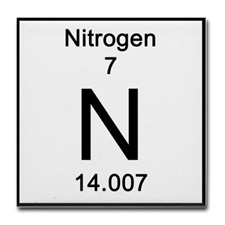
What is the number of protons that the element in this image contain?
a)
14
b)
7
c)
15
d)
18
111.

What is the atomic mass of "F"
a)
9
b)
18
c)
17
d)
19
112.
The first energy level can hold up to how many electrons?
a)
8
b)
4
c)
2
d)
5
113.
the central region of an atom where its neutrons and protons are is its
a)
nucleus
b)
electron cloud
c)
core
d)
center
114.
Which of the following is a negatively charged subatomic particle?
a)
Electron
b)
Proton
c)
Neutron
d)
Quark
115.
How many neutrons does uranium-235 have?
a)
238
b)
92
c)
146
d)
143
116.
Which of the subatomic particles is the lightest
a)
all have the same mass
b)
protons
c)
neutrons
d)
electrons
117.
The relative mass of a proton/neutron is.....
a)
0
b)
1
c)
2
d)
3
118.
Where are electrons of an atom found?
a)
Nucleus
b)
Electron Cloud
c)
Some are in the nucleus and some in the electron cloud.
d)
They are moving everywhere.
119.
Who was the Greek philosopher who called the smallest particle of matter as "atom"?
a)
Democritus
b)
Aristotle
c)
J.J Thompson
d)
Epididymis
120.
Bohr modified the Rutherford model by stating that the electrons move in orbits of fixed size and energy.
a)
True
b)
False
121.
Which scientist conducted experiments using alpha particles and thin gold foil, which later helped him develop his model for the atom?
a)
Ernest Rutherford
b)
James Chadwick
c)
Niels Bohr
d)
John Dalton
122.
Which scientist discovered the electron, which helped him develop a model of the atom?
a)
Niels Bohr
b)
John Dalton
c)
Ernst Rutherford
d)
J.J Thompson
123.
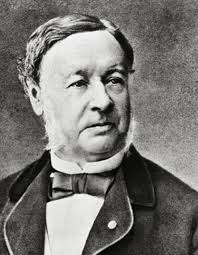
Which of the following scientists concluded that all animals are made of cells?
a)
Rudolf
Virchow
b)
Matthais
Schleiden
c)
Robert
Hooke
d)
Theodor
Schwann
124.

Which of the following scientists was the first to observe bacteria?
a)
Anton
van Leuwenhoek
b)
Matthais
Schleiden
c)
Robert
Hooke
d)
Theodor Schwann
125.
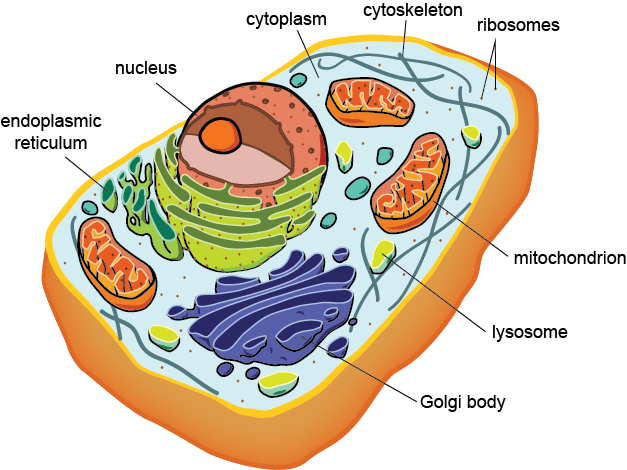
Which of the following statements is not part of the cell theory?
a)
Cells are the basic unit of structure and function in all living things.
b)
All cells are produced from other cells.
c)
Only animal cells are composed of cells.
d)
All living things are composed of cells.
126.
Who looked at cork and named the cell?
a)
Robert Hooke
b)
Van Leeuwenhoek
c)
Robert Brown
d)
Francesco Redi
127.
This bring the specimen into sharp focus
a)
Coarse Adjustment Knob
b)
Fine Adjustment Knob
c)
Eyepiece
d)
Diaphragm
128.
This moves the specimen up or down to adjust the slide containing specimen
a)
Fine Adjustment Knob
b)
Coarse Adjustment Knob
c)
Stage
d)
Diaphragm
129.
Used to control the amount of light reaching the specimen
a)
Illuminator
b)
Stage
c)
Eyepiece
d)
Diaphragm
130.

Part 9
a)
Body tube
b)
Eyepiece
c)
Objective
d)
Light Source
131.
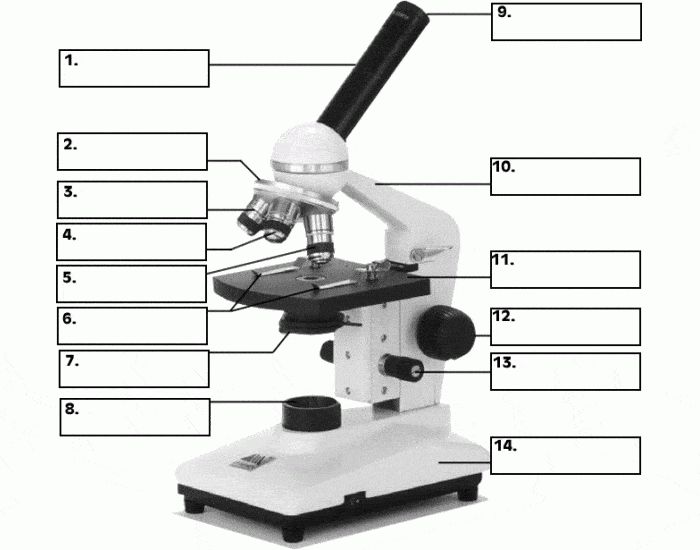
Part 12
a)
Fine Adjustment Knob
b)
Coarse Adjustment Knob
c)
Diaphragm
d)
Objective
132.

Part 13
a)
Fine Adjustment Knob
b)
Course Adjustment Knob
c)
Stage
d)
Diaphragm
133.
Find the total magnification:
Eyepiece = 10X
Objective lens = 55X
Eyepiece = 10X
Objective lens = 55X
a)
10x
b)
55x
c)
65x
d)
550x
134.
Ionic Bonding involves...
a)
The transfer of protons
b)
The transfer of nuetrons
c)
The transfer of electrons
d)
None Of the above
135.
Covalent compounds
a)
Share electrons
b)
transfer electrons
c)
contain a sea of electrons
d)
conduct electricity
136.
4Si + S8 --> 2Si2S4
a)
Synthesis
b)
Decomposition
c)
Single displacement
d)
Double displacement
137.
3Ca + 2AlCl3 --> 3CaCl2 + 2Al
a)
Synthesis
b)
Decomposition
c)
Single diplacement
d)
Double displacement
138.
3KOH + H3PO4 --> K3PO4 + 3H2O
a)
Synthesis
b)
Decomposition
c)
Single displacement
d)
Double displacement
139.
2Pb(NO3)2 --> 2PbO + 4NO2 + O2
a)
Synthesis
b)
Decomposition
c)
Single displacement
d)
Combustion
140.
How many total atoms are in the compound C2H8O ?
a)
11
b)
2
c)
8
d)
1
141.
This variable in an experiment is the one being deliberately changed by the scientist.
a)
dependent variable
b)
independent variable
c)
data
d)
control group
142.
An experiment is performed on plants to see how different liquids affect plant growth. Each plant in the experiment is given a different liquid; water, apple juice, or milk. Each plant has the same amount of soil, sunlight, and listens to the same music. In this investigation, what is the dependent variable?
a)
Type of plant
b)
Water, apple juice, milk
c)
Plant growth
d)
Color of the plant's leaves
143.
When experimenting with the growth of a plant, a scientist uses three (of the same type of) plants, two different fertilizers, equal light, and equal water. What type of variable is the fertilizer?
a)
Dependent
b)
Independent
c)
Control
d)
Compound
144.
What happens in ALL chemical changes?
a)
Change in state of matter
b)
A new substance is formed
c)
Bubbles are produced
d)
An explosion
145.
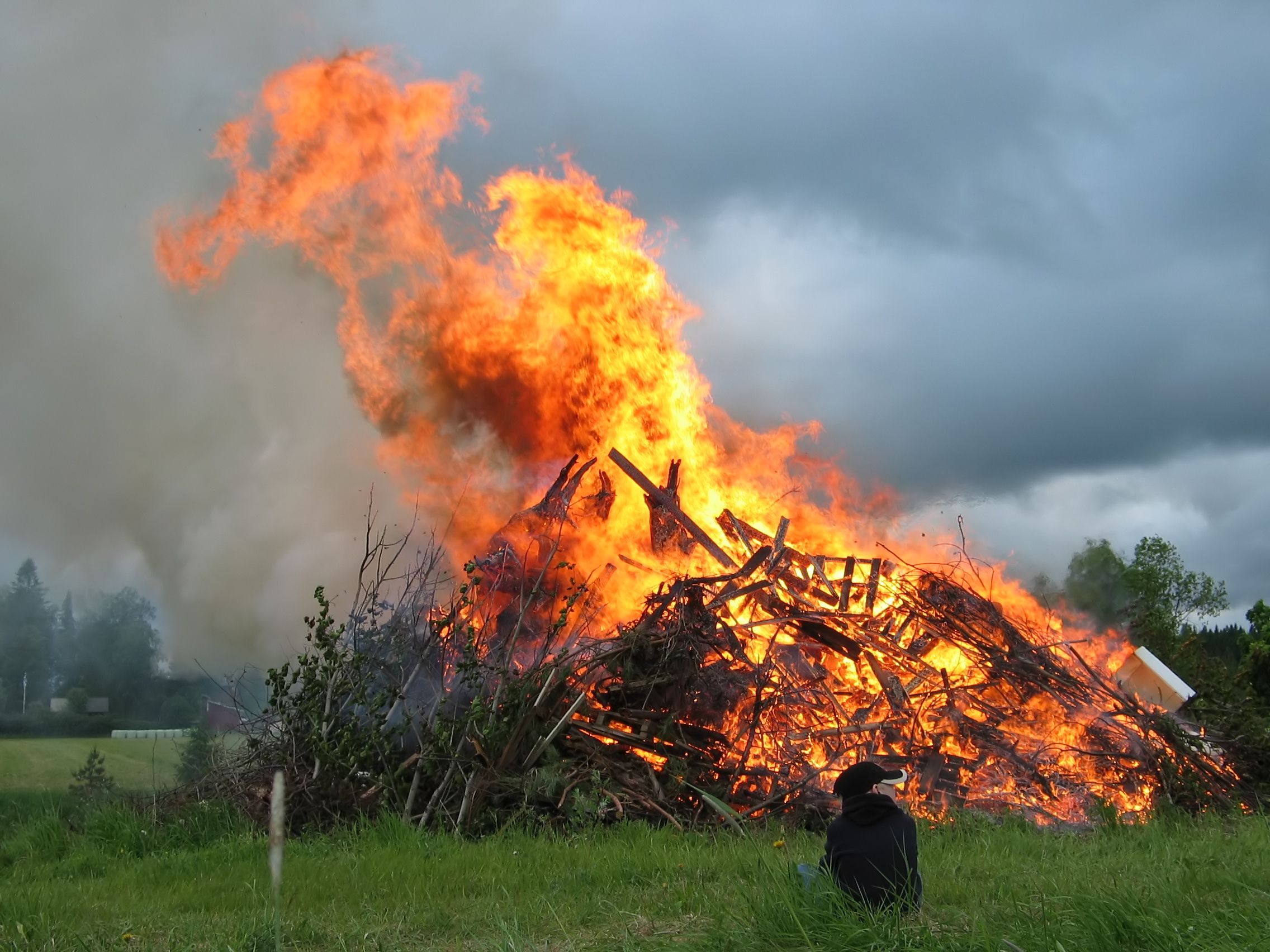
Is wood burning a physical or chemical change?
a)
Physical
b)
Chemical
146.
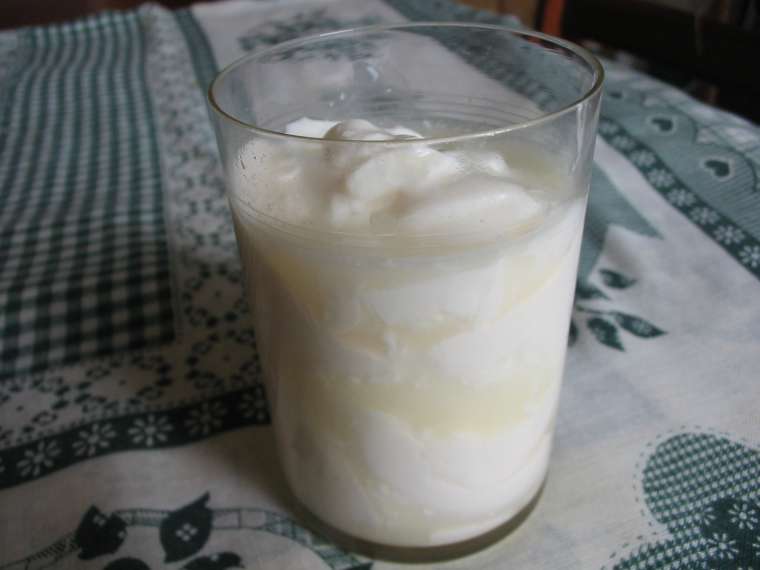
Is milk going sour a physical or chemical change?
a)
Physical
b)
Chemical
147.

Is Gatorade powder dissolving in water physical or chemical change?
a)
Physical
b)
Chemical
148.

Is sharpening a pencil a physical or chemical change?
a)
Physical
b)
Chemical
149.
In an exothermic reaction, energy is _________.
a)
Released
b)
Absorbed
c)
Stored
d)
Doubled
150.
During Photosynthesis energy is absorbed. What kind of reaction is it?
a)
Physical
b)
Exothermic
c)
Endothermic
d)
Photothermic
100 %

