
 Worksheets
REVIEW
Total questions: 170
Worksheet time: 2hrs 13mins
Name
Class
Date
1.
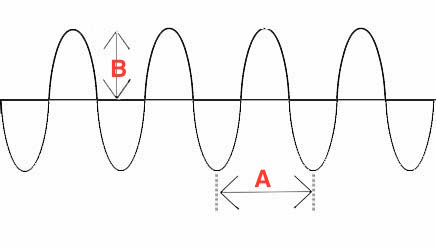
What property of this wave is represented by the letter "A"
a)
amplitude
b)
crest
c)
trough
d)
wavelength
2.
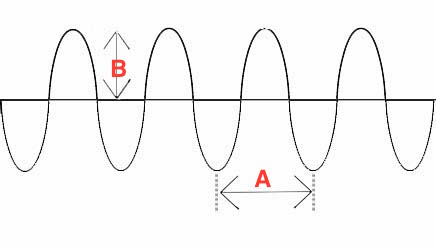
What property of the wave is represented by the letter "B"?
a)
amplitude
b)
crest
c)
trough
d)
wavelength
3.
The number of wavelengths that pass a point each per second is:
a)
frequency
b)
period
c)
longitudinal
d)
transverse wave
4.
The type of waves that require medium to pass:
a)
Mechanical Waves
b)
Electromagnetic Waves
5.
When the frequency of a wave increases, what happens to the wavelength?
a)
The wavelength is not directly affected by the frequency of a wave.
b)
The wavelength increases.
c)
The wavelength decreases.
d)
More specific information is needed to form a conclusion about the wavelength.
6.
A mechanical wave cannot travel through...
a)
a vacuum(empty space).
b)
water.
c)
air.
d)
glass.
7.
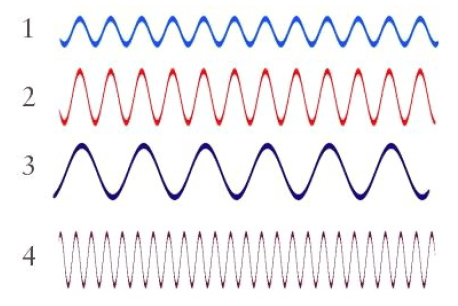
Which wave in the diagram has the greatest frequency?
a)
1
b)
2
c)
3
d)
4
8.
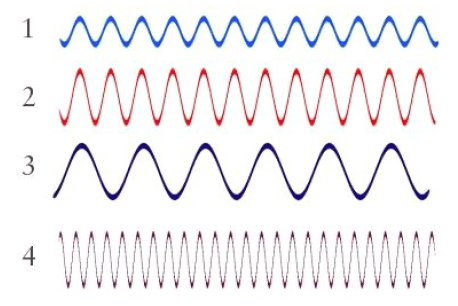
Which wave in the diagram has the greatest wavelength?
a)
1
b)
2
c)
3
d)
4
9.
Which of the following can sound travel through?
a)
solid
b)
liquid
c)
gas
d)
all of the above
10.
Electromagnetic waves include the following except
a)
radio waves
b)
X-rays
c)
doing the wave at a football game
d)
microwaves
11.
Through which material does sound travel the fastest?
a)
solid
b)
liquid
c)
gases
12.
When a wave strikes and object and bounces off. (example echo)
a)
medium
b)
refraction
c)
reflection
d)
interference
13.
Why is sound able to travel faster through a solid than a gas?
a)
Gas molecules are packed tightly.
b)
Sound does not travel faster through a solid than a gas.
c)
Solid molecules are packed tightly.
d)
Gas molecules move slowly.
14.

Sound is a form of?
a)
energy
b)
pitch
c)
volume
d)
matter
15.
The units for frequency are measured in _____________.
a)
hertz
b)
seconds
c)
m/s
d)
m
16.
What kind of wave can travel through space?
a)
electromagnetic waves
b)
compressional waves
c)
longitudinal waves
17.
A wave carries...?
a)
energy only
b)
matter only
c)
the matter carries the energy
d)
neither
19.
What is the measure of how many waves pass a point in a certain amount of time?
a)
frequency
b)
wavelength
c)
midpoint
d)
crest and trough
19.
What is the measure of how many waves pass a point in a certain amount of time?
a)
frequency
b)
wavelength
c)
midpoint
d)
crest and trough
20.
What is the measure of how many waves pass a point in a certain amount of time?
a)
frequency
b)
wavelength
c)
midpoint
d)
crest and trough
21.

Which wave has a greater frequency?
a)
A
b)
B
22.
A _____________________ is the distance between a point on one wave and the identical point of the next wave.
a)
amplitude
b)
wavelength
c)
frequency
d)
compression
23.

_______ carry the greatest amount of energy.
a)
x-rays
b)
gamma rays
c)
infrared rays
d)
visible light
24.

Cell phones use_____________waves.
a)
Microwaves
b)
Gamma
c)
XRays
d)
Radio
25.
Sound will travel slowest through which of the following forms of matter?
a)
milk
b)
desk
c)
air
d)
door
26.
Sound travels FASTEST through which of these materials?
a)
Air
b)
Empty space
c)
Metal
d)
Water
27.

Noureen looks through a glass window to see if it's raining. What makes this possible.
a)
transmission of light
b)
refraction of light
c)
scattering of light
d)
absorption of light
28.

The electromagnetic waves with the highest energy are
a)
infrared waves
b)
sound waves
c)
ultraviolet waves
d)
gamma waves
29.

Light travels fastest in
a)
seawater
b)
solids
c)
gas
d)
empty space
30.

If an object looks blue, it reflects ___ waves.
a)
blue
b)
white
c)
green
d)
black
31.

In which medium will sound travel faster?
a)
air
b)
water
c)
empty space
d)
metal
32.
The amplitude of a wave is the
a)
length of one wave
b)
frequency
c)
state of rest
d)
displacement from its state of rest
33.
A denser medium will generally make a sound wave travel
a)
slower
b)
faster
c)
the same speed
d)
not at all
34.
Which statement is NOT true?
a)
Light travels with or without a medium.
b)
Sound must have a medium to travel through.
c)
Both light and sound must have a medium to travel through.
d)
Light travels faster than sound.
35.
What are the colors of the visible spectrum?
a)
white, red, yellow, green, blue, violet
b)
white, red, yellow, green, blue violet, ultraviolet
c)
red, orange, yellow, green, blue, violet
d)
red, yellow, green, blue, violet, ultraviolet
36.
When white light shines on a film and violet light is transmitted through the film, the film
a)
added violet light to the white light
b)
added ultraviolet light to the white light
c)
absorbed ultraviolet light from the white light
d)
absorbed all the colors except violet from the white light
37.
Which material transmits the most visible light?
a)
sunglass lens
b)
mirror
c)
clear glass
d)
black cloth
38.
Which material absorbs the most visible light?
a)
sunglass lens
b)
mirror
c)
clear glass
d)
black cloth
39.
Which material reflects the most visible light?
a)
sunglass lens
b)
mirror
c)
clear glass
d)
black cloth
40.
Infrared radiation that reaches us on the Earth from the sun
a)
is not visible to humans
b)
damages the skin
c)
is a higher frequency than ultraviolet
d)
is a lower frequency than radio waves.
41.
Ultraviolet light that reaches us on the Earth from the sun
a)
is visible to humans
b)
damages the skin
c)
is at a lower frequency than infrared
d)
is at a higher frequency than X-rays
42.
Light is ________________ wave.
a)
a transverse
b)
a longitudinal
c)
both a transverse and a longitudinal
d)
neither a transverse nor a longitudinal
43.
Frequency is
a)
the amount of time for one wave cycle.
b)
the number of waves cycles in one second.
c)
the total number of wave cycles.
d)
the distance of one wave cycle.
44.
On a roller coaster, where is maximum potential energy?
a)
At the bottom of a big hill
b)
When going around a corner
c)
When going upside down
d)
At the top of a big hill
45.
On a roller coaster, where is maximum kinetic energy?
a)
At the bottom of a big hill
b)
When going around a corner
c)
When going upside down
d)
At the top of a big hill
46.
According to which law of energy, energy can't be created or destroyed?
a)
First law of motion
b)
The law of tacos
c)
Laws of Energy
d)
law of conservation of energy
47.
Energy transformations occur when...
a)
energy is created through conduction
b)
energy changes from one form to another
c)
two forces slide together that are touching
d)
a chemical reaction takes place
48.

In the image, all wavelengths of light are ________________ except for red.
a)
absorbed
b)
reflected
c)
refracted
d)
transmitted
49.

In the image, light is...
a)
absorbed
b)
reflected
c)
refracted
d)
trasmitted
50.

Which behavior of light is shown?
a)
absorption
b)
refraction
c)
reflection
d)
trasmission
51.
A large and a small football player are moving at the same speed. The large football player has greater kinetic energy because it's _________________ is greater.
a)
ability
b)
speed
c)
mass
d)
intelligence
52.
Energy of motion is which type of energy?
a)
Potential
b)
Kinetic
c)
Sound
d)
Gravitational
53.
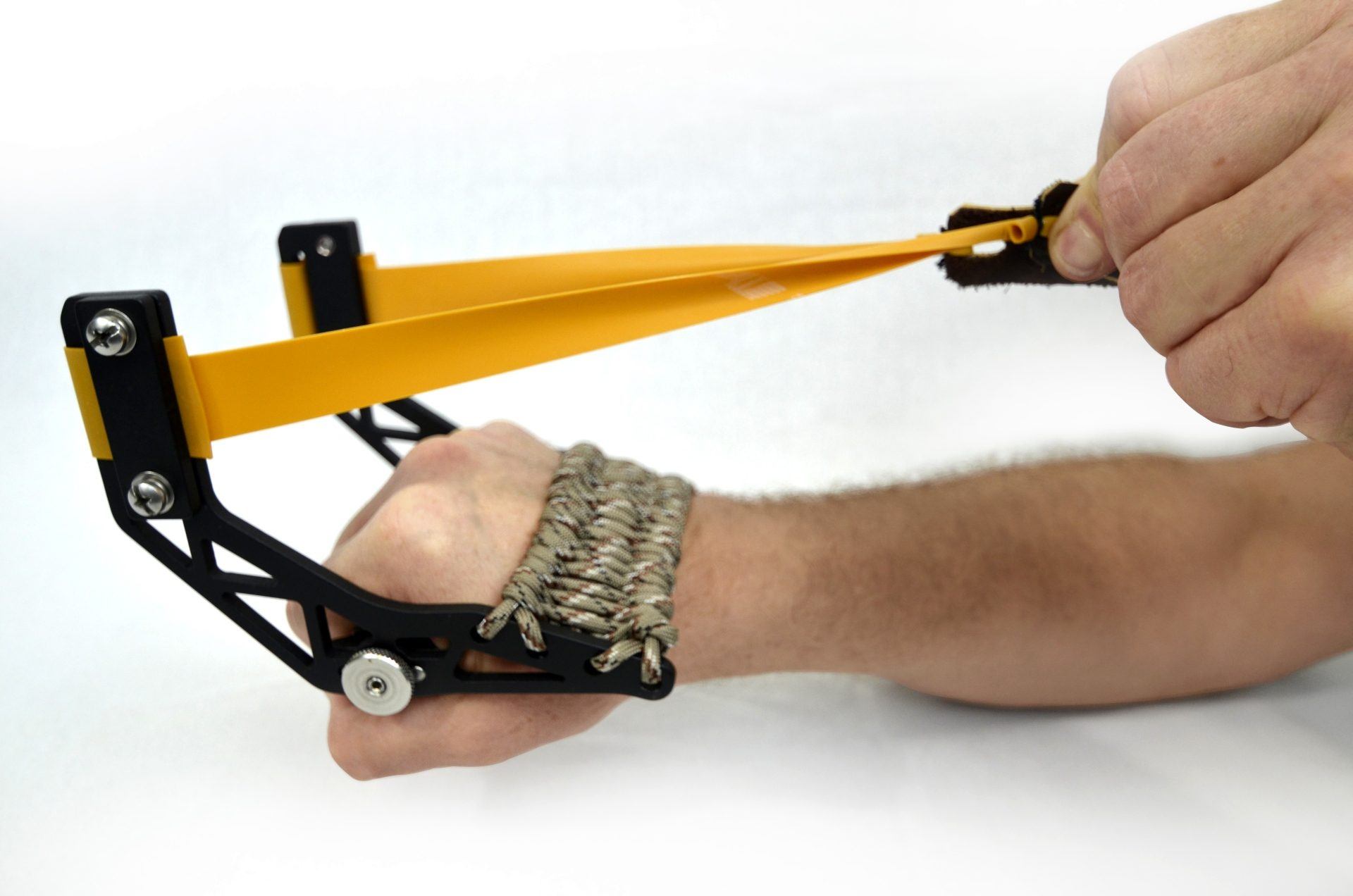
What type of energy is in this picture?
a)
Kinetic
b)
Potential
c)
Chemical
d)
Sound
54.
When plants convert the sun's energy into food, which type of energy is it?
a)
kinetic
b)
chemical
c)
thermal
d)
radiant
55.

What kind of energy is represented in this picture?
a)
Thermal
b)
Potential
c)
Nuclear
d)
Mechanical
56.

What kind of energy does this device use?
a)
Chemical
b)
Electrical
c)
Thermal
d)
Chemical
57.
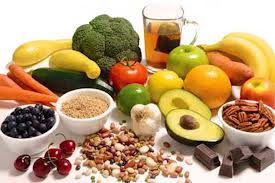
What kind of energy is represented in the picture?
a)
Thermal
b)
Chemical
c)
Sound
d)
Nuclear
58.

A battery converts what type of energy to another?
a)
sound to kinetic
b)
light to heat
c)
mechanical to electrical
d)
chemical to electrical
59.
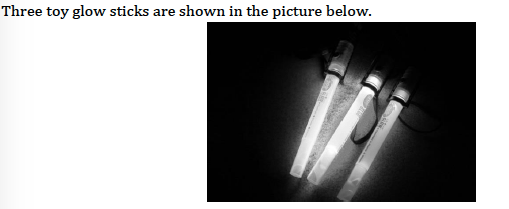
The glow sticks produce light for a short amount of time. The light from the glow stick is a conversion from what to what?
a)
thermal to light
b)
gravitational to potential
c)
radiant to electrical
d)
chemical to light
60.
Wind turbines and windmills convert what energy to another?
a)
Kinetic to electric
b)
Gravitational potential to electric
c)
Mechanical to potential
d)
Thermal to sound
61.
What machine changes electrical energy into light and sound energy?
a)
battery
b)
lightbulb
c)
alarm clock
d)
apple
62.
On a roller coaster, where is maximum kinetic energy?
a)
At the bottom of a big hill
b)
When going around a corner
c)
When going upside down
d)
At the top of a big hill
63.
Energy that is stored in bonds between atoms is:
a)
Mechanical energy
b)
Chemical energy
c)
Kinetic energy
d)
Nuclear energy
64.
Energy that comes from the nucleus of an atom. A form of potential energy.
a)
chemical energy
b)
Nuclear energy
c)
Sound energy
d)
Electrical energy
65.
When a soccer ball is on a field, the energy it has just before being kicked is called
a)
kinetic energy
b)
potential energy
c)
mechanical energy
d)
chemical energy
66.
When a hot object touches a cooler object, heat energy is transferred from the warmer object to the cooler object through:
a)
radiation
b)
electrical energy
c)
conduction
d)
solar heating
67.

The diagram shows a circuit with a battery and a bulb. While the bulb is producing light, which type of energy is decreasing in the battery?
a)
gravitational potential energy.
b)
elastic potential energy
c)
chemical potential energy
d)
mechanical potential energy
68.
Think about the Law of Conservation of Energy.
Which of the following is not true?
Which of the following is not true?
a)
Energy cannot be destroyed.
b)
Energy cannot be created.
c)
Energy cannot be transformed.
d)
Energy can only be transformed.
69.

At what position would a cyclist have the most kinetic energy?
a)
A
b)
B
c)
D
d)
F
70.

Is this picture of a stopped roller coaster this is an example of _________________ energy?
a)
Kinetic Energy Only
b)
Gravitational Potential Energy
c)
Electrical Energy
d)
Nuclear Energy
71.
What characteristic do all renewable resources share?
a)
Produced by waste products
b)
Form underground from dead organisms.
c)
Replaced in a short period of time
d)
Allow energy to pass through them easily
72.
Hydroelectric power produces electricity using.....
a)
Wind
b)
Sunlight
c)
Moving water
d)
Dung
73.
Energy from the sun is known as.........
a)
hydroelectric energy
b)
geothermal energy
c)
solar energy
d)
wind energy
74.
The energy resource that is most affected by change in weather is_____________?
a)
geothermal
b)
wind
c)
nuclear
d)
natural gas
75.
Fossil fuels are classified as nonrenewable because they.......
a)
require expensive equipment
b)
take millions of years to replace
c)
can be found all over
d)
provide all the energy we use
76.
Which of the following is the best example of solar energy being used?
a)
driving a nail into a board with a hammer
b)
starting a fire with a magnifying glass instead of
matches
matches
c)
causing vinegar to fizz by adding baking soda
d)
using a vacuum cleaner that is plugged into the wall
77.

__________uses heat from the interior of the Earth.
a)
Solar
b)
Geothermal
c)
Nucler
d)
Wind
78.

This Picture Represents Which Type of Alternative Energy?
a)
Wind
b)
Solar
c)
Hydroelectric
d)
Geothermal
79.
Coal, natural gas, and oil all produce energy. How?
a)
They are burned to produce heat
b)
Their weight causes a turbine to spin
c)
They undergo nuclear fission
d)
They power solar panels
80.

This Picture Represents Which Type of Alternative Energy?
a)
Wind
b)
Solar
c)
Biofuels
d)
Geothermal
81.

While rubbing your hands together on a cold day, you use friction to transform
a)
thermal energy into nuclear energy
b)
nuclear energy into electrical energy
c)
mechanical energy into thermal energy
d)
mechanical energy into electrical
82.
Which system enables the body to move, moves food through the digestive system, and keeps the heart beating?
a)
skeletal
b)
muscular
c)
digestive
d)
nervous
83.
Which system provides shape and support, enables you to move, protects your internal organs, and stores minerals?
a)
skeletal
b)
muscular
c)
digestive
d)
nervous
84.
Which system takes oxygen into the body and eliminates carbon dioxide?
a)
immune
b)
nervous
c)
respiratory
d)
circulatory
85.
Which system takes food into the body, breaks down food, and absorbs the digested materials?
a)
respiratory
b)
circulatory
c)
digestive
d)
excretory
86.
Which system is made of the smooth, skeletal, and cardiac muscles?
a)
skeletal
b)
muscular
c)
nervous
d)
excretory
87.
Which system detects information from the environment and directs the way your body responds to this information?
a)
excretory
b)
circulatory
c)
respiratory
d)
nervous
88.
Which system includes bones, cartilage, and ligaments?
a)
nervous
b)
muscular
c)
skeletal
d)
excretory
89.
Which system includes the mouth, esophagus, and the small and large intestines?
a)
nervous
b)
excretory
c)
respiratory
d)
digestive
90.
Which system includes the nose, trachea and the lungs?
a)
respiratory
b)
circulatory
c)
immune
d)
digestive
91.
Which system collects and removes wastes?
a)
Muscular
b)
Circulatory
c)
Digestive
d)
Excretory
92.
Which system carries needed materials to the body cells and carries wastes away from the body cells?
a)
Circulatory
b)
Digestive
c)
Nervous
d)
Excretory
93.
Which system includes the kidneys, ureters, urinary bladder, urethra, lungs and skin?
a)
digestive
b)
excretory
c)
circulatory
d)
muscular
94.
Which system includes the heart and blood vessels?
a)
respiratory
b)
circulatory
c)
nervous
d)
skeletal
95.
Which system includes the heart and blood vessels?
a)
respiratory
b)
circulatory
c)
nervous
d)
skeletal
96.
Which three body systems allow you to move?
a)
muscular, skeletal, digestive
b)
nervous, respiratory, digestive
c)
nervous, muscular, skeletal
d)
Muscular, skeletal, circulatory
97.
Which system includes the brain, spinal cord, eyes, ears, and skin?
a)
Muscular
b)
Nervous
c)
Respiratory
d)
Skeletal
98.
Which two body systems work together to break down food and get rid of wastes?
a)
digestive and excretory
b)
digestive and circulatory
c)
excretory and respiratory
d)
nervous and digestive
99.
What is the level o organization known as a group of cells that work together?
a)
cells
b)
organ system
c)
organ
d)
tissue
100.
Which two human body systems are most responsible for getting oxygen to cells?
a)
digestive and skeletal
b)
skeletal and circulatory
c)
circulatory and respiratory
d)
respiratory and digestive
101.
Which best compares the respiratory system to the circulatory system?
a)
The respiratory system transports oxygen to cells, while the circulatory system provides oxygen for cells.
b)
The respiratory system provides oxygen for cells, while the circulatory system transports oxygen to cells.
c)
The respiratory system breaks down food for cell energy, while the circulatory system rids the body of waste.
d)
The respiratory system rids the body of waste, while the circulatory system breaks down food for cell energy.
102.
As the blood reaches the lungs, what is removed from the blood?
a)
Oxygen
b)
Red Blood Cells
c)
White Blood Cells
d)
Carbon Dioxide
103.
The brain and spinal cord belong to what system?
a)
Lymphatic System
b)
Circulatory System
c)
Nervous System
d)
Reproductive System
104.
The mouth, esophagus and large intestine belong to what system?
a)
Nervous System
b)
Digestive System
c)
Integumentary System
d)
Lymphatic System
105.
The respiratory system works with what other system to remove carbon dioxide from the lungs
a)
Immune
b)
Skeletal
c)
Excretory
d)
Digestive
106.
Bob hits a baseball. What two systems are working together to make this happen?
a)
muscular & excretory
b)
muscular & nervous
c)
muscular & circulatory
d)
digestive & muscular
107.

What is the main function or job of the organ system displayed?
a)
To store food until it is absorbed into the lungs
b)
To convert and breakdown food into nutrients and energy to be absorbed into the circulatory system
c)
To provide the body with structure
d)
TO eliminate liquid waste
108.
what system does the circulatory system work with to make red blood cells?
a)
skeletal
b)
muscular
c)
reproductive
d)
digestive
109.
List the levels of organization in the human body in order from least complex to most complex…
a)
Tissues, cells, organ systems, organs,
and organism
b)
Cells, tissues, organ systems, organs,
and organism
c)
Cells, tissues, organs, organism, and
organ systems
d)
Cells, tissues, organs, organ systems,
and organism
110.
How does the muscular system depend on the nervous system?
a)
The nervous system transports blood to the muscles.
b)
The nervous system provides support for the muscles.
c)
The nervous system supplies food and oxygen to the muscles.
d)
The nervous system sends signals to the muscles to cause movement.
111.
Which body systems allow you to move?
a)
muscular and excretory
b)
muscular and nervous
c)
muscular and circulatory
d)
nervous and excretory
112.
A group of cells that work together to perform a specific task are called…
a)
An organ
b)
An organ system
c)
A tissue
d)
An organism
113.
What body systems work together to help food get to your stomach?
a)
Immune & Circulatory
b)
Digestive & Muscular
c)
Muscular & Respiratory
d)
Digestive & Cardiovascular
114.
The muscular system does which of the following?
a)
Breaks down food and absorbs nutrients into bloodstream
b)
Receives and sends messages to all parts of the body
c)
Internal and external body movements and flexibility
d)
Takes in oxygen and releases carbon dioxide
115.
The circulatory system does which of the following?
a)
Takes in oxygen and releases carbon dioxide
b)
Transports needed materials such as oxygen and nutrients to cells and carries away wastes such as carbon dioxide
c)
Removes wastes from body
d)
Protects organs, stores minerals, allows movement and forms blood cells
116.
The Excretory system does which of the following?
a)
Fights disease by recognizing and attacking antigens such as bacteria and viruses by producing antibodies
b)
Transports needed materials such as oxygen and nutrients to cells and carries away wastes such as carbon dioxide
c)
Removes wastes from body
d)
Protects organs, stores materials, allows movement and forms blood cells
117.
What are two body systems that work together to deliver nutrients to your cells?
a)
Digestive and excretory
b)
Excretory and circulatory
c)
Circulatory and digestive
d)
Phineas and Ferb
118.
The nervous system does which of the following?
a)
Fights disease by recognizing and attacking antigens such as bacteria and viruses by producing antibodies
b)
Transports needed materials such as oxygen and nutrients to cells and carries away wastes such as carbon dioxide
c)
Internal and external body movements and flexibility
d)
Receives and sends messages to all parts of the body
119.
A group of organs that performs a similar function is called…
a)
An organ
b)
An organ system
c)
A tissue
d)
An organism
120.
The Respiratory system does which of the following?
a)
Breaks down food and absorbs nutrients into bloodstream
b)
Fights disease by recognizing and attacking antigens such as bacteria and viruses by producing antibodies
c)
Transports needed materials such as oxygen and nutrients to cells and carries away wastes such as carbon dioxide
d)
Takes in oxygen and releases carbon dioxide
121.
The Respiratory system does which of the following?
a)
Breaks down food and absorbs nutrients into bloodstream
b)
Fights disease by recognizing and attacking antigens such as bacteria and viruses by producing antibodies
c)
Transports needed materials such as oxygen and nutrients to cells and carries away wastes such as carbon dioxide
d)
Takes in oxygen and releases carbon dioxide
122.
A structure that is made of two or more tissues working together to perform a specific function is…
a)
An organ
b)
An organ system
c)
A cell
d)
An organism
123.
Where does digestion start?
a)
stomach
b)
mouth
c)
esophagus
124.
The smallest units or parts of living things; the body's building blocks.
a)
cells
b)
organs
c)
tissues
d)
system
125.

Your body systems work separately and do not effect each other.
a)
true
b)
false
126.

Which system provides shape and support, enables you to move, protects your internal organs, and stores minerals?
a)
skeletal
b)
muscular
c)
digestive
d)
nervous
127.
Which of the following happens to large molecules during
digestion?
a)
They are combined with water and special chemicals to create energy
b)
They are stored in the digestive organs until needed by the body
c)
They are broken down into smaller molecules and absorbed by the bloodstream
d)
They pass through the digestive tract without change since they can’t be used
128.
Which of the following is not a food molecule?
a)
Protein
b)
Fat
c)
Carbohydrate
d)
Chloroplast
129.

What does a food web represent?
a)
All connections of energy flow throughout all organisms in a habitat.
b)
The specific ways that mutualism is carried out.
c)
A single pathway or energy flow between organisms.
d)
How carnivores get their food.
130.

The rabbit in this food web would be considered a:
a)
Decomposer
b)
Producer
c)
Secondary Consumer
d)
Primary Consumer
131.
Wolves kill many elk every year and often attack old, sick, and injured members of a herd. Which of the following best describes the role of the wolves in the wolf-elk relationship?
a)
competitor
b)
host
c)
parasite
d)
predator
132.

The diagram below shows an energy pyramid for a lake ecosystem. Which of the following best describes the role of the perch in this energy pyramid?
a)
producer
b)
decomposer
c)
primary consumer
d)
secondary consumer
133.

A natural process is represented in the box below. Which of the following processes is represented in the box?
a)
decomposition
b)
metamorphosis
c)
photosynthesis
d)
respiration
134.

The diagram below represents a cycle in an ecosystem. Which of the following do the arrows most likely represent?
a)
heat
b)
nutrients
c)
sunlight
d)
water
135.

The diagram below shows a partial food web for some of the organisms in an area. If all the trees in the area were cut down, the energy supply of which population would be most directly affected?
a)
aphid
b)
grasshopper
c)
oriole
d)
rabbit
136.
The diagram below shows a partial food web for some of the organisms in an area. If all the trees in the area were cut down, the energy supply of which population would be most directly affected?
a)
aphid
b)
grasshopper
c)
oriole
d)
rabbit
137.
Most of the bacteria in a forest ecosystem are best classified as which of the following types of organisms?
a)
consumers
b)
decomposers
c)
producers
d)
predators
138.
Which statement best describes an important difference between plants and animals?
a)
Plants get food from the soil while animals get food by eating other organisms.
b)
Animals are alive but plants are not.
c)
Plants use carbon dioxide from the air and water to make their own food while animals get food by eating other organisms.
d)
Animals are made of cells but plants are not.
139.
The role of producers in an ecosystem is to:
a)
convert the sun's energy into energy stored as food
b)
convert other organisms into energy
c)
eat other living organisms for energy
d)
break down dead and waste matter
140.
The word "ecosystem" refers to:
a)
the physical environment
b)
living organisms
c)
living organisms and the physical environment
d)
living organisms in a laboratory
141.
Which of the following statements is TRUE?
a)
you can always predict what will happen when you release a new species into the wild
b)
new species will always add to the biodiversity of an area
c)
both a and b
d)
none of the above
142.
A food web shows the flow of ____________ through an ecosystem.
a)
consumers
b)
energy
c)
populations
d)
none of the above.
143.
Decomposers:
a)
convert the sun's energy into energy stored as food
b)
create energy for consumers
c)
eat other living organisms for energy
d)
break down dead and waste matter
144.
The main reason some introduced species survive and overpopulate an area is that:
a)
there are often no natural predators in the area
b)
there is often not enough food for other organisms
c)
most organisms can survive in new habitats
d)
people feed them
145.
Which of the following is a population?
a)
all of the animals in the same phylum
b)
all of the garden snails that live in a specific garden
c)
all of the species of plants and animals that live in a forest
d)
none of the above
146.
Which of the following is a population?
a)
all of the animals in the same phylum
b)
all of the garden snails that live in a specific garden
c)
all of the species of plants and animals that live in a forest
d)
none of the above
147.

Based on this graph, you can conclude that:
a)
the population of birds in this park has grown
b)
the population of birds in this park has decreased
c)
the population of birds in this park will soon disappear
d)
the population of birds in this park will increase in the future
148.
Ronnie decides to release her pet mouse in the woods behind her house. The possible trade-offs of her decision include:
a)
the mouse may die in its new habitat
b)
she may have introduced a new species into the woods
c)
both a and b
d)
there are no trade-offs associated with her decision
149.
You watch a worm slowly disappear into the ground. Which statement is an example of an observation?
a)
the worm was looking for food
b)
the worm was moving away from the light
c)
the worm burrowed into the ground
d)
the worm had a lot of energy
150.
You watch a worm slowly disappear into the ground. Which statement is an example of an observation?
a)
the worm was looking for food
b)
the worm was moving away from the light
c)
the worm burrowed into the ground
d)
the worm had a lot of energy
151.
What is the original source of almost all energy in most ecosystems?
a)
carbohydrates
b)
sunlight
c)
water
d)
carbon
152.
This is potential energy that is dependent on height.
a)
kinetic energy
b)
gravitational potential energy
c)
elastic potential energy
d)
mechanical energy
153.

symbiotic relationship in which both organisms benefit
a)
competition
b)
Mutualism
c)
nitrogen fixation
d)
energy pyramid
154.

A living relationship between two species in which one organism is harmed is called...
a)
mutualism
b)
commensalism
c)
parasitism
d)
niche
155.

What does a food web represent?
a)
All connections of energy flow throughout all organisms in a habitat.
b)
The specific ways that mutualism is carried out.
c)
A single pathway or energy flow between organisms.
d)
How carnivores get their food.
156.
The nonliving aspects of an ecosystem.
a)
Abiotic factors
b)
Biotic factors
157.
The living portions of the ecosystem.
a)
Biotic factors
b)
Abiotic factors
158.
Water temperature would be an example of ...
a)
A biotic factor
b)
An abiotic factor
159.
Organisms that can capture energy from inorganic, nonliving sources.
a)
Producers
b)
Consumers
c)
Detritivores
d)
Carnivores
160.
Organisms that feed on both living producers and other consumers.
a)
Carnivores
b)
Omnivores
c)
Herbivores
d)
Detritivores
161.
The general name for organisms like animals and fungi that get their energy from eating other organisms.
a)
Producers
b)
Consumers
c)
Detritivores
d)
Carnivores
162.
An organism at the second trophic level would be considered a...
a)
Top carnivore
b)
Producer
c)
Herbivore
d)
Carnivore
163.
Consumer that eats plants
a)
heterotroph
b)
herbivore
c)
producer
d)
community
164.
What does every food chain start with? (Even if it's not drawn or written there!)
a)
producers
b)
sun
c)
consumer
d)
decomposers
165.

An organism that needs to eat other organisms to obtain energy is known as a:
a)
Autotroph
b)
Producer
c)
Consumer
d)
Mutualist
166.
plants that convert energy from the sun
a)
decomposer
b)
primary consumer
c)
secondary consumer
d)
producer
167.

What are the Abiotic factors in this image?
a)
water, sunlight, dirt, air
b)
birds and plants
c)
birds, water, dirt
d)
plants, water
168.

In the energy pyramid here, which organisms have the most energy available?
a)
Producers
b)
Carnivores
c)
Herbivores
d)
Top Predator
169.
What is photosynthesis?
a)
The process in which humans eat their food
b)
When a photographer takes a photo.
c)
To get your pictures from the photo lab.
d)
The process in which plants make their food.
170.

The deer, grasshopper, and bird are all examples of which type of consumers on this food pyramid?
a)
decomposers
b)
omnivores
c)
carnivore
d)
herbivore
100 %

