
 Worksheets
Life Science Review
Total questions: 36
Worksheet time: 26mins
Name
Class
Date
1.
Tigers, Jellyfish, Gorillas and Sponges are all part of kingdom _______.
a)
Animalia
b)
Plantae
c)
Fungi
d)
Bacteria
2.

You would find mushrooms in which kingdom?
a)
Plantae
b)
Protists
c)
Fungi
d)
Animalia
3.
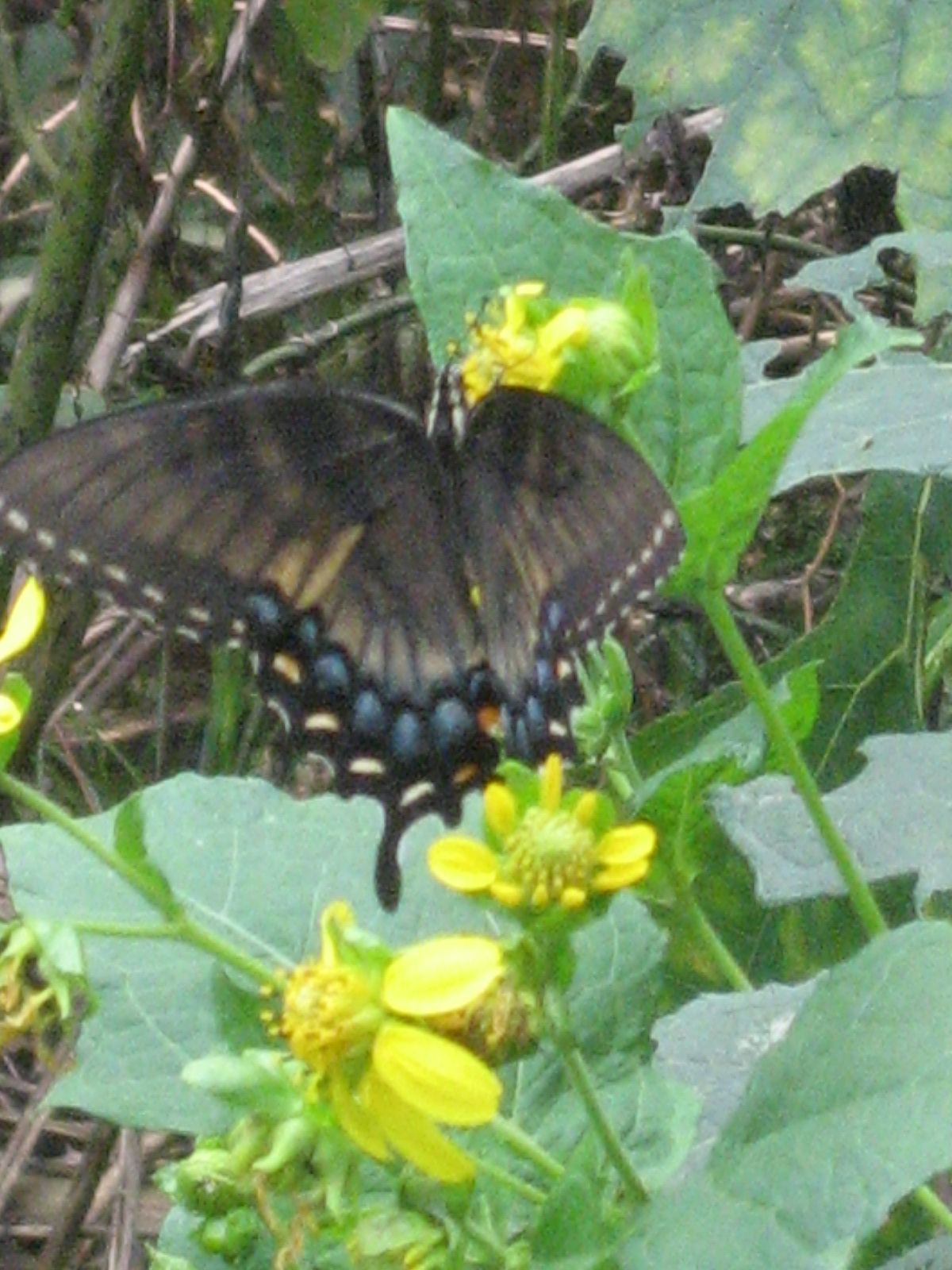
The 8 levels of classification, most broad to most specific.
a)
Domain, Genus, Family, Order, Class, Phylum, Kingdom, Species
b)
Domain, Species, Kingdom, Genus, Phylum, Family, Class, Order
c)
Domain, Kingdom, Phylum, Class, Order, Family, Genus, Species
d)
Order, Kingdom, Species, Domain, Phylum, Family, Class, Genus
4.
The clear, jelly-like material in a cell that supports and protects the cell’s organelles.
a)
Cytoplasm
b)
Cell Membrane
c)
Nucleus
d)
Mitochondria
5.
This organelle absorbs energy from the sunlight and uses it to make food
a)
Nucleus
b)
Vacuole
c)
Chloroplasts
d)
Golgi Apparatus
6.
This is the powerhouse of a cell
a)
Cytoplasm
b)
Rough ER
c)
Ribosome
d)
Mitochondria
7.
A cell boundary that controls what enters and leaves the cell?
a)
cytoplasm
b)
mitochondrion
c)
cell wall
d)
cell membrane
8.
What is the function of the cell nucleus found in both plant and animal cells?
a)
to produce energy
b)
to control cell activity
c)
to remove waste products
d)
to allow molecules to enter the cell
9.
The process of releasing energy from food is called:
a)
Plant respiration
b)
Human circulation
c)
Body perspiration
d)
Cell respiration
10.
The movement of substances through a cell membrane with the use of cell energy
a)
Osmosis
b)
Diffusion
c)
Passive Transport
d)
Active transport
11.
Which of the following is the correct equation for PHOTOSYNTHESIS?
a)
CO2 + light + H2O --> O2 + Sugar
b)
CO2 + sugar + H2O --> O2 + light
c)
O2 + light + H2O --> CO2 + Sugar
d)
CO2 + O2 + H2O --> Light+ Sugar
12.
Which of the following is an example of an AUTOTROPH?
a)
Appletree
b)
Dog
c)
Mushroom
d)
Human
13.
Heredity is the passing of traits from _____________________ to _____________________
a)
predators to prey
b)
water to rain
c)
parents to offspring
d)
fungi to protists
14.
Why did Mendel choose to study pea plants in order to learn how traits are passed from parent to offspring?
a)
Pea plants grow quickly
b)
Pea plants are ultraviolet
c)
Pea plants are rare and expensive
d)
Pea plants are take years to grow
15.
One trait that is ALWAYS present and causes the other traits to disappear is a ________________________
a)
recessive trait
b)
aggressive trait
c)
absent trait
d)
dominant trait
16.
True or False: Recessive traits are ALWAYS present
a)
True
b)
False
17.

A ________________________ is used to predict the possible genotype from certain parents
a)
Mendel Grid
b)
Genetic Tic Tac Toe
c)
Punnett Square
d)
Pedigree Plot
18.
Adenine bonds with ______________.
a)
Guanine
b)
Thymine
c)
Cytosine
d)
Adenine
19.
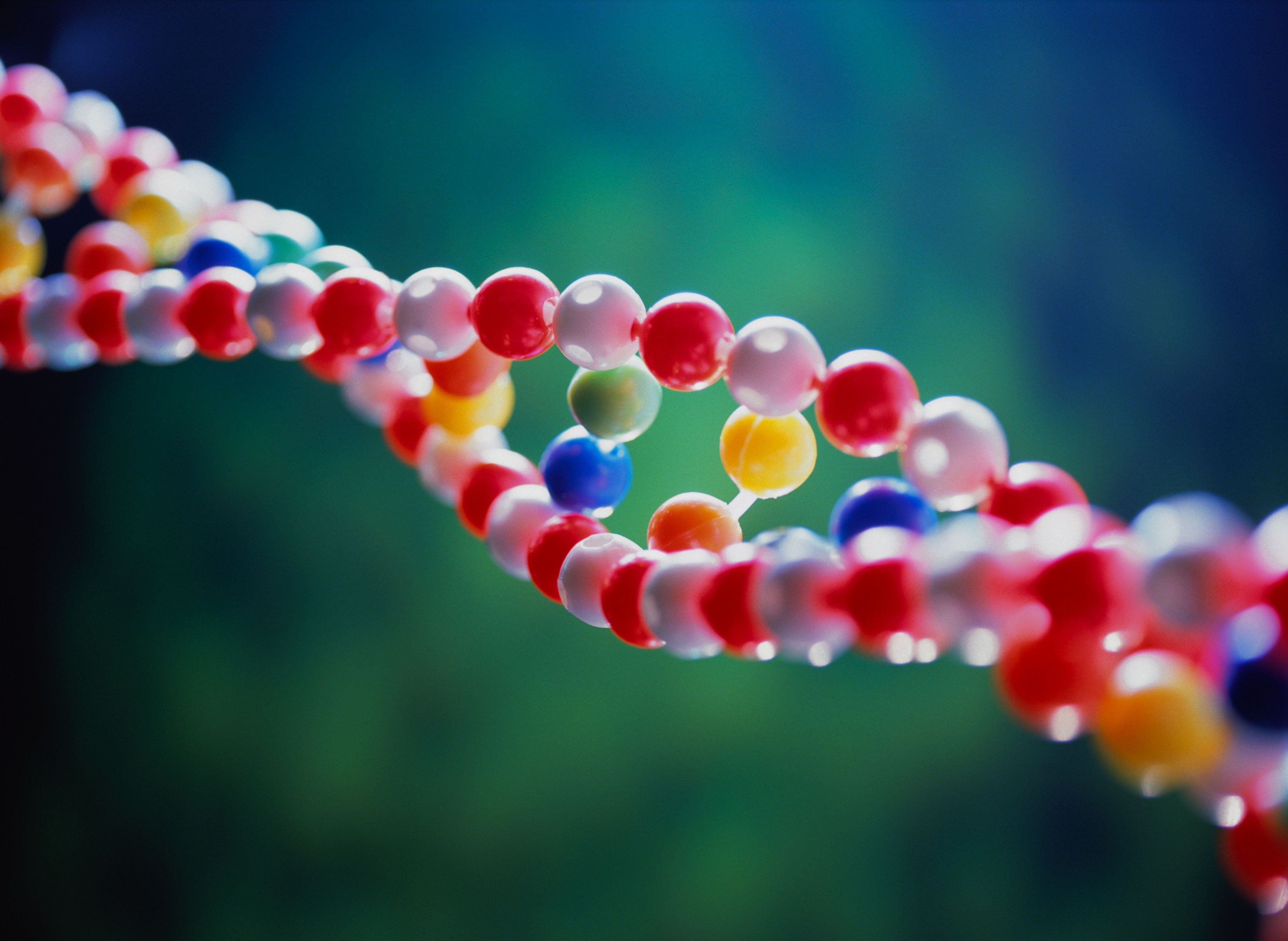
Why is DNA important?
a)
it is very small and very complicated
b)
it's in everything
c)
it serves as the blueprint for traits of all living things
d)
because we eat it every day for energy
20.
The main purpose of the ____________ system is to break food particles into pieces that can be used.
a)
circulatory
b)
respiratory
c)
digestive
d)
skeletal
21.
What is responsible for delivering oxygen and removing carbon dioxide from the body?
a)
cell nucleus
b)
excretory system
c)
nervous tissue
d)
respiratory system
22.
Which of the following body systems work together for support, protection, and movement?
a)
respiratory and cardiovascular
b)
skeletal and muscular
c)
skeletal and integumentary
d)
digestive and respiratory
23.
An organism's particular role in its habitat, or how it makes its living, is called its
a)
carrying capacity.
b)
ecosystem.
c)
competition.
d)
niche.
24.
The behaviors and physical characteristics of species that allow them to live successfully in their environment are called
a)
habitats.
b)
limiting factors.
c)
biotic factors.
d)
adaptations.
25.
The struggle between organisms to survive in a habitat with limited resources is called
a)
competition.
b)
predation.
c)
symbiosis.
d)
parasitism.
26.
A close relationship between two species that benefits at least one of the species is called
a)
natural selection.
b)
symbiosis.
c)
adaptation.
d)
competition.
27.
The bacteria that live in your intestine and help break down food are an example of which type of interaction?
a)
competition
b)
mutualism
c)
parasitism
d)
predation
28.

What is a producer?
a)
an organism that consumes other organisms
b)
an organism that uses the suns energy to make its own food
c)
an organism that breaks down other organisms
29.
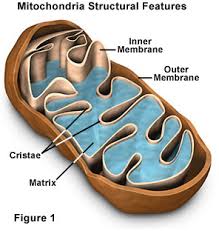
Where does photosynthesis take place?
a)
in the chloroplast of a plant cell
b)
in the mitochondria of a plant cell
c)
in the mitochondria of an animal cell
d)
in the chloroplast of an animal cell
30.
Which of these is always a primary consumer, and thus only eats plants?
a)
Herbivore
b)
Omnivore
c)
Carnivore
d)
Producer
31.
Which of these is a decomposer?
a)
Bacteria
b)
Worms
c)
Fungus
d)
All of these
32.

As shown in this foodweb, which of these is NOT an omnivore?
a)
The grouse
b)
The grizzly bear
c)
They are all omnivores
d)
The marmot
33.

The gradual change in species over time is...
a)
Evolution
b)
Nucleotide
c)
Adaptation
d)
Natural Selection
34.
Genetic differences between organisms of the same species
a)
Variation
b)
Adaptation
c)
Behavior
d)
Environment
35.
Remains of ancient organisms are called
a)
Extinctions
b)
Fossils
c)
Mutations
d)
Variations
36.
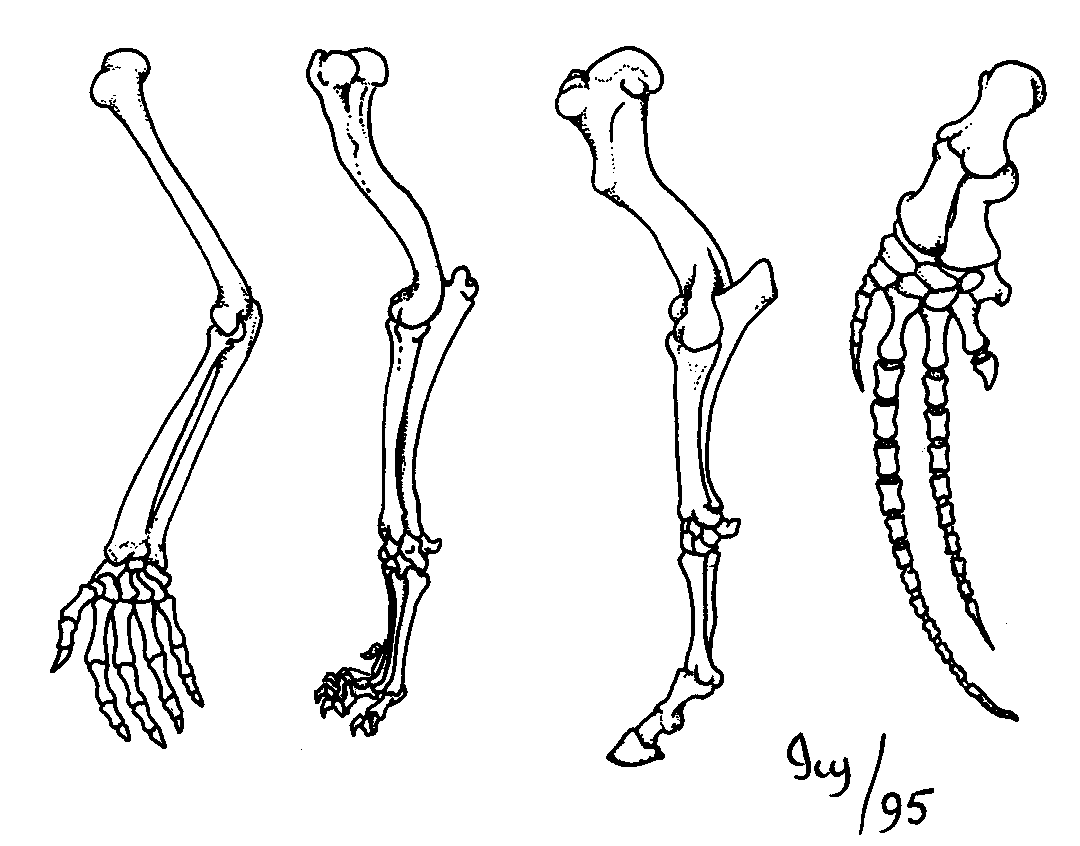
Structures with the same parts have different functions; suggests that organisms share a common ancestry
a)
vestigial structures
b)
homologous structures
c)
adaptive radiation
d)
fossil
100 %

