Wayground logo

Free Printable Worksheets

Font size

S
M
L
XL
Worksheets

8th Grade Science

Total questions: 130

Worksheet time: 2hrs 50mins

Name
Class
Date
1.
Which particle has a positive charge?
a)
electron
b)
orbital
c)
proton
d)
neutron
2.
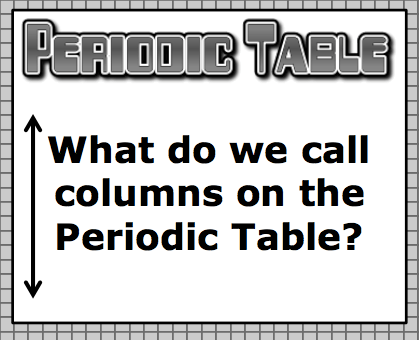
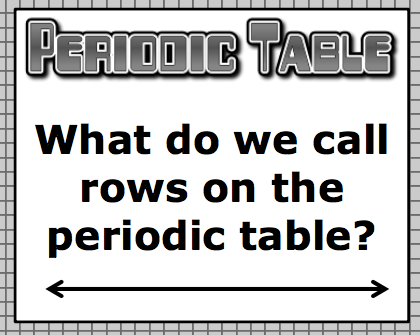
Choose the particle that has no charge.
a)
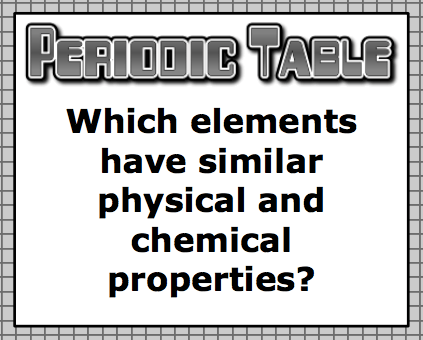
nucleus
b)
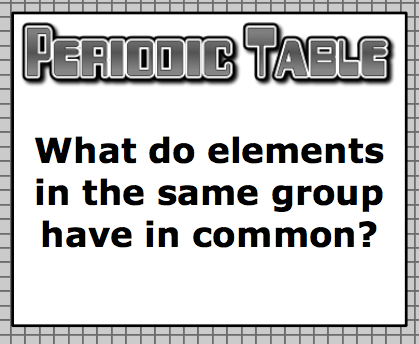
neutron
c)
proton
d)
electron
3.
This particle determines what element you have - the elements identity.
a)
electron
b)
proton
c)
neutron
d)
valence shell
4.
What is the mass of a proton and a neutron?
a)
1amu
b)
2grams
c)
13amu
d)
10cm
5.
This causes the mass of the nucleus to increase.
a)
adding an electron
b)
adding a neutron
c)
more orbitals
d)
adding negatively charged particles
6.
What are the maximum number of electrons that go on the first 3 energy levels?
a)
2,4,16
b)
2,8,18
c)
4,8,12
d)
3,4,6
7.
Describe an Electron Cloud?
a)
the mist outside of an atom
b)
home of the protons
c)
where electrons are located
d)
nucleus
8.
What are valence electrons?
a)
electrons on the first orbital always
b)
nucleus
c)
the outermost shell
d)
the number of electrons on the outermost orbital
9.
The particles of the atom you can find by knowing the atomic number.
a)
neutrons
b)
protons and electrons
c)
protons and neutrons
d)
atomic mass
10.
The subatomic particle that determines the identity of an element.
a)
neutron
b)
proton
c)
electron
d)
outer shell
11.
What charge does the nucleus have and why?
a)
positive - the neutrons do not have a charge
b)
positive - the neutrons and protons are positively charged particles
c)
neutral - the neutral charge dominates the positive charge
d)
neutral - electrons cancel out the positive charge of the atom
12.
What is the mass number and name of an element with 8 protons and 8 neutrons?
a)
16 - Carbon
b)
16 - Oxygen
c)
24 - Oxygen
d)
8 - Neon
13.
An element with a mass number of 10 and an atomic number of 6 has how many protons?
a)
5
b)
8
c)
6
d)
10
14.
An element with a mass number of 11 and an atomic number of 5 has how many neutrons?
a)
11
b)
5
c)
6
d)
16
15.
An atom has 10 protons, 15 neutrons and 10 electrons what is its mass number.
a)
20
b)
10
c)
5
d)
25
16.
Matter that cannot be broken down into a simpler substance – building blocks of life.
a)
neutron
b)
atom
c)
electron
d)
quarks
17.
Elements on the periodic table increase by...
a)
atomic mass
b)
size
c)
mass number
d)
atomic #
18.
An atom has 13 protons, 15 neutrons and ___ electrons what is its mass number?
a)
13
b)
26
c)
28
d)
15
19.
Most of the mass of an atom is contained here.
a)
electron orbitals 
b)
nucleus
c)
shells
d)
atomic #
20.
What is the number that gives you the element and the number of protons contained in each elemental atom?
a)
atomic mass
b)
mass number
c)
symbol
d)
atomic #
21.
What is the difference between the atomic mass and the mass number?
a)
the atomic mass is always a whole number
b)
the atomic mass equals the atomic #
c)
mass number is the rounded atomic mass - always a whole number
d)
electrons
22.
True or False - Protons and Neutrons have about the same mass.
a)
True - They have about the same mass
b)
False - They do not have about the same mass
23.
Which subatomic particle has a negative (-) charge?
a)
Proton
b)
Electron
c)
Neutron
24.
Which subatomic particle has a neutral or no charge?
a)
Proton
b)
Electron
c)
Neutron
25.
a)
Periods
b)
Groups
26.
a)
Periods
b)
Groups
27.
a)
energy levels
b)
valence electrons
c)
protons
d)
neutrons
28.
a)
energy levels
b)
valence electrons
c)
protons
d)
neutrons
29.
a)
Same group
b)
Same period
30.
A ___________ is an arrangement of elements in columns
a)
columns
b)
rows
c)
periodic table
d)
electron shell
31.
Each column in the periodic table is called a 
a)
period
b)
group
c)
cluster
d)
unit
32.
The atomic number tells you what?
a)
number of electrons
b)
number of protons
c)
number of neutrons
d)
both electrons and protons in an atom.
33.
Which group of the periodic table is composed of inert (not reactive)  gases?
a)
alkali metals
b)
alkaline earth metals
c)
halogens
d)
noble gases
34.
Elements which are shiny, conduct electricity and heat are called
a)
metal
b)
nonmetal
c)
metalloid
d)
nonexistent
35.
The atoms along the staircase are called 
a)
metals
b)
nonmetals
c)
metalloids
d)
noble gases
36.
Which element is not a metal?
a)
H
b)
Re
c)
Al
d)
B
37.
Which is a halogen?
a)
Helium
b)
Chlorine
c)
Oxygen
d)
Neptune
38.

What does Pangaea mean?

a)

whole Earth

b)

pieces of Earth

c)

Earth's crust

d)

movement of earth

39.

What is Plate Tectonics?

a)

movement of the Earth in space

b)

movement of the oceans against Earth's land

c)

movement of the Earth around the sun

d)

movement of the pieces of Earth's crust

40.

What are plates?

a)

pieces of the Earth's moon

b)

pieces of rock and dust floating in space

c)

pieces of the Earth's core

d)

pieces of Earth's crust

41.

What is the inner-most layer of Earth?

a)

inner core

b)

outer core

c)

mantle

d)

crust

42.

What is the outer-most layer of Earth?

a)

inner core

b)

outer core

c)

mantle

d)

crust

43.

What layer of Earth is made of magma?

a)

inner core

b)

outer core

c)

mantle

d)

crust

44.

Which layer of the core is made of molten metals?

a)

inner core

b)

outer core

c)

mantle

d)

crust

45.

Why do Earth's plates move?

a)

because of tornadoes and hurricanes

b)

because of Earth spinning on its axis

c)

because of Earth orbiting the sun

d)

because of molten rock heating and cooling within the mantle

46.

How long does it take Earth to orbit the sun?

a)

365 and 1/2 days

b)

365 and 1/4 days

c)

24 days

d)

24 hours

47.

Why do we have day and night?

a)

because of Earth's orbit around the sun

b)

because of Earth's moon

c)

because of Earth's place in the solar system

d)

because of Earth's rotation on its axis

48.
A giant landmass that existed 200 million years ago
a)
Wegener
b)
Pangaea
c)
Archyopteryx
d)
Ammonite
49.
The Theory of Continental Drift states that Pangaea broke apart and the continents "drifted" away from each other
a)
True
b)
False
50.
Alfred Wegener's theory was not immediately accepted by scientists because:
a)
a. he was a meteorologist
b)
b. he was a geologist
c)
c. he could not explain how the continents moved
d)
d. both a and c
51.
All of the following are evidence of continental drift EXCEPT:
a)
similar rock layers on separate continents
b)
similar fossils on separate continents
c)
artifacts left by early humans
d)
tree fossils found in places trees do not grow
52.
Which of the following was a life form on Earth 180 million years ago?
a)
insects
b)
ammonites (giant snails)
c)
sand dollars
d)
birds
53.
All of the following were new life forms on Earth 135 million years ago EXCEPT:
a)
dolphins
b)
sea urchins
c)
sand dollars
d)
birds
54.
Pangaea was a giant landmass that existed 2 million years ago
a)
True
b)
False
55.
The Theory of Continental Drift states that the continents drifted together to form Pangaea
a)
True
b)
False
56.
Alfred Wegener was not taken seriously as an Earth scientist because he was a meteorologist
a)
True
b)
False
57.
All of the following were life forms found on Earth 180 million years ago except:
a)
amphibians
b)
green algae
c)
dinosaurs
d)
sloths
58.
What is the net force?
a)
20 N 
b)
0 N 
c)
400 N 
d)
40 N 
59.
What is the unit to MEASURE force?
a)
Kilogram
b)
Meter
c)
Pascal
d)
Newton
60.
A ____________ is a push or a pull on an object.
a)
friction
b)
force
c)
magnet
d)
gravity
61.
What is the net force?
a)
30 N 
b)
25 N 
c)
5 N 
d)
55 N 
62.
What is the net force?
a)
10 N
b)
0 N
c)
25 N
d)
1 N
63.
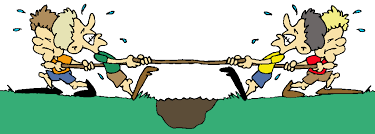
If these teams are pulling with the same amount of force what will happen?
a)
The boy in blue will win.
b)
They will not move at all.
c)
The boy in red will win.
d)
Both will fall down.
64.
Balanced or unbalanced?
a)
balanced
b)
unbalanced
65.
Forces that have a net force of zero 
a)
Balanced force
b)
Unbalanced force
66.
The sum of all forces acting on an object.
a)
Contact Force
b)
Balanced Force
c)
Unbalanced Force
d)
Net Force
67.
Balanced or Unbalanced?
a)
Balanced 
b)
Unbalanced
68.
This is an example of what kind of force?
a)
Balanced Force
b)
Pushing Force
c)
Gravity Force
d)
Unbalanced Force
69.
If an object is not moving the forces acting upon it are _____________
a)
unbalanced
b)
weak
c)
balanced
d)
Hulk Smash!
70.
A push or pull that causes a change in motion
a)
Friction
b)
Gravity
c)
Force
d)
Mass
71.
The force that pulls objects towards Earth.
a)
Gravity
b)
Friction
c)
Inertia
d)
Force
72.
Examples of forces that make something move are...
a)
pushes
b)
pulls
c)
both pushes and pulls
73.
When forces are _________ the object DOES NOT move.
a)
unbalanced
b)
balanced
c)
heavy
d)
light
74.
When forces are ___________ the object will move.
a)
unbalanced
b)
balanced
c)
light
d)
gravity
75.
What is the net force of an object that is not moving?
a)
0 N
b)
100 N
c)
Upward force
d)
10 N
76.
This is used to MEASURE force:
a)
A balance scale
b)
A digital scale
c)
A spring scale
d)
A mass scale
77.
What is the net force on this box?
a)
30 N left
b)
25 N right
c)
5 N left
d)
55 N right
78.
How will this object changed its motion? 
a)
It will not change its motion. 
b)
It will accelerate to the right. 
c)
It will accelerate to the left. 
d)
It will move in both directions. 
79.
The total amount of forces acting on an object is called...
a)
Contact Force
b)
Balanced Force
c)
Unbalanced Force
d)
Net Force
80.
Which of the following has a net force of 0 Newtons?
a)
An asteroid moving at a constant speed through space 
b)
A car accelerating from a stop sign
c)
A box of dishes falling from a counter 
d)
A rocket taking off 
81.
Balanced or Unbalanced?
a)
Balanced 
b)
Unbalanced
82.
Which could be an example of an unbalanced force?
a)
A plate sitting on a dining table
b)
A ball at the top of a hill that is not moving
c)
Earth orbiting the Sun 
d)
A baseball that has been thrown to home plate.
83.
When an object has a net for that is GREATER than 0 Newtons, the object is...
a)
balanced and still
b)
balanced and moving at a constant speed
c)
unbalanced and accelerating
d)
unbalanced and still
84.
Name this boundary
a)
Convergent
b)
Divergent
c)
Transform
d)
Sergent
85.
Name the boundary
a)
divergent
b)
convergent
c)
transform
d)
sergent
86.
Name the boundary
a)
convergent
b)
transform
c)
divergent
d)
sergent
87.
Which of the following is where one plate slides under another plate?
a)
submarine zone
b)
divergence zone
c)
subduction zone
d)
lower zone
88.
Which of the following is associated with transform boundary?
a)
volcanoes
b)
mountains
c)
trenches
d)
earthquakes and fault line
89.
Which of the following land formation occurs at a divergent continental/continental boundary?
a)
mid-ocean ridge
b)
deep ocean trench
c)
Pacific hot spot
d)
rift valley
90.
Mountains form from....
a)
Plates sliding past one another
b)
collision of plates
c)
plates moving away from each other
d)
none of these
91.
Earth's plates are....
a)
Constantly moving and changing the face of the Earth
b)
Never moved
c)
Move seldom and very fast
d)
move when they feel like it
92.
What was the name given to all the continents when they were joined as one super continent?
a)
Supreme Continent
b)
Eurasia
c)
Plate tectonics
d)
Pangea
93.
Whenever a subduction zone is formed a ____ is formed.
a)
mountains
b)
Island arc
c)
rift valley
d)
volcanoes
94.
Plate movement is caused by _____
a)
The rotation of the Earth
b)
Ocean tides
c)
Convection current in the mantle
d)
The moon's gravity
95.
What are mid-ocean ridges?
a)
A chain of underwater falls
b)
A chain of underwater volcanoes
c)
A chain of underwater mountains
d)
A chain of underwater rocks
96.

What will happen at this plate boundary?

a)

Subduction Zone

b)

Mid-Ocean Ridge

c)

Folded Mountains

d)

Earthquakes

97.

Which part of a Milky Way candy bar would represent the lithosphere?

a)

The chocolate

b)

The caramel

c)

The center

d)

None of these

98.

What is happening?

a)

A continental plate is converging with another continental plate

b)

A continental plate is diverging from an ocean plate

c)

An oceanic plate is converging with a continental plate and subducting under it

d)

An oceanic plate is making folded mountains with a continental plate

99.

What type of plate boundary must be near the San Andreas Fault Line?

a)

Convergent Boundary

b)

Divergent Boundary

c)

Transform Boundary

d)

Ring of Fire

100.

What causes the Ring of Fire?

a)

Crust is thinner

b)

Earth layers are hotter

c)

Plate boundaries are nearby

d)

Mantle is nearby

101.

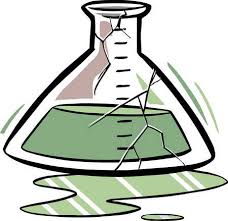
What is the picture demonstrating?

a)

Earth's core is broken into pieces

b)

Earth's lithosphere is broken into pieces

c)

The mantle is very hot

d)

The crust is very fragile

102.
Who is the Dark Knight?
a)
Black Panther
b)
Punisher
c)
Batman
d)
Wolverine
103.
Who grew up in Smallville?
a)
Spiderman
b)
Batman
c)
Superman
d)
The Flash
104.
Who has radioactive blood?
a)
Spiderman
b)
Daredevil
c)
Green Lantern
d)
Superman
105.
Who has an Adamnatium skeleton?
a)
Cyclops
b)
The Thing
c)
Iron Man
d)
Wolverine
106.
Who has the Lasso of Truth?
a)
Cat Woman
b)
Wonder Woman
c)
Storm
d)
Mystique
107.
Who is Clark Kent?
a)
Batman
b)
Spiderman
c)
Antman
d)
Superman
108.
Who is Bruce Wayne?
a)
Batman
b)
Superman
c)
Spiderman
d)
The Flash
109.

Where is Russia?

a)

America

b)

Asia

c)

Africa

d)

Oceania

110.

Who is he?

a)

Maxi Pereira

b)

Álvaro Gonzalez

c)

Diego Godín

d)

Carlos Sánchez

111.

What's its name?

a)

Fuleco

b)

Zakumi

c)

Zabivaka

d)

Goleo

112.

How many stadiums are there in this World Cup?

a)

TEN (10)

b)

ELEVEN (11)

c)

TWELVE (12)

d)

THIRTEEN (13)

113.

How many GROUPS are there?

a)

SIX

b)

SEVEN

c)

EIGHT

d)

NINE

114.

The 1st World Cup was in......

a)

Argentina, in 1926

b)

Uruguay, in 1930

c)

Brazil, in 1934

d)

Colombia, in 1938

115.
What team does Lebron James play for?
a)
Los Angeles Lakers
b)
Cleveland Cavaliers 
c)
Miami Heat
d)
Atlanta Hawks
116.
How many points is a Free Throw worth?
a)
3
b)
2
c)
1
d)
5
117.
What teams did Michael Jordan play for?
a)
Lakers and Bulls
b)
Bulls and Pistons
c)
Bulls and Wizards
d)
Bulls and Mavericks
118.
Who is the current league MVP?
a)
Stephen Curry
b)
James Harden
c)
Lebron James
d)
Kobe Bryant
119.
Who are the defending NBA champs?
a)
Cleveland Cavaliers 
b)
San Antonio Spurs
c)
Golden State Warriors
d)
Chicago Bulls
120.
How many seconds does a team have to inbound the ball?
a)
5
b)
3
c)
1
d)
10
121.
Which is NOT a type of pass?
a)
Chest
b)
Bounce
c)
Palm
d)
Overhead
122.
When should you tie back long hair or baggy clothing?
a)
When working with chemicals
b)
When working with a Bunsen burner
c)
When doing dissections.
d)
Any time you are working in the lab.
123.
When is it OK to eat or drink in the lab?
a)
Always
b)
Never
124.
If you break glassware in the lab, you should...
a)
Tell the teacher
b)
Clean it up quickly before the teacher notices
c)
Scream at the top of your lungs
125.
When in the lab...
a)
long sleeves and loose clothing should be rolled up
b)
closed toe shoes should be worn
c)
long hair should be pulled back
d)
all of the above
126.
Before leaving the lab you should always wash your hands.
a)
True 
b)
False
127.
It's fine to smell chemicals directly from their containers.
a)
True
b)
False
128.
What should you do if a glass breakage occurs?
a)
Touch it to see if it is safe?
b)
Run out of the classroom
c)
Immediately tell your teacher
d)
Leave without telling anyone
129.
Long hair must be secured to the back of your head
a)
True
b)
False
130.
What should you NEVER do in the lab?
a)
Play practical jokes on people
b)
All of these
c)
Run while holding a beaker with chemicals
d)
Mess around with your friends