
 Worksheets
CHAPTER 12 - REVISION
Total questions: 130
Worksheet time: 2hrs 35mins
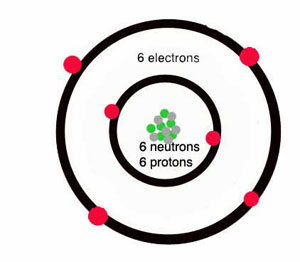
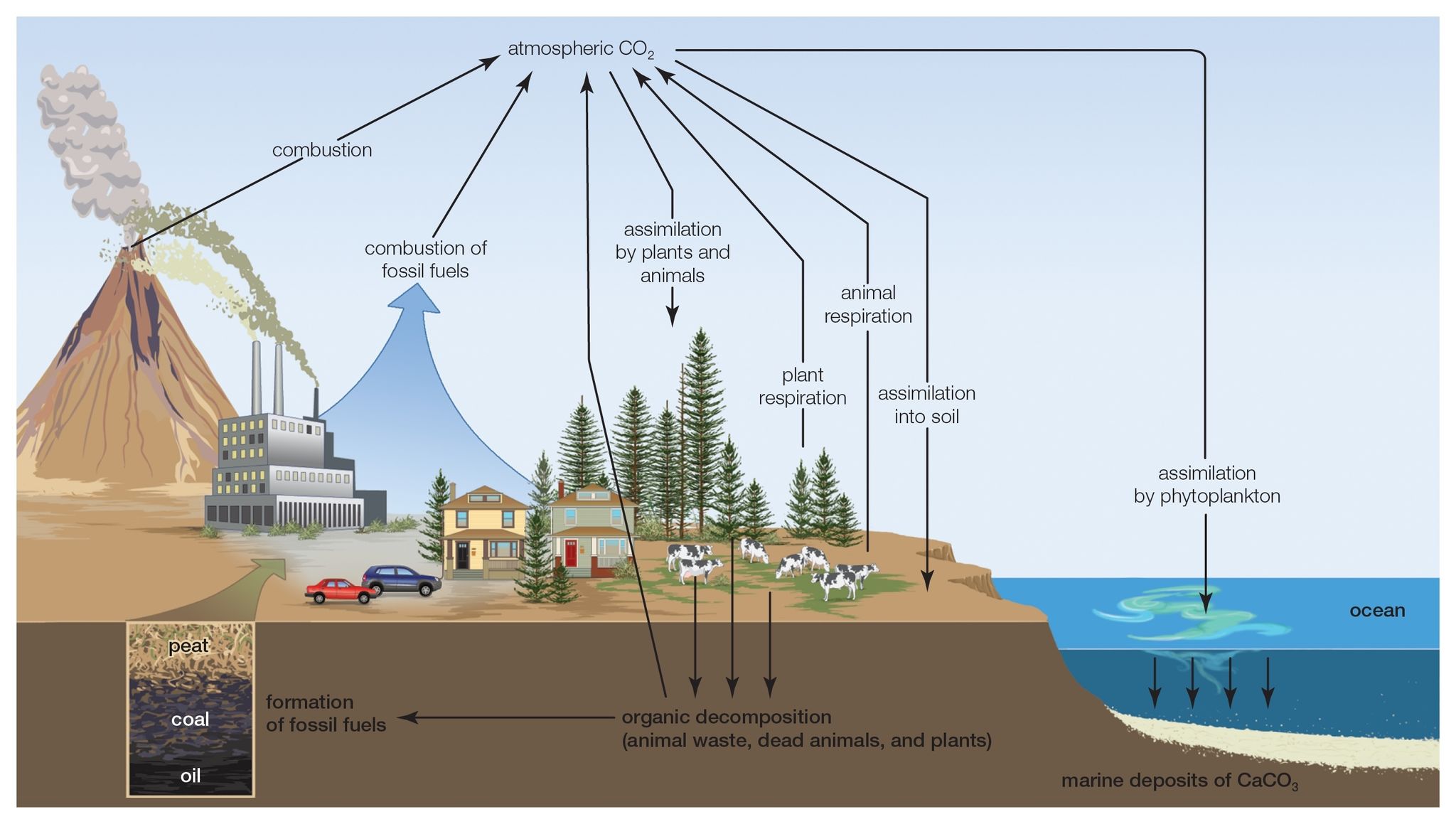
The circulation of the element Carbon among Earth's atmosphere, land, oceans, and organisms is called _____________.
the Carbon Cycle
the Oxygen Cycle
the Carbon dioxide Cycle
the Water Cycle
When animals eat plants, the carbon that the plant contains is absorbed by the animals.
True
False
How do animals get carbon?
By eating plants and or other animals.
They absorb it from the atmosphere.
From the ground
They do not get carbon from anywhere.
What are fossil fuels made from?
Plants and animals that are buried underground for millions of years.
They absorb it from the atmosphere.
Water
Wind
When humans EXHALE, we release __________________.
Oxygen
Carbon Dioxide
Nitrogen
Water
What is CO2?
Carbon Monoxide
Carbon Trioxide
Carbon Dioxide
Oxygen
Which of the following are fossil fuels?
Coal, water, oil
Oxygen, coal, oil
Coal, Oil, Natural Gas
None of the above
How is the carbon cycle similar to the water cycle?
Both involve liquid substances falling to the Earth from the atmosphere?
Neither process works at low temperature.
Both involve the transfer of substances between animals, plants, and the Earth.
Both involve the transfer of substances between the earth and outer space.
What microscopic (tiny) organism absorbs the CO2 at the surface of water?
Algae
Plants
Phytoplankton
Plankton
True or false. Carbon dioxide is a greenhouse gas.
True
False
Is carbon dissolved at the surface of the ocean or in the deep ocean?
Surface
Deep
In what cellular component does respiration primarily occur?
Nucleus
Mitochondria
Golgi apparatus
Ribosome
Which process converts carbon dioxide from the atmosphere into glucose in plants?
Respiration
Decomposition
Photosynthesis
Feeding
What happens to carbon in plants during photosynthesis?
It is released as oxygen.
It is used to make glucose.
It is stored as chlorophyll.
It is expelled as waste.
What happens to carbon during animal respiration?
It is exhaled as oxygen.
It is converted into nitrogen.
It is released as carbon dioxide.
It is stored as glucose.
What do decomposers primarily break down?
Rock minerals
Living plants
Waste and dead organic material
Atmospheric gases
During what process do animals directly emit carbon dioxide into the atmosphere?
Feeding
Growing
Respiration
Sleeping
What is the byproduct of photosynthesis that is used to build plant biomass?
Carbon dioxide
Glucose
Oxygen
Nitrogen
How is carbon transferred from plants to animals?
Through water
Through air
Through feeding
Through soil
How is carbon returned to the atmosphere by living organisms?
Feeding
Photosynthesis
Respiration
Growth
Where does photosynthesis occur in plants?
Roots
Stems
Green parts
Flowers
Decomposition mainly involves which type of organisms?
Herbivores
Carnivores
Decomposers
Omnivores
Which process directly removes carbon from the atmosphere?
Respiration
Combustion
Photosynthesis
Decomposition
What is the role of decomposers in the carbon cycle?
Produce oxygen
Capture carbon dioxide
Release carbon dioxide
Convert carbon to energy
What type of organisms primarily perform photosynthesis?
Animals
Fungi
Plants and algae
Bacteria
What is the main energy source for photosynthesis?
Soil nutrients
Sunlight
Water
Carbon dioxide
Which pigment is responsible for capturing light energy in photosynthesis?
Melanin
Hemoglobin
Chlorophyll
Myoglobin
Which process primarily uses carbon dioxide and releases oxygen?
Respiration
Combustion
Photosynthesis
Feeding
Carbon is a critical component of which of the following molecules in living organisms?
DNA
RNA
Enzymes
All of the above
What is the main role of chloroplasts in plants?
Decomposition
Respiration
Photosynthesis
Combustion
In what form is energy released during respiration?
Light
Sound
Heat
Mechanical
What is the main outcome of the combustion of carbon compounds?
Formation of water
Absorption of heat
Release of carbon dioxide
Production of oxygen
Which of the following is not a product of photosynthesis?
Glucose
Oxygen
Carbon dioxide
Water
What process in the carbon cycle involves the movement of carbon between living organisms and the environment?
Nitrogen cycle
Water cycle
Carbon cycle
Oxygen cycle
Which of the following is a product of respiration?
Oxygen
Glucose
Carbon dioxide
Water
What do animals consume to obtain carbon?
Air
Soil
Biomass
Water
Where does the carbon in animal biomass originally come from?
The soil
The air
Water
Sunlight
What role does carbon play in the bodies of living organisms?
It provides energy.
It builds cell structures.
It regulates temperature.
It balances pH levels.
What element is essential for the formation of carbohydrate, protein, and lipid molecules in cells?
Oxygen
Carbon
Hydrogen
Nitrogen
Which process does not release carbon dioxide into the atmosphere?
Feeding
Respiration
Photosynthesis
Combustion
How is carbon passed from plants to animals?
Respiration
Photosynthesis
Feeding
Decomposition
What is another term for burning in scientific language?
Oxidation
Combustion
Respiration
Decomposition
Which of the following is not a way that carbon is cycled through the environment?
Condensation
Respiration
Photosynthesis
Decomposition
What is the result of combustion?
Release of oxygen
Absorption of carbon dioxide
Release of carbon dioxide
Absorption of nitrogen
What component is essential for the trapping of light in photosynthesis?
Cell membrane
Cytoplasm
Chloroplast
Nucleus
Which process is responsible for breaking down glucose using oxygen?
Photosynthesis
Combustion
Respiration
Feeding
What type of energy is released during the process of respiration?
Chemical
Nuclear
Electrical
Thermal
What is the byproduct of combustion related to the carbon cycle?
Oxygen
Nitrogen
Carbon dioxide
Hydrogen
Which component is not directly involved in the process of photosynthesis?
Water
Carbon dioxide
Oxygen
Nitrogen

Possible human solutions for limiting global warming and climate change are...
being more energy-efficient
using renewable sources of energy
removing carbon from fossil fuel emissions
all of the above
What is climate change?
Is the set of species in a given area that interact with each other and with their abiotic environment.
Visible mass suspended in the atmosphere, of variable color and density, formed by the accumulation of minute particles of water, or of water and ice, as a consequence of the condensation of atmospheric water vapor.
Is a term used to describe a collective and persistent virtual space, which can be visited and explored by many users.
Is the change in the environmental conditions of the earth. This happens due to many internal and external factors. The climatic change has become a global concern over the last few decades. Besides, these climatic changes affect life on the earth in various ways.
How do we now earth's climate is getting warmer?
Rapidly pulsing radio sources. Pulsars must be neutron stars because pulsations arise due to the neutron star spinning rapidly as a result of the conservation of angular momentum.
Bevause ice cores drawn from Greenland, Antarctica, and tropical mountain glaciers show that Earth's climate responds to changes in greenhouse gas levels. Ancient evidence can also be found in tree rings, ocean sediments, coral reefs, and layers of sedimentary rocks.
An effervescence (gas production) occurs. Energy is released or absorbed (changes the temperature of the flask or container where the reaction occurs).
The Greenhouse-effect causes
The increase of temperature on earth
The decrease of temperature on earth
Nothing
None of the previous answers
Global warming is accelerated by the reduction of global snow and ice cover.
True
False
What is carbon does with Climate Change?
each of more than one hundred substances that cannot be chemically interconverted or broken down into simpler substances and are primary constituents of matter. Each element is distinguished by its atomic number, i.e. the number of protons in the nuclei of its atoms.
(KAR-bun dy-OK-side) A colorless, odorless gas. It is a waste product made by the body. Carbon dioxide travels in the blood from the body's tissues to the lungs. Breathing out clears carbon dioxide from the lungs.
a colourless, odourless reactive gas, the chemical element of atomic number 8 and the life-supporting component of the air.
is a greenhouse gas that traps heat close to Earth. It helps Earth hold some of the heat it receives from the Sun so it doesn't all escape back into space. But CO2 is only good up to a point – beyond that point, Earth's temperature warms up too much. NASA research satellites such as OCO-2 and OCO-3 are studying how carbon moves around the planet.
Has the climate ever change before?
The death of a family member or divorce or separation. The birth of a child or return of another child. Son or daughter leaving or returning to jail, school, or other institution. A child being permanently removed from a parent.
Scientists have been observing Earth for a long time. They use NASA satellites and other instruments to collect many types of information about Earth's land, atmosphere, ocean and ice. This information tells us that Earth's climate is getting warmer.
the pervading tone or mood of a place, situation, or creative work.
Earth's climate has changed throughout history. Just in the last 800,000 years, there have been eight cycles of ice ages and warmer periods, with the end of the last ice age about 11,700 years ago marking the beginning of the modern climate era — and of human civilization.
What is carbon do with the Climate Change?
each of more than one hundred substances that cannot be chemically interconverted or broken down into simpler substances and are primary constituents of matter. Each element is distinguished by its atomic number, i.e. the number of protons in the nuclei of its atoms.
(KAR-bun dy-OK-side) A colorless, odorless gas. It is a waste product made by the body. Carbon dioxide travels in the blood from the body's tissues to the lungs. Breathing out clears carbon dioxide from the lungs.
each of more than one hundred substances that cannot be chemically interconverted or broken down into simpler substances and are primary constituents of matter. Each element is distinguished by its atomic number, i.e. the number of protons in the nuclei of its atoms.
is a greenhouse gas that traps heat close to Earth. It helps Earth hold some of the heat it receives from the Sun so it doesn't all escape back into space. But CO2 is only good up to a point – beyond that point, Earth's temperature warms up too much. NASA research satellites such as OCO-2 and OCO-3 are studying how carbon moves around the planet.
What does climate change do to the ocean?
NASA measures sea level around the globe using satellites. The Jason-3 satellite uses radio waves and other instruments to measure the height of the ocean's surface – also known as sea level. It does this for the entire Earth every 10 days, studying how global sea level is changing over time.
Scientists have high confidence that global temperatures will continue to rise for many decades, mainly due to greenhouse gases produced by human activities.
Oxygen is a gas at room temperature and has no colour, smell or taste. Oxygen is found naturally as a molecule. Two oxygen atoms strongly bind together with a covalent double bond to form dioxygen or O2. Oxygen is normally found as a molecule.
Is climate change getting better or worse? If greenhouse gas emissions are increasing — which they are, according to NPR — then technically, climate change is getting worse. But before you lose hope and fall victim to climate doom, it's important to remember that our situation is still very complex
Can climate change be fixed?
Yes
No
Nobody cares about climate change
How are scientists studying climate change?
Kung Fu therefore is more useful in situations where you might be grappling with your target, while Karate is a more offensive martial art.
systematically gathers and uses research and evidence, to make hypotheses and test them, to gain and share understanding and knowledge
Scientists study Earth’s climate using lots of tools on the ground, in the air, and in space. For example, NASA satellites are orbiting Earth all the time. They measure carbon dioxide in the atmosphere. They monitor melting ice and measure rising seas and many other things, too. This information helps scientists learn more about Earth’s changing climate.
What are causes of climate change?
Cutting down forests
Generating power
Manufacturing goods
More intense storms
What can we do to solve climate change?
Save energy at home
Nothing
Change your home's source of energy.
Throwing papers in the green bin.
Which of the following is a consequence of climate change?
Decreased sea levels
Increased frequency of hurricanes
Reduced biodiversity
Expansion of polar ice caps
How does deforestation contribute to climate change?
It has no impact on climate.
It increases the absorption of carbon dioxide by trees.
It releases stored carbon dioxide into the atmosphere.
It promotes cloud formation, leading to cooling.
How do scientists predict future climate change?
By analyzing historical weather data
By studying changes in atmospheric pressure
By developing computer models based on current trends
By observing changes in animal behavior
How do aerosols affect the Earth's climate?
They have no effect on climate.
They warm the atmosphere.
They cool the atmosphere by reflecting sunlight.
They increase rainfall intensity.
How does climate change impact global water resources?
It increases the availability of freshwater.
It leads to more frequent floods.
It has no effect on water resources.
It disrupts precipitation patterns, leading to droughts.
How can individuals reduce their carbon footprint to mitigate climate change?
By driving more frequently
By consuming more energy
By reducing, reusing, and recycling
By increasing meat consumption
What role do greenhouse gases play in climate change?
They decrease global temperatures.
They have no effect on climate.
They trap heat in the Earth's atmosphere, leading to warming.
They promote cloud formation, cooling the planet.
Which human activity is the largest contributor to carbon dioxide emissions?
Agriculture
Industrial processes
Transportation
Deforestation
How does melting polar ice contribute to rising sea levels?
It decreases the volume of water in oceans.
It releases stored heat into the atmosphere.
It increases water runoff from land.
It has no effect on sea levels.
Which region is most vulnerable to the impacts of climate change?
Coastal areas
Mountainous regions
Polar regions
Deserts
What is the main reason behind the increase in greenhouse gases in the atmosphere?
Natural processes
Deforestation
Human activities, such as burning fossil fuels
Animal agriculture
Which of the following is a consequence of ocean acidification caused by climate change?
Increased coral reef growth
Enhanced biodiversity
Decline in shellfish populations
Expansion of marine habitats
How does climate change affect human health?
It reduces the spread of infectious diseases.
It has no impact on human health.
It increases the frequency of heatwaves and respiratory illnesses.
It improves air quality.
How does climate change affect agriculture?
It increases crop yields.
It reduces the availability of water for irrigation.
It has no impact on agricultural productivity.
It promotes the growth of disease-resistant crops.
How does climate change impact ocean ecosystems?
It promotes coral reef growth.
It decreases ocean acidity.
It disrupts marine habitats and food chains.
It increases fish populations.
What is the primary driver of the Earth's climate system?
Solar radiation
Volcanic activity
Plate tectonics
Human activities
Which of the following is a potential consequence of rising global temperatures?
Decreased frequency of droughts
Expansion of desert regions
Increased polar ice coverage
Decreased sea levels
What is the main cause of the hole in the ozone layer?
Deforestation
Air pollution
Greenhouse gas emissions
Chlorofluorocarbons (CFCs)
What is the primary source of human-generated greenhouse gas emissions?
Deforestation
Agriculture
Transportation
Volcanic eruptions
Which of the following is an example of an adaptation to climate change?
Planting more trees to absorb carbon dioxide
Building seawalls to protect coastal areas from rising sea levels
Increasing the use of fossil fuels
Encouraging deforestation
Spring in Ohio typically has higher precipitation and warmer weather.
Climate
Weather

The most abundant greenhouse gas in the atmosphere is ___________________.
oxygen
nitrogen
carbon dioxide
argon
Global warming is known as the gradual increase in _________________ of the atmosphere.
precipitation
sun spots
temperature
ocean currents
Possible human solutions for limiting global warming and climate change are...
being more energy-efficient
using renewable sources of energy
removing carbon from fossil fuel emissions
all of the above
Over the past 200 years, the level of carbon dioxide in the atmosphere has
decreased slightly.
increased steadily.
stayed about the same
How does carbon dioxide get into the atmosphere?
By burning fossil fuels
From the respiration of plants and animals
From organisms that break down dead plants and animals (organic material)
All of the above
Causes of Climate Change are
only human activity
a combination of natural and human forces
only natural forces
Which of the following does NOT happen to solar energy when it reaches Earth?
Some solar energy reflects off the atmosphere, back to space
Some solar energy passes through Earth and comes out the other side
Some solar energy is absorbed by land and water
Some solar energy is radiated from the Earth's surface and trapped by the atmosphere

