wayground logo

Free Printable Worksheets

Font size

S
M
L
XL
Worksheets

Quarter 1 Test Review

Total questions: 125

Worksheet time: 1hrs 3mins
Name
Class
Date
1.
What type of organism does a food chain always start with?
a)
Producer
b)
Consumer
c)
Decomposer
d)
Omnivore
2.
What do the arrows in food chains point to?
a)
The eater
b)
The thing being eaten
c)
The 3rd level consumer
d)
The apex predator
3.
How does the amount of energy change as it moves up an energy pyramid?
a)
It increases.
b)
It decreases.
c)
It stays the same.
d)
It depends on the apex predator.
4.
The original source of energy for all food webs is __________________.
a)
The sun
b)
Plants
c)
Animals
d)
Fossil Fuels
5.
An organism that gets energy from eating other organisms is a ___________________.
a)
Producer
b)
Consumer
c)
Autotroph
d)
Plants
6.
A connection of food chains with many food energy paths in an ecosystem is a _______________.
a)
Food Web
b)
Energy Pyramid
c)
Ecosystem
d)
Energy Chain
7.
Primary consumers are also known as ____________.
a)
Herbivores
b)
Carnivores
c)
Omnivores
d)
Detritivores
8.
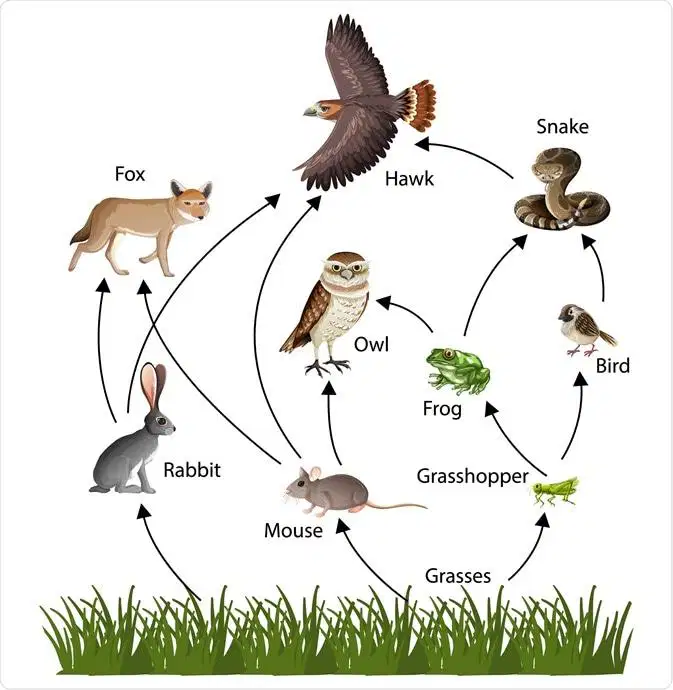
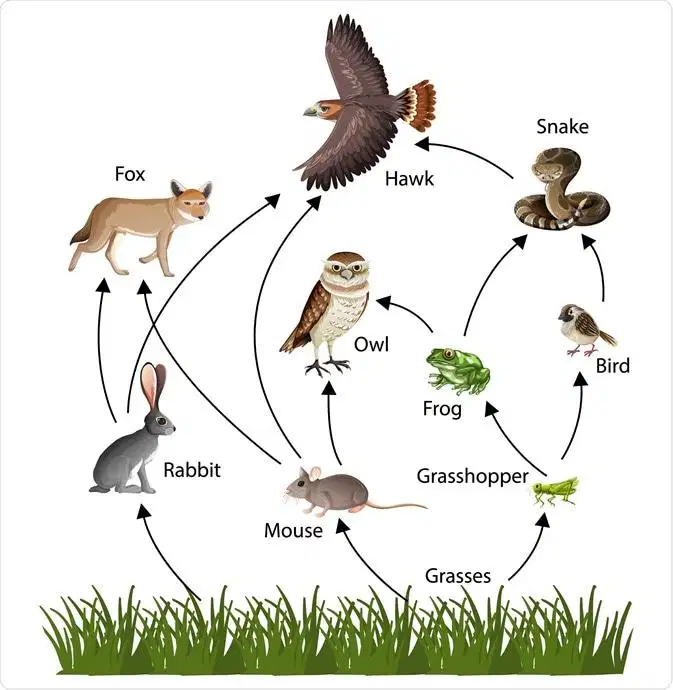
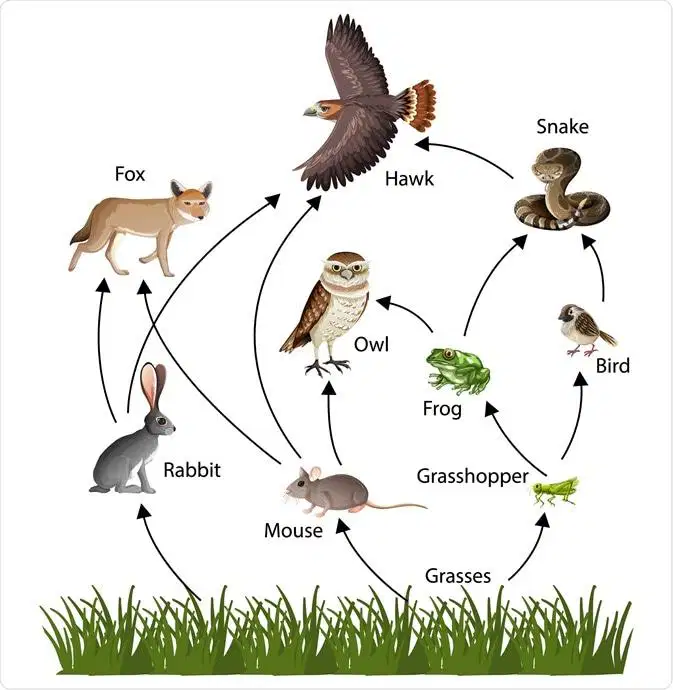
Which of the following is NOT a food chain found in the food web?
a)
Grass --> Mouse --> Owl
b)
Grass --> Grasshopper --> Frog --> Snake --> Hawk
c)
Hawk --> Snake --> Frog --> Mouse
d)
Grass --> Rabbit --> Fox
9.
What are the 2 apex predators in this food web?
a)
Rabbit and Mouse
b)
Hawk and Fox
c)
Hawk and Snake
d)
Snake and Fox
10.
What would happen to the population of mice if the owl population disappeared?
a)
It would increase.
b)
It would decrease.
c)
Nothing would happen.
d)
Not enough information to tell.
11.
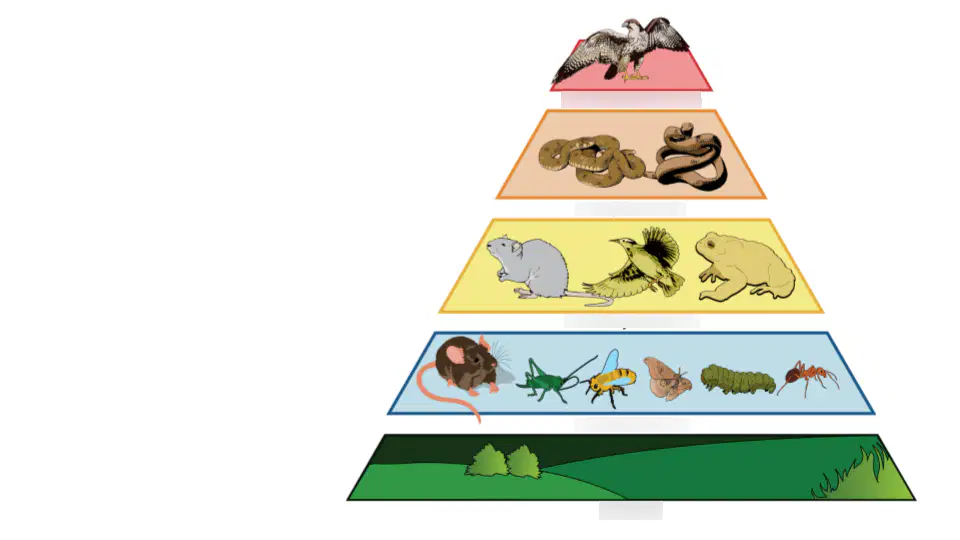
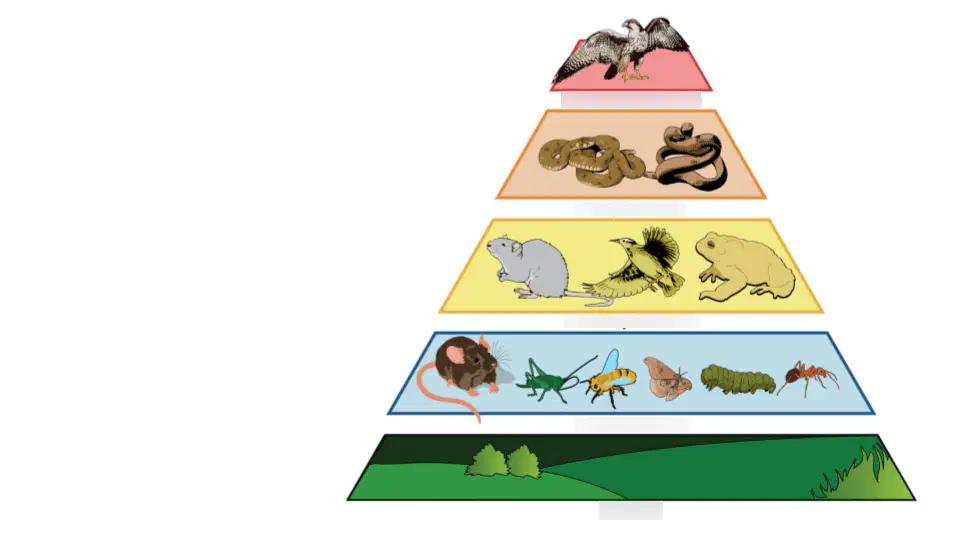
Which organism in the pyramid below has the least amount of energy?
a)
Hawk
b)
Mouse
c)
Grass
d)
Snake
12.
Which organism in the pyramid below is the tertiary consumer?
a)
Hawk
b)
Mouse
c)
Grass
d)
Snake
13.
What is the name of the diagram that shows the amount of energy that moves from one feeding level to another?
a)
Food Web
b)
Food Chain
c)
Energy Pyramid
d)
Energy Chain
14.
What is the independent variable for the following statement: The height of the plants was measured at different times of the day.
a)
Height of the Plant
b)
Different Times of Day
c)
Plant
d)
Measured
15.
What happens to the potential energy of an object as you increase its height?
a)
It increases.
b)
It decreases.
c)
It stays the same.
d)
Not enough information.
16.
Which of the following organelles does the process of cellular respiration take place in?
a)
Mitochondria
b)
Chloroplast
c)
Cytoplasm
d)
Nucleus
17.
What is the main way energy is lost in a food chain?
a)
As chemical energy during digestion
b)
As heat during respiration
c)
As kinetic energy during movmenet
d)
As light during photosynthesis
18.
How do plants get the water necessary for them to grow?
a)
Through the chloroplast
b)
Through the stomata
c)
Through the roots
d)
Through the leaves
19.
Where does the process of photosynthesis take place?
a)
In the chloroplasts of plant cells
b)
In the mitochondria of animal cells
c)
In the chloroplast of animals cells
d)
In the cytoplasm of plants cells
20.
Which organelle turns food into energy for the cell? AKA the "powerhouse" of the cell
a)
Mitochondria
b)
Cell Membrane
c)
Small Vacuoles
d)
Chloroplasts
e)
Cell Wall
21.
Which organelle turns sunlight into energy in plant cells?
a)
Chloroplasts
b)
Mitochondria
c)
Cell Membrane
d)
Vacuoles
e)
Cell Wall
22.
As mass decreases, kinetic energy ________________ and potential energy _________________.
a)
increases, increases
b)
decreases, decreases
c)
increases, decreases
d)
decreases, increases
23.
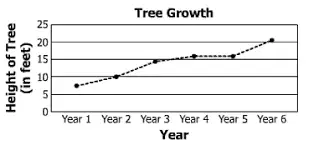
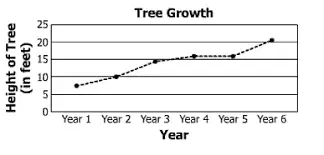
What is the dependent variable for the graph below?
a)
Tree Growth
b)
Height of Tree
c)
Year
d)
Not enough information
24.
Where does the process of cellular respiration take place?
a)
In the chloroplasts of plant cells
b)
In the mitochondria of animal cells
c)
In the chloroplast of animals cells
d)
In the cytoplasm of plants cells
25.
Select the reactants needed for photosynthesis to occur in plants.
a)
Carbon Dioxide (CO2)
b)
Light
c)
Water
d)
Glucose (Sugar)
e)
Oxygen
26.
Select the reactants needed for respiration to occur in animals.
a)
Glucose (Sugar)
b)
Oxygen
c)
Carbon Dioxide (CO2)
d)
Light
e)
ATP
27.
Select the products created during the process of cellular respiration.
a)
Carbon Dioxide (CO2)
b)
ATP
c)
Water
d)
Glucose (Sugar)
e)
Light
28.
Select the products created during the process of photosynthesis.
a)
Glucose (Sugar)
b)
Oxygen
c)
Carbon Dioxide (CO2)
d)
Light
e)
ATP
29.
What happens in the first step of cellular respiration?
a)
Glycolysis- Glucose is broken down into smaller molecules.
b)
Sunlight is captured and carbon dioxide is trapped in plant leaves.
c)
Carbon dioxide and ATP is released from the mitochondria.
d)
Carbon dioxide is absorbed through the stomata of the plant leaves.
30.
How are the chemical equations for photosynthesis and cellular respiration alike?
a)
They are opposites.
b)
They are the exact same.
c)
They are completely different.
d)
Sugar is needed in both equations.
31.
What is the green pigment that absorbs sunlight in plant leaves called?
a)
Chlorophyll
b)
Chloroplast
c)
Cytoplasm
d)
Stomata
32.
What form of energy is created during respiration?
a)
ATP
b)
Sunlight
c)
Glycolysis
d)
Stomata
33.
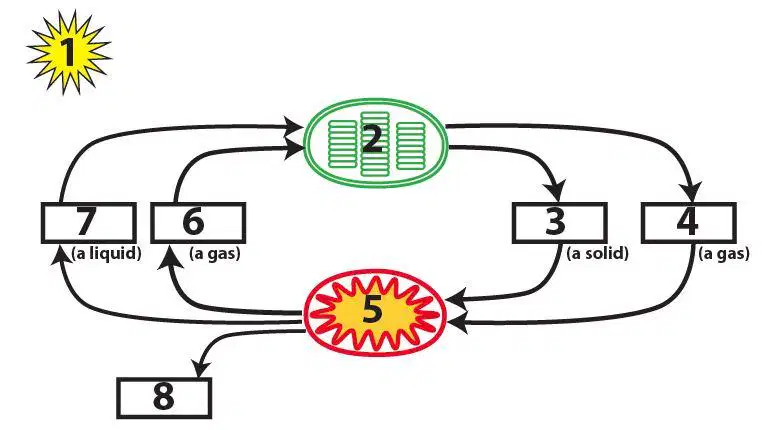
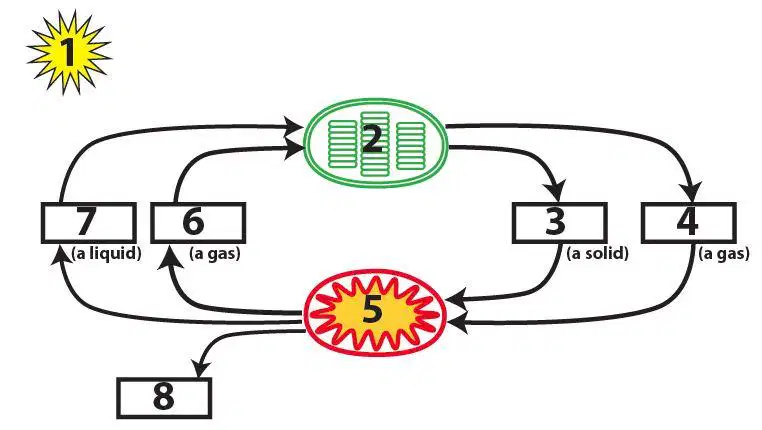
What is represented by #3 in the diagram below?
a)
Glucose
b)
Carbon Dioxide
c)
Water
d)
Oxygen
34.
What is represented by # 4 in the diagram below?
a)
Glucose
b)
Carbon Dioxide
c)
Water
d)
Oxygen
35.
What is represented by # 6 in the diagram below?
a)
Glucose
b)
Carbon Dioxide
c)
Water
d)
Oxygen
36.
What is represented by # 7 in the diagram below?
a)
Glucose
b)
Carbon Dioxide
c)
Water
d)
Oxygen
37.
What is represented by # 8 in the diagram below?
a)
ATP
b)
Carbon Dioxide
c)
Sunlight
d)
Oxygen
38.
Why did the liquid in the cup from yesterday's lab change color?
a)
Carbon dioxide changed the solution to green because it is more acidic.
b)
Oxygen changed the solution to green because it is more acidic.
c)
The temperature of the CO2 being released caused the color to change.
d)
The temperature of the oxygen being released caused the color to change.
39.
When there is friction between surfaces, energy is transferred out of a system as ________ energy.
a)
thermal
b)
chemical
c)
radiant
d)
electrical
40.
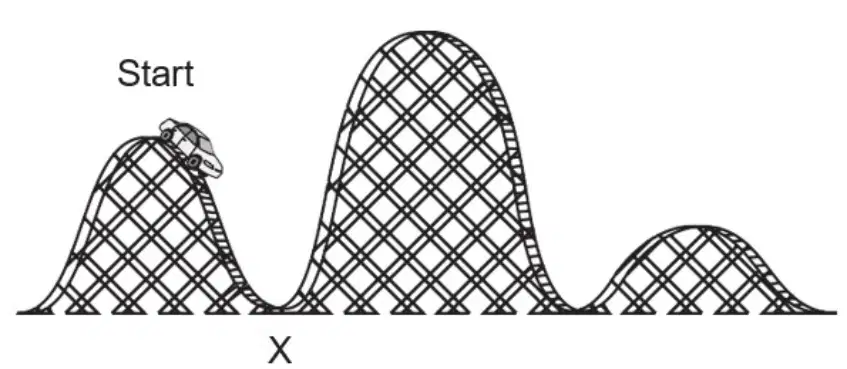
Doug builds a model roller coaster with three hills, as shown in the diagram. He places a toy car at the top of the first hill and releases it. The car stops at point X. Which change to the model would allow the toy car to travel over all three hills?
a)
Add a loop before the first hill in order to maximize the KE of the car.
b)
Add a loop after the tallest hill in order to maximize the KE of the car.
c)
Order the hills from shortest to tallest so that the PE builds up according to the height of each hill.
d)
Order the hills from tallest to shortest to provide the PE needed for the car to make it over each hill.
41.
Differences in gravitational potential energy depend on an object's _________.
a)
mass only
b)
mass and height
c)
speed and height
d)
speed only
42.
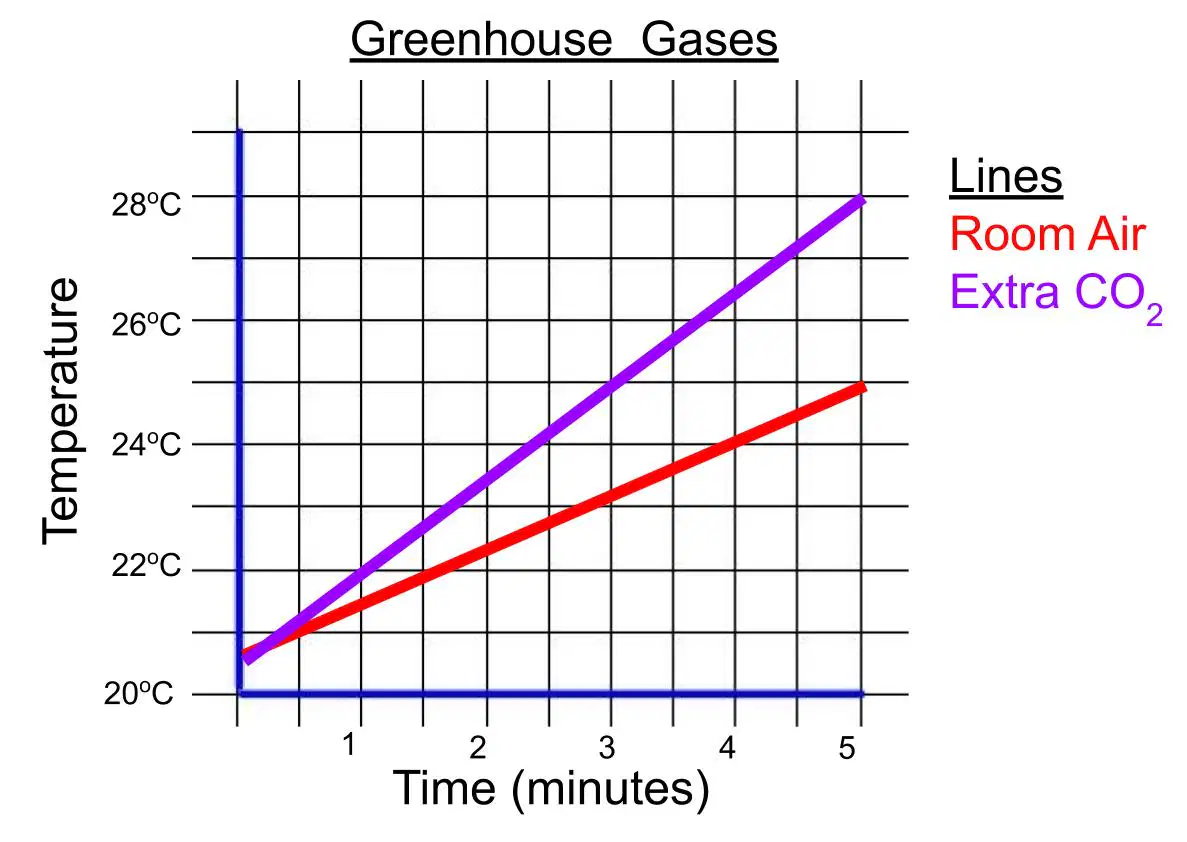
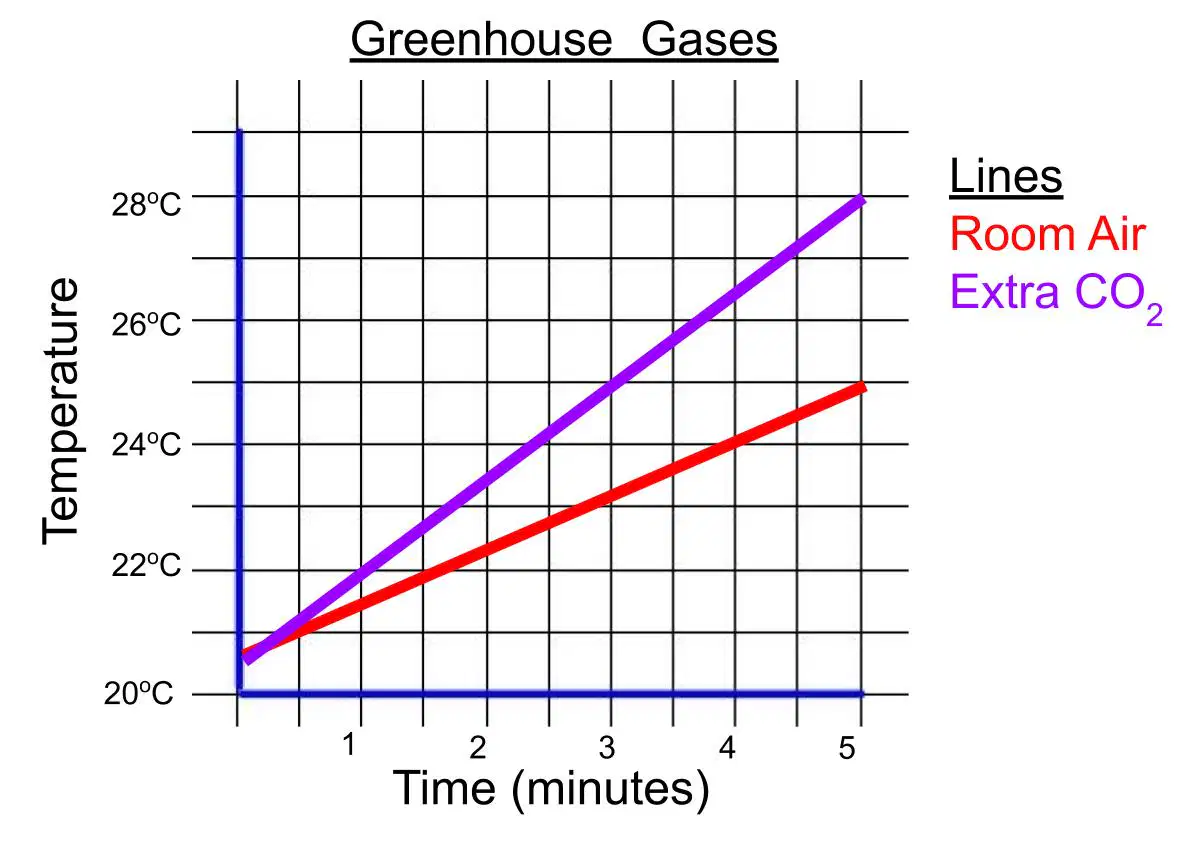
Tina and Tom are conducting an experiment to see how carbon dioxide affects the atmosphere. They fill one bag with room air using a balloon pump and Tina exhales into another bag. Thermometers are placed in both bags and the bags are placed under a heat lamp for 5 minutes. Tina and Tom record the temperature every 30 seconds. Their graph is show below. What is the independent variable in their experiment?
a)
the air temperature
b)
The time they checked the thermometers.
c)
the amount of air
d)
the temperature of the room
43.
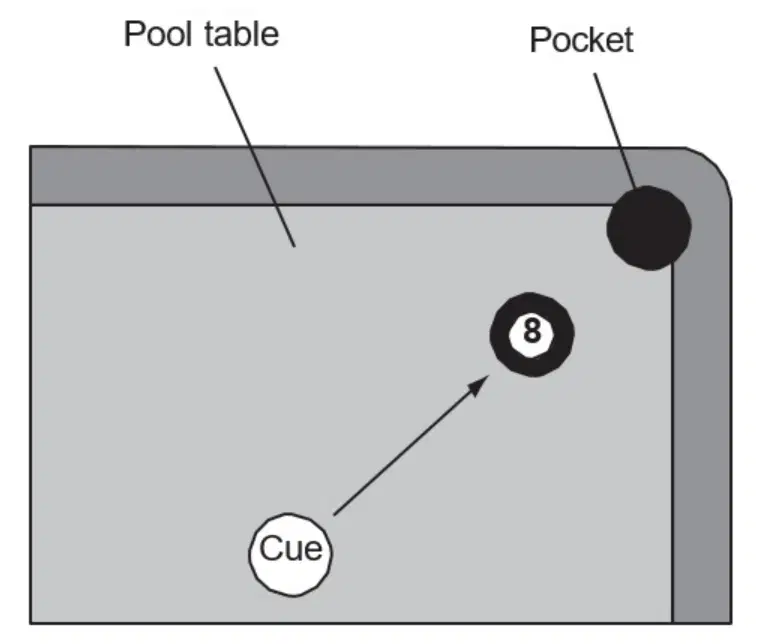
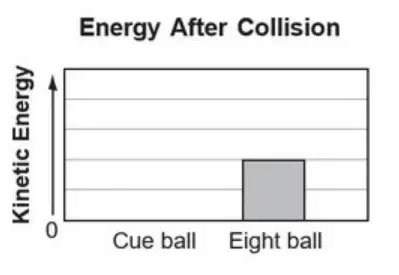
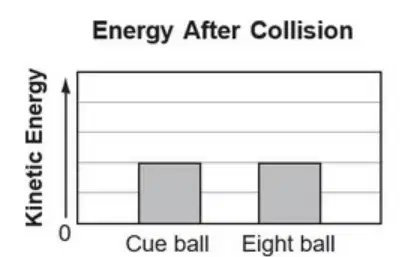
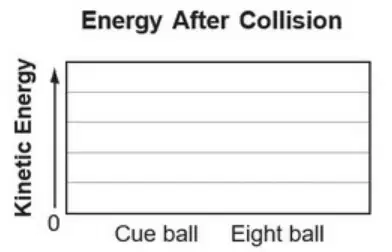
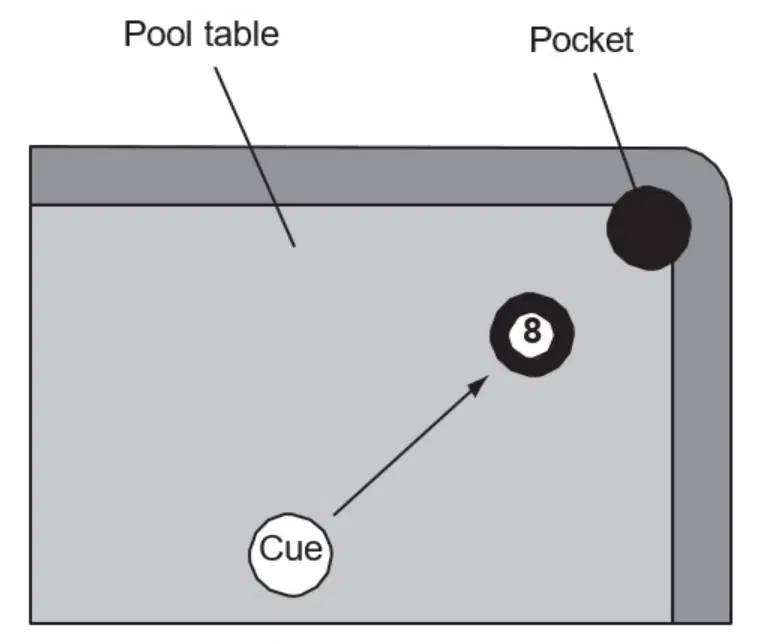
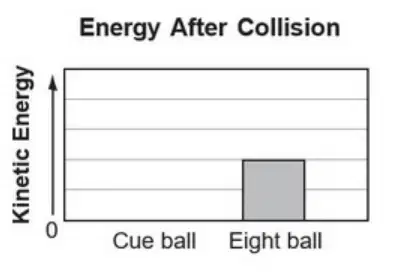
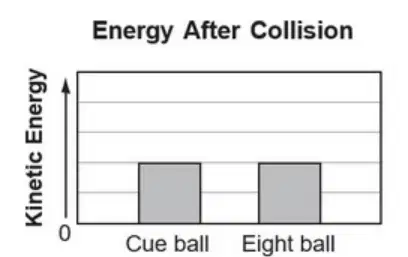
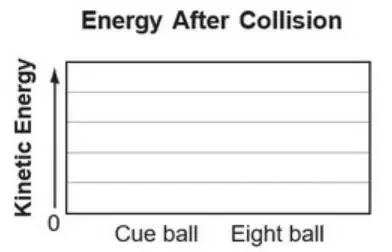
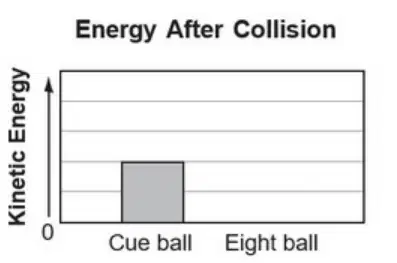
During a game of pool, the cue ball is rolling toward the eight ball which is at rest. The diagram shows a part of the pool table and the positions of the cue ball and eight ball before they collide. Kathleen claims that all of the kinetic energy in the cue ball will be transferred to the eight ball after they collide. Which graph best supports Kathleen’s claim?
a)
A
b)
B
c)
C
d)
D
44.
Which type or types of energy does a blimp circling above a sporting event have?
a)
kinetic energy and gravitational potential energy
b)
kinetic energy and elastic potential energy
c)
potential energy only
d)
kinetic energy only
45.
During a game of pool, the cue ball is rolling toward the eight ball which is at rest. The diagram shows a part of the pool table and the positions of the cue ball and eight ball before they collide. Kathleen claims that all of the kinetic energy in the cue ball will be transferred to the eight ball after they collide. Which graph best supports Kathleen’s claim?
a)
A
b)
B
c)
C
d)
D
46.
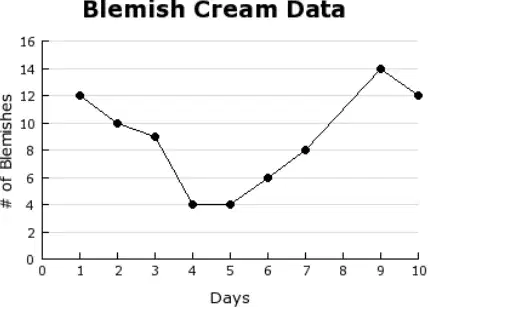
Examine the data presented and find the statement that represents an inference rather than an observation.
a)
The number of blemishes peaked on day 9.
b)
On day 10 there were about 12 blemishes.
c)
The blemish cream was most effective on days 4 and 5.
d)
The blemishes are reoccurring in their appearance and disappearance.
47.
A dump truck, a sports car, and a bicycle are traveling at the same velocity (speed). Which is true?
a)
They all have the same kinetic energy.
b)
The sports car has the most kinetic energy.
c)
The bicycle has the least kinetic energy.
d)
More information is needed to compare their kinetic energy
48.
Tina and Tom are conducting an experiment to see how carbon dioxide affects the atmosphere. They fill one bag with room air using a balloon pump and Tina exhales into another bag. Thermometers are placed in both bags and the bags are placed under a heat lamp for 5 minutes. Tina and Tom record the temperature every 30 seconds. Their graph is show below. What is the dependent variable in their experiment?
a)
the air temperature
b)
The time they checked the thermometers
c)
the amount of air
d)
the temperature of the room
49.
Based on the data, who's prediction is MOST LIKELY correct?
a)
"The number of blemishes will continue to decrease" - Bill
b)
"The number of blemishes will continue to increase" - Jose
c)
"The blemishes will continue to increase and decrease over time" - Zion
d)
"The blemishes will stop occurring all together" - Raquan
50.
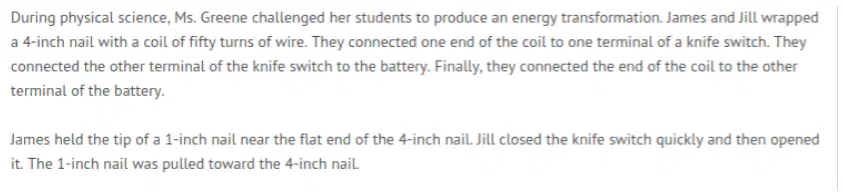
If James and Jill were to expand on their experiment and see the number of coils would affect how far the nail was pulled, what would be the dependent variable?
a)
number of coils
b)
nail length
c)
distance the nail was pulled
d)
type of core used
51.
Which has kinetic energy?
a)
a tank of gasoline
b)
a moving car
c)
a battery
d)
water in a reservoir
52.
Which indicates what happens to the kinetic energy when the mass of a moving object increases?
a)
The kinetic energy does not change
b)
The kinetic energy increases by the same factor as the mass increase.
c)
The kinetic energy increases by the square of the same factor as the mass increase.
d)
The kinetic energy decreases by the same factor as the mass increase.
53.
Which action would require no work to be done on an object?
a)
lifting the object from the floor to the ceiling
b)
pushing the object along a horizontal floor against a frictional force
c)
decreasing the speed of the object until it comes to rest
d)
holding the object stationary above the ground
54.
The law of conservation of energy states that when one form of energy is converted into another...
a)
some of the energy cannot be accounted for.
b)
energy is created in the process.
c)
no energy is destroyed in the process.
d)
energy is destroyed in the process.
55.
Which indicates what happens to the kinetic energy of an object when its speed increases?
a)
The kinetic energy does not change.
b)
The kinetic energy increases by the same factor as the speed increase.
c)
The kinetic energy decreases by the square of the same factor as the speed increase.
d)
The kinetic energy decreases by the same factor as the speed increase.
56.
Work _____ energy.
a)
reduces
b)
reflects
c)
transfers
d)
stops
57.
A kite stuck in a tree has ______ energy due to its position.
a)
potential
b)
kinetic
c)
chemical
d)
thermal
58.
If an object is on top of a hill or in a position raised above the ground, it must have __________.
a)
kinetic energy
b)
gravitational potential energy
c)
elastic potential energy
d)
chemical potential energy
59.
In every energy transformation, some energy is always “lost” as ____ energy.
a)
chemical
b)
radiant
c)
electrical
d)
thermal
60.
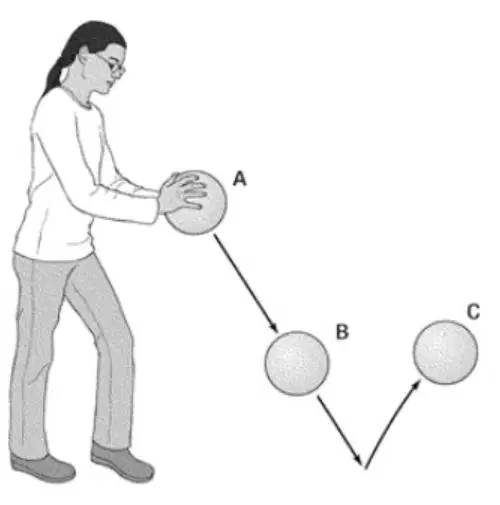
A rubber ball is dropped and bounces back up. The ball has __________.
a)
zero kinetic energy at C
b)
zero potential energy at A
c)
both kinetic and potential energy at A
d)
both kinetic and potential energy at C
61.
A stretched rubber band has what type of energy?
a)
Kinetic Energy
b)
Gravitational Potential Energy
c)
Elastic Potential Energy
d)
Chemical Potential Energy
62.
Which statement is not true about energy?
a)
Energy is the ability to do work.
b)
Energy is neither created nor destroyed.
c)
There are many forms of energy, but they can all be categorized as kinetic or potential.
d)
Potential energy is the energy of motion.
63.
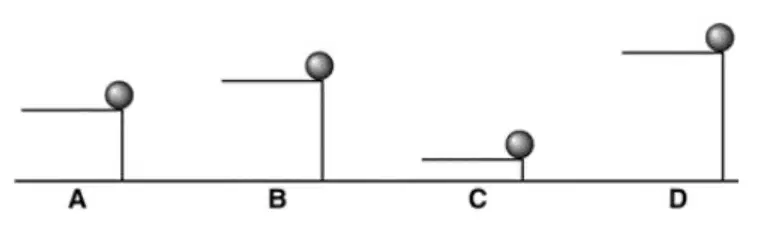
In which diagram does the ball have the greatest potential energy?
a)
A
b)
B
c)
C
d)
D
64.
Which best describes the changes in energy as a child goes down a slide?
a)
potential energy decreases and kinetic energy increases
b)
potential energy is constant and kinetic energy increases
c)
potential and kinetic energy are constant
d)
mechanical energy decreases
65.
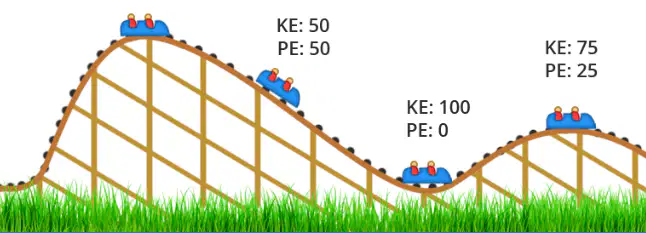
Which of the following would best describe the energy levels at the first point in the roller coaster ride
a)
KE 25 PE 25
b)
KE 0 PE 100
c)
KE 100 PE 0
d)
KE 50 PE 50
66.
Energy is the property that enables something to ______.
a)
be in a fixed position.
b)
do nothing.
c)
do work.
d)
be in motion.
67.
The graph shows the average speed of a car on four different track sections of a roller coaster. Which statement is false?
a)
The car's kinetic energy is greatest in track section 2.
b)
Track section 2 is likely at the top of a hill.
c)
Track section 2 is likely at the bottom of a hill.
d)
The car's kinetic energy varies even though its mechanical energy remains almost constant.
68.
Which type of energy does an object NOT have if it is at rest?
a)
kinetic energy
b)
gravitational potential energy
c)
elastic potential energy
d)
chemical potential energy
69.
Which equation is correct?
a)
mechanical energy = kinetic energy – potential energy
b)
mechanical energy = potential energy – kinetic energy
c)
mechanical energy = kinetic energy + potential energy
d)
mechanical energy = kinetic energy × potential energy
70.
According to the law of conservation of energy, the total amount of energy in the universe ____
a)
remains constant
b)
changes constantly
c)
increases
d)
decreases
71.
When two surfaces interact, some mechanical energy leaves the system as thermal energy due to ________.
a)
surrounding heat
b)
water
c)
friction
d)
fusion
72.
The combined total of the kinetic and potential energy in a system is called _____.
a)
radiant energy
b)
nuclear energy
c)
potential kinetic energy
d)
mechanical energy
73.
What type of observation involves words, letters, and five senses?
a)
Quantitative observation
b)
Qualitative observation
c)
Inference
d)
Hypothesis
74.
What type of observation involves numbers, measurements, and values.
a)
Quantitative observation
b)
Qualitative observation
c)
Inference
d)
Hypothesis
75.
Justin wants to determine the effect of fertilizer on the growth of grass. What is the IV?
a)
Growth of grass
b)
Fertilizer
76.
The solution is blue because it contains copper sulfate. This is an example of an ____________.
a)
inference
b)
observation
c)
conclusion
d)
prediction
77.
The plants will germinate in the absence of light. This is an example of _____________.
a)
infernece
b)
observation
c)
conclusion
d)
prediction
78.
When the 2 solutions are mixed, they will turn blue. This is an example of a ______________.
a)
Inference
b)
observation
c)
conclusion
d)
prediction
79.
Angel wants to know if the type of detergent has an effect on the cleanliness of her clothes. What is the DV?
a)
Type of detergent
b)
Cleanliness of clothes
80.
How does the number of completed passes affect the number of touchdowns scored? What is the IV?
a)
Number of touchdowns scored
b)
Number of completed passes
81.
What variable do scientists change?
a)
Control variable
b)
Dependant variable
c)
Independent variable
d)
Constant
82.
What variable do scientist measure?
a)
Constant
b)
Independent variable
c)
Dependent variable
d)
Control variable
83.
There are eight boys and ten girls in the class. What type of observation is this?
a)
Qualitative
b)
Quantitative
84.
Mrs. Waldron has on white pants. What type of observation is this?
a)
Qualitative
b)
Quantitative
85.
What axis is the independent variable graphed on ?
a)
y-axis
b)
x-axis
86.
What axis is the dependent variable graphed on?
a)
y-axis
b)
x-axis
87.
The solution is red. This is an example of an _______.
a)
Prediction
b)
Inference
c)
Observation
88.
When something happens in the lab (a spill, a break, etc.) what should you do?
a)
Clean it up!
b)
Tell the teacher first.
c)
Nothing, just continue the lab.
d)
Tell your friends
89.
Things that stay the same in an experiment are known as what?
a)
constants
b)
observations
c)
controls
d)
conclusions
90.
Billy Bob came into class and began mixing liquids immediately before the teacher could give directions. Did he break a safety rule?
a)
No
b)
Yes
c)
Maybe
91.
An ______________________ is based on observations.
a)
observation
b)
prediction
c)
inference
d)
conclusion
92.
Why is it important to follow safety rules while conducting an experiment?
a)
Because the teacher said to
b)
To keep everyone safe
c)
To keep everyone's attention
d)
It is not important to follow the rules
93.
First Name
4 lines
94.
Last Name
4 lines
95.
Class Period
a)
1st
b)
2nd
c)
5th
d)
6th
96.
All living things are also known as ________________.
a)
animals
b)
plants
c)
humans
d)
organisms
97.
Select the 2 descriptions of the cell theory.
a)
All living things are made of cells.
b)
All nonliving things are made of cells.
c)
All nonliving AND living things are made of cells.
d)
Cells are the smallest unit of life.
e)
Cells are the largest unit of life.
98.
Select all of the organelles that PLANT cells have that animal cells do not have.
a)
Chloroplasts
b)
Cell Wall
c)
Large Vacuole
d)
Mitochondria
e)
Cell Membrane
99.
Which organelle directs all of the cell's activities? AKA the "brain" of the cell
a)
Nucleus
b)
Mitochondria
c)
Cell Membrane
d)
Small Vacuoles
e)
Chloroplasts
100.
Which organelle turns food into energy for the cell? AKA the "powerhouse" of the cell
a)
Mitochondria
b)
Cell Membrane
c)
Small Vacuoles
d)
Chloroplasts
e)
Cell Wall
101.
Which organelle gives shape and support for plant cells?
a)
Cell Wall
b)
Mitochondria
c)
Cell Membrane
d)
Small Vacuoles
e)
Chloroplasts
102.
Which organelle stores food and water in both plant cells and animal cells?
a)
Vacuoles
b)
Mitochondria
c)
Cell Membrane
d)
Chloroplasts
e)
Cell Wall
103.
Which organelle turns sunlight into energy in plant cells?
a)
Chloroplasts
b)
Mitochondria
c)
Cell Membrane
d)
Vacuoles
e)
Cell Wall
104.
Which organelle allows the materials inside of the cell to move around. The space between the membrane and the organelles.
a)
Cytoplasm
b)
Mitochondria
c)
Cell Membrane
d)
Vacuoles
e)
Chloroplasts
105.
Which organelle gives shape and support to animal cells. It also controls what comes in and out of both plant and animal cells.
a)
Cell Membrane
b)
Mitochondria
c)
Vacuoles
d)
Chloroplasts
e)
Cell Wall
106.
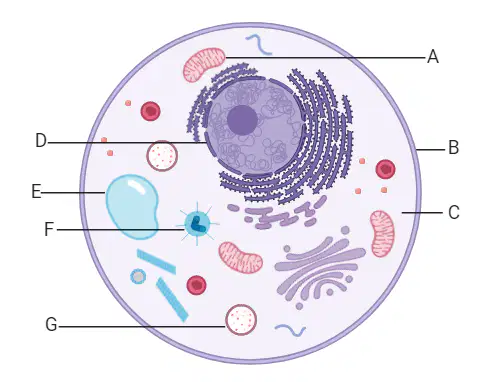
What organelle is labeled by the letter A?
a)
Mitochondria
b)
Cytoplasm
c)
Chloroplast
d)
Nucleus
107.
What organelle is labeled by the letter D?
a)
Mitochondria
b)
Cytoplasm
c)
Chloroplast
d)
Nucleus
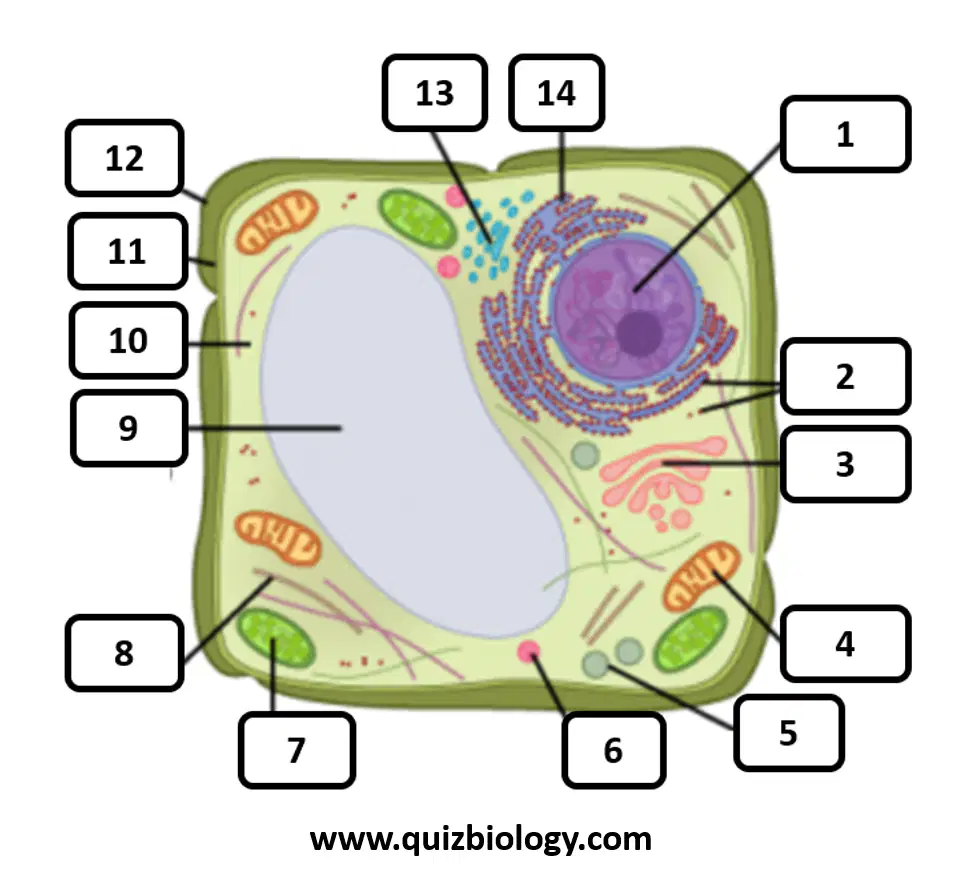
108.
What organelle is labeled by the number 9?
a)
Vacuole
b)
Chloroplast
c)
Mitochondria
d)
Nucleus
109.
What organelle is labeled by the number 7?
a)
Vacuole
b)
Chloroplast
c)
Mitochondria
d)
Nucleus
110.
Which of the following organisms is usually unicellular?
a)
Bacteria
b)
Animal
c)
Plant
d)
Human
111.
Plant cells are usually ____________ shaped, while animal cells are _______________ shaped.
a)
round, rectangular
b)
rectangular, round
c)
triangular, rectangular
d)
round, triangular
112.
Why do plant cells have larger vacuoles than animal cells?
a)
They store more water than animals.
b)
They don't have larger vacuoles than animals.
c)
Their vacuoles serves as their nucleus.
d)
The need more protection than animal cells.
113.
Why are animal cells round shaped?
a)
They need to be able to move freely throughout the body
b)
The need to add support to the body
c)
Animal cells are not round shaped, they are rectangular.
d)
They need to be able to block passageways in the body.
114.
As mass increases, kinetic energy ________________ and potential energy _________________.
a)
increases, increases
b)
decreases, decreases
c)
increases, decreases
d)
decreases, increases
115.
What is the independent variable for the graph below?
a)
Tree Growth
b)
Height of Tree
c)
Year
d)
Not enough information
116.

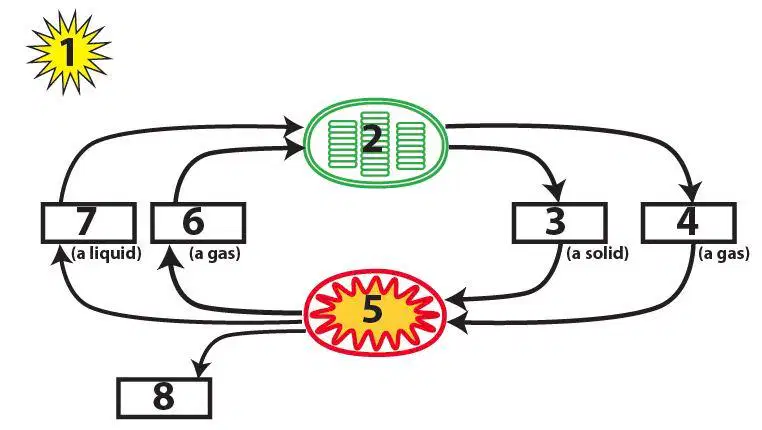
What cycle is this?

a)

Carbon Cycle

b)

Nitrogen Cycle

c)

Water Cycle

d)

Photosynthesis

117.

What cycle is this?

a)

Carbon Cycle

b)

Water Cycle

c)

Nitrogen Cycle

d)

Carbon Dioxide & Oxygen cycle

118.

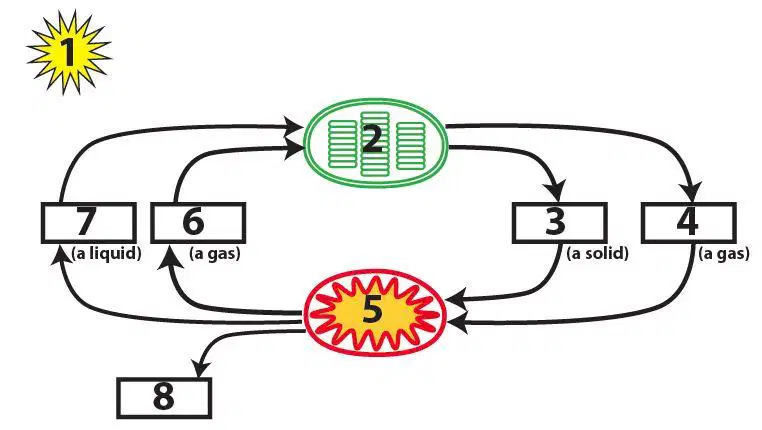
What cycle is this?

a)

Carbon cycle

b)

Water Cycle

c)

Nitrogen Cycle

d)

Carbon dioxide & Oxygen cycle

119.

What is the process where water falls back to the Earth's surface?

a)

evaporation

b)

precipitation

c)

condensation

d)

cellular respiration

120.

What is the stage after evaporation in the water cycle?

a)

condensation

b)

runoff

c)

precipitation

d)

collection

121.

Which of the following is an example of a decomposer?

a)

Owl

b)

Fish

c)

Tree

d)

Mushroom

122.

Which describes the relationship between plants and animals in the carbon cycle?

a)

Plants produce and release oxygen that animals need

b)

Plants produce and release carbon dioxide that animals need

c)

Animals produce and release oxygen that plants need

d)

Animals produce oxygen that plants turn into carbon dioxide

123.

What converts nitrogen gas (N2) into a usable form for plants and animals?

a)

bacteria

b)

rain

c)

fungi

d)

car exhaust

124.

How do animals get the nitrogen they need?

a)

From the air they breathe

b)

From the water they drink

c)

From the food they eat

d)

From the Sun

125.

What is the process of combining nitrogen gas with other elements to make nitrogen into usable compounds?

a)

nitrogen composition

b)

nitrogen fixation

c)

ammonia

d)

denitrification