wayground logo

Free Printable Worksheets

Font size

S
M
L
XL
Worksheets

Bio: Cells, Virus and Bacteria

Total questions: 126

Worksheet time: 3hrs 22mins

Name
Class
Date
1.

Which pathogen is non-living?

a)

Virus

b)

Bacteria

c)

Fungi

d)

Parasite/Protist

e)

They are all alive

2.

Malaria is a common disease in many countries. What type of pathogen is malaria?

a)

a virus

b)

a bacterium

c)

a fungus

d)

a protist

3.

Which type of pathogen is responsible for causing the flu, chicken pox, and yellow fever?

a)

viruses

b)

parasites

c)

fungi

d)

bacteria

4.
Which pathogen needs a host cell to reproduce?
a)
virus
b)
bacteria
c)
fungus
d)
parasite
5.
Which pathogen is most likely to look like a worm or insect?
a)
Virus
b)
Bacteria
c)
Fungi
d)
Protist
6.
Athlete's foot is an example of this pathogen
a)
Bacteria
b)
Virus
c)
Fungus
d)
Protozoan
7.
What are the 4 types of pathogens that could cause illness?
a)
animals, bacteria, fungi and plants
b)
bacteria, fungi, nucleus, protist
c)
bacteria, fungi, viruses, protist
d)
bacteria, plants, fungi, protist
8.

Which type of microbe is the smallest?

a)

Bacteria

b)

Viruses

c)

Fungi

d)

Protists

9.

Which type of microbe is sometimes called "parasites"?

a)

Bacteria

b)

Viruses

c)

Fungi

d)

Protists

10.

Which of the following is a virus?

a)

Influenza

b)

Malaria

c)

Strep throat

d)

Athlete's Foot

11.

Pathogens transmitted via contaminated food or water.

a)

Direct Contact

b)

Indirect Contact

c)

Airborne Transmission

d)

Foodborne Tranmission

e)

Vector-Borne Transmission

12.

When a pathogen is moved from person to person through physical touch (kissing, hugging, close-up sneezing, shaking hands).

a)

Transmission

b)

Translation

c)

Emission

d)

Direct Contact

e)

Indirect Contact

13.

diseases transmitted through the air due to coughing, sneezing, and toilet flushing

a)

airborne

b)

waterborne

c)

foodborne

d)

vectorborne

14.
Edward Jenner succeeded in creating a vaccine against smallpox by injecting patients with material of which disease?
a)
Small pox
b)
Cow pox
c)
Cattle Virus
d)
Measles Virus
15.
Special proteins produced by the body to attack foreign invaders.
a)
antibodies
b)
antigen
16.
Substances that cause the body to produce antibodies.
a)
antibodies
b)
antigens
17.
Vaccines contain weakened or dead parts of antigens. 
a)
True
b)
False
18.
Anything that triggers an immune response is a/n
a)
lymph cell
b)
antigen
c)
antibody
d)
neutrop
19.
Vaccines stimulate the body to produce...
a)
autoimmune diseases
b)
helper t-cells
c)
fever
d)
antibodies
20.
It is possible for the genetic material of a virus to be double or single stranded.
a)
True
b)
False
21.
Which virus replication cycle results in the death of the host cell?
a)
Carbon Cycle
b)
Lysogenic Cycle
c)
Nitrogen Cycle
d)
Lytic Cycle
22.
What is a virulent virus?
a)
One that kills mammals
b)
A virus that is spread through the air.
c)
A virus that denatures human proteins
d)
None of the above.
23.
Retroviruses us a special enzyme called backwards transcriptase.
a)
True
b)
False
24.
A large outbreak of a disease is called a pandemic.
a)
True 
b)
False
25.
A __________ is an infectious protein that causes brain disease in mammals.
a)
Prion
b)
Virus
c)
Bacteria
d)
Viroid
26.
Gram-negative bacteria stain purple after gram staining.
a)
True 
b)
False
27.
________ is the compound that makes up bacterial cell walls.
a)
Cellulose
b)
Chitin
c)
Glucose
d)
Peptidoglycan
28.
Small rings of DNA found in some bacteria are called ___________________________.
a)
Nucleoids
b)
Plasmids
c)
Chromosomes
d)
Chromatids
29.
Flagella are small hairs that project from bacteria and allow them to stick to surfaces and other cells and aid in movement.
a)
True 
b)
False
30.
Transduction occurs when bacteria take up naked DNA from its surroundings.
a)
True
b)
False
31.
A ______________ forms a bridge for DNA exchange during conjugation.
a)
Sex Pillus
b)
Fimbriae
c)
Flagella
d)
Endospore
32.
Any disease causing agent is called a _________________.
a)
Virus
b)
Baceria
c)
Viroid
d)
Pathogen
33.
A protein or polysaccharide layer called a __________________ surrounds some bacteria.
a)
Sex Pillus
b)
Endospore
c)
Capsule
d)
Nucleoid
34.
Organisms that break down dead plants and animals into chemical nutrients that are released back into the soil, air and water
a)
Decomposers
b)
producers
c)
consumers
35.
A temporary union of two organisms for the purpose of DNA transfer.
a)
Conjugation
b)
Transformation
c)
Transduction
36.
The transfer of a DNA segment from a nonfunctional donor cell to that of a functional recipent cell.
a)
Transformation
b)
Transduction
c)
Conjugation
37.
Study of bacteria, archaeabacteria, viruses, unicellular eukaryotes
a)
microbiology
b)
histology
c)
mycology
38.
A form of asexual reproduction in which one cell divides to form two identical cells.
a)
binary fission
b)
meiosis
c)
budding
39.
Transfer of genetic material through a virus called a bacteriophage.
a)
Transduction
b)
Conjugation
c)
Transformation
40.
thin, outer boundary of cell; provides permeability barrier
a)
Plasma membrane
b)
cell wall
c)
capsule
41.
The region in a prokaryotic cell consisting of a concentrated mass of DNA.
a)
Nucleoid Region
b)
nucleus
c)
vacuole
42.
long appendages that ROTATE to allow movement
a)
Flagella
b)
cilia
c)
tail fibers
43.
provides support, shape, and regulates amount of water absorbed by cell; found outside of plasma membrane
a)
Bacterial Cell wall
b)
capsule
c)
Plasma membrane
44.
rod-shaped bacterium
a)
bacillus
b)
coccus
c)
spirillum
d)
s
45.
spiral, helical, or corkscrew-shaped bacterium
a)
spirillum
b)
coccus
c)
bacillus
46.
Outer protein coat of a virus
a)
capsid
b)
capsule
c)
cell wall
47.
a viral reproductive cycle in which copies of a virus are made within a host cell, which then bursts open, releasing new viruses
a)
lytic cycle
b)
lysogenic cycle
48.
A cell that does not have an enclosed nucleus nor membrane bound organelles
a)
prokaryotic cell
b)
eukaryotic cell
49.
A cell characterized by the presence of a nucleus and other membrane-bound organelles. It can be unicellular or multicellular.
a)
eukaryotic cell
b)
prokaryotic cell
50.

a viral reproductive cycle in which the viral DNA is added to the host cell's DNA and is copied along with the host cell's DNA; A LATENT CYCLE where the host cell is not destroyed.

a)

lytic cycle

b)

lysogenic cycle

51.

The bacteria shape seen in the picture is

a)

bacillus

b)

coccus

c)

spirilla

52.

What part of the cell manufactures lipids?

a)

Nucleolus

b)

Smooth endoplasmic reticulum

c)

Cell membrane

d)

Rough endoplasmic reticulum

53.

Where is DNA stored in a Eukaryotic cell?

a)

Nucleus

b)

Nucleolus

c)

Ribosome

d)

Cytoplasm

54.

Cells that require a lot of energy would contain a large number of _______________________.

a)

DNA

b)

Ribosomes

c)

Mitochondria

d)

Vesicles

55.

While studying a cell with an electron microscope, a scientist notes the following: many ribosomes, a well developed endoplasmic reticulum, chloroplasts, and a cell wall. Which of the following could be the source of this cell?

a)

A virus

b)

A bacteria

c)

An animal

d)

A plant

56.

If a cell contains a nucleus, the organism is a(n) _________________.

a)

Animal

b)

Eukaryote

c)

Plant

d)

Prokaryote

57.

Which of the following are sometimes found attached to the endoplasmic reticulum?

a)

Chloroplasts

b)

Mitochondria

c)

Ribosomes

d)

Vacuole

58.

The fluid and most of the organelles in a cell, except the nucleus, are collectively called the _____________.

a)

Stroma

b)

Cytosol

c)

Plasmids

d)

cytoplasm

59.
Which of the following is not true of bacteria? 
a)
they are prokaryotes
b)
they are multi-celled
c)
found pretty much everywhere
d)
they are on you right now! 
60.
Which of the following is the correct shape for bacteria imaged here? 
a)
bacillus
b)
coccus
c)
sprial
61.
What is the shape of this bacteria? 
a)
bacillus
b)
coccus
c)
spiral
62.
TRUE or FALSE: Viruses can be killed with an antibiotic. 
a)
TRUE
b)
FALSE
63.
Bacteria undergo which type of reproduction? 
a)
asexual
b)
sexual
64.
Pathogens are... 
a)
good bacteria
b)
bad bacteria that gets you sick 
65.
What is a virus? 
a)
a tiny packet of genetic material in a protein coat
b)
a cell with a flagella
c)
a cell with a nucleus 
66.
Which of the following works on bacteria? 
a)
antibiotics
b)
vaccines
67.
Which Disease is NOT caused by a fungus?
a)
Small Pox
b)
Dutch Elm Disease
c)
Ringworm
d)
Athletes Foot
68.
Which Fungus is used to make antibiotics?
a)
Yeast
b)
Penicillium
c)
Mushrooms
69.
What does a VIRUS need to replicate?
a)
Host Cell
b)
Pathogen
c)
Computer
70.
Which of the following diseases is NOT caused by a VIRUS?
a)
Measles
b)
Polio
c)
Chicken Pox
d)
Strep throat
71.
Name this bacteria shape
a)
bacilli
b)
cocci
c)
spirilla
d)
crystal
72.
Name this bacteria shape
a)
cocci
b)
spirilla
c)
bacilli
d)
spaceship
73.
Name this bacteria shape
a)
cocci
b)
bacilli
c)
spirilla
d)
sphere
74.
 Bacteria that help break down dead material in the environment are called 
a)
vaccines
b)
decomposers
c)
oats
d)
Consumers
75.
Archeabacteria...
a)
are eukaryotic
b)
live in extreme environments
c)
are non-living
d)
live in the soil
76.
Bacteria help you digest food.
a)
True
b)
False
77.
What is letter A pointing to?
a)
Flagellum
b)
Pili
c)
Capsid
d)
DNA
78.
The picture here is a :
a)
Eubacteria
b)
Eukaryote
c)
Virus
d)
Fungus
79.
What is pictured?
a)
T4 Bacteriophage
b)
Prion
c)
Tobacco Mosaic Virus
d)
Prophage
80.
What is the process by which a bacteria cell replicates its DNA and divides in half?
a)
Lysis
b)
Binary Fission
c)
Conjugation
d)
Prophage
81.
What is NOT an example of controlling bacteria?
a)
Nitrogen Fixing
b)
Disinfecting
c)
Antibiotics
d)
Food Storage and Processing
82.
Which of these could successfully be treated with antibiotics?
a)
HIV
b)
Strep Throat
c)
Influenza
d)
Common Cold
83.

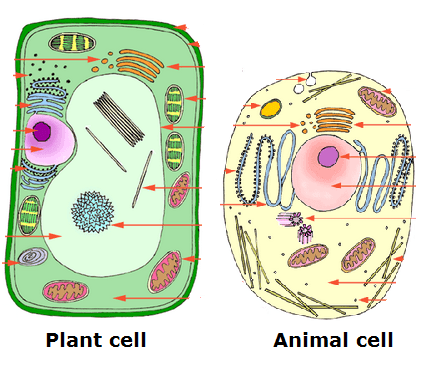
Which numbered cellular structure in the cell above shows that it is a plant cell?

a)

1

b)

2

c)

3

d)

4

84.
The nucleus is like the ____________ of the cell.
a)
foot
b)
hand
c)
stomach
d)
brain
85.

Which of the following converts food into energy for the cell?

a)

vacuole

b)

mitochondria

c)

cytoplasm

d)

cell membrane

86.

The fluid that surrounds the organelles is... (hint... "Try to pull a fast one and..."

a)

chloroplast

b)

cytoplasm

c)

vacuole

d)

cell wall

87.
What do vacuoles do? 
a)
They actually do not have an important role
b)
They protect the cell
c)
They are the brain of the cell
d)
storage area for cells; water storage in plants 
88.

Which organelle takes in "sun showers" and helps plants with the process or photosynthesis?

a)

Vacuole

b)

Mitochondria

c)

Cytoplasm

d)

Chloroplast

89.
If you were some bad guy trying to sneak into an animal cell, who would be there to stop you?
a)
nucleus
b)
mitochondria
c)
cell membrane
d)
cell wall
90.
Which of the following, found ONLY in plant cells, provides structure?
a)
cell wall
b)
chloroplast
c)
mitochondria
d)
vacuole
91.
Which structures are found in every living cell?
a)
cell membrane and cytoplasm
b)
chloroplasts and mitochondria
c)
a cell wall and nucleus
d)
chloroplasts and cell wall
92.
What is the function of the cell nucleus found in both plant and animal cells?
a)
to produce energy
b)
to control cell activity
c)
to remove waste products
d)
to allow molecules to enter the cell
93.
Cell organelles that are responsible for digesting food, worn out organelles and other cellular wastes are called ___________________.
a)
Mitochondria
b)
Vacuoles
c)
Lysosomes
d)
Chlororplasts
94.
What is one basic function of the vacuoles?
a)
circulating oxygen
b)
producing food
c)
controlling cell processes
d)
storing water
95.
Chloroplasts in plant cells allow the plant to perform a function that animal cells cannot do.  What is the main function of the chloroplasts found in plant cells?
a)
to absorb light energy and manufacture food
b)
to remove waste materials by active transport
c)
to manufacture chemical energy from food
d)
to control the shape of the cell
96.
In what part of the plant cell does the process of photosynthesis take place?
a)
nucleus
b)
mitochondria
c)
chloroplasts
d)
vacuoles
97.
What is the function of a cell wall?
a)
to protect and support the cell
b)
to perform different functions in each cell
c)
to prevent water from passing through it
d)
to prevent oxygen from entering the cell
98.
He discovered that all plants are made of cells:
a)
Anton van Leeuwenhoek
b)
Theordor Schwann
c)
Robert Hooke
d)
Mattias Schleiden
99.
Who was the first  person to see cells under the microscope and give them their name?
a)
Mattias Schleiden
b)
Robert Hooke
c)
Theordor Schwann
d)
Anton van Leeuwenhoek
100.

____ is credited with being the first scientist to observe cork cells.

a)

Leewenhoek

b)

Shleidon

c)

Hooke

101.

Which of the following statements is true?

a)

Plants and animal cells have cell walls for protection.

b)

Animal cells have one large vacuole; the plant cell has tiny ones.

c)

Plant cells contain chlorophyll; animal cells have lysosomes.

d)

Animal cells are box shaped; plant cells are circular

102.

There are three types of bacteria - Coccus, Bacilli, & Spirilla. Which of the following picture shows the spirilla.

a)
b)
c)
103.

What distinguishes a plant cell from an animal cell? (How do you tell them apart) Hint: There's 3 ways (Check all 3)

a)

Central Vacuole

b)

Mitochondria

c)

Cell Wall

d)

Ribosomes

e)

Chloroplasts

104.

The 3 parts of the Cell Theory are...?

a)

All living things are composed of cells

Cells are the basic units of structure and function in living things

All cells are produced from other cells

b)

All living things are composed of cells

Cells are the basic units of dance and vibes in living things

All cells are destroyed from other aliens

c)

All living things are composed of Jell-O

Cells are the basic units of structure and function in living things

All cells are produced from factories in Canada

d)

All living things are composed of cells

Cells do karate and practice eating whole pies in their free time

All cells are produced from other cells

105.

These foods contain A LOT of which Bio-molecule that our body LOVES to use for Energy?

a)

Protein

b)

Nucleic Acids

c)

Baconidis

d)

Carbohydrates

106.

Our bodies use this Bio-molecule as it's building material. Often found in meats, eggs, and dairy products.

a)

Carbohydrates

b)

Proteins

c)

Lipids

d)

Baconidis

107.

Cellular Respiration occurs within me and I am in BOTH plant and animal cells. I am a....

a)

Nucleus

b)

Golgi Body

c)

Cytoskeleton

d)

Mitochondria

108.

The Golgi Apparatus/Body is responsible for doing what within a cell?

a)

gathers simple molecules

b)

gathers simple molecules and combines them to make lysosomes

c)

gathers simple molecules and combines them to make molecules that are more complex

d)

gathers simple molecules and combines them to make molecules that are more fun than others

109.

I provide plant cells their rigid shape. I am the...

a)

Basketball that Nic Quarne left in Mr. Woller's room last week

b)

Cytoskeleton

c)

Cell Membrane

d)

Cell Wall

110.

Who said that "all cells come from other cells?"

a)

Hooke

b)

Schlieden

c)

Schwann

d)

Virchow

111.

A group of organs working together create an

a)

organelle

b)

organ

c)

organ system

d)

organism

112.

Which scientist created the compound microscope?

a)

Hooke

b)

Jansen

c)

Virchow

d)

Van Leeuwenhook

113.

Who looked at animal cells & said "cells are the basic unit of structure & function in living things?"

a)

Virchow

b)

Hooke

c)

Schlieden

d)

Schwann

114.

Who gave cells their name when he looked at cork?

a)

Hooke

b)

Van Leeuwenhook

c)

Schlieden

d)

Schwann

115.

Which organelle is responsible for transport of proteins & has ribosomes attached?

a)

Chloroplast

b)

Rough ER

c)

Smooth ER

d)

Cell Wall

116.
A rigid layer that lies outside the cell's  membrane is...
a)
Cytoplasm
b)
Cell membrane
c)
Cell Wall
d)
Flagella
117.
Directs all cell activities and the DNA is located there. "The brain"
a)
Lysosomes
b)
Nucleus
c)
Cell Wall
d)
Cytoplasm
118.
a)
found only in plants
b)
contains chlorophyll
c)
produces energy
119.
What does the plant cell structure chloroplast do?
a)
directs the cell's activities
b)
stores nutrients, water, or waste
c)
makes food
d)
supports the plant cell
120.

What is mitochondria?

a)

the brain of cell

b)

the liquid susbtance of a cell

c)

part that converts food into energy

121.

Bacteria is...

a)

a multicellular organism

b)

a nonliving thing

c)

a unicellular organism

122.

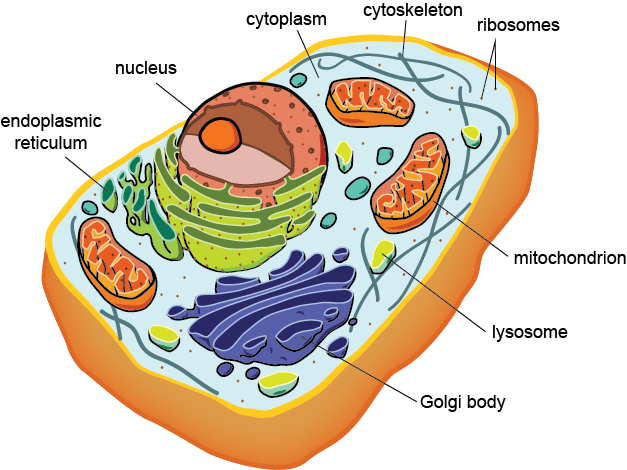
What part of the cell is this one?

a)

Nucleus

b)

Golgi Apparatus

c)

cytoplasm

123.

What part of the cell is this one?

a)

Nucleus

b)

Golgi Apparatus

c)

Mitochondria

d)

Cytoplasm

124.

Which of the following statements is NOT part of the cell theory?

a)

Cells are the basic unit of structure and function in all living things.

b)

All cells are produced from other cells.

c)

Cells are the basic unit of structure and function in all matter.

d)

All living things are composed of cells.

125.

What is one way in which all living things on Earth are alike?

a)

All living things have hair.

b)

All living things are made of cells.

c)

The cells of all living things have chloroplast.

d)

All living things can move.

126.

What is the main difference between prokaryotic and eukaryotic cells?

a)

Prokaryotic cells are found only in multicellular organisms

b)

Eukaryotic cells are found only in unicellular organisms

c)

Eukaryotic cells have a nucleus and prokaryotic cells do not

d)

Prokaryotic cells have DNA and eukaryotic cells do not