
NEW
Font size
 Worksheets
Kinetic energy
Total questions: 37
Worksheet time: 28mins
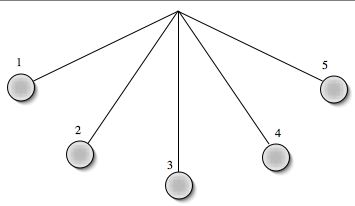

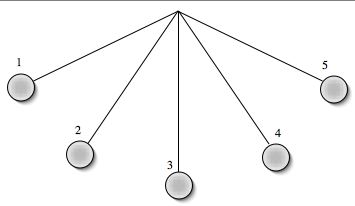
When a pendulum swings, at which point is kinetic energy the greatest?
1
2
3
4
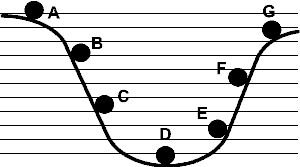

How can you increase the amount of kinetic energy?
Slow the object down
Decrease the mass
Increase the mass
How can you decrease the amount of potential energy?
Increase the mass
Increase the height
Decrease the height
Pull back farther
Which roller coaster would be impossible to complete?


A rock that has rolled about halfway down a hill has -
More potential energy than kinetic energy
Only kinetic energy
About equal amounts of potential and kinetic energy
A lot more kinetic energy than potential energy

A 300 g ball is thrown upward. The diagram shows the path of the ball and four positions along its path.
If a ball weighing 150 g follows the same path with the same speed, how would its kinetic energy compare to the kinetic energy of the 300 g ball at position 4?
The 150 g ball would have more kinetic energy at position 4.
The 150 g ball would have less kinetic energy at position 4.
The 150 g ball would have the same kinetic energy at position 4.
The 150 g ball would have zero kinetic energy at position 4.

A student conducts an experiment by dropping three balls with the same size but different masses from a height of two meters into a box of flour. The table shows the recorded measurements of the indentation each ball makes in the flour.
What can the student conclude from the experiment?
As the size of the ball decreases, the velocity increases.
The ball with the lowest mass has the greatest velocity as it lands in the flour.
As the height from which the ball is dropped increases, the kinetic energy increases.
The ball with the greatest mass has the most kinetic energy as it lands in the flour.

A student rolls a 20-gram ball at different speeds. The table shows the kinetic energy of the ball at each speed.
Based on the data, which statement describes the relationship between the speed and the kinetic energy of the ball?
When the speed of the ball is doubled, the kinetic energy quadruples.
When the speed of the ball is quadrupled, the kinetic energy is halved.
When the speed of the ball is halved, the kinetic energy doubles.
When the speed of the ball is doubled, the kinetic energy doubles.

A student fires a ball at two different speeds from a toy cannon. The ball hits and stretches a rubber sheet. The table shows the speeds of the ball and the distance the rubber sheet is stretched by the ball.
Why does the ball with a higher speed stretch the rubber sheet more?
Increasing speed increases the mass of the ball.
Increasing speed reduces the effect of gravity on the ball.
Increasing speed increases the kinetic energy of the ball.
Increasing speed reduces the air resistance on the ball.

A bowling ball and baseball move at the same speed.
How does the kinetic energy of each ball compare, and why?
The bowling ball and the baseball have the same kinetic energy because they have the same speed.
The baseball has greater kinetic energy because it has less mass than the bowling ball.
The bowling ball has less kinetic energy because it has a larger volume than the baseball.
The bowling ball has greater kinetic energy because it has more mass than the baseball.

Two identical trains, Train A and Train B, are traveling along parallel rails. The speed of Train A is 88 km/hr, and the speed of Train B is 96 km/hr.
Based on this information, which of the following statements is true?
The trains have the same amount of kinetic energy because their masses are identical.
Train A has more kinetic energy than Train B.
Neither train has kinetic energy because they are traveling on a level track.
Train B has more kinetic energy than Train A because it is traveling faster.

According to the data below, which object will have the most kinetic energy?
Rock
Bike
Bowling ball
Box

The table below lists the mass and speed of four different cars.
Which car has the least amount of kinetic energy?
Car 1
Car 2
Car 3
Car 4

The graph below shows the mass and speed of four different objects. According to this data, which object has the least kinetic energy?
Object 1
Object 2
Object 3
Object 4

A student is trying to determine which has the greater effect on the amount of kinetic energy. This is the data that the student collected.
Which conclusion below best represents the data?
Table 2 shows that changes in the mass of an object have no effect on the amount of kinetic energy.
Table 1 shows that when the mass is held constant and the speed is increased gradually, the amount of kinetic energy rises quickly.
Table 1 shows that when the speed of an object increases, the amount of kinetic energy will decrease.
When Table 2 is compared to Table 1, it is evident that mass has a greater effect on kinetic energy than speed does.

Considering the amount of kinetic energy can be calculated using the following formula, KE = 1/2 mv2,
What does the graph below most likely represent?
the effect of mass on kinetic energy
the effect of friction on kinetic energy
the effect of speed on kinetic energy
none of the above

The table below shows the fastest serves of four well-known tennis players.
According to the data, which player's tennis ball had the greatest kinetic energy after the serve?
Andy Roddick
Roger Federer
Rafael Nadal
Andy Murray

A student is trying to determine the amount of kinetic energy of the four objects below. These objects have varying masses and are traveling at different speeds.
Which object is the student likely to identify as having the greatest kinetic energy?
Object 1
Object 2
Object 3
Object 4

Based on the formula below what has the greatest effect on kinetic energy?
Mass
Speed
Height
Potential Energy

Four students raced toy cars on a track. The mass and the speed of each car is recorded in the table below.
According to this data, which toy car had the greatest kinetic energy?
1
2
3
4

