wayground logo

Free Printable Worksheets

Font size

S
M
L
XL
Worksheets

5.4 All chemistry

Total questions: 100

Worksheet time: 2hrs 42mins

Name
Class
Date
1.

The random jerky motion of particles first observed by Robert Brown

(a)  

2.
What is diffusion?
a)
when molecules move 
b)
when molecules move from a high concentration to a low.
c)
no movement 
d)
molecules move everywhere
3.
What does “high concentration area” mean?
a)
Spread out
b)
Tightly packed together
c)
Uncrowded
d)
Spacious
4.
Where is there a low concentration of dye?
a)
at the bottom of cup
b)
in the color
c)
at the top of cup 
d)
no concenteraion gradient
5.
Where is there a high concentration of water?
a)
in the flower
b)
cannot be determined by picture.
c)
in the vase
d)
in the leaves
6.
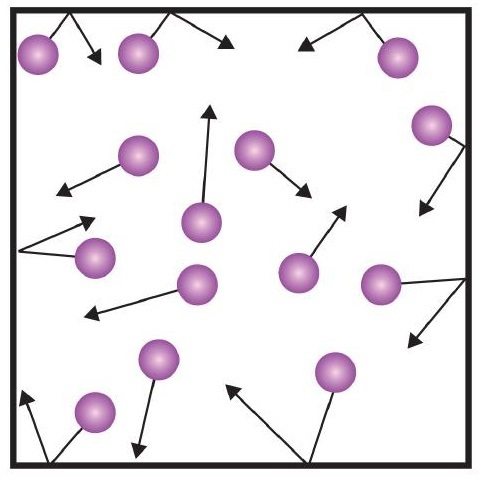
How do gases behave in a container?
a)
Cluster together
b)
form a solid
c)
They take the shape of their container
d)
leak out 
7.
Which description best matches this particle model?
a)
Closely packed and can't move a lot. 
b)
Particles are close together but can move a little. 
c)
Particles have lots of energy and can move around. 
8.
A gas
a)
has a definite shape but no definite volume
b)
has a definite volume but no definite shape
c)
has fast-moving particles
9.

A state of matter in which the particles of the substance are tightly packed and vibrating.

(a)  

10.

What state of matter has a definite shape and a definite volume?

(a)  

11.
Which is a quality that only gasses display
a)
Spread out to fill all available space
b)
Take the shape of their container
c)
Can't be compressed
d)
All of these
12.
What is the difference between particles in a gas and a solid?
a)
gas particles are closer together
b)
solid particles move faster than gas particles
c)
solid particles expand on heating
d)
gas particles have more kinetic energy than solid particles
13.

Which state of matter has a definite volume but no real shape of its own?

(a)  
14.
How do materials change from one state of matter to another?
a)
They gain or lose energy
b)
They break appart
c)
The particles get stickyer
d)
They are magnetised to themselves
15.

When objects absorb heat, the particles...

a)

gain energy and vibrate at fixed position.

b)

gain energy and increase in size.

c)

gain energy and move slower.

d)

gain energy and move faster.

16.
What is the measure of temperature?
a)
Measure of how fast the particles in an object are moving
b)
Measure of  heat
17.
The drops of water that appear on the outside of a glass of cold juice on a warm day are an example of?
a)
sublimation
b)
condensation
c)
evaporation
18.
Which of the following occurs when a liquid becomes a gas?
a)
the particles slow down
b)
the particles beak away from one another
c)
the particles move closer together
19.
The change from liquid to solid, or the reverse of melting is called
a)
condensation
b)
boiling
c)
sublimation
d)
freezing
20.
When objects contract upon cooling...
a)
volume increases and density increases.
b)
volume increases and density decreases.
c)
volume decreases and density decreases.
d)
volume decreases and density increases.
21.
The liquid in the thermometer rises when it is placed in the hot water because ___________. 
a)
it gains heat from the hot water and expands.
b)
loses heat from the hot water and contracts. 
c)
the surrounding air is too warm. 
d)
the liquid is boiling. 
22.
How can we increase the gas pressure inside a sealed container?
a)
Increase the number of particles inside the container
b)
Increase the temperature
c)
Decrease the volume of the container
d)
All of these
23.
Which box has a higher density?  
a)
Box A
b)
Box B
c)
cannot be determined
d)
they are the same
24.
The tool used to measure the mass of a substance or object is a ______________.
a)
balance
b)
graduated cylinder
c)
ruler
d)
thermometer
25.
Which lab tool might you use to measure the volume of a liquid?
a)
electric scale
b)
bunsen burner
c)
test tube
d)
graduated cylinder
26.

An empty beaker has a mass of 60 grams. When mercury is added to the beaker, it has a mass of 200 grams. What is the mass of the mercury?

a)

140 grams

b)

200 grams

c)

140 mL

d)

260 g

27.
Which units of measurement are used for volume?
a)
grams
b)
centimeters
c)
grams/milliliter
d)
milliliter
28.
Find the volume of this piece of brass.  
a)
50 g
b)
10 cm
c)
6 cm3
d)
12 cm3
29.
What is the volume of Object X?
a)
10.0 cm3
b)
15.0 cm3
c)
20.0 cm3
d)
25.0 cm3
30.
Jack has a rock. The rock has a mass of 14g and a volume of 2cm3. What is the density of the rock?
a)
7 mL
b)
7 g/cm3
c)
28 g/cm3
d)
1/7 g/cm3
31.
What is the volume of 150 grams of lead if it has a density of 11.3 g/cm3?
a)
13.3 g
b)
13.3 cm3
c)
.075 g
d)
1695 cm3
32.
An empty beaker has a mass of 60 grams.  When mercury is added to the beaker, it has a mass of 200 grams. What is the mass of the mercury?
a)
140 grams
b)
200 grams
c)
140 mL
d)
260 g
33.
This is a measurement of the amount of matter, or 'stuff', in an object or substance.
a)
volume
b)
density
c)
mass
d)
length
34.
Put the liquids in order from most dense to least dense?
a)
4, 3, 2, 1
b)
1, 2, 3, 4
c)
3, 4, 2, 1, 
d)
4, 3, 1, 2
35.

I am anything that has mass and takes up space!

(a)  

36.
DIFFERENT kinds of atoms chemically combined to form a substance are
a)
Mixture
b)
Element
c)
Compound
d)
Substance
37.

Two or more different types of elements chemically combined

a)

atom

b)

molecule

c)

compound

d)

mixture

38.

A pure substance that cannot be broken down into any other substance by chemical or physical means.

a)

compound

b)

mixture

c)

molecule

d)

element

39.
This contains a variety elements and compounds that ARE NOT chemically combined.
a)
Water
b)
Mixture
c)
Elements
d)
Compounds
40.
This picture represents which of the following?
a)
element
b)
compound
c)
mixture
41.
Salt is a(n)
a)
element
b)
compound
c)
mixture
42.
Is NOan element or a compound?
a)
element
b)
compound
43.
Copper is a mixture.
a)
True
b)
False
44.
Which of the following is an element?
a)
Sugar
b)
Salt
c)
Water
d)
Oxygen
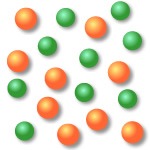
45.
??
a)
The picture shows particles in an element
b)
The picture shows particles in a compound
c)
The picture shows particles in a mixture
46.

The smallest whole particle of matter.

(a)  

47.
Found in the nucleus of the atom
a)
electrons only
b)
protons only
c)
neutrons and protons
d)
neutrons and electrons
48.

Which two subatomic particles make up the nucleus of an atom?

a)

electrons and neutrons

b)

electrons and nuclei

c)

protons and neutrons

d)

protons and kryptons

49.

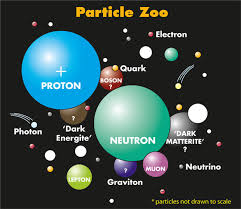
Name the subatomic particle which carries a negative charge.

(a)  
50.
An element is defined by its number of 
a)
protons
b)
electrons
c)
neutrons
d)
protons + electrons
51.
Which particle is equal to the Atomic Number
a)
# of electrons
b)
# of neutrons
c)
# of protons
52.
Atomic mass - Atomic Number =
a)
protons
b)
neutrons
c)
electrons
d)
Average Mass
53.
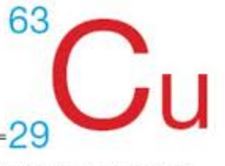
How many electrons does a Copper atom have?
a)
63
b)
29
c)
92
d)
34
54.
How many neutrons does this isotope of lithium have?
a)
8
b)
3
c)
4
d)
5
55.
How many neutrons does a Hydrogen atom have?
a)
1
b)
2
c)
3
d)
0
56.
What is the atomic number for an element with 41 neutrons and a mass number of 80?
a)
39
b)
41
c)
80
d)
121
57.
How many protons are present in phosphorus-31
a)
15
b)
16
c)
31
d)
46
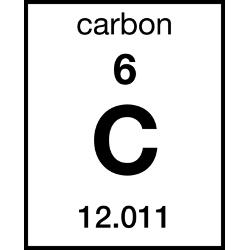
58.
What does the 6 represent above the C
a)
Symbol 
b)
Name 
c)
Mass Number 
d)
Atomic Number 
59.
This type of element is located on the right side of the periodic table.
a)
Metal
b)
Metalloid
c)
Non-Metals
d)
Solid
60.
a)
energy levels
b)
valence electrons
c)
protons
d)
neutrons
61.
a)
Same group
b)
Same period
62.
A vertical column is called...
a)
group
b)
tower
c)
period
d)
crew
63.
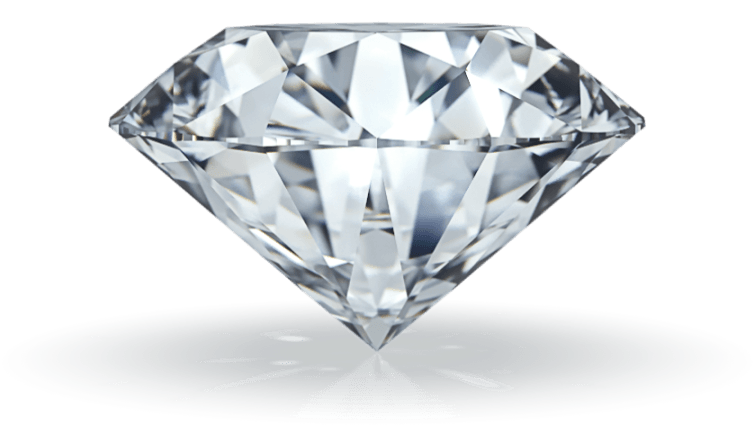
Diamonds are a pure form of what element?
a)
Carbon
b)
Oxygen
c)
Silicon
d)
Silver
64.
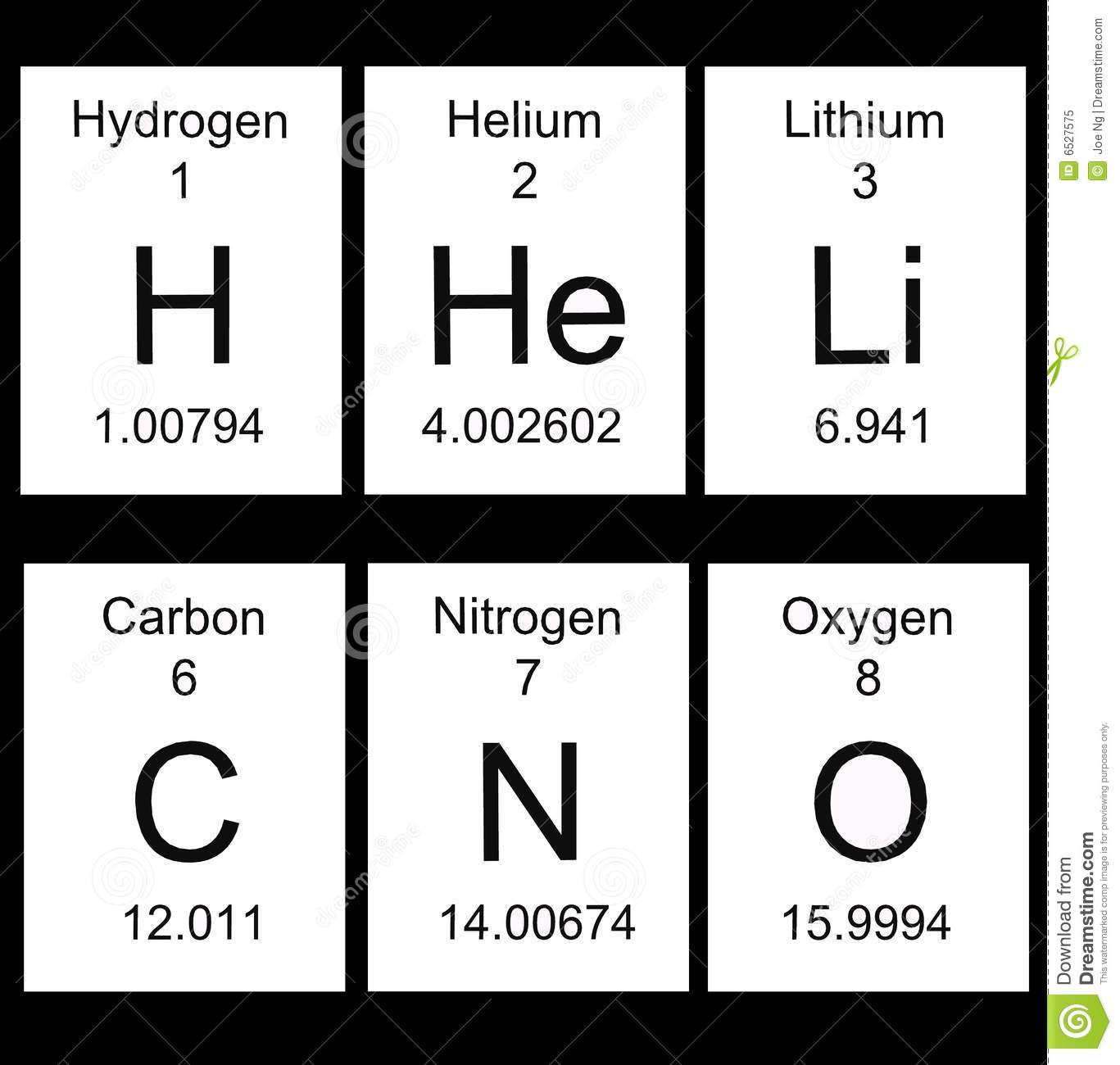
What is the chemical symbol for Lithium?
a)
H
b)
He
c)
Li
d)
N
65.
Which of the following is the most metallic element in period 3?
a)
Boron (B)
b)
Sodium (Na)
c)
Argon (Ar)
d)
Silicon (Si)
66.
Where are the non-metallic elements found in the periodic table?
a)
In the middle
b)
In the top rows
c)
On the left-hand side
d)
On the right-hand side
67.
Which elements are found on the left to middle of The Periodic Table? 
a)
Metals
b)
Nonmetals
c)
Metalloids
d)
Candles
68.
Metals are solid at room temperature
a)
False
b)
True
69.
Metals have a HIGH melting point
a)
True
b)
False
70.
Good conductor of heat
a)
Metal
b)
Nonmetal
71.

Non-metal elements have a low density

a)

True

b)

False

72.

The random jerky motion of particles first observed by Robert Brown.

(a)  

73.
Many NON METALS are solids at room temperature
a)
False
b)
True
74.
Silicon is a semiconductor and has properties of both metals and nonmetals. What type of element is Silicon? 
a)
Metal
b)
Nonmetal
c)
Metalloid
d)
Pretty
75.

Which of the following always results from a chemical reaction?

a)

Fire

b)

Bubbles

c)

A new substance that is a solid

d)

A new substance

76.

The starting materials in a chemical reaction are referred to as

a)

Products

b)

Reactants

c)

Subscripts

d)

Coefficients

77.
Sodium + chlorine gas 
a)
sodium chloride
b)
sodium hydroxide
c)
sodium oxide
d)
sodium
78.
Hydrogen gas + oxygen gas 
a)
hydrochloric acid
b)
water
c)
hydroxide
79.
What is the term for combining 2 or more atoms together?
a)
atoms
b)
elements
c)
molecules
d)
compounds
80.
Are these molecules also compounds?
a)
YES
b)
NO
81.
Are these molecules also compounds?
a)
YES
b)
NO
82.
The element oxygen, represented by the symbol O, is classified as
a)
a pure substance
b)
a compound
c)
a mixture
d)
a solution
83.
Hydrogen is a pure substance represented by the chemical symbol H. Which of the following best describes hydrogen?
a)
Hydrogen is an element made of two or more kinds of atoms.
b)
Hydrogen is a compound made of only one kind of atom.
c)
Hydrogen is a compound made of two or more kinds of atoms.
d)
Hydrogen is an element made of only one kind of atom.
84.

Which of the following cannot be broken down into something simpler?

a)

A compound

b)

An element

c)

A mixture

85.

How many elements are in C6H12O6?

a)

1

b)

2

c)

3

d)

6

86.

How many Hydrogen atoms are present in H20?

a)

2

b)

4

c)

1

d)

0

87.

What is the picture displayed?

a)

atom

b)

element

c)

molecule

88.

What is the formula for diphosphorus pentoxide?

a)

P2O5

b)

PO5

c)

P5O2

d)

Po2O5

89.

What is the name for BrO3?

(a)  

90.
Which of the following is NOT an ionic compound:
a)
CaO
b)
NaOH
c)
BaCl2
d)
Br2
91.
Which of the following is an ionic compound:
a)
CH4
b)
I2
c)
LiBr2
d)
CO
92.
What is the formula for Silicon dioxide?
a)
SO
b)
SO2
c)
SiO
d)
SiO2
93.

What formula represents dinitrogen trioxide?

a)

N3O2

b)

NO2

c)

N2O3

94.

What is the name of Br6F10 ?

a)

Bromium fluoride

b)

Hexabromine fluoride

c)

Bromium decafluoride

d)

Hexabromine decafluoride

95.

Name the molecule CF4

(a)  

96.

What is the name of Al2O3

(a)  

97.

What is the name of K2O?

(a)  

98.

What is the name of NF3?

(a)  

99.

What is the name for CO?

(a)  

100.

How many Nitrogen atoms are in the in H2C3O4N5?

a)

2

b)

3

c)

4

d)

5