
 Worksheets
Matter and Change Test Review
Total questions: 71
Worksheet time: 44mins
Name
Class
Date
1.
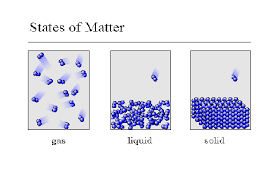
A gas
a)
has a definite shape but no definite volume
b)
has a definite volume but no definite shape
c)
has fast-moving particles
2.
Freezing
a)
Solid to gas
b)
Liquid to solid
c)
Gas to solid
d)
Liquid to gas
3.
Boiling
a)
liquid to gas
b)
gas to solid
c)
gas to liquid
d)
solid to liquid
4.
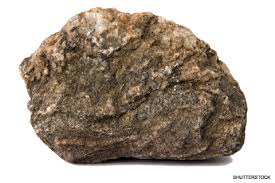
Which state of matter has tightly packed molecules?
a)
solid
b)
liquid
c)
gas
5.
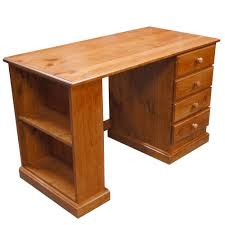
Which state of matter has a definite shape?
a)
solid
b)
liquid
c)
gas
6.
What is happening when my ice cream changes from a solid to a liquid?
a)
freezing
b)
melting
c)
burning
d)
evaporation
7.
Define a liquid.
a)
Indefinite shape, indefinite volume
b)
Definite shape, definite volume
c)
Found in stars
d)
Definite volume, indefinite shape
8.
The state of matter that has no definite size or shape is
a)
Solid
b)
Liquid
c)
Gas
9.
Particles (molecules) in a ______________________ have more energy than the other states of matter.
a)
gas
b)
solid
c)
liquid
10.
Particles of a liquid
a)
are tightly packed together and stay in a fixed position.
b)
have no viscosity.
c)
decrease in volume with increasing temperature.
d)
are free to move around one another but still touch.
11.
What term describes a solid changing to a gas?
a)
Deposition
b)
Sublimation
c)
Evaporation
d)
Freezing
12.
What is condensation?
a)
gas to solid
b)
gas to liquid
c)
liquid to solid
d)
solid to liquid
13.
Which has a greater distance between particles?
a)
Solid
b)
Liquid
14.
A chemical change
a)
doesn't really change much.
b)
creates a new substance
c)
is a change in the state of matter
15.
A physical change is...
a)
a change that doesn't change the identity
b)
a change that makes something new.
c)
a chemical reaction
16.
What are the states of matter?
a)
solid, liquid, and juice
b)
solid and liquid
c)
solid and gas
d)
solid, liquid, and gas
17.
What happens when my glass of water is sitting in the sun and disappears into a gas?
a)
evaporation
b)
burning
c)
melting
d)
freezing
18.
Molecules are closest together in a
a)
Solid
b)
Liquid
c)
Gas
d)
plasma
19.
When paper is folded to make an origami bookmark, what physical property of the paper changes?
a)
mass
b)
weight
c)
shape
d)
smell
20.
What kind of properties can only be observed when a substance changes into a different substance?
a)
physical properties
b)
chemical properties
21.
Properties that can be observed without changing the identity of the substance.
a)
Physical
b)
Chemical
22.
Example for physical property
a)
odor
b)
burns in air
c)
reacts with water to create hydrogen gas
d)
rust
23.
Example for chemical property
a)
color
b)
hardness
c)
toxicity
d)
solubility
24.
Example for physical property
a)
reacts with an acid
b)
explodes
c)
flammibility
d)
taste
25.
Example for physical property
a)
melting point
b)
flammability
c)
reactivity
d)
combustion
26.
Example for chemical property
a)
malleability
b)
texture
c)
combustion
d)
sour taste
27.
Example of a physical property
a)
reactivity
b)
color
c)
combustion
d)
ability to burn
28.
Example of physical property
a)
electromotive force
b)
boiling point
c)
combustion
d)
reactivity with water
29.
Definition of Brittleness?
a)
Tendency of a material to break under stress
b)
The ability of material to be reshaped into thin sheets of metal.
c)
The ability of material to be drawn into wire.
d)
The ability of material to be bent.
30.
Example of a physical property
a)
flammability
b)
luster
c)
ability to rust
d)
ability to explode
31.
Intensive property is dependent on the amount of a substance.
a)
True
b)
False
32.
Freezing point is an example of extensive property.
a)
True
b)
False
33.
Viscosity of a sample will be the same even if you decrease the amount of it.
a)
True
b)
False
34.
Density is an...
a)
Extensive Property
b)
Intensive Property
35.
Sir Nico noticed an increase of his height. This is an...
a)
Extensive property
b)
Intensive property
36.
The word "property" im the statement properties of matter means...
a)
asset
b)
possession
c)
characteristics
37.
Flammability is an ...
a)
Intensive property
b)
Extensive property
38.
Gold has a thermal conductivity of 320 Watts/square meter-Kelvin. This is an example of
a)
Extensive Property
b)
Intensive Property
39.
Properties that DO depend on the amount of matter present.
a)
Mass
b)
Hardness
c)
Extensive
d)
Intensive
40.
Which of the following is an extensive property?
a)
Color
b)
Mass
c)
Odor
d)
Luster
41.
Which of the following is an intensive property?
a)
Color
b)
Mass
c)
Volume
d)
Weight
42.
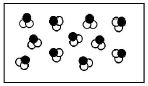
a)
Element
b)
Compound
c)
Mixture of compound and element
d)
Mixture of elements
43.
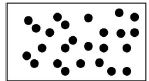
a)
Element
b)
Compound
c)
Mixture of compound and element
d)
Mixture of elements
44.

a)
Element
b)
Compound
c)
Mixture of compound and element
d)
Mixture of two elements
45.

a)
Element
b)
Compound
c)
Mixture of compound and element
d)
Mixture of two elements
46.

a)
Element
b)
Compound
c)
Mixture of compound and element
d)
Mixture of two elements
47.

a)
Element
b)
Compound
c)
Mixture
d)
Energy
48.

a)
Element
b)
Compound
c)
Mixture
d)
Energy
49.

a)
Element
b)
Compound
c)
Mixture
d)
Energy
50.

a)
Element
b)
Compound
c)
Mixture
d)
Energy
51.

a)
Element
b)
Compound
c)
Mixture
d)
Energy
52.

a)
Element
b)
Compound
c)
Mixture
d)
Energy
53.

a)
Element
b)
Compound
c)
Mixture
d)
Energy
54.

a)
Element
b)
Compound
c)
Mixture
d)
Energy
55.
A mixture can be separated by ________ means.
a)
physical
b)
chemical
56.
A _________ is a substance made of two or more DIFFERENT elements chemically combined.
a)
mixture
b)
compound
c)
substance
57.
True or false: NO new substance is formed in a mixture.
a)
True
b)
False
58.
A _________ has two or more different types of matter that are near one another, but the matter does NOT chemically combine.
a)
mixture
b)
compound
c)
property
d)
atom
59.

Elements and compounds are always ___.
a)
pure
b)
mixed
60.

What type of mixture is this?
a)
heterogeneous
b)
homogeneous
61.

What type of mixture is this?
a)
heterogeneous
b)
homogeneous
62.

What type of mixture is this?
a)
heterogeneous
b)
homogeneous
63.

What does it mean if a mixture is homogeneous?
a)
you can see the different parts
b)
cannot tell one part from another
c)
chunks of particles
d)
made of elements
64.
Which of the following IS a mixture?
a)
air
b)
hydrogen
c)
water
d)
sugar
65.
A combination that can be separated by physical processes is a .....
a)
Pure Substance
b)
Glucose
c)
Element
d)
Mixture
66.
How can we separate an insoluble solid from a liquid?
a)
chromatography
b)
crystallisation
c)
filtration
d)
condensation
67.
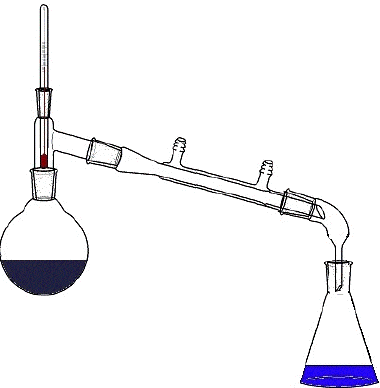
Water and alcohol are easily separated by distillation because of their
a)
different melting points
b)
different colours
c)
different densities
d)
different boiling points
68.
The building block of matter is
a)
Mixture
b)
Atom
c)
Element
d)
Substance
69.
Water is an element
a)
true
b)
false
70.
Copper is a mixture.
a)
True
b)
False
71.
Sweet tea, lemonade, brass, and whole milk are examples of
a)
Elements
b)
Compounds
c)
Mixtures
100 %

