
 Worksheets
Botany: Plant Kingdom
Total questions: 42
Worksheet time: 23mins
Name
Class
Date
1.
Which of the following are classified as seedless vascular plants?
a)
ferns
b)
daisy
c)
pine tree
d)
moss
2.
ferns are seedless vascular plants. how do they reproduce?
a)
spores
b)
seeds
c)
budding
d)
binary fission
3.
A plant with No roots, stems, leaves, transporting vessels is a ...
a)
vascular plant
b)
non-vascular plant
4.
A plant with roots, stems, leaves, and transporting vessels is a ...
a)
vascular plant
b)
non-vascular plant
5.
Which of the following is NOT a conifer (has cones and needle like leaves)
a)
pines
b)
cedars
c)
rose
d)
redwoods
6.
Which type of plant grows in moist environments, are usually very short
a)
nonvascular
b)
vascular
7.
why do nonvascular plants need to live in moist environments and are usually short?
a)
they do not have vascular tissues to absorb water
b)
they have magical powers
c)
all other habitats have been destroyed
d)
it is more cozy
8.
what do flowering plants have to protect their seeds?
a)
cones
b)
pockets
c)
flowers/fruits
d)
police
9.
What do conifers have to protect their seeds?
a)
cones
b)
flowers
c)
pockets
d)
police
10.
WHich of the following is an example of a nonvascular plant?
a)
daisy
b)
pine tree
c)
mushroom
d)
moss
11.
Which process do plants go through to make energy?
a)
decomposing
b)
consuming
c)
filtering
d)
photosynthesis
12.
Which of the following plant groups does NOT contain vascular tissue?
a)
Angiosperms
b)
Gymnosperms
c)
Pteriophytes
d)
Bryophytes
13.
Which of the following plant groups produces flowers with seeds?
a)
Angiosperms
b)
Gymnosperms
c)
Pteriophytes
d)
Bryophytes
14.
The two main groups of plants are:
a)
non flowering and flowering
b)
vascular and non-vascular
c)
dicot and monocot
d)
angiosperm and gymnosperm
15.
Spruce pines and evergreens are examples of:
a)
angiosperms
b)
non-vascular plants because they stay green year round
c)
gymnosperms
d)
None of these
16.

This plant shown has large pink flowers and makes seeds. Based on the characteristics of this plant, which of the following is true about the plant shown?
a)
The plant is a non flowering plant.
b)
The plant is a flowering plant
c)
The plant cannot reproduce.
d)
The plant produces spores.
17.
Which of the following plant groups produces flowers with seeds?
a)
Angiosperms
b)
Gymnosperms
c)
Pteriophytes
d)
Bryophytes
18.
What is the common name for Bryophytes?
a)
Flowering plants
b)
Conifers
c)
Ferns
d)
Mosses and Liverworts
19.
What is the common name for Angiosperms?
a)
Flowering plants
b)
Conifers
c)
Ferns
d)
Mosses and Liverworts
20.
What is the common name for Pteridophytes?
a)
Flowering plants
b)
Conifers
c)
Ferns
d)
Mosses and Liverworts
21.
What is the common name for Gymnosperms?
a)
Flowering plants
b)
Conifers
c)
Ferns
d)
Mosses and Liverworts
22.

What do these plants use for reproduction?
a)
seeds
b)
spores
23.
Small grains that contain a plant's male reproductive cells.
a)
stamen
b)
pollen
c)
anther
d)
stigma
24.
Algae are
a)
Autotrophic
b)
Heterotrophic
c)
Omnitrophic
25.
Which type of algae lives primarily in freshwater?
a)
Green algae
b)
Red algae
c)
Brown algae
26.
All algae are unicellular
a)
true
b)
false
27.
Examples:
diatoms, elodea, Water Sprite
a)
Algae
b)
Fern
c)
Moss
d)
Tree
28.
Mostly aquatic; No specialized tissues (avascular); Absorbs nutrients from surroundings; Life cycles vary and some switch from haploid to diploid
a)
Algae
b)
Moss
c)
Fern
d)
Tree
29.
Considered a “bryophyte”; Have specialized reproductive organs; Found in damp places; Lack vascular tissue; Alternation of generations
a)
Algae
b)
Moss
c)
Fern
d)
Tree
30.
A plant is a ?
a)
Heterotrophic, multicellular, eukaryote
b)
Autotrophic, unicellular, eukaryote
c)
Autotrophic, multicellular, eukaryote
d)
Heterotrophic, unicellular, prokaryote
31.

Seedless plants reproduce by
a)
spores
b)
seeds
c)
binary fission
d)
mitosis
32.
A plant structure that contains protects a young developing plant is called a
a)
fruit
b)
seed
c)
bud
d)
root cap
33.

This is a...
a)
moss
b)
liverwort
c)
hornwort
d)
club moss
e)
horsetail
34.

This is a...
a)
moss
b)
liverwort
c)
club moss
d)
horsetail
35.
Nonvascular plants transport materials from cell to cell.
a)
True
b)
False
36.
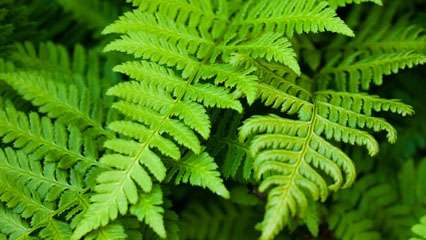
This is a...
a)
fern
b)
liverwort
c)
hornwort
d)
club moss
e)
horsetail
37.

Which is NOT a group of non-vascular plants?
a)
mosses
b)
liverworts
c)
hornworts
d)
ferns
38.

The part of a non-vascular plant that produces the sex cells is called the...
a)
gametophyte
b)
sporophyte
c)
capsule
d)
rhizoid
39.

The part of a non-vascular plant that produces the spores is called the...
a)
gametophyte
b)
sporophyte
c)
protonema
d)
rhizoid
40.

A tiny, root-like structure made of a few thread-like cells are called a...
a)
rhizoid
b)
stalk
c)
capsule
d)
protonema
41.

Which of the following is not part of Alternation of Generations?
a)
asexual & sexual
b)
sporophyte & gametophyte
c)
rhizoid & protonema
d)
diploid & haploid
42.

The organism in the picture is...
a)
moss
b)
liverwort
c)
hornwart
d)
fern
100 %

