wayground logo

Free Printable Worksheets

Font size

S
M
L
XL
Worksheets

Characteristics of life

Total questions: 88

Worksheet time: 1hrs 4mins

Name
Class
Date
1.
When you step out into the cold, your body shivers in order to keep its temperature at 98.6F.
a)
All living things use energy
b)
All living things contain cells
c)
All living things maintain homeostasis
d)
All living things grow
2.
Green plants produce their own food through the process of photosynthesis.
a)
All living things use energy
b)
All living things contain cells
c)
All living things maintain homeostasis
d)
All living things grow
3.
A baby song bird hatches from its egg with both parent songbirds watching.
a)
All living things reproduce
b)
All living things maintain homeostasis
c)
All living things use energy
d)
All living things grow
4.
A camel has eyelashes that work to keep the dust and sand out of its eyes.
a)
All living things adapt to their environment
b)
All living things grow
c)
All living things have cells
d)
All living things use energy
5.
An amoeba is a unicellular organism. Which characteristic of life is this?
a)
All living things use energy
b)
All living things contain cells
c)
All living things respond to their environment
d)
All living things grow
6.
A tulip opens in the morning at sunrise and closes in the evening at sunset.
a)
All living things have cells
b)
All living things use energy
c)
All living things respond to their environment
d)
All living things grow
7.
Over three years, Tim's height has increased from 5'4" to 5'11".
a)
All living things contain cells
b)
All living things maintain homeostasis
c)
All living things use energy
d)
All living things grow
8.
A cat is an organism that has a respiratory system that contains lungs and a trachea.
a)
All living things contain cells
b)
All living things maintain homeostasis
c)
All living things have different levels of organization
d)
All living things grow
9.
A sea worm drops its tail and the tail becomes a new worm.
a)
All living things contain cells
b)
All living things grow
c)
All living things have different levels of organization
d)
All living things reproduce
10.
An adult hydra is producing its offspring through budding.
a)
All living things use energy
b)
All living things reproduce
c)
All living things contain cells
d)
All living things grow
11.
Over many hundreds of years, a population of rabbits living in the woods adapts to its surrounding with brown fur.
a)
All living things adapt to their environment
b)
All living things grow
c)
All living things use energy
d)
All living things have cells
12.
YOU are a multi-celled organism but an amoeba is a single celled organism.
a)
All living things have cells
b)
All living things grow
c)
All living things use energy
d)
All living things respond to their environment
13.
Which is NOT a characteristic that all living organisms share? 
a)
Ability to reproduce 
b)
Ability to grow 
c)
Ability to respond to their environment 
d)
Ability to dominate an ecosystem 
14.
When you step out into the cold, your body shivers in order to keep its temperature at 98.6F. 
a)
All living things have a metabolism 
b)
All living things have an internal structure of cells
c)
All living things respond to their environment 
d)
All living things grow
15.
All living things have an internal structure of ____________, which are the smallest unit of life. 
a)
Cells
b)
ATP
c)
Glucose
d)
Sugar
16.
Light, smell, sound, and temperature are all examples of what? 
a)
Cells
b)
Stimuli
c)
Fungi
d)
Reactions
17.
You accidentally touch a hot burner and quickly pull your hand away. The burner is 
a)
homeostasis
b)
a reaction
c)
ATP
d)
a stimulus
18.

Smallest living unit of a living organism

a)

Cells

b)

Reproduce

c)

Genetic code

d)

Homeostasis

19.
During ___________ conditions inside our body are kept stable (the same)
a)
homeopathic
b)
Homo sapian
c)
homeostasis
d)
homologous
20.
All living things are composed of cells. 
a)
True
b)
False
21.
Living things need energy to survive?
a)
True
b)
False
22.
Rocks are not living because
a)
they never move
b)
they aren't needed for humans
c)
they are not made of cells
d)
they don't break down
23.
Something that has never shown the characteristics of life and never will. 
a)
dormant
b)
nonliving 
c)
living 
d)
dead 
24.
Fire is living because it has 6 of the 8 characteristics of life. 
a)
True 
b)
False
25.
All living things ____ to make more living things.
a)
adapt
b)
develop
c)
grow
d)
reproduce
26.
A plant growing towards the light is an example of 
a)
reproduction.
b)
responding to a stimuli.
c)
metabolism.
d)
homeostasis.
27.
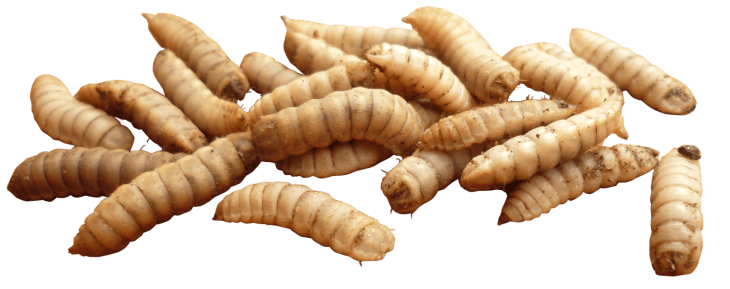
A maggot changing into a fly is an example of 
a)
reproduction.
b)
growth and development.
c)
homeostasis.
d)
evolution.
28.
During ___________ conditions inside our body are kept stable (the same)
a)
homeopathic
b)
Homo sapian
c)
homeostasis
d)
homologous
29.
Living things respond to heat, light, and sound.  This means they respond to:
a)
stimuli/ environment
b)
suction
c)
Dr. Seuss
d)
digestion
30.
A large, very inclusive group of organisms that share certain features.
a)
genus
b)
family
c)
kingdom
d)
species
31.
All of the changes that take place during the life of an organism.
a)
environment
b)
classification
c)
cell
d)
development
32.
Which of the following is an example of development?
a)
clowns with knives
b)
a salmon swimming upstream
c)
a plant made up of cells
d)
a baby giraffe growing during its first year
33.
A tadpole growing into a frog is an example of what trait?
a)
response
b)
movement 
c)
reproduction
d)
growth and development
34.
a living thing that is only one cell its entire life 
a)
prokaryote
b)
eukaryote
c)
unicellular
d)
multicellular
35.
an organism made of more than 1 cell 
a)
prokaryote
b)
eukaryote
c)
unicellular
d)
multicellular
36.
A change in an organisms surroundings that causes it to react is called
a)
response
b)

stimilus

stimulus

c)
energy
d)
development
37.
Homeostasis refers to an organism's ability to
a)
maintain stable internal conditions
b)
compete for living space
c)
dissolve chemicals
d)
obtain energy
38.
A plant grows toward the light.  The plant's action is an example of
a)
reproduction
b)
respond to surroundings
c)
stimulus
d)
growth
39.
What is not a need of living things
a)
snap chat
b)
water
c)
food
d)
living space
40.

Select the answer that is not alive:

a)

Tree

b)

Mushroom

c)

Rock

d)

Bacteria

41.

A change in an organisms environment that causes the organism to react is called a

a)

Reaction

b)

Stimulus

c)

Weather

d)

Nerves

42.

What does unicellular mean?

a)

made of many cells

b)

made of one cell

c)

a cell with a tail

d)

a cell with a horn

43.

Homeostasis is the

a)

the place where an organism lives

b)

made of multiple cells

c)

process of keeping an internal environment balanced

d)

organisms that stay still

44.
The series of changes an organism undergoes during it's lifetime
a)
development
b)
adaptation
c)
evolution
d)
reproduction
45.
The process whereby an organism produces more of its own kind
a)
development
b)
adaptation
c)
homeostasis
d)
reproduction
46.
Rocks are not living because
a)
they never move
b)
they aren't needed for humans
c)
they are not made of cells
d)
they don't break down
47.
Something that has never shown the characteristics of life and never will. 
a)
dormant
b)
nonliving 
c)
living 
d)
dead 
48.
Something that once showed all the characteristics of life but no longer does and never will again. 
a)
dormant
b)
nonliving 
c)
dead 
d)
living 
49.
Which reproduction requires a mate?
a)
asexual
b)
sexual
c)
neither
50.
The scientific name for something living is a(an)
a)
organism
b)
cell
c)
tissue
d)
human
51.

When an organism makes more cells and gets larger, it is

a)

growing

b)

developing

c)

maturing

d)

eating

52.

All living things use ______ to move matter

a)

Energy

b)

Oxygen

c)

Water

d)

Matter

53.
All living things are composed of cells. 
a)
True
b)
False
54.
In order for something to be considered a living organism, it must display _____ of the eight characteristics of living things.
a)
one
b)
some
c)
all
d)
more than half
55.
A plant growing towards the light is an example of 
a)
reproduction.
b)
responding to a stimuli.
c)
metabolism.
d)
homeostasis.
56.
The prefix uni- means
a)
many
b)
the same
c)
one
d)
different
57.
Multicellular means
a)
made of many cells
b)
made of one kind of cell
c)
made of only one cell
58.
What does reproduce mean?
a)
They grow - get larger
b)
They are living things
c)
Organisms make other organisms
59.
During ___________ conditions inside our body are kept stable (the same)
a)
homeopathic
b)
Homo sapian
c)
homeostasis
d)
homologous
60.
a)
Living
b)
Non-living
61.
a)
Living
b)
Non-Living
62.
a)
Living 
b)
Non-living
63.
a)
Living
b)
Non-living
64.
Is lightning living or nonliving? 
a)
Living
b)
Nonliving
65.
All living things grow and change.
a)
True
b)
False
66.
Which of the following characteristics of living things best explains why humans sweat when they get hot?
a)
maintaining a stable internal enviornment
b)
growth and development
c)
using energy
d)
ability to reproduce
67.
Before a soccer game Charlie always eats a big dinner. Which characteristic of life does this face best describe? 
a)
living things use energy
b)
living things reproduce
c)
living things grow and develop
d)
living things are based on a universal genetic code
68.
 Which of the following characteristics of living things best explains why birds fly south for the winter?
a)
Living things respond to their environment.
b)
Living things maintain internal balance.
c)
Living things are made up of units called cells.
d)
Living things are based on a universal genetic code.
69.
A gazelle running away from a hunting lion is an example of ____________.
a)
homeostasis
b)
responding to stimuli
c)
growing and developing
d)
reproducing
70.
A worm turns away from light is an example of a worm
a)
reproducing
b)
doing cellular respiration
c)
having cells
d)
responding to its environment
71.

A stimulus can be external or internal.

a)

False

b)

True

72.

Maintaining a stable internal

environment is called

a)

homeostasis

b)

equilibrium

c)

balance

d)

evenness

73.
Green plants produce their own food through the process of photosynthesis.
a)
All living things use energy
b)
All living things contain cells
c)
All living things maintain homeostasis
d)
All living things grow
74.
The picture represents the butterflies ability to:
a)
maintain homeostasis
b)
adapt and evolve
c)
grow and develop
d)
reproduce
75.
When a venus fly trap senses the light footsteps of a fly, the leaf quickly folds together.  This is an example of:
a)
adapting and evolving
b)
responding to stimuli
c)
growing and developing
d)
maintaining homeostasis
76.
How do consumers get the energy they need to survive?
a)
photosynthesis
b)
eating other organisms
c)
decomposing dead materials
d)
chemosynthesis
77.
A _____ is something in the environment that causes an organism to respond.
a)
stimulus
b)
response
c)
cause
d)
effect
78.
It is hot outside. You start sweating. In this case, the hot weather is the...
a)
stimulus
b)
response
c)
cause and effect
d)
responder
79.
In order to perform photosynthesis, producers need...
a)
WiFi
b)
oxygen
c)
sunlight
d)
to eat other organisms
80.
What is another way of saying organism?
a)
living thing
b)
organ system
c)
tissue team
d)
critter
81.
The plural of stimulus is...
a)
stimuli
b)
stimuluses
82.
Which of these statements is true about animals?
a)
they are consumers
b)
they need water and oxygen
c)
they need to eat other living things for food
d)
all of these statements are true
83.
When a baby kitten becomes an adult cat, this is an example of...
a)
energy metabolism
b)
growth and development
c)
response to stimuli
d)
having cells
84.
Which kind of living things have DNA in their cells?
a)
producers
b)
consumers
c)
decomposers
d)
Trick question! All living things have DNA in their cells 
85.
Your body shivers when you are cold. This is because of the concept of...
a)
homeostasis
b)
heredity
c)
energy metabolism
d)
cellular organization
86.
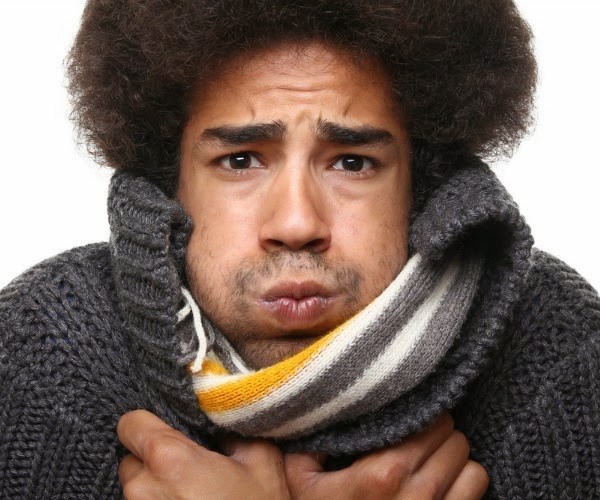
The image seen here is of a person shivering due to cold temperature. This is an example of an organism maintaining ________________!
a)
Homeostasis
b)
Adaptations
c)
Evolution
d)
Development
87.
Something that once showed all the characteristics of life but no longer does and never will again. 
a)
dormant
b)
nonliving 
c)
dead 
d)
living 
88.
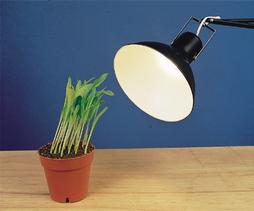
Does this picture show a response to  stimulus?
a)
True
b)
False