
 Worksheets
Elements, Compounds, Mixtures, & Atoms Review
Total questions: 52
Worksheet time: 35mins
Name
Class
Date
1.
The smallest part of an element is
a)
proton
b)
atom
c)
compound
d)
mixture
2.
Define volume.
a)
How loud you hear it
b)
Space it takes up
c)
Amount of air
d)
The height and weight
3.
What is mass?
a)
Amount of matter in object
b)
How much you weigh
c)
Total amount of volume
4.
What is matter?
a)
Takes up Mass
b)
Takes up Mass & Volume
c)
Takes up Volume
d)
Anything
5.
A mixtures is a combination of two or more____________ in which no new kinds of matter are formed.
a)
subtances
b)
parts
c)
leaves
d)
pebbles
6.
Making a mixture results in ___________________ only.
a)
chemical reactions
b)
separate parts
c)
physical changes
d)
two subtances
7.
Sand and gravel may be separated from each other through using..
a)
a filter funnel
b)
a sieve
c)
an evaporating basin
d)
a distillation
8.
Two or more substances mingled together, but not chemically combined are known as a
a)
residue
b)
solution
c)
distillate
d)
mixture
9.
Which one of the following would you use to separate sand from iron filings?
a)
a bar magnet
b)
filter paper
c)
chromatography paper
d)
alum
10.

Type of mixture that has the SAME COMPOSITION in every part.
a)
Homogenous
b)
Heterogeneous
11.

Type of mixture that DOESN'T HAVE the same composition in every part.
a)
Homogeneous
b)
Heterogeneous
12.

M&M's is an examples of a
a)
homogeneous mixture
b)
heterogeneous mixture
13.
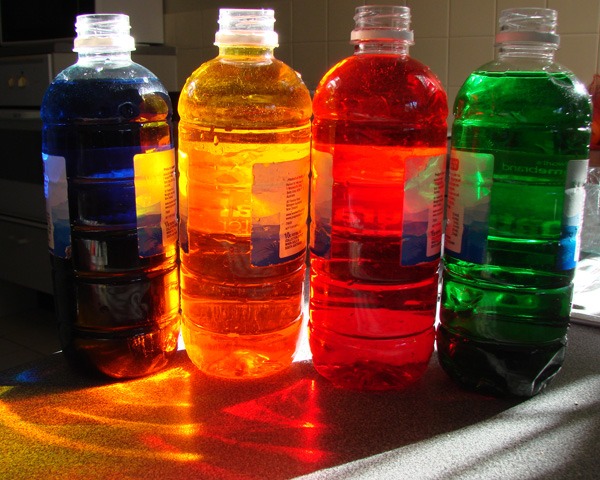
Coloured water is an example of a
a)
homogeneous mixture
b)
heterogeneous mixture
14.

Based on THE DISTRIBUTION OF ITS COMPONENTS, we can divide mixtures in
a)
Homogeneous and Heterogeneous mixtures
b)
Pure substances and Mixtures
15.
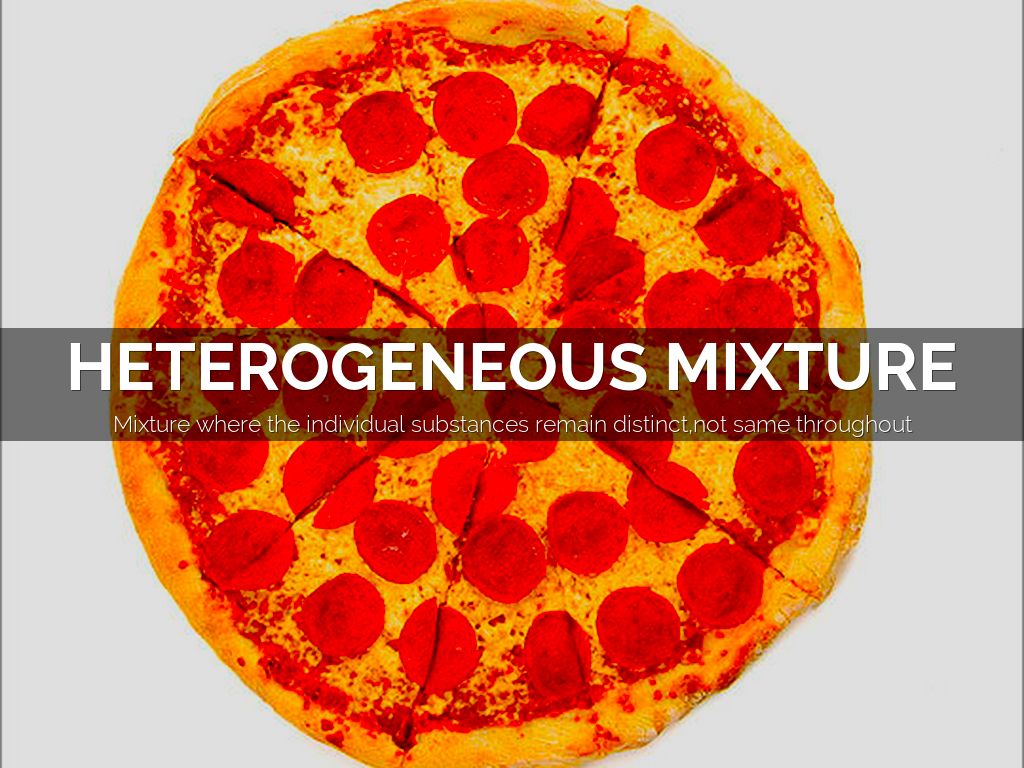
What does it mean if a mixture is heterogeneous?
a)
you can see the different parts
b)
cannot tell one part from another
c)
very well blended
d)
made of elements
16.

What does it mean if a mixture is homogeneous?
a)
you can see the different parts
b)
cannot tell one part from another
c)
chunks of particles
d)
made of elements
17.
If we are making Kool-aid with sugar, Kool-aid powder, and water, which part is the solvent?
a)
water
b)
powder
c)
sugar
d)
powder and sugar
18.
Lemonade - Water, lemon juice, and sugar
Identify the solute
Identify the solute
a)
water
b)
lemon juice
c)
sugar and lemon juice
19.
What is the simplest form that cannot be broken down to anything simpler?
a)
element
b)
solution
c)
compound
20.
Water is a universal solvent
a)
true
b)
false
21.

Classify the picture with the correct label.
a)
Element
b)
Compound
c)
Mixture of Elements
d)
Mixture of Compounds
22.

Classify the picture with the correct label.
a)
Element
b)
Compound
c)
Mixture of Elements and Compounds
d)
Mixture of Elements
23.

Classify the picture with the correct label.
a)
Compounds
b)
Mixture of Elements
c)
Mixture of Compounds
d)
Mixture of Elements & Compounds
24.

Classify the picture with the correct label.
a)
Element
b)
Compound
c)
Mixture of Compounds
d)
Mixture of Elements
25.

Classify the picture with the correct label.
a)
Compound
b)
Mixture of Compounds
c)
Mixture of Elements & Compounds
d)
Mixture of Elements
26.

Classify the picture with the correct label.
a)
Element
b)
Compound
c)
Mixture of Elements & Compounds
d)
Mixture of Elements
27.

Classify the picture with the correct label.
a)
Mixture of Elements
b)
Mixture of Elements & Compounds
c)
Mixture of Compounds
d)
Compounds
28.

Classify the picture with the correct label.
a)
Mixture of Elements
b)
Mixture of Elements & Compounds
c)
Mixture of Compounds
d)
Compounds
29.
What cannot be broken down into other substances?
a)
Compound
b)
Mixture
c)
Solids
d)
Element
30.
Water is an example of:
a)
compound
b)
element
c)
solution
31.

This picture represents which of the following?
a)
element
b)
compound
c)
mixture
32.

This picture represents which of the following?
a)
element
b)
compound
c)
mixture
33.
Which subatomic particle has a positive (+) charge?
a)
Neutron
b)
Proton
c)
Electron
34.

True or False - Protons and Neutrons have about the same mass.
a)
True - They have about the same mass
b)
False - They do not have about the same mass
35.
Which subatomic particle has a negative (-) charge?
a)
Proton
b)
Electron
c)
Neutron
36.
Which subatomic particle has a neutral or no charge?
a)
Proton
b)
Electron
c)
Neutron
37.
Where is the nucleus located in an atom?
a)
Near the electron shells/levels
b)
Near the center of an atom
38.

Which two subatomic particles make up the nucleus of an atom?
a)
Protons and Electrons
b)
Neutrons and Electrons
c)
Electrons and Protons
d)
Protons and Neutrons
39.

Where are the Electrons found in the structure of an atom?
a)
In the nucleus
b)
In spaces around the nucleus
40.

How many electron shells/levels does this atom have?
a)
1
b)
2
c)
3
d)
4
41.
What is the role of an electron in an atom?
a)
Electrons live inside the nucleus and carry a neutral charge.
b)
Electrons circle the nucleus and have a positive charge.
c)
Electrons circle the nucleus and have a negative charge.
d)
Electrons live inside the nucleus and have a negative charge.
42.
In an atom, what is the number of protons equal to?
a)
The number of electrons.
b)
The number of neutrons.
c)
The number of molecules.
d)
The number of nuclei.
43.
The number of neutrons equals...
a)
atomic number - mass number
b)
Protons - neutrons
c)
Electrons - protons
d)
mass number - atomic number
44.
The atoms of any given element ____ have the same number of protons.
a)
sometimes
b)
always
c)
never
45.
Where are electrons located in the atom?
a)
Nucleus
b)
Shells/Orbitals
c)
Matterville
d)
Center
46.
The number of protons plus neutrons.
a)
Mass number
b)
Mass Weight
c)
Atomic number
d)
Atomic weight
47.
How many electrons can the first energy level hold?
a)
1
b)
2
c)
8
d)
0
48.
Valence electrons are:
a)
Electrons farthest away from the nucleus
b)
Electrons closest to the nucleus
c)
Electrons that just come and go - they don't stay with the atom
49.
Ions are:
a)
atoms with a positive or negative charge
b)
atoms with no charge
c)
atoms with ONLY a positive charge
d)
atoms with ONLY a negative charge
50.
How many electrons can be found on the 2nd ring?
a)
Up to 1
b)
Up to 2
c)
Up to 8
d)
Up to 16
51.
How many electrons can be found on the 3rd ring?
a)
Up to 1
b)
Up to 2
c)
Up to 18
d)
Up to 16
52.
What does the outer ring of the electron cloud hold?
a)
Valence electrons
b)
All the electrons
c)
Protons
d)
Neutrons
100 %

