Wayground logo

Free Printable Worksheets

Font size

S
M
L
XL
Worksheets

Bio A: Unit 1 Study of Life

Total questions: 50

Worksheet time: 43mins

Name
Class
Date
1.
A possible explanation to a problem that has not yet been tested. 
a)
data
b)
theory
c)
hypothesis
d)
fact
2.
This variable in an experiment is the one being deliberately changed by the scientist. 
a)
dependent variable
b)
independent variable
c)
data
d)
control group
3.
There are two types of data. Which type of data involves numbers that are obtained by counting or measuring?
a)
quantitative
b)
qualitative
4.
There are two types of data. Which type of data involves descriptions/photographs/illustrations that cannot be counted or measured?
a)
qualitative
b)
quantitative
5.
Jane Goodall video recorded chimpanzees hunting pigs, this type of data is called ___
a)
qualitative
b)
quantitative
c)
field study
d)
observation
6.
Mr. S. sets up an experiment to see how the mass of a ball affects the distance it rolls off a ramp.  Identify the independent variable.
a)
distance traveled by the ball
b)
height of the ramp
c)
mass of the ball
d)
weight of the ball
7.
When experimenting with the growth of a plant, a scientist uses three (of the same type of) plants, two different fertilizers, equal light, and equal water. What type of variable is the fertilizer?
a)
Dependent
b)
Independent
c)
Control
d)
Compound
8.
If I study for my scientific method quiz, then I will have a better test score. What is the dependent variable?
a)
Scientific Method
b)
Studying
c)
Independent variable
d)
Test score
9.
This part of the experiment serves as a basis of comparison; the one variable being tested has been omitted. 
a)
experimental group
b)
control group
c)
data
d)
variables
10.
Which of the following would be considered quantitative data?
a)
Color
b)
Smell
c)
6.84 cm
d)
texture
11.
Nick wanted to see how high an ice cube would float in different temperatures of water. Identify the DEPENDENT variable
-Amount of water
-Height of Ice cube
-Temperature the ice cube was at its highest height
-Temperature of the water
-Size of the ice cube
a)
Amount of water 
b)
Height of Ice cube
c)
Temperature the ice cube was at its highest height 
d)
Size of the ice cube
12.
Mario studied how far room temperature water would spurt out of a plastic milk carton when 3mm holes were punched at different heights from the bottom of the container. Identify the DEPENDENT variable
-3mm holes
-Distant water traveled out of carton
-Different heights of the holes in the container
-Ice water from Iceland
a)
3mm holes
b)
Distant water traveled out of carton
c)
Different heights of the holes in the container 
d)
Ice water from Iceland
13.
The following statement is a hypothesis formed about marsh grass: 
If the amount of nitrogen marsh grass receives is increased, then the height of the grass will increase, because nitrogen is an essential nutrient needed for marsh grass to grow.
What is the independent variable of the statement above? 
a)
Height of grass
b)
Amount of nitrogen
c)
Essential nutrient
d)
Amount of growth
14.
When you step out into the cold, your body shivers in order to keep its temperature at 98.6F.
a)
All living things use energy
b)
All living things contain cells
c)
All living things maintain homeostasis
d)
All living things grow
15.

Green plants produce their own food through the process of photosynthesis.

a)

All living things utilize energy

b)

All living things contain cells

c)

All living things maintain homeostasis

d)

All living things grow

16.
A baby song bird hatches from its egg with both parent songbirds watching.
a)
All living things reproduce
b)
All living things maintain homeostasis
c)
All living things use energy
d)
All living things grow
17.

A camel has eyelashes that work to keep the dust and sand out of its eyes.

a)

All living things have adaptions to suit their environment

b)

All living things grow

c)

All living things have cells

d)

All living things use energy

18.

A caterpillar hibernates in a cocoon and emerges as a butterfly.

a)

All living things adapt to their environment

b)

All living things use energy

c)

All living things respond to their environment

d)

All living things develop

19.
An amoeba is a unicellular organism. Which characteristic of life is this?
a)
All living things use energy
b)
All living things contain cells
c)
All living things respond to their environment
d)
All living things grow
20.
A tulip opens in the morning at sunrise and closes in the evening at sunset.
a)
All living things have cells
b)
All living things use energy
c)
All living things respond to their environment
d)
All living things grow
21.
Over three years, Tim's height has increased from 5'4" to 5'11".
a)
All living things contain cells
b)
All living things maintain homeostasis
c)
All living things use energy
d)
All living things grow
22.

A cat is an organism that has a respiratory system that contains lungs and a trachea.

a)

All living things contain cells

b)

All living things maintain homeostasis

c)

All living things have cellular organization

d)

All living things grow

23.
The roots of a plant grow towards a source of ground water.
a)
All living things use energy
b)
All living things reproduce
c)
All living things respond to their environment
d)
All living things grow
24.
Over many hundreds of years, a population of rabbits living in the woods adapts to its surrounding with brown fur.
a)
All living things adapt to their environment
b)
All living things grow
c)
All living things use energy
d)
All living things have cells
25.
Where does the energy start in this food chain?
a)
Plant
b)
Sun
c)
Deer
d)
Wolf
26.

What is the role of an autotroph?

a)

Use sunlight to make food

b)

Gain energy from eating other organisms

c)

Keep other species from overpopulating

d)

Breaking down dead stuff

27.
Which of these organisms would receive energy from the snake?
a)
Plant
b)
Rabbit
c)
Mouse
d)
Hawk
28.
How much energy is available to be passed on to the next trophic level in an ecosystem?
a)
100%
b)
10%
c)
50%
d)
75%
29.
What is the definition of Biotic factors?
a)
Dead things
b)
plants
c)
Living things or organisms
d)
soil
30.

What is the definition of Abiotic factors?

a)

Alive organisms or things

b)

Nonliving things

c)

panda

d)

insect

31.
What is a example of a abiotic factor?
a)
Panda
b)
Turtle
c)
Butterfly
d)
weather
32.
What is an example of a biotic factor?
a)
skunk
b)
rocks
c)
soil
d)
water
33.
Temperature, light, air, water, and soil are all  _____  parts of the environment
a)
alive
b)
biotic 
c)
abiotic
d)
living
34.
A collection of organisms that make up a community as well as all of the nonliving aspects of the environment.
a)
Population
b)
Community
c)
Habitat
d)
Ecosystem
35.
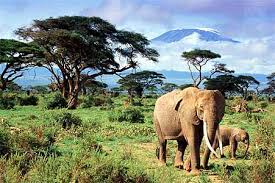
What are the biotic factors in this image?
a)
sunlight, elephants, and grasses
b)
sunlight, water,  and air
c)
elephants, plants, trees 
36.
If a bee does not come in contact with a flower's pollen...
a)
the plant is not likely to reproduce
b)
the plant is more likely to reproduce
37.
What is an ovary?
a)
the female part of the flower that becomes a fruit
b)
the female part of the flower that accepts the pollen
c)
the male part of the flower that produces pollen
d)
another name for the stem of the plant
38.
What part of the flower holds the pollen?
a)
stem
b)
anther
c)
pistil
d)
flower
39.
Seed production, sexual or asexual?
a)
sexual
b)
asexual
c)
neither
d)
both
40.
What does an ovule become when it is pollinated?
a)
a seed
b)
a sprout
c)
a fruit
d)
it stays an ovule
41.
Fertilization is the process by which an 
a)
egg and pollen combine
b)
embryo grows into a plant
c)
animal carries pollen between plants
42.

What do you need for photosynthesis to take place?

a)

water

b)

sunlight

c)

carbon dioxide

d)

all of the above

43.
What attracts insects for pollination?
a)
anther
b)
ovary
c)
stigma
d)
petals
44.
What is D? (pg.134)
a)
Anther
b)
Ovules
c)
Pollen Tube
d)
Stigma
45.
What is the sticky part of the flower that catches pollen?
a)
style
b)
stigma
c)
ovary
d)
petal
46.
Which of the following is the correct order of organization in living things from most basic (simple) to most complex?
a)
a.  Organism, cell, tissue, organ, organ system
b)
a.  Organ system, organ, tissue, cell, organism
c)
a.  Cell, tissue, organ, organ system, organism
d)
a.  Cell, organ, tissue, organ, organism, organ system
47.
A group of similar cells that come together to perform a specific function is a/an
a)
organ
b)
organism
c)
organ system
d)
tissue
48.
The basic unit of structure and function in the human body is the....
a)
organ
b)
organ system
c)
cell
d)
tissue
49.
Which is an example of an organism?
a)
a beetle
b)
a lake
c)
a rock
d)
a shell
50.
The heart contains different types of tissue. What level is the heart?
a)
cell
b)
organ system
c)
organ
d)
tissue